
No products in the cart.




Why Fish Don’t Exist by Lulu Miller

රු1,490.00
3 X Rs. 496.67 or 8% Cashback with


or 3 X රු496.67 with


or up to 4 X රු372.50 with


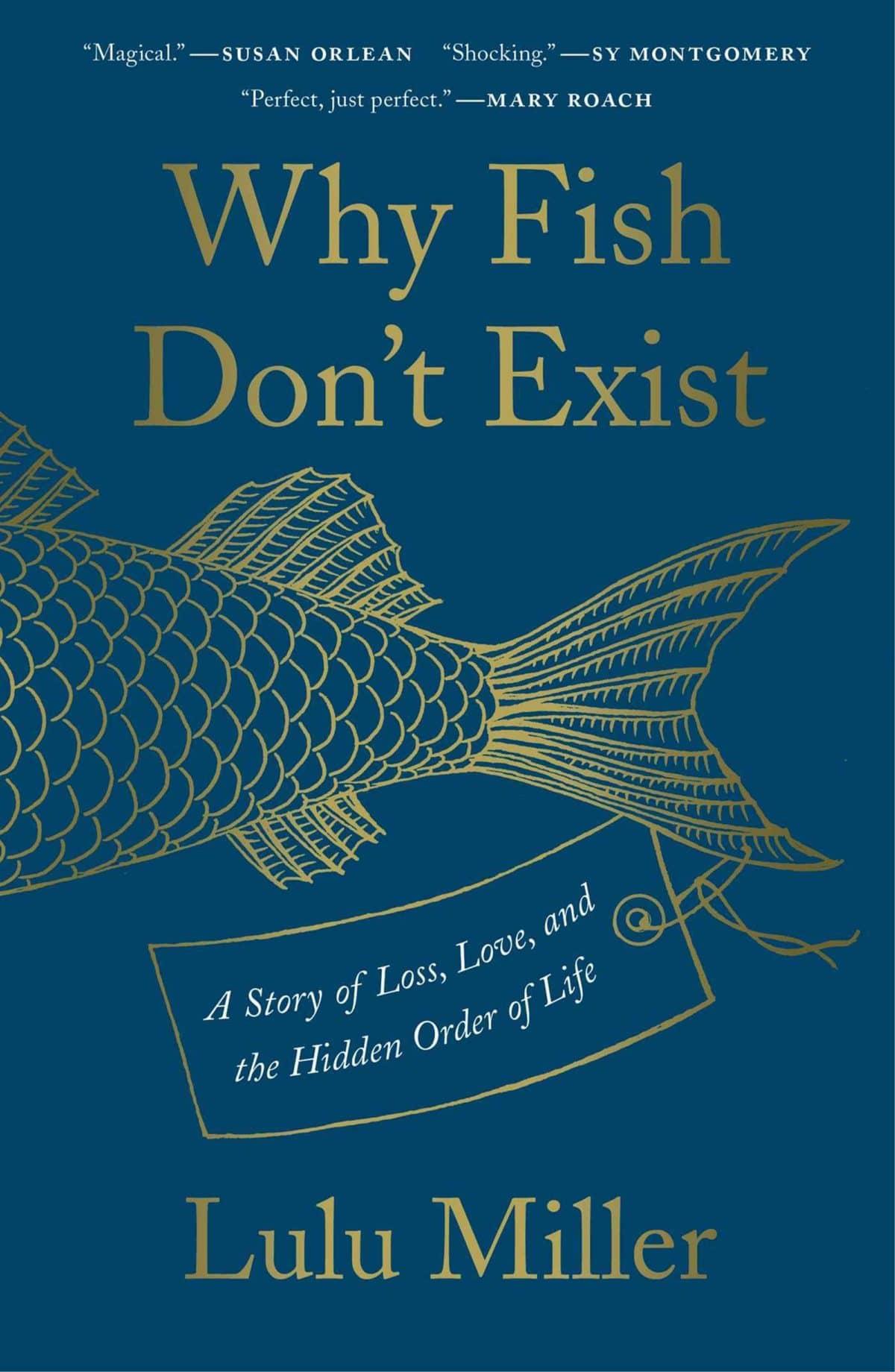
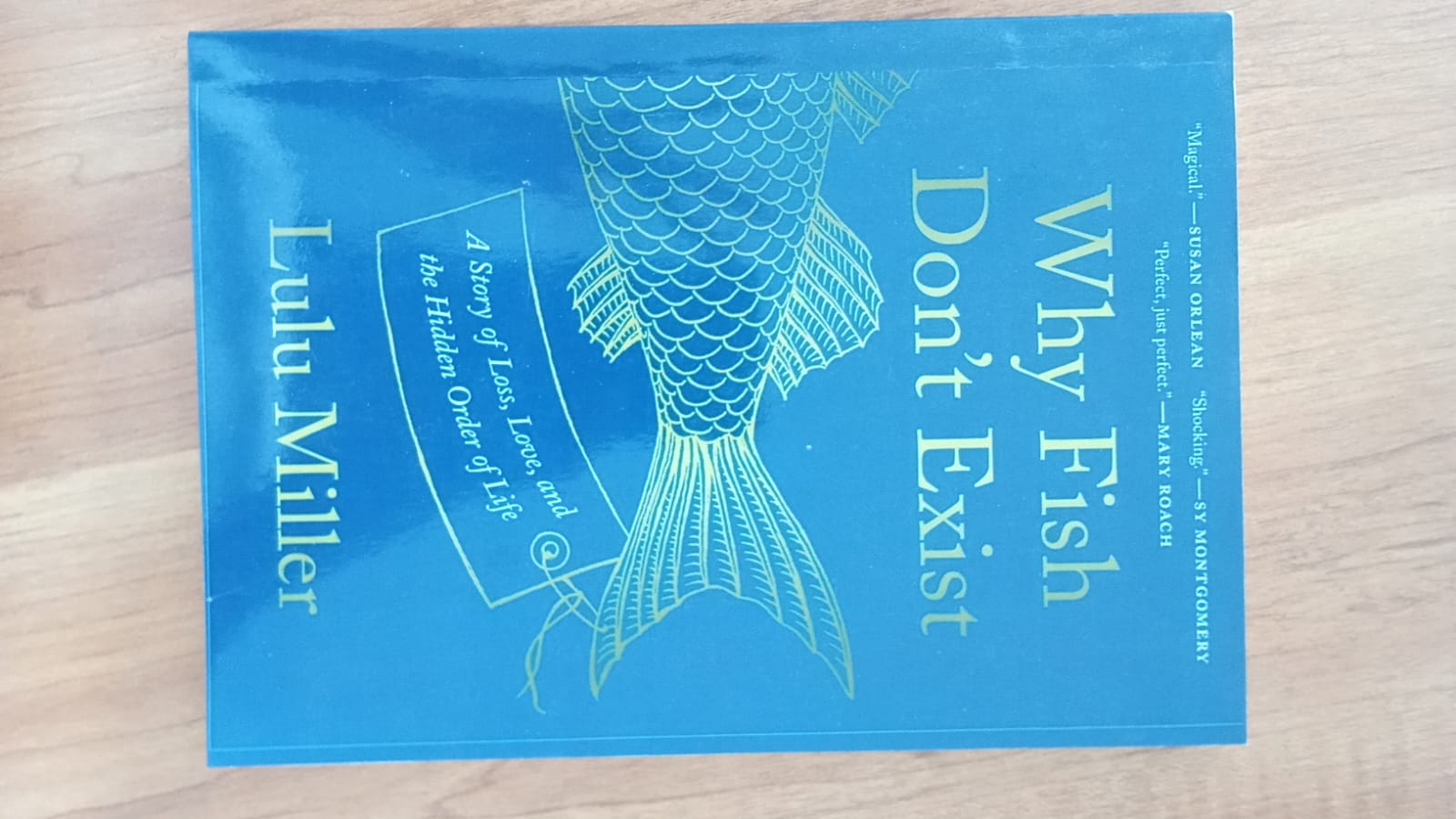
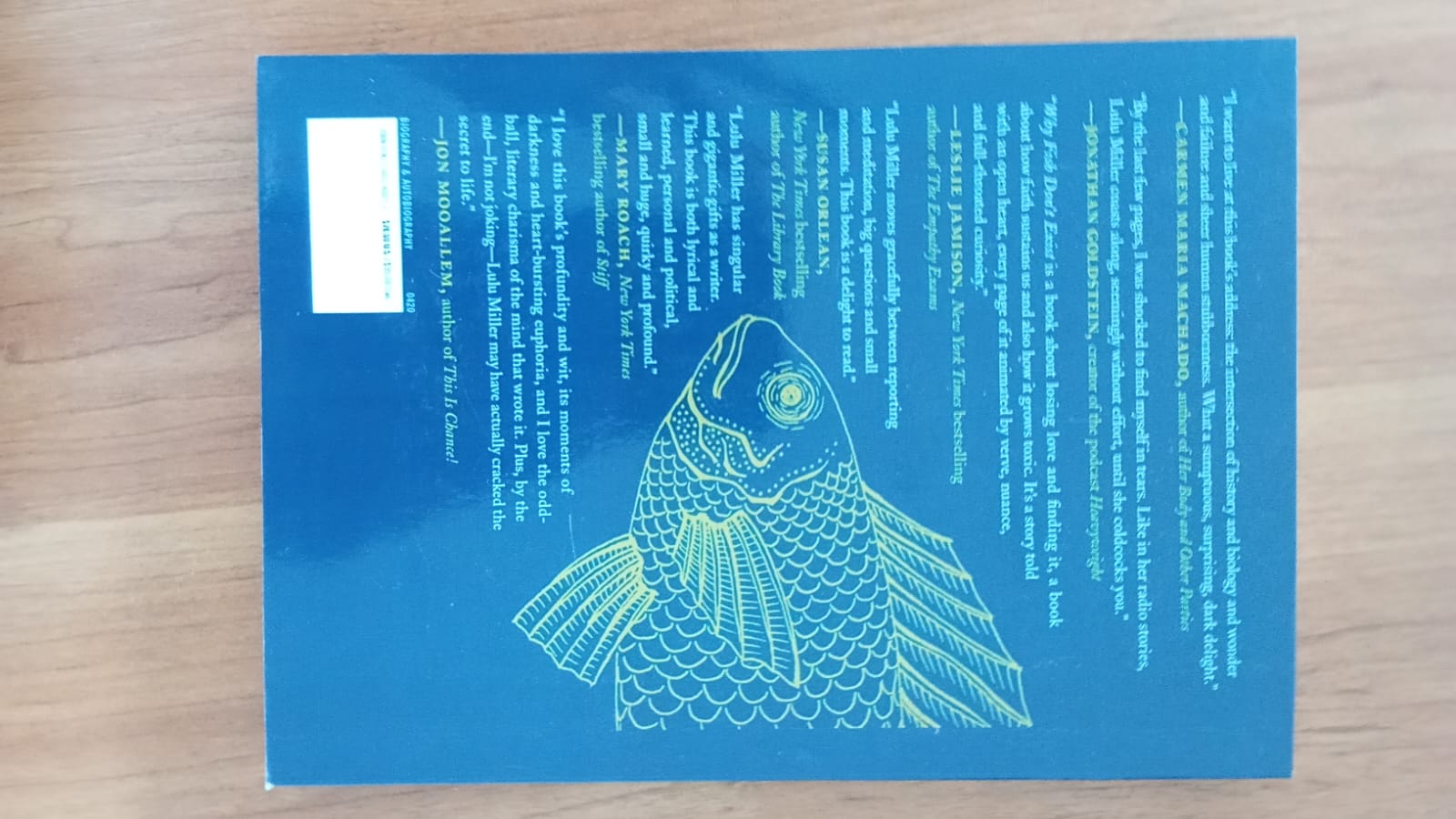
Why Fish Don’t Exist by Lulu Miller is a unique blend of memoir, science, and philosophy that explores how humans try to bring order to a chaotic world. The book follows the life of scientist David Starr Jordan, who dedicated his career to classifying fish, while also reflecting on the author’s personal struggles and search for meaning.
The story challenges the idea that everything can be neatly categorized, showing that life is often unpredictable and complex. Through science and storytelling, the book explores themes of loss, resilience, identity, and the human desire to find order in disorder.
4 in stock
Why Fish Don’t Exist by Lulu Miller
Why Fish Don’t Exist by Lulu Miller is a fascinating blend of memoir, science, biography, history, and philosophy.
At the center of the book is David Starr Jordan.
He was a scientist obsessed with identifying and classifying fish.
He believed nature contained an order waiting to be discovered.
Then chaos repeatedly destroyed his work.
About Why Fish Don’t Exist
Why Fish Don’t Exist begins with Lulu Miller learning about David Starr Jordan.
Jordan was a taxonomist.
His work involved naming and organizing species.
He spent years collecting fish and trying to bring order to the natural world.
Then disaster struck.
His collections were damaged by lightning.
Fire destroyed part of his work.
And the 1906 San Francisco earthquake shattered thousands of preserved specimens.
Instead of giving up, Jordan began rebuilding.
That determination fascinated Miller.
7 Fascinating Lessons from Why Fish Don’t Exist
1. Chaos Is Part of Life
One of the strongest themes in Why Fish Don’t Exist is chaos.
People naturally want order.
We create categories.
Plans.
Rules.
And explanations.
But life does not always follow them.
Miller explores what happens when our carefully created structures suddenly collapse.
2. Resilience Can Be Powerful
David Starr Jordan repeatedly experienced setbacks.
His work was destroyed.
His plans failed.
Yet he continued.
At first, Miller sees this persistence as admirable.
But the deeper she investigates, the more complicated Jordan becomes.
The book asks whether determination is always a virtue.
3. Scientific Categories Can Change
Humans create systems to understand nature.
Taxonomy is one example.
Scientists classify organisms based on shared characteristics.
But classifications can change as knowledge improves.
The title itself points toward this idea.
“Fish” may feel like an obvious scientific category.
Evolutionary biology makes that assumption more complicated.
4. Certainty Can Become Dangerous
Confidence can help people survive difficult situations.
But too much certainty can become dangerous.
Jordan strongly believed in his own worldview.
That confidence helped him rebuild after disasters.
It also contributed to darker parts of his legacy.
The book explores the difference between resilience and rigid certainty.
5. People Are More Complicated Than Heroes or Villains
At first, Jordan appears to be an inspiring figure.
He refuses to surrender to chaos.
Then Miller discovers disturbing parts of his history.
The story becomes less comfortable.
This is one reason the book is so effective.
People do not always fit simple categories.
6. Meaning Can Be Created
The universe may not provide obvious meaning.
That does not mean life has none.
Miller explores the possibility that people create meaning through relationships, curiosity, compassion, and attention.
This becomes especially important as the memoir becomes more personal.
7. Small Things Matter
One of the book’s most hopeful ideas is that importance does not have to come from being objectively important to the universe.
A person.
A relationship.
A tiny organism.
A moment.
These things can still matter deeply.
Who Was David Starr Jordan?
David Starr Jordan was an American scientist and taxonomist.
He became known for his work identifying fish species.
He also served as the first president of Stanford University.
But his legacy is complicated.
Miller’s investigation moves beyond his scientific accomplishments.
She examines his beliefs, ambitions, and involvement in the eugenics movement.
This transforms the book from an inspiring biography into something much more challenging.
The 1906 San Francisco Earthquake
One of the book’s central stories involves Jordan’s specimen collection.
The earthquake shattered jars containing preserved fish.
Labels became separated from specimens.
Years of work appeared ruined.
Jordan responded in an unusual way.
He began identifying the fish again.
He then physically attached identification tags to surviving specimens.
For Miller, this becomes a symbol of human resistance to disorder.
Order vs. Chaos
Humans like categories.
They make the world easier to understand.
Animal.
Plant.
Success.
Failure.
Good.
Bad.
But nature does not always cooperate with those categories.
Why Fish Don’t Exist repeatedly challenges the desire to place everything into neat boxes.
The more Miller studies Jordan, the more those boxes begin to break apart.
Why Fish Don’t Exist
The title sounds absurd.
Of course fish exist.
But scientifically, the category is more complicated than it appears.
Evolutionary relationships do not always match the traditional categories people use.
Some creatures called fish may be more closely related to land animals than to other creatures also called fish.
The title therefore becomes a larger metaphor.
Human categories can feel permanent.
But they are often inventions.
Science and Classification
Taxonomy tries to organize life.
This is extremely useful.
But scientific classification also evolves.
New discoveries change relationships.
DNA evidence changes old assumptions.
Evolutionary biology can redraw branches of the tree of life.
Miller uses this scientific idea to ask philosophical questions about human certainty.
Resilience
Jordan’s resilience initially inspires Miller.
He keeps rebuilding.
Again and again.
This seems like an ideal lesson.
Never quit.
Keep going.
But the book eventually complicates that idea.
Persistence can be admirable.
It can also keep someone committed to harmful beliefs.
The question becomes not only whether we continue.
It becomes what we are continuing toward.
Eugenics and Jordan’s Legacy
One of the darker parts of the book involves Jordan’s support for eugenics.
Eugenics promoted the false and harmful idea that society could be improved by controlling who should reproduce.
These ideas contributed to discriminatory policies and forced sterilizations.
Miller confronts this history directly.
It forces her to reconsider the person she originally hoped would teach her about resilience.
Personal Memoir
The book is not only about Jordan.
It is also about Lulu Miller.
Her investigation begins during a difficult period in her own life.
She is searching for stability.
Meaning.
And a reason to keep moving forward.
Jordan initially seems like the perfect guide.
Then his story becomes more disturbing.
That forces Miller to find a different understanding of hope.
Science Meets Philosophy
Why Fish Don’t Exist moves easily between science and philosophy.
Taxonomy becomes a question about identity.
Evolution becomes a question about certainty.
Chaos becomes a question about meaning.
This combination makes the book difficult to place in only one genre.
Love and Meaning
As the story develops, love becomes increasingly important.
Miller begins questioning whether meaning needs to be universal.
Maybe something can matter simply because it matters to us.
Relationships create meaning.
Care creates meaning.
Attention creates meaning.
This becomes one of the book’s most hopeful ideas.
The Danger of Ranking Life
Jordan believed strongly in hierarchy.
Some organisms were treated as more advanced than others.
Similar ideas were applied to humans through eugenics.
Modern evolutionary biology does not support the idea that evolution is a ladder with one species sitting at the top.
Miller uses this to challenge the desire to rank living things according to imagined superiority.
A Book About Perspective
Perspective changes throughout the story.
Jordan first appears admirable.
Then troubling.
Chaos first appears frightening.
Then freeing.
Scientific categories appear stable.
Then become uncertain.
Miller’s willingness to revise her own conclusions gives the book much of its power.
Who Should Read This Book?
Why Fish Don’t Exist is ideal for readers interested in science, memoir, philosophy, biology, psychology, history, and unusual nonfiction.
It may especially appeal to readers who enjoy books that combine personal storytelling with scientific ideas.
Readers interested in taxonomy and evolution may enjoy the scientific sections.
Readers interested in resilience and meaning may appreciate the memoir elements.
About Lulu Miller
Lulu Miller is a writer, science journalist, and audio producer.
Simon & Schuster identifies her as a cohost of Radiolab, host of the children’s podcast Terrestrials, and author of Why Fish Don’t Exist.
Readers can learn more through the official Simon & Schuster page for Why Fish Don’t Exist.
Product Details
Title: Why Fish Don’t Exist
Subtitle: A Story of Loss, Love, and the Hidden Order of Life
Author: Lulu Miller
Genre: Science / Memoir / Biography / Philosophy / Natural History
Language: English
Common Trade Paperback Edition
Publisher: Simon & Schuster
ISBN-13: 9781501160349
Format: Trade Paperback
Pages: 256
Publication Date: April 6, 2021
Simon & Schuster confirms these specifications for the trade paperback edition.
Important Edition Note
Different editions may use different ISBNs, covers, formats, or page counts.
Always check the barcode printed on your physical copy before entering final WooCommerce product information.
Explore More Non-Fiction Books
Why Fish Don’t Exist begins as the story of a scientist who refuses to surrender to chaos.
Then it becomes something much stranger.
It asks whether order is real.
Whether persistence is always good.
And whether life needs a grand purpose in order to matter.
Readers can explore more Non-Fiction & Knowledge Books at Bargain Books.
You can also explore Biography Books at Bargain Books.
For readers who enjoy science, philosophy, memoir, surprising history, and books that challenge familiar assumptions, Why Fish Don’t Exist is a fascinating and unforgettable read.
Be the first to review “Why Fish Don’t Exist by Lulu Miller”
Related products
Out of stock
Non-Fiction & Knowledge
Astrophysics For People In A Hurry by Neil Degrasse Tyson [Hardcover]
රු1,750.00
3 X Rs. 583.33 or 8% Cashback with
or 3 X රු583.33 with
or up to 4 X රු437.50 with
-8%

Out of stock
Astronomy & Astrophysics
Original price was: රු2,390.00.රු2,200.00Current price is: රු2,200.00.
3 X Rs. 733.33 or 8% Cashback with
or 3 X රු733.33 with
or up to 4 X රු550.00 with

Science & Nature
රු1,950.00
3 X Rs. 650.00 or 8% Cashback with
or 3 X රු650.00 with
or up to 4 X රු487.50 with
-30%

Out of stock
Original price was: රු1,650.00.රු1,150.00Current price is: රු1,150.00.
3 X Rs. 383.33 or 8% Cashback with
or 3 X රු383.33 with
or up to 4 X රු287.50 with

Out of stock
Astronomy & Astrophysics
රු1,000.00
3 X Rs. 333.33 or 8% Cashback with
or 3 X රු333.33 with
or up to 4 X රු250.00 with
-18%
Out of stock
Science & Nature
Original price was: රු2,800.00.රු2,300.00Current price is: රු2,300.00.
3 X Rs. 766.67 or 8% Cashback with
or 3 X රු766.67 with
or up to 4 X රු575.00 with

Out of stock
Non-Fiction & Knowledge
රු1,900.00
3 X Rs. 633.33 or 8% Cashback with
or 3 X රු633.33 with
or up to 4 X රු475.00 with
-19%
Original price was: රු2,600.00.රු2,100.00Current price is: රු2,100.00.
3 X Rs. 700.00 or 8% Cashback with
or 3 X රු700.00 with
or up to 4 X රු525.00 with
Reviews
There are no reviews yet.