
No products in the cart.





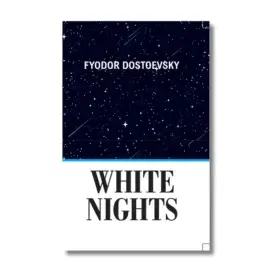
White nights by Fyodor Dostoevsky


රු1,300.00
3 X Rs. 433.33 or 8% Cashback with


or 3 X රු433.33 with


or up to 4 X රු325.00 with


Book Details
- Title: White Nights
- Author: Fyodor Dostoevsky
- Genre: Classic Literature, Romance, Psychological Fiction
- Language: Originally Russian
- First Published: 1848
- Setting: St. Petersburg, Russia
- Main Characters: The Dreamer, Nastenka
- Themes: Love, Loneliness, Dreams, Human Emotion, Isolation
- Indian locally published copy
Out of stock
Email when stock available
White Nights by Fyodor Dostoevsky
White Nights by Fyodor Dostoevsky is a beautiful and emotional classic about loneliness, hope, dreams, unrequited love, and the brief connection between two strangers.
The story takes place during the famous white nights of St. Petersburg.
A lonely young man meets a young woman named Nastenka.
Over several nights, they begin sharing their deepest thoughts.
What starts as friendship slowly becomes something more complicated.
About White Nights
White Nights is one of Dostoevsky’s best-known short works.
It is much shorter than novels such as Crime and Punishment or The Brothers Karamazov.
But it still explores powerful emotions.
Loneliness.
Love.
Hope.
Dreams.
Disappointment.
And the desire to be understood.
Meet the Dreamer
The narrator is never given a proper name.
He is often called the Dreamer.
He lives a lonely life in St. Petersburg.
He spends much of his time walking through the city.
He imagines connections with people.
But he rarely forms real relationships.
That changes when he meets Nastenka.
Meet Nastenka
Nastenka is young, emotional, and hopeful.
She is waiting for a man she loves.
He promised to return.
But he has not appeared.
When she meets the Dreamer, she finds someone willing to listen.
Their friendship grows quickly.
But Nastenka’s heart still belongs to someone else.
7 Powerful Reasons to Read White Nights
1. A Beautiful Story About Loneliness
Loneliness is at the heart of White Nights.
The Dreamer is surrounded by people.
Yet he feels disconnected from everyone.
His meeting with Nastenka gives him something he rarely experiences.
Real companionship.
That makes their brief friendship incredibly meaningful.
2. The Story Feels Deeply Romantic
The setting creates a dreamlike atmosphere.
St. Petersburg remains bright late into the night.
The streets feel quiet.
The city becomes almost magical.
Against this background, two lonely people begin sharing their lives.
3. It Explores Unrequited Love
The Dreamer develops feelings for Nastenka.
But love is complicated.
Nastenka is waiting for another man.
This creates one of the story’s most painful questions.
Can loving someone still be meaningful if they do not choose you?
4. The Characters Feel Human
Neither character is perfect.
The Dreamer can be idealistic.
Nastenka can be uncertain.
Both want connection.
Both are afraid of disappointment.
Their imperfections make the story feel emotionally real.
5. It Is Short but Powerful
White Nights is a novella.
Readers can finish it much faster than Dostoevsky’s longer novels.
But the emotional impact can still be strong.
It is an excellent introduction to Dostoevsky for readers who are not ready for one of his larger books.
6. The Story Explores Hope
Hope keeps both characters moving forward.
Nastenka hopes her love will return.
The Dreamer hopes she might eventually love him.
Hope creates joy.
But it also creates pain.
The story shows both sides beautifully.
7. The Ending Is Unforgettable
The ending is one of the main reasons White Nights remains so memorable.
It is emotional without becoming overly dramatic.
It leaves the Dreamer with both pain and gratitude.
The story suggests that even a brief moment of happiness can matter deeply.
The White Nights of St. Petersburg
The title refers to a natural phenomenon.
During summer, St. Petersburg experiences nights that remain unusually bright.
Darkness never fully arrives.
This creates the perfect setting for the story.
Everything feels suspended between night and day.
Reality and dreams.
Friendship and love.
Hope and disappointment.
The Dreamer’s Loneliness
The Dreamer has spent much of his life inside his imagination.
He talks about buildings as though they are friends.
He creates stories about strangers.
He dreams instead of participating fully in life.
Meeting Nastenka disrupts that pattern.
For once, he is not imagining a relationship.
He is living one.
Friendship Before Romance
Nastenka initially wants friendship.
She needs someone to listen.
The Dreamer agrees.
But emotional closeness changes the relationship.
He begins hoping for more.
That creates tension because he knows she is waiting for someone else.
Love Without Possession
One of the strongest themes in White Nights is love without possession.
The Dreamer loves Nastenka.
But he cannot force her to return that love.
His feelings become painful.
Yet he still wants her to be happy.
This makes the story more compassionate than bitter.
Dreams vs. Reality
The Dreamer has spent years escaping into imagination.
Nastenka gives him a chance to experience real life.
But reality is less predictable than fantasy.
Real people have their own desires.
They can disappoint us.
They can choose differently.
The story shows why reality can hurt more than dreams.
But it also shows why reality matters more.
Emotional Connection
The relationship develops quickly.
That makes sense because both characters are emotionally isolated.
When lonely people finally feel understood, connection can become intense.
Their conversations create intimacy.
They share fears.
Memories.
Hopes.
And disappointment.
Unrequited Love
Many readers connect strongly with this part of the story.
Loving someone who loves another person can be painful.
The Dreamer experiences that directly.
But the story does not reduce his experience to failure.
He gains something valuable from knowing Nastenka.
Even temporary happiness becomes meaningful.
Gratitude Despite Pain
One of the most moving ideas in White Nights is gratitude.
The Dreamer is hurt.
But he does not completely regret what happened.
He has experienced genuine connection.
For someone who has spent years alone, that matters.
This gives the ending unusual emotional maturity.
Why White Nights Still Feels Modern
The novella was originally published in the nineteenth century.
Yet its emotional themes remain familiar.
Loneliness.
Social isolation.
Idealizing relationships.
Waiting for someone.
Falling in love too quickly.
Wanting to be understood.
These feelings still resonate with modern readers.
Dostoevsky’s Softer Side
Readers often associate Dostoevsky with crime, morality, suffering, religion, and psychological darkness.
White Nights shows a softer side.
It is still melancholic.
But it is also tender.
Funny in places.
Romantic.
Hopeful.
And deeply human.
Who Should Read This Book?
White Nights is ideal for readers who enjoy classics, literary fiction, emotional romance, philosophical stories, and short novels.
It may especially appeal to readers who enjoy stories about loneliness and unrequited love.
It is also a good starting point for readers new to Dostoevsky.
About Fyodor Dostoevsky
Fyodor Dostoevsky was a nineteenth-century Russian novelist and short-story writer.
His major works include Crime and Punishment, The Idiot, Demons, Notes from Underground, and The Brothers Karamazov.
Penguin notes that White Nights is among his celebrated short works and describes it as a story of love and loss in St. Petersburg.
Readers can learn more through the official Penguin page for White Nights.
Product Details
Title: White Nights
Author: Fyodor Dostoevsky
Translator: Ronald Meyer
Genre: Classic Literature / Literary Fiction / Romance / Novella
Language: English
Original Publication: 1848
Penguin Little Black Classics Paperback
Publisher: Penguin Classics
Series: Penguin Little Black Classics
ISBN-13: 9780241252086
Format: Paperback
Pages: 128
Publication Date: March 3, 2016
Dimensions: 160 × 110 × 12 mm
Weight: 99 g
Penguin confirms these specifications for the Little Black Classics paperback edition.
Little Clothbound Classics Edition
There is also a hardcover collection containing White Nights and other Dostoevsky stories.
ISBN-13: 9780241619780
Format: Hardcover
Pages: 240
Publisher: Penguin Classics
Series: Little Clothbound Classics
UK Publication Date: February 23, 2023
This edition also includes stories such as A Nasty Business and The Meek One.
Important Edition Note
There are many editions of White Nights.
Different publishers use different translations, covers, ISBNs, and page counts.
For example, a 2024 Fingerprint paperback is listed with ISBN 9789362143525 and 96 pages.
Always check the barcode printed on your physical copy before entering final WooCommerce specifications.
Explore More Classic Fiction
White Nights is a small story about a very large emotion.
Two lonely people meet.
They talk.
They dream.
They hope.
And for a short time, neither of them feels completely alone.
Readers can explore more Fiction & Literature Books at Bargain Books.
For readers who enjoy classics, emotional stories, unrequited love, and beautiful reflections on loneliness, White Nights is a powerful and unforgettable novella.

Be the first to review “White nights by Fyodor Dostoevsky”
Related products
Classics & Literary Fiction
රු1,850.00
3 X Rs. 616.67 or 8% Cashback with
or 3 X රු616.67 with
or up to 4 X රු462.50 with
-17%

Classics & Literary Fiction
Original price was: රු2,400.00.රු1,990.00Current price is: රු1,990.00.
3 X Rs. 663.33 or 8% Cashback with
or 3 X රු663.33 with
or up to 4 X රු497.50 with
Out of stock
Classics & Literary Fiction
රු1,750.00
3 X Rs. 583.33 or 8% Cashback with
or 3 X රු583.33 with
or up to 4 X රු437.50 with
Out of stock
Classics & Literary Fiction
රු1,950.00
3 X Rs. 650.00 or 8% Cashback with
or 3 X රු650.00 with
or up to 4 X රු487.50 with
Out of stock
Classics & Literary Fiction
රු1,700.00
3 X Rs. 566.67 or 8% Cashback with
or 3 X රු566.67 with
or up to 4 X රු425.00 with
-22%

Out of stock
Classics & Literary Fiction
Original price was: රු2,250.00.රු1,750.00Current price is: රු1,750.00.
3 X Rs. 583.33 or 8% Cashback with
or 3 X රු583.33 with
or up to 4 X රු437.50 with

Out of stock
Classics & Literary Fiction
රු4,300.00
3 X Rs. 1,433.33 or 8% Cashback with
or 3 X රු1,433.33 with
or up to 4 X රු1,075.00 with
-14%

Classics & Literary Fiction
Original price was: රු1,800.00.රු1,550.00Current price is: රු1,550.00.
3 X Rs. 516.67 or 8% Cashback with
or 3 X රු516.67 with
or up to 4 X රු387.50 with
Reviews
There are no reviews yet.