
No products in the cart.




Pumpkin Plan by Mike Michalowicz


රු1,600.00
3 X Rs. 533.33 or 8% Cashback with


or 3 X රු533.33 with


or up to 4 X රු400.00 with


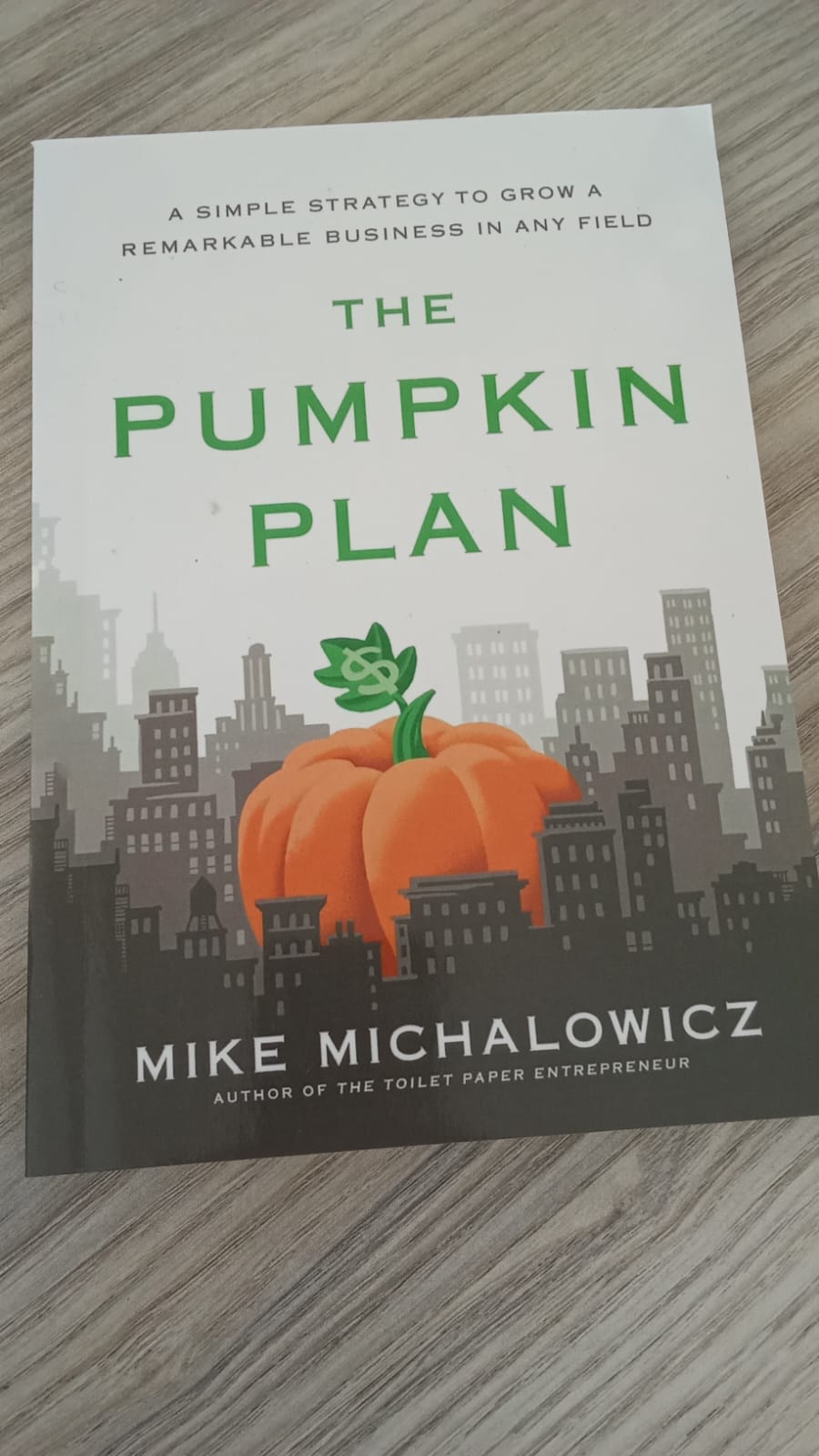
A Simple Strategy for Business Growth – The Pumpkin Plan by Mike Michalowicz
The Pumpkin Plan by Mike Michalowicz is a practical and engaging business book that teaches entrepreneurs how to grow their companies by focusing on what truly works. Inspired by the way farmers grow giant pumpkins, the book explains that success comes from nurturing the best opportunities while removing distractions.
The central idea of The Pumpkin Plan is that not all customers or activities are equal. By focusing on your best clients and strengths, you can build a stronger, more profitable business.
5 in stock
The Pumpkin Plan by Mike Michalowicz is a practical and entertaining business book about escaping exhausting, unfocused entrepreneurship and building a company around the customers, products and strengths that offer the greatest opportunity for profitable growth.
Many small-business owners work constantly.
More customers.
More products.
More services.
More emails.
More problems.
More hours.
Yet the business does not necessarily become easier or more profitable.
Mike Michalowicz experienced this problem himself.
His company was growing, but he felt trapped in a cycle of constantly selling work and then rushing to deliver it.
Then he encountered an unexpected business model:
Giant pumpkin farming.
Farmers who grow prize-winning pumpkins do not simply plant hundreds of seeds and treat every pumpkin exactly the same.
They select promising seeds.
They monitor growth.
They remove weak pumpkins that consume resources.
Then they concentrate water, nutrients and attention on the strongest pumpkin.
Michalowicz realized that a business could be developed in a similar way.
Instead of trying to serve everybody, entrepreneurs can identify the customers and opportunities that best fit what the company does exceptionally well.
Then they can concentrate their resources around those strengths.
That idea becomes the foundation of The Pumpkin Plan by Mike Michalowicz.
The Pumpkin Plan by Mike Michalowicz – Book Overview
The central argument of The Pumpkin Plan by Mike Michalowicz is that businesses often become stuck because they spread limited resources across too many customers, products and activities.
A small company may try to serve:
Corporate clients.
Individuals.
Low-budget customers.
Premium customers.
Completely unrelated industries.
Custom projects.
Standard products.
Emergency work.
Anything that creates revenue.
At first, this seems sensible.
Revenue is revenue.
But over time, the business becomes complicated.
Every customer wants something different.
Employees must learn different processes.
Marketing loses focus.
Pricing becomes inconsistent.
The owner becomes the person responsible for solving every unusual problem.
Revenue may increase while profitability, simplicity and quality of life become worse.
Michalowicz argues that sustainable growth often comes from doing less, better.
The Giant Pumpkin Metaphor
The book’s unusual title comes from the process used by farmers trying to grow enormous pumpkins.
The simplified business analogy is straightforward.
First, plant the right seeds.
In business terms, identify what your company can do unusually well and where strong market demand exists.
Second, remove weak growth.
Stop allowing poor-fit customers, unprofitable work and unnecessary complexity to consume resources that should be invested elsewhere.
Third, nurture the winners.
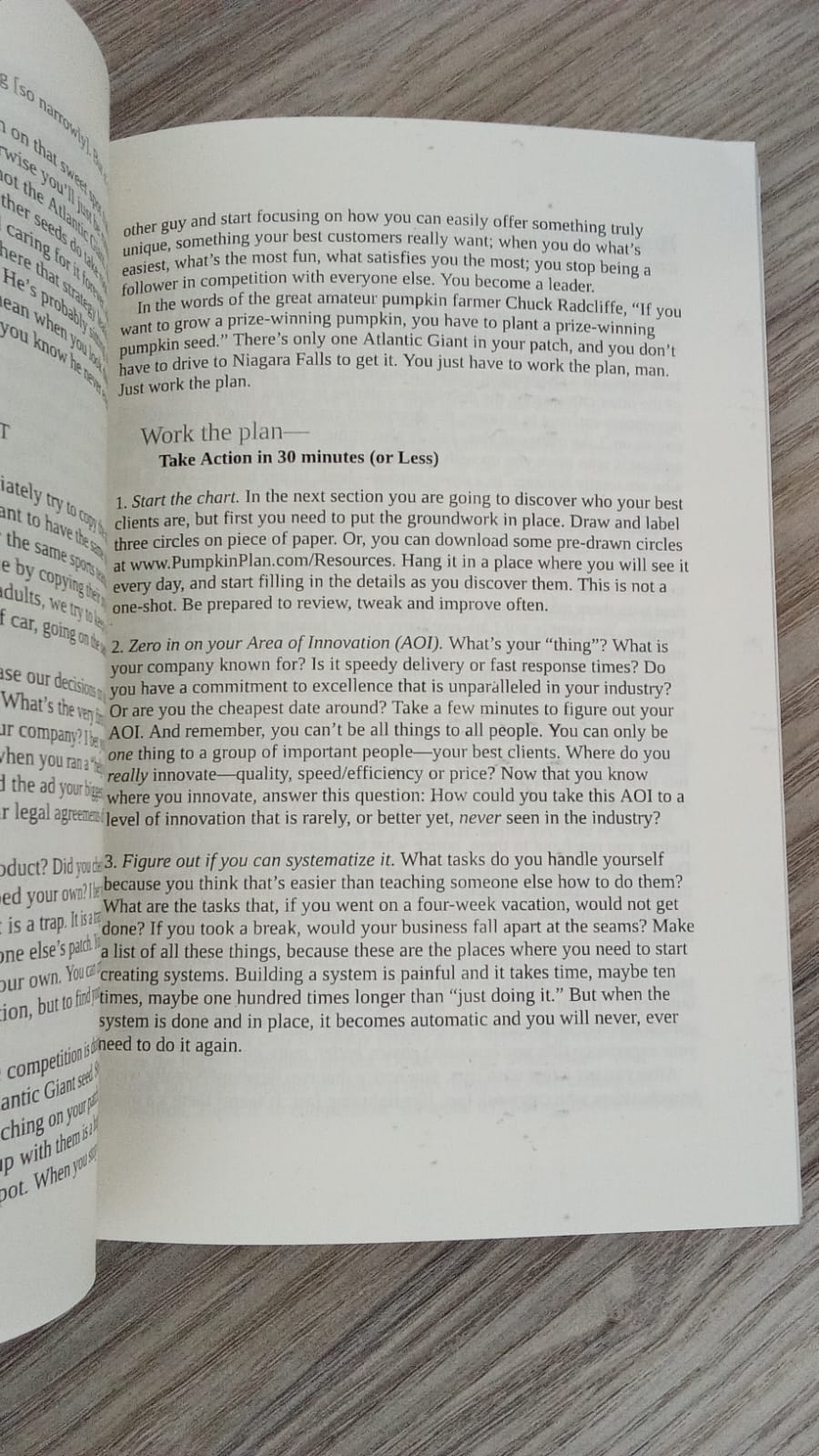
Give your best customers extraordinary service, understand their unmet needs and build more of your business around people like them. Penguin Random House highlights these three principles in its official description.
Stop Trying to Serve Everyone
One of the most important lessons in the book is that every customer is not automatically the right customer.
This idea can feel uncomfortable.
Business owners are often taught:
The customer is always right.
Never reject business.
Revenue is always good.
Michalowicz challenges that assumption.
Some customers may generate revenue while simultaneously creating:
Excessive support work.
Constant special requests.
Low margins.
Payment problems.
Stress.
Operational complexity.
If a customer repeatedly requires activities your business is not designed to perform, that revenue may actually prevent the company from improving.
Revenue and Profit Are Not the Same
A company can have impressive revenue and still struggle financially.
Imagine two customers.
Customer A pays Rs. 100,000 but requires constant revisions, custom work and employee time.
Customer B pays Rs. 70,000 but uses a standardized service, pays quickly and regularly refers similar customers.
Customer A produces more revenue.
Customer B may produce more profit and strategic value.
That distinction is central to The Pumpkin Plan by Mike Michalowicz.
The biggest customer is not necessarily the best customer.
Identify Your Best Customers
The Pumpkin Plan encourages business owners to identify the customers they most want to replicate.
A strong customer might combine several qualities.
They may be profitable.
They may pay reliably.
They may respect your process.
They may genuinely value what makes your business different.
They may refer similar customers.
They may have recurring needs.
They may also be enjoyable for your team to serve.
The exact criteria vary by business.
The important point is to evaluate customers deliberately instead of assuming every customer deserves equal strategic attention.
Your Best Customers Can Show You Where to Grow
Entrepreneurs often ask:
What product should I launch next?
What service should I add?
What market should I enter?
Michalowicz offers another approach.
Ask your strongest customers.
What problems do they still have?
What frustrates them?
What do they currently buy from another supplier?
What would make their experience dramatically better?
This is powerful because innovation becomes connected to real customer demand rather than random brainstorming.
The Wish List
One of the practical ideas associated with the Pumpkin Plan is learning what your best customers wish someone would solve for them.
When several ideal customers mention the same unmet need, that information may reveal an excellent opportunity.
This can be more valuable than creating products simply because the entrepreneur personally finds them interesting.
A business becomes stronger when customer problems and company strengths overlap.
Find Your Sweet Spot
A business sweet spot appears where three things come together:
Something customers genuinely value.
Something your company can perform exceptionally well.
Something that can produce a healthy economic return.
If one element is missing, the opportunity may be weak.
A product customers want but you cannot deliver well creates quality problems.
A product you can deliver perfectly but nobody wants has no market.
A product customers love but that consistently loses money is difficult to sustain.
Specialization
The book strongly supports focus.
This does not mean every company must offer only one product forever.
It means customers should clearly understand why your business is unusually good at something.
Compare:
“We provide many business services.”
with:
“We help independent restaurants reduce food waste and improve gross margin.”
The second statement is narrower.
But it also makes the company easier to remember, recommend and differentiate.
Being Different Matters
Businesses often compete by copying competitors.
Same products.
Same marketing language.
Same pricing.
Same promises.
That creates commodity competition.
If everyone looks identical, customers naturally compare price.
The Pumpkin Plan by Mike Michalowicz encourages entrepreneurs to become remarkable within a defined area rather than average across many areas.
Your Best Customers Help Define Your Difference
Sometimes entrepreneurs decide what makes their company special without asking customers.
They may say:
“We have great quality.”
“We provide excellent customer service.”
“We care about our customers.”
Competitors say the same things.
Your best customers may reveal a more useful difference.
Perhaps they choose you because you:
Respond unusually fast.
Understand a specific industry.
Carry difficult-to-find products.
Provide better after-sales service.
Make a complicated process simple.
That difference can become the foundation of your positioning.
The Danger of Bad-Fit Customers
A poor-fit customer does more than reduce profit.
They can influence the entire company.
Employees spend time creating exceptions.
Managers solve unusual problems.
Processes become complicated.
Inventory expands.
The owner becomes stressed.
Meanwhile, the best customers receive less attention.
In the pumpkin metaphor, resources that should feed the giant pumpkin are being consumed elsewhere.
“Fire Your Worst Customers” Needs Judgment
The book deliberately uses bold language about eliminating poor customers.
In practice, business owners should apply this intelligently.
Do not randomly remove customers just because they complain once.
A complaint can reveal a genuine failure in your business.
Instead, evaluate the relationship objectively.
Consider profitability.
Strategic fit.
Payment behavior.
Operational burden.
Respect for employees.
Future opportunity.
Sometimes a difficult customer deserves better service.
Sometimes the relationship simply is not a good fit.
Do Not Confuse Difficult With Valuable Feedback
Your easiest customer is not necessarily your best customer.
A strong customer may challenge you.
They may ask important questions.
They may identify weaknesses.
The difference is whether the relationship creates mutual value.
A customer who pushes your company to improve can be extremely valuable.
A customer who repeatedly demands unsustainable exceptions may not be.
Focus Creates Operational Simplicity
Imagine serving one clear customer type with one well-designed process.
Training becomes easier.
Marketing becomes clearer.
Pricing becomes easier to understand.
Employees gain deeper expertise.
Quality becomes more consistent.
Automation becomes possible.
Compare that with a business where every order is completely different.
The second company may generate revenue but remain permanently dependent on heroic effort.
Stop Customizing Everything
Customization can feel like excellent customer service.
But excessive customization can destroy scalability.
Every special request creates another variation.
Another workflow.
Another price.
Another exception.
The owner eventually becomes the only person who understands everything.
The Pumpkin Plan encourages businesses to understand what their best customers repeatedly need and develop systems around those needs.
Systems Support Growth
Growth without systems can create chaos.
Ten customers handled informally may be manageable.
One hundred customers probably require processes.
A thousand definitely do.
A scalable business needs repeatable ways to:
Sell.
Deliver.
Support.
Invoice.
Follow up.
Measure quality.
The goal is not bureaucracy for its own sake.
It is consistency.
The Owner Should Not Be the Entire Business
Many small businesses depend completely on the founder.
Every decision.
Every customer.
Every problem.
Every quotation.
Every approval.
That creates a company that cannot grow beyond the owner’s available hours.
A focused business is easier to delegate because employees can learn repeatable processes.
Growth Is Not More of Everything
Entrepreneurs often think growth means:
More customers.
More employees.
More products.
More offices.
More revenue.
But strategic growth may involve deliberately reducing something.
Fewer product lines.
Fewer poor-fit customers.
Fewer unnecessary tasks.
Fewer special cases.
Less complexity.
Then the remaining business can grow much more effectively.
Quality of Revenue
This concept is extremely useful for entrepreneurs.
Not all revenue has equal quality.
High-quality revenue tends to have characteristics such as:
Healthy margin.
Predictability.
Repeatability.
Low collection risk.
Strong strategic fit.
Reasonable support requirements.
Referral potential.
Low-quality revenue may be unpredictable, low-margin and extremely demanding.
A company that replaces low-quality revenue with better revenue may become healthier even before total sales increase.
Focus Your Marketing
Marketing becomes easier once the ideal customer is clear.
Instead of advertising to:
“Everyone who may need our service,”
you can create messages for a specific audience.
Their problems.
Their language.
Their priorities.
Their objections.
This improves relevance.
Referrals Become Easier
People find it easier to refer a specialized company.
Compare:
“I know a general consultant.”
with:
“I know someone who specializes in helping small ecommerce businesses fix inventory problems.”
The second recommendation is more memorable.
Specialization therefore strengthens word-of-mouth marketing.
Apply the Pumpkin Plan to a Bookstore
The ideas in The Pumpkin Plan by Mike Michalowicz can be applied even to a bookstore.
Suppose your data shows that certain readers repeatedly purchase:
Business books.
Manga.
Children’s books.
Romance.
Instead of treating every category identically, you could identify the customer segment with the strongest combination of:
Demand.
Margin.
Repeat purchases.
Advertising performance.
Stock turnover.
Then improve the experience for that segment.
For example, if manga customers frequently buy series in sequence, you could improve:
Volume availability.
Series bundles.
Pre-orders.
Reading-order information.
Collector box sets.
The goal is not necessarily to remove every other category.
The goal is to identify where concentrated effort can produce disproportionate results.
Use Data, Not Only Emotion
Business owners often keep products because:
“I like this.”
“We have always sold this.”
“One customer asked for it.”
The Pumpkin Plan encourages more deliberate thinking.
Track:
Revenue.
Margin.
Repeat purchases.
Customer acquisition cost.
Returns.
Support burden.
Inventory turnover.
Numbers help reveal what deserves more attention.
But Data Needs Context
A product with low current sales might still have strategic value.
A new category may need time.
A premium product may sell less frequently but create strong margin.
A customer with low current spending may have excellent future potential.
Business judgment still matters.
The goal is not blindly following a spreadsheet.
It is making better decisions with evidence.
Concentrate Resources
Small businesses have limited:
Money.
People.
Time.
Attention.
Inventory.
Marketing budget.
Trying to dominate ten markets simultaneously is difficult.
Concentrating resources gives the company a better chance of becoming excellent within one valuable niche.
Saying No Is a Growth Skill
One of the hardest entrepreneurial skills is saying no.
No to the wrong customer.
No to an unnecessary product.
No to a distracting partnership.
No to a project outside your strategy.
Every yes consumes resources.
When resources are limited, strategy is partly the art of deciding what not to do.
Busyness Is Not Growth
An owner can work fourteen hours every day without building a stronger company.
Busyness measures activity.
Growth should improve something meaningful:
Profit.
Customer value.
Operational capability.
Brand strength.
Recurring revenue.
Employee productivity.
A business that requires increasingly more work just to maintain the same result may need redesign rather than additional effort.
The Entrepreneurial Hamster Wheel
The book describes the exhausting experience of constantly selling and then immediately delivering the work.
Sell.
Deliver.
Sell.
Deliver.
No time to improve systems.
No time to plan.
No time to innovate.
This is the entrepreneurial hamster wheel.
The Pumpkin Plan attempts to break that cycle through focus.
Great Customers Can Generate Great Customers
Your ideal customers often know people similar to themselves.
A satisfied business owner knows other business owners.
A serious collector knows other collectors.
A parent with young children knows other parents.
That means delighting your strongest customers can create naturally aligned referrals.
This can reduce reliance on broad, expensive advertising.
Customer Care as Growth Strategy
Many companies treat customer service as a cost.
Michalowicz treats extraordinary service for the right customers as a growth mechanism.
When you deeply understand high-value customers and solve problems competitors ignore, loyalty increases.
So can referrals.
Retention.
Reputation.
Pricing power.
Customer care becomes strategic.
The Pumpkin Plan Is Not About Making Every Company Huge
The metaphor involves giant pumpkins, but the principle is not simply:
Become the biggest company possible.
A remarkable business may be intentionally small.
The goal is to become highly effective in the field where you choose to compete.
Profitability, sustainability and owner quality of life can matter more than raw size.
Growth Should Improve the Business
If revenue doubles but:
Profit disappears.
Employees burn out.
Customers become unhappy.
The owner works twice as much.
that growth may not be healthy.
A strong growth strategy should eventually improve the company rather than merely enlarge its problems.
Mike Michalowicz
Mike Michalowicz is an entrepreneur and business author known for practical frameworks aimed at small-business owners. Penguin Random House notes that he founded and sold two multimillion-dollar businesses and later wrote books including Profit First, Clockwork, Fix This Next and The Pumpkin Plan.
His writing style is informal, humorous and highly practical rather than academic.
Is The Pumpkin Plan a Self-Help Book?
It is better categorized as Business & Entrepreneurship rather than general self-help.
The book addresses topics such as:
Customer selection.
Business focus.
Differentiation.
Growth strategy.
Profitability.
Entrepreneurial workload.
It can certainly motivate readers, but its central purpose is improving a business.
Is It Good for New Entrepreneurs?
Yes.
The principles can help new founders avoid building an unnecessarily complicated company from the beginning.
However, very early businesses may still need experimentation before they know exactly which customers and offers are strongest.
Focus should come from learning, not guesswork.
Is It Good for Existing Businesses?
Yes, and in some ways the book may be even more useful for owners whose businesses already have customers.
Existing data makes it easier to identify:
Best customers.
Worst customers.
Most profitable services.
Recurring problems.
Strongest referral sources.
Those patterns can guide the Pumpkin Plan process.
Is The Pumpkin Plan Similar to Profit First?
Both are written by Mike Michalowicz for entrepreneurs, but they solve different problems.
The Pumpkin Plan focuses on strategic growth, ideal customers and specialization.
Profit First focuses on cash management and profitability.
They complement each other but are not sequels and can be read independently.
Official Edition Details
Penguin Random House lists the original Portfolio hardcover as The Pumpkin Plan by Mike Michalowicz, published July 5, 2012, with 240 pages and ISBN 9781591844884.
The fuller bibliographic title is The Pumpkin Plan: A Simple Strategy to Grow a Remarkable Business in Any Field.
If the physical copy you are selling carries a different ISBN, format or page count, use the details printed on that specific edition for your WooCommerce attributes.
Important Themes
The Pumpkin Plan by Mike Michalowicz focuses on business growth, entrepreneurship, specialization, ideal customers, profitable revenue, customer service, differentiation, strategic focus, innovation, scaling, systems, referrals, resource allocation, business simplicity and escaping entrepreneurial burnout.
7 Powerful Lessons From The Pumpkin Plan by Mike Michalowicz
- Do not try to serve everyone. Businesses become stronger when they identify the customers they are best equipped to serve instead of accepting every opportunity simply because it produces revenue.
- Your best customers reveal your best growth opportunities. Study profitable, enjoyable and strategically aligned customers, then find out what additional problems they need solved.
- Revenue quality matters more than revenue alone. A high-revenue customer can still be harmful if margins are poor, payments are difficult and excessive custom work consumes the team.
- Remove distractions so your strongest opportunities receive more resources. Time, money and attention invested in low-value activities cannot simultaneously support your most promising customers and products.
- Specialization makes a business easier to remember and recommend. When customers understand exactly what you do exceptionally well, marketing and referrals become much clearer.
- Growth needs systems, not constant heroics from the owner. Repeatable processes allow quality to remain consistent as the company expands and reduce dependency on the founder.
- Great growth can come from doing less, better. The Pumpkin Plan is ultimately about concentration—fewer distractions, stronger customer relationships and greater investment in the areas where the company can genuinely become remarkable.
Why Read The Pumpkin Plan by Mike Michalowicz?
The Pumpkin Plan by Mike Michalowicz is an excellent choice for entrepreneurs, small-business owners, startup founders, managers, freelancers and anyone trying to grow a business without becoming overwhelmed by increasing complexity.
The book is especially useful if your business has a problem like this:
You are busy every day.
Sales are happening.
Customers keep asking for things.
Yet you do not feel that the company is becoming easier, stronger or more profitable.
The Pumpkin Plan encourages you to stop assuming the solution is simply more.
Instead, identify what already works exceptionally well.
Find the customers who value it most.
Understand what those customers need next.
Build systems around serving them.
Then remove activities that prevent the company from focusing.
That approach makes The Pumpkin Plan by Mike Michalowicz particularly relevant to real-world small businesses where money, staff and time are limited.
Who Should Read This Book?
The Pumpkin Plan by Mike Michalowicz is particularly suitable for entrepreneurs who feel overworked, small-business owners trying to improve profitability, founders struggling with too many customer types, managers trying to simplify operations, freelancers who want better clients, marketers trying to define an ideal customer and business owners who want to scale without adding endless complexity.
It is also useful for someone planning a new business because it teaches an important lesson early:
You do not need to become everything to everyone.
You need to become exceptionally valuable to the right people.
The Pumpkin Plan by Mike Michalowicz – Grow the Business Worth Growing
The Pumpkin Plan by Mike Michalowicz takes a surprisingly simple agricultural idea and turns it into a useful business strategy.
A giant pumpkin farmer does not distribute equal resources forever.
The farmer observes.
Chooses.
Cuts.
Focuses.
Nurtures.
Businesses often do the opposite.
They add.
Another service.
Another customer type.
Another feature.
Another promotion.
Another exception.
Soon the company is larger but harder to manage.
The Pumpkin Plan asks a different question:
What deserves more of our resources because it already shows the greatest potential?
That question can change how an entrepreneur thinks about growth.
Maybe the answer is one customer segment.
One product category.
One service.
One geography.
One marketing channel.
One strength competitors cannot easily copy.
Once that opportunity becomes clear, the company can begin concentrating around it.
Not recklessly.
Not by firing every customer who is imperfect.
Not by ignoring diversification forever.
But by recognizing that limited resources create trade-offs.
Every hour spent serving a customer your company is poorly designed for is an hour unavailable for improving the experience of your ideal customers.
Every marketing campaign aimed at everyone may be less persuasive than one designed specifically for the buyers you serve best.
Every unnecessary product can complicate inventory, training and operations.
Focus creates room for excellence.
That is the deeper message behind The Pumpkin Plan by Mike Michalowicz.
Business growth is not always about planting more.
Sometimes the breakthrough comes from deciding which seed is worth nurturing—and giving it enough resources to become extraordinary.
Learn more about The Pumpkin Plan by Mike Michalowicz on the official Mike Michalowicz website.
Explore more business and entrepreneurship books at Bargain Books.
Be the first to review “Pumpkin Plan by Mike Michalowicz”
Related products

Non-Fiction & Knowledge
රු1,550.00
3 X Rs. 516.67 or 8% Cashback with
or 3 X රු516.67 with
or up to 4 X රු387.50 with
-24%

Out of stock
Non-Fiction & Knowledge
Original price was: රු2,500.00.රු1,900.00Current price is: රු1,900.00.
3 X Rs. 633.33 or 8% Cashback with
or 3 X රු633.33 with
or up to 4 X රු475.00 with

Non-Fiction & Knowledge
රු1,950.00
3 X Rs. 650.00 or 8% Cashback with
or 3 X රු650.00 with
or up to 4 X රු487.50 with
Out of stock
Non-Fiction & Knowledge
රු1,600.00
3 X Rs. 533.33 or 8% Cashback with
or 3 X රු533.33 with
or up to 4 X රු400.00 with
-33%

Self-Help & Psychology
Original price was: රු2,300.00.රු1,550.00Current price is: රු1,550.00.
3 X Rs. 516.67 or 8% Cashback with
or 3 X රු516.67 with
or up to 4 X රු387.50 with
Non-Fiction & Knowledge
රු2,450.00
3 X Rs. 816.67 or 8% Cashback with
or 3 X රු816.67 with
or up to 4 X රු612.50 with
රු2,000.00
3 X Rs. 666.67 or 8% Cashback with
or 3 X රු666.67 with
or up to 4 X රු500.00 with
-19%

Out of stock
Non-Fiction & Knowledge
Original price was: රු2,650.00.රු2,150.00Current price is: රු2,150.00.
3 X Rs. 716.67 or 8% Cashback with
or 3 X රු716.67 with
or up to 4 X රු537.50 with
Reviews
There are no reviews yet.