
No products in the cart.
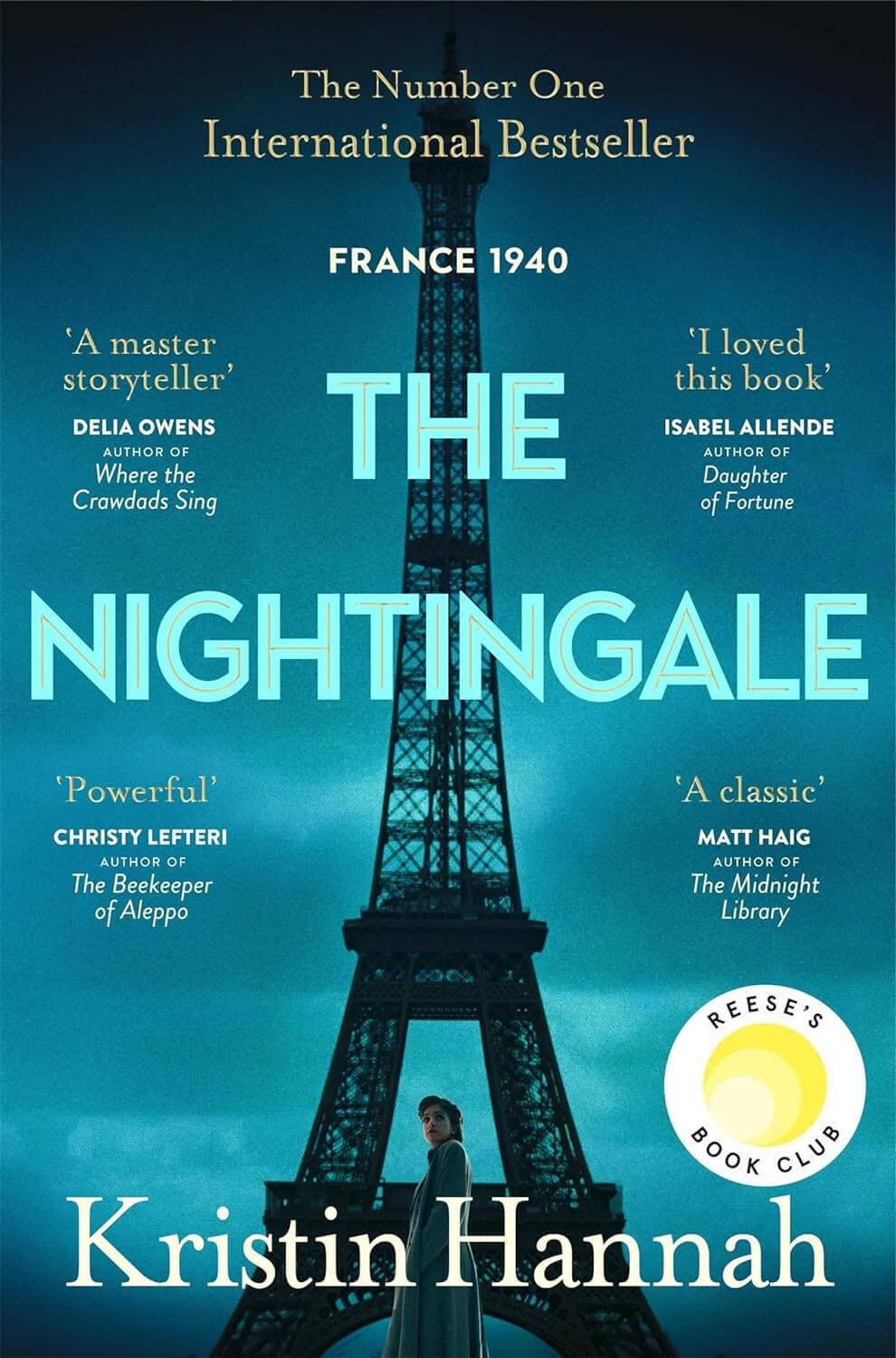
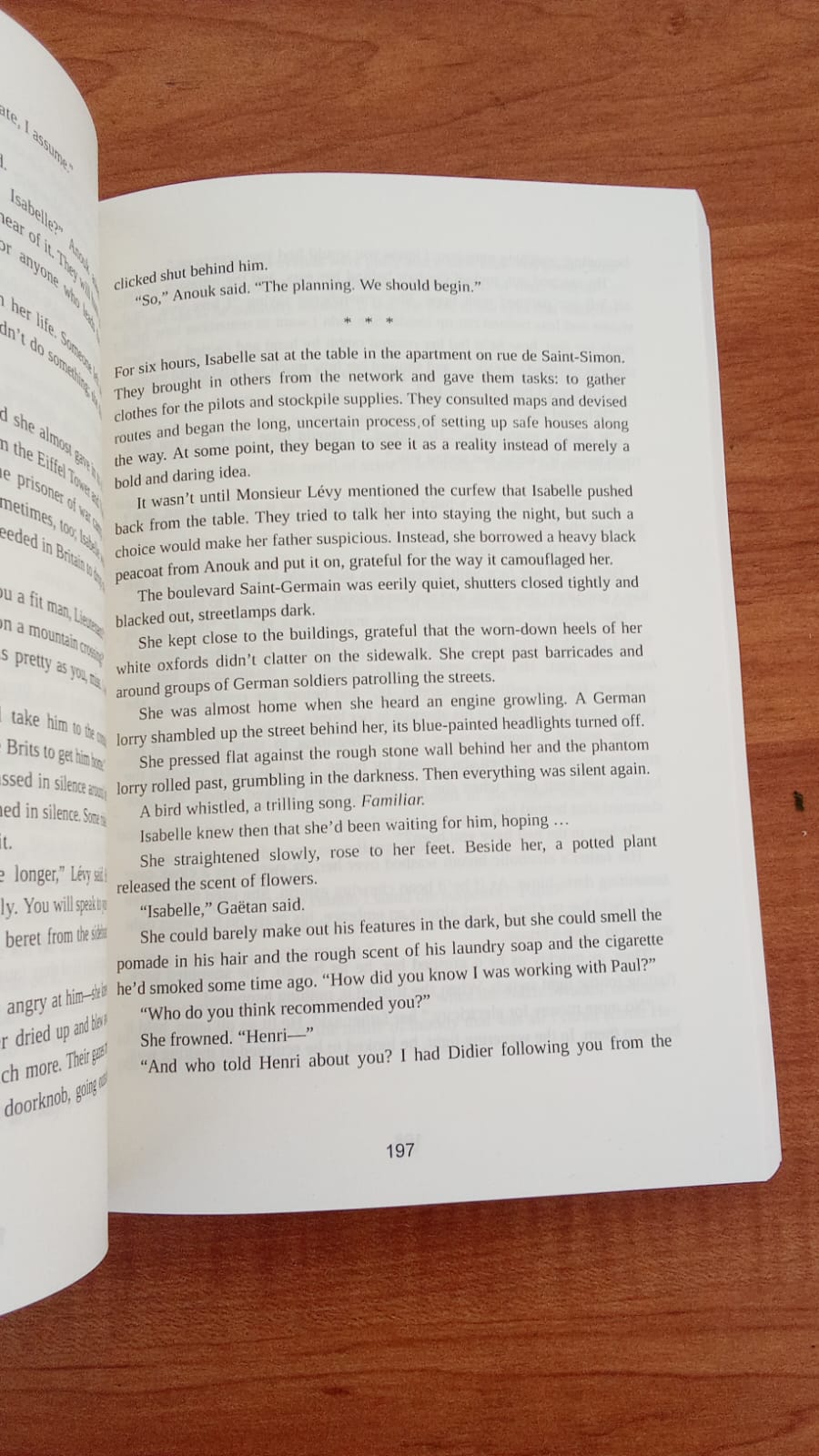
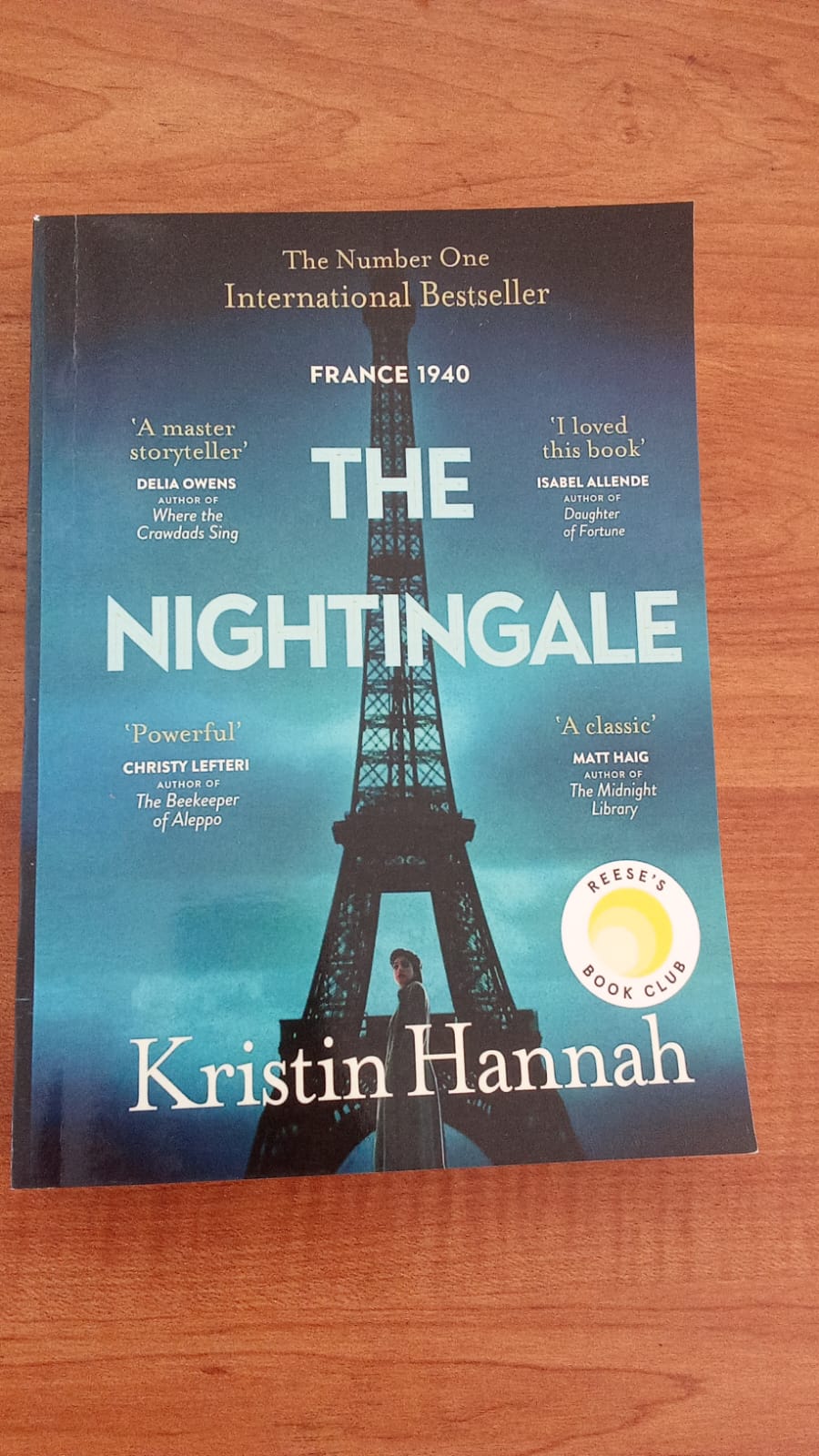
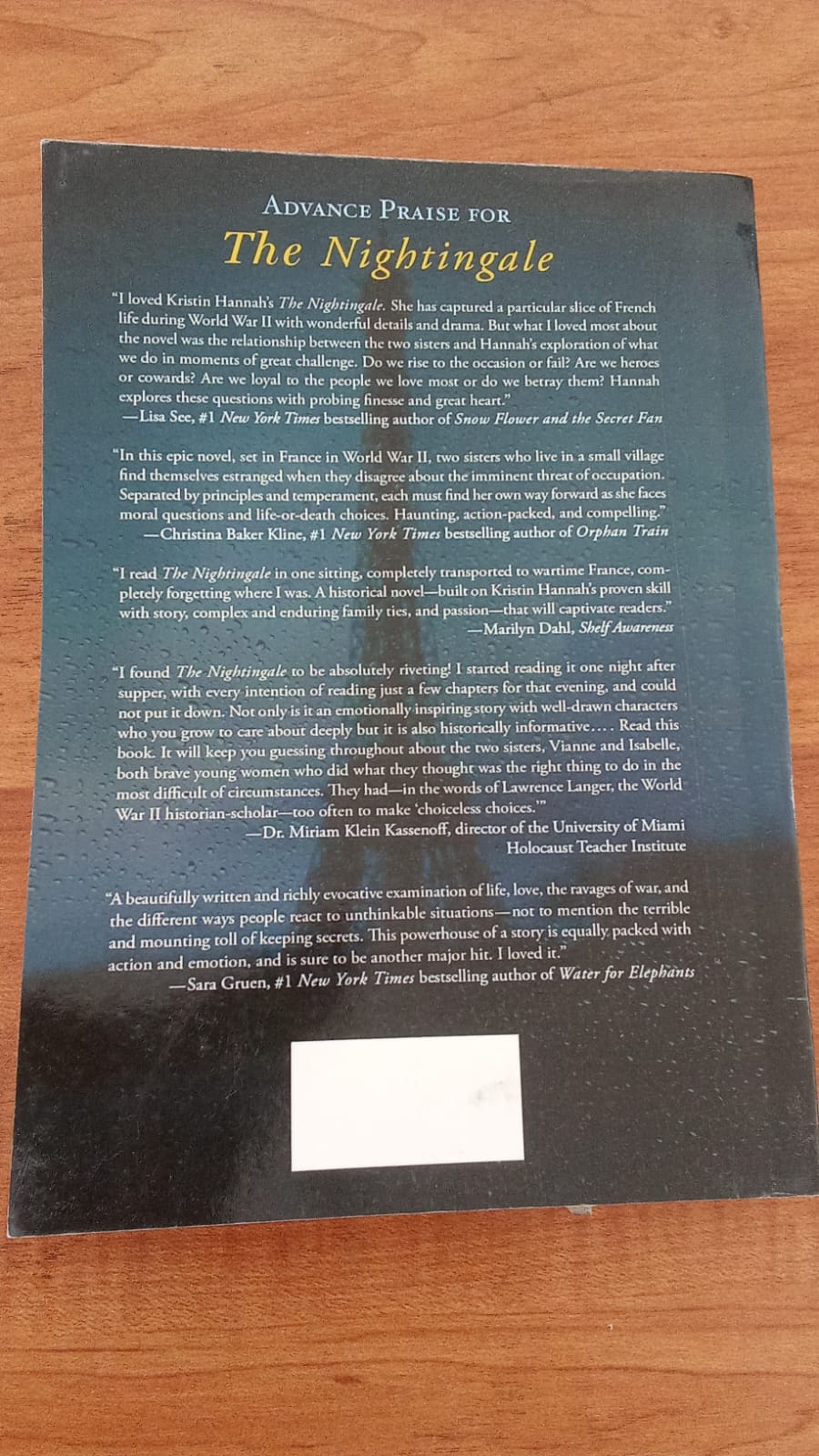
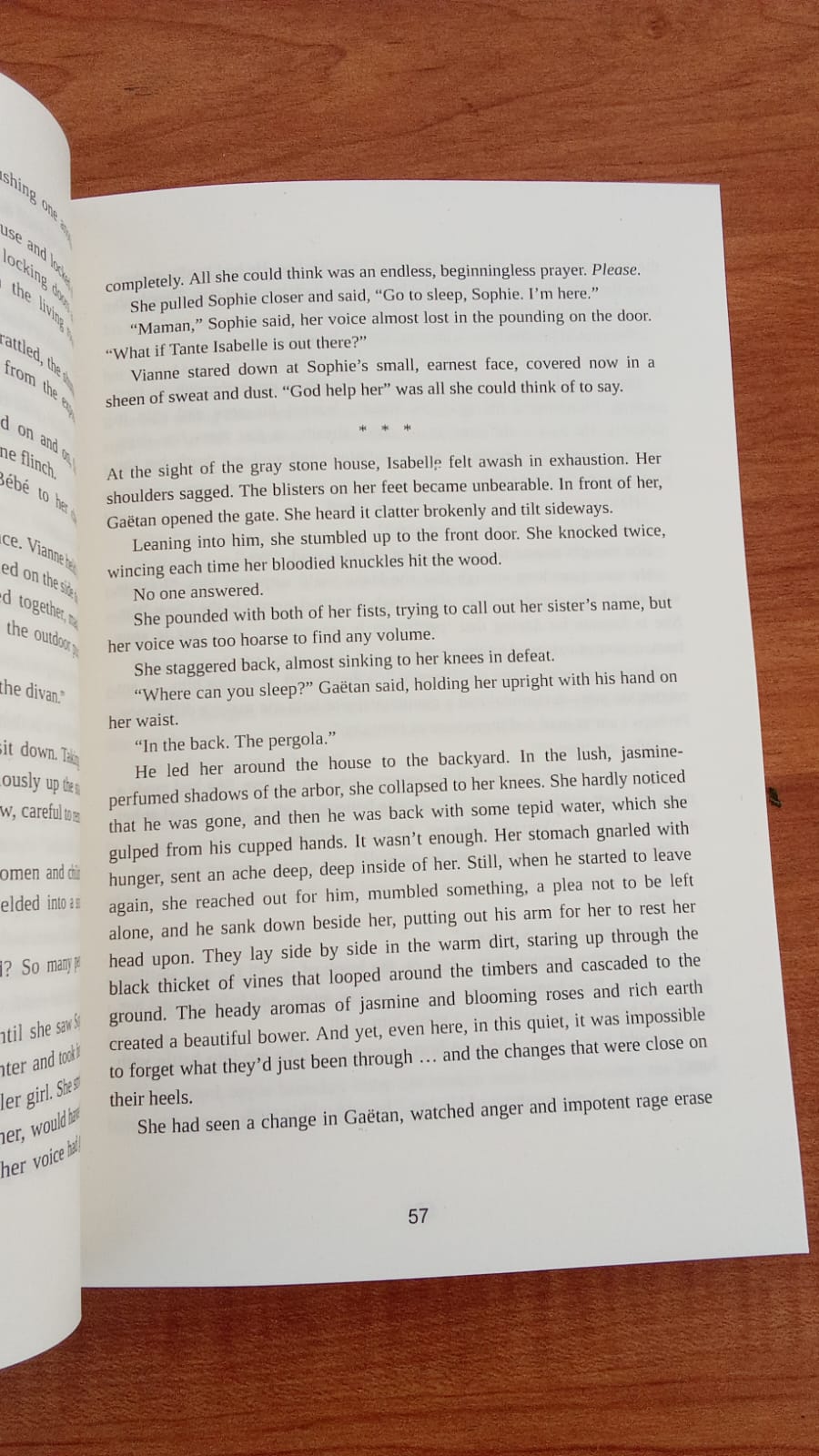
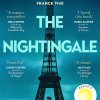
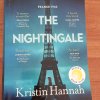
NIGHTANGLE by Kristin Hannah


රු1,800.00
3 X Rs. 600.00 or 8% Cashback with


or 3 X රු600.00 with


or up to 4 X රු450.00 with


| Detail | Information |
|---|---|
| Title | The Nightingale |
| Author | Kristin Hannah |
| Genre | Historical Fiction / War Fiction |
| Language | English |
| Publisher | St. Martin’s Press |
| Publication Year | 2015 |
| Pages | 448 pages |
| Format | Paperback |
| ISBN-10 | 1250080401 |
| ISBN-13 | 9781250080400 |
| Package Length (cm) | 20.8 cm |
| Package Width (cm) | 13.7 cm |
| Package Height (cm) | 2.8 cm |
Out of stock
Email when stock available
The Nightingale by Kristin Hannah is a heartbreaking and powerful historical novel about two sisters whose lives take very different paths during the German occupation of France in World War II.
France, 1939.
Vianne Mauriac lives with her husband Antoine and their young daughter in the quiet village of Carriveau. When war begins, Antoine is called to the front, leaving Vianne to protect their daughter as the world around them becomes increasingly dangerous.
Then German troops invade France.
A German officer is billeted in Vianne’s home, food becomes scarce, fear spreads through the community and every decision begins carrying consequences.
Vianne’s younger sister, Isabelle, responds to the war very differently.
Young, rebellious and unwilling to accept occupation quietly, Isabelle becomes drawn toward the French Resistance. She gradually takes extraordinary risks to help others and resist Nazi control.
The sisters disagree.
They misunderstand each other.
They make very different choices.
Yet both are forced to discover what courage means when ordinary life disappears.
Kristin Hannah’s official description emphasizes that the novel focuses on the often-overlooked experiences of women during World War II and follows Vianne and Isabelle as each takes her own path toward survival, love and freedom in German-occupied France.
The Nightingale by Kristin Hannah – Book Overview
The Nightingale by Kristin Hannah is historical fiction set primarily in France during World War II.
Rather than centering the story on generals, governments or battlefield strategy, Kristin Hannah places women at the emotional center of the war.
What happens to the people who remain behind?
How does a mother protect a child when food disappears?
What happens when enemy soldiers occupy your town?
How much danger should someone accept to save a stranger?
And what forms can resistance take?
These questions shape the lives of Vianne and Isabelle.
Two Sisters, Two Different Forms of Courage
One of the greatest strengths of The Nightingale by Kristin Hannah is that it does not present courage in only one form.
Isabelle’s courage is visible.
She acts.
Resists.
Takes risks.
Moves toward danger.
Vianne’s courage is often quieter.
She survives.
Protects.
Makes impossible decisions.
Tries to keep people alive.
At first, readers may be tempted to decide that one sister is braver than the other.
The novel gradually complicates that judgment.
Sometimes courage is running toward danger.
Sometimes courage is surviving another day.
Vianne Mauriac
Vianne begins the novel with a life centered around home and family.
She is not searching for adventure.
She does not want to become a hero.
She wants her husband home.
Her daughter safe.
Her family together.
War destroys that sense of normality.
When Antoine leaves, Vianne must manage alone.
Then the occupation places danger directly inside her home.
A German officer being billeted there means the war is no longer distant.
It is sitting at her table.
Survival Under Occupation
Occupation transforms ordinary decisions.
Food becomes political.
A conversation can become dangerous.
Helping someone may risk your own family.
Remaining silent may carry another kind of cost.
The Nightingale by Kristin Hannah explores the moral complexity of surviving in such circumstances.
Vianne must repeatedly ask herself what she can risk when another person’s safety may depend on her.
Isabelle Rossignol
Isabelle is very different from her older sister.
She is younger.
More impulsive.
More openly defiant.
She hates the idea of accepting occupation.
Where Vianne initially focuses on surviving within the new reality, Isabelle wants to fight against it.
Her anger eventually pushes her toward organized resistance.
The French Resistance
The Resistance becomes central to Isabelle’s story.
Resistance work could involve communication, intelligence, sabotage, protecting people, moving documents and helping those being hunted or stranded behind enemy lines.
Hannah has explained that her research for the novel was inspired partly by the story of a young Belgian woman who created an escape route out of Nazi-occupied France, as well as by stories of women who helped Jewish children and rescued downed Allied airmen.
Women in War
This is perhaps the defining theme of The Nightingale by Kristin Hannah.
Many traditional war stories focus on soldiers.
But war also transforms the lives of civilians.
Women had to deal with:
Occupation.
Hunger.
Children.
Missing husbands.
Threats.
Military authority.
Resistance activity.
Fear.
Moral compromise.
Grief.
The novel asks readers to notice those forms of wartime experience too.
Sisterhood
At its emotional center, The Nightingale by Kristin Hannah is also a story about sisters.
Vianne and Isabelle love each other.
That does not mean they understand each other.
Family relationships can contain:
Love.
Resentment.
Old wounds.
Jealousy.
Protection.
Misunderstanding.
The pressure of war makes all of those feelings more intense.
Different Personalities
Vianne believes Isabelle can be reckless.
Isabelle can view Vianne as fearful or passive.
Both judgments are incomplete.
One of the novel’s most important ideas is that people may be braver than they initially appear.
Courage often becomes visible only when circumstances demand it.
Love During War
Love appears throughout The Nightingale by Kristin Hannah, but this is not primarily a romance novel.
The book explores many forms of love.
Romantic love.
Sisterly love.
Parental love.
Friendship.
Compassion toward strangers.
Love becomes especially meaningful because war threatens to separate people permanently.
Marriage and Separation
When Antoine leaves for war, Vianne’s marriage becomes defined by distance and uncertainty.
There is no reliable promise that everything will return to normal.
Families across Europe experienced similar uncertainty.
Letters.
Rumours.
Waiting.
Fear.
Not knowing can become its own form of suffering.
Motherhood
Motherhood shapes many of Vianne’s choices.
A person making decisions only for themselves may accept one level of risk.
A parent responsible for a child may think differently.
That does not necessarily make the parent less courageous.
It changes what courage requires.
Isabelle and Rebellion
Isabelle’s youth gives her a different relationship with risk.
She wants action.
She wants meaning.
She wants to fight injustice.
This gives her extraordinary courage.
It can also make her impulsive.
The Nightingale by Kristin Hannah does not pretend bravery and recklessness are always easy to separate.
Occupied France
The German occupation provides the historical setting for much of the novel.
Readers experience restrictions, shortages, fear and changing social relationships through individual lives rather than through a textbook-style explanation.
This makes history feel personal.
A political event becomes:
Someone’s home.
Someone’s child.
Someone’s husband.
Someone’s secret.
Resistance and Moral Choice
War removes many easy moral answers.
Suppose helping one person puts your family at risk.
What should you do?
Suppose refusing an order could result in punishment.
When is compliance survival?
When does it become complicity?
The novel repeatedly places its characters inside these difficult spaces.
Fear
Fear appears constantly in The Nightingale by Kristin Hannah.
Fear of soldiers.
Fear of betrayal.
Fear of hunger.
Fear of losing family.
Fear of being discovered.
Yet fear does not automatically prevent action.
That is one of the novel’s strongest messages.
Courage Is Not Fearlessness
People sometimes imagine brave characters as people who do not feel fear.
The sisters show something more realistic.
They are afraid.
They act anyway.
Courage becomes meaningful precisely because danger is understood.
Sacrifice
War demands sacrifices from nearly every character.
Time.
Safety.
Comfort.
Relationships.
Dreams.
In some cases, much more.
The novel asks how much a person might give to protect someone else.
Survival
Survival is not portrayed as emotionally simple.
Someone may survive physically while carrying:
Trauma.
Loss.
Guilt.
Memories.
Grief.
That makes the aftermath of survival just as important as the immediate danger.
Grief
The Nightingale by Kristin Hannah is an emotional book.
Readers should not expect a light historical romance.
The novel deals extensively with loss.
War repeatedly changes relationships without permission.
Someone can be present one day and gone the next.
That uncertainty gives ordinary moments greater significance.
Memory
The novel is also concerned with remembering.
Who gets remembered after wars?
Soldiers often enter official histories.
But what about:
Mothers.
Resistance workers.
Women hiding children.
People carrying messages.
People quietly protecting neighbours.
One purpose of the novel is to bring attention to those less-visible forms of courage.
Heroism
Heroism in The Nightingale by Kristin Hannah is not always glamorous.
Sometimes it involves doing frightening work without recognition.
Sometimes nobody knows what someone risked.
That raises an important question:
Does an action need public recognition to be heroic?
The novel’s answer seems clear.
No.
The Meaning of the Nightingale
The title carries symbolic weight.
The nightingale has long been associated with song, voice and beauty.
Within the novel, the idea becomes connected with identity and resistance.
A voice can survive even in darkness.
That makes the title emotionally appropriate for a story about people whose courage might otherwise have gone unrecorded.
Historical Fiction
Readers should remember that The Nightingale by Kristin Hannah is a novel, not a documentary history.
The central characters are fictional.
However, Hannah’s research was influenced by real stories of women involved in resistance and rescue activities during World War II.
This distinction matters.
Historical fiction can illuminate emotional realities while still using invented characters and events.
France in 1939
The story begins as Europe moves into war.
Many ordinary people could not yet imagine how completely their lives would change.
That creates dramatic tension because modern readers know what is coming even when the characters do not.
Hunger and Scarcity
War changes everyday life through scarcity.
Food.
Fuel.
Money.
Medicine.
What once felt ordinary becomes precious.
This makes survival itself a daily activity.
Power
Occupation also reveals how much power depends on control over ordinary life.
Who can travel?
Who receives food?
Who can work?
Who can remain in a home?
Political power becomes personal very quickly.
Compassion
In dangerous times, helping another person becomes more meaningful precisely because the cost is higher.
Compassion may require:
Food.
Shelter.
Documents.
Silence.
Risk.
The book repeatedly asks whether people will protect others when doing so becomes dangerous.
Women and Resistance
The novel highlights the fact that women could participate in resistance in many ways precisely because occupying forces sometimes underestimated them.
That invisibility could become strategically useful.
But it also meant many women’s wartime contributions received less attention afterward.
Family Conflict
The tension between Vianne and Isabelle is not created only by war.
Older family wounds already exist.
War forces unresolved relationships into extreme situations.
That is psychologically realistic.
Major crises rarely erase old problems.
Sometimes they expose them.
Forgiveness
Forgiveness becomes an important emotional theme.
People carry old hurts.
They misunderstand one another.
They make decisions under enormous pressure.
The question becomes whether love can survive judgment.
Strength
The Nightingale by Kristin Hannah challenges narrow ideas of strength.
Strength can look like:
Defiance.
Endurance.
Protection.
Resistance.
Silence.
Sacrifice.
Persistence.
Two sisters can express strength differently without one form cancelling the other.
Isabelle’s Search for Purpose
Isabelle begins as a young woman whose rebellious energy lacks a clear direction.
War gives that energy a terrifying purpose.
She discovers something she believes is worth risking herself for.
This gives her story both intensity and tragedy.
Vianne’s Transformation
Vianne’s development may initially appear quieter.
But that is part of what makes it powerful.
She is forced gradually beyond what she believed she could do.
Courage does not always arrive as one dramatic decision.
Sometimes it develops one impossible choice at a time.
Ordinary People in Extraordinary Circumstances
This may be the most important theme in The Nightingale by Kristin Hannah.
Most people do not know how they would behave during war.
It is easy to imagine ourselves as heroic afterward.
Living through danger is different.
The novel shows ordinary people confronting extraordinary moral pressure.
Is The Nightingale Based on a True Story?
Not directly.
Vianne and Isabelle are fictional characters.
However, Kristin Hannah has said her research was inspired by real female resistance figures and stories of women helping Jewish children and Allied airmen escape danger.
So the book is best described as historical fiction inspired by real wartime experiences, not a biography.
Is The Nightingale a Romance?
Romantic relationships are important, but The Nightingale by Kristin Hannah is primarily historical fiction and family drama.
Its central themes are:
War.
Sisterhood.
Resistance.
Survival.
Sacrifice.
Family.
Women in wartime.
Readers looking only for a conventional romance should expect a much heavier story.
Is The Nightingale a Standalone?
Yes.
The Nightingale by Kristin Hannah is a complete standalone novel.
You do not need to read any other Kristin Hannah book before it.
Is It Part of Firefly Lane?
No.
Firefly Lane is a separate Kristin Hannah story.
The Great Alone, The Four Winds, The Women and The Nightingale are also separate novels.
Is The Nightingale Difficult to Read?
The writing is accessible, but the subject matter can be emotionally difficult.
The novel includes war, persecution, death, violence and serious suffering.
Readers who enjoy character-driven historical fiction generally find the narrative very immersive.
Is It Suitable for Book Clubs?
Yes.
The novel creates many strong discussion topics:
What is courage?
How should we judge survival decisions?
Can two opposite responses to danger both be brave?
How does war affect women differently?
What do families owe one another?
That makes it particularly well suited to group discussion.
Kristin Hannah
Kristin Hannah is a bestselling American novelist known for emotionally intense stories centered on relationships, survival, women and major historical or social events.
Her books include Firefly Lane, The Great Alone, The Four Winds, The Women and The Nightingale.
Her official site describes The Nightingale as a story about Vianne and Isabelle’s separate paths toward survival, love and freedom during the German occupation of France.
Your Edition Details
Your inventory ISBN is 9781509848621.
Pan Macmillan confirms the matching edition as The Nightingale by Kristin Hannah, paperback, 464 pages, ISBN 9781509848621, published under the Pan imprint.
For your WooCommerce entry, this means you can safely use Kristin Hannah as the sole author for this edition.
Content Considerations
The Nightingale by Kristin Hannah contains mature and potentially distressing material involving war and occupation. Readers should be prepared for:
- War, bombing and military violence
- Death and grief
- Nazi occupation and persecution
- Antisemitism and the persecution of Jewish people
- Hunger and deprivation
- Imprisonment and torture
- Sexual violence and coercion
- Threats against women and children
- Family separation
- Trauma
- Resistance activity and executions
- Serious illness and physical suffering
The novel treats these themes as part of wartime historical fiction rather than as light entertainment.
Important Themes
The Nightingale by Kristin Hannah explores sisterhood, World War II, occupied France, courage, resistance, survival, motherhood, love, sacrifice, grief, family, memory, moral choice, fear, forgiveness, female heroism, identity, persecution, resilience and the hidden experiences of women during war.
7 Powerful Reasons to Read The Nightingale by Kristin Hannah
1. It puts women at the center of a World War II story. Rather than focusing mainly on battlefield combat, the novel explores occupation, motherhood, resistance, hunger, fear and survival through women’s experiences.
2. Vianne and Isabelle represent very different forms of courage. One sister resists openly while the other initially focuses on survival and protection, allowing the novel to challenge simple definitions of bravery.
3. The relationship between the sisters gives the history emotional depth. Their disagreements, old wounds and love for one another make the war feel deeply personal rather than distant.
4. The Resistance storyline adds tension and danger. Isabelle’s growing involvement with resistance activity creates some of the novel’s most suspenseful and courageous moments.
5. It explores morally difficult choices. Characters repeatedly have to decide what they are willing to risk for family, strangers and their own principles.
6. The story celebrates forgotten forms of heroism. Kristin Hannah was inspired by real accounts of women who aided Jewish children and downed airmen, helping bring attention to forms of wartime courage often overlooked in popular history.
7. It combines historical scale with intimate emotion. War, occupation and resistance provide the background, but the heart of the novel remains family, love, loss and what people discover about themselves when everything familiar disappears.
Why Read The Nightingale by Kristin Hannah?
The Nightingale by Kristin Hannah is an excellent choice for readers interested in historical fiction, World War II novels, women’s history, family dramas, sister relationships, French Resistance stories, emotional fiction and novels about resilience.
It may especially appeal to readers who enjoy books where historical events are experienced through individual lives rather than explained only through military or political history.
The story asks difficult questions without always giving simple answers.
What would you risk?
Who would you protect?
How would you survive?
Would you resist openly?
Could you forgive someone whose choices you did not understand?
These questions make the book memorable long after the final page.
Who Should Read This Book?
The Nightingale by Kristin Hannah may especially appeal to historical-fiction readers, Kristin Hannah fans, readers interested in World War II, fans of emotional family sagas, book-club readers, readers interested in women in wartime, people who enjoy stories of resistance and courage, and readers who appreciate powerful novels about sisters and family.
Readers who prefer light fiction should know that this is emotionally intense and contains serious wartime themes.
The Nightingale by Kristin Hannah – Two Sisters, One War, Different Kinds of Courage
The Nightingale by Kristin Hannah begins before Vianne and Isabelle fully understand what the war will demand from them.
That matters.
Heroes rarely wake up already knowing they are heroes.
They begin as ordinary people.
A wife.
A mother.
A younger sister.
A daughter.
Then circumstances change.
A husband leaves.
Soldiers arrive.
Food disappears.
A home is occupied.
Someone needs help.
A decision must be made.
And suddenly character is no longer theoretical.
Vianne and Isabelle respond differently.
One wants to protect what remains.
The other wants to fight.
At first, those approaches seem almost incompatible.
But the deeper the novel goes, the clearer something becomes:
There is no single shape of courage.
Sometimes courage is crossing dangerous territory.
Sometimes it is hiding someone.
Sometimes it is keeping a child alive.
Sometimes it is saying no.
Sometimes it is enduring.
And sometimes it is making a choice that nobody else will ever know you made.
That is why The Nightingale by Kristin Hannah resonates so strongly.
It transforms the enormous history of World War II into human decisions.
History books can tell us:
When armies moved.
When governments fell.
How battles ended.
Fiction can ask another question:
What did those events feel like inside one ordinary home?
Through Vianne and Isabelle, readers see war enter kitchens, marriages, friendships and family relationships.
The sisters are not perfect.
They misunderstand one another.
They carry old wounds.
They judge each other’s decisions.
But war eventually forces them to see each other more clearly.
For readers who love historical fiction that combines emotional storytelling with courage, sacrifice and unforgettable female characters, The Nightingale by Kristin Hannah is a moving exploration of what people can become when history leaves them no easy choices.
Learn more about The Nightingale by Kristin Hannah on Kristin Hannah’s official website.
Explore more historical fiction books at Bargain Books.
Be the first to review “NIGHTANGLE by Kristin Hannah”
Related products
-13%
Out of stock
Non-Fiction & Knowledge
Original price was: රු3,900.00.රු3,400.00Current price is: රු3,400.00.
3 X Rs. 1,133.33 or 8% Cashback with
or 3 X රු1,133.33 with
or up to 4 X රු850.00 with
රු2,000.00
3 X Rs. 666.67 or 8% Cashback with
or 3 X රු666.67 with
or up to 4 X රු500.00 with
-24%
Non-Fiction & Knowledge
Original price was: රු2,300.00.රු1,750.00Current price is: රු1,750.00.
3 X Rs. 583.33 or 8% Cashback with
or 3 X රු583.33 with
or up to 4 X රු437.50 with
-23%
Non-Fiction & Knowledge
Original price was: රු2,200.00.රු1,700.00Current price is: රු1,700.00.
3 X Rs. 566.67 or 8% Cashback with
or 3 X රු566.67 with
or up to 4 X රු425.00 with

Out of stock
Self-Help & Psychology
රු1,500.00
3 X Rs. 500.00 or 8% Cashback with
or 3 X රු500.00 with
or up to 4 X රු375.00 with
-24%
Out of stock
Non-Fiction & Knowledge
Original price was: රු2,100.00.රු1,600.00Current price is: රු1,600.00.
3 X Rs. 533.33 or 8% Cashback with
or 3 X රු533.33 with
or up to 4 X රු400.00 with
Out of stock
Non-Fiction & Knowledge
රු1,600.00
3 X Rs. 533.33 or 8% Cashback with
or 3 X රු533.33 with
or up to 4 X රු400.00 with
-26%
Non-Fiction & Knowledge
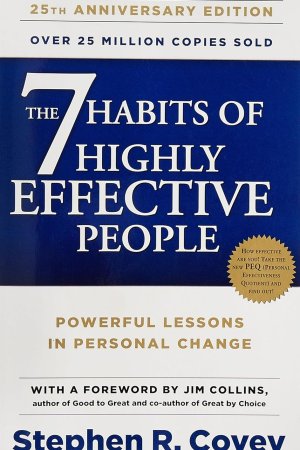
The 7 Habits of Highly Effective People by Stephen R. Covey – Blue Cover
Original price was: රු2,300.00.රු1,700.00Current price is: රු1,700.00.
3 X Rs. 566.67 or 8% Cashback with
or 3 X රු566.67 with
or up to 4 X රු425.00 with
Reviews
There are no reviews yet.