
No products in the cart.
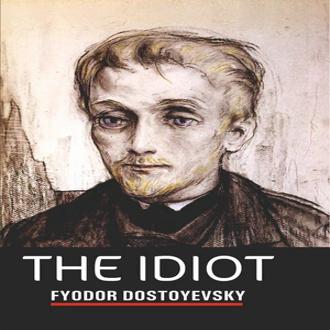
The Idiot by Fyodor Dostoyevsky


රු2,500.00
3 X Rs. 833.33 or 8% Cashback with


or 3 X රු833.33 with


or up to 4 X රු625.00 with


The Idiot follows Prince Myshkin, a kind and innocent man whose honesty and compassion set him apart in a complex and often selfish society. Through deep psychological insight, the novel explores love, morality, and the challenges of remaining good in a flawed world.
5 in stock
The Idiot by Fyodor Dostoevsky
The Idiot by Fyodor Dostoevsky is a major Russian classic about innocence, morality, love, jealousy, social ambition, suffering, and the struggle to remain good in a deeply flawed world.
The novel follows Prince Lev Myshkin.
He is gentle.
He is compassionate.
He is unusually honest.
After spending time in a Swiss sanatorium, he returns to Russia and enters a society filled with ambition, pride, gossip, manipulation, and emotional conflict.
His goodness quickly makes him appear strange.
Some people admire him.
Others underestimate him.
Many simply do not understand him.
About The Idiot
The Idiot explores what happens when a genuinely kind person enters a society driven by self-interest.
Prince Myshkin does not behave like the people around him.
He does not constantly calculate status.
He is not interested in manipulating others.
He speaks honestly.
He also treats people with compassion even when they behave badly.
Because of this, many people begin calling him an “idiot.”
The title is deeply ironic.
Myshkin is not foolish in a simple sense.
His innocence exposes the moral confusion of the world around him.
Meet Prince Myshkin
Prince Myshkin is one of Dostoevsky’s most memorable characters.
He returns to St. Petersburg after receiving treatment in Switzerland.
He has epilepsy.
He also has very little practical experience with Russian high society.
At first, people see him as naïve.
But Myshkin understands suffering.
He notices emotional pain.
He often shows sympathy toward people others judge harshly.
This makes him unusual in a world where appearances and status matter greatly.
7 Powerful Reasons to Read The Idiot
1. Prince Myshkin Is an Extraordinary Character
Few literary characters are built around radical compassion in the way Myshkin is.
He tries to understand everyone.
He rarely responds to cruelty with cruelty.
He often sees pain behind bad behavior.
This makes him admirable.
It also makes him vulnerable.
2. A Deep Study of Human Nature
The Idiot is filled with psychologically complex characters.
People act from jealousy.
They act from shame.
They act from pride.
They also act from love, fear, insecurity, and wounded self-respect.
Dostoevsky rarely reduces people to simple heroes and villains.
The characters are contradictory.
That makes them feel human.
3. Love Is Complicated
Romantic relationships in the novel are emotionally intense.
Myshkin becomes connected to Nastasya Filippovna and Aglaya Yepanchin.
The emotional triangle creates much of the novel’s conflict.
But the story is not simply a romance.
Love becomes connected to pity, pride, insecurity, obsession, social expectations, and self-destruction.
4. Nastasya Filippovna Is Unforgettable
Nastasya is one of the most complicated characters in the novel.
She is intelligent and emotionally wounded.
She struggles with shame and self-worth.
At times, she seems to want rescue.
At other times, she pushes away anyone who tries to help.
Her relationship with Myshkin is shaped by compassion, attraction, fear, and guilt.
5. Rogozhin Adds Darkness and Intensity
Parfyon Rogozhin represents a very different kind of passion.
His love for Nastasya becomes obsessive.
Where Myshkin responds with compassion, Rogozhin responds with possession and intensity.
The contrast between the two men becomes one of the most powerful elements in The Idiot.
6. Society Is Constantly Being Questioned
Dostoevsky examines money, class, reputation, marriage, ambition, religion, and social status.
Many characters care deeply about how they appear.
Myshkin often ignores those rules.
Because of that, he exposes how strange and artificial some social expectations really are.
7. It Raises Difficult Moral Questions
The novel does not offer easy answers.
Can goodness survive in a corrupt environment?
Can compassion save another person?
Is innocence always a strength?
Can love become destructive?
These questions make the story powerful long after the final page.
Innocence Versus Corruption
One of the central conflicts in The Idiot is the contrast between innocence and corruption.
Myshkin tries to treat people honestly.
But honesty does not automatically improve the world around him.
Sometimes it creates confusion.
Sometimes his compassion is misunderstood.
Dostoevsky seems interested in what happens when moral purity meets a world that does not operate according to the same values.
Love and Pity
The novel repeatedly blurs the difference between love and pity.
Myshkin feels deep compassion for Nastasya.
But is compassion the same as romantic love?
That question becomes increasingly important.
Nastasya herself struggles to believe she deserves happiness.
This makes their relationship emotionally complicated.
The novel does not present love as simple or purely comforting.
Love can save.
It can also become painful.
Jealousy and Obsession
Rogozhin’s relationship with Nastasya adds another dimension.
His love is intense.
It is also possessive.
Jealousy begins to shape his decisions.
This creates a darker contrast with Myshkin.
Through these relationships, Dostoevsky explores how love can become distorted by fear and obsession.
Aglaya Yepanchin
Aglaya represents another important emotional connection.
She is intelligent, proud, curious, and emotionally unpredictable.
Her relationship with Myshkin creates another possibility for his future.
But Myshkin’s emotional commitments are complicated.
His connection to Nastasya continues to influence everything.
This makes the conflict increasingly difficult to resolve.
Society, Reputation, and Money
Many characters in The Idiot care intensely about social reputation.
Marriage can become connected to financial advantage.
Relationships can become strategic.
People judge one another based on wealth, family background, and public image.
Myshkin does not naturally think this way.
His presence reveals how often social behavior is driven by calculation.
Religion and Morality
Dostoevsky’s work frequently explores religious and philosophical questions.
This novel is no exception.
Myshkin has often been interpreted as a Christ-like figure because of his compassion, forgiveness, and moral innocence.
However, the novel also asks whether goodness alone can protect people from suffering.
The result is more complicated than a simple moral lesson.
Suffering and Compassion
Suffering appears throughout the novel.
Physical illness matters.
Emotional suffering matters too.
Myshkin’s own experiences make him especially sensitive to other people’s pain.
He listens carefully.
He treats people with dignity.
That compassion becomes one of his defining qualities.
But compassion does not always produce the outcome he hopes for.
Why The Idiot Still Matters
The Idiot remains relevant because its central conflicts are still familiar.
People still struggle with status.
They still compare themselves to others.
Jealousy still damages relationships.
People still confuse attention with love.
And genuinely kind people can still be misunderstood.
The nineteenth-century Russian setting may feel distant.
The emotional questions do not.
Who Should Read This Book?
The Idiot is ideal for readers interested in classic literature, philosophy, psychology, morality, and complex character-driven fiction.
Readers who enjoyed Crime and Punishment or The Brothers Karamazov may find many familiar Dostoevsky themes.
It is also suitable for readers who enjoy novels that focus more on human psychology than fast-paced action.
The book requires patience.
But it rewards careful reading.
About Fyodor Dostoevsky
Fyodor Dostoevsky was one of the most important Russian novelists of the nineteenth century.
His major works include Crime and Punishment, Notes from Underground, The Brothers Karamazov, Demons, and The Idiot.
His novels frequently explore morality, guilt, faith, suffering, freedom, psychology, and human contradiction.
Readers can learn more through the Penguin Random House page for The Idiot.
Product Details
Title: The Idiot
Author: Fyodor Dostoevsky
Genre: Classic Fiction / Russian Literature / Literary Fiction
Language: English
Original Publication: 1868–1869
Original Language: Russian
Because The Idiot has been published in many English translations and editions, page count and ISBN vary significantly.
For example:
Vintage Paperback
ISBN: 9780375702242
Pages: 656
Signet Mass Market Paperback
ISBN: 9780451531520
Pages: 688
Penguin Classics Paperback
ISBN: 9780140447927
Pages: 784
Always check the ISBN printed on your physical copy before entering the final WooCommerce product specifications.
Explore More Classic Literature
The Idiot is ultimately a novel about what happens when compassion enters a world shaped by ambition, jealousy, status, and fear.
Prince Myshkin tries to remain honest.
He tries to understand people rather than condemn them.
But goodness alone cannot easily repair every damaged relationship.
That tension gives the novel its lasting power.
Readers looking for more literary classics can explore Fiction & Literature Books at Bargain Books.
For readers interested in psychology, morality, Russian literature, and deeply complex characters, The Idiot remains one of Dostoevsky’s most important novels.
Be the first to review “The Idiot by Fyodor Dostoyevsky”
Related products
-19%

Classics & Literary Fiction
Original price was: රු2,700.00.රු2,200.00Current price is: රු2,200.00.
3 X Rs. 733.33 or 8% Cashback with
or 3 X රු733.33 with
or up to 4 X රු550.00 with

Out of stock
Classics & Literary Fiction
රු1,600.00
3 X Rs. 533.33 or 8% Cashback with
or 3 X රු533.33 with
or up to 4 X රු400.00 with
-19%
Out of stock
Classics & Literary Fiction
Original price was: රු2,600.00.රු2,100.00Current price is: රු2,100.00.
3 X Rs. 700.00 or 8% Cashback with
or 3 X රු700.00 with
or up to 4 X රු525.00 with

Out of stock
Classics & Literary Fiction
රු1,750.00
3 X Rs. 583.33 or 8% Cashback with
or 3 X රු583.33 with
or up to 4 X රු437.50 with
-11%

Out of stock
Classics & Literary Fiction
Original price was: රු1,800.00.රු1,600.00Current price is: රු1,600.00.
3 X Rs. 533.33 or 8% Cashback with
or 3 X රු533.33 with
or up to 4 X රු400.00 with
-37%
Out of stock
Classics & Literary Fiction
Original price was: රු3,000.00.රු1,900.00Current price is: රු1,900.00.
3 X Rs. 633.33 or 8% Cashback with
or 3 X රු633.33 with
or up to 4 X රු475.00 with
-48%

Out of stock
Classics & Literary Fiction
Original price was: රු3,000.00.රු1,550.00Current price is: රු1,550.00.
3 X Rs. 516.67 or 8% Cashback with
or 3 X රු516.67 with
or up to 4 X රු387.50 with
-20%
Classics & Literary Fiction
Original price was: රු2,450.00.රු1,950.00Current price is: රු1,950.00.
3 X Rs. 650.00 or 8% Cashback with
or 3 X රු650.00 with
or up to 4 X රු487.50 with
Reviews
There are no reviews yet.