
No products in the cart.
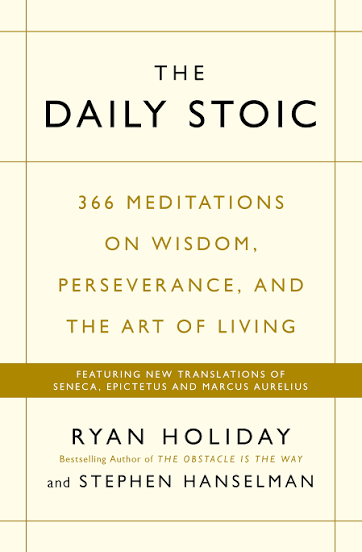
The Daily Stoic by Ryan Holiday & Stephen Hanselman

රු1,950.00
3 X Rs. 650.00 or 8% Cashback with


or 3 X රු650.00 with


or up to 4 X රු487.50 with


The Daily Stoic: 366 Meditations on Wisdom, Perseverance, and the Art of Living by Ryan Holiday and Stephen Hanselman is an inspiring personal development book that brings the timeless wisdom of Stoic philosophy into everyday life.
Featuring 366 daily meditations, this bestselling guide draws upon the teachings of legendary philosophers Marcus Aurelius, Seneca and Epictetus to help readers develop greater self-awareness, emotional resilience, discipline and inner peace.
Each daily entry features an ancient philosophical insight accompanied by practical commentary designed to encourage reflection and meaningful action.
Discover how to focus on what you can control, overcome obstacles, manage difficult emotions, make better decisions and develop a more purposeful approach to life.
Organised around the Stoic disciplines of perception, action and will, The Daily Stoic provides a simple way to incorporate philosophical wisdom into your daily routine.
Product Highlights:
- Written by bestselling authors Ryan Holiday and Stephen Hanselman
- Features 366 daily Stoic meditations
- Includes wisdom from Marcus Aurelius, Seneca and Epictetus
- Explores discipline, resilience, wisdom and personal growth
- Encourages better decision-making and emotional self-control
- Provides practical insights for handling everyday challenges
- Suitable for daily morning or evening reflection
- Ideal for students, professionals, entrepreneurs and leaders
- Perfect for readers of The Obstacle Is the Way and Meditations
- A thoughtful gift for readers interested in philosophy and self-improvement
Buy The Daily Stoic by Ryan Holiday and Stephen Hanselman online in Sri Lanka from Book Lounge and discover a year of timeless wisdom for living a more thoughtful and meaningful life.
10 in stock
366 Days of Ancient Wisdom for Modern Life
The Daily Stoic by Ryan Holiday and Stephen Hanselman is a practical and inspiring guide to living with greater wisdom, discipline, emotional resilience and purpose. Featuring 366 daily meditations drawn from the teachings of ancient Stoic philosophers, this internationally bestselling book introduces readers to a powerful philosophy that remains remarkably relevant to the challenges of modern life.
Every day presents situations beyond our control.
Unexpected difficulties arise at work. Personal relationships become complicated. Plans fail, emotions overwhelm us, and uncertainty makes important decisions difficult.
Although these challenges may seem uniquely modern, people have struggled with many of the same questions for thousands of years.
How can we remain calm when circumstances become stressful?
How should we respond to criticism, disappointment or failure?
What does it mean to live a meaningful life?
How can we develop the discipline to make better decisions?
The Daily Stoic approaches these questions through the timeless teachings of Stoicism.
Drawing on philosophers including Marcus Aurelius, Seneca and Epictetus, Ryan Holiday and Stephen Hanselman present short daily passages accompanied by accessible commentary.
Each meditation encourages readers to examine their thoughts, behaviour and choices.
Rather than presenting philosophy as an abstract academic subject, the book demonstrates how ancient ideas can be used in everyday situations.
Readers are encouraged to reflect on what is within their control, develop stronger personal values and respond to life’s challenges with patience and sound judgement.
The Daily Stoic: 366 Meditations on Wisdom, Perseverance, and the Art of Living offers a year-long journey toward greater self-awareness, resilience and thoughtful action.
Profile Books+1
What Is Stoicism?
Stoicism is an ancient philosophical tradition that developed in Greece and later became influential in Rome.
It focuses on cultivating virtue, exercising reason and learning to respond wisely to circumstances.
The philosophy does not promise a life without difficulties.
Instead, it encourages individuals to develop the character necessary to face challenges responsibly.
A central Stoic idea is the distinction between what we can control and what we cannot.
Our actions, decisions and judgements are areas where we can exercise responsibility.
The opinions of others, unexpected events and many external outcomes cannot be completely controlled.
Stoicism encourages readers to direct their energy toward their own conduct rather than becoming consumed by circumstances beyond their influence.
Through practical commentary, The Daily Stoic makes these principles accessible to modern readers.
A Daily Meditation for Every Day of the Year
One of the book’s most valuable features is its simple structure.
Rather than requiring readers to complete long chapters, the book provides a short meditation for each day.
There are 366 entries, allowing the book to be used throughout a leap year as well as an ordinary year.
Each daily reading includes philosophical insight and commentary designed to encourage reflection.
This makes the book suitable for a morning routine, an evening reading habit or a short break during the working day.
Readers can begin on January 1 or simply open the book to the current date.
The daily format encourages consistency.
Instead of attempting to change every habit immediately, readers can gradually develop a more thoughtful approach to everyday life.
The Three Core Disciplines of Stoicism
The book is organised around three major areas of Stoic practice.
The Discipline of Perception
Learning to examine situations clearly, question assumptions and avoid being controlled by immediate emotional reactions.
The Discipline of Action
Making responsible decisions, practising self-control and acting consistently with personal values.
The Discipline of Will
Developing resilience, accepting unavoidable circumstances and facing uncertainty with courage and patience.
These interconnected disciplines form the foundation of the book’s practical approach to Stoic philosophy.
Learning to Focus on What You Can Control
An important lesson throughout The Daily Stoic is that personal wellbeing can suffer when we concentrate too heavily on things beyond our control.
We cannot determine how every person will behave.
We cannot guarantee that every plan will succeed.
We cannot prevent all unexpected difficulties.
However, we can take responsibility for our preparation, judgement and behaviour.
The book encourages readers to distinguish between these two categories.
For example, a business owner cannot completely control market conditions or customer demand.
However, they can control how carefully they manage expenses, support employees and respond to problems.
By concentrating on constructive action, individuals can reduce unnecessary frustration and make more effective decisions.
Marcus Aurelius – Wisdom From a Roman Emperor
Marcus Aurelius is one of the principal philosophical voices featured in The Daily Stoic.
Despite holding extraordinary political power, Marcus Aurelius devoted considerable attention to personal discipline and ethical behaviour.
His writings, collected in Meditations, explore the importance of self-control, responsibility and clear thinking.
The book draws upon these ideas to encourage readers to examine their own responses to difficult circumstances.
His teachings remind readers that external success does not eliminate the need for good character.
They also emphasise that thoughtful behaviour remains important even when conditions are stressful.
Seneca – Time, Anger and the Art of Living
Seneca is another important influence.
His philosophical writings discuss time, wealth, friendship, mortality and emotional restraint.
Seneca encouraged individuals to consider how they spend their lives.
He questioned whether accumulating wealth or pursuing public recognition necessarily produces happiness.
The Daily Stoic uses ideas from his writings to explore the importance of managing anger, appreciating time and recognising meaningful priorities.
Readers are encouraged to consider whether their everyday activities reflect what they genuinely value.
Epictetus – Freedom Through Personal Responsibility
Epictetus provides another foundation for the book.
Born into slavery, Epictetus later became an influential teacher of Stoic philosophy.
His teachings emphasise the distinction between external circumstances and personal judgement.
He argued that freedom involves more than favourable conditions.
It also depends upon how individuals respond to events.
His ideas help readers understand why the pursuit of complete external control can create unnecessary suffering.
The book presents these principles as tools for improving self-awareness and personal responsibility.
Emotional Resilience and Dealing With Stress
Modern life involves constant demands.
Professional responsibilities, financial uncertainty, family obligations and personal expectations can create emotional pressure.
The Daily Stoic offers a philosophical approach to navigating these challenges.
Rather than encouraging readers to ignore difficult emotions, Stoic practice involves recognising reactions and examining the judgements behind them.
A disappointing event does not necessarily mean that every future opportunity has disappeared.
Criticism does not automatically determine a person’s worth.
A temporary setback does not have to define an entire life.
By developing more thoughtful responses, readers may become better equipped to handle uncertainty and frustration.
Discipline, Consistency and Personal Growth
Personal development requires more than motivation.
Meaningful progress often depends upon habits repeated over time.
The Daily Stoic encourages readers to develop consistency through daily reflection.
Its format makes philosophical learning manageable.
A short meditation can become part of an established routine.
Readers may use each passage to examine their decisions, personal behaviour or challenges.
The objective is not to achieve perfection immediately.
Instead, the book encourages steady improvement through awareness and deliberate action.
This makes it especially relevant to people seeking to develop stronger habits.
Facing Failure and Overcoming Obstacles
Failure is an unavoidable part of personal and professional life.
Projects may not succeed.
Careers may take unexpected directions.
Relationships can involve misunderstanding or disappointment.
Stoic philosophy encourages readers to recognise that setbacks do not remove the possibility of meaningful action.
Although the past cannot be changed, the response to it remains important.
The Daily Stoic encourages readers to consider what difficult experiences can teach them.
A setback may reveal weaknesses in preparation.
An unexpected challenge may require a different strategy.
The book presents resilience as a quality developed through thoughtful responses rather than a guarantee that difficulties will disappear.
Making Better Decisions
Good judgement is essential in everyday life.
People frequently make decisions under emotional pressure or with incomplete information.
Stoic philosophy encourages careful reflection before action.
The book discusses the importance of recognising assumptions and avoiding unnecessary impulsiveness.
Instead of responding immediately to anger or frustration, readers are encouraged to consider the consequences of their behaviour.
This approach can be relevant to business, education, family relationships and personal development.
The goal is to make decisions that reflect reason and values rather than temporary emotions.
Leadership and Professional Success
Although The Daily Stoic is a philosophy and personal development book, many of its lessons are relevant to leadership.
Managers and entrepreneurs must regularly make decisions under uncertainty.
They may face criticism, competition, operational problems and unexpected changes.
The book encourages individuals to remain focused on their responsibilities.
Successful leadership requires more than ambition.
It also involves discipline, patience, fairness and the willingness to acknowledge mistakes.
Stoic principles can help leaders examine whether their actions are guided by sound judgement.
Readers interested in business and management may appreciate the practical applications of these ideas.
Managing Anger and Difficult Emotions
Anger can influence relationships and decision-making.
An emotionally charged response may create consequences greater than the original problem.
The Stoic philosophers frequently discussed the importance of examining emotional reactions.
The Daily Stoic encourages readers to create space between an event and their response.
This does not require pretending that difficult feelings do not exist.
Instead, it involves considering whether a reaction is useful, justified and consistent with personal values.
The book offers philosophical perspectives that readers can apply when managing frustration, disagreement or disappointment.
Understanding Success and Happiness
Modern culture often measures success through money, professional status or public recognition.
Stoicism invites readers to question whether these measures provide lasting satisfaction.
The ancient philosophers placed greater importance on wisdom, justice, courage and moderation.
The Daily Stoic encourages readers to consider what genuinely matters.
Professional achievements may be valuable, but they do not automatically determine personal character.
External recognition can be temporary.
By focusing on values and responsible actions, readers may develop a more stable understanding of success.
Time Management and Appreciating the Present
Time is one of the most important resources in human life.
Yet people frequently postpone meaningful activities while concentrating on less important concerns.
The book draws upon Stoic reflections about mortality and the limited nature of time.
Readers are encouraged to consider whether their daily choices reflect their priorities.
This can involve spending more time with family, pursuing meaningful work or reducing unnecessary distractions.
The purpose is not to create fear about the passage of time.
Instead, it is to encourage greater appreciation for the present.
Relationships, Kindness and Social Responsibility
Stoicism is sometimes misunderstood as a philosophy that encourages emotional coldness.
However, classical Stoic thought also emphasises justice, human connection and responsibility toward others.
The Daily Stoic encourages readers to consider how their actions affect people around them.
Personal discipline should not become an excuse for ignoring the needs of others.
Wisdom involves treating people fairly, acting with integrity and recognising shared human vulnerability.
The book’s lessons can therefore be applied to friendships, family relationships and professional interactions.
Building a Daily Reading Habit
One of the strengths of The Daily Stoic is its accessibility.
Readers do not need a background in philosophy.
Each entry is designed to be read and considered independently.
A practical approach is to read one passage every morning, reflect on its central message and consider how it might influence the day.
Some readers may also use a journal to record their observations.
Others may prefer reading the meditation quietly and returning to its lesson later.
The book supports a flexible approach to philosophical learning.
It can be revisited year after year, allowing readers to discover new meaning as their circumstances change.
A Book for Repeated Reading
Unlike a conventional nonfiction book that is read once from beginning to end, The Daily Stoic is designed for repeated use.
Its date-based structure encourages readers to return to familiar teachings.
A meditation that seems straightforward during one period of life may become more meaningful during another.
Professional challenges, personal relationships and changing responsibilities can influence how readers interpret the same philosophical ideas.
This makes the book useful as an ongoing reference rather than a one-time introduction.
The Daily Stoic and the Daily Stoic Journal
Readers interested in developing a regular reflection habit may also appreciate The Daily Stoic Journal.
The journal is a separate companion product intended to support daily writing and reflection.
The Daily Stoic contains the 366 philosophical meditations themselves.
Customers purchasing this listing receive the book, not a book-and-journal set.
Why Read The Daily Stoic?
The Daily Stoic offers a practical introduction to ancient philosophy through short, accessible readings.
Its daily format is suitable for readers with busy schedules.
Its teachings explore familiar challenges such as stress, anger, discipline, failure and uncertainty.
The contributions of Ryan Holiday and Stephen Hanselman connect historical philosophical ideas with everyday situations.
Readers can use the book to develop a habit of reflection and improve their understanding of Stoic principles.
Its emphasis on character and personal responsibility makes it relevant to students, professionals, entrepreneurs and anyone interested in thoughtful living.
Who Should Read This Book?
The Daily Stoic is recommended for readers interested in self-improvement, personal growth, ancient philosophy, emotional resilience, discipline, mindfulness, leadership and practical wisdom.
It is particularly appealing to fans of The Obstacle Is the Way, Ego Is the Enemy, Meditations by Marcus Aurelius, Letters from a Stoic by Seneca and other books exploring philosophy as a practical guide to life.
About the Authors
Ryan Holiday is a bestselling author known for bringing Stoic philosophy to modern audiences. His books include The Obstacle Is the Way, Ego Is the Enemy, Stillness Is the Key, Courage Is Calling and Discipline Is Destiny. His writing explores how ancient philosophical principles can help readers navigate personal challenges, leadership and professional responsibilities.
Stephen Hanselman is an author, editor and publishing professional with decades of experience in bookselling, publishing and literary representation. He studied at Harvard Divinity School and has contributed to making classical Stoic writings more accessible to contemporary readers.
Together, they developed The Daily Stoic as a practical collection of daily philosophical reflections.
Book Hero+1
Buy The Daily Stoic in Sri Lanka
The Daily Stoic by Ryan Holiday and Stephen Hanselman is an excellent addition to any nonfiction, self-help or personal development collection.
Featuring 366 meditations on wisdom, perseverance and the art of living, the book provides an accessible way to explore Stoicism throughout the year.
Its daily reading format makes it suitable for personal reflection, professional development and gifting to readers interested in philosophy.
Buy The Daily Stoic by Ryan Holiday and Stephen Hanselman online in Sri Lanka from Book Lounge and discover practical lessons from some of history’s most influential philosophical thinkers.
Be the first to review “The Daily Stoic by Ryan Holiday & Stephen Hanselman”
Related products

Needs Category Review
Lighter: Let Go of the Past, Connect with the Present, and Expand the Future by Yung Pueblo
රු1,750.00
3 X Rs. 583.33 or 8% Cashback with
or 3 X රු583.33 with
or up to 4 X රු437.50 with

Out of stock
Needs Category Review
රු1,700.00
3 X Rs. 566.67 or 8% Cashback with
or 3 X රු566.67 with
or up to 4 X රු425.00 with

Needs Category Review
3 X Rs. 0.00 or 8% Cashback with
or 3 X රු0.00 with
or up to 4 X රු0.00 with

Out of stock
Needs Category Review
රු9,500.00
3 X Rs. 3,166.67 or 8% Cashback with
or 3 X රු3,166.67 with
or up to 4 X රු2,375.00 with

Needs Category Review
The Complete Culpable Series Set — My Fault, Your Fault & Our Fault by Mercedes Ron
රු8,900.00
3 X Rs. 2,966.67 or 8% Cashback with
or 3 X රු2,966.67 with
or up to 4 X රු2,225.00 with

Needs Category Review
රු1,800.00
3 X Rs. 600.00 or 8% Cashback with
or 3 X රු600.00 with
or up to 4 X රු450.00 with
Out of stock
Needs Category Review
රු1,550.00
3 X Rs. 516.67 or 8% Cashback with
or 3 X රු516.67 with
or up to 4 X රු387.50 with

Out of stock
Needs Category Review
රු11,550.00
3 X Rs. 3,850.00 or 8% Cashback with
or 3 X රු3,850.00 with
or up to 4 X රු2,887.50 with
Reviews
There are no reviews yet.