No products in the cart.
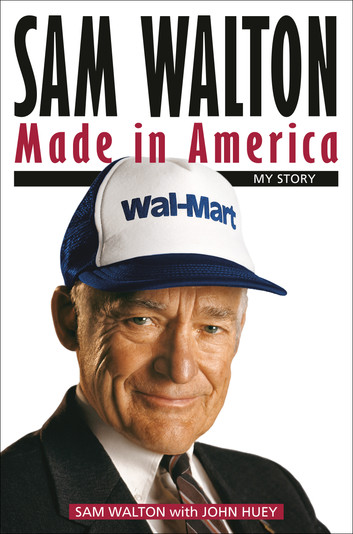
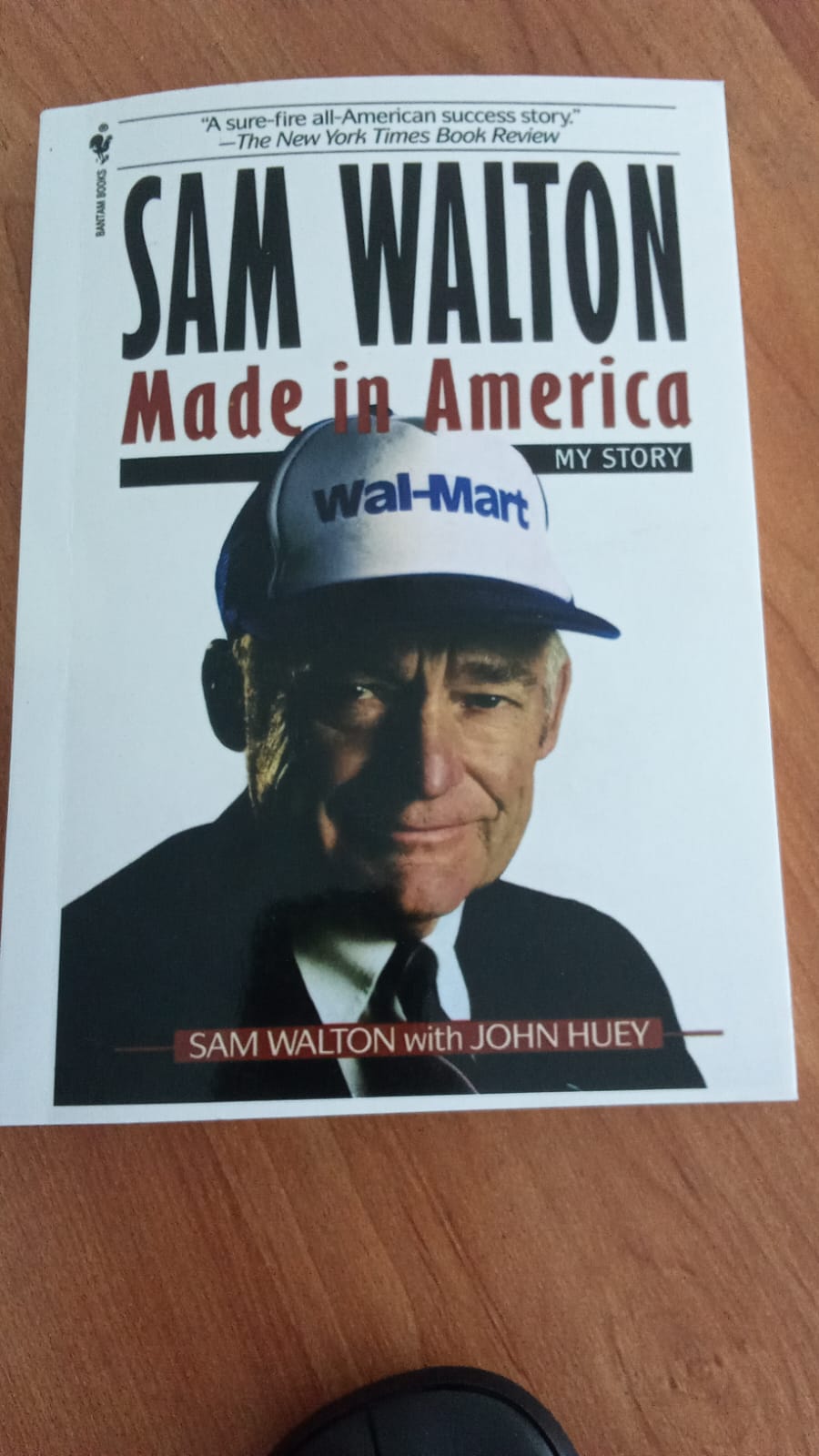
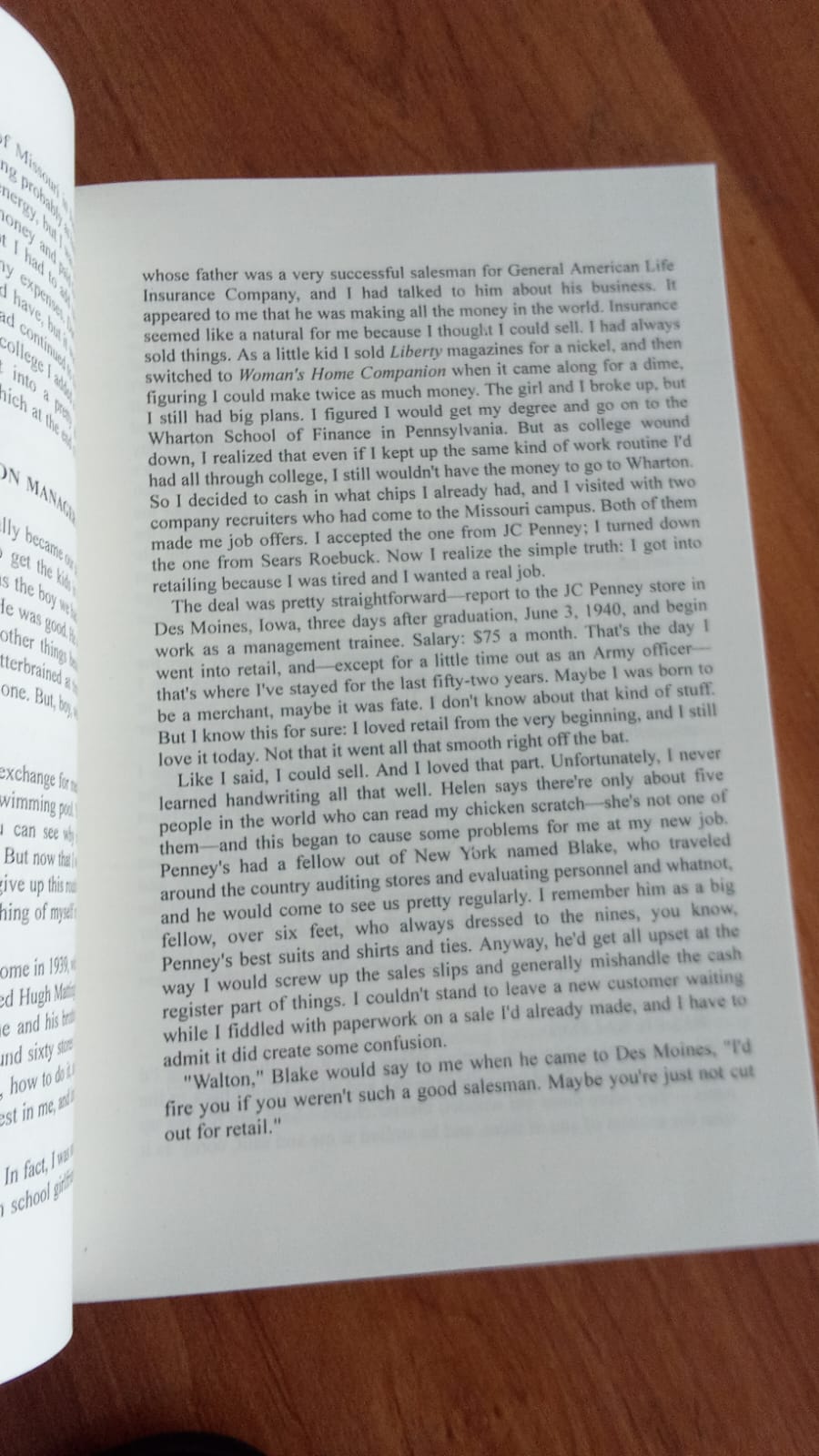
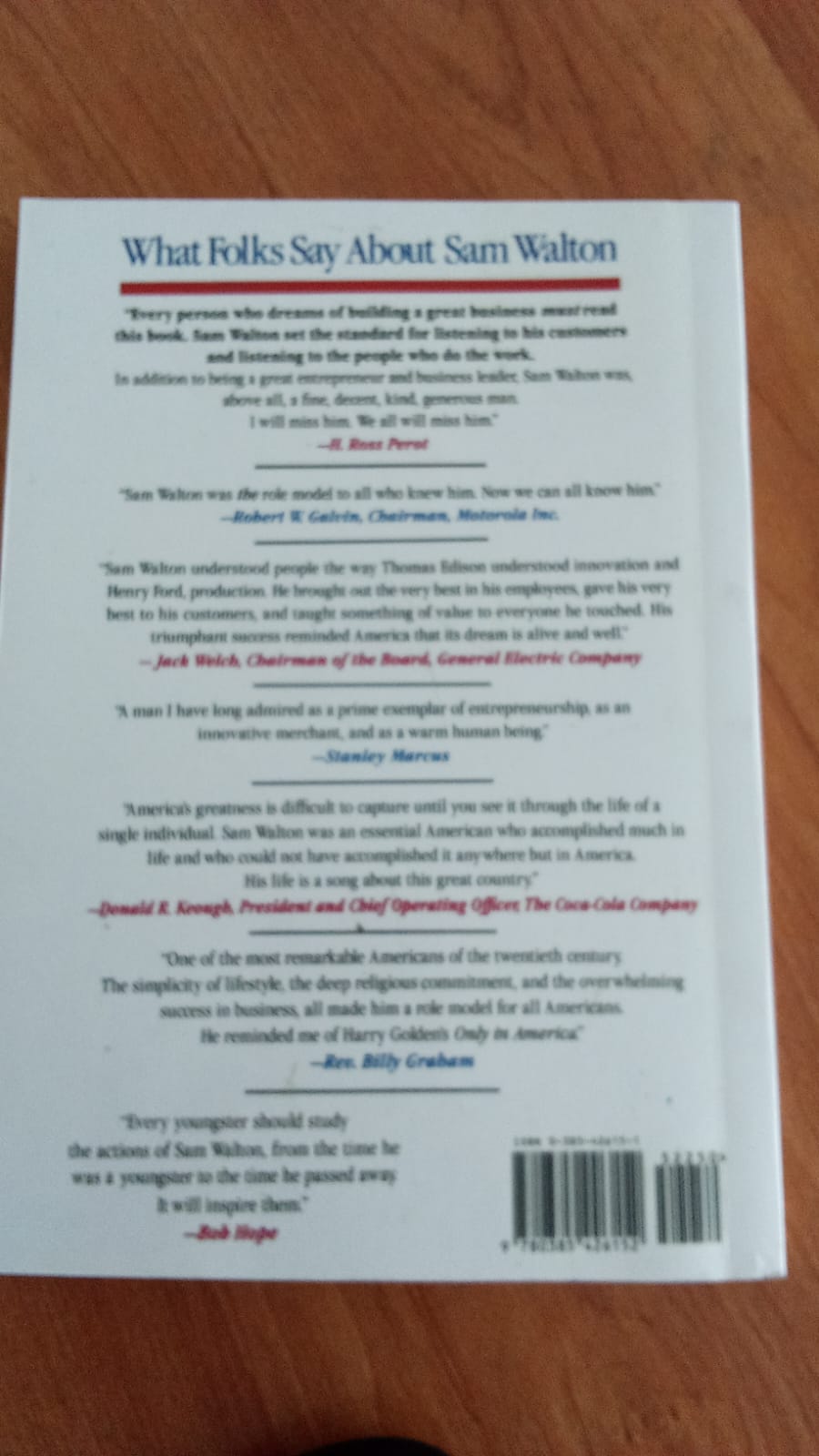


Made IN America by Sam Walton


රු1,750.00
3 X Rs. 583.33 or 8% Cashback with


or 3 X රු583.33 with


or up to 4 X රු437.50 with


Sam Walton Made in America is the inspiring autobiography of Walmart founder Sam Walton, sharing how he transformed a small-town retail business into a global retail powerhouse. Through stories of competition, customer focus, frugality, teamwork, innovation, risk-taking and relentless improvement, Walton reveals the practical principles behind his success. Ideal for entrepreneurs, business owners, retailers, managers, students and anyone interested in leadership, business growth and the story behind Walmart.
Out of stock
Email when stock available
Sam Walton Made in America is an inspiring autobiography and business memoir from Walmart founder Sam Walton, revealing the ideas, habits, mistakes and unconventional decisions that helped transform a small retail operation into one of the world’s most influential businesses.
Sam Walton did not begin with a giant corporation.
He began in small-town retail.
He studied customers.
Watched competitors.
Experimented constantly.
Looked for ways to lower prices.
Worked closely with employees.
And refused to accept that successful retail stores had to operate according to established rules.
Over time, those principles helped create Walmart.
But Sam Walton Made in America is not simply a story about becoming wealthy.
It is a practical account of entrepreneurship.
Walton discusses:
Competition.
Customers.
Employees.
Leadership.
Expansion.
Mistakes.
Money.
Cost control.
Innovation.
Risk.
Partnership.
Family.
And the importance of staying close to the business even as it grows.
The book is particularly valuable because Walton does not present himself as someone who made perfect decisions.
He discusses experiments that worked.
Ideas that failed.
Competitors he learned from.
Risks he took.
And the relentless curiosity that kept pushing him to improve.
For entrepreneurs, managers, retailers, business students and anyone interested in how major companies are built, Sam Walton Made in America offers a fascinating look inside the thinking of one of modern retail’s most influential founders.
Sam Walton Made in America – Book Overview
Sam Walton Made in America tells the story of Sam Walton’s journey from small-town businessman to the founder of Walmart.
His story is closely connected with one central idea:
Always look for a better way.
Walton was constantly observing.
How are competitors displaying products?
What prices are they charging?
How are stores organized?
What do customers respond to?
Where are costs too high?
What can we change?
This mindset transformed ordinary retailing into a lifelong experiment.
Who Was Sam Walton?
Sam Walton was an American entrepreneur best known for founding Walmart and later helping build the broader retail organization associated with the Walton family.
His career became one of the most famous examples of retail entrepreneurship.
Yet his public image often remained surprisingly simple.
Walton was known for emphasizing:
Hard work.
Frugality.
Competition.
Customer service.
Teamwork.
Small-town values.
He believed business success came from doing basic things exceptionally well.
Starting Small
One of the strongest lessons from Sam Walton Made in America is that large companies often begin with very small decisions.
Walton did not start by saying:
“I will build one of the world’s largest companies.”
He focused on making individual stores perform better.
One store.
Then another.
Then another.
That approach demonstrates an important entrepreneurial lesson:
Focus on making the current operation work before becoming obsessed with scale.
Retailing as a Craft
Retail can appear simple.
Buy products.
Put them on shelves.
Sell them.
But successful retail requires understanding:
Customers.
Pricing.
Inventory.
Location.
Suppliers.
Employees.
Competition.
Operations.
Walton treated retail as something that could always be improved.
Learn From Competitors
Walton was famously interested in competitors.
But he did not study them simply to criticize them.
He wanted to learn.
If another retailer had:
A better display.
A better promotion.
A smarter layout.
A lower-cost process.
Walton wanted to understand it.
Never Be Too Proud to Copy a Good Idea
One practical principle from Sam Walton Made in America is that entrepreneurs should not assume every useful idea must originate inside their own company.
Good business leaders observe.
They ask:
What is working elsewhere?
Why does it work?
Can we adapt it?
Learning from competitors is not weakness.
It is intelligence.
Competition Makes Businesses Better
Walton enjoyed competition.
Competition creates pressure.
Without pressure, companies can become comfortable.
Prices rise.
Service weakens.
Innovation slows.
A strong competitor forces a business to improve.
Customer First
Walmart’s growth was closely connected with offering customers value.
Walton understood that customers have choices.
A business does not automatically deserve loyalty.
It has to earn it.
Give Customers a Reason to Return
Customers return when they receive value.
That value can include:
Good prices.
Useful products.
Convenience.
Friendly service.
Trust.
A reliable experience.
Retail success depends heavily on repeat customers.
Low Prices
Low-price retail became central to Walmart’s identity.
Walton believed that reducing prices could increase customer volume.
The logic was simple:
Earn less on one item.
Sell more items.
Create more value for customers.
Build loyalty.
This required extremely careful cost control.
Cost Control
A company cannot offer low prices if its internal costs are uncontrolled.
That makes frugality a strategic advantage.
Every unnecessary expense eventually affects:
Profit.
Price.
Investment ability.
Growth.
Walton paid close attention to costs.
Frugality
Frugality appears repeatedly in Sam Walton Made in America.
Walton did not believe success required acting wealthy.
Money saved inside the business could be:
Reinvested.
Used to lower prices.
Used for expansion.
Used to strengthen operations.
This mindset became part of Walmart’s culture.
Spend Where It Matters
Frugality does not mean never spending money.
It means spending deliberately.
A business should ask:
Does this expense help customers?
Does it improve efficiency?
Does it increase sales?
Does it strengthen the team?
If not, why are we paying for it?
Employees as Partners
Walton believed employees were crucial to business performance.
A store cannot succeed because of the founder alone.
Front-line employees interact directly with customers.
They understand daily operational problems.
They see what works.
They see what fails.
Listen to Front-Line Employees
One of the most practical leadership lessons in Sam Walton Made in America is to listen to people closest to the customer.
Head-office executives may understand:
Reports.
Budgets.
Strategy.
But store employees see reality every day.
Good leaders need both perspectives.
Teamwork
Walton emphasized that business success is collective.
A founder can create direction.
But employees execute thousands of decisions.
Store managers.
Cashiers.
Buyers.
Warehouse teams.
Drivers.
Suppliers.
Everyone contributes.
Share Success
People become more engaged when they feel connected to results.
A business should not treat employees only as costs.
Strong organizations help people feel:
Important.
Trusted.
Recognized.
Part of something larger.
Leadership
Walton’s leadership style was highly energetic.
He visited stores.
Talked with employees.
Observed competitors.
Asked questions.
He remained interested in practical details.
Get Out of the Office
One powerful leadership lesson is:
Do not manage only from reports.
Numbers are useful.
But reports cannot completely show:
Customer mood.
Employee energy.
Store cleanliness.
Product presentation.
Operational frustration.
Leaders sometimes need direct contact with reality.
Stay Close to Customers
As companies become larger, leaders can become increasingly distant from customers.
Layers appear.
Managers report to managers.
Data replaces conversation.
This can be dangerous.
A business exists because customers choose it.
Ask Questions
Walton’s curiosity is one of the strongest themes in Sam Walton Made in America.
He constantly asked questions.
What is selling?
Why?
What is not selling?
Why?
What is the competitor doing?
What do employees think?
What should change?
Questions create information.
Experiment
Entrepreneurship requires experimentation.
Not every idea will work.
That is normal.
The important thing is learning quickly.
Try something.
Measure the result.
Adjust.
Try again.
Failure
Walton experienced mistakes throughout his career.
The book does not suggest that great entrepreneurs avoid failure.
They respond differently to it.
A failure can become:
A lesson.
A warning.
A new strategy.
A better decision later.
Learn Fast
A failed experiment becomes valuable when it produces learning.
Ask:
What went wrong?
Was the idea wrong?
Was execution poor?
Was the timing bad?
Was the location wrong?
Did customers simply not care?
Understanding the reason matters.
Persistence
Sam Walton Made in America repeatedly demonstrates persistence.
Retail success was not created overnight.
Expansion required years of:
Work.
Travel.
Negotiation.
Competition.
Experimentation.
Problem-solving.
Many people want business success.
Far fewer are willing to keep working through the difficult middle stages.
Small-Town Strategy
One important part of Walmart’s early strategy was serving smaller communities.
Large competitors often focused heavily on bigger cities.
Walton saw opportunity elsewhere.
This demonstrates a major business principle:
You do not always need to fight competitors where they are strongest.
Find markets they overlook.
Find the Underserved Customer
Entrepreneurs can ask:
Who is being ignored?
Which customers receive poor service?
Which locations lack good options?
Which market seems too small for large competitors?
Sometimes neglected markets become enormous opportunities.
Distribution
As Walmart expanded, distribution became increasingly important.
Retail depends on moving products efficiently.
The cheaper and faster products move through the system, the more competitive the retailer can become.
Logistics as Competitive Advantage
Customers rarely think about warehouses.
But logistics influence:
Availability.
Price.
Speed.
Inventory.
Profit.
A business with excellent logistics may outperform a competitor even if customers never see the system behind it.
Technology
Walmart also became known for investing in information and communication systems.
Technology helped the company understand:
Sales.
Inventory.
Stores.
Distribution.
As businesses grow, good information becomes increasingly important.
Data Should Help Decisions
Technology is useful when it improves decisions.
What is selling?
Where?
How quickly?
What needs restocking?
Which store performs better?
Data turns large organizations into more manageable systems.
Scale
Scaling creates opportunities.
But it also creates problems.
A process that works for five stores may fail at fifty.
A communication method that works for twenty employees may fail with thousands.
Growth therefore requires systems.
Grow Without Losing the Culture
One of the hardest challenges for any growing company is maintaining:
Customer focus.
Speed.
Entrepreneurial thinking.
Employee engagement.
As organizations grow, bureaucracy naturally increases.
Leaders must actively protect the behaviors that created success.
Bureaucracy
Large companies can become slow.
Rules multiply.
Approval processes increase.
Decision-making moves further from customers.
Walton preferred a more entrepreneurial approach.
Act Like a Small Company
Even a large company can try to maintain small-business habits.
Move quickly.
Listen closely.
Control costs.
Experiment.
Stay connected to customers.
This is difficult but valuable.
Suppliers
Supplier relationships are crucial in retail.
Retailers depend on suppliers for:
Products.
Pricing.
Availability.
Quality.
Delivery.
Strong negotiation can create competitive advantages.
Negotiation
Walton was a determined negotiator.
Every reduction in purchase cost could potentially help Walmart:
Lower prices.
Improve margins.
Compete more aggressively.
Negotiation therefore became central to the retail model.
Win-Win Relationships
However, sustainable business relationships require more than squeezing every possible advantage from another party.
Strong partnerships need:
Reliability.
Trust.
Long-term thinking.
Mutual value.
Entrepreneurship
At its core, Sam Walton Made in America is a book about entrepreneurship.
Entrepreneurship means seeing possibilities where others see ordinary conditions.
A town.
A store.
A supplier.
A competitor.
A pricing problem.
An entrepreneur asks:
Can this work better?
Opportunity Is Often Ordinary
Many people search for revolutionary ideas.
But enormous businesses can be built around ordinary problems.
Retail existed long before Walmart.
Walton did not invent shopping.
He improved the system.
That is an important lesson.
Innovation does not always require inventing a completely new industry.
Innovation
Innovation can involve:
Pricing.
Distribution.
Management.
Store locations.
Inventory.
Employee incentives.
Technology.
Customer service.
Thousands of small improvements can create a major competitive advantage.
Speed
Fast-moving companies learn more quickly.
Make a decision.
Observe.
Correct.
Waiting for perfect certainty can slow progress.
Take Risks
Walton took significant risks.
Opening stores requires capital.
Expansion creates debt and financial pressure.
New locations can fail.
But entrepreneurship cannot eliminate risk completely.
The goal is to understand it.
Calculated Risk
A good risk should have a reason behind it.
What is the opportunity?
What is the downside?
How can we reduce the downside?
What evidence supports the decision?
Risk without thinking is gambling.
Money
Walton became extremely wealthy, but Sam Walton Made in America repeatedly emphasizes that business should not become only a display of wealth.
Money is a tool.
It can help:
Expand.
Invest.
Hire.
Develop systems.
Create opportunities.
But expensive lifestyles do not necessarily create stronger companies.
Humility
One distinctive element of Walton’s public image was simplicity.
He did not believe leadership required acting like a celebrity executive.
Humility can help leaders remain connected to:
Employees.
Customers.
Operational reality.
Stay Hungry
Success creates a dangerous feeling:
“We figured it out.”
That confidence can quickly become complacency.
Walton continued searching for ways to improve even after Walmart became successful.
Never Stop Improving
A business can always improve:
Price.
Service.
Selection.
Speed.
Training.
Technology.
Marketing.
Customer experience.
The moment a company believes improvement is unnecessary, a competitor may begin catching up.
Retail Lessons for Small Businesses
You do not need to operate thousands of stores to apply the ideas in Sam Walton Made in America.
A small retailer can still:
Study competitors.
Control expenses.
Listen to customers.
Reward good employees.
Improve displays.
Negotiate with suppliers.
Track fast-selling items.
Test promotions.
Lessons for Bookstores
The principles can even apply directly to bookstores.
A bookstore can ask:
Which books sell fastest?
Which categories attract repeat customers?
Which promotions work?
What do customers request but fail to find?
How quickly is inventory moving?
Which products create strong margins?
How can staff improve the shopping experience?
The industry changes.
The fundamental questions remain similar.
Customer Experience
Low price alone is not always enough.
Customers remember how a business makes them feel.
Are staff helpful?
Is the store easy to navigate?
Are products available?
Are problems solved quickly?
Customer experience creates loyalty.
Culture
A company’s culture is not simply a slogan written on a wall.
Culture is created through behavior.
What do managers reward?
How are customers treated?
How are mistakes handled?
How do leaders behave?
Employees notice.
Lead by Example
If leaders demand frugality but spend extravagantly, employees notice.
If leaders demand customer service but ignore complaints, employees notice.
Credibility comes from consistency.
Family
Walton also reflects on family throughout his memoir.
Entrepreneurship affects more than the entrepreneur.
Long hours.
Travel.
Financial risk.
Growth.
Public attention.
All influence family life.
The Cost of Success
Success has costs.
Time.
Stress.
Responsibility.
Pressure.
Business books sometimes focus only on rewards.
Walton’s story reminds readers that building something large requires sacrifice.
The American Dream
The title Made in America reflects the larger theme of opportunity.
A person starts small.
Works hard.
Takes risks.
Builds something bigger.
Walton’s story became one of the most famous business examples of this idea.
Sam Walton’s 10 Rules for Building a Business
Toward the end of his story, Walton shares practical ideas about building and managing a company.
The broader principles emphasize:
Commitment.
Sharing success.
Motivation.
Communication.
Appreciation.
Celebrating wins.
Listening.
Exceeding expectations.
Controlling expenses.
Challenging conventional wisdom.
These ideas summarize much of the philosophy found throughout the memoir.
Break the Rules When Necessary
One of Walton’s strongest entrepreneurial qualities was his willingness to question accepted business wisdom.
Experts may say:
This location will not work.
Customers will not respond.
The market is too small.
Sometimes experts are right.
Sometimes they are simply repeating assumptions.
Great entrepreneurs know when to test those assumptions.
Conventional Wisdom
Every industry contains sentences such as:
“This is how we have always done it.”
That statement should immediately create curiosity.
Why?
Is the reason still valid?
Could technology change it?
Could customers prefer something else?
Adaptation
Businesses survive by adapting.
Customer expectations change.
Technology changes.
Competition changes.
Costs change.
A strategy that worked ten years ago may no longer be enough.
Why Walmart Became Different
Walmart’s growth came from combining many ideas rather than relying on one secret.
Low prices.
Cost discipline.
Small-town expansion.
Distribution.
Technology.
Employee involvement.
Aggressive competition.
Constant experimentation.
The combination became powerful.
No Single Secret
This is an important lesson from Sam Walton Made in America.
Success rarely comes from one magical idea.
It usually comes from repeatedly doing many important things well.
Is Sam Walton Made in America an Autobiography?
Yes.
The book is Sam Walton’s own account of his life, business journey and philosophy, developed with John Huey.
It is therefore both:
A memoir.
And a business book.
Readers get personal stories alongside practical business lessons.
Is It Only About Walmart?
No.
Walmart is central to the story, but the book also explores:
Entrepreneurship.
Leadership.
Competition.
Family.
Money.
Risk.
Employees.
Customers.
Personal values.
That makes it useful even for readers who have no direct connection to retail.
Is This a Good Book for Entrepreneurs?
Yes.
Entrepreneurs can learn from Walton’s approach to:
Starting small.
Testing ideas.
Watching competitors.
Finding underserved markets.
Controlling costs.
Building teams.
Scaling operations.
The lessons are practical rather than theoretical.
Who Was John Huey?
John Huey helped shape Walton’s story for publication and is credited as a contributor to the book.
The narrative is presented through Walton’s own experiences and perspective.
Content Considerations
Sam Walton Made in America contains business and biographical material involving:
- Financial risk
- Business competition
- Corporate expansion
- Family and work pressures
- Workplace challenges
- Discussions of mistakes and failures
- Serious illness near the end of Walton’s life
The overall tone is practical, reflective and motivational.
7 Powerful Business Lessons From Sam Walton Made in America
There are many business lessons in Sam Walton Made in America, but seven stand out:
- Stay obsessed with the customer – A business survives only when customers keep choosing it. Price, service, convenience and value should remain central.
- Study your competitors constantly – Competitors can become free teachers. Observe what they do well, understand why it works and improve upon it.
- Control costs relentlessly – Lower operating costs create flexibility to reduce prices, invest in growth and survive difficult periods.
- Treat employees like partners – Great companies are built by teams. Listen to people close to customers and make employees feel connected to the company’s success.
- Experiment and learn from mistakes – Not every idea works. The important thing is to test, learn quickly and use failure to improve the next decision.
- Look where others are not looking – Walmart’s focus on underserved communities shows the power of finding markets large competitors underestimate.
- Never become comfortable with success – Growth can create complacency. Strong companies continue asking how they can become better even when things are already going well.
Why Read Sam Walton Made in America?
Sam Walton Made in America is an excellent choice for readers interested in:
- Sam Walton
- Walmart
- Entrepreneurship
- Business biographies
- Retail management
- Leadership
- Customer service
- Business strategy
- Competition
- Cost control
- Frugality
- Teamwork
- Employee management
- Business growth
- Retail operations
- Distribution
- Innovation
- Small business
- Business success
- Founder stories
It is particularly valuable for readers who prefer learning business through real experiences rather than abstract theory.
Who Should Read This Book?
Sam Walton Made in America may especially appeal to:
- Entrepreneurs
- Small-business owners
- Retailers
- Store managers
- Business students
- Managers
- Team leaders
- Sales professionals
- Business founders
- Startup owners
- Readers interested in Walmart
- Biography readers
- Leadership readers
- Anyone interested in building and scaling a company
Sam Walton Made in America – Build From the Customer Backwards
Sam Walton Made in America tells the story of a businessman who spent his career asking simple but powerful questions.
What does the customer want?
How can we lower the price?
What is the competitor doing better?
How can the store improve?
How can employees become more involved?
How can costs come down?
How can the company move faster?
Those questions may sound ordinary.
But asked consistently for decades, they helped create extraordinary results.
Walton’s greatest lesson may not be a complicated business framework.
It may be his attitude toward learning.
He remained curious.
He watched.
Asked.
Tested.
Changed.
He was willing to borrow a good idea.
Willing to admit mistakes.
Willing to enter overlooked markets.
And willing to keep working after success had already arrived.
That is why the story remains valuable for modern entrepreneurs.
Technology has changed.
Retail has changed.
Marketing has changed.
Customers now shop online.
Data moves instantly.
But fundamental business questions remain.
Are customers receiving value?
Are costs under control?
Are employees engaged?
Are competitors learning faster than you?
Are you willing to adapt?
For entrepreneurs, managers and retailers who want a practical account of customer-focused growth, competitive thinking, disciplined cost management and relentless improvement, Sam Walton Made in America remains a compelling business autobiography and a powerful reminder that enormous companies can grow from very simple principles executed consistently.
Learn more about Sam Walton: Made in America by Sam Walton on the official Penguin Random House website.
Explore more business and biography books at Bargain Books.
Be the first to review “Made IN America by Sam Walton”
Related products

Out of stock
Autobiography
රු2,750.00
3 X Rs. 916.67 or 8% Cashback with
or 3 X රු916.67 with
or up to 4 X රු687.50 with

Out of stock
Non-Fiction & Knowledge
රු1,900.00
3 X Rs. 633.33 or 8% Cashback with
or 3 X රු633.33 with
or up to 4 X රු475.00 with
-21%
Non-Fiction & Knowledge
7 Secrets to Investing Like Warren Buffett by Mary Buffett & Sean Seah
Original price was: රු1,900.00.රු1,500.00Current price is: රු1,500.00.
3 X Rs. 500.00 or 8% Cashback with
or 3 X රු500.00 with
or up to 4 X රු375.00 with
-34%

Self-Help & Psychology
Original price was: රු2,350.00.රු1,550.00Current price is: රු1,550.00.
3 X Rs. 516.67 or 8% Cashback with
or 3 X රු516.67 with
or up to 4 X රු387.50 with

Non-Fiction & Knowledge
රු1,950.00
3 X Rs. 650.00 or 8% Cashback with
or 3 X රු650.00 with
or up to 4 X රු487.50 with
-33%

Self-Help & Psychology
Original price was: රු2,300.00.රු1,550.00Current price is: රු1,550.00.
3 X Rs. 516.67 or 8% Cashback with
or 3 X රු516.67 with
or up to 4 X රු387.50 with
-23%

Non-Fiction & Knowledge
Original price was: රු2,200.00.රු1,700.00Current price is: රු1,700.00.
3 X Rs. 566.67 or 8% Cashback with
or 3 X රු566.67 with
or up to 4 X රු425.00 with
-19%
Out of stock
Non-Fiction & Knowledge
Original price was: රු2,650.00.රු2,150.00Current price is: රු2,150.00.
3 X Rs. 716.67 or 8% Cashback with
or 3 X රු716.67 with
or up to 4 X රු537.50 with
Reviews
There are no reviews yet.