
No products in the cart.
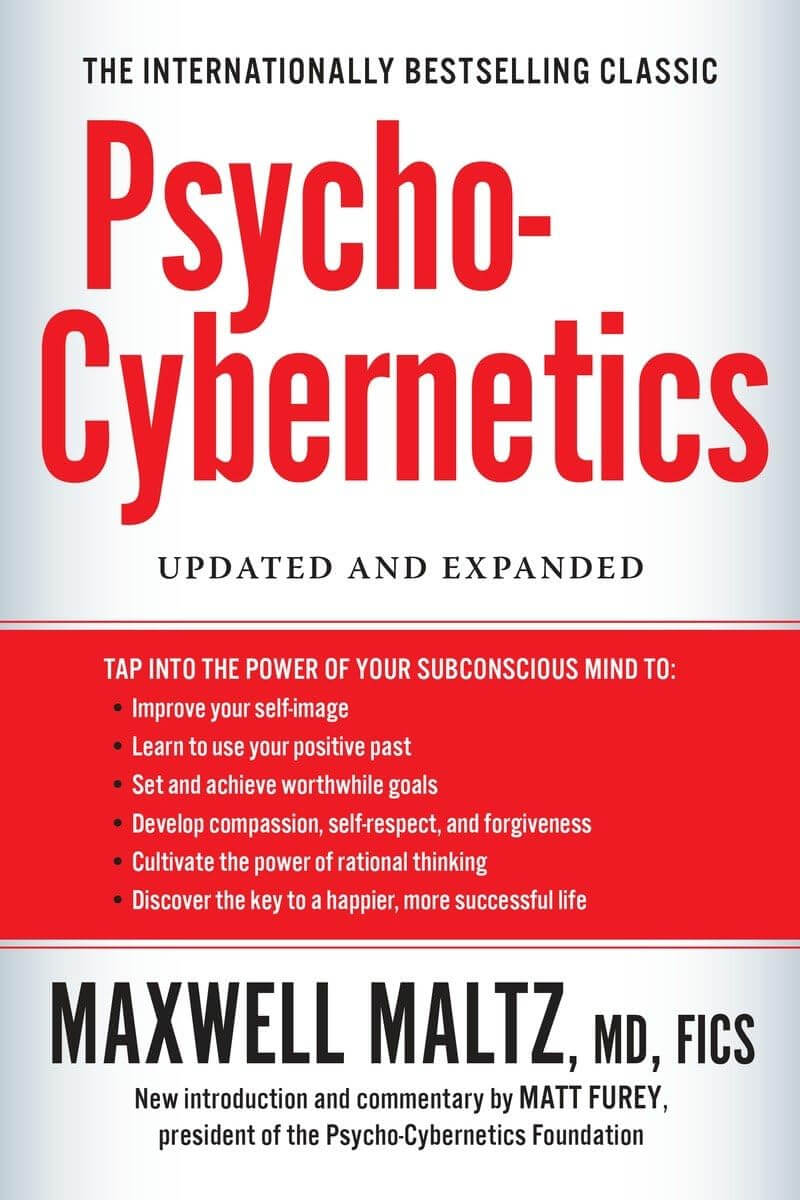
Psycho-Cybernetics: Updated and Expanded by Maxwell Maltz

රු1,500.00
3 X Rs. 500.00 or 8% Cashback with


or 3 X රු500.00 with


or up to 4 X රු375.00 with


Psycho-Cybernetics: Updated and Expanded by Maxwell Maltz is a classic personal-development guide about self-image, confidence, visualization, mental rehearsal and goal achievement.
This edition includes a new introduction and editorial commentary by Matt Furey.
Format: Paperback
Pages: 336
Publisher: Souvenir Press / Profile Books
ISBN: 9781800812925
10 in stock
Psycho-Cybernetics by Maxwell Maltz
Psycho-Cybernetics: Updated and Expanded by Maxwell Maltz is a classic personal-development book built around the idea that the way people see themselves can strongly influence their behaviour, confidence, decisions and performance.
Originally published in 1960, Psycho-Cybernetics became one of the most influential books in the modern self-help movement.
This updated edition preserves Maltz’s original ideas while adding a new introduction and editorial commentary by Matt Furey, helping place the material in a more contemporary context.
The Importance of Self-Image
Maltz’s central idea is the concept of self-image.
He observed that people often behave in ways consistent with how they see themselves.
For example, a person who believes:
- “I always fail.”
- “I am not confident.”
- “I am bad at speaking.”
- “I cannot succeed.”
may begin acting in ways that reinforce those beliefs.
Maltz argued that changing outward circumstances alone may not be enough if the underlying self-image stays the same.
His goal was to help readers develop a healthier and more constructive internal picture of themselves.
The Origins of Psycho-Cybernetics
Maxwell Maltz was a plastic surgeon.
During his medical career, he noticed something interesting.
Some patients experienced major improvements in confidence after surgery.
Others did not.
Even after a physical feature had been corrected, some people continued to think and behave as though nothing had changed.
This led Maltz to become increasingly interested in the psychological side of identity.
Hachette notes that Maltz became fascinated by patients whose insecurities remained even after successful surgery, which contributed to the development of his ideas about self-image and “success conditioning.”
Why “Cybernetics”?
Cybernetics is the study of systems that use feedback to move toward a goal.
Maltz uses this idea as a metaphor for human behaviour.
Imagine a guided system that:
- Has a target
- Moves toward it
- Notices mistakes
- Adjusts direction
- Continues until it reaches the goal
Maltz suggests that human behaviour can work in a similar way.
If the mind has a clear goal and receives useful feedback, it may be easier to correct mistakes and continue moving forward.
Visualization
Visualization is one of the best-known techniques associated with Psycho-Cybernetics.
Maltz encourages readers to mentally rehearse successful behaviour before performing it in real life.
Examples might include imagining yourself:
- Giving a confident presentation
- Handling a difficult conversation calmly
- Performing well in competition
- Completing a challenging task
- Responding effectively under pressure
The purpose is not to pretend success is guaranteed.
Instead, mental rehearsal can help a person become more familiar with a desired behaviour.
Mental Rehearsal
Mental rehearsal is closely connected to visualization.
Athletes, performers and professionals often rehearse important situations mentally before they occur.
Maltz applies this idea more broadly to personal development.
A person who repeatedly imagines a constructive response may find it easier to recognise and use that response when the real situation arrives.
This concept later became influential in areas such as sports psychology and performance coaching.
Relaxation
Maltz also emphasises the role of relaxation.
Too much tension can interfere with performance.
People may know what to do but struggle because they become overwhelmed by:
- Fear
- Anxiety
- Self-consciousness
- Overthinking
- Pressure
The book includes ideas for reducing unnecessary tension so that learned skills can operate more naturally.
Confidence
Confidence is another major theme.
Maltz does not treat confidence simply as something a person either has or lacks.
Instead, confidence can be strengthened through:
- Practice
- Successful experiences
- Mental rehearsal
- More constructive self-talk
- Changing unrealistic negative beliefs
The book encourages readers to stop treating previous mistakes as permanent definitions of who they are.
Mistakes Are Feedback
One of the more practical ideas in the book is that mistakes should not automatically become identity statements.
There is a major difference between saying:
“I failed at this attempt.”
and
“I am a failure.”
Maltz encourages readers to treat mistakes as information.
If something does not work, the response should be to adjust the approach rather than convert one poor result into a permanent judgment about the self.
Goal Setting
Goals play an important role in the cybernetic model.
A system cannot move toward a target if the target is unclear.
Maltz encourages readers to define what they actually want rather than focusing only on what they want to avoid.
For example:
Instead of:
“I do not want to be nervous.”
a more useful target may be:
“I want to speak calmly and clearly.”
The second statement gives the mind a clearer direction.
Self-Talk
The way people speak to themselves can reinforce their existing self-image.
Repeated negative statements may strengthen negative expectations.
Maltz therefore encourages readers to become more aware of internal language.
The goal is not unrealistic positive thinking.
It is to avoid turning temporary difficulties into permanent conclusions.
Success Mechanism vs Failure Mechanism
Maltz uses the idea of an internal “success mechanism” and “failure mechanism.”
The success mechanism works when a person:
- Has a clear goal
- Learns from mistakes
- Adjusts behaviour
- Maintains a constructive self-image
- Continues acting
The failure mechanism becomes stronger when someone becomes trapped in:
- Fear
- Resentment
- Anxiety
- Negative self-judgment
- Excessive self-consciousness
These terms are part of Maltz’s conceptual framework rather than formal modern clinical diagnoses.
Updated and Expanded Edition
This edition updates the original book for modern readers.
Matt Furey contributes:
- A new introduction
- Editorial commentary
- Context around Maltz’s original ideas
Hachette describes this edition as an annotated and expanded version designed to make the original 1960 teachings more relevant to contemporary readers.
Influence on Modern Self-Help
Psycho-Cybernetics has had a major influence on later personal-development writers.
Profile Books describes it as a classic work of the human-potential movement and notes that the book has sold tens of millions of copies worldwide.
Ideas associated with Maltz later became common in discussions of:
- Visualization
- Performance psychology
- Confidence
- Goal setting
- Self-image
- Mental rehearsal
Important Evidence Note
Psycho-Cybernetics is a classic self-help book, not a modern clinical psychology textbook.
Some of Maltz’s ideas were influential and overlap with later work on behaviour, mental rehearsal and performance psychology.
However, not every claim or explanation in the book should automatically be treated as current scientific consensus.
Readers should use it as a personal-development framework rather than as a substitute for professional mental-health care.
Who May Enjoy This Book?
Psycho-Cybernetics may appeal to readers interested in:
- Self-help
- Personal development
- Confidence
- Self-image
- Visualization
- Goal setting
- Mental rehearsal
- Performance psychology
- Motivation
- Self-improvement
It may especially appeal to readers who enjoyed:
- Atomic Habits
- Mindset
- The Power of Your Subconscious Mind
- Think and Grow Rich
- Mindset Secrets for Winning
About Maxwell Maltz
Dr. Maxwell Maltz was a plastic surgeon, lecturer and author.
Hachette notes that he received his medical doctorate from Columbia University’s College of Physicians and Surgeons and later became increasingly interested in the psychological effects of self-image.
His best-known work is:
Psycho-Cybernetics
Originally published in 1960, it became one of the most influential works in the personal-development genre.
For readers looking to buy Psycho-Cybernetics by Maxwell Maltz in Sri Lanka, ISBN 9781800812925 is the Souvenir Press updated and expanded paperback edition used for this listing.
Be the first to review “Psycho-Cybernetics: Updated and Expanded by Maxwell Maltz”
Related products
රු1,550.00
3 X Rs. 516.67 or 8% Cashback with
or 3 X රු516.67 with
or up to 4 X රු387.50 with

Personal Development
රු1,400.00
3 X Rs. 466.67 or 8% Cashback with
or 3 X රු466.67 with
or up to 4 X රු350.00 with

රු2,500.00
3 X Rs. 833.33 or 8% Cashback with
or 3 X රු833.33 with
or up to 4 X රු625.00 with

Self Help
රු1,800.00
3 X Rs. 600.00 or 8% Cashback with
or 3 X රු600.00 with
or up to 4 X රු450.00 with
Communication & Social Skills
රු1,650.00
3 X Rs. 550.00 or 8% Cashback with
or 3 X රු550.00 with
or up to 4 X රු412.50 with

රු1,550.00
3 X Rs. 516.67 or 8% Cashback with
or 3 X රු516.67 with
or up to 4 X රු387.50 with

රු2,500.00
3 X Rs. 833.33 or 8% Cashback with
or 3 X රු833.33 with
or up to 4 X රු625.00 with
Self-Help & Psychology
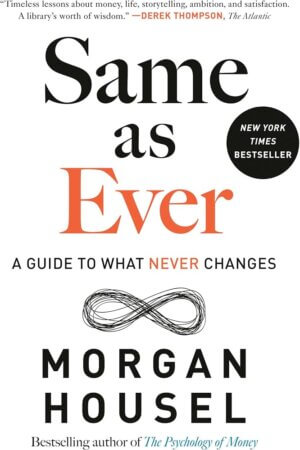
Same as Ever: A Guide to What Never Changes by Morgan Housel
රු2,100.00
3 X Rs. 700.00 or 8% Cashback with
or 3 X රු700.00 with
or up to 4 X රු525.00 with
Reviews
There are no reviews yet.