
No products in the cart.
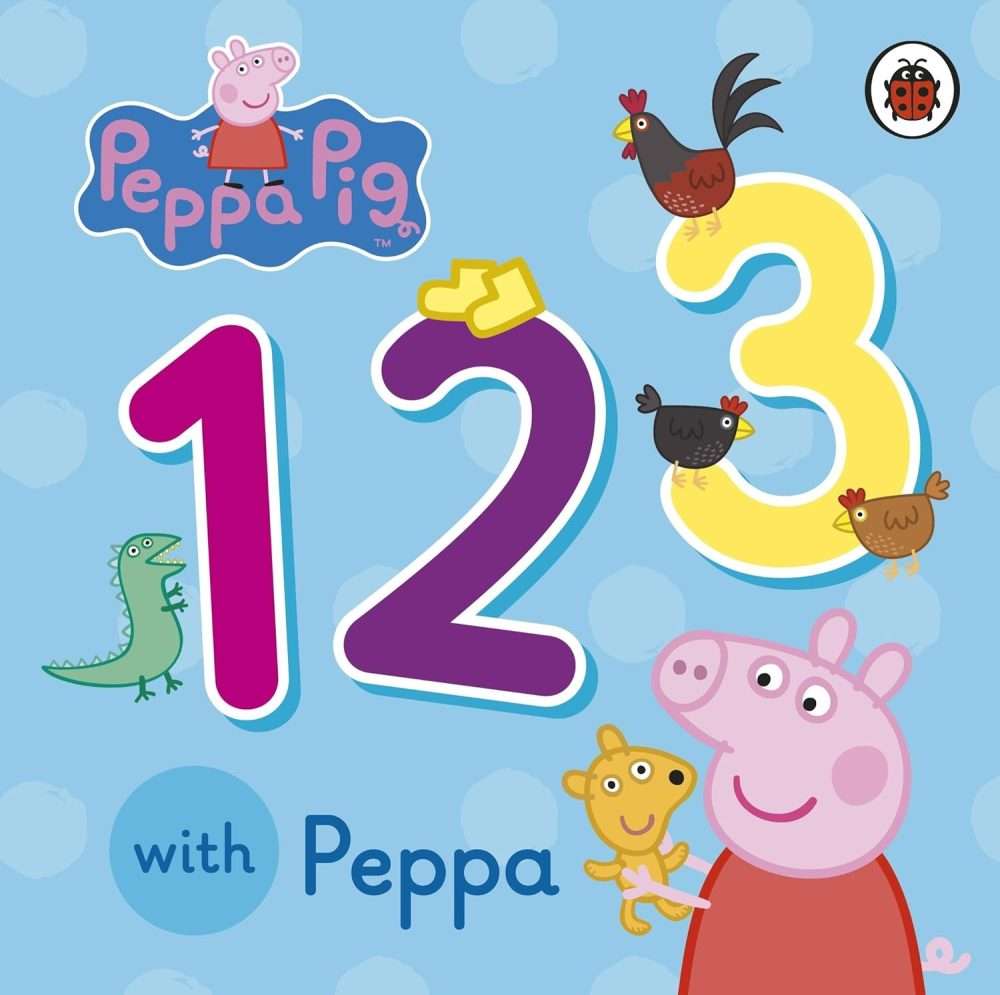

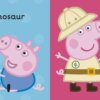
Peppa Pig 123 with Peppa
රු2,500.00
3 X Rs. 833.33 or 8% Cashback with


or 3 X රු833.33 with


or up to 4 X රු625.00 with


| Attribute | Details |
|---|---|
| Title | Peppa Pig: 123 with Peppa |
| Series / Brand | Peppa Pig / Early Learning Books |
| Imprint / Publisher | Ladybird / Penguin Random House Children’s UK |
| ISBN | 978 0723292104 |
| Format | Board Book |
| Number of Pages | 16 pages |
| Dimensions | Approx 176 mm × 176 mm × 14 mm |
| Recommended Age | For very young children / toddlers (e.g., 2+ years) |
| Language | English |
| Release / Publication Date | June 5 2014 |
5 in stock
Peppa Pig: 123 with Peppa
Peppa Pig: 123 with Peppa is a colourful first counting board book that introduces young children to numbers from one to ten. Featuring Peppa Pig, George, and other familiar characters, this simple early-learning title makes counting enjoyable for toddlers and preschoolers.
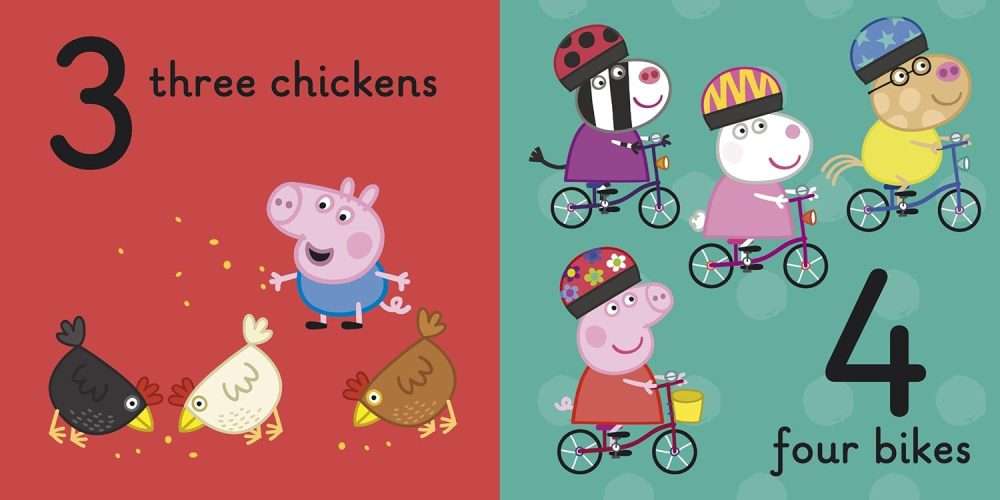
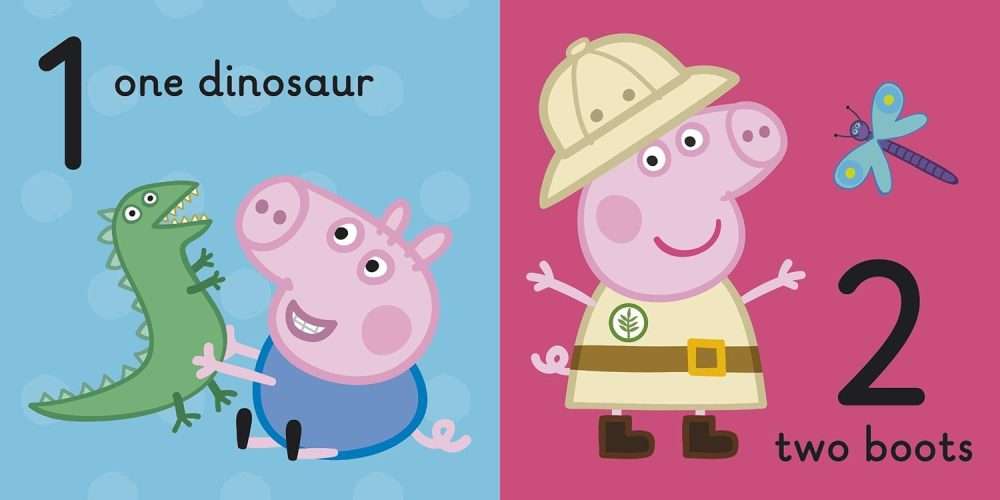
Each page combines clearly presented pictures with short, accessible text, allowing children to count objects alongside Peppa and George. Its chunky board-book format is designed for little hands, making it a practical choice for children beginning to explore books independently.
Published by Ladybird, Peppa Pig: 123 with Peppa helps transform early number practice into a playful shared-reading experience. It is particularly suitable for young Peppa Pig fans aged approximately two to four years.
Count from One to Ten with Peppa
Peppa and George guide children through the numbers from one to ten. The gradual sequence allows young readers to begin with a single object before progressing towards larger groups.
Parents can point to each picture while saying the corresponding number aloud. Children can then attempt to repeat the number or count the objects independently.
Adults can ask simple questions such as:
- “How many can you see?”
- “Can you point to number three?”
- “What number comes next?”
- “Can we count them together?”
- “Which group has more?”
- “Can you show me five fingers?”
- “What comes before number ten?”
These questions encourage children to observe, listen, count, and respond.
A First Introduction to Numbers
Peppa Pig: 123 with Peppa is described by the publisher as a first-concept book for the youngest Peppa Pig fans. Its simple words and colourful pictures provide an accessible introduction to early counting. Penguin UK
The book may help children become familiar with:
- Number names
- Counting from one to ten
- The correct counting sequence
- Matching a spoken number with a quantity
- Recognising small groups of objects
- Understanding that larger numbers represent larger groups
- Using numbers during everyday activities
Young children do not need to identify every number immediately. Repeated exposure gradually builds familiarity and confidence.
Developing One-to-One Counting
An important early maths skill is learning to count each object once. Children sometimes repeat an object or skip one when counting a group.
Parents can help by encouraging their child to touch or point to each picture as they say the numbers:
“One, two, three…”
This creates a connection between each spoken number and one object. The activity is known as one-to-one correspondence and forms an important foundation for later mathematical learning.
Adults can model slow, careful counting before inviting the child to try.
Learning Through Familiar Characters
Peppa Pig and George create a friendly and recognisable setting for early maths practice. Children who already enjoy the television series may feel more interested in a counting book featuring characters they know.
The colourful artwork also provides opportunities to discuss:
- Character names
- Colours
- Shapes
- Sizes
- Animals
- Everyday objects
- Positions and directions
Parents can use the illustrations for more than one activity. After counting the objects, they might ask the child to identify a colour, locate a character, or find the largest item on the page.
Supporting Early Language Development
Although the book concentrates on numbers, its pictures and simple text can also support language learning.
Adults can name the characters and objects before counting them. For example, instead of asking only “How many?”, they might say, “Let’s count the red balls” or “How many friends are with Peppa?”
This type of discussion introduces words connected with:
- Numbers
- Colours
- Characters
- Objects
- Actions
- Size
- Position
- Comparison
Repeated shared reading may encourage listening, vocabulary development, and confidence speaking aloud.
Building Early Maths Vocabulary
Parents can introduce simple mathematical words while reading 123 with Peppa.
Useful terms include:
- More
- Fewer
- Same
- Different
- First
- Last
- Next
- Before
- After
- Small
- Large
- Altogether
For example, an adult might ask, “Which page has more objects?” or “What number comes after four?”
Children do not need to memorise every term immediately. Hearing these words within meaningful activities helps build familiarity.
Everyday Counting Activities
The learning can continue after the book is closed. Parents can encourage children to count familiar items around the home.
Try counting:
- Fingers and toes
- Building blocks
- Toy animals
- Crayons
- Spoons
- Pieces of fruit
- Steps
- Cars
- Shoes
- Books
Children can also look for printed numbers on doors, clocks, calendars, lifts, buses, and signs.
Connecting the book’s number sequence with real objects helps children understand that counting is useful in everyday life.
Encouraging Fine Motor Skills
The chunky board pages are easier for little fingers to hold and turn than delicate paper pages. Handling the book independently may help children practise:
- Grasping pages
- Turning pages one at a time
- Pointing to pictures
- Tracing numbers with a finger
- Hand-eye coordination
- Controlled finger movements
Parents can invite children to trace the shape of a printed number while saying its name. This provides an early introduction to numeral formation without requiring a pencil.
Learning Through Repetition
Toddlers frequently request the same book many times. Repetition helps them remember the order of numbers, recognise familiar pictures, and anticipate what appears on the next page.
During early readings, children may listen while an adult counts. After several sessions, they may begin joining in or supplying the next number before the page is turned.
Parents can encourage effort with positive phrases such as:
- “Let’s count together.”
- “You found number five.”
- “That was careful counting.”
- “What number comes next?”
- “Would you like to try again?”
Positive encouragement helps children associate early mathematics with enjoyment rather than pressure.
Supporting Early Childhood Development
Exploring Peppa Pig: 123 with Peppa may encourage:
- Number recognition
- Counting from one to ten
- One-to-one correspondence
- Understanding of quantities
- Visual concentration
- Listening skills
- Early vocabulary
- Memory and sequencing
- Hand-eye coordination
- Parent-child communication
- Confidence with first maths concepts
The book works best as a relaxed activity. Parents can follow the child’s pace and return to favourite pages as often as necessary.
A Chunky Board Book for Little Hands
This title is produced as a durable board book with thick pages designed for young readers. Its approximately 17.6 × 17.6 cm square format is compact enough for small hands while providing clear space for the colourful pictures.
The sturdy construction makes it suitable for repeated reading at home, during travel, or as part of a nursery learning routine.
A younger child may initially concentrate on the familiar characters and colours. As the child develops, they may begin counting the objects, recognising numbers, and answering simple questions.
Part of Peppa’s First-Concept Collection
123 with Peppa can be paired with other Peppa Pig first-concept books covering subjects such as:
- The alphabet
- Colours
- Shapes
- First words
- Opposites
- Early counting
Ladybird also published a digital four-book Learn with Peppa collection containing 123 with Peppa, ABC with Peppa, Colours, and Shapes. Learn with Peppa collection – Penguin UK
Together, these titles introduce several important preschool concepts using a consistent cast of familiar characters.
About Peppa Pig
Peppa Pig is the main character of the popular preschool animated series. She lives with Mummy Pig, Daddy Pig, and her little brother George.
Peppa’s stories follow her family and friends through humorous everyday adventures involving school, play, holidays, family activities, and jumping in muddy puddles.
Ladybird publishes Peppa Pig storybooks, board books, sound books, sticker activities, colouring titles, phonics readers, and early-learning resources.
Who Should Read 123 with Peppa?
This book is suitable for:
- Toddlers aged approximately two years and above
- Preschool children learning to count
- Young Peppa Pig fans
- Children beginning to recognise numbers
- Parents looking for a first maths book
- Nurseries and early-learning centres
- Families building a first board-book library
- Anyone searching for an educational toddler gift
The official publisher confirms the ISBN, board-book format, publication date, page count, dimensions, weight, and Ladybird imprint. Penguin UK
Book Links
Buy or view the book at Bargain Books:
View the official publication information:
123 with Peppa – Penguin UK
Explore more Peppa Pig books at Book Lounge:
Peppa Pig Books – Book Lounge Search
A Colourful First Counting Book
Peppa Pig: 123 with Peppa gives toddlers an entertaining introduction to counting from one to ten. Its simple text, cheerful illustrations, sturdy pages, and familiar characters make early number practice accessible and enjoyable.
Whether shared during family reading, used for home learning, or added to a nursery collection, this chunky board book can help children develop number awareness, vocabulary, concentration, and confidence with their first mathematical concepts.
Be the first to review “Peppa Pig 123 with Peppa”
Related products
-21%
Children & Young Adult
Original price was: රු2,400.00.රු1,900.00Current price is: රු1,900.00.
3 X Rs. 633.33 or 8% Cashback with
or 3 X රු633.33 with
or up to 4 X රු475.00 with

Out of stock
Children & Young Adult
The Famous Five Complete Box Set of 21 by Enid Blyton & Eileen Soper
රු9,900.00
3 X Rs. 3,300.00 or 8% Cashback with
or 3 X රු3,300.00 with
or up to 4 X රු2,475.00 with
Out of stock
Children & Young Adult
රු1,600.00
3 X Rs. 533.33 or 8% Cashback with
or 3 X රු533.33 with
or up to 4 X රු400.00 with

Out of stock
Children & Young Adult
රු1,950.00
3 X Rs. 650.00 or 8% Cashback with
or 3 X රු650.00 with
or up to 4 X රු487.50 with
-10%
Out of stock
Children & Young Adult
Lord of the rings triology (Single Book) by J. R. R. Tolkien
Original price was: රු5,000.00.රු4,500.00Current price is: රු4,500.00.
3 X Rs. 1,500.00 or 8% Cashback with
or 3 X රු1,500.00 with
or up to 4 X රු1,125.00 with
Out of stock
Children & Young Adult
රු2,500.00
3 X Rs. 833.33 or 8% Cashback with
or 3 X රු833.33 with
or up to 4 X රු625.00 with
-25%
Out of stock
Children & Young Adult
Original price was: රු2,000.00.රු1,500.00Current price is: රු1,500.00.
3 X Rs. 500.00 or 8% Cashback with
or 3 X රු500.00 with
or up to 4 X රු375.00 with
Out of stock
Children & Young Adult
Famous Five: Five Run Away Together (Book 3) by Enid Blyton | Paperback Edition
රු800.00
3 X Rs. 266.67 or 8% Cashback with
or 3 X රු266.67 with
or up to 4 X රු200.00 with
Reviews
There are no reviews yet.