
No products in the cart.
-21%
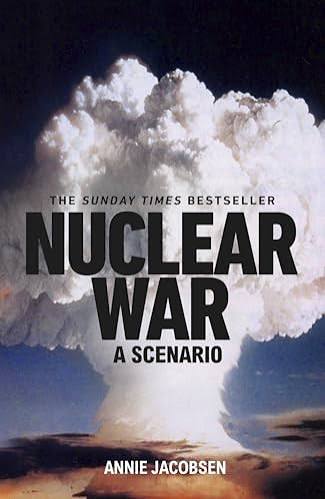
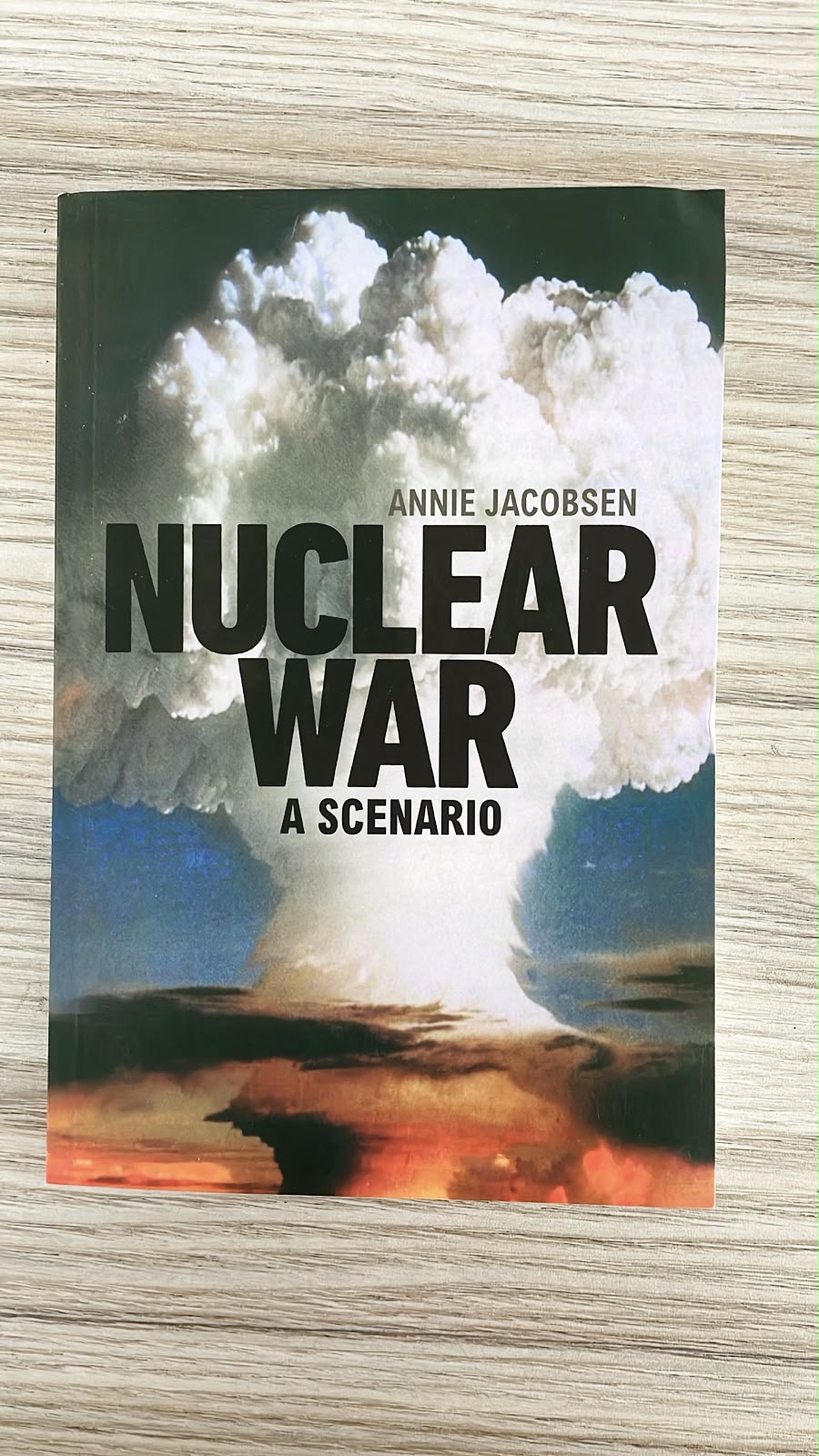
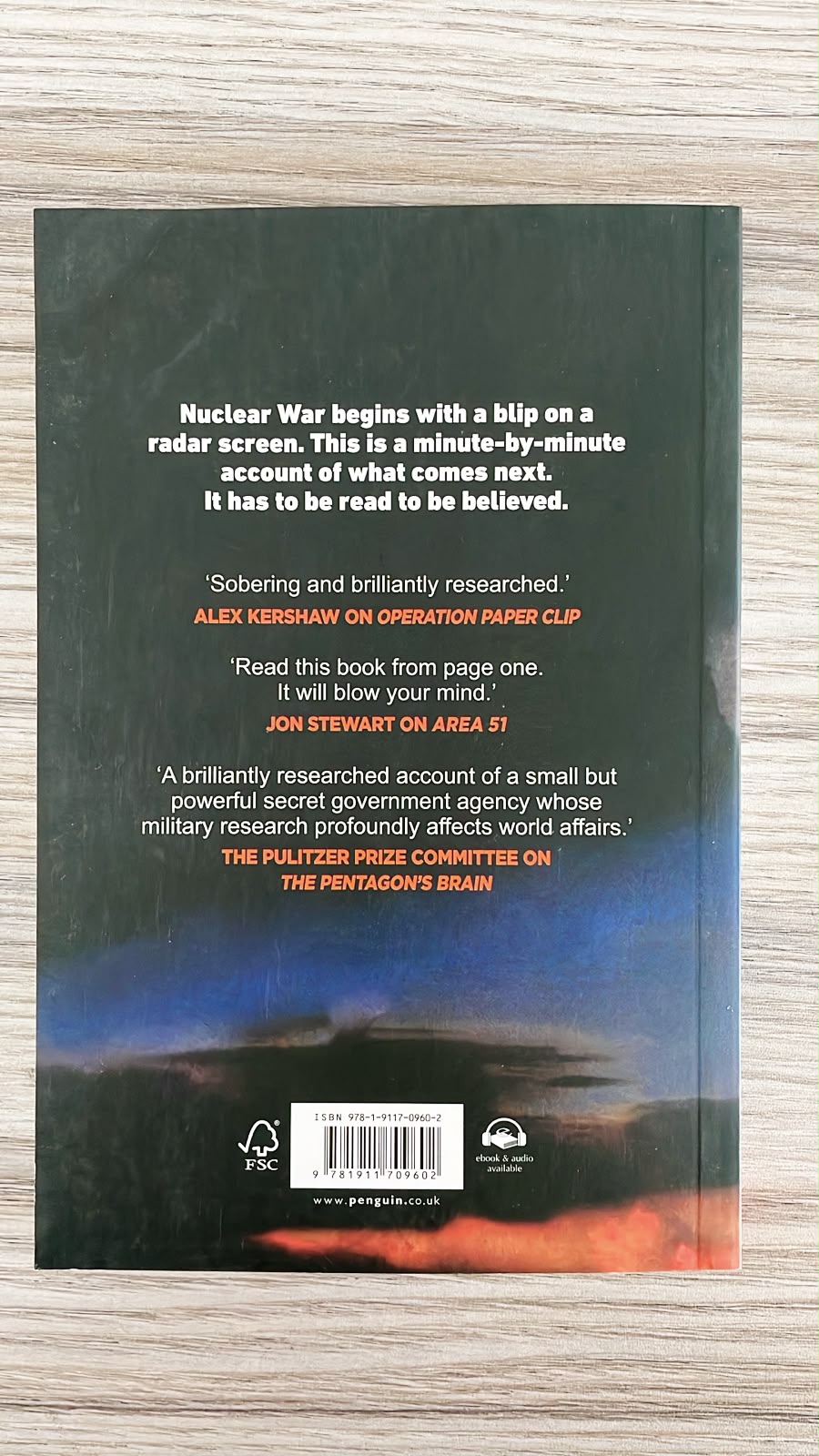
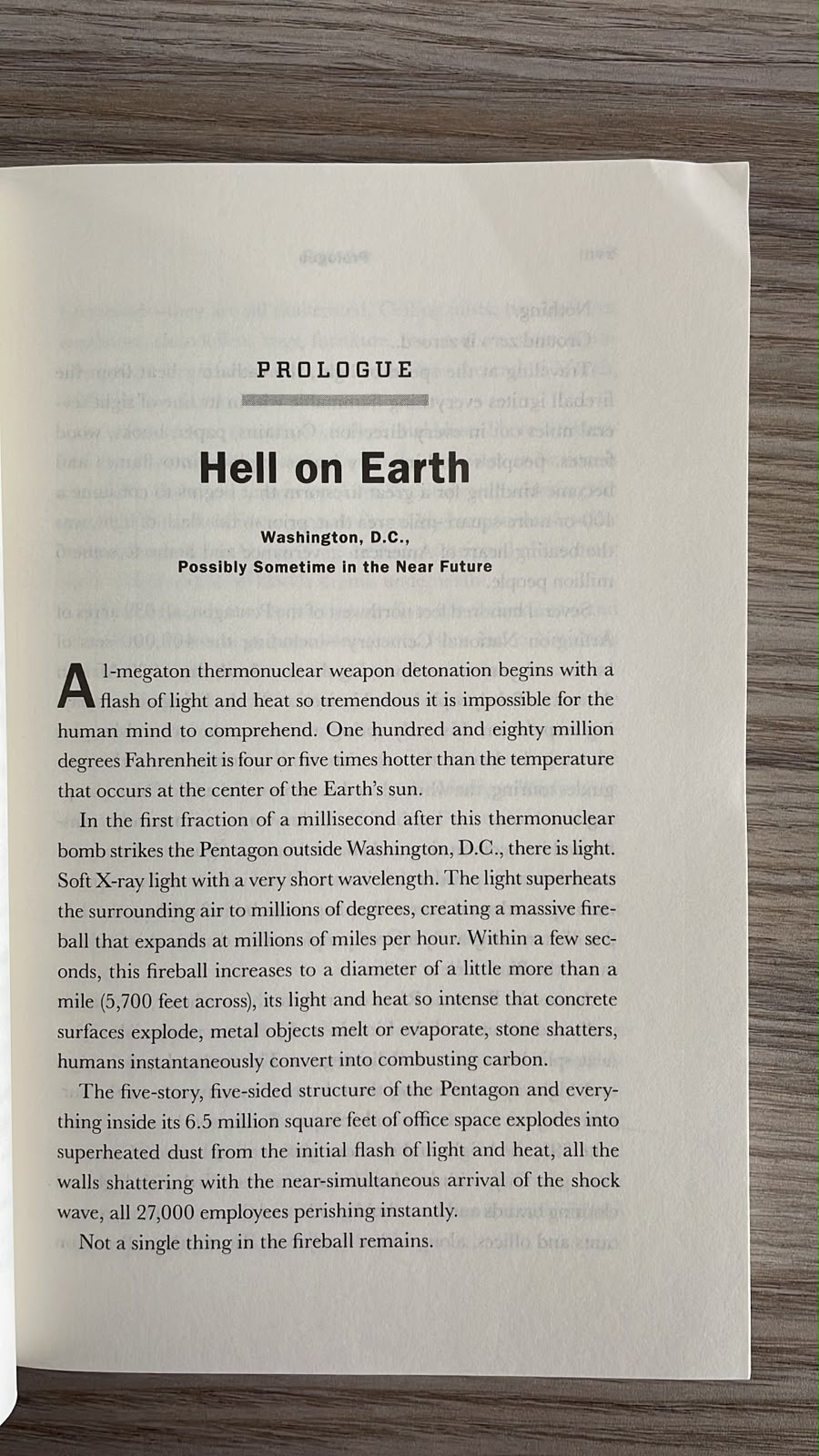
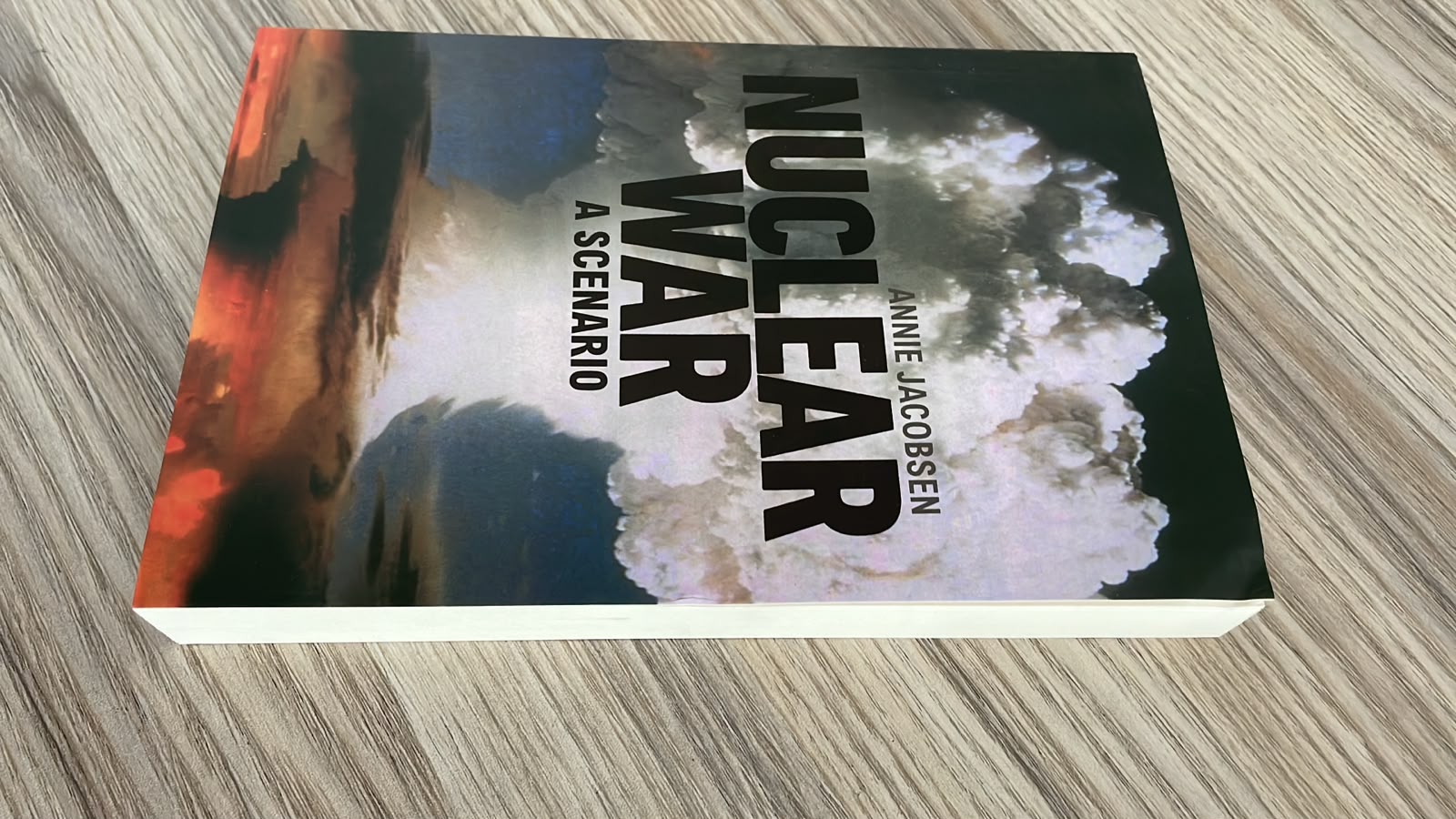
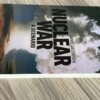
Nuclear War: A Scenario by Annie Jacobsen


Original price was: රු3,750.00.රු2,950.00Current price is: රු2,950.00.
3 X Rs. 983.33 or 8% Cashback with


or 3 X රු983.33 with


or up to 4 X රු737.50 with


Book Details
Title: Nuclear War: A Scenario
Author: Annie Jacobsen
Language: English
Format: Paperback
Genre: Nonfiction, Military History, Geopolitics, Current Affairs
Category: History > Military History > Modern Warfare & Security Studies
Themes: Nuclear Weapons, National Security, Military Strategy, Geopolitics, International Relations, Crisis Management, Global Risk, Modern Warfare
3 in stock
Nuclear War A Scenario by Annie Jacobsen is a gripping nonfiction investigation into what could happen if a nuclear missile launch triggered a rapidly escalating global crisis.
Instead of discussing nuclear weapons only through abstract statistics, Annie Jacobsen constructs a terrifying hypothetical scenario and follows events as political leaders, military commanders, warning systems and national-security institutions attempt to respond under extreme time pressure.
The result reads with the urgency of a geopolitical thriller.
But the subject is real.
Nuclear arsenals exist.
Early-warning systems exist.
Military response plans exist.
National leaders may be required to make civilization-changing decisions with incomplete information and almost no time.
Jacobsen draws on interviews with military officials, scientists, weapons experts and people familiar with national-security planning to examine how such a crisis might unfold.
Nuclear War A Scenario by Annie Jacobsen is therefore not simply a book about weapons.
It is a book about:
Human judgment.
Deterrence.
Technology.
Communication.
Leadership.
Escalation.
Fear.
Uncertainty.
And the terrifying consequences of decisions that cannot easily be reversed.
Nuclear War A Scenario by Annie Jacobsen – Book Overview
Nuclear War A Scenario by Annie Jacobsen begins with a hypothetical nuclear launch.
From that point forward, the clock starts moving.
Warning systems detect activity.
Military institutions attempt to understand what is happening.
Government leaders need information.
Advisers must interpret incomplete data.
Communication channels become critical.
Other nuclear powers watch events unfold.
Every decision creates another decision.
The central danger is escalation.
One launch may trigger a response.
That response may be interpreted as preparation for something larger.
Another country may react.
Soon, events can move much faster than political leaders can comfortably control.
Jacobsen’s scenario is designed to show how nuclear deterrence depends not only on weapons themselves but on human beings, technology and information systems functioning correctly during one of the most stressful situations imaginable.
A Nonfiction Book That Reads Like a Thriller
One reason Nuclear War A Scenario by Annie Jacobsen became widely discussed is its narrative structure.
It does not read like a conventional academic textbook.
Instead, the story progresses almost in real time.
Readers are placed inside a rapidly developing crisis.
That creates a disturbing sense of momentum.
The question is no longer merely:
What are nuclear weapons?
It becomes:
What happens after the first warning appears?
Nuclear Deterrence
A central concept behind modern nuclear strategy is deterrence.
The basic idea is that nuclear weapons may prevent attack because an aggressor understands that retaliation could be devastating.
In theory, fear of retaliation discourages everyone from launching first.
For decades, this logic has been central to nuclear strategy.
But deterrence depends on several assumptions.
Leaders must behave rationally.
Warning systems must work correctly.
Communication must remain available.
Information must be interpreted accurately.
And everyone must understand the other side’s intentions well enough to avoid catastrophic miscalculation.
The Problem With Perfect Rationality
Real people do not always behave perfectly rationally.
They operate under:
Stress.
Fear.
Political pressure.
Limited information.
Time constraints.
Conflicting advice.
That creates one of the most disturbing ideas in Nuclear War A Scenario by Annie Jacobsen.
A system capable of destroying civilization may ultimately depend on decisions made by imperfect human beings during extraordinary pressure.
Information Under Pressure
When a crisis develops, decision-makers need information quickly.
But speed and accuracy can conflict.
Waiting for perfect confirmation may consume valuable time.
Acting too quickly may mean responding to incomplete or misunderstood information.
This dilemma appears throughout nuclear command and control discussions.
False Information Can Be Catastrophic
History contains examples of military warning systems producing confusing or mistaken signals.
Most such incidents did not lead to nuclear war.
But they reveal an important principle:
Technology can fail.
Sensors can misinterpret data.
Human beings can misunderstand warnings.
A safe system therefore needs safeguards and verification.
Nuclear Command and Control
The phrase nuclear command and control refers broadly to the systems used to manage nuclear forces and the decisions surrounding their potential use.
This includes:
Leadership.
Communication.
Military organizations.
Warning systems.
Procedures.
Security.
Jacobsen explores how these pieces interact during a rapidly developing crisis.
Seconds and Minutes Matter
A conventional political crisis may unfold over days or weeks.
A nuclear crisis can develop much faster.
That changes how decisions are made.
There may be little time for:
Long debate.
Detailed investigation.
Diplomatic negotiation.
Multiple meetings.
The compressed timeline is one of the most frightening elements of the book.
The President and Nuclear Decisions
In the United States, the president occupies a central role in decisions involving nuclear weapons.
During a severe crisis, advisers and military officials may provide information and options.
But the amount of time available can be extraordinarily limited.
Jacobsen emphasizes the psychological burden created by this structure.
A decision affecting millions of lives may need to be made under conditions no person can fully simulate beforehand.
Leadership Under Extreme Pressure
Leadership is easy to discuss when conditions are normal.
A leader can:
Gather information.
Consult experts.
Consider alternatives.
Sleep on a decision.
During an extreme military crisis, those luxuries may disappear.
This raises a deeper question:
How should humanity design systems where individual leaders may need to make irreversible decisions under enormous pressure?
Escalation
Escalation is one of the most important themes in Nuclear War A Scenario by Annie Jacobsen.
A conflict does not necessarily remain at its original level.
One side acts.
The other responds.
The first interprets the response as threatening.
Another response follows.
This cycle can accelerate.
Misunderstanding Intentions
One country may believe it is acting defensively.
Another may interpret the same action as preparation for attack.
This creates a dangerous gap between:
What a government intends
and
what another government believes it intends.
In nuclear strategy, that misunderstanding could become catastrophic.
Nuclear Weapons Are Different
Nuclear weapons are not simply larger conventional bombs.
Their effects can include:
Extreme blast damage.
Thermal radiation.
Immediate radiation exposure.
Long-term radioactive contamination.
Mass fires.
Infrastructure collapse.
Medical-system failure.
Large-scale environmental consequences.
That is why discussions of nuclear warfare are fundamentally different from most conventional military strategy.
Cities and Infrastructure
Modern cities depend on interconnected systems.
Electricity.
Water.
Hospitals.
Transport.
Communication.
Food distribution.
Emergency services.
A major nuclear attack could destroy several of these systems simultaneously.
The result would extend far beyond the initial explosion.
Hospitals and Emergency Response
Even countries with advanced healthcare systems are not designed to handle enormous numbers of severe burns, trauma cases and radiation injuries simultaneously.
Medical infrastructure itself could also be damaged.
This creates a terrible mismatch between:
The number of people needing help
and
the amount of help available.
The Human Cost
It is easy to discuss nuclear weapons using numbers.
Warheads.
Missiles.
Megatons.
Targets.
But numbers can hide human consequences.
Every city contains:
Families.
Children.
Hospitals.
Schools.
Workers.
Homes.
Nuclear War A Scenario by Annie Jacobsen repeatedly brings attention back to what strategic language means when translated into real human suffering.
Nuclear Winter
One of the longer-term concerns associated with large-scale nuclear war is the possibility that smoke and soot from widespread fires could affect the atmosphere and global climate.
Scientists have debated exact outcomes and models, but the broader concern is that a major nuclear exchange could create effects extending far beyond the countries directly involved.
These could affect:
Temperature.
Agriculture.
Food production.
Global supply systems.
The consequences could therefore become planetary rather than regional.
Civilization Depends on Systems
Modern life feels stable partly because countless systems work quietly every day.
Electricity arrives.
Food reaches supermarkets.
Banks process transactions.
Mobile networks connect people.
Aircraft move goods.
Governments maintain records.
Large-scale war can reveal how dependent civilization is on those systems.
Communication
Communication becomes crucial during crisis.
Governments need to communicate with:
Military forces.
Other governments.
Emergency agencies.
Citizens.
If communication systems are damaged or misunderstood, uncertainty increases.
And uncertainty can make dangerous situations even worse.
The Fog of War
Military strategists often use the phrase fog of war to describe uncertainty during conflict.
Information may be:
Incomplete.
Delayed.
Incorrect.
Contradictory.
During nuclear escalation, the fog of war becomes particularly dangerous because decisions may need to be made extremely quickly.
Technology Does Not Remove Human Error
Modern nuclear systems use advanced technology.
But advanced systems still depend on:
Software.
Sensors.
Networks.
People.
Procedures.
No system is absolutely perfect.
Technology can reduce certain risks while introducing others.
Automation
Automation can increase speed.
But greater speed also reduces time for human reflection.
This creates a difficult balance.
Some systems need to respond rapidly.
But humans also need enough time to confirm that information is accurate.
Artificial Intelligence and Future Risk
Although Nuclear War A Scenario by Annie Jacobsen focuses primarily on existing nuclear systems and strategy, modern readers may naturally connect its themes with debates about AI and automated military decision-making.
The central principle remains:
Greater technological capability must be accompanied by careful human control, accountability and safeguards.
Nuclear Secrecy
Nuclear planning has always involved extraordinary secrecy.
Some information must remain classified for legitimate security reasons.
But secrecy also creates a challenge for democratic societies.
Citizens are affected by policies they may know very little about.
Jacobsen’s reporting attempts to take readers as close as publicly available information permits to understanding how these systems operate.
Journalism and National Security
Annie Jacobsen has built much of her career investigating secretive areas of the U.S. national-security establishment.
Her previous books include:
Area 51
Operation Paperclip
The Pentagon’s Brain
Surprise, Kill, Vanish
First Platoon
Her background makes Nuclear War A Scenario by Annie Jacobsen part of a larger body of work examining military technology, intelligence and government secrecy.
Interviews With Experts
Jacobsen states that the book draws from dozens of interviews with military and civilian experts, including people familiar with weapons, response planning and high-level decision processes.
This allows the book to combine:
Historical research.
Technical explanation.
Expert testimony.
Scenario-based storytelling.
Is Nuclear War A Scenario a True Story?
Not exactly.
This is extremely important for customers.
Nuclear War A Scenario by Annie Jacobsen uses a hypothetical scenario.
The specific chain of events in the central narrative is not a record of an actual nuclear war.
However, Jacobsen builds the scenario using research, expert interviews and real-world nuclear command structures and technologies.
So the best description is:
Research-based nonfiction presented through a hypothetical nuclear-war scenario.
Is It Fiction?
No.
It is nonfiction.
The scenario itself is hypothetical, but the book is built around real systems, historical research and expert interviews.
It should therefore be categorized under nonfiction rather than political thriller fiction.
Is It a Military History Book?
Partly.
It discusses the history and structure of nuclear weapons, Cold War thinking and national-security policy.
But it is more accurately described as a combination of:
Military nonfiction.
Geopolitics.
Current affairs.
Nuclear strategy.
Science and technology.
Is It Difficult to Read?
The subject is complex, but the narrative structure makes the book relatively accessible.
Jacobsen explains technical and strategic ideas through a rapidly developing scenario rather than presenting them only as abstract theory.
Readers do not need to be experts in nuclear physics or military strategy.
Is It Frightening?
Yes.
The book is intentionally disturbing because the consequences it discusses are extreme.
Readers sensitive to:
Mass casualties.
War.
Civilian deaths.
Global catastrophe.
may find sections emotionally difficult.
Is It Anti-Nuclear?
The book is clearly concerned with the catastrophic risks created by nuclear arsenals.
Its emphasis is on understanding what nuclear war could mean in practice and why systems designed around deterrence carry enormous danger.
Readers can evaluate its arguments alongside other works on nuclear strategy and deterrence.
Does the Book Predict That Nuclear War Will Definitely Happen?
No.
A scenario is not a prediction.
The book explores what could happen if a nuclear crisis escalated.
Readers should distinguish:
Risk analysis
from
claiming an event is inevitable.
Nuclear Weapons and Probability
Low probability does not necessarily mean low importance.
Imagine an event with:
Very low probability
but
civilization-scale consequences.
Even if it never happens, policymakers may reasonably consider the risk seriously.
This is one reason nuclear strategy receives so much attention.
Deterrence Has Prevented Direct Nuclear Exchange So Far
Since the atomic bombings of Hiroshima and Nagasaki in 1945, nuclear weapons have not again been used in warfare.
Supporters of nuclear deterrence argue that fear of retaliation has helped prevent direct conflict between major nuclear powers.
Critics argue that relying indefinitely on perfect deterrence creates unacceptable long-term risk.
Nuclear War A Scenario by Annie Jacobsen is especially interested in that risk.
Hiroshima and Nagasaki
Any discussion of nuclear warfare is connected historically to Hiroshima and Nagasaki.
Those events demonstrated the catastrophic destructive potential of nuclear weapons.
Modern nuclear arsenals can include weapons far more powerful than the bombs used in 1945.
The Cold War
During the Cold War, the United States and Soviet Union accumulated enormous nuclear arsenals.
Strategies developed around:
Deterrence.
Second-strike capability.
Early warning.
Command systems.
Mutually assured destruction.
The legacy of those systems continues to influence nuclear policy today.
Mutually Assured Destruction
Mutually assured destruction, commonly abbreviated MAD, describes the logic that if both sides can retaliate after being attacked, neither side has a rational incentive to begin nuclear war.
The disturbing aspect is obvious.
Peace depends partly on maintaining the ability to inflict unacceptable destruction.
The Stability Paradox
Nuclear deterrence creates a strange paradox.
Weapons built for destruction may discourage war precisely because their use would be so catastrophic.
But the same weapons also create the possibility that:
Misunderstanding.
Technical failure.
Human error.
Deliberate aggression.
could produce disaster.
Human Judgment
Despite advanced systems, people remain central.
Someone must interpret information.
Someone must decide whether a warning is credible.
Someone must communicate.
Someone must authorize actions.
This makes nuclear strategy partly a problem of human psychology.
Fear and Decision-Making
Extreme fear affects cognition.
People under pressure may:
Narrow attention.
Overreact.
Misinterpret uncertainty.
Rely heavily on existing assumptions.
That is one reason crisis procedures and safeguards matter.
The Importance of Diplomacy
If nuclear weapons create enormous risks, diplomacy becomes more important, not less.
Communication between rival states can reduce uncertainty.
Arms-control agreements can create transparency.
Hotlines can provide direct communication.
Diplomacy may appear slow and frustrating, but in nuclear politics communication can literally be a security mechanism.
Arms Control
Historically, nuclear powers have negotiated agreements designed to:
Limit certain weapons.
Increase transparency.
Reduce testing.
Create verification systems.
Such agreements do not remove geopolitical rivalry.
They attempt to reduce some of the risks created by that rivalry.
Verification
Trust alone is rarely enough between competing states.
Effective arms-control systems often require verification.
This reflects a general principle:
Trust is stronger when supported by evidence.
Geopolitics
Nuclear strategy cannot be separated from geopolitics.
Relationships between:
The United States.
Russia.
China.
North Korea.
NATO members.
Other nuclear-armed states.
all influence global risk.
The exact political environment changes over time, but the underlying danger of escalation remains.
Nuclear War Is a Global Problem
Even if a conflict began between only two countries, consequences could cross borders.
Economic disruption.
Refugee flows.
Environmental effects.
Food shortages.
Political instability.
Nuclear war therefore cannot be understood purely as a local battlefield problem.
Why the Book Feels Urgent
The urgency comes from the mismatch between:
How slowly humans normally make major decisions
and
how quickly nuclear crises could develop.
We may spend months debating ordinary policy.
A nuclear warning might compress extraordinary decisions into minutes.
That should make readers uncomfortable.
What the Book Is Really Asking
At a deeper level, Nuclear War A Scenario by Annie Jacobsen asks:
Should civilization continue depending on systems capable of destroying civilization?
How reliable are deterrence systems over decades?
How much risk is acceptable?
Can humans maintain perfect control forever?
These questions do not have simple answers.
But the book argues that they deserve much more public attention.
Annie Jacobsen
Annie Jacobsen is an investigative journalist and nonfiction author whose work frequently explores military technology, intelligence and classified government programs.
She was a Pulitzer Prize finalist for The Pentagon’s Brain. Her official biography also identifies Nuclear War: A Scenario as an international bestseller and notes that it was shortlisted for the Baillie Gifford Prize.
Edition Details
Your inventory records:
Title: Nuclear War: A Scenario
Author: Annie Jacobsen
ISBN: 9781911709602
That ISBN matches the UK Transworld/Torva paperback. Google Books identifies it as a March 2024 Transworld edition, while bookseller records list the same ISBN for the English paperback.
Different international editions have different ISBNs and page counts, so for WooCommerce always use the specifications printed on the physical copy you stock.
Content Considerations
Nuclear War A Scenario by Annie Jacobsen contains disturbing real-world themes, including:
- Nuclear weapons
- Mass casualties
- Civilian deaths
- War
- Radiation
- Destruction of cities
- Global catastrophe
- Military conflict
- Political crisis
- Fear and panic
- Environmental devastation
- Discussion of death on a massive scale
The material is nonfiction and can be emotionally intense.
Important Themes
Nuclear War A Scenario by Annie Jacobsen explores nuclear deterrence, escalation, national security, military technology, command and control, human judgment, geopolitical rivalry, leadership, communication, uncertainty, radiation, nuclear strategy, secrecy, diplomacy, risk management and the possibility of global catastrophe.
7 Powerful Lessons From Nuclear War A Scenario by Annie Jacobsen
- Nuclear deterrence depends on human beings as much as technology. Advanced warning systems and military infrastructure still require people to interpret information and make decisions under extreme pressure.
- A crisis can escalate faster than diplomacy can respond. Nuclear weapons compress decision-making into frighteningly short periods, leaving little room for misunderstanding or error.
- Information quality matters enormously. Having more data does not help if leaders cannot determine which information is accurate, relevant or complete.
- Technology cannot eliminate human error. Every sophisticated system still contains vulnerabilities involving hardware, software, communication and judgment.
- Deterrence contains an unavoidable paradox. Nuclear weapons may discourage attack because their consequences are catastrophic, yet keeping them also preserves the possibility of catastrophic use.
- Communication between rivals is a security tool. Diplomacy, verification and reliable channels between nuclear powers can reduce the possibility that uncertainty becomes escalation.
- Low-probability risks still matter when the consequences are enormous. Even if nuclear war is unlikely on any particular day, its potential impact makes understanding and reducing the risk critically important.
Why Read Nuclear War A Scenario by Annie Jacobsen?
Nuclear War A Scenario by Annie Jacobsen is an excellent choice for readers interested in geopolitics, nuclear weapons, military history, national security, international relations, investigative journalism, Cold War history, political science and the future of global security.
It is particularly compelling for readers who enjoy nonfiction books that combine serious research with narrative storytelling.
Instead of simply saying:
Nuclear war would be terrible,
Jacobsen asks the reader to imagine the actual chain of decisions and consequences that could follow a launch.
That makes an abstract geopolitical risk feel immediate.
Who Should Read This Book?
Nuclear War A Scenario by Annie Jacobsen may especially appeal to:
- Geopolitics readers
- History readers
- Military-history readers
- Political-science students
- International-relations students
- National-security readers
- Readers interested in nuclear weapons
- Fans of investigative journalism
- Readers who enjoyed American Prometheus
- Readers interested in Cold War history
- Policy and strategy readers
- Anyone interested in understanding the consequences of nuclear deterrence
Nuclear War A Scenario by Annie Jacobsen – When There Is Almost No Time to Decide
Nuclear War A Scenario by Annie Jacobsen is frightening because it removes one comforting assumption:
That civilization-ending decisions would always be made slowly and carefully.
A nuclear crisis may not provide that luxury.
Warnings appear.
Information arrives.
Leaders ask questions.
Military organizations prepare.
Other countries observe those preparations.
Each side tries to understand what the other is doing.
And meanwhile, the clock keeps moving.
That is what makes the book more than a story about bombs.
It is really a story about systems.
Systems of technology.
Systems of communication.
Systems of leadership.
Systems of deterrence.
Systems that have to function correctly even during the worst crisis imaginable.
Most days, those systems remain invisible.
Jacobsen asks readers to imagine the day when they would matter more than anything else.
The central lesson is not that nuclear war is guaranteed.
It is that the consequences are so extreme that assuming the system will always work perfectly is itself a dangerous form of complacency.
For readers interested in military history, international politics, nuclear strategy and how fragile modern civilization can become under extreme pressure, Nuclear War A Scenario by Annie Jacobsen is a disturbing but important work of nonfiction.
Learn more about Nuclear War: A Scenario by Annie Jacobsen on Annie Jacobsen’s official website.
Explore more history and current affairs books at Bargain Books.
:::
Be the first to review “Nuclear War: A Scenario by Annie Jacobsen”
Related products
-21%
Non-Fiction & Knowledge
7 Secrets to Investing Like Warren Buffett by Mary Buffett & Sean Seah
Original price was: රු1,900.00.රු1,500.00Current price is: රු1,500.00.
3 X Rs. 500.00 or 8% Cashback with
or 3 X රු500.00 with
or up to 4 X රු375.00 with
-19%
Out of stock
Non-Fiction & Knowledge
Original price was: රු2,650.00.රු2,150.00Current price is: රු2,150.00.
3 X Rs. 716.67 or 8% Cashback with
or 3 X රු716.67 with
or up to 4 X රු537.50 with
Out of stock
Non-Fiction & Knowledge
රු1,500.00
3 X Rs. 500.00 or 8% Cashback with
or 3 X රු500.00 with
or up to 4 X රු375.00 with

Non-Fiction & Knowledge
රු1,550.00
3 X Rs. 516.67 or 8% Cashback with
or 3 X රු516.67 with
or up to 4 X රු387.50 with
Out of stock
Self-Help & Psychology
රු1,900.00
3 X Rs. 633.33 or 8% Cashback with
or 3 X රු633.33 with
or up to 4 X රු475.00 with
-24%
Non-Fiction & Knowledge
Original price was: රු2,300.00.රු1,750.00Current price is: රු1,750.00.
3 X Rs. 583.33 or 8% Cashback with
or 3 X රු583.33 with
or up to 4 X රු437.50 with
-26%
Non-Fiction & Knowledge
The 7 Habits of Highly Effective People by Stephen R. Covey – Blue Cover
Original price was: රු2,300.00.රු1,700.00Current price is: රු1,700.00.
3 X Rs. 566.67 or 8% Cashback with
or 3 X රු566.67 with
or up to 4 X රු425.00 with
රු2,000.00
3 X Rs. 666.67 or 8% Cashback with
or 3 X රු666.67 with
or up to 4 X රු500.00 with
Reviews
There are no reviews yet.