
No products in the cart.
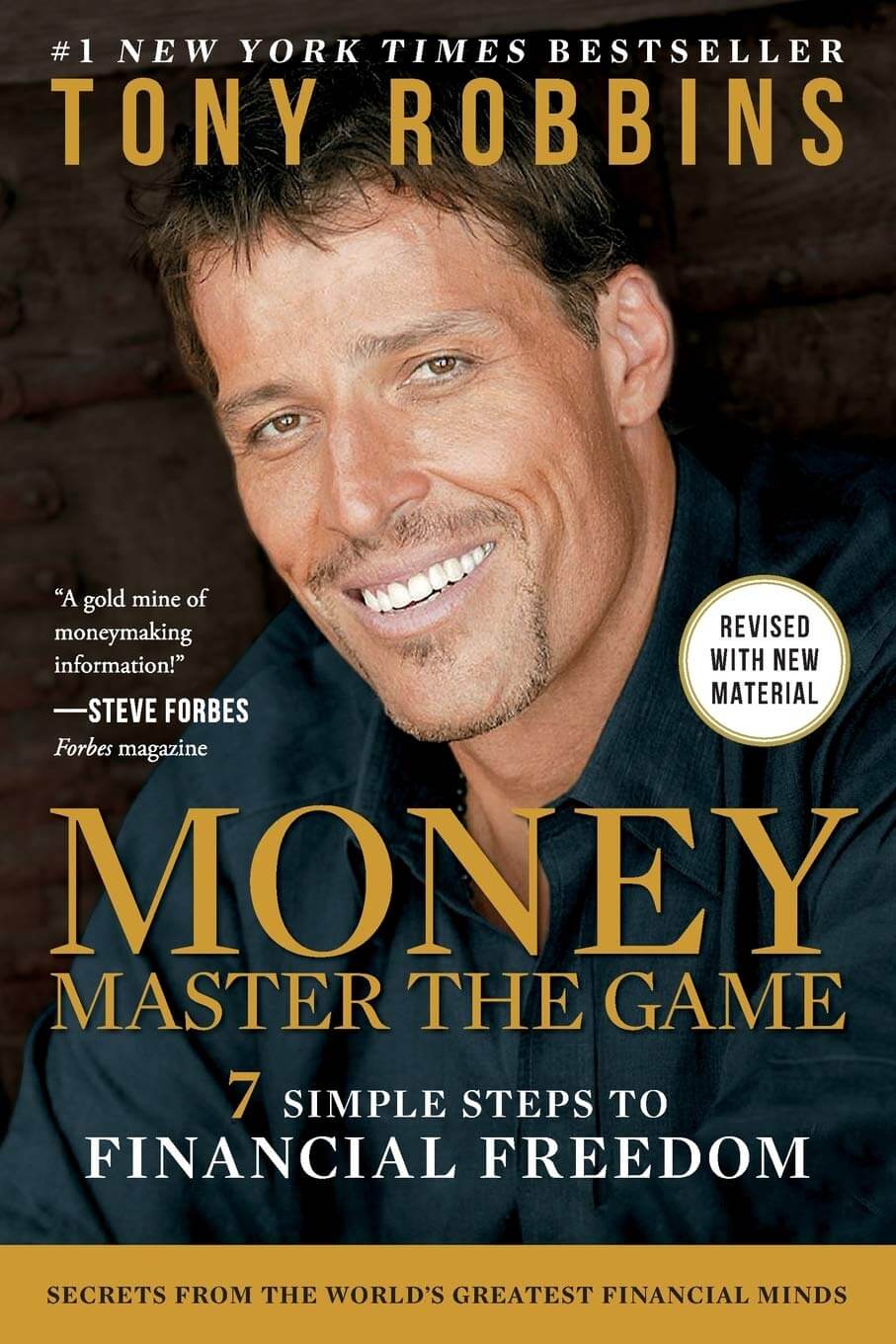
Money master the game by Tony Robbins

රු2,750.00
3 X Rs. 916.67 or 8% Cashback with


or 3 X රු916.67 with


or up to 4 X රු687.50 with


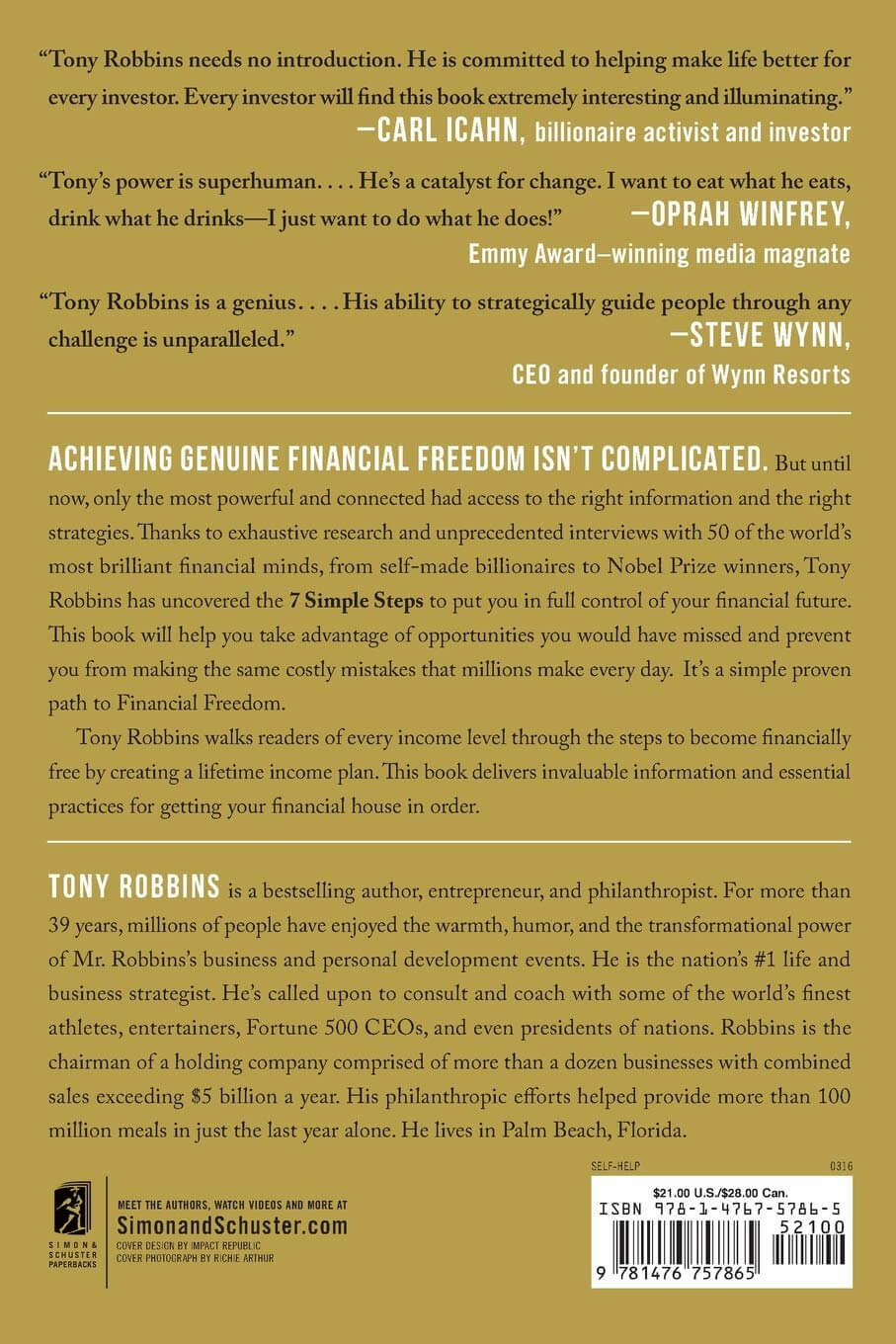
Money Master the Game by Tony Robbins is a comprehensive guide to personal finance, investing and financial independence. Built around seven steps to financial freedom and insights from investors including Warren Buffett, John Bogle, Ray Dalio and Paul Tudor Jones, the book explores saving, compounding, investment fees, diversification, asset allocation, risk management and retirement income. Ideal for beginners, professionals and entrepreneurs who want to understand money better and create a disciplined long-term financial plan.
Out of stock
Email when stock available
Money Master the Game by Tony Robbins is a comprehensive personal-finance and investing guide designed to help ordinary people better understand money, saving, investing, fees, asset allocation and the long-term journey toward financial independence.
Many people work for decades without ever feeling fully in control of their finances.
Money comes in.
Bills go out.
A little may be saved.
Investments may seem confusing.
Retirement feels far away.
And financial advice often sounds as though it were written only for professional investors.
Tony Robbins attempts to make the subject more approachable.
He spent years researching financial markets and speaking with influential investors, economists and financial professionals to identify principles that ordinary readers could understand and apply to their own financial planning.
The result is Money Master the Game, a detailed seven-step framework built around one central idea:
You need a plan for your money instead of simply hoping everything works out.
The book explores topics including:
Saving automatically.
Compound growth.
Investment fees.
Diversification.
Asset allocation.
Risk.
Retirement planning.
Income generation.
Financial goals.
Investor psychology.
Long-term thinking.
Rather than focusing primarily on picking individual stocks or predicting markets, the book encourages readers to create a disciplined financial system.
For beginners interested in investing, professionals planning for retirement, entrepreneurs building personal wealth or anyone trying to improve their understanding of money, Money Master the Game offers an extensive introduction to creating a more intentional financial future.
Money Master the Game – Book Overview
Money Master the Game is structured around seven broad steps toward financial freedom.
Tony Robbins begins with mindset and financial decisions before moving toward:
Saving.
Investing.
Understanding fees.
Setting financial targets.
Asset allocation.
Learning from experienced investors.
Building long-term income.
The goal is not simply accumulating the largest possible number in a bank account.
Robbins encourages readers to define what financial freedom actually means personally.
For one person, it may mean paying essential bills without employment income.
For another, it may mean having enough investment income to travel.
For someone else, it may mean supporting family, retiring comfortably or having the freedom to choose meaningful work.
Financial Freedom Needs a Number
“I want to be financially free” sounds good.
But it is difficult to plan around.
How much does your lifestyle actually cost?
What are your:
Housing costs?
Food expenses?
Transport costs?
Insurance expenses?
Debt repayments?
Family commitments?
Other essential expenses?
Once those numbers are known, financial freedom becomes more measurable.
Know What You Are Investing For
Before choosing investments, understand the purpose.
Are you investing for:
Retirement?
A home?
Education?
Financial independence?
Long-term wealth?
Different goals may require different:
Time horizons.
Risk levels.
Liquidity.
Investment strategies.
The investment should serve the goal rather than becoming the goal itself.
Become an Investor
One of the central ideas in Money Master the Game is moving from being only a consumer toward also becoming an owner.
People earn money and spend it on:
Food.
Rent.
Entertainment.
Transport.
Technology.
Lifestyle.
Those expenses are necessary to varying degrees.
But if every dollar or rupee earned is consumed, little remains to build future wealth.
Investing allows part of current income to become an asset intended to support your future.
Pay Your Future Self
Robbins emphasizes setting aside part of your income for investing.
The important principle is consistency.
Instead of:
Earn.
Spend.
Save whatever remains.
Consider:
Earn.
Automatically allocate money toward long-term goals.
Then manage spending around the remainder.
Automation can reduce the need to make the same saving decision every month.
Automate Your Financial System
Willpower is unreliable.
One month:
You save.
Next month:
You forget.
Then an unexpected purchase appears.
A system can be more dependable.
Automatic transfers can move money into:
Savings.
Retirement accounts.
Investment accounts.
The specific account depends on your country and financial situation, but the behavioral principle is widely applicable.
Compounding
Compound growth is one of the most important ideas in Money Master the Game.
Investment returns can potentially generate additional returns over time.
Imagine investing money.
It produces a return.
That return remains invested.
Now future returns can be generated on:
The original investment.
Plus earlier gains.
Over long periods, this can create significant growth.
Time Matters
Compounding tends to become more powerful with time.
This means someone who begins earlier may need to contribute less than someone trying to catch up much later.
That does not mean it is ever automatically “too late.”
It means:
Starting sooner gives money more time to work.
Start With What You Can
People sometimes delay investing because they think:
“I don’t earn enough yet.”
Then years pass.
A more practical strategy can be beginning with an affordable amount and increasing contributions as income grows.
The habit matters.
Increase Contributions With Income
Suppose your salary increases.
Instead of directing the entire increase toward lifestyle expansion, part of it can potentially go toward:
Savings.
Investments.
Debt repayment.
This allows financial progress to increase alongside earnings.
The Hidden Cost of Fees
One of the strongest practical themes in Money Master the Game is investment fees.
A fee may look tiny:
1%.
2%.
But investment accounts operate over decades.
Repeated fees can consume a significant portion of long-term returns.
That means investors should understand what they are paying.
Ask What Your Investments Cost
Potential costs can include:
Management fees.
Fund expenses.
Advisory fees.
Transaction costs.
Administrative charges.
Other product-specific fees.
A financial product should not be judged only by advertised returns.
The net result after:
Fees.
Taxes.
Inflation.
matters more.
Small Percentages Can Become Large Amounts
A 1% difference may appear insignificant in one year.
Across decades and large balances, the cumulative effect can become substantial.
That is why Money Master the Game encourages readers to understand the mathematics behind investment costs.
Financial Advice and Conflicts of Interest
Not every person selling a financial product operates under exactly the same incentives.
Some may receive:
Commissions.
Product fees.
Other compensation.
This does not automatically make the advice bad.
But investors should understand how the adviser or salesperson is compensated.
Ask Questions
Before purchasing an investment product, ask:
What does this cost?
What are the risks?
How liquid is it?
How is the adviser compensated?
Are there penalties?
What happens in a market decline?
What alternatives exist?
Understanding what you own is part of responsible investing.
Make the Financial Game Winnable
Another important concept in Money Master the Game is creating realistic financial targets.
Suppose you think retirement requires an enormous amount of money.
That number may feel impossible.
But breaking the goal into levels can make planning easier.
Instead of only asking:
“How do I become incredibly wealthy?”
ask:
“What would it cost to cover my essential expenses?”
Then:
“What would financial independence cost?”
Then:
“What lifestyle would I ideally like?”
Financial Security
A first goal might be covering basic needs.
Housing.
Food.
Utilities.
Transport.
Insurance.
Essential expenses.
Reaching this level can create greater psychological security.
Financial Independence
Financial independence generally means reaching a point where investment income or accumulated assets can support a significant portion of your lifestyle without complete dependence on employment income.
The exact definition varies.
What matters is calculating your own target.
Financial Freedom
Freedom is personal.
Someone may want:
More time with family.
The ability to travel.
Freedom to change careers.
Freedom to start a business.
Early retirement.
Money matters because it can create options.
Wealth Is More Than Luxury
Money Master the Game does not need to be interpreted as:
Become rich so you can buy expensive things.
Wealth can instead mean:
Security.
Time.
Choice.
Reduced financial stress.
Ability to help others.
The meaning depends on the individual.
Asset Allocation
One of the book’s major investment themes is asset allocation.
Asset allocation means deciding how much of a portfolio is placed across different categories of investments.
For example:
Stocks.
Bonds.
Cash.
Other assets where appropriate.
Different assets may behave differently under different economic conditions.
Diversification
Diversification means avoiding excessive dependence on one investment.
Imagine putting all your savings into one company.
If that company fails, the result can be devastating.
A diversified portfolio spreads exposure.
Diversification cannot eliminate all risk.
But it can reduce some concentration risk.
Do Not Put Everything on One Bet
Confidence can be dangerous.
An investor thinks:
“This company cannot fail.”
“This market will always rise.”
“This asset is guaranteed.”
Markets repeatedly show that certainty can be expensive.
Risk management matters.
Risk and Reward
Higher potential returns often come with greater uncertainty.
The important question is not simply:
“What investment gives the biggest return?”
It is also:
“What risk am I taking to pursue that return?”
Know Your Risk Tolerance
Two people can have the same income and need different portfolios.
One may remain calm during a 30% market decline.
Another may panic and sell.
An investment plan needs to consider both:
Financial capacity for risk.
Emotional ability to tolerate volatility.
Investor Psychology
Psychology is extremely important in Money Master the Game.
A theoretically excellent portfolio can still produce poor results if the investor repeatedly:
Buys from excitement.
Sells from fear.
Chases trends.
Changes strategy every month.
Human behavior can undermine financial planning.
Fear
Markets fall.
Headlines become frightening.
Investors panic.
Selling purely because everyone is afraid can lock in losses.
A long-term plan should anticipate that markets sometimes decline.
Greed
The opposite problem appears during booms.
Everyone seems to be making money.
People begin believing:
Prices can only rise.
Risk disappears from conversation.
Greed can encourage excessive speculation.
Avoid Emotional Investing
A financial plan created during calm conditions can help reduce impulsive decisions during:
Market crashes.
Bubbles.
Periods of extreme uncertainty.
Market Timing Is Difficult
Trying to perfectly predict:
When to buy.
When to sell.
When markets will peak.
When they will bottom.
is extremely difficult.
Even professionals frequently make incorrect forecasts.
For many ordinary investors, disciplined long-term investing may be more realistic than repeatedly attempting perfect market timing.
The Importance of Staying Invested
Missing strong market periods can significantly reduce long-term performance.
This is one reason investors should be cautious about repeatedly jumping in and out based on predictions.
However, any investment strategy should reflect individual goals and risk tolerance.
Index Investing
The book discusses ideas associated with low-cost diversified investing and features insights from investment pioneer John Bogle.
Index funds attempt to track a market index rather than relying on a manager to constantly select winning investments.
Potential advantages may include:
Diversification.
Lower costs.
Simplicity.
But even index funds can decline when markets fall.
Active Versus Passive Investing
Active investing attempts to outperform a benchmark through security selection or market decisions.
Passive investing generally attempts to track a benchmark.
Neither term means “risk free.”
Readers should understand:
Fees.
Strategy.
Historical performance.
Risk.
before investing.
Learn From Great Investors
One distinguishing feature of Money Master the Game is Robbins’s interviews with prominent investors.
Rather than relying solely on his own opinions, he discusses ideas from professionals with very different approaches.
These include figures such as:
Warren Buffett.
John Bogle.
Ray Dalio.
Paul Tudor Jones.
Carl Icahn.
The purpose is not to suggest that ordinary investors can simply copy every strategy.
Many professional investors operate with:
Different resources.
Information.
Time horizons.
Risk tolerance.
The broader value is understanding how experienced investors think about:
Risk.
Capital preservation.
Diversification.
Decision-making.
Warren Buffett
Warren Buffett is widely associated with:
Long-term investing.
Business fundamentals.
Patience.
Avoiding unnecessary complexity.
A key lesson ordinary investors can take is that successful investing does not always require constantly trading.
John Bogle
John Bogle founded Vanguard and became one of the strongest advocates of low-cost index investing.
His philosophy highlights an important truth:
Investment costs are more predictable than future returns.
You cannot control exactly what the market will return.
You can often control how much you pay.
Ray Dalio
Ray Dalio’s investment thinking is strongly associated with diversification and balancing exposure across different economic environments.
The book discusses portfolio concepts inspired by this risk-focused philosophy.
Readers should understand that any example portfolio is educational rather than automatically suitable for every individual.
Paul Tudor Jones
Paul Tudor Jones is known as a trader and hedge-fund manager with a strong emphasis on risk control.
One important lesson is that making money matters, but protecting against catastrophic losses matters too.
Protect the Downside
Suppose an investment loses 50%.
You need a 100% gain afterward just to return to the original value.
This illustrates why large losses can be particularly damaging.
Risk management deserves serious attention.
The All Seasons Concept
Money Master the Game discusses an “All Seasons” portfolio concept inspired by Robbins’s conversation with Ray Dalio.
The underlying idea is designing a portfolio for different economic environments rather than making one large prediction about what the future will look like.
However, investors should not assume a model portfolio will automatically suit:
Every country.
Every tax system.
Every age.
Every investor.
Professional advice may be appropriate.
Income for Life
Retirement planning involves more than accumulating money.
Eventually, many investors need to turn assets into income.
Questions include:
How much can I withdraw?
How long must the money last?
What happens during market declines?
What about inflation?
How will healthcare costs change?
Creating sustainable retirement income requires careful planning.
Longevity Risk
People are living longer in many parts of the world.
That creates a financial challenge:
What if your retirement lasts longer than expected?
A retirement plan should consider longevity rather than assuming a short retirement period.
Inflation
Rs. 100,000 today may not purchase the same amount decades from now.
Inflation reduces purchasing power.
Therefore, financial planning should focus not only on nominal numbers but on what those numbers can actually buy.
Cash Is Not Risk-Free in Every Sense
Cash may be stable in nominal terms.
But if inflation exceeds the return on cash, purchasing power can decline.
Different assets solve different problems.
Taxes
Taxes also affect investment outcomes.
A return before tax may differ significantly from what an investor actually keeps.
Tax rules vary greatly by country, so readers should seek current local information when applying strategies.
Sri Lankan Readers
The principles in Money Master the Game can still be useful for Sri Lankan readers, particularly around:
Saving.
Compounding.
Fees.
Diversification.
Risk management.
Financial goals.
However, the book was written primarily in a U.S. financial context.
Specific references to:
Retirement accounts.
Tax rules.
Financial products.
Regulations.
may not directly apply in Sri Lanka.
Always adapt the principles to local financial laws and available products.
Avoid Blindly Copying American Strategies
An investment product available in the United States may:
Not exist locally.
Have different taxes.
Have different regulatory protections.
Have different fees.
The principle may remain useful even when the exact product does not.
Build an Emergency Fund
Before aggressively investing, many households benefit from maintaining liquid emergency savings.
Unexpected events may include:
Job loss.
Medical expenses.
Urgent repairs.
Family emergencies.
Without emergency funds, people may be forced to sell investments at a bad time or take expensive debt.
Debt
High-interest debt can work against wealth accumulation.
If debt costs significantly more than a realistic investment return, paying it down may deserve priority.
The correct decision depends on:
Interest rate.
Liquidity.
Tax treatment.
Personal circumstances.
Credit Card Debt
High-interest revolving debt can be particularly expensive.
Before focusing exclusively on investment returns, understand how much interest existing debt is consuming.
Financial Education
One major benefit of Money Master the Game is encouraging readers to become active participants in their financial lives.
You do not need to become:
A professional trader.
A financial analyst.
An economist.
But you should understand enough to ask good questions.
Never Invest in Something You Do Not Understand
Before investing, understand:
What is the asset?
How does it potentially generate returns?
What could cause losses?
What fees exist?
How quickly can it be sold?
Who regulates it?
If the explanation is impossible to understand, be cautious.
Beware of Guaranteed Returns
High returns with:
No risk.
Guaranteed profit.
Immediate wealth.
should trigger caution.
Investing always involves trade-offs.
Fraud often uses unrealistic certainty.
Financial Independence Is a Process
Most people will not become financially independent after reading one book.
The process may take years or decades.
The value of Money Master the Game is helping readers think systematically about that process.
Saving Rate
Your saving rate can be one of the most controllable elements in a financial plan.
You cannot control markets.
You may have limited control over inflation.
But you can often influence:
Spending.
Saving.
Income development.
Increase Income
Financial planning is not only about cutting expenses.
People can also work on increasing earning capacity through:
Education.
Skills.
Career advancement.
Entrepreneurship.
Business ownership.
Higher income combined with disciplined saving can accelerate wealth accumulation.
Avoid Lifestyle Inflation
When income increases, lifestyle often increases immediately.
Better salary.
Better car.
Bigger expenses.
The result:
Still no financial surplus.
Keeping some lifestyle growth below income growth creates room for investment.
Financial Freedom and Entrepreneurship
Entrepreneurs may especially appreciate the book because business income can be unpredictable.
Personal investments can create diversification beyond the business itself.
A founder whose entire wealth is tied to one company may have significant concentration risk.
Separate Business and Personal Finance
Business owners should understand:
Company cash.
Personal savings.
Investment capital.
Emergency funds.
Taxes.
These are different financial categories.
Wealth and Giving
Robbins also connects financial success with contribution.
Money can provide the ability to help:
Family.
Community.
Charitable causes.
Financial freedom does not have to be purely individual.
Enjoy the Journey
The final goal should not be postponing all happiness until a distant financial milestone.
Saving matters.
Investing matters.
But life is happening now.
A financial plan should balance:
Future security.
Present responsibilities.
Meaningful experiences.
Money Is a Tool
Money can create:
Security.
Choice.
Opportunity.
But it cannot automatically create:
Good health.
Strong relationships.
Purpose.
Happiness.
Understanding what money can and cannot do helps create healthier financial goals.
Tony Robbins
Tony Robbins is an author, speaker, entrepreneur and personal-development coach known for books and programs focused on:
Performance.
Motivation.
Leadership.
Business.
Personal growth.
With Money Master the Game, he turned much of his attention toward financial freedom and investment education.
Is Money Master the Game an Investing Book?
Yes.
The book deals extensively with:
Investing.
Asset allocation.
Diversification.
Fees.
Risk.
Retirement.
However, it also covers broader personal-finance topics including:
Saving.
Financial goals.
Behavior.
Planning.
Is Money Master the Game Good for Beginners?
Yes, particularly for readers who want a broad introduction to financial planning and investing.
However, it is a large and detailed book.
Readers may prefer to move through it section by section rather than trying to absorb everything at once.
Is Money Master the Game a Get-Rich-Quick Book?
No.
The central strategy relies heavily on:
Saving.
Investing.
Compounding.
Long-term planning.
Risk management.
Although the tone is highly motivational, the financial process described is generally long term rather than an overnight wealth formula.
Does Money Master the Game Guarantee Financial Freedom?
No.
No investment book can guarantee wealth or financial independence.
Investment outcomes depend on:
Market performance.
Income.
Saving.
Fees.
Taxes.
Inflation.
Risk.
Individual decisions.
Unexpected circumstances.
The book should be treated as financial education rather than personalized financial advice.
Is This Book Still Useful?
Many underlying principles remain relevant:
Understand fees.
Diversify.
Save consistently.
Invest intentionally.
Know your financial goals.
Think long term.
However, specific:
Products.
Interest rates.
Tax rules.
Market statistics.
regulations discussed in an older financial book may change.
Readers should verify current information before making real financial decisions.
Money Master the Game and Unshakeable
Tony Robbins later published Unshakeable, which also deals with investing and financial confidence.
You do not need to read Unshakeable before Money Master the Game.
Money Master the Game is the larger, more comprehensive work, while Unshakeable offers a shorter exploration of several related investment themes.
Important Themes
Money Master the Game explores:
- Personal finance
- Financial freedom
- Investing
- Saving
- Compound growth
- Asset allocation
- Diversification
- Investment fees
- Risk management
- Retirement planning
- Financial independence
- Investor psychology
- Long-term investing
- Index funds
- Financial goals
- Inflation
- Wealth building
- Income planning
- Financial education
- Giving and contribution
7 Powerful Lessons From Money Master the Game
There are many lessons in Money Master the Game, but seven stand out:
- Automatically invest part of your income – Building wealth becomes easier when saving and investing are part of a system rather than something you remember only when money happens to remain at the end of the month.
- Understand the real cost of investment fees – Small annual percentages can significantly reduce long-term wealth when they compound over decades, making costs an important part of investment decisions.
- Set specific financial-freedom targets – Instead of vaguely wanting to become rich, calculate what different levels of financial security and independence would actually require.
- Diversify rather than betting everything on one prediction – Different investments behave differently, and spreading exposure can help reduce the danger of relying completely on one asset or market outcome.
- Protect against major losses – Successful investing is not only about maximizing returns. Managing downside risk is essential because recovering from large losses can require disproportionately large gains.
- Control investor psychology – Fear, greed, panic and excitement can damage even a sensible investment plan. A disciplined long-term strategy can reduce emotional decision-making.
- Use money to create freedom rather than simply status – The deeper goal of wealth is having greater security, choice, time and ability to live according to your priorities.
Why Read Money Master the Game?
Money Master the Game is an excellent choice for readers interested in:
- Tony Robbins
- Personal finance
- Financial freedom
- Investing
- Wealth creation
- Investment books
- Retirement planning
- Compound interest
- Saving money
- Asset allocation
- Diversification
- Financial independence
- Index investing
- Investment fees
- Money management
- Passive-income concepts
- Long-term investing
- Financial literacy
- Building wealth
- Investor psychology
It is especially valuable for readers who want a broad financial education rather than a book focused on only one investment strategy.
Who Should Read This Book?
Money Master the Game may especially appeal to:
- Investing beginners
- Young professionals
- Entrepreneurs
- Business owners
- People planning for retirement
- Personal-finance readers
- People interested in financial independence
- Readers trying to understand investment fees
- People building long-term savings
- Readers interested in diversification
- Anyone who wants to take greater responsibility for their financial future
Money Master the Game – Build a System for Financial Freedom
Money Master the Game ultimately asks readers to stop treating their financial future as something that will somehow take care of itself.
Financial freedom rarely happens accidentally.
It usually requires decisions.
How much will you save?
How much will you invest?
What fees are you paying?
How diversified are you?
What level of risk can you tolerate?
What does financial independence actually mean for you?
These questions may feel complicated.
But avoiding them does not make them disappear.
The book’s message is to turn financial planning into a system.
Save consistently.
Invest intentionally.
Understand the costs.
Diversify.
Protect against unnecessary risk.
Allow compounding time to work.
And remember that the final objective is not simply accumulating the largest possible number.
The purpose of financial independence is what that money allows you to do.
Spend more time with family.
Choose meaningful work.
Retire with greater security.
Handle emergencies.
Support people you care about.
Contribute to causes that matter.
Money itself is not the destination.
It is a resource.
For readers willing to work through a substantial book about investing, retirement, asset allocation, risk and financial behavior, Money Master the Game provides a detailed framework for becoming more intentional about building and protecting long-term wealth.
Learn more about Money: Master the Game by Tony Robbins on Tony Robbins’ official website.
Explore more investing and personal finance books at Bargain Books.
| Author | Tony Robbins |
|---|---|
| Language | English |
| Type | Paperback Printed Book (Second Quality Copy) |
Be the first to review “Money master the game by Tony Robbins”
Related products
-22%

Out of stock
Business, Finance & Economics
Original price was: රු2,250.00.රු1,750.00Current price is: රු1,750.00.
3 X Rs. 583.33 or 8% Cashback with
or 3 X රු583.33 with
or up to 4 X රු437.50 with
-33%
Out of stock
Business, Finance & Economics
Original price was: රු2,300.00.රු1,550.00Current price is: රු1,550.00.
3 X Rs. 516.67 or 8% Cashback with
or 3 X රු516.67 with
or up to 4 X රු387.50 with

Out of stock
Damaged & Imperfect Books
රු1,700.00
3 X Rs. 566.67 or 8% Cashback with
or 3 X රු566.67 with
or up to 4 X රු425.00 with
Damaged & Imperfect Books
රු1,700.00
3 X Rs. 566.67 or 8% Cashback with
or 3 X රු566.67 with
or up to 4 X රු425.00 with
-14%
Out of stock
Non-Fiction & Knowledge
Original price was: රු3,500.00.රු3,000.00Current price is: රු3,000.00.
3 X Rs. 1,000.00 or 8% Cashback with
or 3 X රු1,000.00 with
or up to 4 X රු750.00 with
Damaged & Imperfect Books
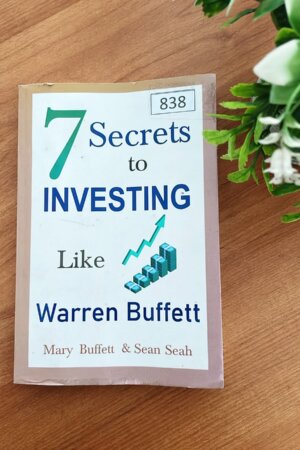
7 Secrets to Investing Like Warren Buffett by Mary Buffett and Sean Seah (838)
රු750.00
3 X Rs. 250.00 or 8% Cashback with
or 3 X රු250.00 with
or up to 4 X රු187.50 with
-33%
Non-Fiction & Knowledge
Original price was: රු2,850.00.රු1,900.00Current price is: රු1,900.00.
3 X Rs. 633.33 or 8% Cashback with
or 3 X රු633.33 with
or up to 4 X රු475.00 with
Business, Finance & Economics
රු1,900.00
3 X Rs. 633.33 or 8% Cashback with
or 3 X රු633.33 with
or up to 4 X රු475.00 with
Reviews
There are no reviews yet.