
No products in the cart.
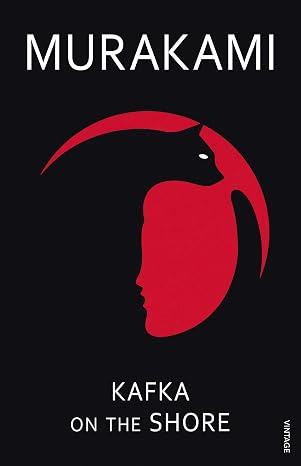
Kafka on the Shore by Haruki Murakami

රු2,300.00
3 X Rs. 766.67 or 8% Cashback with


or 3 X රු766.67 with


or up to 4 X රු575.00 with


Kafka on the Shore by Haruki Murakami is a surreal literary novel following runaway teenager Kafka Tamura and the mysterious Nakata through parallel journeys filled with talking cats, strange coincidences, memory, fate and magical realism.
Format: Paperback
Pages: 624
Publisher: Vintage
ISBN: 9780099494096
9 in stock
Kafka on the Shore by Haruki Murakami
Kafka on the Shore by Haruki Murakami is a surreal, philosophical and deeply atmospheric novel that blends literary fiction, magical realism, mystery, mythology and dreamlike storytelling.
The story follows two very different characters whose lives unfold in parallel.
The first is Kafka Tamura, a fifteen-year-old boy who runs away from home.
The second is Satoru Nakata, an elderly man whose unusual childhood experience left him with limited conventional abilities but a remarkable capacity to communicate with cats.
Their journeys appear separate at first.
Gradually, however, their stories begin to echo one another through strange coincidences, symbols, memories and events that resist ordinary explanation.
Penguin describes the novel as a story in which Kafka leaves home under the shadow of a dark prophecy while Nakata’s quiet life changes dramatically, leading both men into increasingly strange and mysterious circumstances.
Kafka Tamura
Kafka is determined to escape both his father and a disturbing prophecy that has shaped his life.
He chooses the name “Kafka” for himself and begins travelling through Japan alone.
Eventually, he finds refuge in a private library.
There he meets people who become deeply important to his journey.
Kafka’s story deals with:
- Identity
- Family
- Memory
- Loneliness
- Fate
- Desire
- Fear
- Growing up
He is searching for freedom, but escaping his old life does not necessarily mean escaping the questions attached to it.
Nakata
Nakata’s sections have a very different tone.
After a mysterious incident during childhood, he lost much of his memory and conventional academic ability.
Yet he gained something unusual:
He can communicate with cats.
Nakata spends part of his life helping people find missing pets.
That simple routine changes when one case leads him into a much darker and stranger situation.
His journey eventually expands far beyond lost cats.
Two Parallel Journeys
One of the novel’s greatest strengths is the way it develops two apparently separate narratives.
Kafka and Nakata do not move through the world in the same way.
Kafka is introspective and searching.
Nakata is direct, gentle and often accepts extraordinary events without questioning them.
Their stories are linked through themes, symbols and consequences rather than through a conventional plot structure.
Magical Realism and Surrealism
The novel contains many events that do not follow normal reality.
Readers encounter elements such as:
- Talking cats
- Fish falling from the sky
- Strange dreams
- Ghostlike figures
- Shifting identities
- Symbolic spaces
- Impossible coincidences
- Mysterious supernatural forces
Murakami does not always explain these events.
Instead, they function as part of the emotional and symbolic world of the novel.
This is important for readers expecting a traditional mystery.
Not every strange event receives a straightforward answer.
Fate and Free Will
One of the central questions in the novel concerns fate.
Kafka is trying to escape a prophecy.
Yet the more he tries to avoid it, the more he wonders whether his choices are actually leading him toward it.
This creates tension between:
- Destiny
- Personal choice
- Family history
- Fear
- Self-identity
The novel repeatedly asks whether people can escape the stories that have been imposed upon them.
Memory
Memory is another major theme.
Different characters experience memory in very different ways.
Some are haunted by the past.
Some have lost parts of it.
Some seem almost trapped inside memories that have become more powerful than the present.
The novel explores how identity can depend on what a person remembers—and what happens when memory becomes uncertain.
Music and Literature
Like many Murakami novels, Kafka on the Shore is filled with references to music, books and philosophy.
These cultural references help shape the novel’s atmosphere.
They also reflect the inner worlds of the characters.
Readers will encounter discussion of literature, classical music and Western philosophy alongside Japanese mythology and contemporary life.
Literary Fiction with Mystery Elements
Although the book contains a murder, disappearances and supernatural puzzles, it is not a conventional crime novel.
The mystery is more philosophical and psychological.
The important questions are often not:
What happened?
but rather:
What does it mean?
That makes the novel best suited to readers comfortable with ambiguity.
Themes in Kafka on the Shore
The novel explores:
- Identity
- Fate
- Memory
- Loneliness
- Family
- Desire
- Loss
- Consciousness
- Dreams
- Time
- Violence
- Myth
- Self-discovery
Content Considerations
The novel contains mature themes including:
- Violence
- Death
- Sexual content
- Incest-related themes
- Disturbing imagery
- Family trauma
- Psychological distress
These elements are part of a serious adult literary narrative.
Who May Enjoy This Book?
Kafka on the Shore may appeal to readers who enjoy:
- Haruki Murakami
- Magical realism
- Surreal fiction
- Japanese literature
- Literary fiction
- Philosophical novels
- Unusual mysteries
- Dreamlike storytelling
- Symbolism
- Character-driven fiction
Readers who prefer every mystery to have a clear and literal explanation may find the novel challenging, while readers who enjoy ambiguity and interpretation may find it especially rewarding.
About Haruki Murakami
Haruki Murakami is one of Japan’s most internationally recognised contemporary writers.
His major works include:
- Norwegian Wood
- The Wind-Up Bird Chronicle
- 1Q84
- A Wild Sheep Chase
- Hard-Boiled Wonderland and the End of the World
- Sputnik Sweetheart
- Colorless Tsukuru Tazaki and His Years of Pilgrimage
- The City and Its Uncertain Walls
Penguin notes that Murakami began writing while running a jazz bar in Tokyo and later became internationally known for fiction that combines everyday life with mystery, melancholy and surreal elements.
For readers searching for Kafka on the Shore by Haruki Murakami in Sri Lanka, ISBN 9780099494096 is the Vintage paperback edition used for this listing.
Be the first to review “Kafka on the Shore by Haruki Murakami”
Related products
Classics & Literary Fiction
රු1,750.00
3 X Rs. 583.33 or 8% Cashback with
or 3 X රු583.33 with
or up to 4 X රු437.50 with
Out of stock
Classics & Literary Fiction
රු1,800.00
3 X Rs. 600.00 or 8% Cashback with
or 3 X රු600.00 with
or up to 4 X රු450.00 with
-48%

Classics & Literary Fiction
Original price was: රු3,000.00.රු1,550.00Current price is: රු1,550.00.
3 X Rs. 516.67 or 8% Cashback with
or 3 X රු516.67 with
or up to 4 X රු387.50 with
-26%

Contemporary romance
Original price was: රු1,950.00.රු1,450.00Current price is: රු1,450.00.
3 X Rs. 483.33 or 8% Cashback with
or 3 X රු483.33 with
or up to 4 X රු362.50 with
-22%
Out of stock
Fiction & Literature
Original price was: රු2,300.00.රු1,800.00Current price is: රු1,800.00.
3 X Rs. 600.00 or 8% Cashback with
or 3 X රු600.00 with
or up to 4 X රු450.00 with

Out of stock
Classics & Literary Fiction
රු1,500.00
3 X Rs. 500.00 or 8% Cashback with
or 3 X රු500.00 with
or up to 4 X රු375.00 with
-18%

Out of stock
Fiction & Literature
Original price was: රු2,750.00.රු2,250.00Current price is: රු2,250.00.
3 X Rs. 750.00 or 8% Cashback with
or 3 X රු750.00 with
or up to 4 X රු562.50 with

Out of stock
Fiction & Literature
රු1,750.00
3 X Rs. 583.33 or 8% Cashback with
or 3 X රු583.33 with
or up to 4 X රු437.50 with
Reviews
There are no reviews yet.