
No products in the cart.
-48%
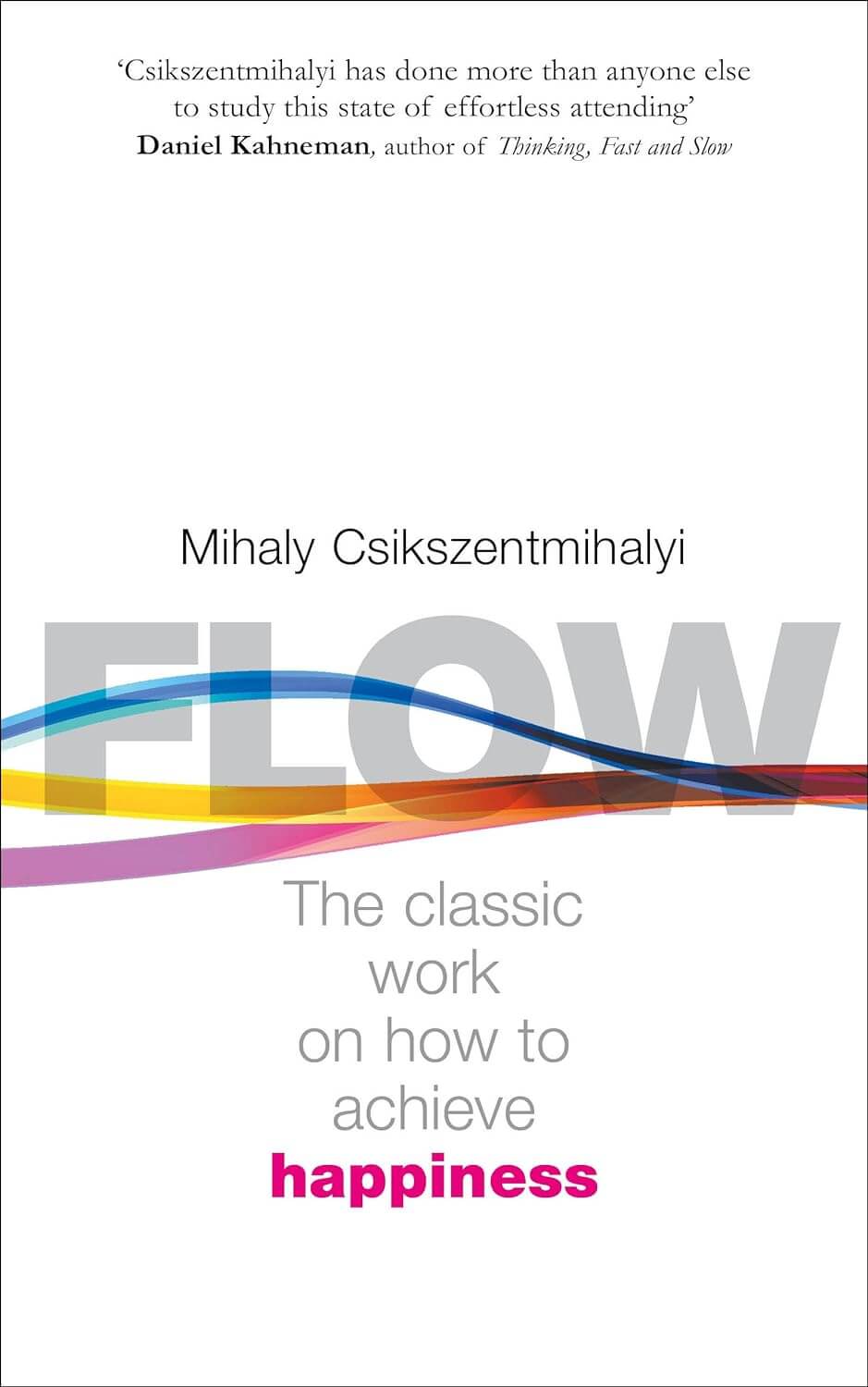
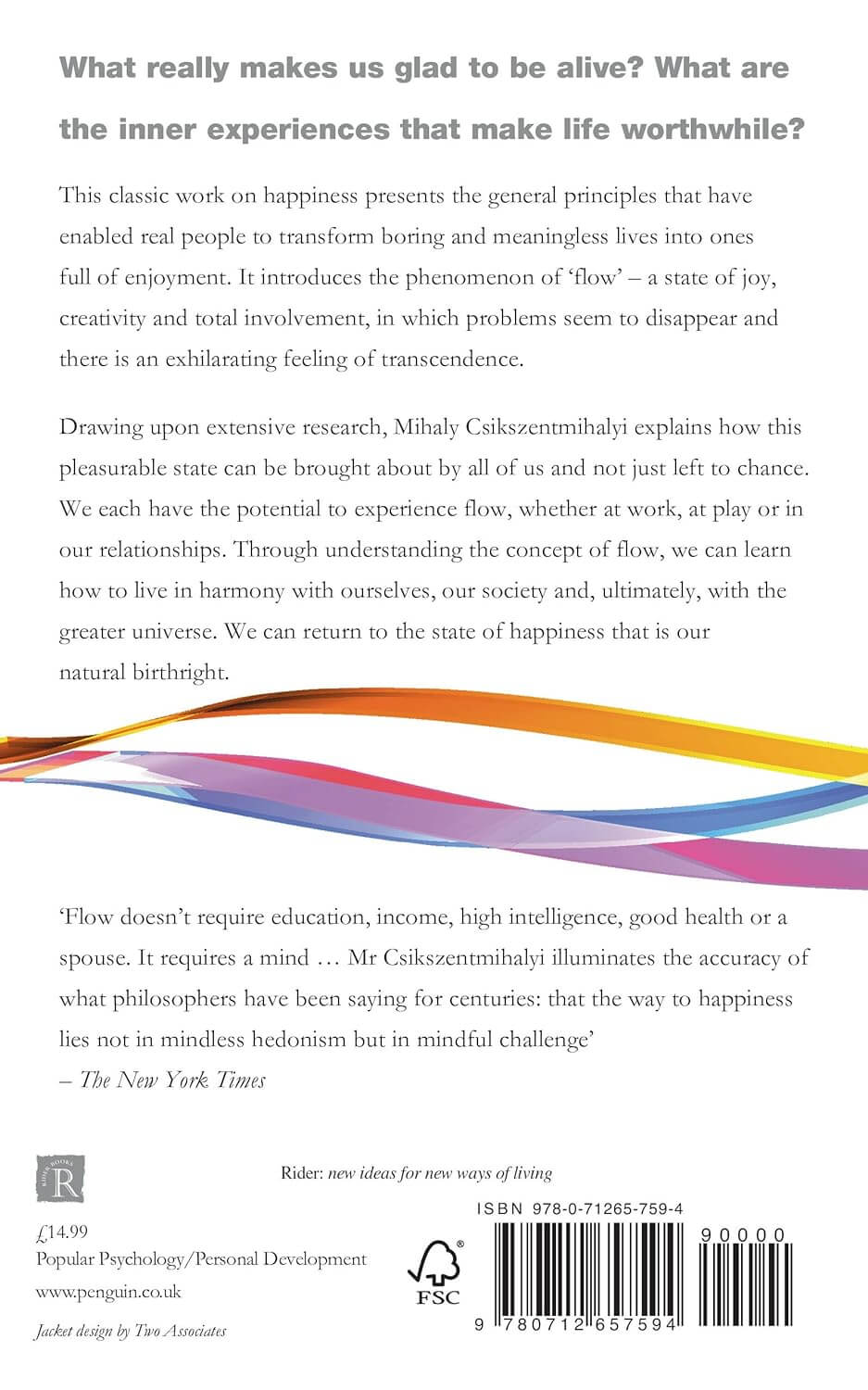
Flow by Mihaly Csikszentmihalyi


Original price was: රු2,800.00.රු1,450.00Current price is: රු1,450.00.
3 X Rs. 483.33 or 8% Cashback with


or 3 X රු483.33 with


or up to 4 X රු362.50 with


“Dive into the transformative concept of ‘Flow’ with Mihaly Csikszentmihalyi’s groundbreaking book. Explore the psychology of optimal experience and learn how to achieve a state of effortless concentration, heightened creativity, and deep fulfillment. This classic work is a guide to unlocking your full potential and finding joy in everyday activities.”
Out of stock
Email when stock available
Flow by Mihaly Csikszentmihalyi explores one of the most fascinating questions in psychology:
What makes an experience genuinely satisfying?
Think about a time when you were completely absorbed in something.
Writing.
Reading.
Programming.
Playing music.
Painting.
Playing a sport.
Solving a difficult problem.
Hours passed.
But it felt like minutes.
You were not thinking about your phone.
You were not worrying about tomorrow.
You were simply doing the activity.
That experience is what Mihaly Csikszentmihalyi calls flow.
His research suggests that some of the most rewarding moments of life happen when our attention becomes completely engaged in a challenging but manageable activity.
Why Read Flow by Mihaly Csikszentmihalyi?
Flow by Mihaly Csikszentmihalyi is ideal for readers interested in psychology, happiness, productivity, creativity, concentration, and meaningful living.
The book explores:
- Flow state
- Happiness
- Focus
- Attention
- Creativity
- Peak performance
- Meaning
- Consciousness
- Enjoyment
- Goals
- Skills
- Work
- Leisure
- Relationships
- Personal growth
It is not simply a productivity book.
Its bigger question is how people can improve the quality of their everyday experience.
What Is Flow?
Flow is a state of deep involvement.
Your attention becomes concentrated on what you are doing.
Self-consciousness becomes weaker.
Distractions disappear.
Your actions and awareness seem to merge.
Time may feel faster or slower than normal.
And the activity itself becomes rewarding.
Csikszentmihalyi describes these moments as examples of optimal experience.
Flow by Mihaly Csikszentmihalyi and Happiness
People often imagine happiness as something that arrives after achieving a goal.
Get promoted.
Buy the house.
Earn more money.
Finish the degree.
Then you will be happy.
Flow by Mihaly Csikszentmihalyi presents a different perspective.
The quality of life depends greatly on the quality of the experiences filling it.
If most of your day feels boring, anxious, distracted, or meaningless, occasional rewards may not be enough.
But if meaningful activities regularly create deep engagement, everyday life can become more satisfying.
Happiness Is Not Only About What Happens to You
Two people can experience similar circumstances but interpret them differently.
One may feel frustrated.
Another may find challenge.
One may feel bored.
Another may discover something worth learning.
Csikszentmihalyi argues that happiness is influenced not only by external events but also by how consciousness is organized and how attention is directed.
This gives the reader a powerful idea.
You cannot control everything around you.
But you can influence where you place your attention.
Flow by Mihaly Csikszentmihalyi and Challenge
Flow usually does not happen when something is extremely easy.
If a task requires almost no effort, boredom may appear.
But flow also becomes difficult when a task is far beyond your ability.
Then anxiety can take over.
The most engaging activities often sit somewhere between these extremes.
The challenge stretches you.
But you still believe you can respond.
That balance between challenge and skill is one of the most famous ideas connected with flow psychology.
Too Easy Creates Boredom
Imagine playing a game you can win without thinking.
At first, it may feel enjoyable.
Eventually, it becomes boring.
There is no uncertainty.
No growth.
No reason to concentrate.
Now make the game slightly harder.
Suddenly you need to pay attention.
That increased challenge can make the experience far more engaging.
Too Difficult Creates Anxiety
The opposite can also happen.
Imagine being asked to play chess against a grandmaster when you barely know the rules.
That challenge may not feel exciting.
It may simply feel impossible.
Flow is more likely when skill and challenge are reasonably matched.
As your skills improve, the challenge can increase too.
Flow by Mihaly Csikszentmihalyi and Clear Goals
Flow becomes easier when you know what you are trying to accomplish.
A vague task creates uncertainty.
“Work on my project.”
That is unclear.
Compare it with:
“Write the introduction before 10 a.m.”
Now the goal is visible.
Clear goals help attention focus on the immediate task rather than wandering between possibilities.
Immediate Feedback Matters
Flow activities often provide feedback.
A musician hears the note.
A basketball player sees whether the shot goes in.
A programmer sees whether the code runs.
A writer sees the page filling with words.
Feedback tells you whether your actions are working.
This helps maintain concentration.
Without feedback, people may become uncertain about whether they are making progress.
Flow by Mihaly Csikszentmihalyi and Attention
Attention is one of your most valuable resources.
Whatever repeatedly receives your attention begins shaping your experience.
If attention constantly jumps between:
Messages.
Notifications.
Social media.
Emails.
Videos.
News.
Tasks.
Your consciousness becomes fragmented.
Flow by Mihaly Csikszentmihalyi shows why sustained attention can produce a completely different quality of experience.
Deep concentration can turn ordinary activities into something more meaningful.
Flow and Modern Distraction
The book was first published in 1990.
That was before smartphones and social media dominated daily life.
Yet its ideas may feel even more relevant today.
Modern technology constantly competes for attention.
A notification appears.
You check it.
Then another.
Then another.
Ten minutes disappear.
Flow requires almost the opposite environment.
One task.
Sustained attention.
A meaningful challenge.
Enough time to become deeply involved.
Flow by Mihaly Csikszentmihalyi and Work
Work does not automatically prevent flow.
In fact, challenging work can sometimes create more flow than passive leisure.
A meaningful project may involve:
Clear goals.
Skills.
Feedback.
Concentration.
Challenge.
These conditions can create deep engagement.
The problem is not necessarily work itself.
It is whether the work allows autonomy, challenge, concentration, and meaningful progress.
Making Work More Engaging
You may not be able to redesign your entire job.
But sometimes you can redesign the way you approach a task.
Create a clearer goal.
Increase the challenge.
Track progress.
Remove distractions.
Learn a new skill.
Turn repetitive work into a measurable challenge.
Small changes can make an activity more engaging.
Flow by Mihaly Csikszentmihalyi and Creativity
Creative work frequently produces flow.
Artists.
Writers.
Musicians.
Designers.
Scientists.
Inventors.
They may become deeply absorbed in solving a problem or creating something.
During those moments, external rewards become less important.
The activity itself becomes rewarding.
Google Books describes flow as involving deep enjoyment, creativity, and complete involvement with life.
The Autotelic Experience
One important concept is the autotelic experience.
An autotelic activity is worth doing largely for its own sake.
You are not doing it only for:
Money.
Grades.
Status.
Praise.
Recognition.
You enjoy the process itself.
That does not mean external rewards are bad.
It means the activity has an internal reward too.
The experience itself matters.
Flow by Mihaly Csikszentmihalyi and Motivation
External motivation says:
“I am doing this because I will receive something afterward.”
Internal motivation says:
“I value the activity itself.”
Flow tends to strengthen intrinsic motivation.
You continue because the challenge is satisfying.
That can be particularly powerful for:
Learning.
Sports.
Creative work.
Career development.
Hobbies.
Personal projects.
Flow and Self-Consciousness
When people enter flow, they often stop worrying so much about themselves.
Normally the mind may ask:
“Do I look stupid?”
“Am I good enough?”
“What will people think?”
During deep involvement, those questions may temporarily disappear.
Attention moves away from self-evaluation and toward the task.
That can create a feeling of freedom.
Flow by Mihaly Csikszentmihalyi and Time
One of the most recognizable signs of flow is altered perception of time.
You begin working at 7:00 p.m.
You look up.
It is 10:30 p.m.
It felt like one hour.
Sometimes the opposite happens.
A short but intense experience may feel much longer because so much attention is concentrated into it.
Time itself has not changed.
Your experience of time has.
Flow and Skill Development
Flow can encourage growth.
Suppose your skill level increases.
The old challenge becomes too easy.
Boredom appears.
To re-enter flow, you need a harder challenge.
That pushes skill higher.
Then challenge must rise again.
This creates a cycle:
Challenge.
Learning.
Improvement.
New challenge.
That is one reason flow can become closely connected with mastery.
Flow by Mihaly Csikszentmihalyi for Students
Students can apply the concept to studying.
Studying often feels boring when it is passive.
Simply rereading notes may not create enough challenge.
Instead, try:
Practice questions.
Timed exercises.
Explaining ideas from memory.
Solving problems.
Testing yourself.
Breaking material into clear goals.
These methods create more active engagement.
The goal is not simply studying longer.
It is becoming more involved in the learning process.
Flow for Professionals
Professionals can also use flow principles.
A long workday filled with interruptions can feel exhausting while producing very little.
A shorter period of deep concentration may produce much more meaningful work.
Useful conditions include:
Clear objectives.
Limited interruptions.
Challenging tasks.
Immediate feedback.
Dedicated focus time.
This is why the concept of flow later became influential in discussions about productivity and peak performance.
Flow by Mihaly Csikszentmihalyi and Leisure
Not all leisure creates the same quality of experience.
Watching something passively can feel relaxing.
But activities requiring skill and engagement may create deeper satisfaction.
Playing music.
Reading.
Gardening.
Painting.
Sport.
Chess.
Cooking.
Writing.
Building something.
The important factor is active involvement.
Pleasure vs Enjoyment
Csikszentmihalyi makes an important distinction between passive pleasure and deeper enjoyment.
Pleasure may come from comfort.
Food.
Rest.
Entertainment.
Enjoyment often involves growth.
You accomplish something.
Learn something.
Stretch a skill.
Overcome a challenge.
Both have a place in life.
But a life built entirely around passive pleasure may not create the same sense of development and meaning.
Flow by Mihaly Csikszentmihalyi and Meaning
The book eventually moves beyond individual activities.
How can an entire life develop a sense of order and meaning?
If goals constantly contradict one another, life can feel fragmented.
Work says one thing.
Relationships say another.
Personal values say something else.
A more meaningful life may come from organizing goals around a larger sense of direction.
Flow then becomes more than occasional concentration.
It becomes part of how a person approaches living.
Flow Does Not Mean Constant Happiness
This is important.
Flow is not a promise that every moment should feel amazing.
People need rest.
Life contains grief.
Stress.
Boredom.
Uncertainty.
Responsibilities.
Flow is one way of understanding why certain activities feel deeply satisfying.
It is not a requirement to remain productive every second.
7 Powerful Lessons From Flow by Mihaly Csikszentmihalyi
- Deep involvement can create genuine enjoyment. Some of life’s most satisfying moments happen when attention is fully absorbed.
- Challenge should match skill. Tasks that are too easy become boring, while tasks that are overwhelmingly difficult can create anxiety.
- Clear goals improve concentration. Knowing what you are trying to achieve helps direct attention.
- Feedback keeps you engaged. Understanding whether your actions are working helps sustain involvement.
- Attention shapes experience. What you repeatedly focus on influences the quality of your life.
- The activity itself can become rewarding. Autotelic experiences are valuable even without external rewards.
- Meaningful engagement can improve quality of life. Flow by Mihaly Csikszentmihalyi shows how greater control of attention can support enjoyment, creativity, and personal growth.
What You Can Expect From Flow by Mihaly Csikszentmihalyi
Readers can expect:
- Flow psychology
- Optimal experience
- Happiness research
- Concentration
- Focus
- Creativity
- Motivation
- Skill development
- Goal setting
- Consciousness
- Meaning
- Work and leisure
- Peak performance
- Personal growth
- Psychology research
Who Should Read Flow by Mihaly Csikszentmihalyi?
Flow by Mihaly Csikszentmihalyi is ideal for:
Students.
Professionals.
Entrepreneurs.
Artists.
Writers.
Athletes.
Designers.
Creators.
Psychology students.
Readers interested in happiness.
People struggling with distraction.
Anyone interested in meaningful work.
Readers interested in peak performance.
People who want to understand why some activities feel deeply satisfying.
A Powerful Psychology Classic About Living Better
Flow by Mihaly Csikszentmihalyi is ultimately not about working harder.
It is about experiencing life more deeply.
When challenge matches skill, goals are clear, feedback is available, and attention becomes completely engaged, ordinary activities can become extraordinarily satisfying.
You stop watching the clock.
You stop constantly judging yourself.
You become absorbed in what you are doing.
That state is flow.
Csikszentmihalyi’s research turned this experience into one of the most influential ideas in modern psychology, connecting deep involvement with enjoyment, creativity, meaning, and improved quality of life.
For readers interested in happiness, psychology, concentration, creativity, meaningful work, and personal growth, Flow by Mihaly Csikszentmihalyi remains a powerful classic.
Book Details
Title: Flow
Full Title: Flow: The Psychology of Optimal Experience
Author: Mihaly Csikszentmihalyi
Genre: Psychology / Personal Development / Happiness
Main Topics: Flow State, Happiness, Focus, Creativity, Meaning, Optimal Experience
Original Publication: 1990
Original Publisher: Harper & Row
Original Edition Length: 303 pages.
Harper Perennial Modern Classics Edition
A widely available modern edition is:
ISBN-13: 9780062151605
ISBN-10: 0062151606
Publisher: HarperCollins
Series: Harper Perennial Modern Classics
Pages: 336.
Earlier Harper Edition
Another commonly catalogued edition is:
ISBN-13: 9780061876721
ISBN-10: 0061876720
Publisher: HarperCollins
Publication: 2009 digital/catalogued edition
Pages: 336.
Edition Note
Different editions of Flow vary in title presentation, ISBN, page count, and format.
Some editions are titled Flow: The Psychology of Optimal Experience, while UK editions have also appeared under titles such as Flow: The Psychology of Happiness.
Use the ISBN printed on your physical copy before entering exact edition information on your website.
Learn more about Flow: The Psychology of Optimal Experience by Mihaly Csikszentmihalyi on the official Harper Academic website.
Explore more personal development books at Bargain Books.
| Author | Mihaly Csikszentmihalyi |
|---|---|
| Type | Paperback Printed Book |
| ISBN/ISSN | 0061339202, 978-0061339202 |
| Language | English |
| Pages | 336 |
Be the first to review “Flow by Mihaly Csikszentmihalyi”
Related products

Non-Fiction & Knowledge
රු1,950.00
3 X Rs. 650.00 or 8% Cashback with
or 3 X රු650.00 with
or up to 4 X රු487.50 with
Out of stock
Non-Fiction & Knowledge
රු1,800.00
3 X Rs. 600.00 or 8% Cashback with
or 3 X රු600.00 with
or up to 4 X රු450.00 with
Non-Fiction & Knowledge
රු2,450.00
3 X Rs. 816.67 or 8% Cashback with
or 3 X රු816.67 with
or up to 4 X රු612.50 with
Non-Fiction & Knowledge
රු2,250.00
3 X Rs. 750.00 or 8% Cashback with
or 3 X රු750.00 with
or up to 4 X රු562.50 with
-24%
Out of stock
Non-Fiction & Knowledge
Original price was: රු2,500.00.රු1,900.00Current price is: රු1,900.00.
3 X Rs. 633.33 or 8% Cashback with
or 3 X රු633.33 with
or up to 4 X රු475.00 with
-13%
Out of stock
Non-Fiction & Knowledge
Original price was: රු3,900.00.රු3,400.00Current price is: රු3,400.00.
3 X Rs. 1,133.33 or 8% Cashback with
or 3 X රු1,133.33 with
or up to 4 X රු850.00 with
-19%
Out of stock
Non-Fiction & Knowledge
Original price was: රු2,650.00.රු2,150.00Current price is: රු2,150.00.
3 X Rs. 716.67 or 8% Cashback with
or 3 X රු716.67 with
or up to 4 X රු537.50 with
-14%
Out of stock
Self-Help & Psychology
Original price was: රු2,900.00.රු2,500.00Current price is: රු2,500.00.
3 X Rs. 833.33 or 8% Cashback with
or 3 X රු833.33 with
or up to 4 X රු625.00 with
Reviews
There are no reviews yet.