
No products in the cart.
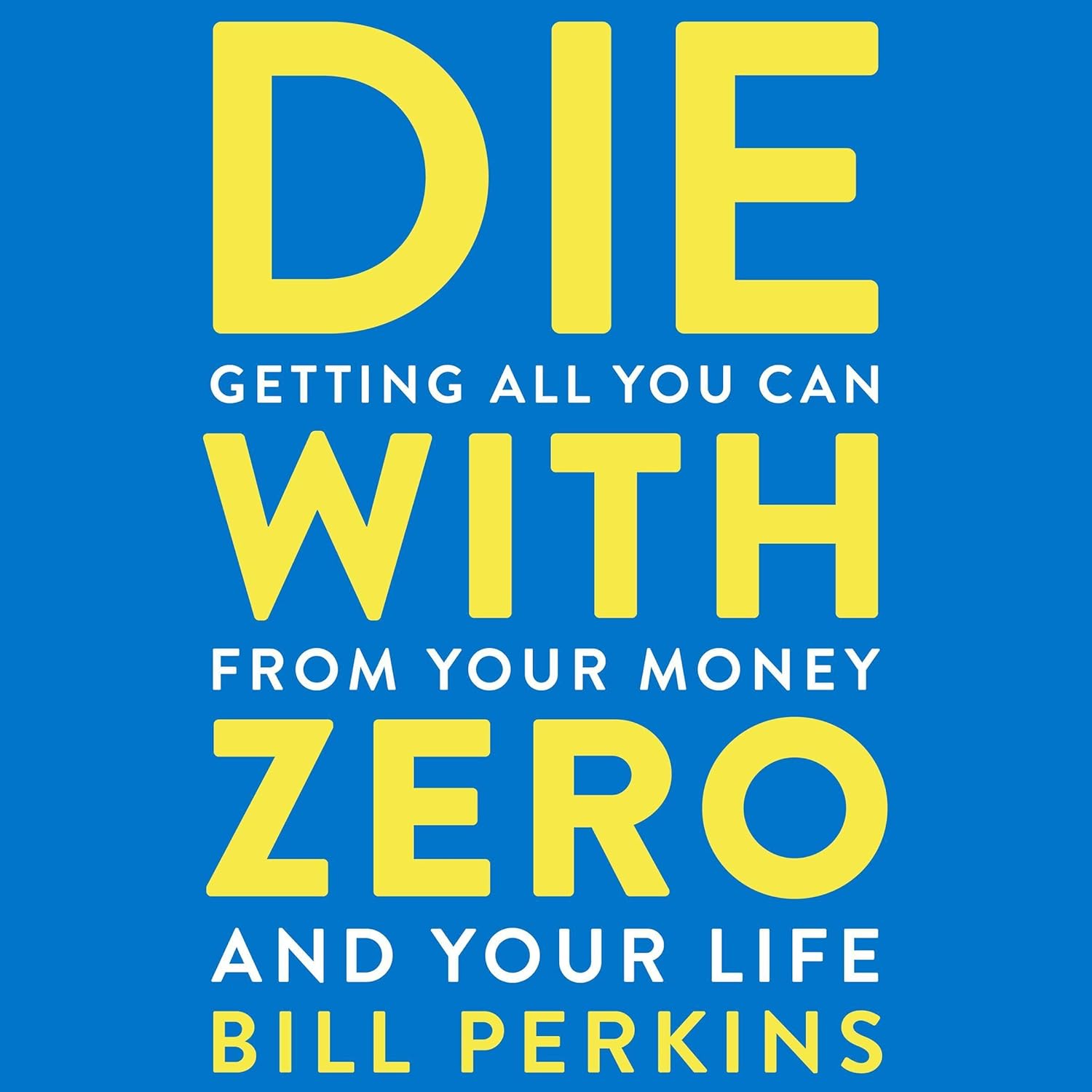
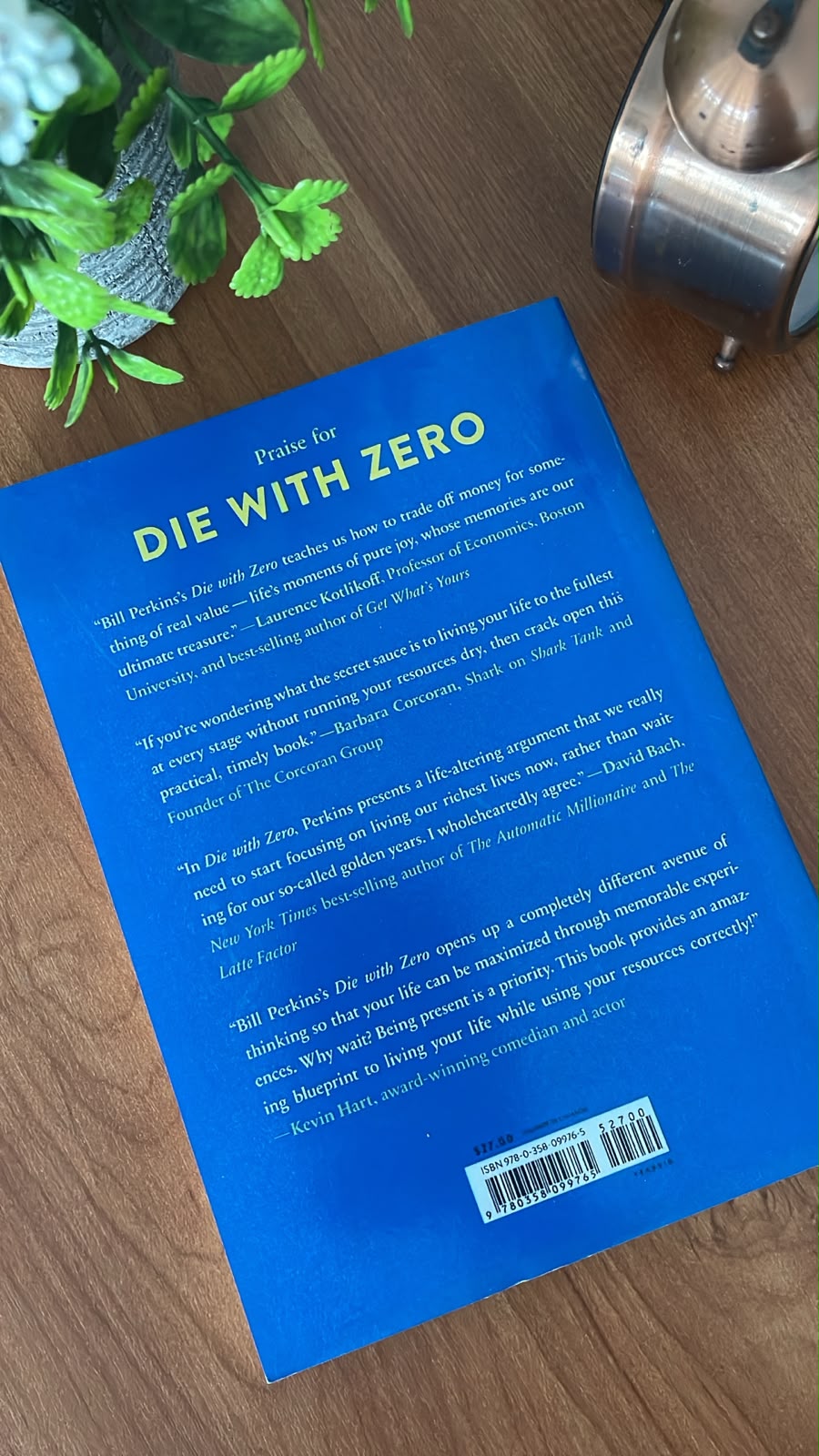

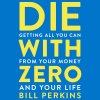

Die With Zero by Bill Perkins

රු1,950.00
3 X Rs. 650.00 or 8% Cashback with


or 3 X රු650.00 with


or up to 4 X රු487.50 with


Die With Zero by Bill Perkins challenges traditional saving habits and teaches how to use money to create meaningful life experiences
Indian locally published copy included.
3 in stock
Die With Zero by Bill Perkins is a thought-provoking personal finance book that challenges the traditional idea that financial success means accumulating as much money as possible.
Instead, Perkins argues that money should be viewed as a tool.
The real goal is not simply increasing your net worth.
It is using money, time and health to create a fulfilling life filled with meaningful experiences.
Die With Zero encourages readers to think differently about saving, spending, retirement and the value of time.
It is particularly suitable for readers interested in personal finance, financial independence, retirement planning and intentional living.
Why Read Die With Zero?
Die With Zero asks readers to consider an unusual financial question.
What happens if you become excellent at saving money but wait too long to enjoy it?
Many traditional financial books focus heavily on saving.
Save for retirement.
Save for emergencies.
Invest for the future.
Those ideas can be important.
But Perkins argues that excessive saving can also create another type of waste.
You may eventually have plenty of money but less time, energy or health to use it meaningfully.
Die With Zero and the Value of Time
Time is one of the most important ideas in Die With Zero.
Money can sometimes be replaced.
Time cannot.
Once a particular stage of life has passed, certain experiences may become much harder or impossible.
A physically demanding trip may be easy at thirty.
It may be considerably more difficult at eighty.
Spending time with young children can only happen while they are young.
Perkins therefore encourages readers to consider not only whether they can afford an experience but also when that experience should happen.
Money Is a Tool, Not the Final Goal
Money has value because of what it allows people to do.
It can provide security.
It can provide comfort.
It can also create opportunities.
But simply having a large number in a bank account does not automatically create a meaningful life.
Die With Zero encourages readers to think about the purpose behind financial accumulation.
Why are you saving?
What do you want your money to make possible?
These questions can change the way someone approaches personal finance.
Die With Zero and Memory Dividends
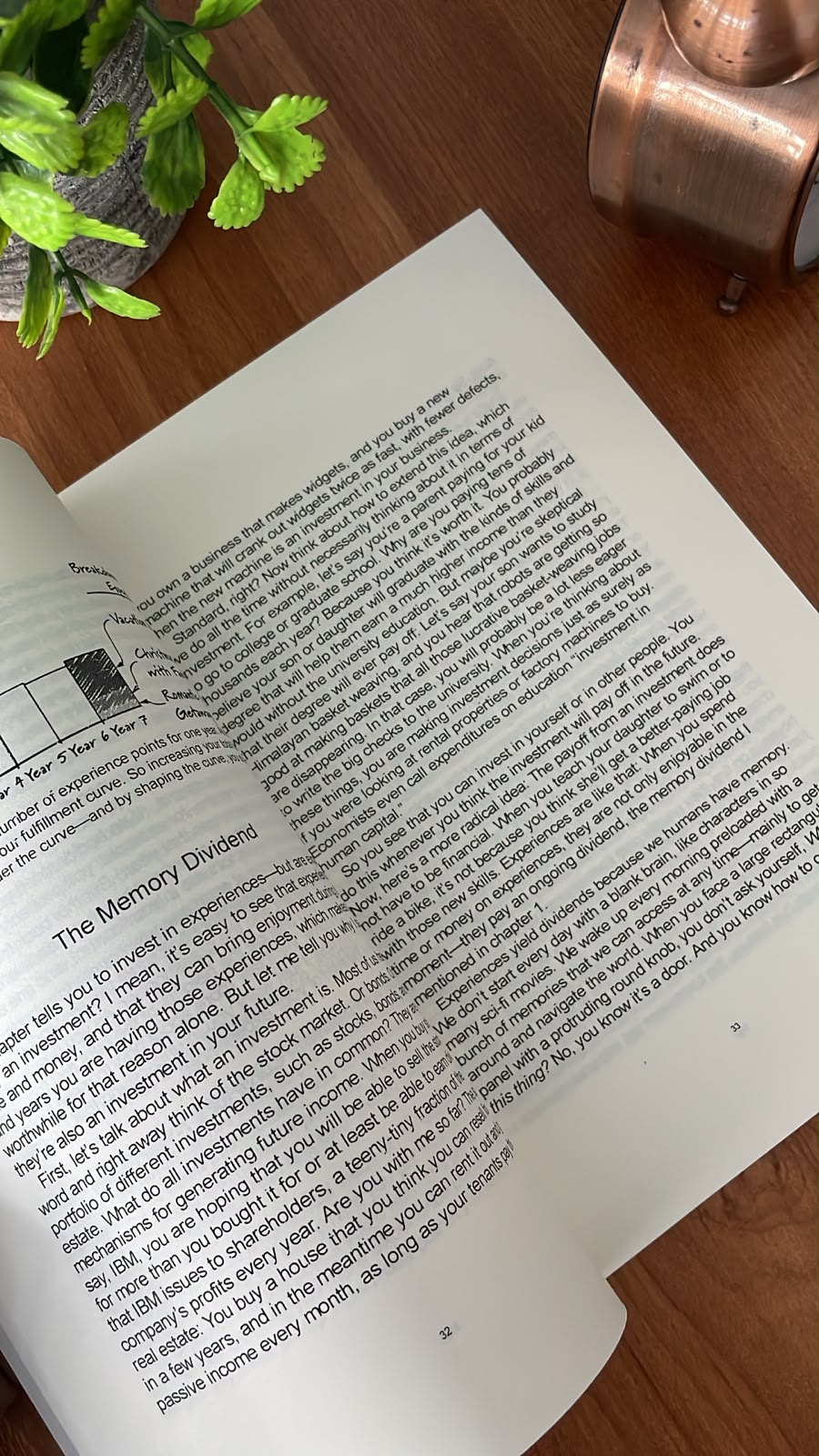
One of the best-known concepts in Die With Zero is memory dividends.
Perkins argues that valuable experiences can continue giving benefits long after the experience itself ends.
You take a memorable trip.
Years later, you remember it.
You share the story.
You look at photographs.
You talk about it with the people who experienced it with you.
In this sense, the original experience continues producing emotional returns.
Perkins calls these ongoing benefits memory dividends.
Invest in Experiences
Traditional investing focuses on financial assets.
Die With Zero asks readers to think about experiences as another form of investment.
A family holiday may not increase your bank balance.
But it can strengthen relationships and create memories.
Learning a skill may not immediately produce financial returns.
But it can create years of enjoyment.
Spending money therefore does not always mean wasting money.
The important question is whether the spending creates genuine value in your life.
Time Buckets in Die With Zero
Another important framework in Die With Zero is time bucketing.
Instead of keeping one large list of everything you want to do someday, Perkins suggests thinking about experiences according to different stages of life.
Some goals make sense earlier.
Others make sense later.
The book’s official site uses examples such as physically demanding activities and family experiences to show why timing matters.
This approach can turn vague dreams into more concrete plans.
Stop Saving Everything for Retirement
Many people imagine retirement as the time when they will finally enjoy life.
They will travel.
They will pursue hobbies.
They will spend more time with family.
But Die With Zero challenges the idea that every major experience should be postponed until retirement.
Health changes.
Responsibilities change.
Relationships change.
Some experiences have a natural window.
Waiting until later can mean losing that opportunity completely.
The book therefore encourages a better balance between preparing for the future and enjoying the present.
Health, Time and Money
Perkins treats three resources as especially important:
- Money
- Time
- Health
People rarely have all three in equal amounts throughout life.
Younger people may have more time and health but less money.
Middle-aged people may earn more money while facing greater responsibilities.
Older people may have accumulated substantial wealth but have less physical energy.
Die With Zero encourages readers to make decisions based on how these resources change throughout life.
Die With Zero Does Not Mean Spend Recklessly
The title can sound extreme.
But the core idea is not simply to spend every dollar immediately.
Perkins advocates deliberate spending and purposeful saving.
The goal is to avoid ending life with large amounts of unused wealth that could have created meaningful experiences earlier.
The book’s official description emphasizes balancing spending and saving so that money supports fulfillment rather than becoming the final objective.
Know What You Are Saving For
Saving becomes more meaningful when it has a clear purpose.
You may be saving for financial security.
You may want to support your family.
You may want to travel.
You may want freedom from stressful work.
Die With Zero encourages readers to connect money with specific life goals.
This helps transform financial planning from endless accumulation into intentional decision-making.
Give Money When It Has Greater Impact
The book also challenges traditional thinking about inheritance.
People often leave significant wealth to children only after death.
But by that time, children may already be financially established themselves.
Perkins argues that giving can sometimes create greater value when recipients receive support earlier, at a stage when it can meaningfully change their opportunities.
This idea fits the wider philosophy of Die With Zero: timing affects value.
Avoid Living on Autopilot
Many people move through life using a familiar sequence.
Study.
Work.
Earn.
Save.
Retire.
Then enjoy life.
Die With Zero asks readers to question whether that sequence always produces the best result.
Personal finance should support life.
Life should not simply become a long project devoted to maximizing savings.
That does not mean abandoning responsibility.
It means regularly asking whether your financial decisions still support the life you actually want.
Die With Zero and Intentional Living
At its heart, Die With Zero is as much a book about life planning as it is about money.
It encourages readers to become intentional about experiences.
What do you want to do?
Who do you want to spend time with?
What experiences would you regret missing?
Which opportunities have an expiration date?
These questions can help readers decide how to allocate both money and time.
Experiences Change With Age
Not every experience provides equal value at every age.
Your priorities change.
Your physical abilities change.
Your relationships change.
That means planning experiences according to life stages can be more effective than simply keeping a retirement bucket list.
Die With Zero encourages readers to think about when an experience will produce the greatest benefit.
This is one of the reasons time bucketing plays such an important role in the book.
Financial Security Still Matters
The philosophy behind Die With Zero should not be confused with ignoring financial risk.
People still need money for housing, healthcare and unexpected expenses.
Nobody knows exactly how long they will live.
That means financial decisions still require careful planning.
The book’s main challenge is directed more toward excessive accumulation without a clear purpose.
Readers should therefore interpret its ideas according to their own financial circumstances.
Learn to Measure a Rich Life Differently
People often measure financial success using net worth.
Perkins proposes another idea: net fulfillment.
His official book site describes this as prioritizing the fulfillment created by money rather than maximizing wealth for its own sake.
A person could have enormous wealth and still regret missed opportunities.
Another person may have less money but a lifetime filled with meaningful relationships and experiences.
Die With Zero asks readers to think about which definition of wealth matters more.
7 Powerful Lessons From Die With Zero
- Money Is a Tool – Use wealth to support your life instead of making accumulation the only goal.
- Time Is Limited – Certain opportunities become harder or impossible as life changes.
- Invest in Experiences – Meaningful experiences can continue creating memory dividends for years.
- Use Time Buckets – Plan important experiences according to the stages of life when they make the most sense.
- Balance Saving and Living – Preparing for the future should not require postponing every meaningful experience.
- Give at the Right Time – Money can sometimes have greater impact when given earlier rather than only through inheritance.
- Optimize Fulfillment, Not Only Net Worth – Financial success should ultimately contribute to a life you value.
What You Can Learn From Die With Zero
Readers can explore:
- Personal finance
- Intentional spending
- Saving
- Retirement planning
- Financial independence
- Memory dividends
- Time buckets
- Life planning
- Experiences
- Wealth management
- Financial priorities
- Intentional living
- Giving and inheritance
- Time management
- Health and money
- Life satisfaction
- Net fulfillment
Who Should Read Die With Zero?
Die With Zero is suitable for readers interested in personal finance.
People who save aggressively for retirement may find its ideas particularly thought-provoking.
Readers interested in financial independence may appreciate its alternative perspective on wealth accumulation.
Entrepreneurs and high earners may also find value in considering whether additional wealth is creating additional fulfillment.
The book can also appeal to people who enjoy personal-development books about priorities, time and meaningful living.
A Powerful Guide to Using Money and Time Better
Die With Zero challenges readers to rethink one of the most common assumptions about money.
More is not always better.
The value of money depends partly on what you eventually do with it.
Bill Perkins encourages readers to balance financial responsibility with meaningful experiences, relationships and opportunities that may not remain available forever.
The goal is not irresponsible spending.
It is intentional living.
Save with a purpose.
Spend with a purpose.
Understand that time and health are limited resources.
And use your money while it can still create the greatest value in your life.
For readers interested in personal finance, retirement, financial freedom and building a richer life through experiences, Die With Zero is an excellent addition to any finance or personal-development bookshelf.
Book Details
Title: Die With Zero
Subtitle: Getting All You Can from Your Money and Your Life
Author: Bill Perkins
Category: Personal Finance / Money / Personal Development
Publisher: HarperCollins / Mariner Books editions are listed through HarperCollins.
Be the first to review “Die With Zero by Bill Perkins”
Related products
-24%
Out of stock
Non-Fiction & Knowledge
Original price was: රු2,500.00.රු1,900.00Current price is: රු1,900.00.
3 X Rs. 633.33 or 8% Cashback with
or 3 X රු633.33 with
or up to 4 X රු475.00 with
-21%
Non-Fiction & Knowledge
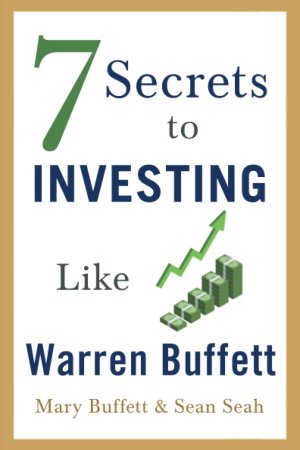
7 Secrets to Investing Like Warren Buffett by Mary Buffett & Sean Seah
Original price was: රු1,900.00.රු1,500.00Current price is: රු1,500.00.
3 X Rs. 500.00 or 8% Cashback with
or 3 X රු500.00 with
or up to 4 X රු375.00 with
-24%
Non-Fiction & Knowledge
Original price was: රු2,100.00.රු1,600.00Current price is: රු1,600.00.
3 X Rs. 533.33 or 8% Cashback with
or 3 X රු533.33 with
or up to 4 X රු400.00 with
Non-Fiction & Knowledge
රු1,550.00
3 X Rs. 516.67 or 8% Cashback with
or 3 X රු516.67 with
or up to 4 X රු387.50 with
රු2,000.00
3 X Rs. 666.67 or 8% Cashback with
or 3 X රු666.67 with
or up to 4 X රු500.00 with

Non-Fiction & Knowledge
රු1,950.00
3 X Rs. 650.00 or 8% Cashback with
or 3 X රු650.00 with
or up to 4 X රු487.50 with
-13%
Out of stock
Non-Fiction & Knowledge
Original price was: රු3,900.00.රු3,400.00Current price is: රු3,400.00.
3 X Rs. 1,133.33 or 8% Cashback with
or 3 X රු1,133.33 with
or up to 4 X රු850.00 with
Non-Fiction & Knowledge
රු2,450.00
3 X Rs. 816.67 or 8% Cashback with
or 3 X රු816.67 with
or up to 4 X රු612.50 with
Reviews
There are no reviews yet.