
No products in the cart.
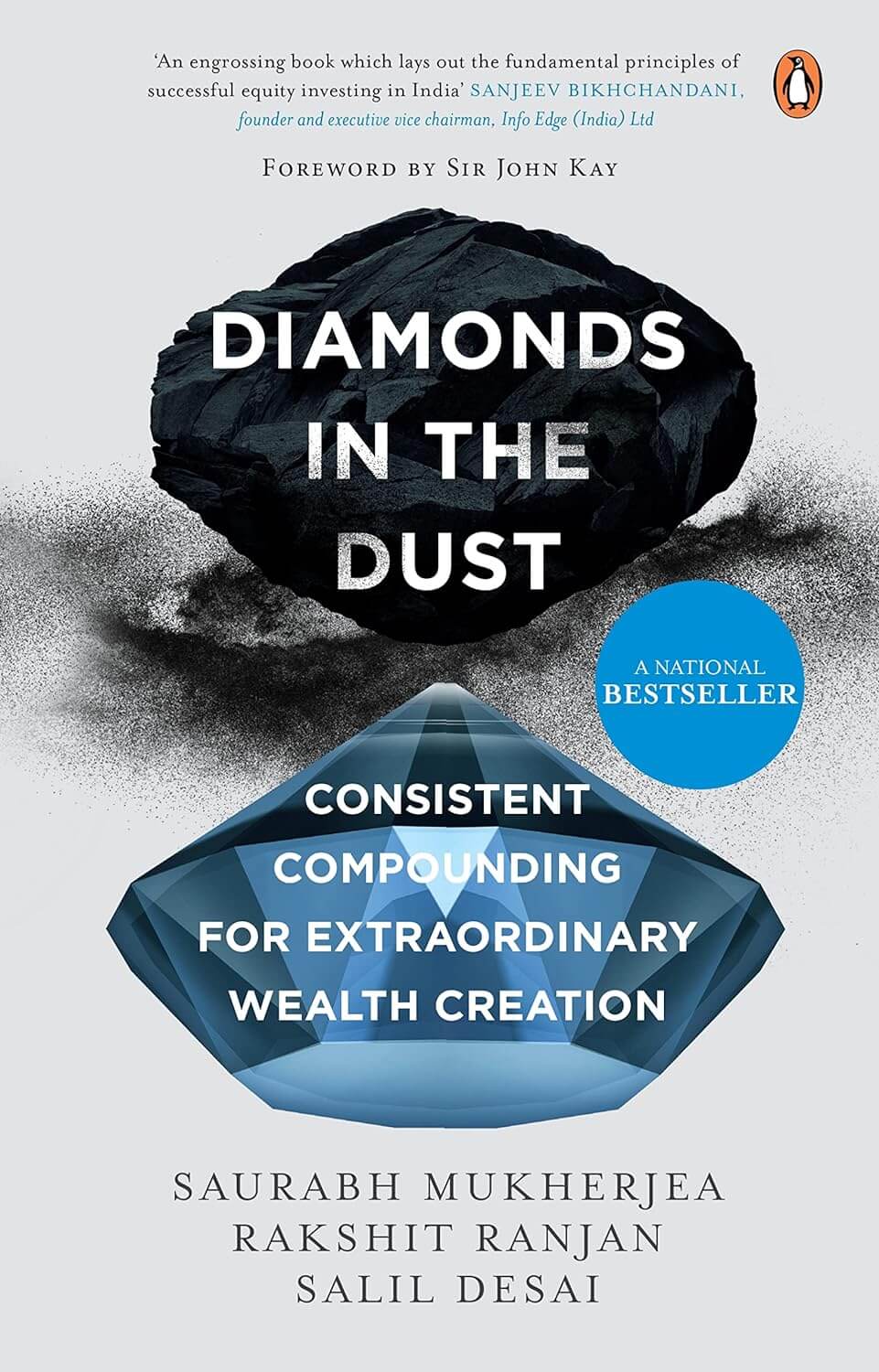

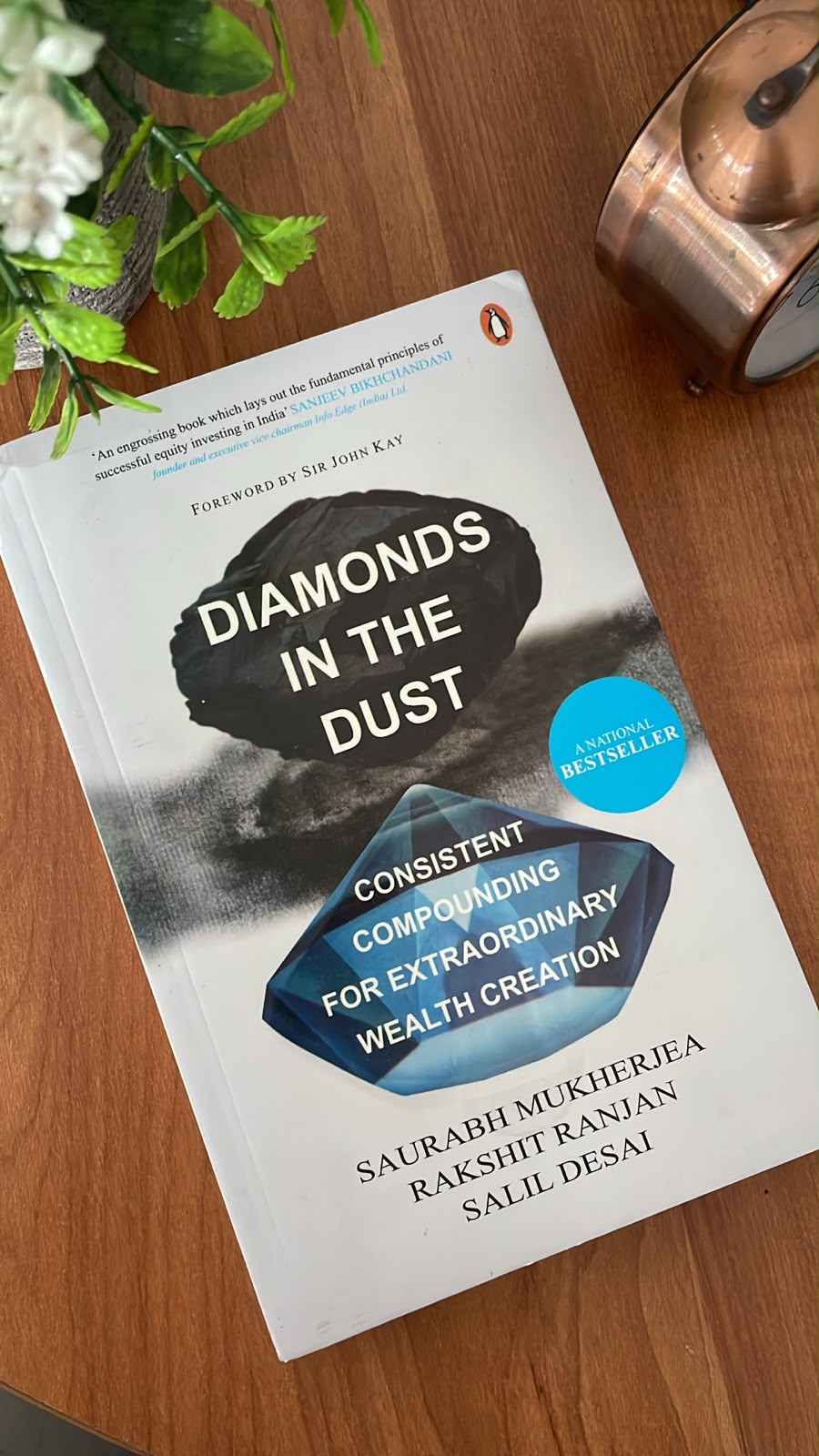
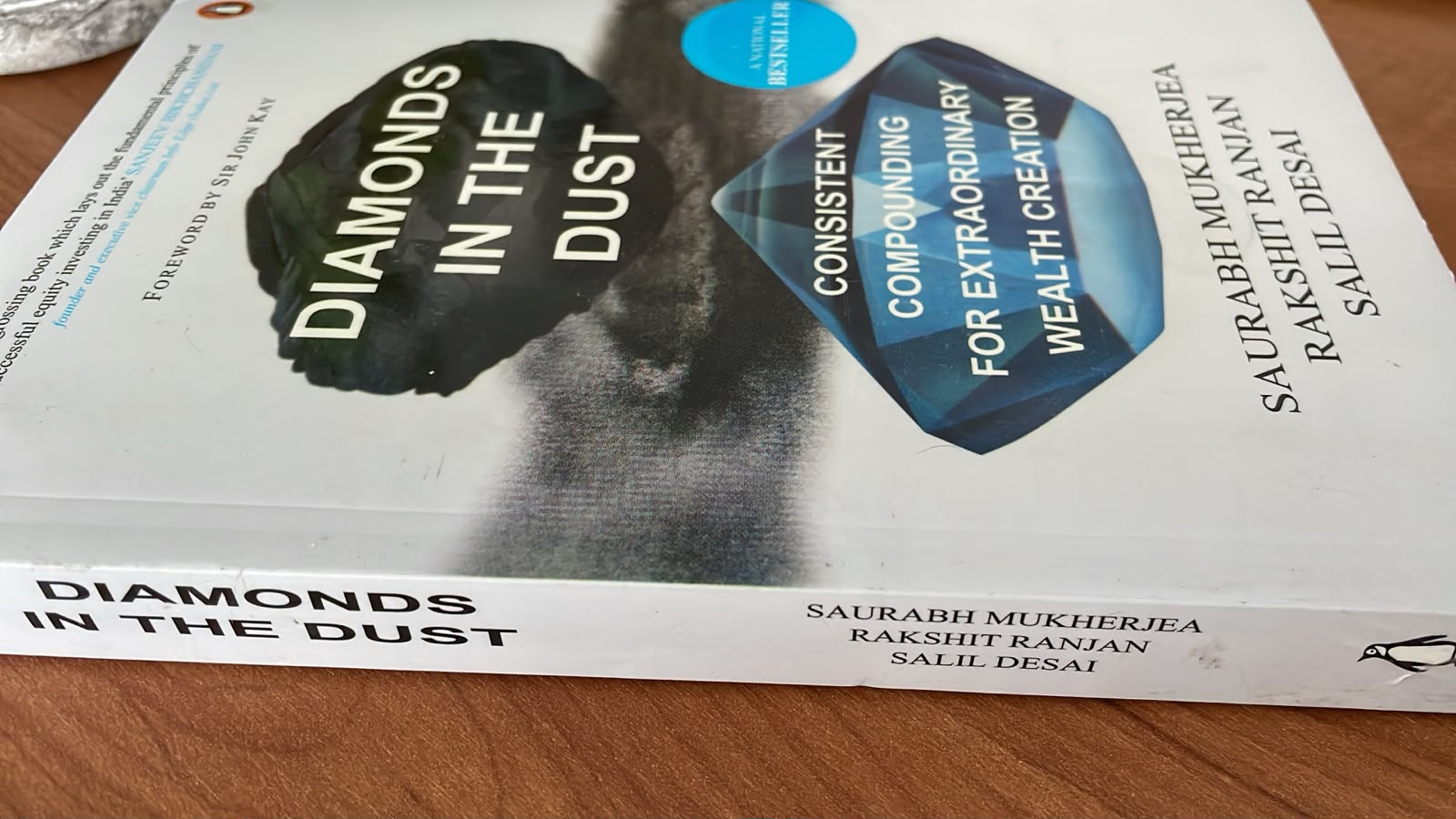





Diamonds in the Dust by Marie’s Designs (Paper Back)


රු2,750.00
3 X Rs. 916.67 or 8% Cashback with


or 3 X රු916.67 with


or up to 4 X රු687.50 with


“Dive into the poignant narrative of ‘Diamonds in the Dust’ with this hardcover edition. Uncover the resilience of the human spirit as author [Author’s Name] weaves a compelling tale of [brief description of the theme or plot]. This beautifully crafted hardcover edition is a treasure for book enthusiasts and an enriching addition to any collection.”
3 in stock
Diamonds in the Dust by Saurabh Mukherjea, Rakshit Ranjan and Salil Desai is a practical investment book about identifying strong businesses and building wealth through consistent long-term investing.
The book focuses particularly on the Indian stock market and the challenge investors face when separating genuinely high-quality companies from businesses with weak fundamentals, poor management or inefficient use of capital.
Rather than encouraging investors to chase quick profits, Diamonds in the Dust explains an approach centred on finding clean, well-managed companies capable of producing strong returns over long periods.
It is especially suitable for investors interested in stocks, compounding, business quality and disciplined wealth creation.
Why Read Diamonds in the Dust?
Diamonds in the Dust addresses an important question faced by many investors.
How can you identify businesses that have the potential to create wealth consistently?
Stock markets contain thousands of companies.
Some may appear attractive because their prices are rising.
Others may receive significant media attention.
But neither popularity nor short-term price movement necessarily tells you whether the underlying business is strong.
The authors encourage readers to focus more carefully on company quality, financial performance and management.
Diamonds in the Dust and Consistent Compounding
Consistent compounding is central to Diamonds in the Dust.
Compounding occurs when investment gains themselves begin producing additional gains.
Over long periods, this effect can become extremely powerful.
But compounding works best when the underlying investment continues performing consistently.
The book therefore focuses on identifying businesses capable of generating strong results across extended periods rather than depending on one exceptional year.
Penguin describes the approach as a technique for finding clean, well-managed Indian companies that have consistently generated outsized returns.
Finding High-Quality Companies
One of the biggest challenges in stock investing is understanding which companies are genuinely strong.
A company can report rapid growth and still be poorly managed.
Another may have an exciting business model but use shareholder capital inefficiently.
Diamonds in the Dust encourages readers to examine the underlying quality of a business.
Investors should look beyond market excitement.
The quality of management, financial discipline and consistency can matter enormously over the long term.
Avoid Weak Business Models
Not every company that enters the stock market will create wealth for shareholders.
Some businesses operate with weak economics.
Others may require enormous amounts of capital simply to maintain growth.
Penguin notes that investors can suffer losses because of weak business models, corporate fraud and poor capital allocation by companies.
Diamonds in the Dust therefore encourages investors to examine the structure of a company before becoming excited about its share price.
The Importance of Good Management
Management quality can significantly influence long-term business performance.
Executives decide how profits are reinvested.
They determine whether the company takes on unnecessary debt.
They make acquisitions.
They decide how aggressively the company expands.
Poor management can damage even a promising business.
Diamonds in the Dust places particular attention on identifying clean and well-managed companies.
For long-term investors, understanding management can therefore be just as important as understanding products.
Capital Allocation Matters
A company may generate profits but still destroy shareholder value if those profits are used poorly.
Management can reinvest money into productive opportunities.
Or it can spend capital on weak acquisitions and unprofitable expansion.
This is why capital allocation deserves attention.
The authors identify misallocation of capital as one of the reasons investors can lose money in financial markets.
Diamonds in the Dust helps readers think more carefully about how businesses use the resources available to them.
Diamonds in the Dust and Long-Term Investing
Diamonds in the Dust is particularly relevant to investors who prefer a long-term approach.
Short-term market movements can be unpredictable.
Prices may rise or fall because of news, sentiment or speculation.
Long-term investors can instead concentrate on whether the underlying business continues growing and strengthening.
This does not remove risk.
No company can guarantee future returns.
But focusing on business quality provides a more disciplined framework than simply chasing market trends.
The Power of Patience
Compounding requires time.
An investor who constantly switches from one company to another may never allow a strong investment thesis to develop fully.
Diamonds in the Dust encourages thinking that is compatible with patient investing.
The goal is not necessarily to find the stock that will rise fastest tomorrow.
It is to identify companies capable of producing sustainable value over many years.
Patience can therefore become an important investment advantage.
Investing Versus Speculation
Investing and speculation are not the same thing.
Speculation often focuses heavily on what another person may be willing to pay for an asset in the near future.
Investing focuses more on the underlying business.
What does the company sell?
Does it generate cash?
Is management trustworthy?
Does it possess a strong competitive position?
Diamonds in the Dust encourages readers to approach stocks as ownership in businesses rather than merely prices moving on a screen.
Research Before Investing
Research is an essential part of intelligent investing.
The authors base the book on research conducted by the team at Marcellus Investment Managers, using case studies and charts to explain their approach.
This makes Diamonds in the Dust particularly useful for readers who want more than motivational investing advice.
It encourages evidence-based decision-making.
Investors can learn to examine companies rather than relying entirely on recommendations from other people.
Understanding the Indian Stock Market
Diamonds in the Dust is strongly focused on the Indian market.
This makes it particularly relevant to readers interested in Indian equities.
The authors also challenge some investment ideas that they believe have been imported from Western markets without sufficient adjustment for Indian conditions.
This gives the book a distinctive perspective compared with many investment books written primarily for American or European markets.
Avoiding Investment Myths
Investment markets contain many popular beliefs.
Some sound convincing because they are repeated frequently.
But repetition does not make an idea correct.
Diamonds in the Dust challenges several assumptions about investing and encourages readers to examine whether commonly accepted strategies actually fit the Indian market.
This teaches an important broader lesson.
Investors should understand why a strategy works rather than copying it blindly.
Quality Before Cheapness
A low share price does not automatically mean a stock is attractive.
A company can appear cheap because the underlying business has serious problems.
Likewise, a strong business may sometimes appear expensive when viewed through a single valuation measure.
Diamonds in the Dust encourages readers to pay attention to business quality alongside valuation.
The cheapest company is not necessarily the best investment.
Wealth Creation Takes Discipline
Long-term wealth is rarely created through one lucky investment.
It usually requires consistency.
Investors need a process.
They need patience.
They also need the discipline to avoid emotional decisions during periods of market excitement or fear.
Diamonds in the Dust offers readers a structured way to think about companies instead of reacting to every short-term market movement.
Learn Through Real Examples
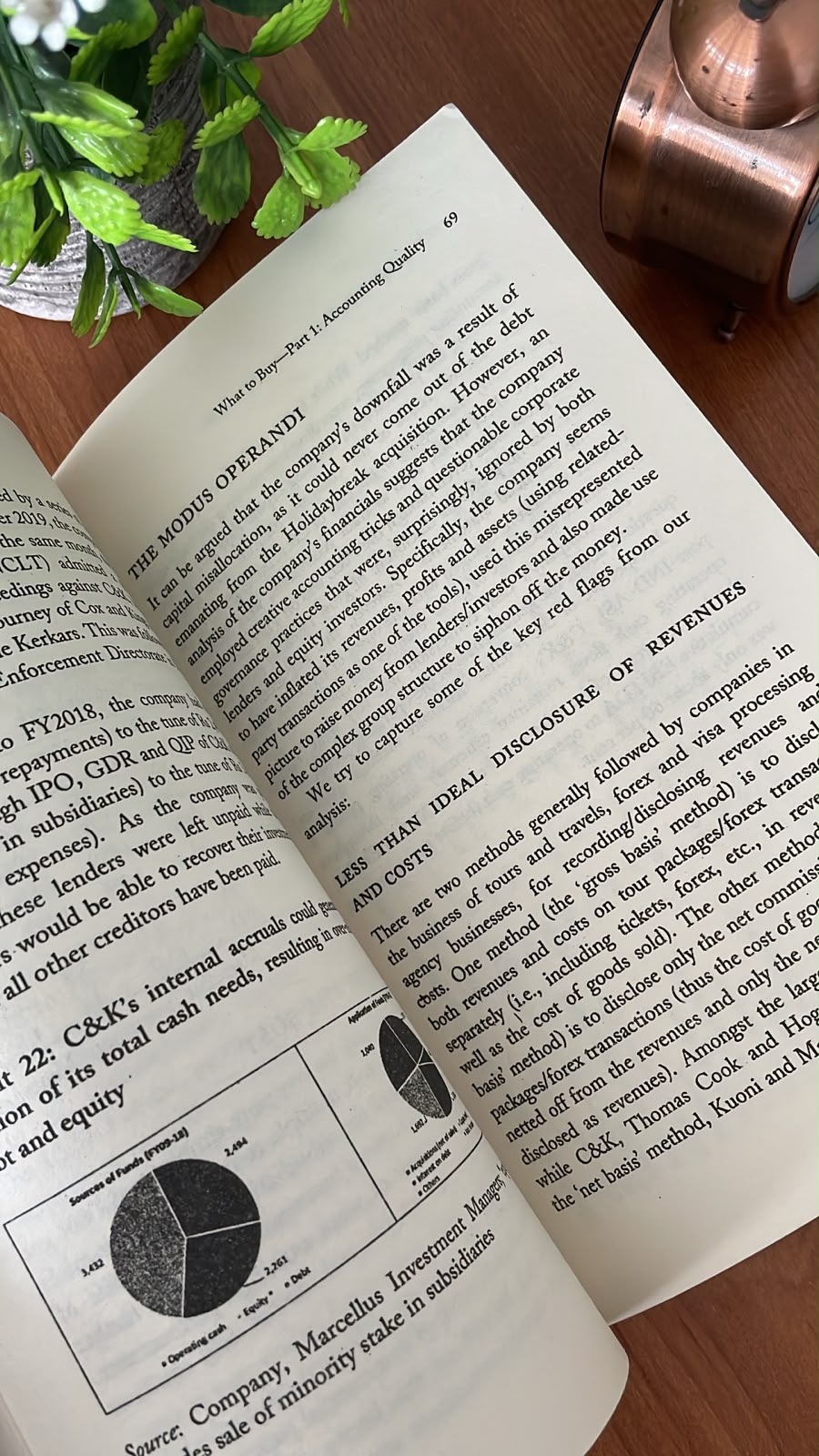
One useful feature of Diamonds in the Dust is its use of case studies and charts.
Penguin specifically highlights these as tools used to explain the art and science of investing in Indian equities.
Examples can make financial concepts easier to understand.
Instead of discussing investing only in abstract terms, readers can see how ideas apply to actual businesses and market situations.
Diamonds in the Dust for Beginner Investors
Diamonds in the Dust can be useful for readers who already understand basic stock-market concepts and want to learn how to evaluate companies more carefully.
Beginners can also benefit from its emphasis on discipline and business quality.
However, readers should remember that no book can remove investment risk.
The principles should be used as part of wider research rather than as guarantees of future returns.
7 Powerful Lessons From Diamonds in the Dust
- Focus on Business Quality – Strong businesses matter more than short-term market excitement.
- Look for Clean Management – Governance and integrity can significantly affect shareholder outcomes.
- Understand Capital Allocation – How a company uses its profits can influence long-term value.
- Think Long Term – Consistent compounding requires patience.
- Avoid Weak Businesses – Rapid growth does not automatically mean a company is financially strong.
- Research Before Investing – Use evidence, financial information and business analysis instead of rumours.
- Question Popular Investment Ideas – Strategies should fit the market and circumstances in which they are being applied.
What You Can Learn From Diamonds in the Dust
Readers can explore:
- Stock-market investing
- Indian equities
- Consistent compounding
- Wealth creation
- Long-term investing
- Business quality
- Management quality
- Corporate governance
- Capital allocation
- Investment research
- Financial analysis
- Stock selection
- Investment discipline
- Investor psychology
- Portfolio thinking
- Risk awareness
Who Should Read Diamonds in the Dust?
Diamonds in the Dust is suitable for readers interested in stock-market investing.
Indian investors may find it particularly relevant because its analysis is built around the Indian market.
Business students can also benefit from learning how investors examine company quality.
Professionals building long-term portfolios may appreciate its focus on consistency and compounding.
Readers of Coffee Can Investing may also recognise Saurabh Mukherjea and Rakshit Ranjan; Penguin identifies both authors with that earlier investing title.
A Powerful Guide to Long-Term Wealth Creation
Diamonds in the Dust encourages investors to look beyond market noise.
The central idea is straightforward.
Find strong businesses.
Examine management carefully.
Understand how capital is allocated.
Think in years rather than days.
And allow consistent business performance to support long-term compounding.
The authors use research, case studies and charts to explain their approach to identifying quality Indian companies and avoiding common investment mistakes.
For readers interested in investing, Indian stocks, financial analysis and disciplined wealth creation, Diamonds in the Dust is a valuable addition to a finance and investment bookshelf.
Book Details
Title: Diamonds in the Dust
Subtitle: Consistent Compounding for Extraordinary Wealth Creation
Authors: Saurabh Mukherjea, Rakshit Ranjan & Salil Desai
Category: Investing / Business / Finance / Wealth Management
Imprint: India Portfolio
Publication: August 2021
Length: 256 pages https://yourwebsite.com/diamonds-in-the-dust/

| Author | Marie's Designs |
|---|---|
| Type | Hardcover |
| ISBN/ISSN | 0670095303, 978-0670095308 |
| Language | English |
| Pages | 256 |
Be the first to review “Diamonds in the Dust by Marie’s Designs (Paper Back)”
Related products
-19%

Out of stock
Non-Fiction & Knowledge
Original price was: රු2,650.00.රු2,150.00Current price is: රු2,150.00.
3 X Rs. 716.67 or 8% Cashback with
or 3 X රු716.67 with
or up to 4 X රු537.50 with
-26%

Out of stock
Non-Fiction & Knowledge
Original price was: රු2,000.00.රු1,490.00Current price is: රු1,490.00.
3 X Rs. 496.67 or 8% Cashback with
or 3 X රු496.67 with
or up to 4 X රු372.50 with
-24%

Out of stock
Non-Fiction & Knowledge
Original price was: රු2,100.00.රු1,600.00Current price is: රු1,600.00.
3 X Rs. 533.33 or 8% Cashback with
or 3 X රු533.33 with
or up to 4 X රු400.00 with

Out of stock
Autobiography
රු2,750.00
3 X Rs. 916.67 or 8% Cashback with
or 3 X රු916.67 with
or up to 4 X රු687.50 with
-34%

Non-Fiction & Knowledge
Original price was: රු2,250.00.රු1,490.00Current price is: රු1,490.00.
3 X Rs. 496.67 or 8% Cashback with
or 3 X රු496.67 with
or up to 4 X රු372.50 with

Non-Fiction & Knowledge
රු1,950.00
3 X Rs. 650.00 or 8% Cashback with
or 3 X රු650.00 with
or up to 4 X රු487.50 with

Out of stock
Non-Fiction & Knowledge
රු1,500.00
3 X Rs. 500.00 or 8% Cashback with
or 3 X රු500.00 with
or up to 4 X රු375.00 with

Out of stock
Self-Help & Psychology
රු2,200.00
3 X Rs. 733.33 or 8% Cashback with
or 3 X රු733.33 with
or up to 4 X රු550.00 with
Reviews
There are no reviews yet.