
No products in the cart.
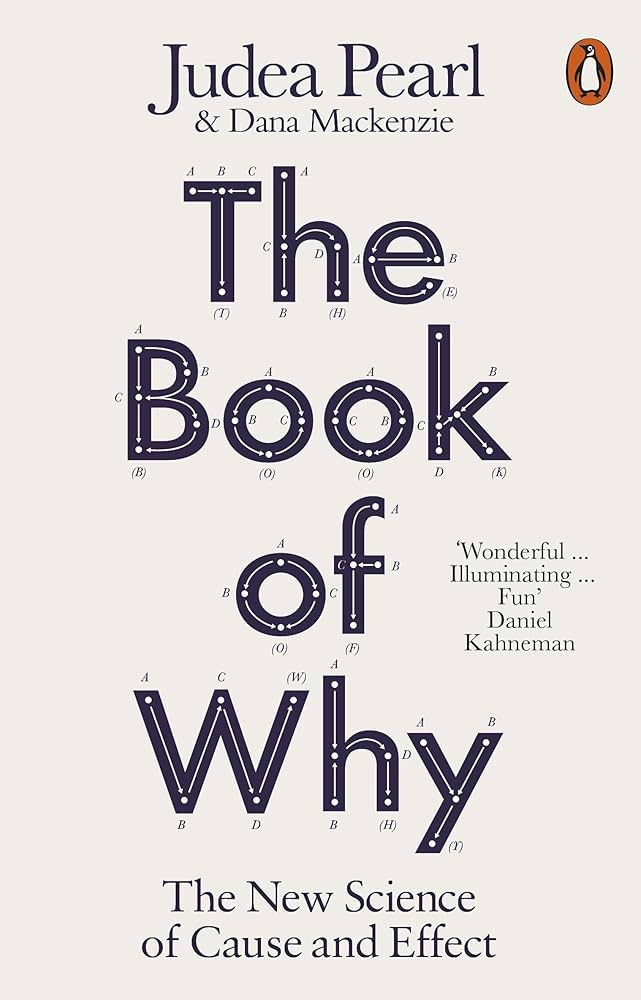
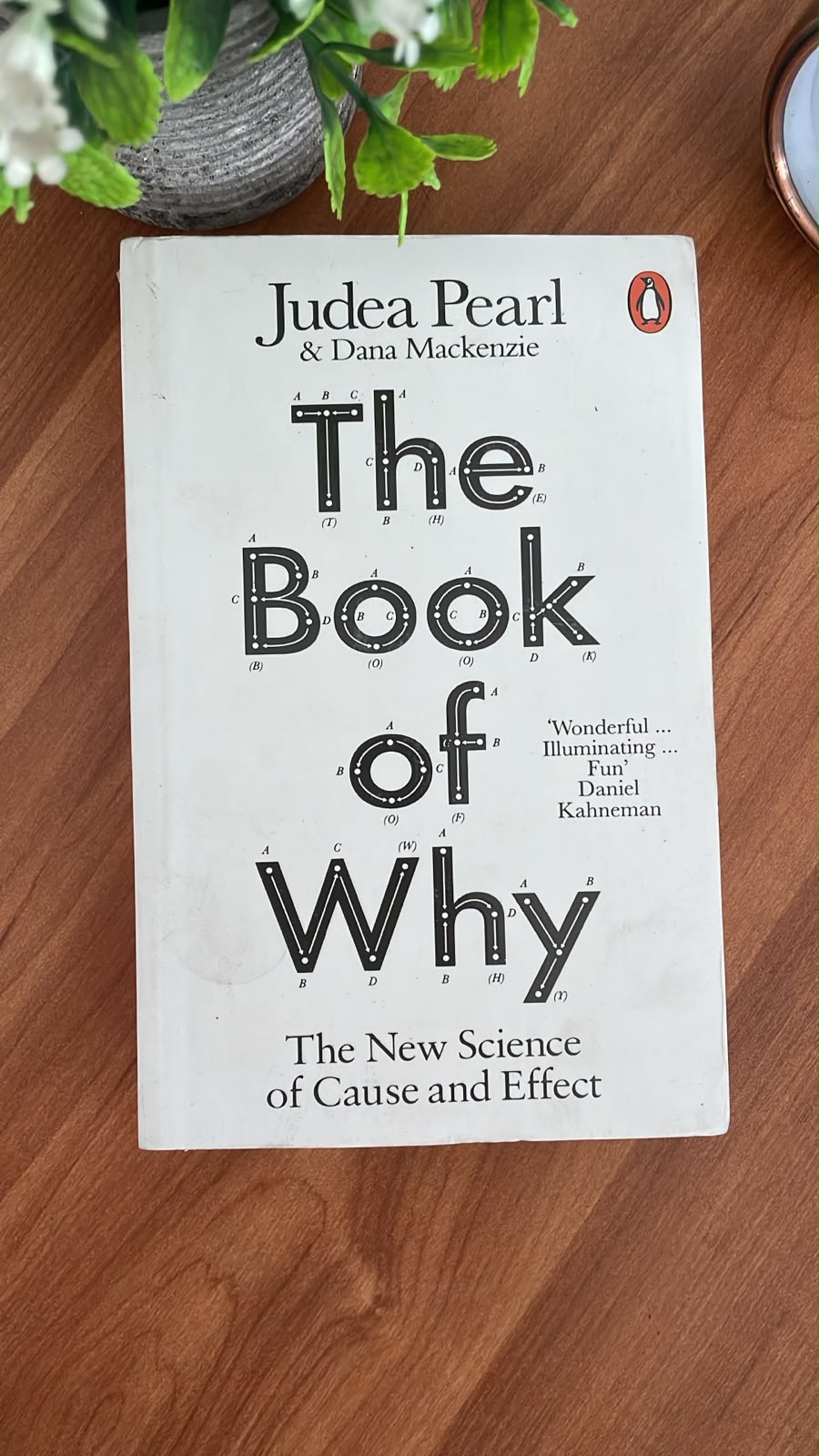
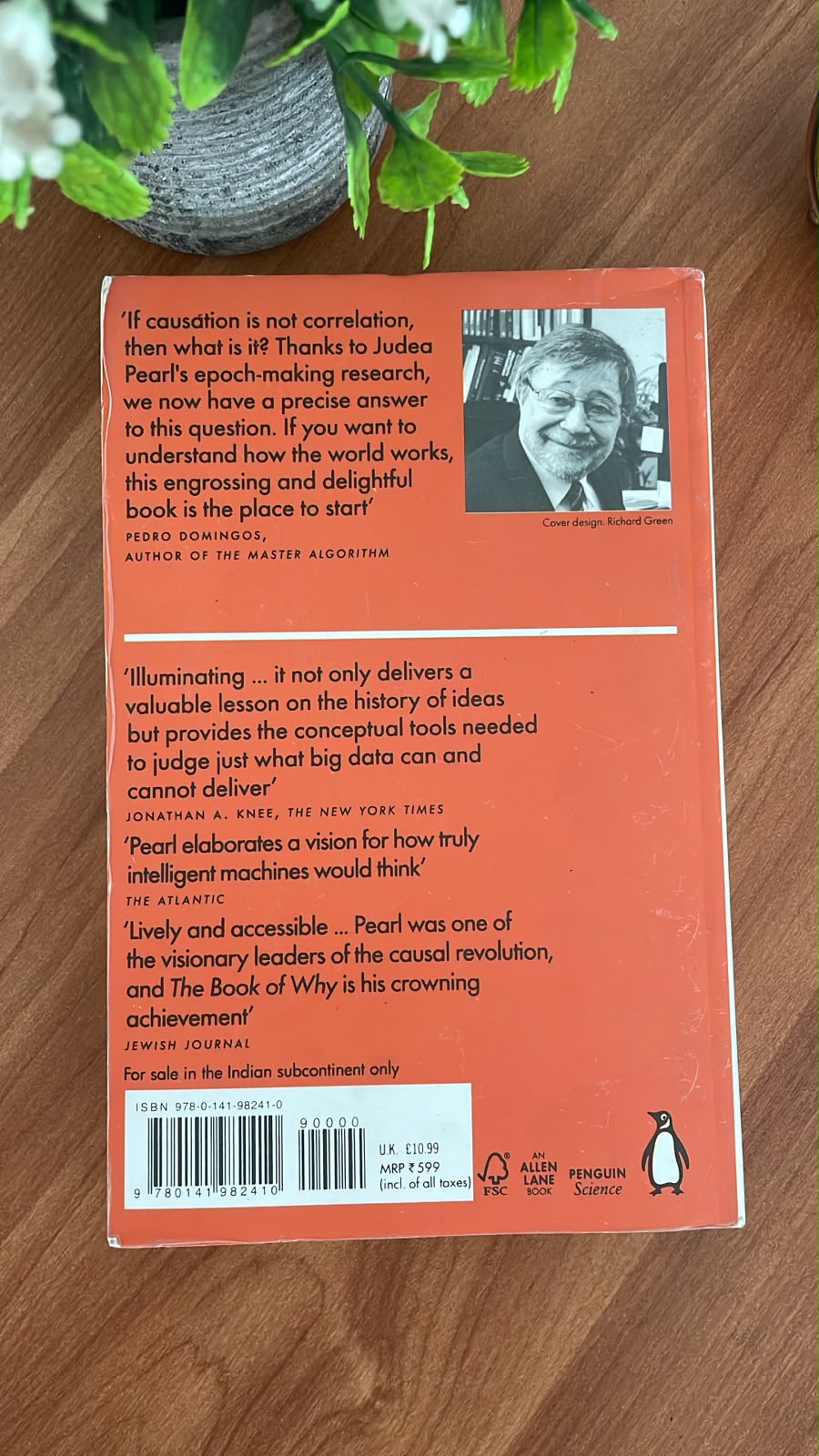






Book of Why by Judea Pearl and Dana Mackenzie


රු1,950.00
3 X Rs. 650.00 or 8% Cashback with


or 3 X රු650.00 with


or up to 4 X රු487.50 with


• Explains causality and the science of “why”
• Introduces counterfactual reasoning and causal models
• Shows practical applications in AI, medicine, and policy
• Written by Judea Pearl, a pioneer in causal inference
• Perfect for students, researchers, and curious minds
5 in stock
The Book of Why by Judea Pearl and Dana Mackenzie
Book of Why by Judea Pearl and Dana Mackenzie is a fascinating exploration of causality, statistics, probability, artificial intelligence, data, and the way humans understand cause and effect.
The authors explain why knowing that two things are connected is not necessarily enough to prove that one caused the other.
The book makes complex scientific ideas more accessible to readers who want to understand how we can move from observing patterns to asking deeper questions about why things happen.
Why Read Book of Why?
Book of Why is an excellent choice for readers interested in statistics, artificial intelligence, science, psychology, data analysis, economics, and decision-making.
Judea Pearl argues that understanding causality requires more than simply collecting larger amounts of data.
We also need models that represent relationships between causes and effects.
This idea has important consequences for both scientific research and artificial intelligence.
Correlation Is Not Causation
One of the most familiar ideas in statistics is that correlation does not automatically mean causation.
Two events may happen together.
But that does not prove that one caused the other.
For example, a relationship in data may be influenced by another hidden factor.
Understanding that difference is essential when interpreting research, business data, medical studies, or social trends.
Moving Beyond Correlation
Book of Why explains why causal questions require different tools from simple statistical association.
A dataset can tell us that two variables often appear together.
But we may want to ask something more useful.
What would happen if we actively changed one of those variables?
That is a causal question.
Pearl’s work developed formal tools for answering questions of this kind.
The Ladder of Causation
One of the book’s central frameworks is the Ladder of Causation.
It separates causal reasoning into progressively more powerful levels.
The first level concerns association.
This asks what tends to occur together.
The second level concerns intervention.
This asks what would happen if we deliberately changed something.
The third level concerns counterfactuals.
This asks what might have happened if circumstances had been different.
These distinctions help explain why human reasoning can go beyond simply recognizing statistical patterns.
Asking “What If?”
Counterfactual thinking is an important part of everyday reasoning.
People frequently ask questions such as:
What would have happened if I had chosen differently?
Would this result still have happened without that event?
Would a patient have recovered without a particular treatment?
These questions cannot always be answered by observing correlations alone.
They require reasoning about alternative possibilities.
Cause and Effect in Science
Book of Why also examines the development of causal thinking in science.
Pearl and Mackenzie discuss how scientists historically became cautious about making direct causal claims.
The book then describes the development of newer methods that allow researchers to represent and analyze causal relationships more formally.
This historical perspective makes the book useful for understanding how scientific thinking about causation evolved.
Causal Diagrams
One important tool discussed in the book is the causal diagram.
A causal diagram represents variables and the proposed relationships between them.
These diagrams can help researchers reason about complicated systems.
They can also reveal where confounding variables may create misleading statistical relationships.
The objective is to make assumptions about causality visible instead of leaving them hidden.
Understanding Confounding
A confounding variable can make two things appear causally related when the real explanation is more complicated.
This problem appears frequently in medicine, economics, social science, and business analysis.
Book of Why explains how causal reasoning can help identify which variables need to be considered before drawing conclusions.
That is especially important when decisions depend on observational data rather than controlled experiments.
Experiments and Interventions
Randomized experiments remain extremely valuable for understanding cause and effect.
However, experiments are not always possible.
They may be too expensive.
They may be impractical.
They may even be unethical.
Pearl’s causal framework explores how carefully constructed models can sometimes help researchers reason about causal effects using observational information.
Causality and Artificial Intelligence
Artificial intelligence is another major subject in Book of Why.
Basic Books describes the book as making an argument that deeper causal understanding can advance artificial intelligence.
Pattern recognition is powerful.
But recognizing patterns is different from understanding why those patterns occur.
The authors argue that causal reasoning can help machines move toward more sophisticated forms of intelligence.
Data Is Not Everything
Modern organizations collect enormous amounts of information.
But more data does not automatically provide better explanations.
A company may know which customers purchased a product.
It may know what pages they visited.
It may know which advertising campaigns appeared before the purchase.
But deciding what actually caused the customer to buy requires more careful reasoning.
This distinction makes causal thinking highly relevant to analytics and business strategy.
Better Decision-Making
Understanding causality can improve decisions.
Managers want to know whether a new policy increased productivity.
Marketers want to know whether an advertisement caused additional sales.
Doctors want to know whether a treatment improved outcomes.
Governments want to know whether policies created intended results.
In each case, identifying a pattern is only the beginning.
The deeper question is why the pattern appeared.
7 Powerful Lessons from Book of Why
1. Correlation is not enough.
Two events occurring together does not automatically prove causation.
2. Ask intervention questions.
Consider what would happen if you actively changed something.
3. Counterfactual thinking matters.
Understanding alternative possibilities can reveal causal relationships.
4. Make assumptions visible.
Causal diagrams can clarify how you believe variables interact.
5. Watch for confounding variables.
Hidden influences can produce misleading conclusions.
6. More data does not automatically create understanding.
Good reasoning still matters.
7. Causal reasoning may be crucial for more capable AI.
Machines that understand why events happen could reason differently from systems based primarily on statistical association.
About Judea Pearl and Dana Mackenzie
Judea Pearl is a UCLA professor of computer science and a recipient of the Alan Turing Award. His research has been highly influential in artificial intelligence and causal inference.
Dana Mackenzie is a mathematician and science writer whose work has appeared in publications including Science, New Scientist, and Scientific American.
Together, they present complex ideas about causality in a form intended for both general readers and scientists.
Book Details
Basic Books lists an edition with the following details:
Full Title: The Book of Why: The New Science of Cause and Effect
Authors: Judea Pearl and Dana Mackenzie
Publisher: Basic Books
Publication Date: May 15, 2018
Pages: 432
ISBN-13: 9780465097616
Check the ISBN and page count on your physical copy before entering edition-specific WooCommerce details.
Perfect for Readers Interested In
Book of Why is a strong choice for readers interested in:
- Artificial intelligence
- Statistics
- Causal inference
- Data science
- Probability
- Science
- Decision-making
- Machine learning
- Mathematics
- Psychology
- Economics
- Critical thinking
It is particularly suitable for readers who want to understand the difference between finding patterns and explaining why those patterns exist.
Buy Book of Why in Sri Lanka
Looking for Book of Why in Sri Lanka?
Judea Pearl and Dana Mackenzie’s thought-provoking book is an excellent choice for readers interested in artificial intelligence, statistics, causal inference, data science, probability, and decision-making.
Discover how asking why can take us beyond simple correlations toward a deeper understanding of cause and effect.
Add Book of Why to your science, technology, or statistics collection today. https://www.basicbooks.com/titles/judea-pearl/the-book-of-why/9780465097616/
Be the first to review “Book of Why by Judea Pearl and Dana Mackenzie”
Related products
Out of stock
Damaged & Imperfect Books
රු950.00
3 X Rs. 316.67 or 8% Cashback with
or 3 X රු316.67 with
or up to 4 X රු237.50 with
-30%

Out of stock
Original price was: රු1,650.00.රු1,150.00Current price is: රු1,150.00.
3 X Rs. 383.33 or 8% Cashback with
or 3 X රු383.33 with
or up to 4 X රු287.50 with
-17%

Fiction & Literature
Blue Ocean Strategy (Paperback) by W. Chan Kim & Renée Mauborgne
Original price was: රු1,800.00.රු1,500.00Current price is: රු1,500.00.
3 X Rs. 500.00 or 8% Cashback with
or 3 X රු500.00 with
or up to 4 X රු375.00 with

Out of stock
Non-Fiction & Knowledge
රු1,900.00
3 X Rs. 633.33 or 8% Cashback with
or 3 X රු633.33 with
or up to 4 X රු475.00 with

Science & Nature
රු2,900.00
3 X Rs. 966.67 or 8% Cashback with
or 3 X රු966.67 with
or up to 4 X රු725.00 with
-18%
Out of stock
Science & Nature
Original price was: රු2,800.00.රු2,300.00Current price is: රු2,300.00.
3 X Rs. 766.67 or 8% Cashback with
or 3 X රු766.67 with
or up to 4 X රු575.00 with
-19%
Original price was: රු2,600.00.රු2,100.00Current price is: රු2,100.00.
3 X Rs. 700.00 or 8% Cashback with
or 3 X රු700.00 with
or up to 4 X රු525.00 with

Science & Nature
රු1,490.00
3 X Rs. 496.67 or 8% Cashback with
or 3 X රු496.67 with
or up to 4 X රු372.50 with
Reviews
There are no reviews yet.