No products in the cart.
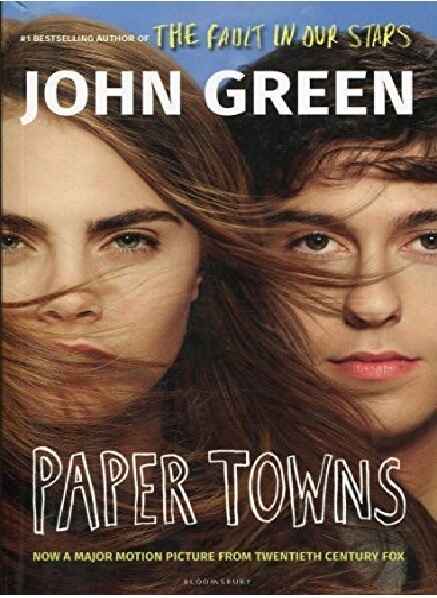

Paper Towns by John Green is a witty, thoughtful and emotionally engaging young adult novel about friendship, mystery, first love, identity and the difference between who someone really is and the version of them we create inside our own minds.
Quentin “Q” Jacobsen has spent years admiring his next-door neighbor Margo Roth Spiegelman.
Margo is everything Quentin believes he is not.
Bold.
Adventurous.
Unpredictable.
Popular.
Mysterious.
To Quentin, she seems almost larger than life.
They were close when they were children, but as teenagers their lives have moved in different directions.
Quentin has his friends, routines and plans.
Margo has become the legendary girl everyone at school seems to know something about.
Then, one night, Margo appears at Quentin’s window.
She needs his help.
What follows is an unforgettable all-night adventure across Orlando involving a carefully planned series of missions, revenge, secrets and risks Quentin would normally never take.
For a few hours, it feels as if Quentin has finally entered Margo’s extraordinary world.
Then morning arrives.
Margo disappears.
Nobody seems to know where she has gone.
But Quentin begins finding clues.
And he becomes convinced that Margo left them for him.
His search takes him through poems, abandoned places, maps and strange geographical mysteries as he tries to understand where Margo went.
Yet Paper Towns by John Green gradually becomes about something more complicated than simply finding a missing girl.
Quentin has to ask himself:
Does he actually know Margo?
Or has he spent years loving an imaginary version of her?
Paper Towns by John Green – Book Overview
Paper Towns by John Green begins as a mystery.
Where did Margo go?
Why did she leave?
What do the clues mean?
But beneath the mystery is a deeper story about perception.
People constantly create simplified versions of one another.
The popular girl.
The quiet boy.
The funny friend.
The perfect boyfriend.
The difficult student.
Those labels make people easier to understand.
But they rarely capture an entire human being.
Quentin’s journey forces him to confront the difference between Margo the person and Margo the idea.
Quentin Jacobsen
Quentin is a relatively cautious teenager.
He is not known for breaking rules or seeking dangerous adventures.
He has close friends and a fairly predictable life.
His future feels planned.
Then Margo re-enters his life dramatically.
Quentin has been fascinated by her for years, but much of that fascination comes from distance.
He watches.
Imagines.
Remembers.
But he does not necessarily know her as deeply as he believes.
Loving an Idea of Someone
This becomes one of the central themes in Paper Towns by John Green.
People often fall in love not only with another person but with the story they have created about that person.
Quentin sees Margo as:
Fearless.
Free.
Beautiful.
Unpredictable.
Different from everyone else.
But Margo may not experience herself that way.
That gap becomes essential.
Margo Roth Spiegelman
Margo is one of the most memorable parts of the novel.
Everyone seems to have a different story about her.
Her adventures become legends.
Her actions become gossip.
Her personality becomes almost mythical.
But the real Margo is more complicated.
She has:
Frustrations.
Disappointments.
Anger.
Fear.
A desire to escape expectations.
She is not simply the mysterious girl Quentin imagines.
The Night Adventure
The novel’s early all-night sequence is energetic and funny.
Margo appears with a plan.
Quentin becomes her reluctant partner.
They move through Orlando completing different tasks.
For Quentin, the experience feels transformative.
He temporarily becomes someone who:
Breaks rules.
Takes risks.
Acts spontaneously.
This night becomes important because Quentin interprets it as the beginning of something.
Margo may understand it very differently.
The Disappearance
The next day, Margo is gone.
At first, her disappearance does not seem completely shocking to everyone.
Margo has disappeared before.
She has a reputation for dramatic adventures.
But this time feels different.
Quentin begins believing she has intentionally left behind clues.
Following the Clues
The mystery element of Paper Towns by John Green becomes increasingly important as Quentin investigates.
He searches:
Margo’s room.
Books.
Poetry.
Online information.
Maps.
Abandoned locations.
Each discovery appears to bring him closer.
But clues can be interpreted in many ways.
Quentin’s biggest problem may not be finding information.
It may be understanding what that information actually means.
Walt Whitman and Poetry
Literature becomes part of Quentin’s investigation.
A poem may mean one thing when read casually and something completely different when connected with a person’s disappearance.
Quentin starts searching for messages inside words.
This creates an important theme:
We interpret stories based partly on what we already hope to find.
Maps
Maps play a major symbolic role in Paper Towns by John Green.
Maps appear objective.
Road here.
Town there.
Distance between them.
But even maps are representations.
They simplify reality.
A map is useful precisely because it cannot show everything.
The same problem applies to people.
Our mental “maps” of other people are always incomplete.
What Is a Paper Town?
The title refers partly to the idea of paper towns, places that may exist differently on maps than in physical reality.
The concept becomes connected to places that feel artificial, incomplete or disconnected from genuine human experience.
Most importantly, it becomes a metaphor for how people imagine one another.
A person can become a kind of map in someone else’s mind:
Useful.
Simplified.
But not complete.
Agloe
One location becomes particularly important to the mystery: Agloe, New York.
Without revealing too much about how Quentin’s investigation develops, Agloe becomes closely connected with the meaning of “paper towns” and his attempt to understand where Margo might have gone.
The geographical mystery gives the novel one of its most distinctive ideas.
Perception
Paper Towns by John Green repeatedly asks:
Can we ever truly understand another person?
Quentin thinks he understands Margo.
Margo believes she understands the people around her.
Friends believe they understand each other.
But everyone sees only part of everyone else.
Mirrors and Windows
We sometimes use other people like mirrors.
Instead of seeing them clearly, we see what they mean to us.
The adventurous girl becomes:
The person who might rescue me from my boring life.
The perfect friend becomes:
The person who will always agree with me.
But people exist independently of the roles we assign them.
Friendship
Although Margo drives the mystery, friendship becomes one of the strongest parts of the book.
Quentin’s friends Ben and Radar bring humor, personality and loyalty to the story.
They are not merely background characters helping him find Margo.
They have their own relationships, plans and concerns.
Ben
Ben provides much of the novel’s comedy.
He can be ridiculous.
Loud.
Immature.
But friendship is rarely about people being perfectly sophisticated all the time.
Ben also shows up when it matters.
Radar
Radar is more measured and technically capable.
His relationship with his parents and their unusual collection creates some of the novel’s memorable humor.
He also becomes important to Quentin’s investigation.
Lacey
Lacey Pemberton becomes increasingly significant as the search progresses.
Initially, Quentin may view her through assumptions connected to Margo’s social world.
But as he gets to know her, those assumptions begin changing.
This reinforces the novel’s central message:
People are always more complicated than the roles assigned to them.
Friendship Beyond High School Labels
High school encourages categories.
Popular.
Nerd.
Athlete.
Outsider.
Funny kid.
Beautiful girl.
But graduation approaches.
Those categories start losing power.
Characters begin seeing one another in ways they may not have during ordinary school life.
The Road Trip
One of the most enjoyable sections of Paper Towns by John Green involves a spontaneous road trip.
Road trips are perfect coming-of-age settings because characters are physically moving while emotionally changing.
The destination matters.
But so does what happens inside the car.
Arguments.
Jokes.
Bad food.
Time pressure.
Exhaustion.
Friendship.
Road Trips and Freedom
Driving away from familiar places creates a temporary feeling of freedom.
No classroom.
No normal routine.
No parents nearby.
But freedom also creates responsibility.
Someone has to navigate.
Someone has to drive.
Time matters.
Choices have consequences.
Coming of Age
Paper Towns by John Green is fundamentally a coming-of-age story.
Quentin begins with certain beliefs about:
Margo.
Friendship.
Love.
Adventure.
His future.
The search forces him to reconsider them.
Growing up sometimes means discovering that the stories you believed about other people were incomplete.
Graduation
The novel takes place near the end of high school.
This matters.
Graduation creates a strange period where everything feels temporary.
Friends may move away.
College begins.
Relationships change.
The familiar environment of school is about to disappear.
That uncertainty makes Margo’s disappearance feel connected to a broader desire to escape.
The Fear of an Ordinary Life
Margo strongly resists the idea of living a life that feels artificial or predetermined.
School.
College.
Job.
Expected relationships.
Expected future.
Her frustration raises a relatable question:
How much of life should follow the route other people expect?
Escape
Escaping can feel powerful.
Leave.
Start over.
Disappear.
But geographical escape does not automatically solve internal problems.
A new location may change your surroundings.
It does not instantly create a new identity.
Identity
Margo struggles with being turned into an idea by everyone around her.
Quentin’s journey reveals how difficult it can be to escape other people’s expectations.
Who are you when nobody else is defining you?
That question sits near the emotional center of the novel.
Expectations
Parents have expectations.
Friends have expectations.
Classmates create reputations.
Romantic partners create fantasies.
Eventually, people may begin performing versions of themselves that satisfy those expectations.
Margo wants distance from that performance.
Quentin’s Growth
Quentin’s most important development is not simply becoming braver.
It is learning to look at Margo differently.
He must move from:
“What does Margo mean to me?”
toward:
“Who is Margo when I stop making her story about me?”
That shift is a major form of emotional maturity.
Empathy
Empathy is not the same as imagining what you would feel in someone else’s situation.
True empathy requires recognizing that another person may experience the world differently.
Quentin gradually learns this.
People Are Not Mysteries Designed for Us to Solve
Because Margo leaves clues, Quentin naturally treats her disappearance like a puzzle.
But human beings are not puzzles with one clean solution.
You cannot always decode someone perfectly.
Sometimes understanding another person means accepting uncertainty.
Mystery Versus Reality
Mystery can make someone more attractive.
The less we know, the more space imagination has.
Quentin has spent years filling that space around Margo.
As he learns more, mystery gradually gives way to reality.
Reality may be less perfect.
But it is more human.
Romance
Paper Towns by John Green contains romantic feelings, but it should not be marketed as a straightforward romance novel.
The relationship between Quentin and Margo is important.
However, the story is more deeply concerned with:
Idealization.
Identity.
Friendship.
Growing up.
Perception.
Self-discovery.
Is Paper Towns a Love Story?
Partly, but not in the conventional sense.
Quentin’s love for Margo drives much of the plot.
Yet the novel asks readers to question what that love is based on.
Does he love Margo?
Or does he love the Margo he imagined?
That distinction is central.
Humor
Despite the mystery and emotional themes, Paper Towns by John Green contains plenty of humor.
Ben and Radar provide much of it.
The road-trip section especially balances emotional tension with chaotic teenage comedy.
This keeps the novel from becoming relentlessly serious.
John Green’s Writing Style
John Green is known for combining:
Teenage humor.
Emotional reflection.
Philosophical questions.
Friendship.
Romance.
Coming-of-age themes.
His characters often think deeply while still behaving like teenagers.
Paper Towns is a strong example of this balance.
Is Paper Towns Connected to The Fault in Our Stars?
No.
Paper Towns by John Green is a standalone novel.
It is not connected to:
The Fault in Our Stars
Looking for Alaska
An Abundance of Katherines
or John Green’s other novels.
You can read it without reading anything else first.
Is Paper Towns a Series?
No.
There is no required sequel.
The story is complete within one novel.
Is It YA?
Yes.
Paper Towns is a young adult contemporary novel.
The main characters are high-school students approaching graduation.
However, its themes about perception, relationships and identity can also resonate strongly with adult readers.
Is It a Mystery?
Yes, but it is not a conventional crime thriller.
The mystery is:
Where is Margo?
Why did she disappear?
What do her clues mean?
The search drives the plot, but the deeper purpose is character development.
Is It a Thriller?
Not primarily.
There is suspense surrounding Margo’s disappearance, but the novel is better described as:
Young Adult Contemporary / Mystery / Coming-of-Age Fiction.
Is It Good for John Green Beginners?
Yes.
Paper Towns by John Green contains many qualities readers associate with his work:
Witty teenage dialogue.
Interesting friendships.
Unusual ideas.
Romantic longing.
Philosophical reflection.
A strong coming-of-age theme.
It can be a good introduction to his novels.
Paper Towns Movie
Paper Towns was adapted into a feature film released in 2015.
The movie stars Nat Wolff as Quentin and Cara Delevingne as Margo.
Readers who have seen the movie may enjoy the novel because books have more space to explore Quentin’s thoughts, the clues and the deeper ideas about perception.
Should You Read the Book Before Watching the Movie?
If possible, yes.
The novel gives more space to:
Quentin’s internal thoughts.
His interpretation of Margo.
The literary clues.
Friendship.
The symbolism behind paper towns.
Reading first also lets you imagine the mystery without knowing how the adaptation presents the characters.
Content Considerations
Paper Towns by John Green contains themes and material including:
- A childhood encounter with a dead body
- References to suicide
- Teen drinking
- Smoking references
- Strong language
- Sexual references and teenage romantic discussion
- Bullying and humiliation
- Revenge
- Family conflict
- Emotional distress
- Running away/disappearance
- Risky teenage behavior
The novel is written for a young adult audience, but parents purchasing for younger readers may want to consider these themes.
The Opening Childhood Experience
Quentin and Margo share an unsettling childhood experience when they encounter the body of a man who has died.
That moment influences the way they think about people and the hidden struggles inside ordinary lives.
It also introduces an early version of the book’s central question:
How much do we actually understand about another human being?
Suicide and Mental Health
Because the story contains a suicide-related element, readers should avoid simplifying the novel into the idea that mysterious behavior always has an exciting explanation.
Real-world suicidal thoughts or severe mental-health distress require serious support and should not be treated as romantic mystery.
Important Themes
Paper Towns by John Green explores:
- Identity
- Perception
- Idealization
- Friendship
- First love
- Mystery
- Growing up
- Graduation
- Road trips
- Maps
- Expectations
- Empathy
- Freedom
- Escape
- Self-discovery
- High school
- Belonging
- Relationships
- Seeing people clearly
- The difference between appearance and reality
7 Powerful Reasons to Read Paper Towns by John Green
- The mystery immediately pulls you in. Margo’s sudden disappearance and the trail of clues give Quentin—and the reader—a strong reason to keep searching.
- The novel challenges romantic idealization. Quentin slowly learns that admiring someone from a distance is not the same as understanding who they truly are.
- The friendships are funny and believable. Ben, Radar, Lacey and Quentin create a lively group dynamic that becomes especially enjoyable during the road trip.
- The “paper towns” concept is genuinely memorable. Maps, imaginary places and representations become powerful metaphors for the simplified versions of people we carry in our minds.
- It balances humor with meaningful ideas. The story can move from ridiculous teenage conversations to serious reflections on identity, loneliness and empathy without losing its personality.
- The road-trip section is classic YA adventure. Friendship, urgency, bad decisions and freedom combine into one of the novel’s most energetic parts.
- Its central message remains relevant beyond high school. Adults also create idealized versions of friends, partners and public figures. Learning to see people as complicated individuals is a lifelong skill.
Why Read Paper Towns by John Green?
Paper Towns by John Green is an excellent choice for readers interested in young adult fiction, John Green novels, coming-of-age stories, friendship, first love, road trips, mysteries, clues and books about identity.
It may especially appeal to readers who enjoy stories that initially appear to be about finding another person but gradually become about understanding yourself.
The novel asks questions that remain interesting long after the mystery is solved:
Do we really see the people we love?
How much of another person exists only inside our imagination?
Can we know someone completely?
Why do we expect certain people to play certain roles in our lives?
What happens when they refuse?
Who Should Read This Book?
Paper Towns by John Green may especially appeal to:
- John Green fans
- Young adult readers
- Teen readers
- Readers who enjoy coming-of-age fiction
- Fans of contemporary YA
- Mystery readers who prefer character-driven stories
- Readers who enjoy road-trip novels
- Fans of witty dialogue
- Readers interested in identity and self-discovery
- Fans of Looking for Alaska
- Readers who enjoyed The Fault in Our Stars
- Students interested in themes of perception and identity
- Anyone who has ever discovered that someone they admired was more complicated than they imagined
Paper Towns by John Green – You Cannot Truly Love a Person You Refuse to See Clearly
Paper Towns by John Green begins with Quentin believing he understands Margo.
She is adventure.
Mystery.
Freedom.
Everything exciting that his own life seems to lack.
Then she disappears.
Quentin believes the clues will lead him to her.
And physically, perhaps they will.
But emotionally, the clues lead somewhere much more important.
They force Quentin to recognize how much of Margo existed only inside his imagination.
He made her extraordinary.
Her classmates made her legendary.
Her friends created their own versions.
Her parents had another.
But none of those versions completely contained the real person.
That is what makes the title so meaningful.
A paper town looks real on a map.
But the map is not the place.
In the same way, our ideas about another person can feel completely real.
But the idea is not the person.
People are messier.
More contradictory.
More disappointing.
More interesting.
And more human.
Quentin’s journey therefore becomes an education in empathy.
Finding Margo matters.
But learning how to see Margo matters more.
The novel’s final power comes from realizing that growing up sometimes means allowing people to stop being characters in your story.
Your friend is not only your friend.
Your crush is not only your crush.
Your parents are not only your parents.
Every person has an inner life that continues when you are not there.
For readers who enjoy witty YA fiction, mysteries, road trips, friendship and thoughtful stories about identity, Paper Towns by John Green offers much more than a search for a missing girl.
It is a story about learning that people are not maps.
And the closer we come to seeing them clearly, the more complicated—and real—they become.
Learn more about Paper Towns by John Green on the official John Green website.
Explore more young adult fiction books at Bargain Books.
| Author | John Green |
|---|---|
| Language | English |
| Type | Paperback Printed Book (Second Quality Copy) |
Be the first to review “Paper Towns by John Green”
Related products
-11%
Out of stock
Classics & Literary Fiction
Original price was: රු1,800.00.රු1,600.00Current price is: රු1,600.00.
3 X Rs. 533.33 or 8% Cashback with


or 3 X රු533.33 with


or up to 4 X රු400.00 with

-26%
Out of stock
Classics & Literary Fiction
Original price was: රු1,900.00.රු1,400.00Current price is: රු1,400.00.
3 X Rs. 466.67 or 8% Cashback with
or 3 X රු466.67 with
or up to 4 X රු350.00 with
-29%
Classics & Literary Fiction
Original price was: රු2,100.00.රු1,500.00Current price is: රු1,500.00.
3 X Rs. 500.00 or 8% Cashback with
or 3 X රු500.00 with
or up to 4 X රු375.00 with
Out of stock
Classics & Literary Fiction
රු1,700.00
3 X Rs. 566.67 or 8% Cashback with
or 3 X රු566.67 with
or up to 4 X රු425.00 with

Out of stock
Classics & Literary Fiction
රු1,750.00
3 X Rs. 583.33 or 8% Cashback with
or 3 X රු583.33 with
or up to 4 X රු437.50 with
-48%
Out of stock
Classics & Literary Fiction
Original price was: රු3,000.00.රු1,550.00Current price is: රු1,550.00.
3 X Rs. 516.67 or 8% Cashback with
or 3 X රු516.67 with
or up to 4 X රු387.50 with
Out of stock
Classics & Literary Fiction
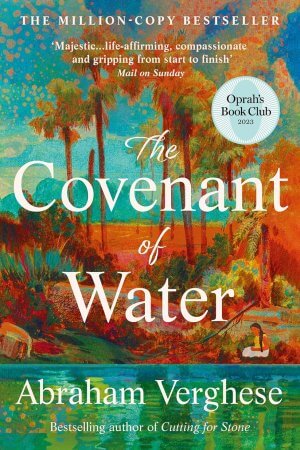
The Covenant of Water by Abraham Verghese | Oprah’s Book Club Selection | Paperback Edition
රු2,750.00
3 X Rs. 916.67 or 8% Cashback with
or 3 X රු916.67 with
or up to 4 X රු687.50 with
Out of stock
Classics & Literary Fiction
රු1,600.00
3 X Rs. 533.33 or 8% Cashback with
or 3 X රු533.33 with
or up to 4 X රු400.00 with
Reviews
There are no reviews yet.