
No products in the cart.
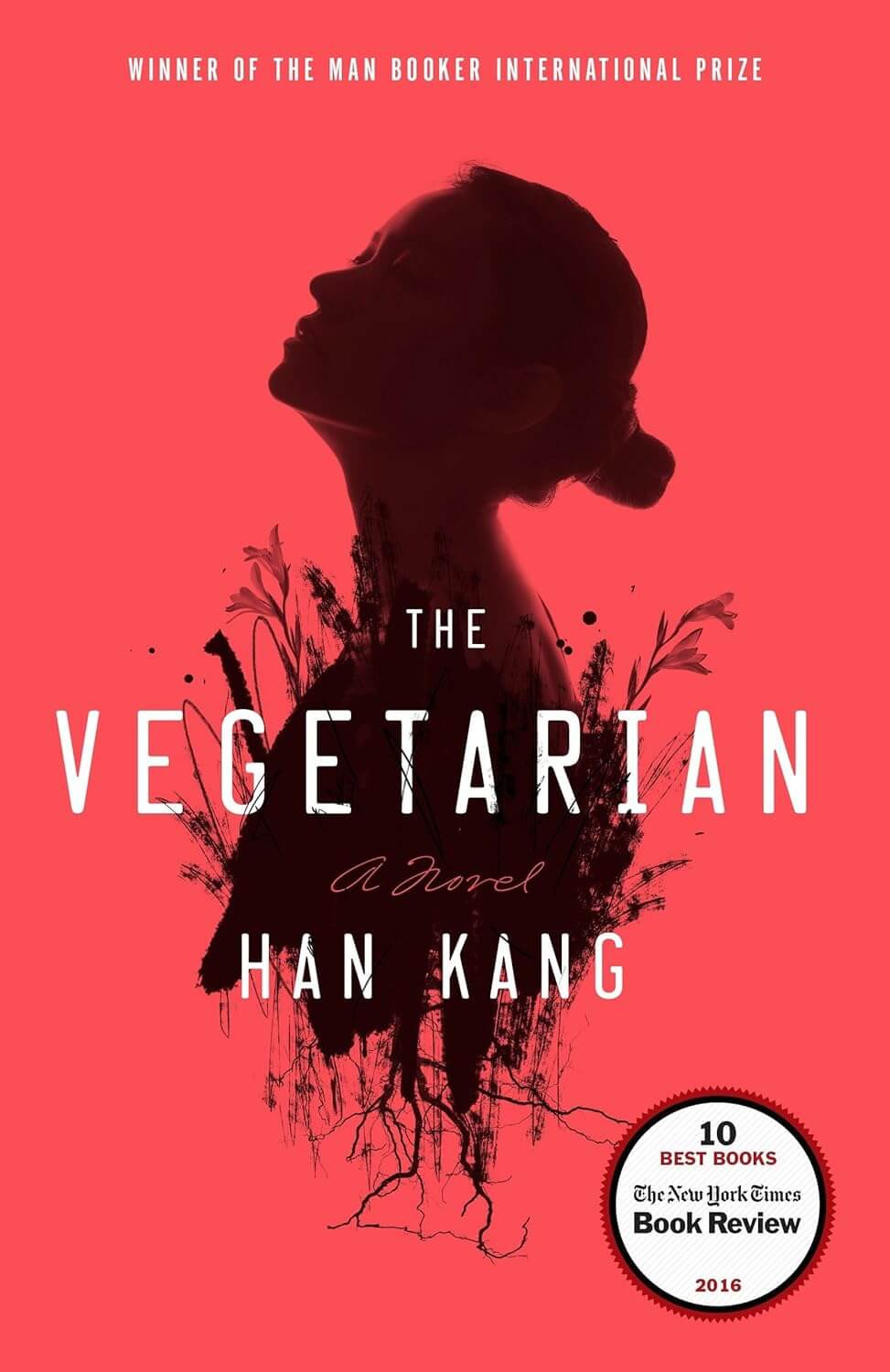
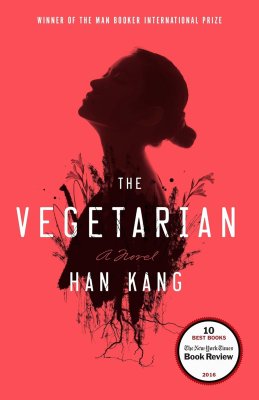
Vegetarian by Han Kang
රු1,100.00
3 X Rs. 366.67 or 8% Cashback with


or 3 X රු366.67 with


or up to 4 X රු275.00 with


The Vegetarian by Han Kang is a haunting and deeply thought-provoking novel about one woman’s quiet rebellion against societal expectations. After a disturbing dream, Yeong-hye, an ordinary Korean housewife, decides to stop eating meat—a choice that disrupts her family and challenges the boundaries of identity, autonomy, and sanity.
Told through the perspectives of those closest to her, the story unfolds with lyrical prose and psychological intensity, exploring themes of control, freedom, and the human body as a site of conflict.
Winner of the Man Booker International Prize, The Vegetarian is a gripping meditation on personal choice and the consequences of nonconformity in a rigid society. It’s a must-read for fans of literary fiction, psychological drama, and international voices.
Out of stock
Email when stock available
The Vegetarian by Han Kang
The Vegetarian by Han Kang is a haunting literary novel about bodily autonomy, family pressure, desire, violence, identity, and a woman’s refusal to continue living according to other people’s expectations.
The story follows Yeong-hye.
She appears to be an ordinary wife.
Then disturbing dreams begin.
Soon after, she decides to stop eating meat.
That decision seems simple.
But it causes a chain of increasingly intense reactions from the people around her.
About The Vegetarian
The Vegetarian is a short but powerful novel by South Korean author Han Kang.
The book is divided into three connected sections.
Each section views Yeong-hye from another person’s perspective.
This structure is important.
Readers rarely receive Yeong-hye’s thoughts directly.
Instead, we see how other people interpret her choices.
That makes the novel feel even more unsettling.
Meet Yeong-hye
Yeong-hye lives what appears to be a quiet and conventional life.
Her husband sees her as ordinary.
He values that ordinary quality.
Then Yeong-hye begins having violent dreams.
She decides she can no longer eat meat.
Her decision becomes an act of resistance.
But the people around her do not treat it as a private choice.
They see it as a problem.
7 Powerful Reasons to Read The Vegetarian
1. A Simple Decision Becomes a Major Conflict
The premise is strikingly simple.
Yeong-hye stops eating meat.
But the consequences become enormous.
Her family reacts with anger.
Her husband becomes frustrated.
The people around her try to force her back into the role they expect.
This turns an everyday decision into a story about control.
2. The Novel Explores Bodily Autonomy
The Vegetarian asks who gets to decide what happens to a person’s body.
Yeong-hye makes a personal choice.
Others repeatedly try to override it.
This conflict becomes one of the central themes of the book.
The story grows increasingly disturbing as that control becomes more extreme.
3. The Structure Is Unusual
Yeong-hye is the central character.
But she is not the main narrator.
Instead, the story is told through the perspectives of her husband, brother-in-law, and sister.
This creates distance.
It also shows how different people project their own desires and fears onto her.
4. The Writing Is Disturbing and Beautiful
Han Kang’s prose is controlled and poetic.
Violent imagery appears beside quiet domestic scenes.
Dreams blend with reality.
Ordinary situations become strange.
The result is a novel that can feel beautiful and deeply uncomfortable at the same time.
5. It Examines Family Pressure
Family plays a major role in The Vegetarian.
Yeong-hye’s relatives do not simply disagree with her.
They believe they have the right to correct her.
This reveals how family expectations can become coercive.
The story asks what happens when conformity becomes more important than compassion.
6. The Novel Explores Desire and Objectification
Another major part of the book involves Yeong-hye’s brother-in-law.
His artistic obsession with her becomes increasingly inappropriate.
This section explores desire, objectification, fantasy, and the way other people turn Yeong-hye into something they want her to be.
7. It Leaves Readers With Difficult Questions
The novel does not give simple answers.
Is Yeong-hye escaping?
Is she resisting?
Is she destroying herself?
Or is she trying to become something beyond the life others designed for her?
That ambiguity is one of the reasons the book remains so memorable.
The Decision to Stop Eating Meat
Yeong-hye’s choice appears small at first.
She removes meat from the refrigerator.
She changes what she eats.
But her husband is embarrassed.
Her family is alarmed.
They treat the change as unacceptable.
The response reveals how little control Yeong-hye has been allowed over her own life.
Dreams and Violence
The dreams are essential to the story.
They are disturbing.
They involve blood, flesh, and violence.
Yeong-hye’s rejection of meat is connected to these nightmares.
The dreams also blur the boundary between psychological distress and symbolic rebellion.
Marriage and Control
Yeong-hye’s husband does not understand her.
He mostly values how little disruption she once caused.
Her change frustrates him because it affects his routine.
This makes the marriage feel emotionally distant.
The relationship becomes another example of how Yeong-hye is expected to behave for other people’s comfort.
The Brother-in-Law
The second section changes perspective.
Yeong-hye’s brother-in-law becomes fascinated by her.
He is an artist.
His interest begins with an idea for an art project.
But the fascination becomes increasingly personal.
This part of the novel is especially concerned with obsession, desire, and objectification.
In-hye
Yeong-hye’s sister In-hye becomes central in the final section.
Her perspective is different.
She is more compassionate.
But she also has her own frustrations and exhaustion.
Through In-hye, the novel explores the emotional burden of caring for someone while also questioning your own life.
Transformation
Yeong-hye increasingly rejects ordinary human expectations.
Her transformation becomes more extreme.
She seems to want something beyond conventional identity.
This gives the novel a strange, dreamlike quality.
It also pushes the story toward questions about nature, humanity, and freedom.
Violence and Submission
Violence appears in different forms.
Physical violence.
Emotional pressure.
Sexual exploitation.
Family coercion.
The novel repeatedly shows people trying to control Yeong-hye.
Her refusal becomes more absolute as that pressure increases.
Identity
The Vegetarian asks how much of identity is chosen.
Family creates expectations.
Marriage creates expectations.
Society creates expectations.
Yeong-hye’s rejection of those roles becomes increasingly radical.
Her story shows what happens when a person refuses to participate in the identity others have assigned.
Nature and the Body
Plants and nature become increasingly important.
Yeong-hye begins imagining a different relationship between her body and the natural world.
This idea is both beautiful and disturbing.
It gives the final part of the novel an almost surreal quality.
Translation
The English edition was translated by Deborah Smith.
The translation helped bring Han Kang to a much larger international readership.
The book won the 2016 Man Booker International Prize, which was shared between Han Kang and Deborah Smith.
Nobel Prize Recognition
Han Kang later received the 2024 Nobel Prize in Literature.
Penguin Random House currently lists her as the author of The Vegetarian, Human Acts, The White Book, Greek Lessons, and We Do Not Part.
Who Should Read This Book?
The Vegetarian is ideal for readers who enjoy literary fiction, psychological fiction, translated literature, dark family drama, and unusual narrative structures.
It may also appeal to readers interested in themes of autonomy, repression, identity, and social conformity.
This is not a light novel.
It contains disturbing imagery, violence, sexual content, coercion, and psychological distress.
Readers sensitive to these subjects may want to check detailed content warnings first.
About Han Kang
Han Kang is a South Korean author born in 1970.
Her internationally known works include The Vegetarian, Human Acts, The White Book, Greek Lessons, and We Do Not Part.
She was awarded the Nobel Prize in Literature in 2024.
Readers can learn more through the official Han Kang page for The Vegetarian.
Product Details
Title: The Vegetarian
Author: Han Kang
Translator: Deborah Smith
Genre: Literary Fiction / Psychological Fiction / Translated Fiction
Language: English
Original Korean Publication: 2007
English Publication: 2016
Main Character: Yeong-hye
Common Hogarth Paperback Edition
Publisher: Hogarth
ISBN-13: 9781101906118
Format: Paperback
Pages: 208
Publication Date: August 23, 2016
Dimensions: Approximately 5 3/16 × 8 inches
Penguin Random House confirms these specifications for the Hogarth paperback edition.
New 10th Anniversary Edition
A newer Deluxe 10th Anniversary Edition was published on August 11, 2026.
ISBN-13: 9798217199983
Publisher: Hogarth
Pages: 208
This edition includes an afterword by Han Kang.
Always check the ISBN on your physical copy before entering final WooCommerce specifications.
Explore More Fiction Books
The Vegetarian begins with a quiet personal decision.
Then that decision exposes the expectations, violence, and desires surrounding Yeong-hye.
The novel becomes increasingly strange.
But the central question remains clear.
Who has the right to decide what another person should become?
Readers looking for more literary fiction can explore Fiction & Literature Books at Bargain Books.
For readers who enjoy unsettling psychological fiction, unusual narrative structures, and powerful questions about autonomy and identity, The Vegetarian is a disturbing and unforgettable novel.
Be the first to review “Vegetarian by Han Kang”
Related products
Non-Fiction & Knowledge
රු1,550.00
3 X Rs. 516.67 or 8% Cashback with
or 3 X රු516.67 with
or up to 4 X රු387.50 with
-39%
Out of stock
Self-Help & Psychology
Original price was: රු2,450.00.රු1,500.00Current price is: රු1,500.00.
3 X Rs. 500.00 or 8% Cashback with
or 3 X රු500.00 with
or up to 4 X රු375.00 with
Out of stock
Autobiography
රු2,750.00
3 X Rs. 916.67 or 8% Cashback with
or 3 X රු916.67 with
or up to 4 X රු687.50 with
Non-Fiction & Knowledge
රු1,950.00
3 X Rs. 650.00 or 8% Cashback with
or 3 X රු650.00 with
or up to 4 X රු487.50 with
-34%
Non-Fiction & Knowledge
Original price was: රු2,250.00.රු1,490.00Current price is: රු1,490.00.
3 X Rs. 496.67 or 8% Cashback with
or 3 X රු496.67 with
or up to 4 X රු372.50 with
-17%
Out of stock
Non-Fiction & Knowledge
Original price was: රු2,900.00.රු2,400.00Current price is: රු2,400.00.
3 X Rs. 800.00 or 8% Cashback with
or 3 X රු800.00 with
or up to 4 X රු600.00 with
Out of stock
Non-Fiction & Knowledge
රු1,500.00
3 X Rs. 500.00 or 8% Cashback with
or 3 X රු500.00 with
or up to 4 X රු375.00 with
Non-Fiction & Knowledge
රු2,450.00
3 X Rs. 816.67 or 8% Cashback with
or 3 X රු816.67 with
or up to 4 X රු612.50 with
Reviews
There are no reviews yet.