
No products in the cart.
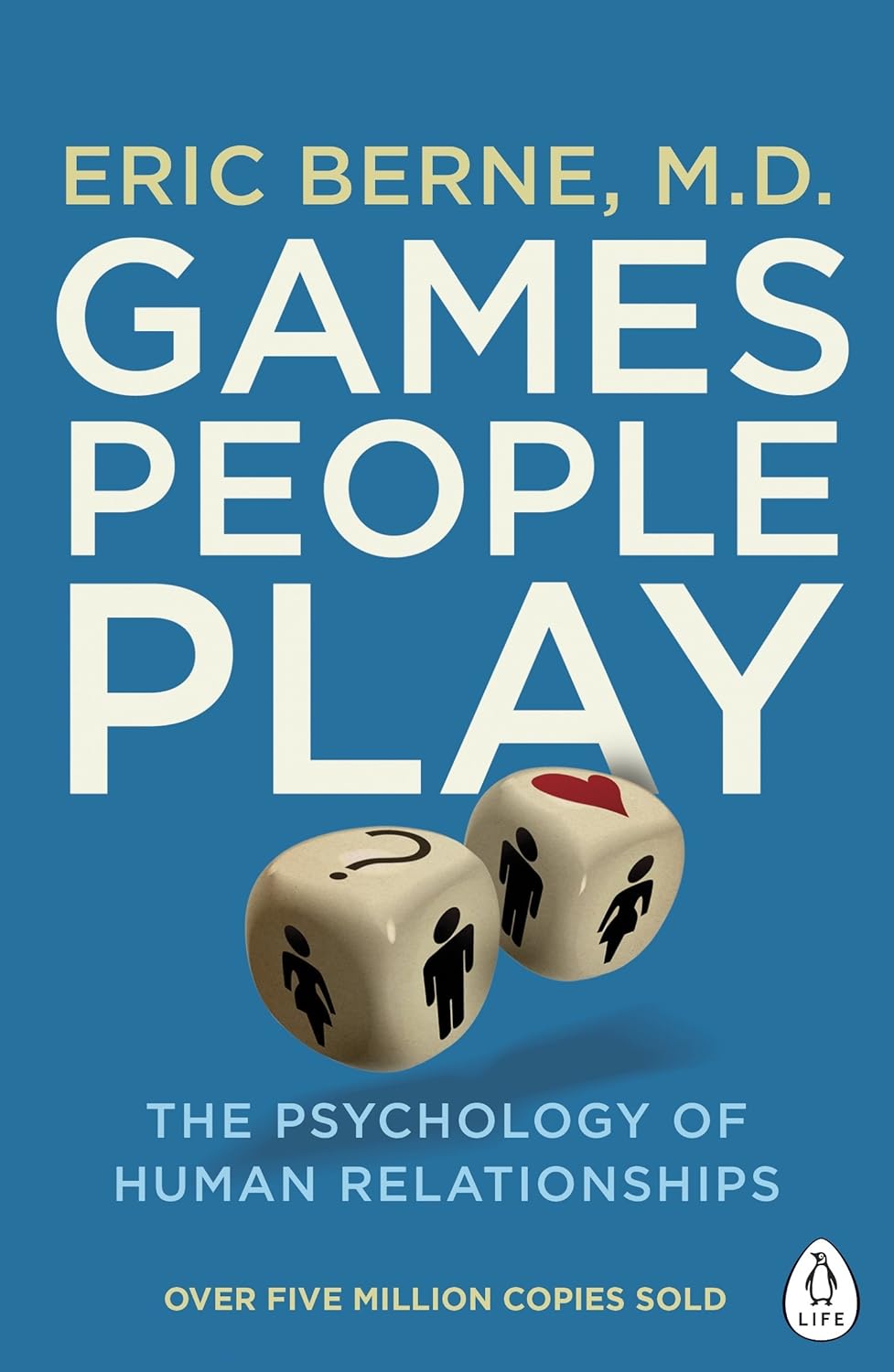
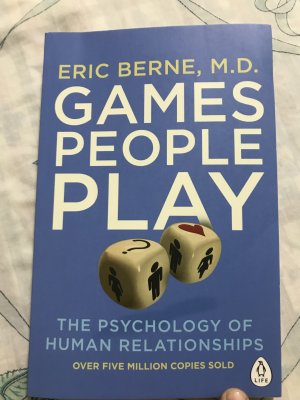
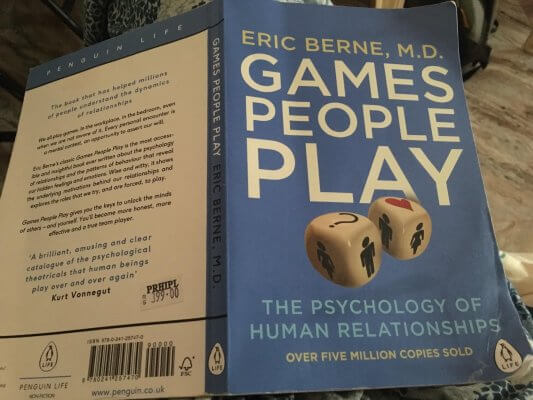
Games People Play by Eric Berne “Games People Play by Eric Berne | Understanding Human Behavior and Social Interactions”


රු1,750.00
3 X Rs. 583.33 or 8% Cashback with


or 3 X රු583.33 with


or up to 4 X රු437.50 with


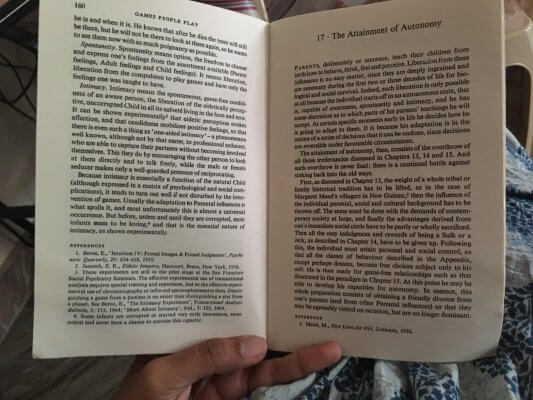
Games People Play by Eric Berne is a groundbreaking book that explores the hidden dynamics of human relationships through the lens of transactional analysis. Berne reveals the unconscious games people play in everyday interactions and how they impact our social behavior, communication, and emotional well-being.
Introduction of Transactional Analysis (TA):
The book introduces Transactional Analysis, a psychological theory that examines how people communicate and interact based on three primary “ego states”—Parent, Adult, and Child.
Identification of Social “Games”:
Berne identifies common “games” people play in daily life—unconscious patterns of behavior that often lead to dysfunctional interactions. These games range from innocent and playful to manipulative and destructive.
Insight Into Human Behavior:
The book offers deep insights into the psychological motivations behind everyday actions, highlighting how people often use games to fulfill emotional needs or avoid uncomfortable feelings.
Practical Application for Personal Growth:
By recognizing and understanding the “games” we play, Berne encourages self-awareness, which can lead to more effective communication, healthier relationships, and personal development.
Case Studies and Real-Life Examples:
Berne uses numerous case studies and real-life examples to illustrate how these games manifest in relationships, both personal and professional, making complex psychological concepts accessible and relatable.
Impact on Communication and Relationships:
The book highlights how recognizing the patterns of games can lead to better communication, conflict resolution, and emotional intelligence in various types of relationships.
Enduring Influence in Psychology:
Games People Play remains a groundbreaking work in psychology, influencing both therapeutic practices and popular understanding of human interaction, communication, and behavior.
Accessible for All Readers:
Berne’s clear, engaging writing style makes Games People Play an approachable and insightful read for both psychology professionals and general readers interested in understanding human behavior.
5 in stock
Games People Play by Eric Berne is a classic psychology book about the hidden patterns that shape everyday relationships.
People talk.
Argue.
Flirt.
Compete.
Complain.
Help.
Blame.
Apologize.
And repeat the same conversations again and again.
But what if some of those interactions are not as spontaneous as they seem?
What if people unconsciously follow familiar scripts?
What if an argument between two people keeps repeating because both people are playing recognizable psychological roles?
That is the central idea behind Games People Play.
Eric Berne examines the recurring patterns people use in marriages, friendships, workplaces, families, and social situations.
He calls these patterns games.
Not because they are fun.
But because they often follow recognizable rules, involve hidden motives, and end with a predictable emotional payoff.
Why Read Games People Play?
Games People Play is ideal for readers interested in psychology, communication, relationships, human behaviour, and understanding why the same conflicts seem to happen repeatedly.
The book explores:
- Transactional analysis
- Human behaviour
- Communication
- Relationships
- Hidden motives
- Emotional patterns
- Conflict
- Marriage
- Friendship
- Workplace interactions
- Social roles
- Repeated arguments
- Self-awareness
- Manipulation
- Psychological payoffs
It is not a traditional self-help book filled with motivational advice.
Instead, Berne gives readers a framework for observing how people interact.
Games People Play and Transactional Analysis
To understand Games People Play, it helps to understand Berne’s idea of transactional analysis.
A transaction is essentially an exchange between people.
One person says or does something.
Another responds.
But Berne argues that these exchanges can come from different psychological positions.
His framework famously describes three ego states:
- Parent
- Adult
- Child
These are not simply literal ages.
They describe different ways of thinking, feeling, and reacting.
Berne uses these concepts throughout his broader transactional-analysis work, and they form the foundation for understanding the interpersonal games discussed in the book.
The Parent Ego State
The Parent ego state contains attitudes, rules, judgments, and behaviours learned from authority figures.
It may sound like:
“You should know better.”
“That is not how things are done.”
“You always do this.”
Sometimes the Parent state can be protective.
Supportive.
Responsible.
At other times, it can become controlling or critical.
The Adult Ego State
The Adult ego state focuses more on the present situation.
Facts.
Evidence.
Problem-solving.
Clear communication.
An Adult response might ask:
“What actually happened?”
“What information do we have?”
“What is the best solution?”
In healthy communication, the Adult position can help people respond to reality rather than automatically repeating old emotional patterns.
The Child Ego State
The Child ego state contains emotional reactions, impulses, fears, creativity, resistance, and patterns learned earlier in life.
It may appear as:
Excitement.
Fear.
Rebellion.
Approval-seeking.
Defensiveness.
Playfulness.
The Child state is not automatically negative.
But problems can arise when people react from old emotional patterns rather than the reality of the present situation.
Games People Play and Repeated Patterns
Think about an argument you have had more than once.
Perhaps the topic changes.
But the pattern stays the same.
One person complains.
The other becomes defensive.
The first becomes more critical.
The second withdraws.
Then both leave the conversation feeling exactly as they expected.
A few days later, the same thing happens again.
Games People Play asks readers to look beneath the surface topic.
The real issue may not be what the argument appears to be about.
The interaction itself may be following a familiar pattern.
What Does Eric Berne Mean by a “Game”?
A psychological game is not simply any conversation.
Berne uses the term for recurring interpersonal patterns involving hidden motives and predictable outcomes.
A game may appear to be about one thing on the surface.
But another psychological process is happening underneath.
People may receive emotional rewards from the pattern even when the outcome seems negative.
That reward can include:
Feeling superior.
Feeling innocent.
Feeling victimized.
Avoiding responsibility.
Receiving attention.
Proving a belief.
Avoiding intimacy.
Or confirming what someone already thinks about themselves or other people.
Berne’s book catalogues many such recurring games.
Games People Play and Hidden Motives
People do not always say exactly what they want.
Sometimes they do not even consciously know what they want.
Imagine someone repeatedly asking for advice.
You offer a solution.
They explain why it will not work.
You offer another.
That will not work either.
Another suggestion?
Also impossible.
Eventually you become frustrated.
Perhaps the person did not actually want a solution.
Perhaps the deeper emotional payoff came from proving:
“Nothing can help me.”
That kind of interaction is exactly the sort of pattern Berne encourages readers to examine.
“Why Don’t You — Yes But”
One of the famous games associated with Berne’s framework is often called “Why Don’t You — Yes But.”
A person presents a problem.
Others suggest solutions.
Every suggestion receives a response:
“Yes, but…”
The conversation can continue indefinitely.
On the surface, the person appears to be asking for help.
But the hidden payoff may come from demonstrating that nobody can solve the problem.
The important lesson is not to label everyone who rejects advice.
It is to notice repeated interaction patterns and ask what function they may be serving.
Games People Play and “If It Weren’t for You”
Another well-known game is “If It Weren’t for You.”
Someone believes another person prevents them from doing something.
“If it weren’t for you, I would travel.”
“If it weren’t for my partner, I would change careers.”
“If it weren’t for my family, I would take more risks.”
The other person appears to be the obstacle.
But Berne’s analysis asks whether blaming that person may also protect the speaker from facing their own fear or uncertainty.
If the obstacle disappeared, would they actually act?
Or would another reason appear?
Games People Play and Relationships
Relationships are one of the book’s main areas of interest.
Why do couples repeat the same arguments?
Why do people seem to choose similar partners repeatedly?
Why do certain people constantly create drama?
Why do some friendships become competitive?
Why do people complain about patterns they also seem to maintain?
Games People Play encourages readers to stop looking only at individual words and start examining the full structure of an interaction.
Who begins the pattern?
Who responds?
What role does each person take?
What happens at the end?
And what emotional payoff does each person receive?
Games People Play and Marriage
Berne discusses several patterns involving couples.
Arguments can sometimes become rituals.
One person knows exactly what the other will say.
The other knows the expected response.
Both people may dislike the outcome.
Yet they continue repeating it.
That repetition matters.
It suggests the argument may be serving a psychological purpose beyond solving the immediate problem.
Games People Play and the Workplace
These ideas can also apply at work.
Consider a manager who repeatedly rescues employees.
Then complains that nobody takes responsibility.
Or an employee who asks for guidance but rejects every suggestion.
Or colleagues who compete through subtle status games rather than discussing issues directly.
The exact situations change.
The underlying pattern may stay surprisingly similar.
That is one reason Games People Play remains interesting to readers far outside clinical psychology.
Games People Play and Status
Some interactions are really about status.
Who knows more?
Who is smarter?
Who is more experienced?
Who has suffered more?
Who has better taste?
Who is morally superior?
Berne describes multiple games where the visible subject matters less than the psychological contest underneath.
The conversation may seem casual.
But both participants may actually be competing for a position.
Games People Play and Friendship
Friendships can contain games too.
One person always rescues.
Another always needs rescuing.
One always complains.
Another always gives advice.
One constantly creates crises.
Another enjoys being the person who fixes them.
At first, both roles may feel comfortable.
Eventually, resentment can develop.
Understanding the pattern can help people ask whether they are relating genuinely or simply repeating familiar roles.
Games People Play and Manipulation
The book is sometimes described as a guide to manipulation.
That is too narrow.
Berne is more interested in understanding the hidden structure of relationships.
Some games certainly involve manipulation.
But many are unconscious.
People may not deliberately plan them.
They may simply repeat patterns because those patterns feel familiar.
That is what makes self-awareness important.
Games People Play and Self-Awareness
The easiest way to use this book badly is to start diagnosing everyone else.
“My boss is playing a game.”
“My partner is playing a game.”
“My friend is manipulating me.”
The more useful question is:
What games do I play?
Do you repeatedly seek reassurance?
Do you complain but reject every solution?
Do you rescue people and then resent them?
Do you provoke arguments that confirm your belief that nobody understands you?
Do you create situations that end exactly the way you secretly expect?
That kind of self-examination is much closer to the book’s deeper value.
The Psychological Payoff
A game continues because something is gained from it.
That gain may not be pleasant.
This sounds strange.
Why would someone repeat an interaction that makes them miserable?
Because emotional patterns can feel familiar.
A negative outcome may still confirm an old belief.
For example:
“Nobody helps me.”
“People always leave.”
“I am always right.”
“I am powerless.”
“Everyone is selfish.”
If a game ends by confirming one of those beliefs, the person receives a kind of psychological payoff.
Games People Play and Intimacy
One important idea in Berne’s work is that games can sometimes prevent genuine intimacy.
Real intimacy requires openness.
Honesty.
Risk.
Vulnerability.
A game allows people to interact without fully exposing themselves.
Instead of saying:
“I feel insecure and need reassurance.”
someone may provoke an argument.
Instead of saying:
“I am afraid to make this decision.”
someone may blame another person.
The game protects the person from direct vulnerability.
But it also blocks clearer communication.
Games People Play and Communication
A major practical lesson is to become more direct.
Say what you mean.
Ask what the other person actually wants.
Clarify assumptions.
Notice when a conversation starts following an old pattern.
Ask whether the discussion is solving anything.
Sometimes the most effective response to a game is simply refusing to continue the expected script.
Breaking the Pattern
Imagine someone expects you to become defensive.
Normally, you do.
This time, you respond calmly.
The usual pattern cannot continue in the same way.
That interruption creates something new.
Breaking a game does not guarantee that the other person will respond well.
But awareness creates choice.
Without awareness, people may repeat the same interaction automatically.
Games People Play and Personal Responsibility
One of the strongest lessons from the book is that relationships are interactive.
It is easy to focus entirely on what another person is doing.
But repeated games often depend on multiple participants.
That does not mean everyone has equal responsibility for harmful behaviour.
It means that understanding your own role can help you change what you can actually control.
Games People Play and Modern Life
The book was written in the 1960s.
Some terminology feels dated.
Some examples reflect older social norms.
Modern psychology has also developed far beyond Berne’s original framework.
Still, the central question remains surprisingly relevant:
Why do people repeatedly interact in ways that produce predictable conflict?
Online arguments.
Workplace drama.
Family conflicts.
Relationship patterns.
Social-media status contests.
People continue repeating familiar scripts.
That is why Games People Play remains widely read decades after its original publication.
Is Games People Play Still Useful Today?
Yes, if read thoughtfully.
The book can help readers notice:
Repeated interaction patterns.
Hidden assumptions.
Emotional roles.
Indirect communication.
Avoidance of responsibility.
Status contests.
And predictable conflict.
However, it should not be treated as a complete modern textbook of psychology.
Some concepts are better understood as influential historical frameworks rather than universally accepted scientific laws.
That distinction matters.
7 Powerful Lessons From Games People Play
1. Repeated Conflicts Often Follow Patterns
If the same argument keeps happening, examine the structure rather than only the topic.
2. People Do Not Always Say What They Really Want
Surface communication and psychological motivation can differ.
3. Every Pattern Has a Payoff
Even unpleasant interactions may provide attention, validation, superiority, avoidance, or confirmation of an old belief.
4. Self-Awareness Matters More Than Diagnosing Others
The book becomes more useful when you ask what role you repeatedly play.
5. Direct Communication Can Interrupt Games
Clearer, more honest communication reduces the need for hidden psychological manoeuvres.
6. Familiar Roles Can Feel Safer Than Genuine Intimacy
People may prefer predictable conflict because vulnerability feels riskier.
7. Awareness Creates Choice
Games People Play teaches that once you recognize a recurring pattern, you have a better chance of responding differently rather than repeating it automatically.
What You Can Expect From Games People Play
Readers can expect:
- Transactional analysis
- Parent, Adult, and Child ego states
- Human behaviour
- Relationship psychology
- Communication patterns
- Hidden motives
- Emotional payoffs
- Marriage dynamics
- Friendship patterns
- Workplace interactions
- Social behaviour
- Psychological games
- Self-awareness
- Classic psychology concepts
Who Should Read Games People Play?
Games People Play is ideal for:
Psychology students.
Counsellors.
Managers.
HR professionals.
Couples.
People interested in communication.
Readers interested in relationships.
Readers curious about human behaviour.
People who notice repeating conflicts in their lives.
Anyone interested in classic popular psychology.
A Powerful Classic About Human Behaviour
Games People Play asks readers to look beneath ordinary conversation.
Sometimes people are simply talking.
Sometimes they are doing something more.
Seeking reassurance.
Avoiding responsibility.
Competing for status.
Testing loyalty.
Provoking a familiar reaction.
Confirming an old belief.
Berne’s insight was that these interactions can become structured enough to recognize.
Once recognized, they become easier to question.
That does not mean every conversation is a game.
It does not mean everyone is secretly manipulative.
But it does mean repeated patterns deserve attention.
For readers interested in communication, human behaviour, self-awareness, workplace dynamics, relationships, and classic psychology, Games People Play remains a provocative and influential introduction to transactional analysis.
Book Details
Title: Games People Play
Full Title: Games People Play: The Psychology of Human Relationships
Author: Eric Berne, M.D.
Genre: Psychology / Relationships / Communication
Main Framework: Transactional Analysis
Original Publication: 1964.
Ballantine Paperback Edition
A widely available Ballantine Books edition has:
ISBN-13: 9780345410030
Format: Paperback
Publisher: Ballantine Books
Publication Date: August 27, 1996
Pages: 216
Dimensions: approximately 5½ × 8¼ inches.
Penguin Edition
A Penguin edition is catalogued as:
ISBN-13: 9780141040271
ISBN-10: 0141040270
Publisher: Penguin
Publication Year: 2009
Pages: approximately 173.
Earlier Grove Press Edition
An earlier Grove Press edition is listed as:
ISBN-13: 9780802140715
Publisher: Grove Press
Publication Year: 1967
Pages: 192.
Edition Note
Different editions of Games People Play vary in ISBN, page count, introduction, and formatting.
For example, some editions contain around 173–192 pages, while the later Ballantine paperback runs to 216 pages.
Use the ISBN printed on your physical copy before entering exact edition details on your website.
Learn more about Games People Play by Eric Berne on the official Penguin Random House website.
Explore more psychology and personal development books at Bargain Books.

Be the first to review “Games People Play by Eric Berne “Games People Play by Eric Berne | Understanding Human Behavior and Social Interactions””
Related products
Business
Coffee Can Investing by Sanjay Bakshi – A Simple, High-Reward Strategy for Building Long-Term Wealth
රු1,750.00
3 X Rs. 583.33 or 8% Cashback with
or 3 X රු583.33 with
or up to 4 X රු437.50 with
-13%

Out of stock
Original price was: රු4,000.00.රු3,500.00Current price is: රු3,500.00.
3 X Rs. 1,166.67 or 8% Cashback with
or 3 X රු1,166.67 with
or up to 4 X රු875.00 with

Business, Finance & Economics
රු1,750.00
3 X Rs. 583.33 or 8% Cashback with
or 3 X රු583.33 with
or up to 4 X රු437.50 with
-12%

Out of stock
Biography
Original price was: රු2,600.00.රු2,300.00Current price is: රු2,300.00.
3 X Rs. 766.67 or 8% Cashback with
or 3 X රු766.67 with
or up to 4 X රු575.00 with

රු1,400.00
3 X Rs. 466.67 or 8% Cashback with
or 3 X රු466.67 with
or up to 4 X රු350.00 with

Out of stock
Business, Finance & Economics
රු1,900.00
3 X Rs. 633.33 or 8% Cashback with
or 3 X රු633.33 with
or up to 4 X රු475.00 with

Out of stock
රු1,990.00
3 X Rs. 663.33 or 8% Cashback with
or 3 X රු663.33 with
or up to 4 X රු497.50 with
-20%
Out of stock
Original price was: රු2,500.00.රු2,000.00Current price is: රු2,000.00.
3 X Rs. 666.67 or 8% Cashback with
or 3 X රු666.67 with
or up to 4 X රු500.00 with
Reviews
There are no reviews yet.