
No products in the cart.
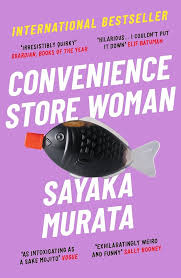
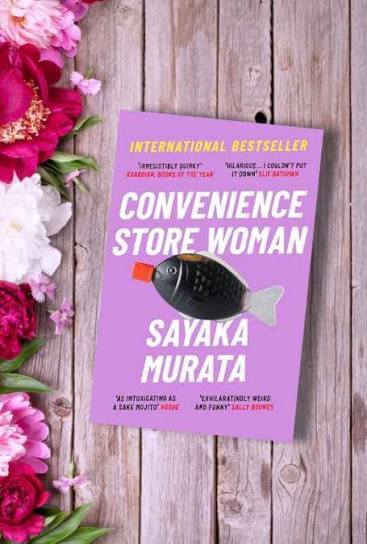
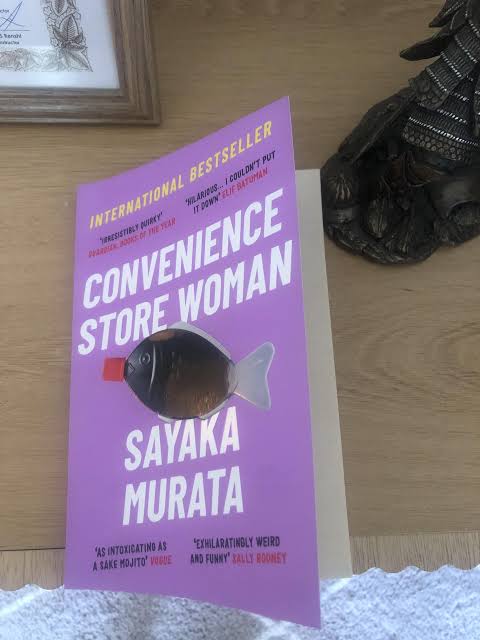
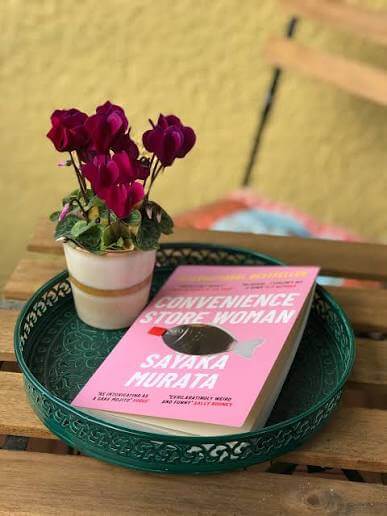
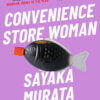

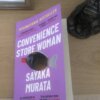

Convenience Store Woman by Sayaka Murata


රු1,350.00
3 X Rs. 450.00 or 8% Cashback with


or 3 X රු450.00 with


or up to 4 X රු337.50 with


Keiko Furukura has never understood the unwritten rules that seem to govern everyone else’s life. Inside a Tokyo convenience store, however, every action has a clear purpose—and for eighteen years, its familiar routines have given her the belonging she cannot find elsewhere.
When family and friends pressure her to pursue a conventional career and marriage, Keiko must decide whether appearing normal is worth abandoning the life that makes sense to her.
Translated by Ginny Tapley Takemori, Convenience Store Woman is a concise, darkly comic and thought-provoking novel about work, identity, social conformity and the freedom to define happiness on your own terms.
5 in stock
Convenience Store Woman by Sayaka Murata
Convenience Store Woman by Sayaka Murata
Convenience Store Woman by Sayaka Murata is a sharp, unusual and darkly comic novel about identity, conformity and the pressure to live according to society’s expectations. Translated from Japanese by Ginny Tapley Takemori, this compact yet thought-provoking story introduces Keiko Furukura, a woman who feels most comfortable within the predictable routines of a Tokyo convenience store.
Keiko has never found it easy to understand the unwritten rules followed by the people around her. At school, university and family gatherings, her behaviour often seems strange to others, even when her actions make perfect sense to her. She learns to observe how people speak, dress and react, then carefully copies those patterns in order to appear more conventional.
When Keiko begins working at a newly opened convenience store, she finally discovers an environment that she understands. The store provides detailed instructions for almost every situation. Employees are shown how to greet customers, arrange products, respond to changing demand and perform each task correctly. Its familiar sounds, bright lights and organised shelves give Keiko a sense of purpose that the outside world has never offered her.
Eighteen years later, Keiko remains in the same part-time position. She is skilled, dependable and deeply attentive to the store’s needs. However, the people around her do not consider this enough. Her family wants her to find a more respectable career, while friends and acquaintances repeatedly question why she is unmarried. To them, adulthood is supposed to follow a recognised sequence involving professional advancement, romance, marriage and family life.
Keiko’s satisfaction with her own routine is therefore treated as a problem that must be corrected. As the pressure to appear normal increases, she begins considering whether changing her life would make other people more comfortable—even if those changes make little sense to her. The arrival of another unconventional employee further complicates her carefully ordered existence and forces her to examine what she is willing to sacrifice for social acceptance.
Sayaka Murata uses Keiko’s distinctive perspective to explore the ways people perform normality. The novel asks who gets to decide what a successful life should look like and why harmless differences can make others uncomfortable. Work, marriage, gender roles and personal fulfilment are examined through situations that are often funny but also quietly unsettling.
The convenience store becomes far more than the novel’s setting. It is a carefully regulated world with its own rhythms, vocabulary and expectations. Keiko understands the store’s needs intuitively, noticing subtle changes in customers, weather and product displays. Outside it, social expectations appear far less logical. This contrast allows Murata to question whether ordinary society is truly more natural than the artificial environment of a retail store.
The writing is concise and controlled, reflecting Keiko’s practical way of observing the world. Murata avoids unnecessary explanation and allows the humour to emerge through the difference between Keiko’s reasoning and the assumptions made by other characters. The result is a novel that can be read quickly but encourages much longer reflection.
Although the book addresses serious questions about belonging and social pressure, it remains highly accessible. Its short length, distinctive narrator and deadpan comedy make it an excellent introduction to contemporary Japanese fiction. Readers do not need any prior knowledge of Japanese culture, although the convenience-store setting offers an intriguing glimpse into an important part of everyday urban life in Japan.
Convenience Store Woman will appeal to readers who enjoy unconventional protagonists, feminist literary fiction, translated novels and stories that challenge familiar ideas about happiness and success. It is particularly suitable for fans of Mieko Kawakami, Yoko Ogawa, Banana Yoshimoto, Hiromi Kawakami and Han Kang.
Winner of Japan’s prestigious Akutagawa Prize, the novel helped establish Sayaka Murata as an internationally recognised literary voice. It is an excellent choice for book clubs because its deceptively simple story opens discussions about work, relationships, social performance, independence and the meaning of a fulfilling life.
This Best of Granta paperback makes a thoughtful gift for readers who appreciate intelligent, unusual and quietly rebellious fiction. Browse more translated and contemporary novels at bargainbooks.lk or visit the official Granta page for information about this edition.
Be the first to review “Convenience Store Woman by Sayaka Murata”
Related products

Out of stock
Adventure Fiction
Death on the Nile – Film Tie-In Edition | Agatha Christie Paperback
රු2,400.00
3 X Rs. 800.00 or 8% Cashback with
or 3 X රු800.00 with
or up to 4 X රු600.00 with
-29%

Classics & Literary Fiction
Original price was: රු2,100.00.රු1,500.00Current price is: රු1,500.00.
3 X Rs. 500.00 or 8% Cashback with
or 3 X රු500.00 with
or up to 4 X රු375.00 with

Classics & Literary Fiction
රු1,650.00
3 X Rs. 550.00 or 8% Cashback with
or 3 X රු550.00 with
or up to 4 X රු412.50 with
-18%

Out of stock
Fiction & Literature
Original price was: රු1,950.00.රු1,600.00Current price is: රු1,600.00.
3 X Rs. 533.33 or 8% Cashback with
or 3 X රු533.33 with
or up to 4 X රු400.00 with

Out of stock
Fiction & Literature
රු1,750.00
3 X Rs. 583.33 or 8% Cashback with
or 3 X රු583.33 with
or up to 4 X රු437.50 with
-22%

Out of stock
Fiction & Literature
Original price was: රු2,250.00.රු1,750.00Current price is: රු1,750.00.
3 X Rs. 583.33 or 8% Cashback with
or 3 X රු583.33 with
or up to 4 X රු437.50 with
-48%

Classics & Literary Fiction
Original price was: රු3,000.00.රු1,550.00Current price is: රු1,550.00.
3 X Rs. 516.67 or 8% Cashback with
or 3 X රු516.67 with
or up to 4 X රු387.50 with

Out of stock
Classics & Literary Fiction
රු1,800.00
3 X Rs. 600.00 or 8% Cashback with
or 3 X රු600.00 with
or up to 4 X රු450.00 with
Reviews
There are no reviews yet.