
No products in the cart.
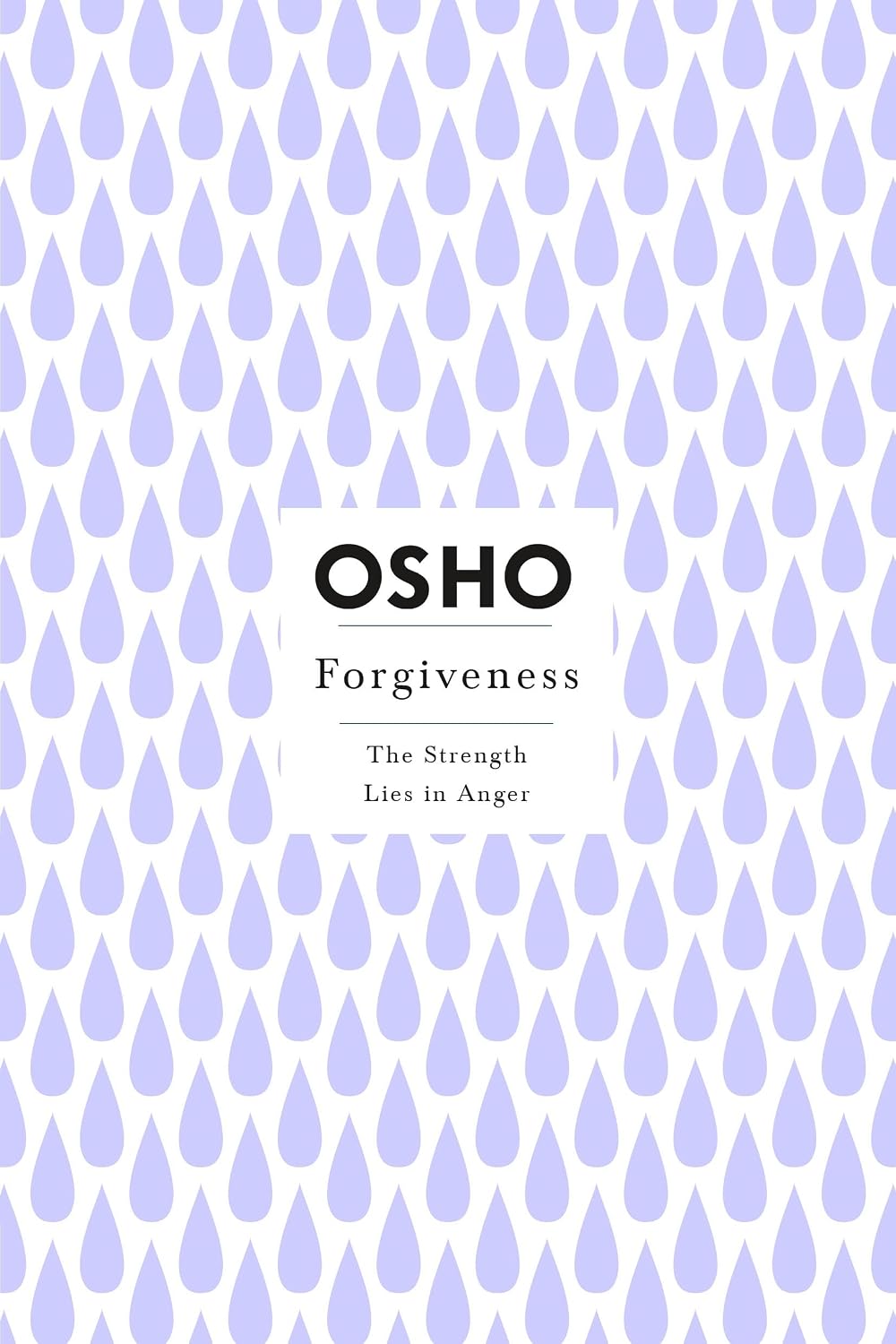
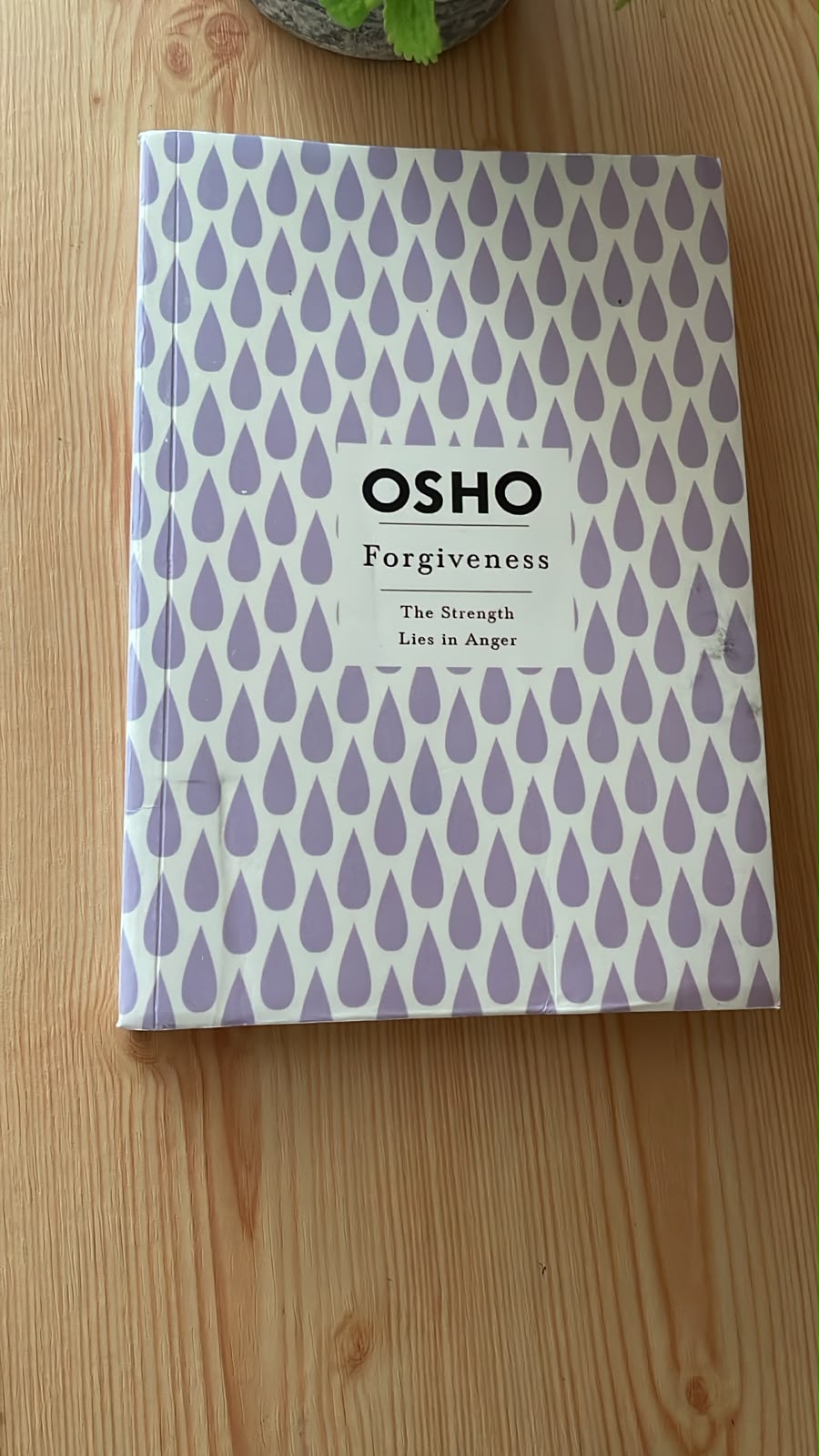








Forgiveness (Osho Insights for a New Way of Living) by Osho

රු900.00
3 X Rs. 300.00 or 8% Cashback with


or 3 X රු300.00 with


or up to 4 X රු225.00 with


Book Details / WooCommerce
| Field | Enter This |
|---|---|
| Title | Forgiveness |
| Subtitle | The Strength Lies in Anger |
| Author | Osho |
| ISBN-13 | 9781250786340 |
| ISBN-10 | 1250786347 |
| Series | Osho Insights for a New Way of Living |
| Series Position | 13 |
| Format | Paperback |
| Publisher | St. Martin’s Publishing Group |
| Imprint | St. Martin’s Essentials |
| Publication Date | 17 October 2023 |
| Pages | 224 |
| Language | English |
| Audience | Adult / General |
| Genre | Self-Help / Spirituality / Personal Development |
| Weight | Approx. 0.204 kg |
| Length | Approx. 20.8 cm |
| Width | Approx. 13.7 cm |
| Height / Thickness | Approx. 1.4 cm |
| Dimensions | Approx. 20.8 × 13.7 × 1.4 cm |
1 in stock
A Different Perspective on Forgiveness
Forgiveness: The Strength Lies in Anger by Osho is a reflective work of spirituality and personal development that examines forgiveness from a perspective very different from the usual idea of simply forgetting hurt or forcing oneself to excuse another person.
The thirteenth title in the Osho Insights for a New Way of Living series, the book explores forgiveness alongside themes including anger, guilt, repentance, awareness, responsibility, love and social conditioning.
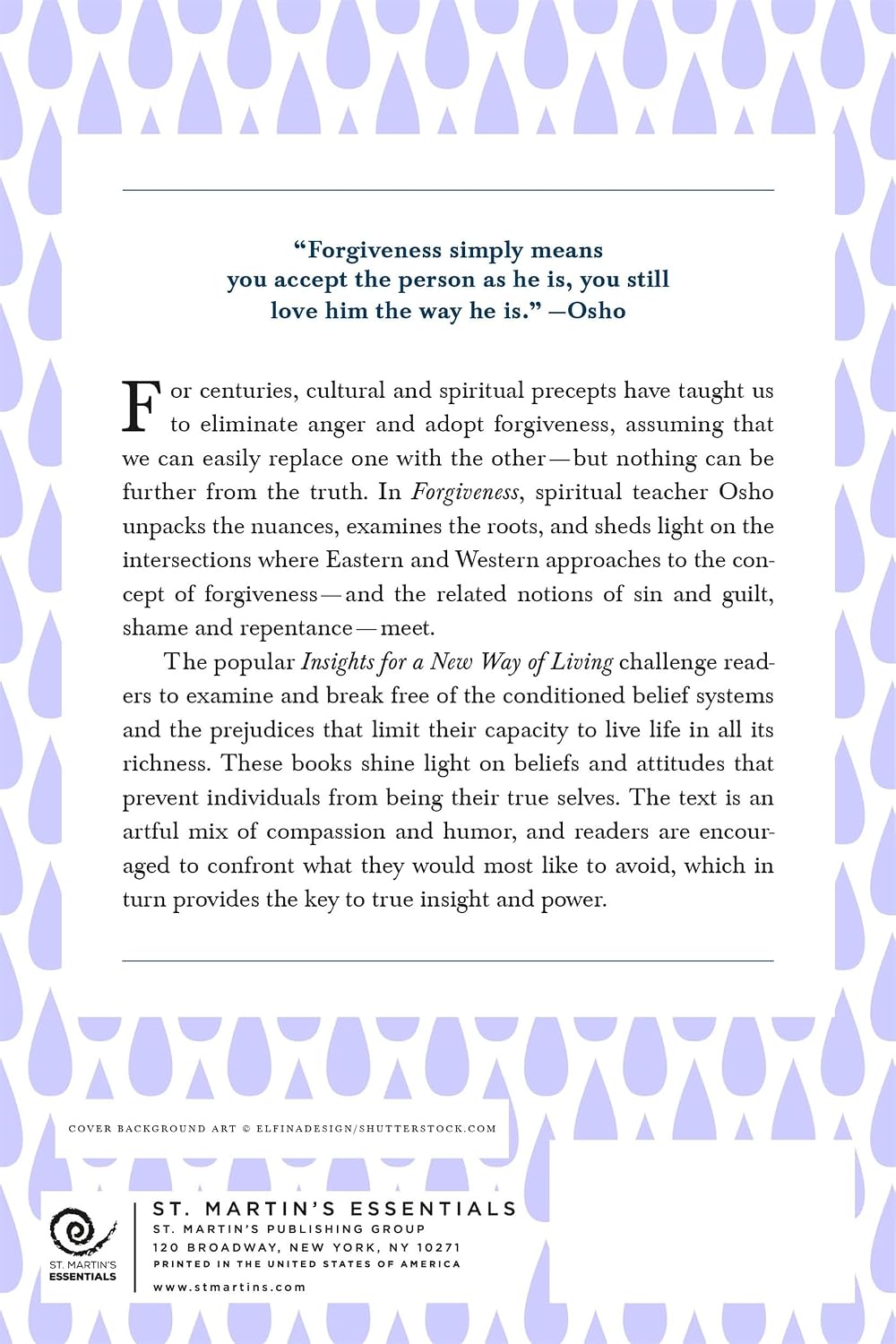
Macmillan describes the book as an examination of forgiveness and the belief systems that influence the way people understand themselves and others. It encourages readers to confront attitudes and emotional patterns they might normally prefer to avoid.
What Does Forgiveness Mean to Osho?
Osho does not treat forgiveness simply as a moral command.
Instead, he connects it with awareness and understanding.
One of the central ideas in the book is that resentment, anger and the desire for revenge can continue to affect the person carrying them long after the original event has passed.
From Osho’s philosophical perspective, forgiveness becomes less about performing a socially approved act and more about understanding what happened clearly enough that the emotional burden no longer controls the present.
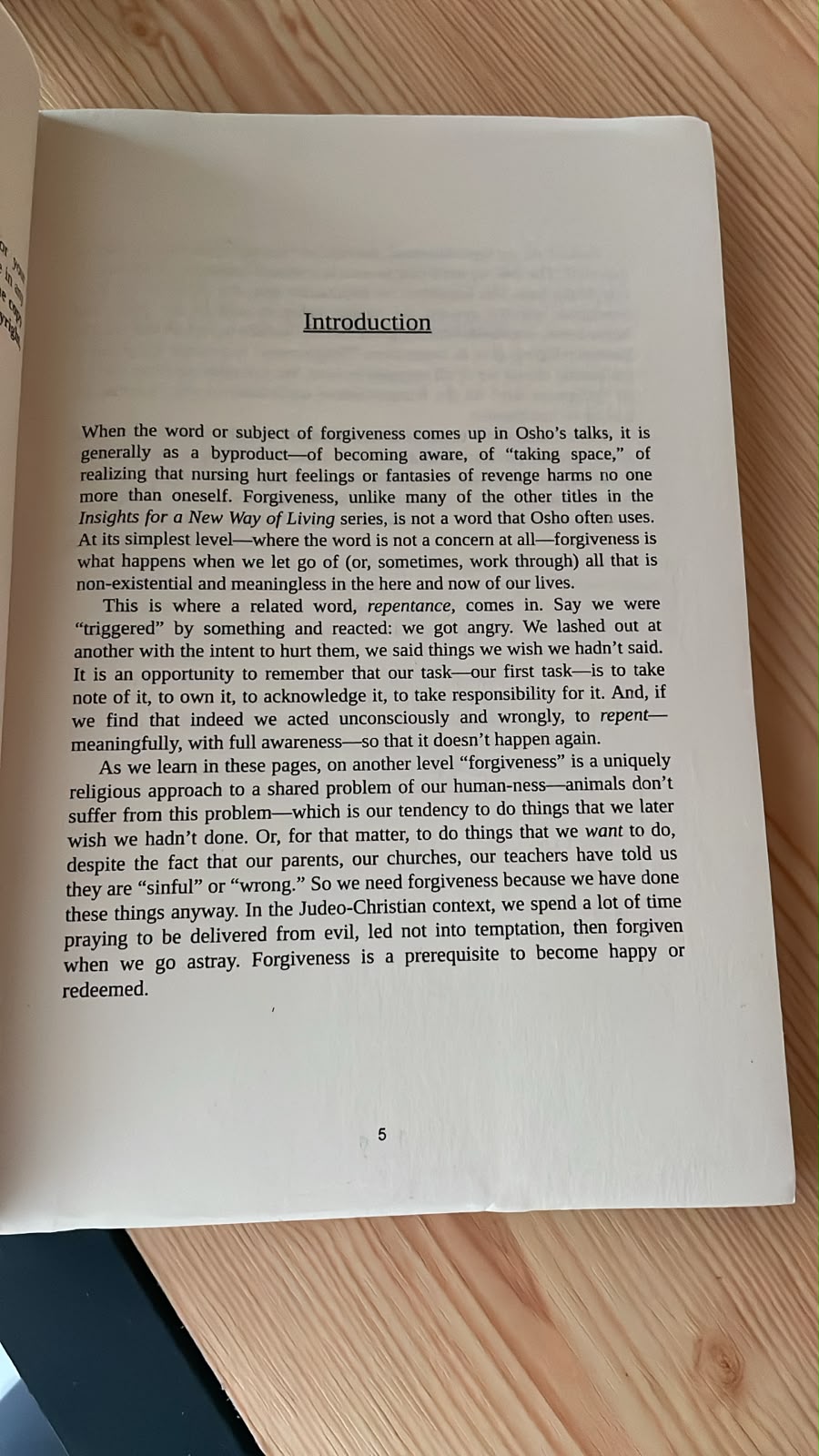
The introduction explains that forgiveness may emerge as a result of becoming more aware, creating space around emotional reactions and recognising how holding onto resentment can continue to affect one’s own life.
Anger and Awareness
The subtitle:
The Strength Lies in Anger
may initially sound as though the book encourages anger.
That is not the central message.
Instead, Osho examines what anger can reveal.
When a person reacts angrily, he encourages them to notice:
- What triggered the reaction?
- What expectation was challenged?
- What fear or hurt was underneath it?
- Was the response conscious or automatic?
- What responsibility does the person have for their own reaction?
In this framework, anger becomes something to observe rather than immediately suppress.
The goal is not to glorify aggression.
Instead, the book treats anger as an opportunity for self-observation.
Forgiveness and Responsibility
Responsibility is an important theme throughout the book.
Osho frequently questions the habit of immediately explaining away behaviour by blaming circumstances.
His approach asks readers to examine the difference between:
explaining something
and
taking responsibility for it.
Macmillan’s published excerpt discusses apology and explanation as possible ways people sometimes distance themselves from responsibility rather than examining their own unconscious behaviour.
This does not mean that people are responsible for harm committed against them.
Rather, the philosophical focus is on becoming aware of one’s own responses and actions.
Repentance
Another important concept is repentance.
In the book’s introduction, repentance is not presented simply as feeling guilty.
Instead, Osho’s framework connects genuine repentance with recognising that one acted unconsciously, acknowledging the action and becoming sufficiently aware that the same behaviour does not need to be repeated automatically.
This creates an important distinction between:
guilt
and
learning.
Someone can feel guilty without changing.
From Osho’s perspective, greater awareness is more useful than repeatedly punishing oneself emotionally.
Eastern and Western Perspectives
Forgiveness also compares different religious and cultural approaches to ideas such as:
- Sin
- Guilt
- Repentance
- Karma
- Moral responsibility
- Redemption
- Forgiveness
The introduction contrasts Western religious traditions in which forgiveness may be connected with sin and redemption with Eastern traditions where karma often provides a different framework for understanding actions and consequences.
These comparisons reflect Osho’s own philosophical interpretation and should not be treated as definitive descriptions of every religious tradition.
Ideals Versus Reality
Another recurring theme is the conflict between ideals and actual behaviour.
People may hold ideals such as:
“I should never be angry.”
“I must forgive everyone.”
“I should always be loving.”
Osho questions whether simply adopting such ideals changes what a person actually feels.
Instead, he encourages readers to begin by recognising what is genuinely present.
If anger exists, observe the anger.
If resentment exists, acknowledge it.
If guilt exists, notice it.
From his perspective, genuine transformation starts with awareness of reality rather than pretending to have already reached an ideal state.
Love and Forgiveness
Love also plays an important role in the book.
Osho argues that deeper understanding can sometimes reduce the need for formal moral gestures because genuine connection changes the way people interpret one another.
However, these ideas should not be interpreted as meaning that harmful behaviour must be accepted or that people should remain in unsafe relationships.
Forgiveness does not require abandoning personal boundaries.
Readers experiencing abuse, violence or coercion should prioritise safety and appropriate professional support rather than treating forgiveness as an obligation.
Forgiveness Is Not Forgetting Harm
A useful way to approach the book is to distinguish forgiveness from several other ideas.
Forgiveness does not necessarily mean:
- Forgetting what happened
- Saying harmful behaviour was acceptable
- Rebuilding every relationship
- Trusting someone again automatically
- Remaining close to someone who caused harm
- Ignoring appropriate boundaries
The book is better understood as a philosophical exploration of what happens internally when people continue carrying anger, resentment or guilt.
Is Forgiveness a Psychology Book?
Not in the academic or clinical sense.
Although the book discusses:
- Anger
- Guilt
- Emotional reactions
- Relationships
- Responsibility
- Conditioning
- Resentment
- Awareness
its framework comes from Osho’s spiritual and philosophical teachings rather than evidence-based clinical psychology.
It should therefore be categorised mainly under:
- Self-Help
- Personal Development
- Spirituality
- Philosophy
- Mindfulness-style reflection
It should not be marketed as a substitute for professional mental-health treatment, trauma therapy or relationship counselling.
Osho Insights for a New Way of Living
Macmillan describes the series as encouraging readers to examine conditioned beliefs and attitudes that may prevent them from living authentically.
Pan Macmillan currently lists the sequence as:
- Courage
- Creativity
- Maturity
- Awareness
- Intimacy
- Intuition
- Freedom
- Intelligence
- Compassion
- Joy
- Trust
- Happiness
- Forgiveness.
Each book focuses on a separate theme, so readers do not need to read Books 1–12 first.
Who Will Enjoy Forgiveness?
This book may particularly appeal to readers interested in:
- Forgiveness
- Anger and emotional reflection
- Spirituality
- Self-awareness
- Personal growth
- Meditation
- Conscious living
- Relationships
- Letting go of resentment
- Philosophy
- Inner transformation
- Osho’s teachings
Readers who enjoyed Awareness: The Key to Living in Balance, Maturity: The Responsibility of Being Oneself, Joy: The Happiness That Comes from Within or Compassion: The Ultimate Flowering of Love may find Forgiveness especially relevant.
About Osho
Osho was an Indian spiritual teacher whose talks and teachings were later compiled into many books.
Macmillan describes him as an influential and provocative twentieth-century spiritual teacher whose works explore inner transformation and continue to reach readers internationally.
His books frequently examine themes such as:
- Meditation
- Awareness
- Relationships
- Love
- Freedom
- Creativity
- Anger
- Responsibility
- Consciousness
- Personal transformation
For Sri Lankan readers interested in spirituality and reflective personal development, Forgiveness: The Strength Lies in Anger offers a thought-provoking examination of anger, responsibility, resentment and the possibility of letting go.
Be the first to review “Forgiveness (Osho Insights for a New Way of Living) by Osho”
Related products
-14%

Out of stock
Self-Help & Psychology
Original price was: රු2,900.00.රු2,500.00Current price is: රු2,500.00.
3 X Rs. 833.33 or 8% Cashback with
or 3 X රු833.33 with
or up to 4 X රු625.00 with

Non-Fiction & Knowledge
රු1,950.00
3 X Rs. 650.00 or 8% Cashback with
or 3 X රු650.00 with
or up to 4 X රු487.50 with

Out of stock
Non-Fiction & Knowledge
රු1,900.00
3 X Rs. 633.33 or 8% Cashback with
or 3 X රු633.33 with
or up to 4 X රු475.00 with
-21%

Non-Fiction & Knowledge
7 Secrets to Investing Like Warren Buffett by Mary Buffett & Sean Seah
Original price was: රු1,900.00.රු1,500.00Current price is: රු1,500.00.
3 X Rs. 500.00 or 8% Cashback with
or 3 X රු500.00 with
or up to 4 X රු375.00 with
-39%

Out of stock
Self-Help & Psychology
Original price was: රු2,450.00.රු1,500.00Current price is: රු1,500.00.
3 X Rs. 500.00 or 8% Cashback with
or 3 X රු500.00 with
or up to 4 X රු375.00 with
-24%

Out of stock
Non-Fiction & Knowledge
Original price was: රු2,500.00.රු1,900.00Current price is: රු1,900.00.
3 X Rs. 633.33 or 8% Cashback with
or 3 X රු633.33 with
or up to 4 X රු475.00 with
-29%

Self-Help & Psychology
Original price was: රු1,750.00.රු1,250.00Current price is: රු1,250.00.
3 X Rs. 416.67 or 8% Cashback with
or 3 X රු416.67 with
or up to 4 X රු312.50 with
-13%

Out of stock
Non-Fiction & Knowledge
Original price was: රු3,900.00.රු3,400.00Current price is: රු3,400.00.
3 X Rs. 1,133.33 or 8% Cashback with
or 3 X රු1,133.33 with
or up to 4 X රු850.00 with
Reviews
There are no reviews yet.