
No products in the cart.
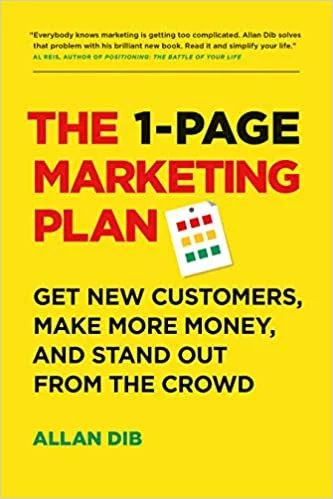

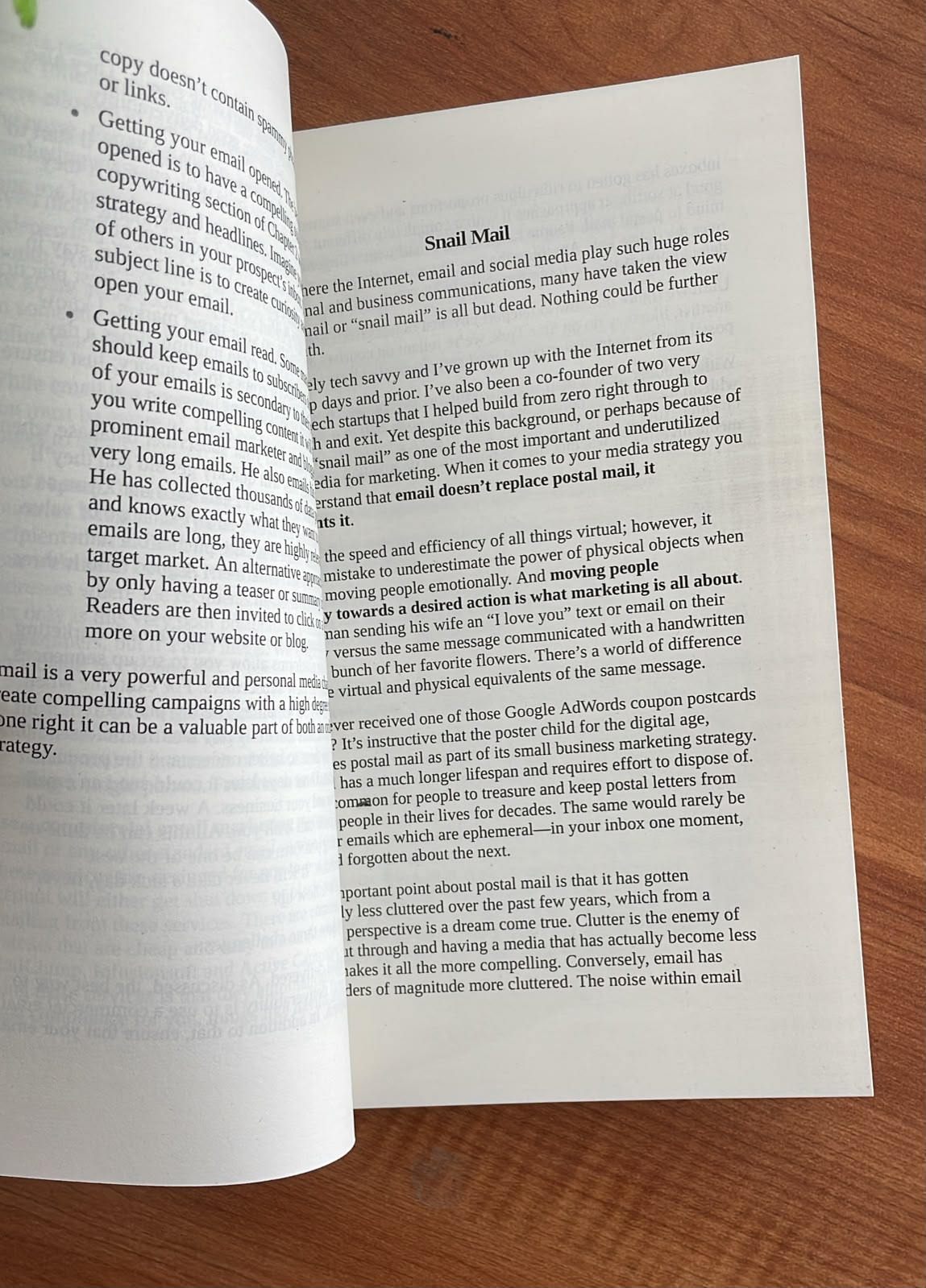
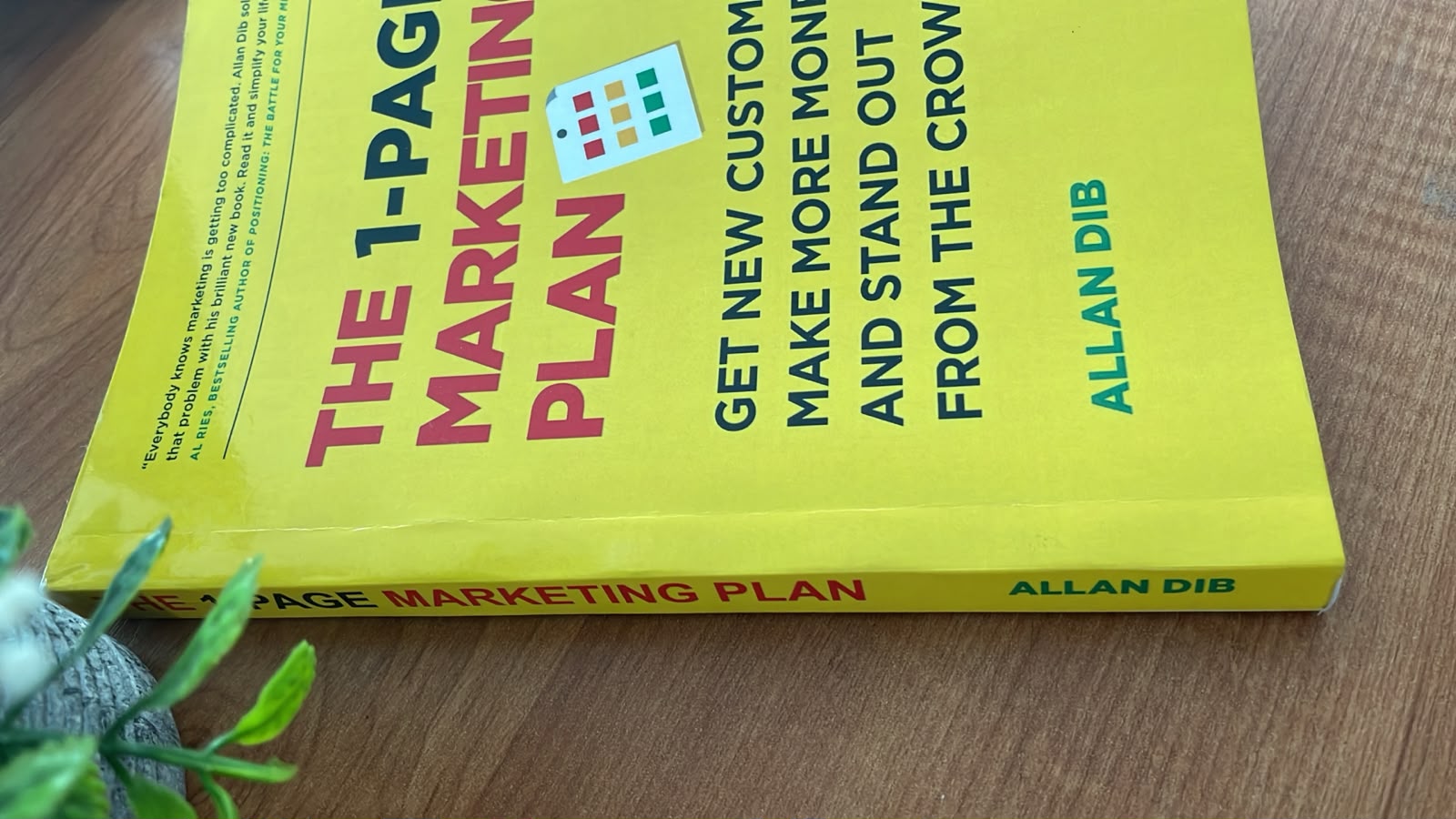



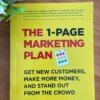
The 1-Page Marketing Plan by Allan Dib


රු1,900.00
3 X Rs. 633.33 or 8% Cashback with


or 3 X රු633.33 with


or up to 4 X රු475.00 with


1 Page Marketing Plan by Allan Dib is a practical business guide that shows entrepreneurs how to create a complete marketing strategy using just one page divided into nine simple sections.
Instead of relying on random marketing activities, Allan Dib teaches readers to identify their target market, craft a compelling message, choose effective advertising channels, capture and nurture leads, convert prospects into customers and increase the value of existing customers.
The framework is organised into three stages: Before, During and After, making it particularly useful for entrepreneurs, small-business owners, marketers and anyone who wants a clearer approach to business growth.
Product details:
- Full title: The 1-Page Marketing Plan
- Subtitle: Get New Customers, Make More Money, And Stand Out From The Crowd
- Author: Allan Dib
- Publisher/Imprint: Page Two
- Format: Paperback
- Pages: 228
- Language: English
- ISBN-13: 9781989025017
- ISBN-10: 1989025013
- Original edition publication: 5 May 2018
- Categories: Business, Marketing, Entrepreneurship and Small Business
- Key themes: Target markets, messaging, advertising, lead generation, sales conversion, customer experience and referrals
5 in stock
The 1-Page Marketing Plan by Allan Dib
1 Page Marketing Plan by Allan Dib is a practical marketing and business guide designed to help entrepreneurs replace random promotional activities with a clear, structured strategy. Instead of requiring a long traditional business document, Allan Dib presents an entire marketing plan on a single page divided into nine manageable sections.
The framework guides readers through what happens before someone becomes a prospect, while they are considering becoming a customer, and after they have made a purchase.
For entrepreneurs, small-business owners and marketers who feel overwhelmed by marketing, the book provides a straightforward way to organise the entire customer journey.
1 Page Marketing Plan by Allan Dib
1 Page Marketing Plan by Allan Dib begins with a simple problem: many businesses perform isolated marketing activities without having a complete strategy.
They may run social-media advertisements, send occasional emails, build a website or offer discounts, but these activities are not always connected to a clear plan.
Dib’s solution is a marketing framework consisting of nine sections that fit onto one page.
The nine areas cover:
- Selecting a target market
- Crafting a marketing message
- Choosing advertising media
- Capturing leads
- Nurturing leads
- Converting prospects into customers
- Delivering a strong customer experience
- Increasing customer lifetime value
- Generating referrals
Together, these areas create a complete marketing process rather than a collection of unrelated tactics.
The Before Phase
The first major part of the framework focuses on what happens before someone becomes a lead.
At this stage, businesses need to answer three important questions:
- Who are we trying to reach?
- What should we say to them?
- Where should we communicate that message?
Without clear answers, marketing can become expensive and ineffective.
Select Your Target Market
One of the first lessons in 1 Page Marketing Plan by Allan Dib is the importance of selecting a specific target market.
Trying to sell to everyone can make marketing messages vague.
A business may achieve stronger results when it clearly understands:
- Who its ideal customers are
- What problems they have
- What outcomes they want
- What motivates them to buy
- Which alternatives they currently use
- Where they spend their time
A bookstore, for example, could market differently to parents buying children’s books, university students buying textbooks and business professionals buying management titles.
The products may all be books, but the reasons for buying them are different.
Understanding those differences can help create more relevant marketing.
Craft a Clear Message
Once the target customer is clear, the next step is developing a message that attracts attention.
Customers generally care more about the result they will receive than about a long list of business features.
Businesses can therefore ask:
- What problem do we solve?
- What outcome does the customer want?
- Why should they choose us?
- What makes our offer different?
- What should they do next?
A strong marketing message should make the value of the business easier to understand.
Instead of simply saying what a company sells, effective messaging explains why the product or service matters to the customer.
Choose Your Advertising Media
The next step involves deciding where to deliver the message.
Possible marketing channels include:
- TikTok
- Google Ads
- Direct mail
- Search engines
- YouTube
- Events
- Partnerships
- Print advertising
The book encourages businesses to think strategically about media rather than automatically using every available platform.
The best channel is usually the one that can efficiently reach the intended customer.
The During Phase
The second part of 1 Page Marketing Plan by Allan Dib focuses on what happens after someone shows interest but before they become a customer.
This stage includes:
- Lead capture
- Lead nurturing
- Sales conversion
Many businesses lose opportunities because they spend money generating attention but have no organised process for following up.
Capture Leads
A website visitor or social-media follower may be interested without being ready to buy immediately.
Businesses can therefore create ways to capture contact information.
Examples include:
- Email subscriptions
- Enquiry forms
- Free consultations
- Discount registrations
- Downloadable guides
- WhatsApp enquiries
- Product alerts
- Loyalty-program registrations
Once contact information is captured appropriately, businesses have another opportunity to communicate with the potential customer.
Nurture Potential Customers
Not every lead is ready to purchase immediately.
Lead nurturing means maintaining communication and providing useful information while the person moves closer to a decision.
A business might use:
- Helpful emails
- Product recommendations
- Educational content
- Demonstrations
- Customer reviews
- Case studies
- Frequently asked questions
- Reminders
- Special announcements
The objective is to develop trust rather than pressure someone into buying immediately.
Good nurturing helps customers understand whether the product or service is appropriate for them.
Convert Leads into Customers
Eventually, the business needs a clear sales process.
The customer should understand:
- What is being offered
- What it costs
- How to purchase
- What happens after payment
- What support is available
- What guarantees or policies apply
Unnecessary friction can reduce conversions.
For an online store, this may involve making product information clear, simplifying checkout, displaying payment options and ensuring shipping information is easy to understand.
1 Page Marketing Plan by Allan Dib encourages businesses to treat conversion as a process that can be measured and improved.
The After Phase
Marketing does not end when someone makes a purchase.
The final part of the framework focuses on what happens after the customer buys.
This includes:
- Delivering a strong experience
- Increasing customer lifetime value
- Encouraging referrals
These areas can have a major influence on long-term profitability.
Deliver a Great Customer Experience
A successful transaction should create confidence and satisfaction.
Businesses can improve the customer experience through:
- Accurate order fulfilment
- Clear communication
- Fast support
- Reliable delivery
- Good packaging
- Helpful instructions
- Easy returns
- Friendly service
- Consistent quality
Customers remember how a business makes them feel after the purchase.
A strong experience can increase the chance of repeat business.
Increase Customer Lifetime Value
Customer lifetime value considers the total value of a customer relationship rather than only the first purchase.
Businesses may increase customer value through:
- Repeat purchases
- Related products
- Upgrades
- Bundles
- Memberships
- Subscription services
- Loyalty programmes
- Cross-selling
- Seasonal offers
This does not mean encouraging customers to buy unnecessary products.
The strongest approach is to identify additional products or services that genuinely match their needs.
Generate Referrals
Satisfied customers can become an important source of new business.
Referrals often carry more trust because the recommendation comes from someone the potential customer already knows.
Businesses may encourage referrals by:
- Asking satisfied customers to recommend them
- Creating referral programmes
- Making reviews easy to submit
- Providing shareable content
- Rewarding legitimate referrals
- Delivering experiences worth talking about
The goal is to make word-of-mouth marketing more systematic rather than leaving it entirely to chance.
A Complete Marketing Strategy on One Page
The biggest advantage of the framework is simplicity.
Traditional marketing plans can become long documents that are written once and rarely used again.
The one-page format forces businesses to identify the most important information.
A completed plan provides a quick overview of:
Before
- Target Market
- Message
- Media
During
4. Lead Capture
5. Lead Nurture
6. Sales Conversion
After
7. Customer Experience
8. Customer Lifetime Value
9. Referrals
This structure helps entrepreneurs see how different marketing activities connect with one another.
Marketing for Small and Medium Businesses
1 Page Marketing Plan by Allan Dib is particularly focused on small and medium-sized businesses.
Large corporations often have substantial advertising budgets and may invest heavily in broad brand-awareness campaigns.
Smaller businesses usually need marketing activities that can produce measurable results with more limited resources.
The book therefore places strong emphasis on direct-response marketing and practical customer acquisition.
Readers are encouraged to think about what happens after someone sees an advertisement rather than measuring success only through impressions, likes or followers.
Measure Marketing Results
A useful marketing system should produce measurable information.
Businesses can track metrics such as:
- Advertising spend
- Website visitors
- Leads generated
- Cost per lead
- Conversion rate
- Number of customers
- Customer acquisition cost
- Average order value
- Repeat purchase rate
- Customer lifetime value
- Referral rate
These numbers help identify which parts of the marketing plan are working and which require improvement.
For example, generating many leads but very few customers may indicate a conversion problem.
Generating customers at a high cost may indicate problems with targeting, advertising or the underlying offer.
Useful for Entrepreneurs and Business Owners
1 Page Marketing Plan by Allan Dib may be particularly helpful for:
- Entrepreneurs
- Small-business owners
- Startup founders
- Marketing professionals
- Sales professionals
- Consultants
- Freelancers
- E-commerce businesses
- Service businesses
- Managers responsible for growth
It is especially useful for people who understand individual marketing tactics but do not yet have a complete system connecting them.
About Allan Dib
Allan Dib is an entrepreneur, marketer and author who focuses on helping businesses develop practical marketing systems.
His work emphasises straightforward frameworks that make complicated marketing concepts easier to implement.
The 1-Page Marketing Plan became widely known for simplifying marketing strategy into a structured nine-part framework.
Product Details
Product title: The 1-Page Marketing Plan
Subtitle: Get New Customers, Make More Money, And Stand Out From The Crowd
SEO product title: 1 Page Marketing Plan by Allan Dib
Author: Allan Dib
Publisher/Imprint: Page Two
Format: Paperback
Language: English
Page count: 228 pages
ISBN-13: 9781989025017
ISBN-10: 1989025013
Original publication date for this edition: 5 May 2018
Categories: Business, Marketing, Entrepreneurship and Small Business
Key themes: Targeting, advertising, lead generation, sales conversion, customer experience, lifetime value and referrals
Why Choose 1 Page Marketing Plan by Allan Dib?
1 Page Marketing Plan by Allan Dib provides a simple framework for organising an entire marketing strategy without creating an unnecessarily complicated document.
Readers learn how to identify ideal customers, communicate a clear message, select marketing channels, capture and nurture leads, convert prospects, improve customer experiences and generate repeat business and referrals.
The nine-part structure allows entrepreneurs to see marketing as one connected system rather than a series of unrelated promotional activities.
For small-business owners, entrepreneurs and marketers looking for a practical approach to customer acquisition and growth, 1 Page Marketing Plan by Allan Dib is a valuable addition to a business bookshelf.
Explore our complete business and marketing books collection to discover more titles about sales, entrepreneurship, advertising, customer acquisition and business growth.
Be the first to review “The 1-Page Marketing Plan by Allan Dib”
Related products

Out of stock
Business
රු2,700.00
3 X Rs. 900.00 or 8% Cashback with
or 3 X රු900.00 with
or up to 4 X රු675.00 with
-17%

Out of stock
Original price was: රු2,900.00.රු2,400.00Current price is: රු2,400.00.
3 X Rs. 800.00 or 8% Cashback with
or 3 X රු800.00 with
or up to 4 X රු600.00 with

රු1,750.00
3 X Rs. 583.33 or 8% Cashback with
or 3 X රු583.33 with
or up to 4 X රු437.50 with

Out of stock
රු1,990.00
3 X Rs. 663.33 or 8% Cashback with
or 3 X රු663.33 with
or up to 4 X රු497.50 with
Business, Finance & Economics
රු1,750.00
3 X Rs. 583.33 or 8% Cashback with
or 3 X රු583.33 with
or up to 4 X රු437.50 with

Business & Management
රු1,800.00
3 X Rs. 600.00 or 8% Cashback with
or 3 X රු600.00 with
or up to 4 X රු450.00 with
-12%

Out of stock
Biography
Original price was: රු2,600.00.රු2,300.00Current price is: රු2,300.00.
3 X Rs. 766.67 or 8% Cashback with
or 3 X රු766.67 with
or up to 4 X රු575.00 with
Out of stock
Business
රු1,300.00
3 X Rs. 433.33 or 8% Cashback with
or 3 X රු433.33 with
or up to 4 X රු325.00 with
Reviews
There are no reviews yet.