
No products in the cart.
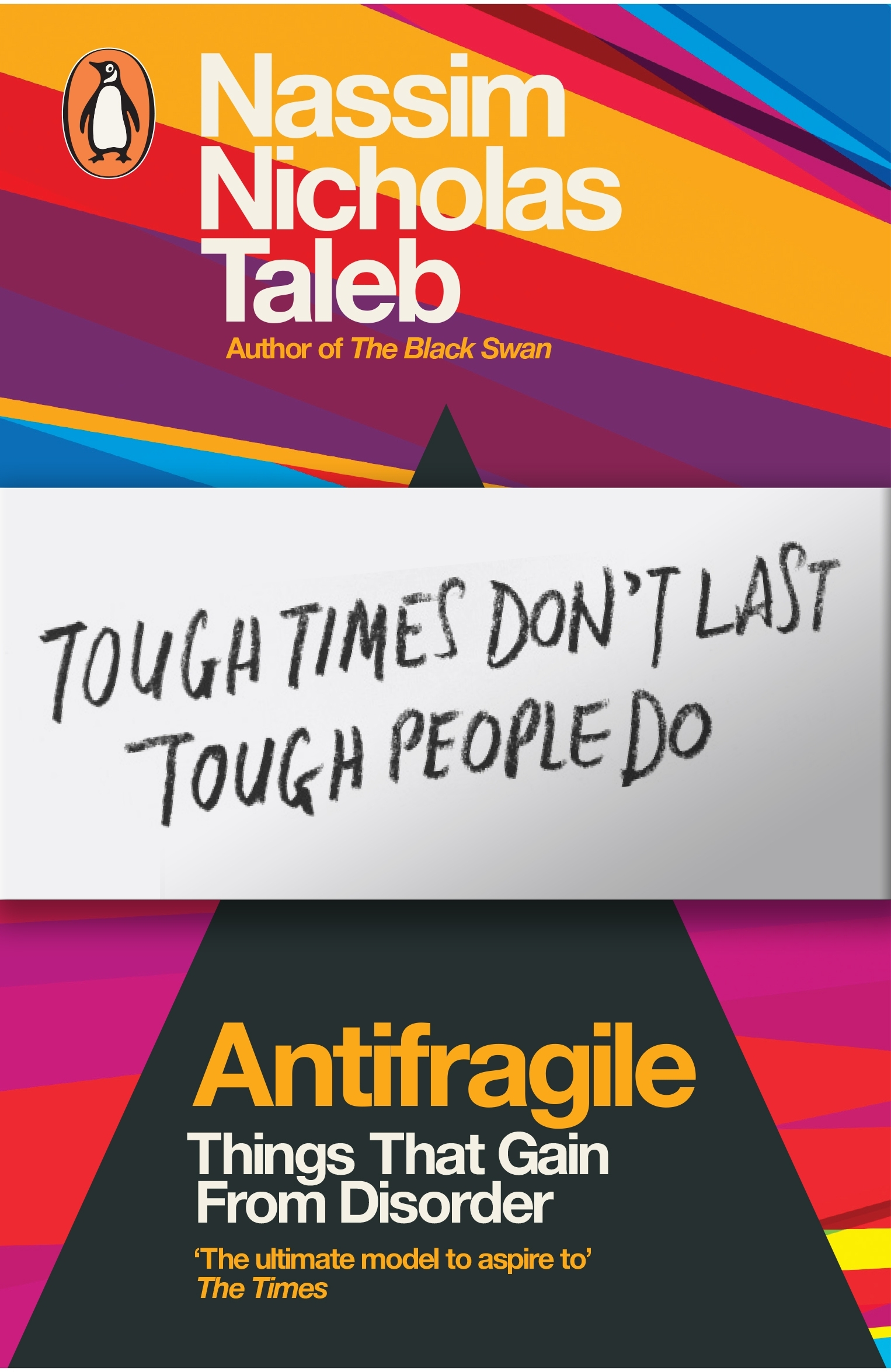
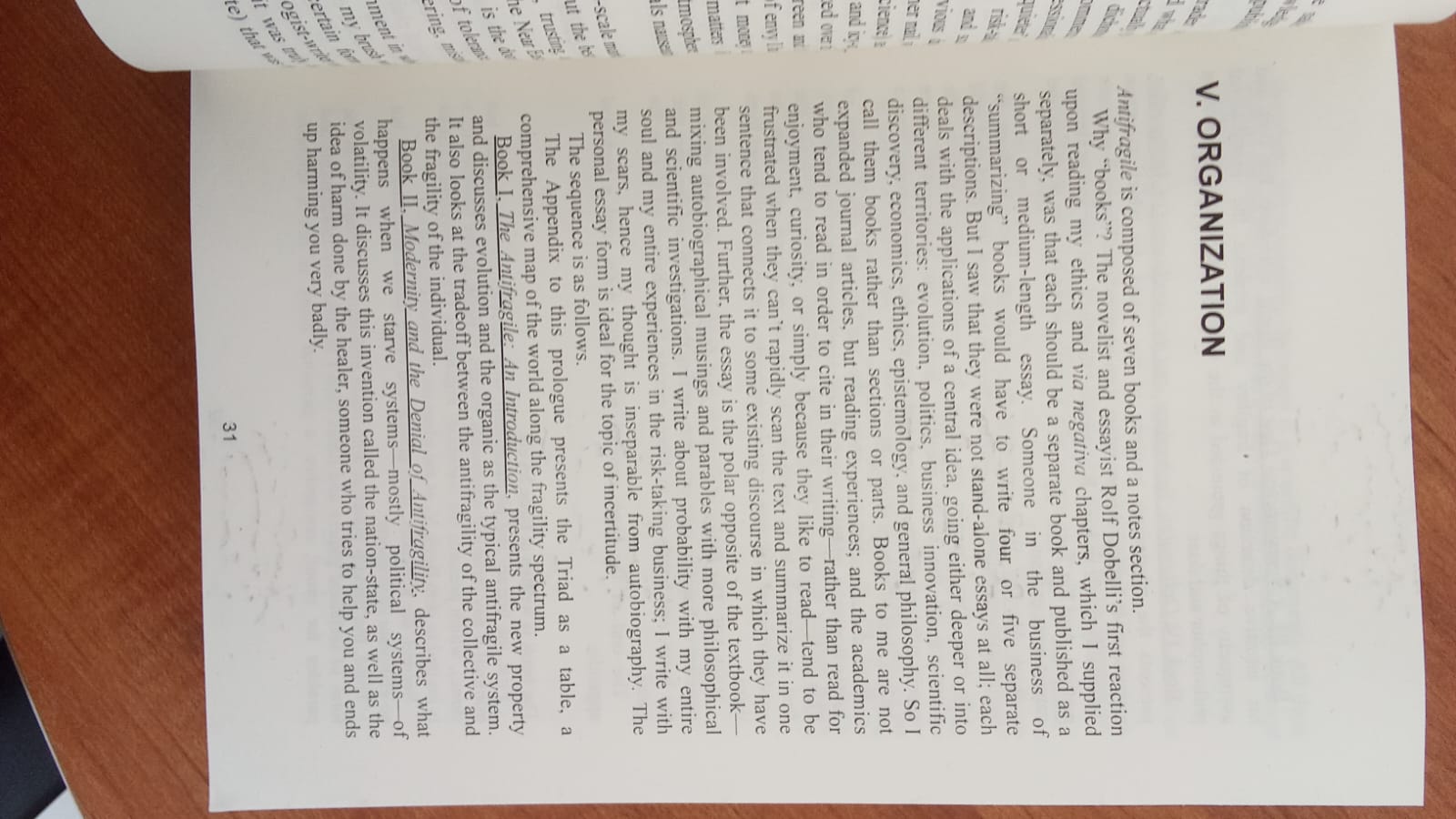
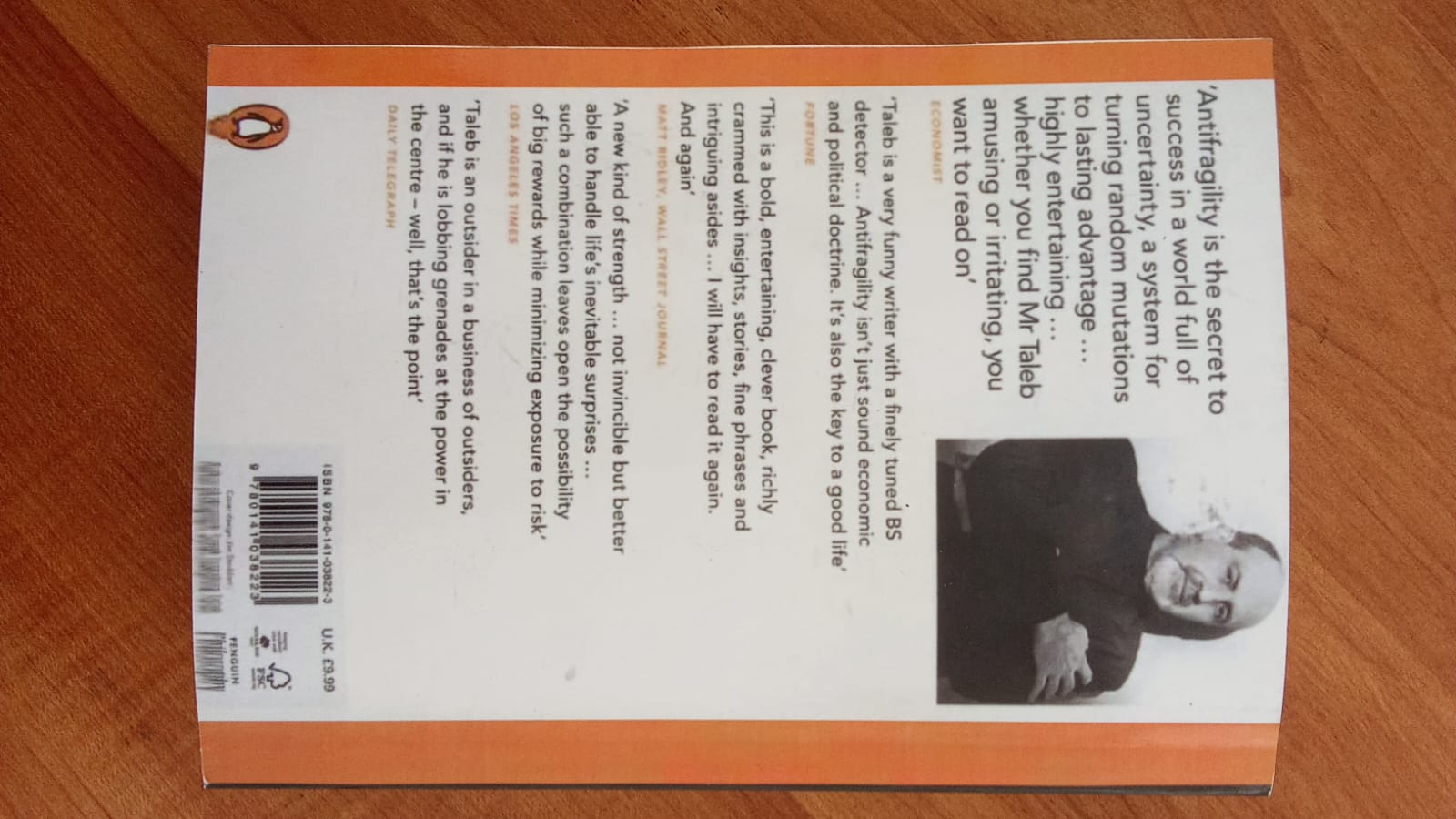
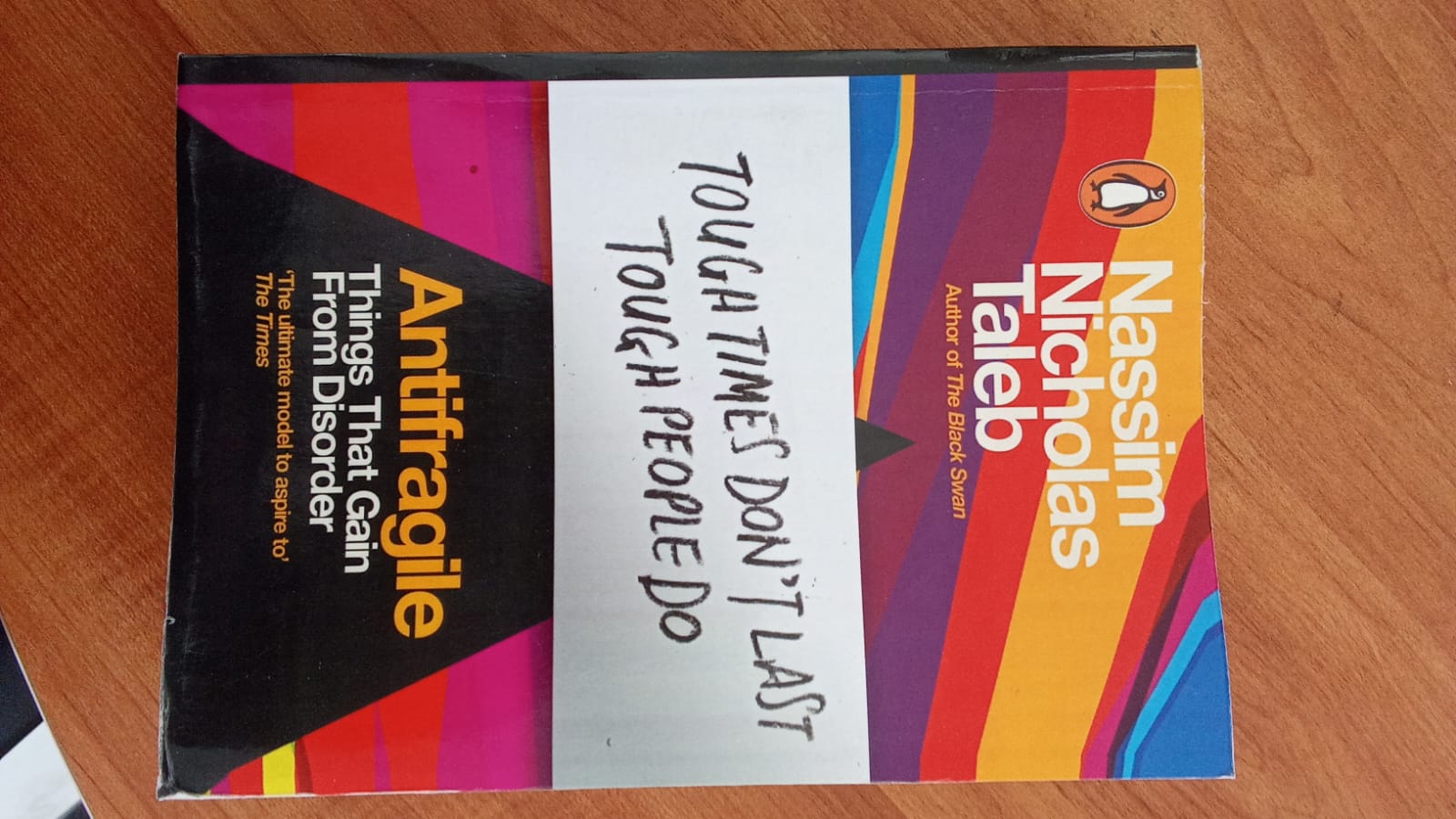


“Antifragile – Things that Gain from Disorder” by Nassim Nicolas Taleb

රු2,750.00
3 X Rs. 916.67 or 8% Cashback with


or 3 X රු916.67 with


or up to 4 X රු687.50 with


Short Description – Antifragile by Nassim Nicholas Taleb
Antifragile: Things That Gain from Disorder by Nassim Nicholas Taleb explores how individuals and systems can grow stronger through uncertainty, stress, and change. The book introduces the concept of antifragility—going beyond resilience to actually benefit from challenges. Through practical insights and real-world examples, it shows how embracing risk and unpredictability can lead to long-term success, making it an essential read for anyone interested in personal growth, decision-making, and resilience.
5 in stock
Antifragile by Nassim Nicholas Taleb
Antifragile by Nassim Nicholas Taleb is a thought-provoking book about uncertainty, risk, randomness, resilience, and the unexpected advantages of disorder.
Most people think the opposite of fragile is strong or resilient.
Taleb introduces a different idea.
Some things do not simply survive pressure.
They actually become better because of it.
He calls this quality antifragility.
Why Read Antifragile by Nassim Nicholas Taleb?
Antifragile by Nassim Nicholas Taleb challenges readers to reconsider the way they think about risk and uncertainty.
Modern life often encourages people to eliminate uncertainty.
Businesses try to predict markets.
Individuals try to create perfectly controlled plans.
Organizations attempt to remove every possible surprise.
Taleb argues that excessive control can sometimes make systems more fragile.
Instead, some systems become stronger when they experience manageable stress, variation, and uncertainty.
What Does Antifragile Mean?
Fragile things are damaged by shocks.
Robust things can survive shocks without changing very much.
Antifragile things are different.
They can benefit from shocks and become stronger because of them.
This distinction is one of the central ideas in the book.
Taleb applies it to many areas, including business, economics, health, decision-making, careers, organizations, and everyday life.
Learning from Stress
A simple example of antifragility is physical exercise.
Appropriate physical stress can encourage the body to adapt.
The same broad principle can sometimes apply to other systems.
Small challenges can reveal weaknesses.
Mistakes can provide information.
Competition can encourage improvement.
Unexpected situations can create opportunities for learning.
The important question becomes whether a system is designed to learn from disorder rather than collapse because of it.
Understanding Uncertainty
Antifragile by Nassim Nicholas Taleb encourages readers to accept that the future cannot always be predicted accurately.
Unexpected events are unavoidable.
Trying to forecast everything can therefore create false confidence.
Taleb suggests paying more attention to how a system behaves when predictions fail.
A strong strategy should not depend entirely on being able to predict exactly what happens next.
Avoiding Fragility
One of the practical ideas in the book is reducing exposure to situations where a single mistake can cause enormous damage.
Something may appear efficient under normal conditions but become extremely vulnerable when circumstances change.
This principle can apply to businesses, careers, investments, organizations, and personal decisions.
Reducing catastrophic downside can sometimes matter more than accurately predicting the future.
The Importance of Optionality
Optionality is another important concept associated with the book.
Having several possible paths can create flexibility.
When circumstances change, options allow people to respond rather than remain trapped in one plan.
This can be valuable in entrepreneurship.
It can also matter in careers, education, investing, and everyday decisions.
Flexibility can become especially powerful when the future is uncertain.
Small Risks and Large Opportunities
Taleb often examines situations where the downside is limited but the potential upside is much larger.
These situations can create opportunities to benefit from uncertainty.
Instead of risking everything on one prediction, a person can sometimes take several smaller risks.
Most may produce limited results.
A few successful outcomes may create significant benefits.
This way of thinking is particularly relevant to entrepreneurship and innovation.
Trial and Error
Antifragile by Nassim Nicholas Taleb also highlights the value of experimentation.
Many important discoveries do not come from perfect planning.
They emerge through repeated attempts.
Someone tries something.
The result provides information.
The next attempt improves.
Over time, successful ideas survive while unsuccessful ideas disappear.
This process allows systems to learn without requiring perfect knowledge from the beginning.
Antifragility in Business
Businesses constantly face uncertainty.
Customer preferences change.
Technology changes.
Competitors appear.
Economic conditions shift.
A company that depends on everything remaining predictable may become vulnerable.
Businesses that experiment, learn quickly, maintain flexibility, and avoid catastrophic risks may be better prepared for unexpected change.
Antifragility in Everyday Life
The ideas in the book are not limited to large organizations.
Individuals also face uncertainty.
Careers change.
Plans fail.
Opportunities appear unexpectedly.
Learning new skills, maintaining different options, and avoiding unnecessary dependence on a single outcome can make life more adaptable.
The goal is not to create chaos.
The goal is to become better prepared for a world where uncertainty already exists.
Resilience vs Antifragility
Resilience and antifragility are related but different.
A resilient system survives a difficult event and returns to its original state.
An antifragile system can improve because of the event.
This distinction changes how readers may think about challenges.
The objective is not always simply to survive difficulty.
Sometimes difficulty can provide information or pressure that leads to improvement.
Who Should Read This Book?
Antifragile by Nassim Nicholas Taleb is a strong choice for readers interested in:
- Risk and uncertainty
- Business strategy
- Economics
- Investing
- Entrepreneurship
- Decision-making
- Personal development
- Probability
- Philosophy
- Innovation
- Resilience
- Systems thinking
Readers interested in unconventional approaches to decision-making may find the book particularly thought-provoking.
Part of the Incerto Series
Antifragile belongs to Nassim Nicholas Taleb’s Incerto collection.
The series explores uncertainty, probability, luck, risk, human error, and decision-making.
Other books associated with Incerto include The Black Swan, Fooled by Randomness, Skin in the Game, and The Bed of Procrustes.
Each book can also be approached as a standalone work.
About Nassim Nicholas Taleb
Nassim Nicholas Taleb is an author and researcher whose work focuses heavily on probability, uncertainty, risk, randomness, and decision-making.
Before moving more deeply into research, he spent many years working professionally with risk.
His books have become known for challenging conventional approaches to forecasting and uncertainty.
Readers can learn more about this title through the official Penguin Random House Antifragile page.
A Different Approach to Risk
Antifragile by Nassim Nicholas Taleb does not promise that uncertainty can be eliminated.
Instead, it asks a more useful question.
How can we structure decisions so that uncertainty does not destroy us?
Better still, how can we sometimes benefit from unexpected change?
This question makes Antifragile different from many traditional books about risk management.
Build Your Business and Finance Collection
Readers who enjoy this title can also explore more Business & Economics Books, Investment Books, and Personal Development Books available in our bookstore.
Books about risk and decision-making can provide useful perspectives for investors, entrepreneurs, managers, and professionals.
Antifragile is an excellent addition for readers who want to challenge conventional ideas about stability and uncertainty.
Buy Antifragile by Nassim Nicholas Taleb in Sri Lanka
Looking for Antifragile by Nassim Nicholas Taleb in Sri Lanka?
This influential book is an excellent choice for entrepreneurs, investors, managers, professionals, and readers interested in understanding uncertainty.
Discover why some systems break under pressure while others survive—and why certain systems can actually improve because of disorder.
Add this thought-provoking Nassim Nicholas Taleb book to your collection today.https://www.penguinrandomhouse.com/books/176227/antifragile-by-nassim-nicholas-taleb/
Be the first to review ““Antifragile – Things that Gain from Disorder” by Nassim Nicolas Taleb”
Related products
රු2,000.00
3 X Rs. 666.67 or 8% Cashback with
or 3 X රු666.67 with
or up to 4 X රු500.00 with
-39%

Out of stock
Self-Help & Psychology
Original price was: රු2,450.00.රු1,500.00Current price is: රු1,500.00.
3 X Rs. 500.00 or 8% Cashback with
or 3 X රු500.00 with
or up to 4 X රු375.00 with
-13%

Out of stock
Non-Fiction & Knowledge
Original price was: රු3,900.00.රු3,400.00Current price is: රු3,400.00.
3 X Rs. 1,133.33 or 8% Cashback with
or 3 X රු1,133.33 with
or up to 4 X රු850.00 with

Out of stock
Autobiography
රු2,750.00
3 X Rs. 916.67 or 8% Cashback with
or 3 X රු916.67 with
or up to 4 X රු687.50 with
Non-Fiction & Knowledge
රු1,550.00
3 X Rs. 516.67 or 8% Cashback with
or 3 X රු516.67 with
or up to 4 X රු387.50 with
-21%
Non-Fiction & Knowledge
7 Secrets to Investing Like Warren Buffett by Mary Buffett & Sean Seah
Original price was: රු1,900.00.රු1,500.00Current price is: රු1,500.00.
3 X Rs. 500.00 or 8% Cashback with
or 3 X රු500.00 with
or up to 4 X රු375.00 with
-17%
Out of stock
Non-Fiction & Knowledge
Original price was: රු2,900.00.රු2,400.00Current price is: රු2,400.00.
3 X Rs. 800.00 or 8% Cashback with
or 3 X රු800.00 with
or up to 4 X රු600.00 with
-19%
Out of stock
Non-Fiction & Knowledge
Original price was: රු2,650.00.රු2,150.00Current price is: රු2,150.00.
3 X Rs. 716.67 or 8% Cashback with
or 3 X රු716.67 with
or up to 4 X රු537.50 with
Reviews
There are no reviews yet.