
No products in the cart.
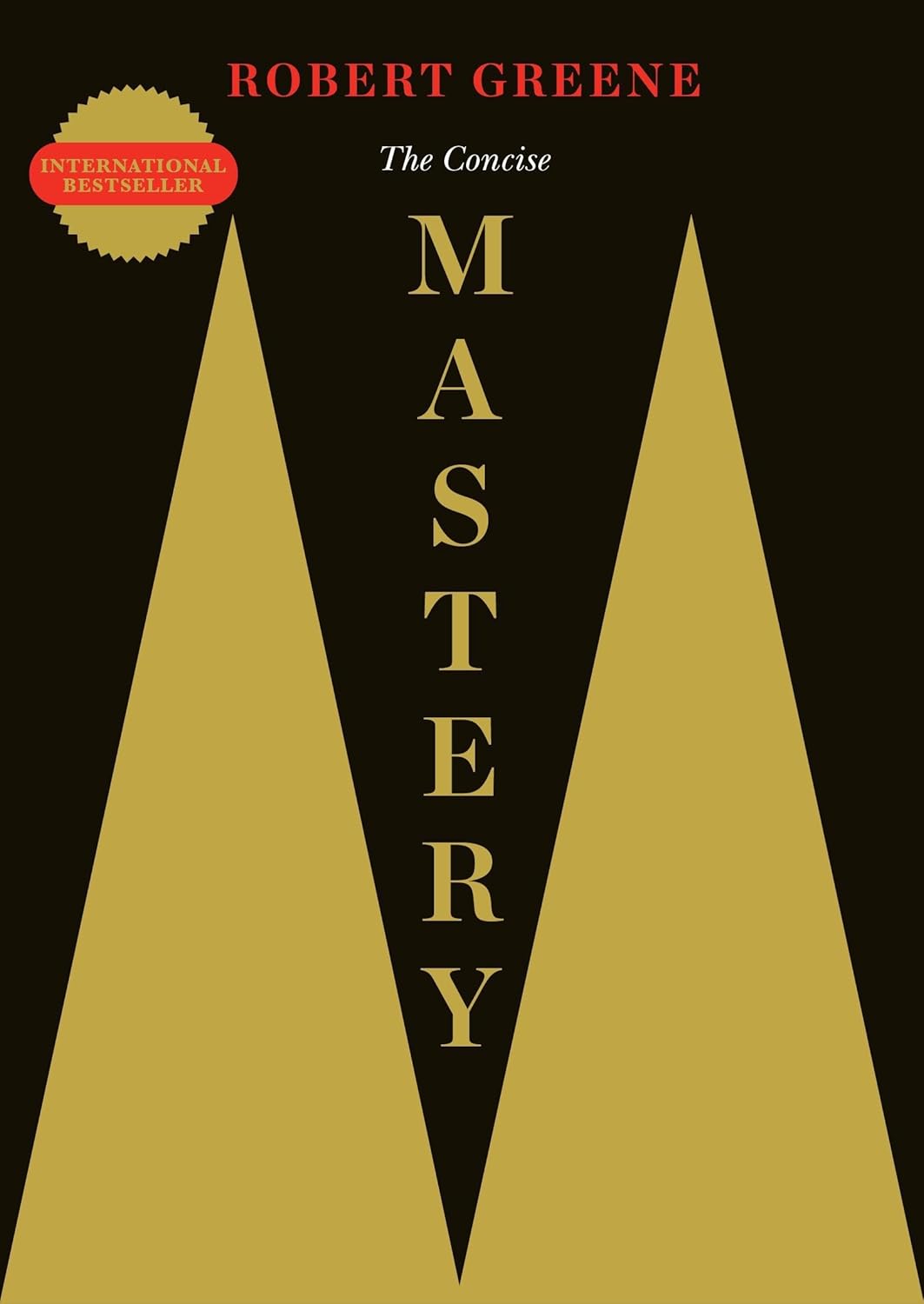

Concise Mastery
Concise Mastery by Robert Greene is a compact guide to developing skill, discipline and long-term excellence.
Based on Greene’s bestselling book Mastery, this concise edition presents the key ideas in a shorter and more accessible format.
Concise Mastery explores how people can discover their strengths, develop valuable skills and move toward a higher level of expertise.
It is ideal for readers interested in self-development, career growth, productivity, leadership and personal success.
Why Read Concise Mastery?
Concise Mastery focuses on one central idea: real success takes time.
Robert Greene explains that mastery is not simply about natural talent.
It develops through practice, patience, observation and consistent improvement.
Readers are encouraged to think about their long-term direction rather than chasing quick results.
This makes the book especially useful for people who want to build meaningful skills and create lasting progress.
Discover Your Life’s Task
One of the important ideas in Concise Mastery is discovering the kind of work that naturally interests you.
Greene encourages readers to pay attention to their curiosity, strengths and long-term interests.
The goal is to identify an area that can hold your attention long enough for real expertise to develop.
A clear direction can make it easier to remain committed when progress feels slow.
The Importance of Apprenticeship
The apprenticeship stage is a major theme in Concise Mastery.
Greene explains that beginners need time to learn the basic rules of a field.
This stage may involve observation, repetition and uncomfortable mistakes.
Instead of trying to prove themselves too early, readers are encouraged to focus on learning as much as possible.
A strong foundation can make advanced progress much easier later.
Learn From Mentors
Mentorship can accelerate growth.
Experienced people can provide knowledge that might take years to discover independently.
Concise Mastery encourages readers to learn from skilled mentors while also developing their own judgement.
A good mentor can help identify weaknesses, improve technique and avoid common mistakes.
However, Greene also emphasises that learners should eventually develop their own approach.
Practice With Purpose
Practice is not simply repeating the same task.
Effective practice requires attention.
Readers should identify weak areas and work deliberately to improve them.
Concise Mastery explains how focused repetition can gradually transform difficult skills into natural abilities.
This principle can apply to business, writing, design, sport, leadership, technology and many other areas.
Develop Patience
Modern culture often rewards speed.
People want rapid results, instant recognition and quick success.
Concise Mastery presents a different approach.
Greene argues that meaningful expertise requires patience.
The early stages can feel slow because progress is often difficult to see.
However, consistent effort can create major improvements over time.
Move Beyond the Rules
Beginners need rules.
Experts eventually learn when to move beyond them.
As experience grows, people begin to recognise patterns more quickly.
They can make decisions with greater confidence and creativity.
Concise Mastery explains that this level of understanding develops after years of focused learning and practice.
Mastery allows a person to work with both knowledge and intuition.
Creativity and Mastery
Mastery is not only about technical skill.
It also creates space for creativity.
Once a person understands the foundations of a field, they can experiment more intelligently.
They can combine ideas, challenge assumptions and create something new.
Concise Mastery encourages readers to move from imitation toward originality.
This process can help turn knowledge into meaningful innovation.
Learn From Failure
Failure is an important part of learning.
Mistakes can reveal weaknesses that success often hides.
Greene encourages readers to study failures instead of avoiding them.
Each setback can provide useful information.
Concise Mastery presents failure as a natural stage in the development of skill.
The key is to learn, adjust and continue.
Build Discipline
Talent without discipline can be wasted.
Consistent work is necessary for long-term improvement.
Concise Mastery encourages readers to develop routines that support their goals.
This may involve practising regularly, protecting time for focused work and avoiding distractions.
Discipline helps turn ambition into progress.
What You Can Learn From Concise Mastery
Readers can explore lessons about:
- Developing valuable skills
- Discovering your strengths
- Finding your long-term direction
- Learning through apprenticeship
- Working with mentors
- Practising with purpose
- Building patience
- Developing discipline
- Learning from mistakes
- Improving creativity
- Moving beyond basic rules
- Building expertise
- Remaining focused on long-term growth
- Turning knowledge into skill
- Achieving excellence through consistency
Who Should Read Concise Mastery?
Concise Mastery is suitable for students, professionals, entrepreneurs and anyone interested in personal growth.
It can be especially useful for readers who are beginning a new career or learning a difficult skill.
Managers and leaders may also appreciate its lessons about learning, patience and long-term development.
Readers of Robert Greene’s other books may enjoy how this title focuses more strongly on skill and expertise.
A Compact Guide to Long-Term Excellence
One of the main advantages of Concise Mastery is its shorter format.
Readers can explore Robert Greene’s key ideas without immediately reading the longer original edition.
The book works well as an introduction to Mastery.
It can also be used as a quick reference for people who want to revisit important principles.
Build Your Path to Mastery
Concise Mastery reminds readers that excellence is rarely accidental.
It develops through focused learning, practice, patience and reflection.
The book encourages people to choose a meaningful direction and commit to improving over time.
Whether you are developing a career, building a business or learning a new skill, Concise Mastery by Robert Greene offers practical ideas for creating long-term progress.
Learn more about Robert Greene’s ideas on achieving mastery, developing skills, and reaching your full potential through the official Mastery website.
Be the first to review “Concise Mastery”
Related products

Non-Fiction & Knowledge
රු1,950.00
3 X Rs. 650.00 or 8% Cashback with


or 3 X රු650.00 with


or up to 4 X රු487.50 with


Out of stock
Non-Fiction & Knowledge
රු1,500.00
3 X Rs. 500.00 or 8% Cashback with
or 3 X රු500.00 with
or up to 4 X රු375.00 with
-34%
Non-Fiction & Knowledge
Original price was: රු2,250.00.රු1,490.00Current price is: රු1,490.00.
3 X Rs. 496.67 or 8% Cashback with
or 3 X රු496.67 with
or up to 4 X රු372.50 with
-24%
Out of stock
Non-Fiction & Knowledge
Original price was: රු2,500.00.රු1,900.00Current price is: රු1,900.00.
3 X Rs. 633.33 or 8% Cashback with
or 3 X රු633.33 with
or up to 4 X රු475.00 with
-23%

Non-Fiction & Knowledge
Original price was: රු2,200.00.රු1,700.00Current price is: රු1,700.00.
3 X Rs. 566.67 or 8% Cashback with
or 3 X රු566.67 with
or up to 4 X රු425.00 with
රු2,000.00
3 X Rs. 666.67 or 8% Cashback with
or 3 X රු666.67 with
or up to 4 X රු500.00 with
Out of stock
Self-Help & Psychology
රු1,900.00
3 X Rs. 633.33 or 8% Cashback with
or 3 X රු633.33 with
or up to 4 X රු475.00 with
-19%

Out of stock
Non-Fiction & Knowledge
Original price was: රු2,650.00.රු2,150.00Current price is: රු2,150.00.
3 X Rs. 716.67 or 8% Cashback with
or 3 X රු716.67 with
or up to 4 X රු537.50 with
Reviews
There are no reviews yet.