
No products in the cart.
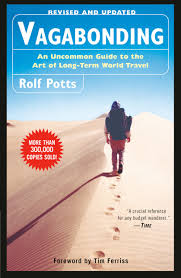
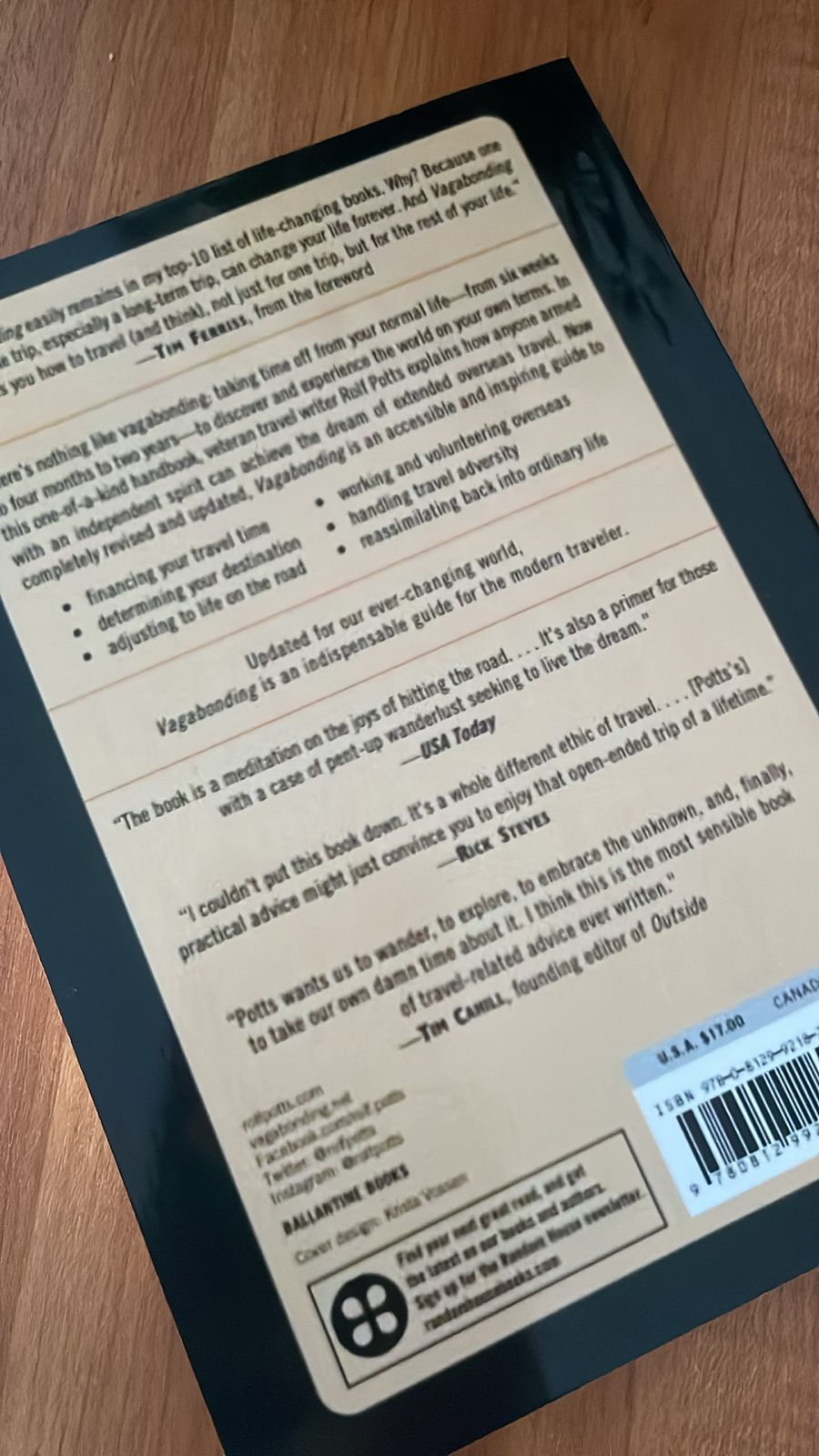
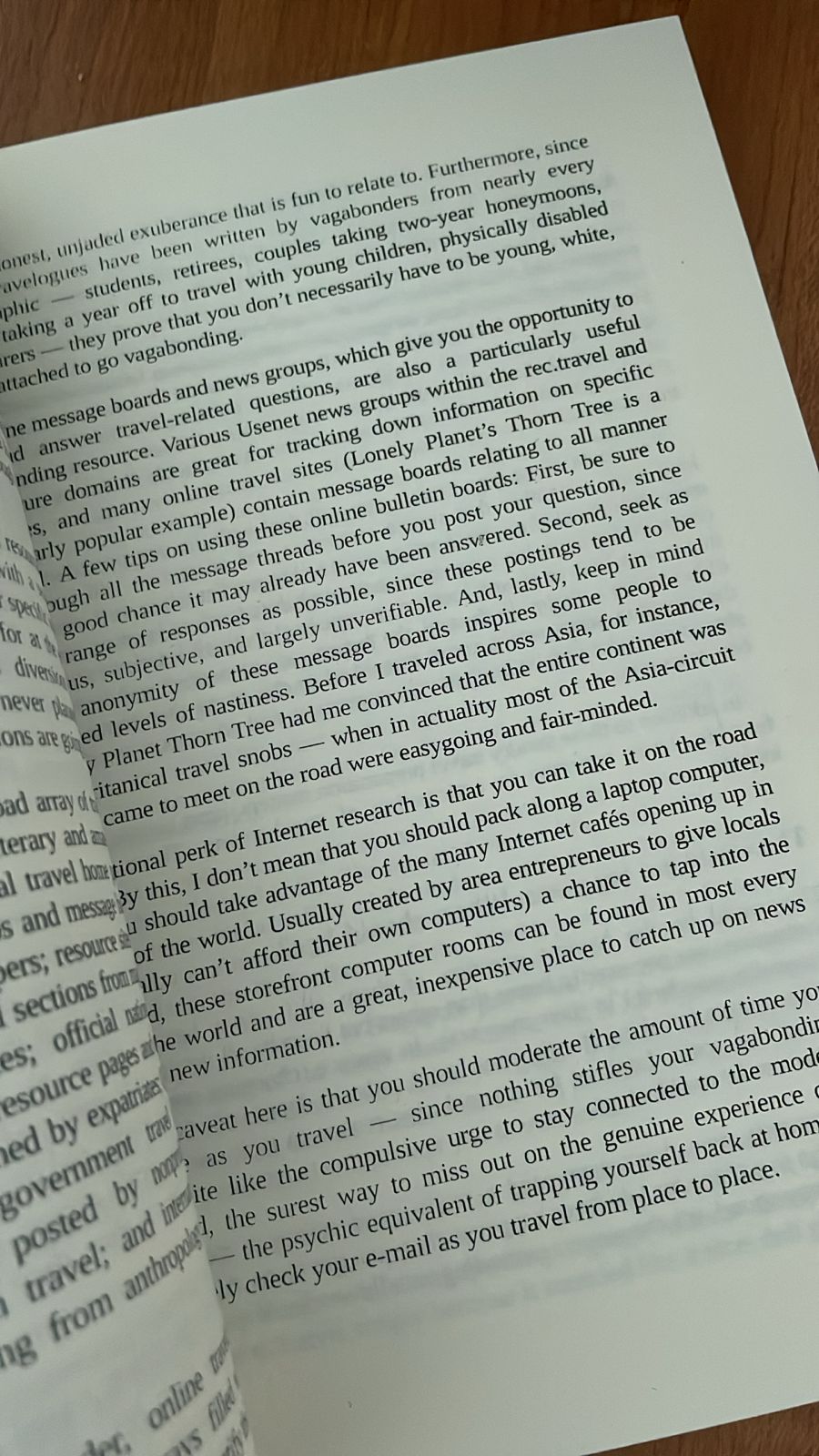




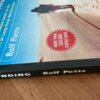
Vagabgondin by Rolf Potts


රු1,600.00
3 X Rs. 533.33 or 8% Cashback with


or 3 X රු533.33 with


or up to 4 X රු400.00 with


Vagabonding by Rolf Potts – Short Description
A timeless guide to long-term travel, Vagabonding inspires readers to break free from routine and explore the world with purpose. Rolf Potts shows how anyone—regardless of age or budget—can embrace meaningful travel by prioritizing experiences over possessions. Blending practical advice with philosophical insights, this book encourages slow, immersive journeys that lead to personal growth, cultural understanding, and a richer way of living.
5 in stock
Vagabonding by Rolf Potts
Vagabonding by Rolf Potts is a practical and philosophical travel book about taking extended time away from everyday routines to explore the world slowly, deliberately, and independently.
The book is not simply about backpacking.
It is about changing the way you think about time.
Money.
Work.
Possessions.
Freedom.
And travel itself.
Rolf Potts argues that long-term travel does not have to be reserved for the wealthy.
It can begin with planning, saving, simplifying, and deciding that time and experience matter more than constant consumption.
About Vagabonding by Rolf Potts
Vagabonding by Rolf Potts has become a well-known guide for people interested in long-term independent travel.
Potts combines practical advice with reflections on why people travel.
He discusses saving money.
Leaving work temporarily.
Choosing destinations.
Packing.
Meeting people.
Adapting to uncertainty.
And returning home after a long journey.
The book encourages readers to see travel as a way of living rather than simply a short vacation.
7 Powerful Lessons from Vagabonding by Rolf Potts
1. Time Is More Valuable Than Possessions
One of the strongest ideas in Vagabonding by Rolf Potts is that people often trade enormous amounts of time for things they do not truly need.
A larger house.
A newer car.
More gadgets.
More expensive habits.
All of these require money.
And money usually requires time.
Potts encourages readers to ask whether some of that time could be used differently.
Long-term travel becomes possible when time is treated as something valuable in itself.
2. Travel Does Not Have to Be Expensive
Many people assume long-term travel requires a large amount of money.
Potts challenges that belief.
Slow travel can sometimes be cheaper than short luxury vacations.
Staying longer in one place can reduce transportation costs.
Eating locally can reduce food expenses.
Using simple accommodation can lower the daily budget.
The goal is not luxury.
It is freedom and experience.
3. Simplify Before You Leave
Possessions can create obligations.
More things require more storage.
More maintenance.
More money.
More attention.
Vagabonding encourages readers to simplify.
That does not mean giving away everything.
It means deciding what actually matters.
Travel becomes easier when your life is less financially and physically complicated.
4. Travel Slowly
Potts strongly favors slow travel.
Rushing from city to city may allow you to collect more photos.
But it can reduce the depth of the experience.
Staying longer allows you to understand local rhythms.
You notice more.
You meet people.
You learn how a place actually feels.
Slow travel turns a destination from a checklist item into an experience.
5. Stay Open to Surprise
Detailed planning can be useful.
But overplanning can remove flexibility.
Sometimes the best experiences happen unexpectedly.
A conversation changes your route.
A local recommends another town.
Weather forces you to stay longer.
A festival appears that you did not know about.
Potts encourages travelers to leave room for chance.
6. Learn From Local People
Travel becomes richer when you interact with the people who actually live in a place.
Ask questions.
Listen.
Be respectful.
Eat where locals eat.
Use public transportation.
Learn basic phrases.
Observe everyday life.
These experiences often teach more than simply visiting famous attractions.
7. Travel Can Change the Way You Live at Home
The journey does not end when you return.
Long-term travel can change priorities.
People may become less interested in possessions.
More comfortable with uncertainty.
More curious.
More independent.
Vagabonding by Rolf Potts suggests that travel can influence everyday life long after the trip is over.
What Does Vagabonding Mean?
Vagabonding does not mean wandering without purpose.
Potts uses the term to describe deliberate long-term travel.
You create enough freedom to step away from normal routines.
Then you explore without rushing.
The goal is not simply to escape life.
It is to experience life differently.
Work and Freedom
Most people cannot simply stop working forever.
Potts does not pretend otherwise.
Instead, he encourages readers to think creatively.
Can you save for a year?
Take unpaid leave?
Work seasonally?
Build flexible income?
Reduce expenses before leaving?
The larger idea is that work should support life.
Life should not exist only to support work.
Saving for Long-Term Travel
Saving becomes easier when the goal is meaningful.
Cut unnecessary subscriptions.
Reduce expensive habits.
Sell things you do not use.
Avoid lifestyle inflation.
Create a dedicated travel fund.
Even small regular savings can accumulate over time.
The book encourages readers to see saving as buying future freedom.
Planning Without Overplanning
Some preparation is essential.
Passports.
Visas.
Insurance.
Vaccinations.
Basic budgeting.
Transportation.
But every day does not need to be scheduled.
Too much planning can create pressure.
It can also make travelers ignore opportunities that appear unexpectedly.
Packing Light
Packing light gives you mobility.
Heavy luggage creates problems.
It costs more.
It slows you down.
It makes public transportation harder.
It can also increase stress.
Potts encourages travelers to carry less and trust that many things can be purchased locally if truly needed.
Cultural Immersion
Travel is more meaningful when you move beyond tourist bubbles.
That does not mean avoiding famous attractions.
It means adding everyday experiences.
Markets.
Neighborhoods.
Local food.
Public transportation.
Conversations.
Small towns.
These experiences help travelers understand culture beyond postcard images.
Respecting Local Culture
Independent travel comes with responsibility.
Visitors should not assume their own customs apply everywhere.
Dress codes differ.
Religious traditions differ.
Ideas about privacy differ.
Tipping practices differ.
Learning basic local expectations shows respect and reduces misunderstandings.
Language
You do not need to become fluent in every language.
But learning a few words can help.
Hello.
Thank you.
Please.
Excuse me.
How much?
Where is…?
Even simple effort can change how people respond to you.
Language becomes a bridge.
Travel and Fear
Long-term travel can feel intimidating.
What if something goes wrong?
What if you get lost?
What if you feel lonely?
What if you regret leaving?
Potts does not suggest ignoring real risks.
Instead, he encourages preparation without allowing fear to control every decision.
Confidence often develops after you begin.
Dealing With Loneliness
Long-term travel is not always exciting.
There may be lonely days.
Boring days.
Difficult days.
Homesickness can happen.
The book acknowledges that meaningful travel includes discomfort.
Travel is not a permanent vacation.
It is still life.
Meeting People
One of the greatest rewards of travel can be the people you meet.
Other travelers.
Host families.
Shop owners.
Drivers.
Guides.
Students.
Workers.
Brief conversations can become memorable.
Some travel friendships last for years.
Others matter only for one afternoon.
Both can be valuable.
Avoiding the Checklist Mentality
It is easy to treat travel like collecting achievements.
Countries visited.
Landmarks photographed.
Passport stamps.
But numbers do not necessarily equal experience.
Potts encourages readers to focus on depth rather than quantity.
One meaningful month in a place may teach more than rushing through five countries.
Coming Home
Returning home can be surprisingly difficult.
Friends may not fully understand how the journey changed you.
Old routines can feel strange.
You may miss the freedom of the road.
The book discusses how to bring lessons from travel into normal life.
The goal is not to spend forever escaping.
It is to live more intentionally wherever you are.
Travel as Education
Travel teaches in a different way from classrooms.
You learn geography by moving through it.
You learn culture by participating.
You learn history by standing in places where events happened.
You learn communication through necessity.
You also learn about yourself.
Patience.
Adaptability.
Confidence.
Curiosity.
These lessons can remain useful long after the journey ends.
Who Should Read This Book?
Vagabonding by Rolf Potts is ideal for readers interested in travel, backpacking, long-term travel, minimalism, personal freedom, and independent exploration.
It may be especially helpful for people who want to travel but believe they cannot afford it.
Students may find inspiration in the book.
Professionals considering a career break may also find it useful.
Digital nomads, backpackers, solo travelers, and gap-year travelers may appreciate the practical mindset.
About Rolf Potts
Rolf Potts is an American travel writer, essayist, and teacher.
He is best known for Vagabonding and for writing about independent travel, culture, creativity, and life on the road.
His work has appeared in a wide range of travel and literary publications.
Readers can learn more through the official Rolf Potts website.
Product Details
Title: Vagabonding
Subtitle: An Uncommon Guide to the Art of Long-Term World Travel
Author: Rolf Potts
Genre: Travel / Personal Development / Lifestyle
Language: English
Original Publication: 2003
Common Paperback Edition
Publisher: Ballantine Books
ISBN-13: 9780812992182
Format: Paperback
Pages: Approximately 240
Different editions may carry different ISBNs, page counts, dimensions, and cover designs.
Always check the ISBN printed on your physical copy before entering final WooCommerce specifications.
Explore More Travel and Personal Development Books
Vagabonding by Rolf Potts is ultimately about more than seeing new places.
It is about choosing time over possessions.
Experience over routine.
Curiosity over fear.
Slow travel over rushed tourism.
The book encourages readers to build enough freedom to experience the world on their own terms.
Readers looking for more books about personal growth and intentional living can explore Self-Help & Psychology Books at Bargain Books.
You can also explore Non-Fiction & Knowledge Books at Bargain Books.
For readers who dream about long-term travel, independent adventure, simpler living, and seeing more of the world, Vagabonding by Rolf Potts remains a practical and inspiring guide.
Be the first to review “Vagabgondin by Rolf Potts”
Related products
Non-Fiction & Knowledge
රු2,250.00
3 X Rs. 750.00 or 8% Cashback with
or 3 X රු750.00 with
or up to 4 X රු562.50 with
-13%
Out of stock
Non-Fiction & Knowledge
Original price was: රු3,900.00.රු3,400.00Current price is: රු3,400.00.
3 X Rs. 1,133.33 or 8% Cashback with
or 3 X රු1,133.33 with
or up to 4 X රු850.00 with
Non-Fiction & Knowledge
රු2,450.00
3 X Rs. 816.67 or 8% Cashback with
or 3 X රු816.67 with
or up to 4 X රු612.50 with
-24%
Out of stock
Non-Fiction & Knowledge
Original price was: රු2,500.00.රු1,900.00Current price is: රු1,900.00.
3 X Rs. 633.33 or 8% Cashback with
or 3 X රු633.33 with
or up to 4 X රු475.00 with
-26%
Non-Fiction & Knowledge
The 7 Habits of Highly Effective People by Stephen R. Covey – Blue Cover
Original price was: රු2,300.00.රු1,700.00Current price is: රු1,700.00.
3 X Rs. 566.67 or 8% Cashback with
or 3 X රු566.67 with
or up to 4 X රු425.00 with
-33%

Self-Help & Psychology
Original price was: රු2,300.00.රු1,550.00Current price is: රු1,550.00.
3 X Rs. 516.67 or 8% Cashback with
or 3 X රු516.67 with
or up to 4 X රු387.50 with
-24%
Out of stock
Non-Fiction & Knowledge
Original price was: රු2,100.00.රු1,600.00Current price is: රු1,600.00.
3 X Rs. 533.33 or 8% Cashback with
or 3 X රු533.33 with
or up to 4 X රු400.00 with
-23%

Non-Fiction & Knowledge
Original price was: රු2,200.00.රු1,700.00Current price is: රු1,700.00.
3 X Rs. 566.67 or 8% Cashback with
or 3 X රු566.67 with
or up to 4 X රු425.00 with
Reviews
There are no reviews yet.