
No products in the cart.
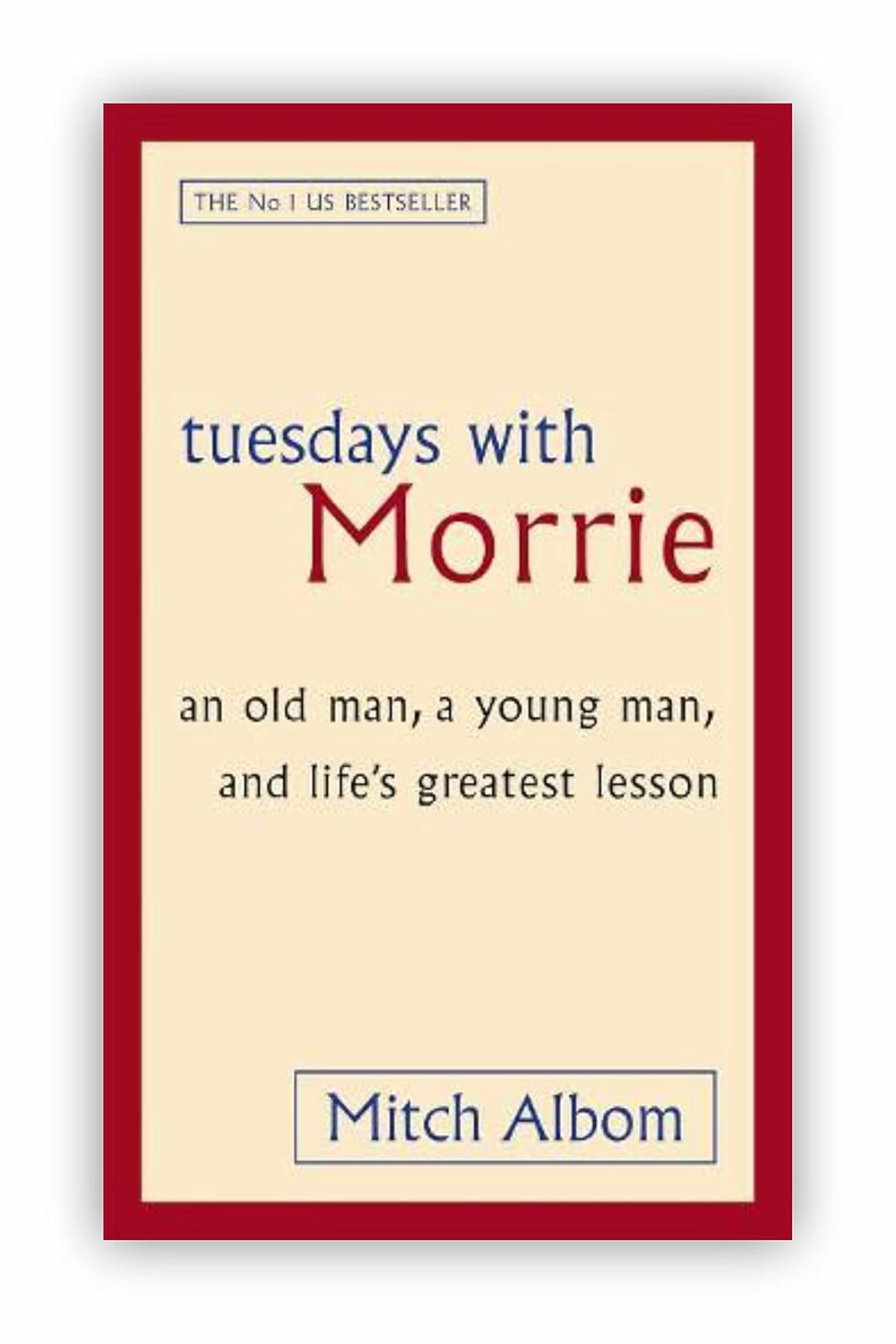
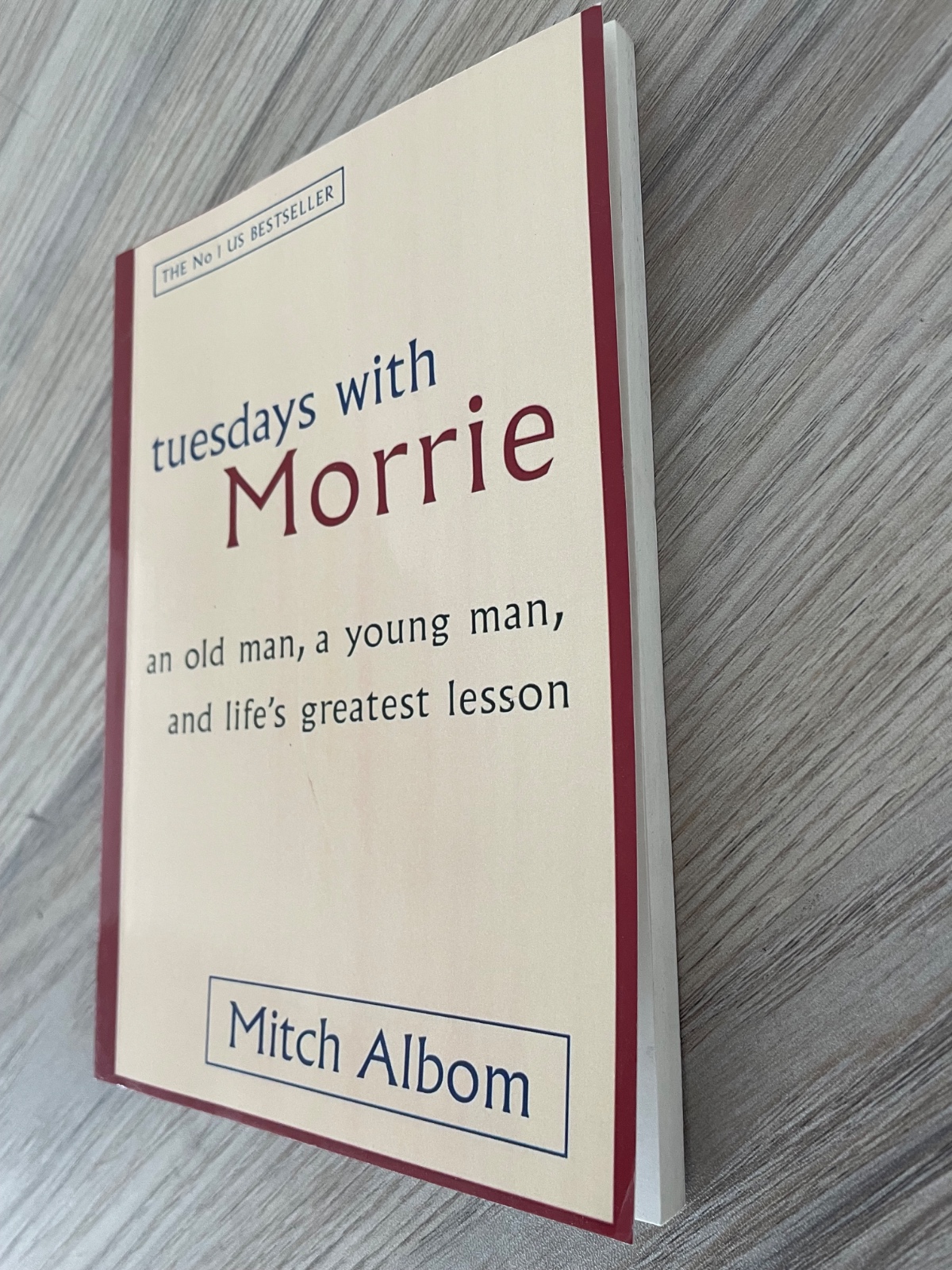
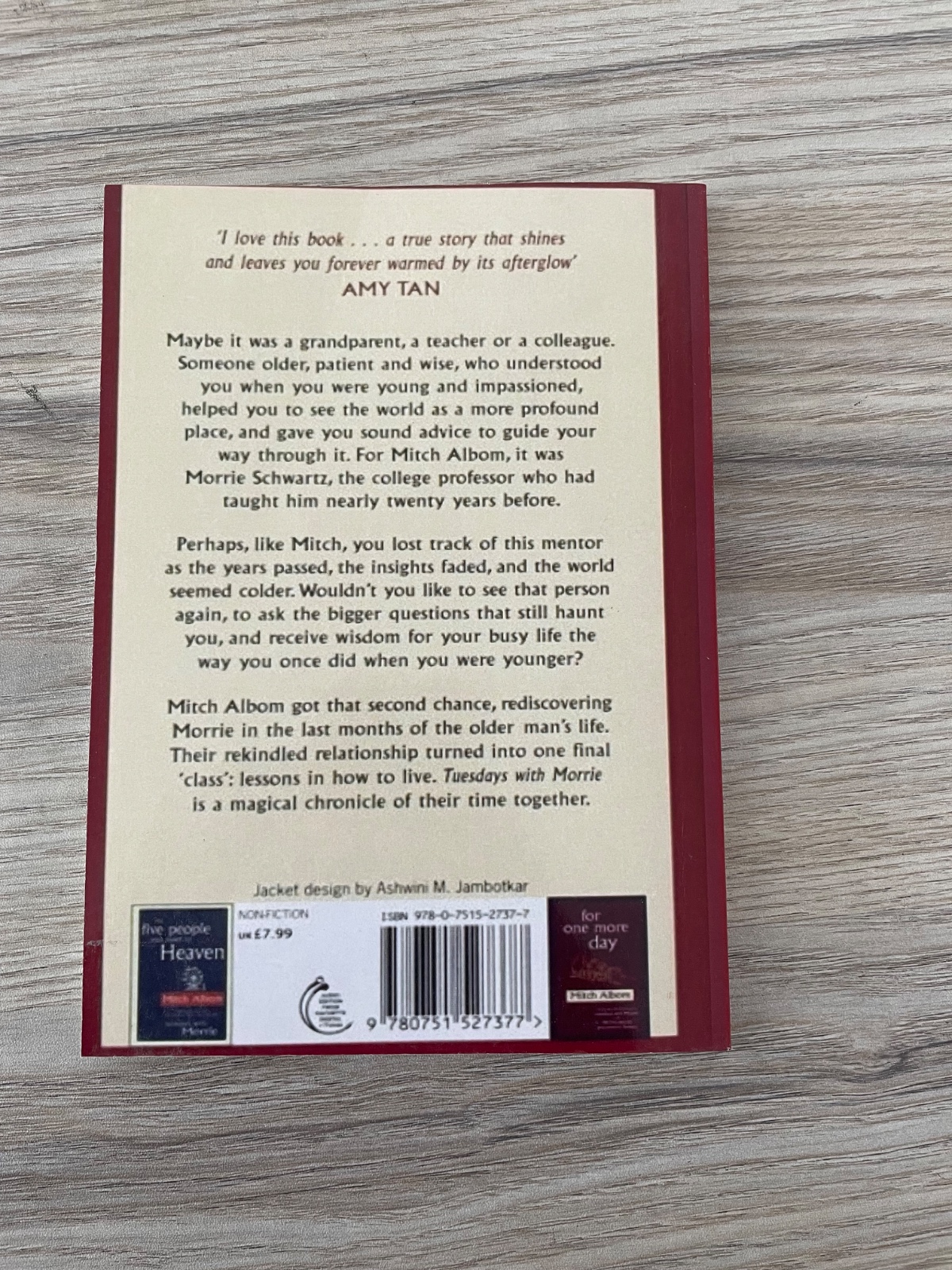

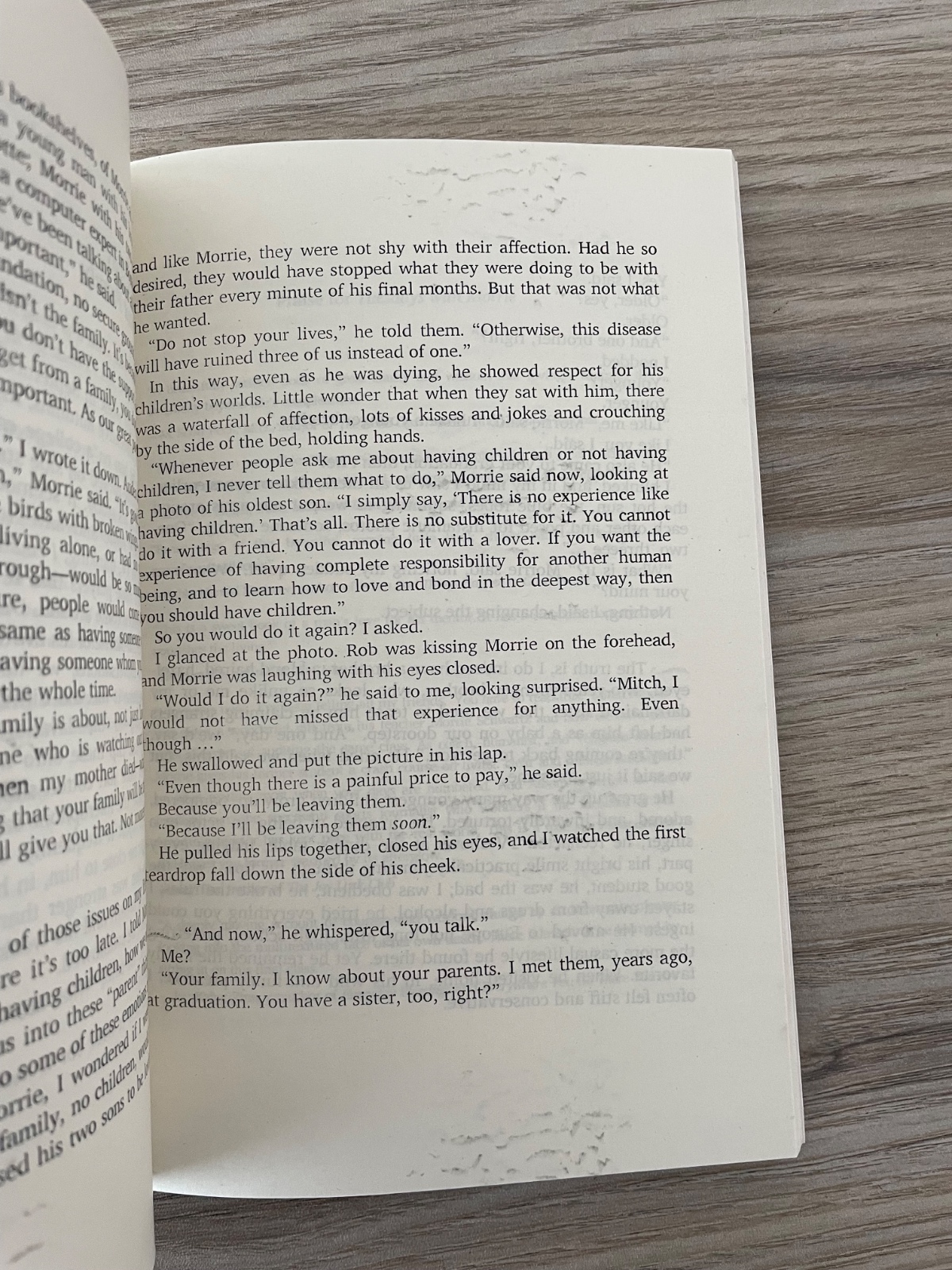
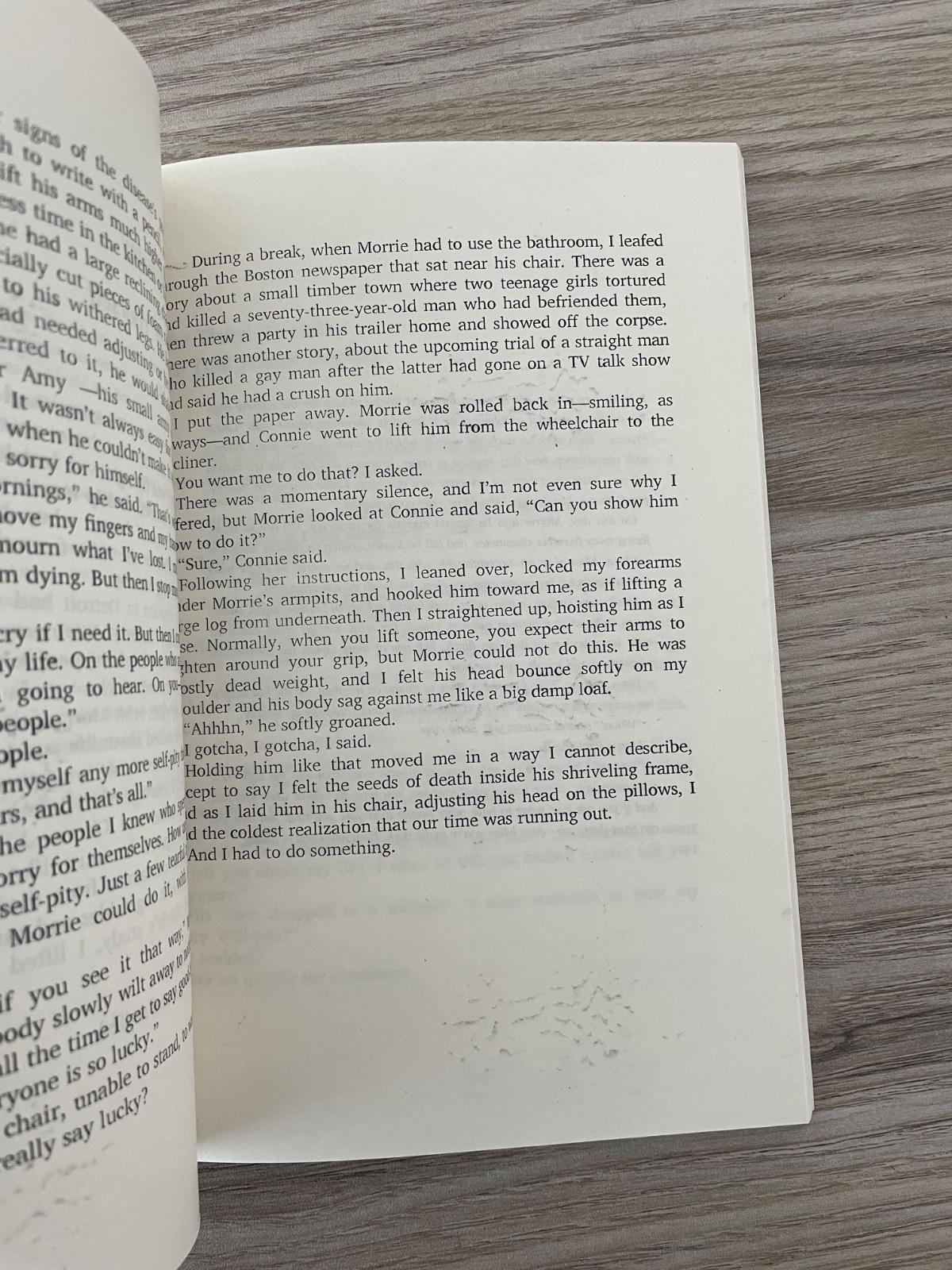






TUESDAYS WITH MORRIE by Mitch Albom


රු1,200.00
3 X Rs. 400.00 or 8% Cashback with


or 3 X රු400.00 with


or up to 4 X රු300.00 with


Tuesdays with Morrie is a deeply moving and inspirational memoir by bestselling author Mitch Albom, chronicling his final conversations with his former college professor, Morrie Schwartz.
Years after graduating, Mitch reconnects with Morrie, who is now battling ALS (Amyotrophic Lateral Sclerosis)—a progressive and terminal illness. What begins as a simple visit soon becomes a weekly ritual every Tuesday, where Morrie shares profound life lessons as he prepares for death. These meetings turn into Mitch’s last class with his beloved teacher, covering topics such as love, family, forgiveness, aging, fear, money, marriage, and the true meaning of life.
Through Morrie’s wisdom, warmth, and unfiltered honesty, the book gently reminds readers that modern life often distracts us from what truly matters. Morrie teaches that real success is measured not by wealth or status, but by how much love we give and receive.
Written in simple yet powerful prose, Tuesdays with Morrie is an emotional, comforting, and thought-provoking read that resonates with readers of all ages. It is a book to be revisited again and again—especially during moments of reflection and personal growth.
Out of stock
Email when stock available
Tuesdays with Morrie by Mitch Albom
Tuesdays with Morrie by Mitch Albom is a deeply moving memoir about friendship, love, aging, family, forgiveness, death, and learning what truly matters in life.
Mitch Albom was once a student of sociology professor Morrie Schwartz.
Morrie was more than a teacher.
He became a mentor.
After graduation, Mitch promised to stay in touch.
Life moved quickly.
Years passed.
The two eventually lost contact.
Then Mitch unexpectedly saw Morrie on television.
His former professor was seriously ill.
That moment led Mitch back to Morrie—and to a series of Tuesday meetings that changed the way he thought about life.
About Tuesdays with Morrie
Tuesdays with Morrie tells the true story of Mitch Albom reconnecting with his former college professor.
Morrie Schwartz had been diagnosed with ALS, a progressive neurological illness.
He knew that his time was limited.
Instead of avoiding conversations about death, Morrie chose to talk openly about it.
Every Tuesday, Mitch visited him.
Their conversations became one final course.
There were no exams.
No grades.
No textbooks.
The subject was life.
Morrie Schwartz as a Teacher
Morrie believed teaching should go beyond academic knowledge.
He was interested in people.
Relationships.
Compassion.
Meaning.
Human connection.
Even as his body became weaker, he continued teaching.
His final lessons were not delivered in a university classroom.
They happened at home, through conversation.
This makes Tuesdays with Morrie feel both intimate and universal.
7 Powerful Lessons from Tuesdays with Morrie
1. Give and Receive Love
One of the strongest ideas in the book is that love matters more than status or possessions.
Morrie believes people often spend too much time chasing things that do not provide lasting fulfillment.
Career success can disappear.
Money can be lost.
Recognition can fade.
Relationships often remain far more meaningful.
The book repeatedly returns to the importance of giving love and allowing yourself to receive it.
2. Do Not Let Work Become Your Entire Identity
Mitch becomes extremely focused on his career.
Deadlines dominate his life.
Work keeps him busy.
Achievement gives him a sense of direction.
But Morrie challenges him to ask whether being busy is the same as living well.
Tuesdays with Morrie encourages readers to think about whether their work supports their life or consumes it.
3. Accept That Life Changes
Morrie’s illness forces him to confront change every day.
Tasks that were once easy become difficult.
He gradually loses independence.
Instead of pretending nothing is happening, he tries to accept each stage.
Acceptance does not mean enjoying suffering.
It means recognizing reality instead of wasting energy denying it.
4. Forgive Yourself and Others
Regret can become heavy.
People remember conversations they should have handled differently.
Relationships they neglected.
Chances they did not take.
Morrie encourages forgiveness before it becomes too late.
That includes forgiving other people.
But it also includes forgiving yourself.
5. Create Your Own Values
Morrie questions many of the values promoted by modern culture.
More money.
More possessions.
More status.
More competition.
He encourages Mitch to think independently about what makes life meaningful.
The book asks readers to decide which values deserve their time instead of simply accepting whatever society rewards.
6. Spend Time With People You Love
Time is limited.
Morrie’s illness makes that impossible to ignore.
His conversations with Mitch repeatedly return to family and relationships.
A busy schedule may feel important today.
But missed time with people cannot always be recovered later.
This lesson gives the book much of its emotional force.
7. Understanding Death Can Improve Life
Death is one of the central subjects in Tuesdays with Morrie.
Morrie does not discuss it simply to be sad.
He believes awareness of death can clarify priorities.
If time is limited, what deserves attention?
Which relationships matter?
Which arguments are worth continuing?
What would you regret leaving unsaid?
Thinking about death becomes a way of thinking more seriously about life.
Mitch Albom’s Transformation
At the beginning, Mitch is successful professionally.
But success has not necessarily made him fulfilled.
He is constantly busy.
His schedule controls him.
His priorities have changed since college.
Seeing Morrie again forces him to remember the person he once hoped to become.
The Tuesday meetings gradually influence his thinking.
He begins paying more attention to relationships.
He becomes more willing to ask difficult questions.
The book is therefore not only about Morrie dying.
It is also about Mitch learning how to live differently.
Aging
Modern culture often treats aging as something negative.
Morrie sees it differently.
Growing older can bring experience.
Perspective.
Patience.
Understanding.
He does not pretend aging is easy.
His illness makes physical decline painfully real.
But he rejects the idea that youth is automatically better.
Each stage of life can offer something different.
Family
Family is extremely important to Morrie.
He sees relationships as a source of security that money cannot replace.
When illness arrives, professional titles matter less.
The people who sit beside you become more important.
The book encourages readers to invest time in family before a crisis makes that importance obvious.
Emotions
Morrie believes people should experience emotions rather than constantly suppress them.
Fear.
Sadness.
Grief.
Love.
Loneliness.
He suggests allowing yourself to feel them fully and then letting them pass.
Avoiding emotions does not necessarily make them disappear.
Understanding them can make them easier to handle.
Money and Status
Tuesdays with Morrie repeatedly questions materialism.
Morrie does not argue that money is completely unimportant.
People need food, shelter, healthcare, and security.
His concern is what happens when accumulation becomes the main purpose of life.
There is always something more expensive to buy.
Someone wealthier to compare yourself with.
Morrie suggests that generosity and relationships may provide deeper satisfaction.
Forgiveness Before It Is Too Late
Some opportunities do not remain available forever.
A person may die before an apology is made.
A friendship may remain broken for years.
Pride can keep people apart.
Morrie’s own regrets make this lesson especially personal.
He encourages Mitch not to carry unnecessary bitterness.
Being Present
One of Morrie’s qualities is his ability to give someone his full attention.
When he speaks with Mitch, he is present.
He listens.
He does not treat the conversation as something to rush through.
This seems simple.
But it becomes increasingly difficult in a world filled with notifications, deadlines, and constant distraction.
The book reminds readers that attention itself can be a form of care.
What Makes a Meaningful Life?
There is no complicated formula.
Morrie’s ideas are often simple.
Love people.
Forgive.
Pay attention.
Build relationships.
Accept change.
Help others.
Do not allow money or status to determine your worth.
The challenge is not understanding these ideas.
The challenge is actually living by them.
Why the Book Feels Personal
The structure of Tuesdays with Morrie makes the reader feel almost present in the conversations.
Each meeting focuses on another part of life.
Death.
Fear.
Family.
Money.
Marriage.
Culture.
Forgiveness.
Meaning.
The subjects are large.
But the conversations remain personal.
That simplicity is one reason the book has remained widely read.
Who Should Read This Book?
Tuesdays with Morrie is ideal for readers interested in memoirs, life lessons, philosophy, personal growth, relationships, grief, aging, and emotional nonfiction.
It may especially resonate with readers who have had an important teacher or mentor.
It can also be meaningful for people reconsidering priorities during a difficult stage of life.
Readers looking for a short book with thoughtful ideas may find it particularly accessible.
About Mitch Albom
Mitch Albom is an American author, journalist, screenwriter, playwright, and broadcaster.
His books include The Five People You Meet in Heaven, For One More Day, The Time Keeper, and The Stranger in the Lifeboat.
His work often explores love, mortality, relationships, faith, regret, and the meaning people find in their lives.
Readers can learn more through the official Penguin Random House page for Tuesdays with Morrie.
Product Details
Title: Tuesdays with Morrie
Subtitle: An Old Man, a Young Man, and Life’s Greatest Lesson
Author: Mitch Albom
Genre: Memoir / Biography / Inspirational / Personal Growth
Language: English
Original Publication: 1997
Main People: Mitch Albom and Morrie Schwartz
Common Paperback Edition
Publisher: Crown
ISBN-13: 9780767905923
Format: Paperback
Pages: 224
Publication Date: October 8, 2002
Dimensions: Approximately 5 × 7¼ inches
Penguin Random House confirms these specifications for the standard paperback edition.
Different international editions may have different covers, ISBNs, dimensions, and page counts.
Always check the ISBN printed on your physical copy before entering final WooCommerce specifications.
Explore More Inspiring Books
Tuesdays with Morrie is ultimately about a teacher sharing his final lessons with a former student.
Morrie cannot stop what is happening to his body.
But he can still choose how he responds.
He can still teach.
He can still love.
He can still help another person reconsider what matters.
Mitch arrives thinking he is visiting an old professor.
He leaves with a new understanding of time, relationships, success, and mortality.
Readers looking for more inspiring books can explore Self-Help & Psychology Books at Bargain Books.
You can also explore Biography Books at Bargain Books.
For readers interested in meaningful life lessons, friendship, love, forgiveness, and learning to appreciate the time we have, Tuesdays with Morrie remains a deeply moving read.
Be the first to review “TUESDAYS WITH MORRIE by Mitch Albom”
Related products
-28%

Self-Help & Psychology
Original price was: රු1,800.00.රු1,300.00Current price is: රු1,300.00.
3 X Rs. 433.33 or 8% Cashback with
or 3 X රු433.33 with
or up to 4 X රු325.00 with
-26%
Non-Fiction & Knowledge
The 7 Habits of Highly Effective People by Stephen R. Covey – Blue Cover
Original price was: රු2,300.00.රු1,700.00Current price is: රු1,700.00.
3 X Rs. 566.67 or 8% Cashback with
or 3 X රු566.67 with
or up to 4 X රු425.00 with

Non-Fiction & Knowledge
රු2,450.00
3 X Rs. 816.67 or 8% Cashback with
or 3 X රු816.67 with
or up to 4 X රු612.50 with

Non-Fiction & Knowledge
රු1,550.00
3 X Rs. 516.67 or 8% Cashback with
or 3 X රු516.67 with
or up to 4 X රු387.50 with

Out of stock
Non-Fiction & Knowledge
රු1,500.00
3 X Rs. 500.00 or 8% Cashback with
or 3 X රු500.00 with
or up to 4 X රු375.00 with

Out of stock
Self-Help & Psychology
රු2,200.00
3 X Rs. 733.33 or 8% Cashback with
or 3 X රු733.33 with
or up to 4 X රු550.00 with

Out of stock
Autobiography
රු2,750.00
3 X Rs. 916.67 or 8% Cashback with
or 3 X රු916.67 with
or up to 4 X රු687.50 with
-17%

Out of stock
Non-Fiction & Knowledge
Original price was: රු2,900.00.රු2,400.00Current price is: රු2,400.00.
3 X Rs. 800.00 or 8% Cashback with
or 3 X රු800.00 with
or up to 4 X රු600.00 with
Reviews
There are no reviews yet.