
No products in the cart.
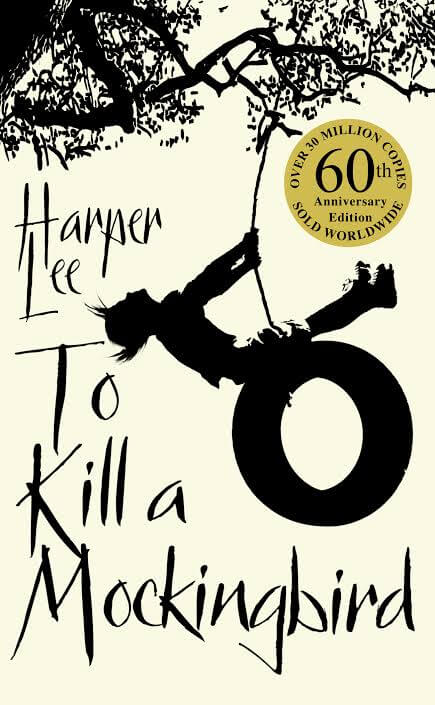
To Kill a Mockingbird by Harper Lee
රු1,650.00
3 X Rs. 550.00 or 8% Cashback with


or 3 X රු550.00 with


or up to 4 X රු412.50 with


Discover Harper Lee’s Pulitzer Prize-winning American classic To Kill a Mockingbird.
Narrated by young Scout Finch, the novel follows Scout and her brother Jem as their father, lawyer Atticus Finch, defends a Black man unjustly accused of a serious crime in Depression-era Alabama.
The novel explores:
- Justice
- Racism and prejudice
- Moral courage
- Childhood and growing up
- Family
- Empathy
- Class and community
- Law and conscience
Winner of the 1961 Pulitzer Prize for Fiction.
Important ISBN note: 9780062368683 is the digital eBook ISBN. For the common physical Harper Perennial paperback, use 9780060935467.
6 in stock
To Kill a Mockingbird by Harper Lee
To Kill a Mockingbird by Harper Lee is one of the most influential works of twentieth-century American literature.
First published in 1960, the novel follows young Jean Louise “Scout” Finch as she grows up in the fictional town of Maycomb, Alabama, during the 1930s.
Through Scout’s perspective, Harper Lee explores childhood, family, prejudice, justice, social class, moral courage and the complicated realities of the adult world.
The novel won the Pulitzer Prize for Fiction in 1961, one year after its original publication.
Scout Finch
Scout is the young narrator at the centre of the novel.
She lives with:
- Her older brother Jem
- Her father Atticus Finch
- Their housekeeper Calpurnia
Scout approaches the world with curiosity, honesty and a child’s tendency to question rules adults often take for granted.
Her perspective allows readers to observe Maycomb society from a viewpoint that is both innocent and increasingly aware of its contradictions.
Much of the novel can therefore be understood as a coming-of-age story.
Scout and Jem gradually discover that the adult world contains prejudice, violence and injustice alongside kindness, courage and compassion.
Atticus Finch
Scout and Jem’s father, Atticus Finch, is a lawyer.
He becomes responsible for defending Tom Robinson, a Black man accused of a serious crime involving a white woman.
The case places Atticus and his family under enormous social pressure.
Through Atticus’s decision to provide a committed defence despite hostility from parts of the community, the novel examines ideas involving:
- Justice
- Moral courage
- Professional duty
- Racism
- Social pressure
- Empathy
- Conscience
- Personal integrity
The National Endowment for the Arts describes the novel as centring on Scout’s childhood while racial prejudice threatens the apparent security of her small-town world.
Maycomb, Alabama
The fictional town of Maycomb is essential to the novel.
Set during the Great Depression, it is a community where families have known one another for generations.
Social expectations are powerful.
Class, family reputation and race all influence how people are treated.
Scout’s childhood initially feels relatively secure, but the Tom Robinson case gradually exposes deeper inequalities within the community.
This tension between childhood familiarity and adult injustice is one of the novel’s defining features.
Jem Finch
Jem Finch, Scout’s older brother, experiences many of the same events but understands them differently as he grows older.
His developing awareness of injustice becomes an important part of the story.
Together, Scout and Jem experience:
- Childhood adventures
- School
- Neighbourhood mysteries
- Family conflict
- Social prejudice
- Fear
- Disillusionment
- Moral growth
Their different reactions give readers two perspectives on the transition from childhood innocence toward greater awareness.
Boo Radley
Another important figure is the mysterious neighbour commonly known as Boo Radley.
At first, Scout, Jem and their friend Dill know him largely through rumours.
He becomes the subject of childhood fascination and imaginative stories.
Over time, however, their understanding of Boo changes.
This storyline connects strongly to one of the novel’s central themes:
People should not be judged solely through rumours, assumptions or the opinions of others.
The children’s changing understanding of Boo parallels their broader education about empathy.
Justice and Prejudice
One of the central conflicts in To Kill a Mockingbird involves the legal case against Tom Robinson.
The trial forces Scout and Jem to confront racial prejudice directly.
Harper Lee uses the courtroom and the wider Maycomb community to examine the gap between:
- Law and justice
- Evidence and prejudice
- Reputation and truth
- Public opinion and personal conscience
The novel does not present these issues abstractly.
Instead, they are experienced through the eyes of children watching adults make consequential decisions.
Empathy
Empathy is another major theme.
Throughout the novel, Scout gradually learns that understanding another person requires looking beyond one’s own assumptions.
This idea influences her developing relationships with:
- Atticus
- Jem
- Calpurnia
- Boo Radley
- Members of the wider Maycomb community
The novel repeatedly asks what happens when people are judged before others understand their circumstances.
Coming of Age
Although To Kill a Mockingbird addresses serious social issues, it is also fundamentally a story about growing up.
Scout begins the novel with a relatively simple understanding of the world.
Through her experiences she learns that:
- Adults can be wrong
- Communities can behave unjustly
- Good people can face hostility
- Reputation can be misleading
- Courage does not always look dramatic
- Empathy requires effort
This coming-of-age dimension is one reason the novel continues to be widely studied in literature courses.
Google Books classifies the work under Classics, Coming of Age, Literary Fiction, Southern Fiction and American twentieth-century literature.
A Pulitzer Prize-Winning Classic
To Kill a Mockingbird won the:
1961 Pulitzer Prize for Fiction
The official Pulitzer Prize archive lists Harper Lee’s novel as that year’s winner.
The novel was originally published by J. B. Lippincott & Co. on 11 July 1960. The National Endowment for the Arts confirms both the original publication year and the 11 July publication date.
It has since become one of the best-known works of modern American fiction.
Southern Gothic and Coming-of-Age Fiction
The novel is commonly associated with several literary categories:
- American Classics
- Literary Fiction
- Coming-of-Age Fiction
- Southern Fiction
- Southern Gothic
- Historical / Social Fiction
Its combination of childhood narration, small-town life and darker social realities creates a distinctive tone.
Some scenes are humorous and warm.
Others deal directly with hatred, violence and injustice.
This contrast is central to the book’s impact.
About Harper Lee
Harper Lee was an American author born in Monroeville, Alabama, in 1926.
She is best known for:
- To Kill a Mockingbird
- Go Set a Watchman
She received the Pulitzer Prize for Fiction for To Kill a Mockingbird and later received other major honours, including the Presidential Medal of Freedom. Google Books’ current author biography records these achievements.
Harper Lee died in 2016.
Connection to Go Set a Watchman
Readers interested in Scout Finch and Maycomb may also encounter Harper Lee’s later-published novel:
Go Set a Watchman
That manuscript was written earlier in Lee’s career and features an adult Jean Louise Finch returning to Maycomb.
The National Endowment for the Arts explains that this early manuscript preceded the version that eventually became To Kill a Mockingbird.
For bookstore cataloguing, To Kill a Mockingbird should still be treated as a standalone classic, with Go Set a Watchman offered as a closely related title rather than simply labelling it “Book 2.”
Who Will Enjoy To Kill a Mockingbird?
This novel may particularly appeal to readers interested in:
- Classic literature
- American fiction
- Coming-of-age novels
- Literary fiction
- Historical social themes
- Courtroom fiction
- Family stories
- Southern fiction
- Pulitzer Prize winners
- Harper Lee
It is also widely studied by secondary-school, university and literature students.
Content Note
The novel deals with mature themes including:
- Racism and racial slurs
- False criminal accusations
- Sexual-assault allegations
- Violence
- Domestic abuse
- Death
- Prejudice
- Social inequality
The language reflects the novel’s historical setting and includes terminology now recognised as offensive.
For a bookstore catalogue, these elements should be described in context rather than removed from the work’s historical and literary setting.
Buy To Kill a Mockingbird in Sri Lanka
For readers looking to buy To Kill a Mockingbird by Harper Lee in Sri Lanka, first confirm whether your store is selling the digital edition or a physical paperback.
The supplied ISBN:
9780062368683
is the HarperCollins digital eBook ISBN, released on 8 July 2014 with a digital extent of 336 pages.
If your stock is the common physical Harper Perennial Modern Classics paperback, its ISBN should instead be:
9780060935467
with approximately:
336 pages / 0.249 kg / 20.1 × 13.5 × 2.3 cm.
Be the first to review “To Kill a Mockingbird by Harper Lee”
Related products

Literary Fiction
රු1,750.00
3 X Rs. 583.33 or 8% Cashback with
or 3 X රු583.33 with
or up to 4 X රු437.50 with
Reviews
There are no reviews yet.