
No products in the cart.
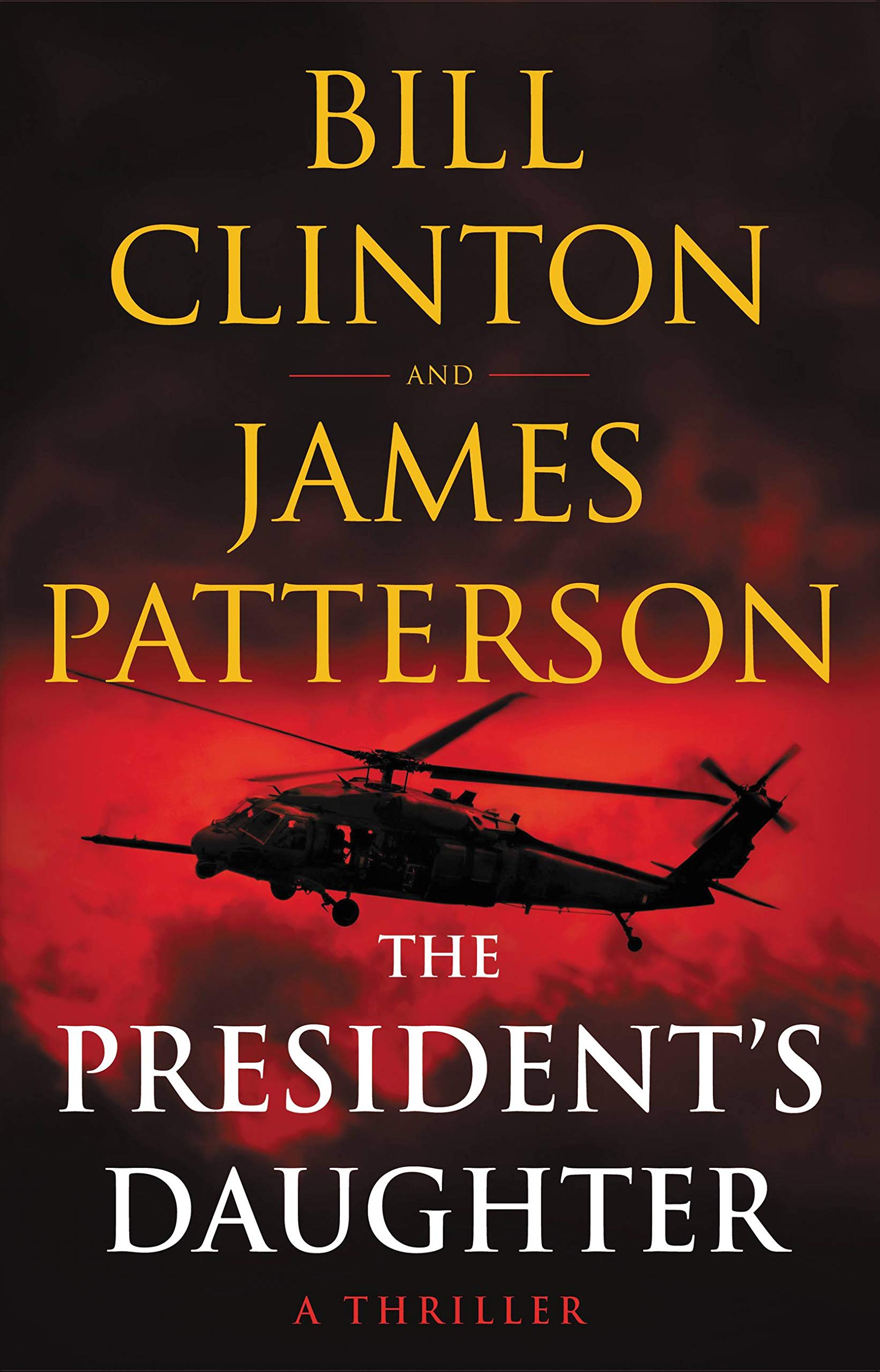
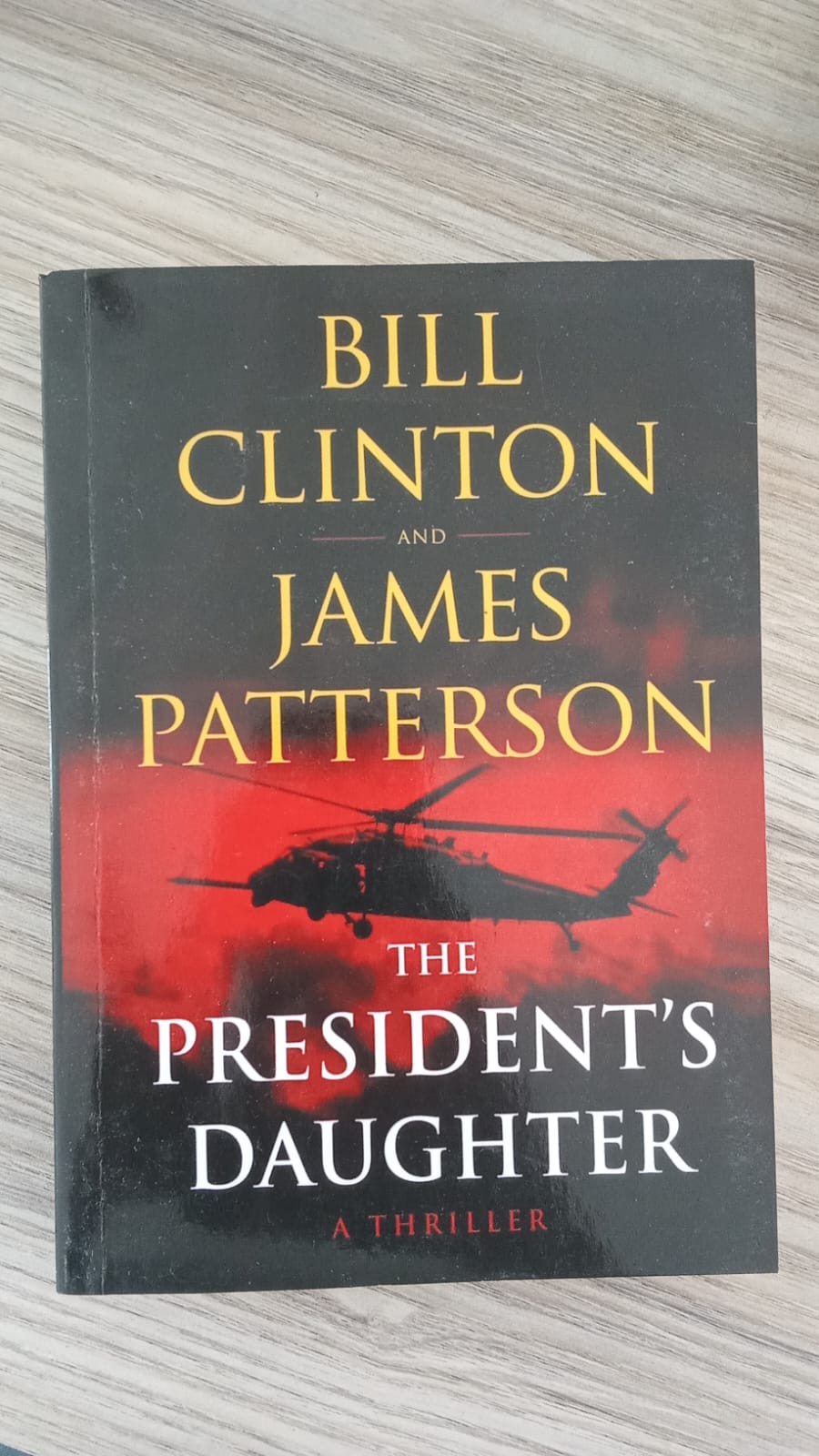
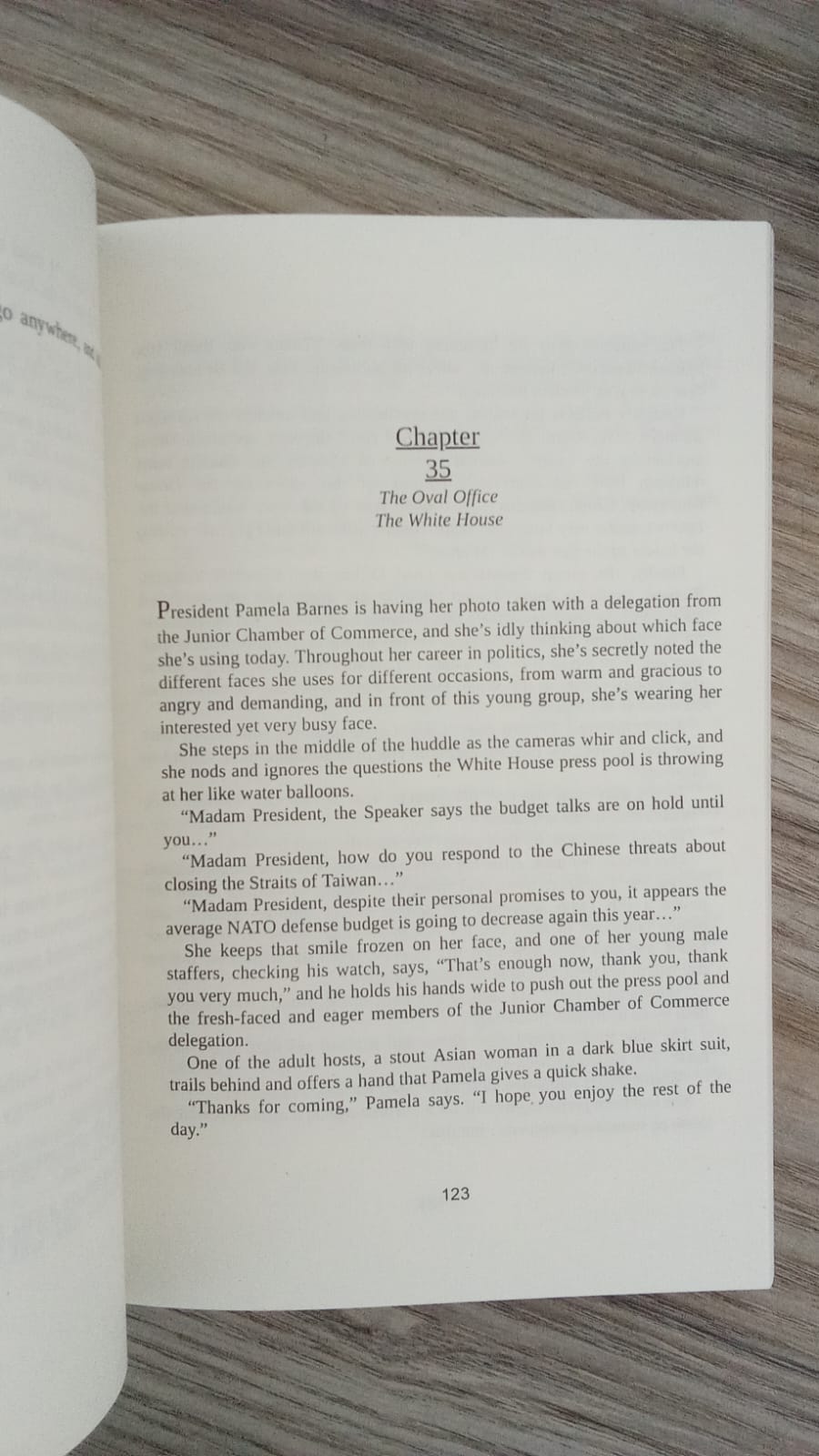




President’s Daughter by Bill Clinton and James Patterson


රු2,200.00
3 X Rs. 733.33 or 8% Cashback with


or 3 X රු733.33 with


or up to 4 X රු550.00 with


The Presidents Daughter by Bill Clinton and James Patterson is a gripping political thriller following Matthew Keating, a former U.S. president and Navy SEAL whose teenage daughter, Melanie, is kidnapped. With the crisis becoming a matter of national security, Keating must rely on his political experience, military training and determination as a father to bring her home. Packed with kidnapping, terrorism, political tension, military action and fast-paced suspense, it is an excellent read for fans of high-stakes political and action thrillers.
5 in stock
The Presidents Daughter by Bill Clinton and James Patterson is a fast-paced political thriller about a former U.S. president who is forced to rely on his military experience, political knowledge and instincts as a father when his teenage daughter is kidnapped.
Matthew Keating once held one of the most powerful positions in the world.
Before becoming president, he served as a Navy SEAL.
He understands national security.
He understands military operations.
He understands the difficult decisions leaders must make when lives are at risk.
But nothing in his career has prepared him for the moment when the target is his own family.
After leaving the presidency, Keating hopes for a different kind of life.
Then his daughter Melanie is abducted.
Suddenly, what would already be every parent’s nightmare becomes an international security crisis.
Governments are watching.
Enemies understand exactly what Melanie means to her father.
Every decision has political consequences.
And Keating must decide how far he is willing to go to bring his daughter home.
The Presidents Daughter by Bill Clinton and James Patterson combines the political and presidential knowledge associated with Bill Clinton with James Patterson’s rapid thriller pacing, creating a story filled with national-security tension, family loyalty, military action and constant pressure.
The Presidents Daughter by Bill Clinton and James Patterson – Book Overview
The Presidents Daughter by Bill Clinton and James Patterson begins with a powerful idea:
What happens when someone who once commanded the full power of the presidency no longer controls the system—but suddenly needs it more than ever?
Matthew Keating is no longer sitting in the Oval Office.
He cannot simply issue orders as president.
He cannot control every agency.
He cannot assume that everyone in government will put his priorities first.
Yet the person who has been taken is his daughter.
That immediately creates tension between:
The former president.
The current government.
National-security professionals.
And a father who believes time is running out.
Matthew Keating
Matthew Keating is designed as a protagonist who combines two very different identities.
He is:
A former president.
And a former Navy SEAL.
That means he understands both political leadership and direct action.
He knows what happens inside briefing rooms.
But he also understands what happens when a mission becomes physical.
This makes him particularly well suited to a political thriller built around rescue and national security.
President Versus Father
One of the strongest tensions in the novel is the difference between being a president and being a parent.
A president is expected to think about:
National interest.
Security.
Diplomacy.
Consequences.
Millions of citizens.
A father thinks about:
His child.
Those responsibilities can collide.
If rescuing one person creates danger for many others, what should a leader do?
And what happens when the person making the decision is no longer president but still carries the instincts of one?
Melanie Keating
Melanie is not important merely because she is the daughter of a former president.
She becomes the emotional center of the story.
Her kidnapping transforms a geopolitical conflict into something intensely personal.
The stakes are not abstract.
They have a name.
A family.
A history.
That makes Keating’s decisions feel different from an ordinary government response.
Kidnapping as Political Leverage
Kidnapping can become more than a crime when the victim has political importance.
A former president’s daughter may become:
A bargaining tool.
A symbol.
A source of pressure.
A way to humiliate a government.
A way to force decisions.
That is what transforms the central crime into a national-security crisis.
Power After the Presidency
Former presidents remain influential.
They still have:
Connections.
Knowledge.
Security experience.
Public recognition.
Relationships with powerful people.
But they no longer possess the constitutional authority of the sitting president.
This creates a fascinating situation for Matthew Keating.
He remembers what it means to command the system.
Now he must operate without fully controlling it.
The Limits of Political Power
One of the useful ideas in The Presidents Daughter by Bill Clinton and James Patterson is that political power has limits.
A president may command enormous resources.
But no leader can completely control:
Events.
Enemies.
Public opinion.
Intelligence failures.
Human behavior.
Once Keating leaves office, those limits become even clearer.
National Security
National security is a major part of the novel.
The kidnapping creates questions involving:
Intelligence.
Counterterrorism.
Military response.
Diplomacy.
Government agencies.
Threat assessment.
The thriller uses these structures to create tension beyond the family drama.
Insider Political Detail
The novel’s marketing emphasizes that Bill Clinton’s experience as a former U.S. president contributes to the political authenticity of the story. The publisher specifically presents the collaboration as combining presidential experience with Patterson’s thriller storytelling.
That does not mean every fictional event should be interpreted as a literal description of real government procedures.
It is still a novel.
But the presidential perspective gives the story a distinctive political texture.
James Patterson’s Thriller Style
James Patterson is known for:
Short chapters.
Fast pacing.
Cliffhangers.
Frequent perspective shifts.
High-stakes plots.
These techniques make The Presidents Daughter by Bill Clinton and James Patterson especially suitable for readers who enjoy books designed to keep moving.
This is not a slow political study.
It is an action-driven thriller.
A Political Thriller
The book combines several thriller elements:
Political intrigue.
Family crisis.
Military action.
Kidnapping.
Terrorism.
International conflict.
Personal revenge.
This makes it broader than a conventional domestic kidnapping novel.
The Personal Becomes Political
Normally, a parent searching for a kidnapped child is a deeply personal crisis.
But when the parent is a former U.S. president, almost nothing remains purely personal.
Every action can affect:
Diplomatic relationships.
Government agencies.
Security operations.
Public perception.
That is where the thriller gains much of its tension.
Terrorism
The kidnapping is connected to a wider extremist threat, which means Keating is not simply dealing with ordinary criminals.
His opponents understand:
Politics.
Media.
Fear.
Symbolism.
They know that kidnapping the daughter of a former president gives them global attention.
Media Pressure
A crisis involving a former president’s daughter would naturally attract enormous media attention.
That creates another challenge.
Government and family decisions cannot necessarily remain private.
The world watches.
Speculates.
Judges.
Information itself becomes part of the conflict.
Public Versus Private Life
Presidents and their families live under extraordinary public attention.
Even after leaving office, that attention does not disappear completely.
The Presidents Daughter by Bill Clinton and James Patterson uses this reality to intensify the kidnapping plot.
Keating does not have the luxury of suffering privately.
Leadership Under Pressure
One of the central questions in the novel is:
What does good leadership look like when the situation becomes personal?
It is relatively easy to appear calm when discussing someone else’s crisis.
It is much harder when your own child is in danger.
Keating must balance emotion with judgment.
Decision-Making
Thrillers often create situations where characters must decide quickly.
Waiting may create danger.
Acting too quickly may create another kind of danger.
Good decision-making therefore requires:
Information.
Experience.
Risk assessment.
Instinct.
Sometimes none of those produces certainty.
No Perfect Choices
High-stakes situations rarely offer perfect solutions.
Instead, leaders may have to choose between:
Bad.
Worse.
And unknown.
That moral pressure gives political thrillers much of their appeal.
The Navy SEAL Background
Keating’s previous career as a Navy SEAL gives him abilities unusual for a former president.
He is not simply someone who once approved military missions.
He understands military culture and operational risk from direct experience.
This makes the rescue dimension more believable within the novel’s thriller framework.
Action Versus Politics
Keating’s two backgrounds create an internal tension.
Politics often requires:
Negotiation.
Patience.
Compromise.
Military operations may require:
Speed.
Decisiveness.
Direct action.
The story repeatedly brings those approaches into conflict.
Family Loyalty
At the heart of all the politics is a simple motivation.
A father wants his daughter back.
That emotional foundation keeps the novel accessible even to readers who are not deeply interested in American politics.
You do not need to understand every element of government to understand the fear of losing someone you love.
How Far Would You Go?
This becomes one of the main moral questions.
How far would you go to save your child?
Would you:
Ignore advice?
Break rules?
Risk yourself?
Challenge government decisions?
The answer becomes more complicated when you possess information and capabilities unavailable to an ordinary parent.
Responsibility
Keating cannot completely separate his personal choices from his former office.
A former president carries:
Secrets.
Relationships.
Reputation.
Influence.
His actions may create consequences beyond himself.
That makes responsibility a major theme.
Revenge Versus Rescue
A kidnapping naturally creates anger.
But anger can interfere with judgment.
Is the objective:
Punish the enemy?
Or rescue the victim?
Those goals may not always require the same strategy.
A good mission needs clarity about the actual priority.
Intelligence
Information becomes essential.
Where is Melanie?
Who controls her?
What do they want?
What information can be trusted?
A rescue attempt based on incorrect intelligence could make everything worse.
Trust
Political thrillers are filled with uncertainty because information travels through institutions.
Keating has to decide:
Who can be trusted?
Who is competent?
Who has another agenda?
Who knows more than they are saying?
Trust becomes a strategic decision.
Government Institutions
The story involves the tension between individuals and institutions.
Institutions can provide enormous resources.
But they also move through:
Rules.
Command structures.
Political interests.
Bureaucratic procedures.
An individual parent may find that pace unbearable when every hour matters.
Bureaucracy Versus Urgency
Bureaucracy exists partly because major decisions require oversight.
But from the perspective of someone in crisis, procedure can feel painfully slow.
This tension appears naturally in a kidnapping involving national security.
Former Leaders
One of the more interesting aspects of the premise is how former leaders adapt to ordinary life.
A person who once received daily intelligence briefings and commanded enormous institutions eventually has to live without that authority.
That psychological adjustment alone creates interesting fiction.
Identity After Power
Who are you after you stop being president?
The office may disappear.
The habits remain.
The knowledge remains.
The relationships remain.
Keating must decide whether he is now:
A private citizen.
A former commander.
A father.
Or some combination of all three.
Power and Helplessness
The kidnapping creates a powerful contrast.
Keating once held enormous political power.
Yet when his daughter disappears, he experiences one of the most fundamental forms of human helplessness.
This reminds readers that status cannot protect someone from every kind of suffering.
Global Stakes
Because the crime involves a former president and extremist forces, the consequences extend beyond one family.
This gives the story its blockbuster scale.
The rescue becomes part of a larger geopolitical confrontation.
Fast Pacing
Readers who enjoy rapid thrillers are likely to appreciate the structure.
The narrative moves through:
Threats.
Investigations.
Political decisions.
Action sequences.
Rescue planning.
Changing locations.
The focus is momentum rather than long philosophical discussion.
Short Chapters
James Patterson frequently uses short chapters to maintain speed.
This style works especially well in suspense because chapters can end at moments of uncertainty.
The reader naturally thinks:
One more chapter.
Then another.
Multiple Perspectives
Thrillers often gain tension by moving between different sides of a conflict.
Readers may know something one character does not.
That creates dramatic tension.
The central question becomes not only:
What happens next?
but:
When will the characters discover what the reader already suspects?
The President Is Missing Connection
Bill Clinton and James Patterson previously collaborated on The President Is Missing, published in 2018.
The President’s Daughter is their second presidential thriller collaboration. The publisher describes the earlier novel as their first collaboration, while contemporary reviews called The President’s Daughter a standalone sequel.
Do You Need to Read The President Is Missing First?
No.
The Presidents Daughter by Bill Clinton and James Patterson can be read independently.
It centers on Matthew Keating and its own kidnapping storyline.
You do not need detailed knowledge of the earlier book before beginning this one.
Is It a Direct Sequel?
It is better described as a standalone follow-up / standalone sequel to the authors’ earlier presidential thriller rather than a conventional Book 2 that requires Book 1.
That makes it easy for new readers to start here.
Is This Based on Bill Clinton?
No.
Matthew Keating is a fictional former president.
The novel benefits from Bill Clinton’s experience with presidential life and national-security decision-making, but the central story is fictional.
Readers should not treat Keating as a disguised autobiography of Clinton.
Is The President’s Daughter a True Story?
No.
It is fiction.
The kidnapping, characters and central plot are invented.
Bill Clinton’s involvement contributes insider knowledge, but the book itself is a thriller novel.
Is It Political?
Yes, in the sense that:
Presidents.
Government agencies.
National security.
International threats.
Political relationships.
are central to the story.
However, it is primarily written as an entertainment thriller rather than a policy book.
Is It About Real Political Parties?
The main appeal is not party politics.
The plot focuses much more strongly on:
Leadership.
Security.
Terrorism.
Family.
Government power.
Readers do not need to approach it as partisan political commentary.
Is It a Mystery?
It belongs most naturally in Mystery, Thriller & Suspense, which matches your approved BargainBooks category.
It is specifically a political / action thriller rather than a traditional detective whodunit.
Is It Suitable for Beginners to Political Thrillers?
Yes.
The basic emotional story is easy to understand:
A daughter is kidnapped.
Her father wants to rescue her.
The political and military dimensions expand the stakes.
Readers do not need specialist knowledge of U.S. government.
Content Considerations
The Presidents Daughter by Bill Clinton and James Patterson contains mature thriller material including:
- Kidnapping
- Terrorism
- Armed violence
- Murder and death
- Threats against family members
- Military operations
- Weapons
- Political conflict
- International security threats
- Psychological pressure
- Parental fear
- Hostage situations
It is more appropriate for adult and mature thriller readers than young children.
Authors
Bill Clinton served as President of the United States from 1993 to 2001 and later became an author of both nonfiction and fiction.
James Patterson is one of the world’s most commercially successful thriller writers and is known for series including Alex Cross and the Women’s Murder Club.
Their collaboration combines presidential experience with commercial thriller storytelling.
Edition Note
Different editions of the novel have different ISBNs and page counts.
For example, Little, Brown lists a U.S. trade paperback edition with:
ISBN: 9781538703151
Pages: 608
Publication: July 19, 2022.
The original U.S. hardcover is listed with ISBN 9780316540711, while ebook and other formats use different identifiers.
So when adding ISBN, format or page count to WooCommerce, check the details printed on the exact physical copy you are selling.
Important Themes
The Presidents Daughter by Bill Clinton and James Patterson explores:
Political power.
Family loyalty.
Kidnapping.
Terrorism.
National security.
Leadership.
Fatherhood.
Responsibility.
Courage.
Military action.
Government institutions.
Trust.
Revenge.
Duty.
Protection.
Public life.
Private fear.
International conflict.
Decision-making.
Survival.
7 Powerful Reasons to Read The Presidents Daughter by Bill Clinton and James Patterson
- The premise is instantly compelling. A former U.S. president discovers that his teenage daughter has been kidnapped, turning a deeply personal crisis into an international security emergency.
- Matthew Keating has a unique background. As both a former president and former Navy SEAL, he understands political power as well as direct military action.
- The family stakes make the political story emotional. The book is not only about governments and terrorism; at its heart, it is about a father trying to save his child.
- Bill Clinton brings presidential perspective. His experience gives the political and executive side of the fictional story an unusual insider dimension.
- James Patterson keeps the story moving quickly. Short chapters, cliffhangers, action and shifting threats make it well suited to readers who prefer fast-paced thrillers.
- It explores leadership under extreme pressure. Keating must make difficult decisions while emotion, national security and family responsibility collide.
- You can read it without starting another series first. Although it follows Clinton and Patterson’s earlier collaboration, The President Is Missing, this story functions as a standalone presidential thriller.
Why Read The Presidents Daughter by Bill Clinton and James Patterson?
The Presidents Daughter by Bill Clinton and James Patterson is an excellent choice for readers interested in political thrillers, James Patterson novels, Bill Clinton fiction, kidnapping stories, national-security fiction, military thrillers, former-president stories and high-stakes family dramas.
It may especially appeal to readers who enjoy novels involving:
Political power.
Government secrets.
Special operations.
Terrorist threats.
International crises.
Hostage rescues.
Fast pacing.
High-stakes decisions.
The combination of personal and political danger keeps the story accessible.
Even readers who do not normally follow politics can understand the central fear driving Matthew Keating.
His daughter is missing.
Time matters.
And every decision could make the situation better—or much worse.
Who Should Read This Book?
The Presidents Daughter by Bill Clinton and James Patterson may especially appeal to:
- James Patterson fans
- Readers of political thrillers
- Military thriller fans
- Readers interested in U.S. presidential fiction
- Fans of kidnapping and rescue stories
- Readers who enjoy fast-paced suspense
- Readers of national-security fiction
- Fans of action thrillers
- Readers who enjoyed The President Is Missing
- Adult readers looking for a high-stakes page-turner
- Readers interested in leadership and crisis decision-making
- Fans of stories where family loyalty collides with public responsibility
The Presidents Daughter by Bill Clinton and James Patterson – When the Most Powerful Job in the World Cannot Protect Your Family
The Presidents Daughter by Bill Clinton and James Patterson begins with a frightening reversal.
Matthew Keating once had access to:
Intelligence agencies.
Military forces.
Security services.
Presidential advisers.
The enormous machinery of the U.S. government.
Now he is a former president.
And suddenly the person he most wants to protect is beyond his reach.
His daughter has been taken.
That turns every political skill Keating has developed into something personal.
He knows how governments think.
He knows how military operations work.
He understands how enemies create pressure.
But he is also a father.
And fathers do not always think like presidents.
That is where the thriller becomes interesting.
A president must ask:
What is best for the country?
A father asks:
How do I bring my daughter home?
When those answers point in different directions, the conflict becomes more than political.
It becomes moral.
The story also explores an uncomfortable truth about power.
Even the most powerful person in a country cannot control everything.
Power can provide:
Resources.
Access.
Influence.
Information.
But it cannot guarantee safety.
Keating learns that lesson in the most painful possible way.
His title cannot rescue Melanie.
His past cannot guarantee the outcome.
He still has to act.
This is why the novel works as more than a government thriller.
Strip away the presidency, military experience and international politics, and the emotional question is universal:
What would you do if someone you loved was in danger?
Keating’s answer pushes him into a mission that tests every part of his identity.
Leader.
Warrior.
Former president.
Father.
For readers who enjoy political suspense, military action, kidnapping plots and fast-moving thrillers where personal and national stakes collide, The Presidents Daughter by Bill Clinton and James Patterson delivers exactly that kind of high-pressure story.
Learn more about The President’s Daughter by Bill Clinton and James Patterson on the official James Patterson website.
Explore more mystery and thriller books at Bargain Books.
Be the first to review “President’s Daughter by Bill Clinton and James Patterson”
Related products
-20%

Out of stock
Fiction & Literature
Original price was: රු2,450.00.රු1,950.00Current price is: රු1,950.00.
3 X Rs. 650.00 or 8% Cashback with
or 3 X රු650.00 with
or up to 4 X රු487.50 with
-13%

Out of stock
Fiction & Literature
The Inheritance Games: Deadly stakes, thrilling twists, and juicy secrets by Jennifer Lynn Barnes
Original price was: රු2,400.00.රු2,100.00Current price is: රු2,100.00.
3 X Rs. 700.00 or 8% Cashback with
or 3 X රු700.00 with
or up to 4 X රු525.00 with
-48%

Out of stock
Classics & Literary Fiction
Original price was: රු3,000.00.රු1,550.00Current price is: රු1,550.00.
3 X Rs. 516.67 or 8% Cashback with
or 3 X රු516.67 with
or up to 4 X රු387.50 with
-22%

Out of stock
Fiction & Literature
Original price was: රු2,250.00.රු1,750.00Current price is: රු1,750.00.
3 X Rs. 583.33 or 8% Cashback with
or 3 X රු583.33 with
or up to 4 X රු437.50 with
-18%

Fiction & Literature
Original price was: රු2,750.00.රු2,250.00Current price is: රු2,250.00.
3 X Rs. 750.00 or 8% Cashback with
or 3 X රු750.00 with
or up to 4 X රු562.50 with
Out of stock
Fiction & Literature
රු1,700.00
3 X Rs. 566.67 or 8% Cashback with
or 3 X රු566.67 with
or up to 4 X රු425.00 with

Fiction & Literature
රු2,450.00
3 X Rs. 816.67 or 8% Cashback with
or 3 X රු816.67 with
or up to 4 X රු612.50 with

Out of stock
රු1,440.00
3 X Rs. 480.00 or 8% Cashback with
or 3 X රු480.00 with
or up to 4 X රු360.00 with
Reviews
There are no reviews yet.