
No products in the cart.
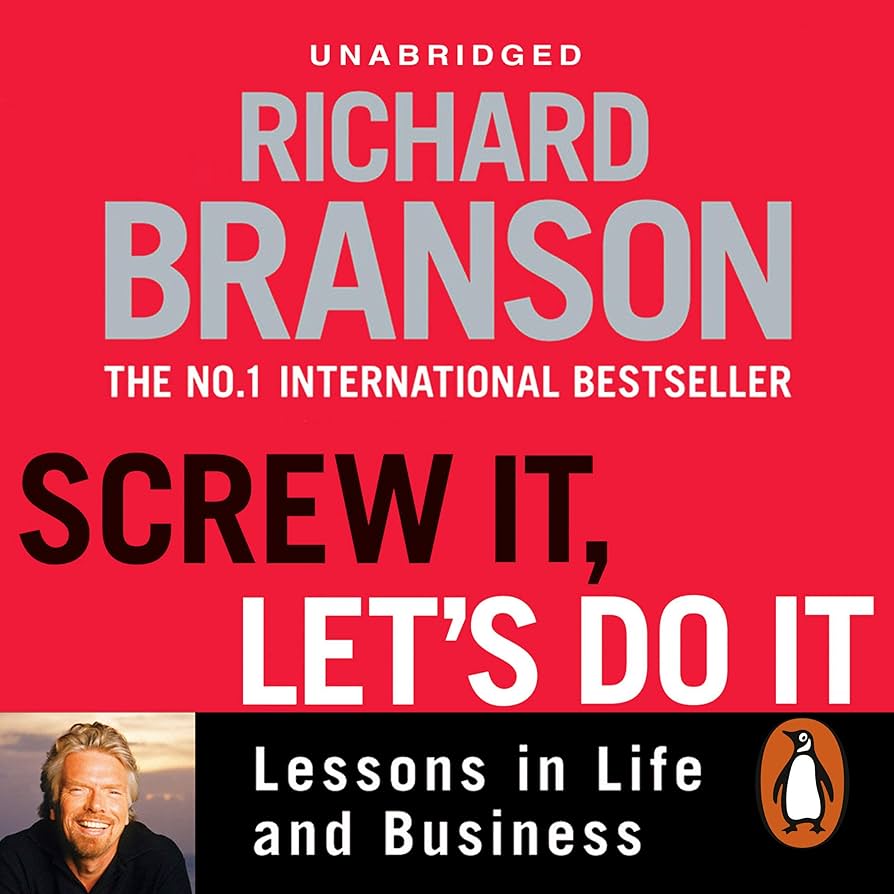
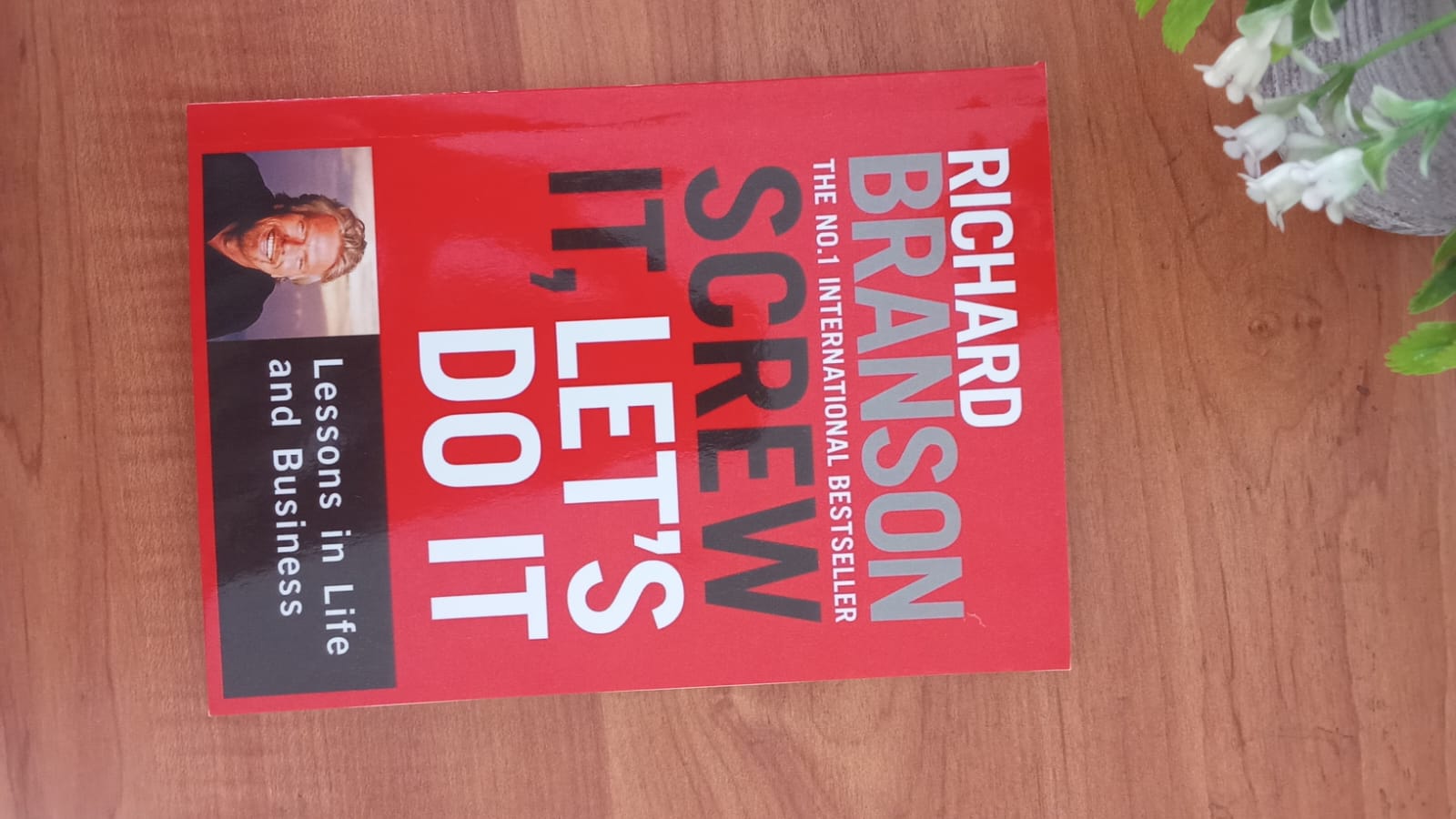
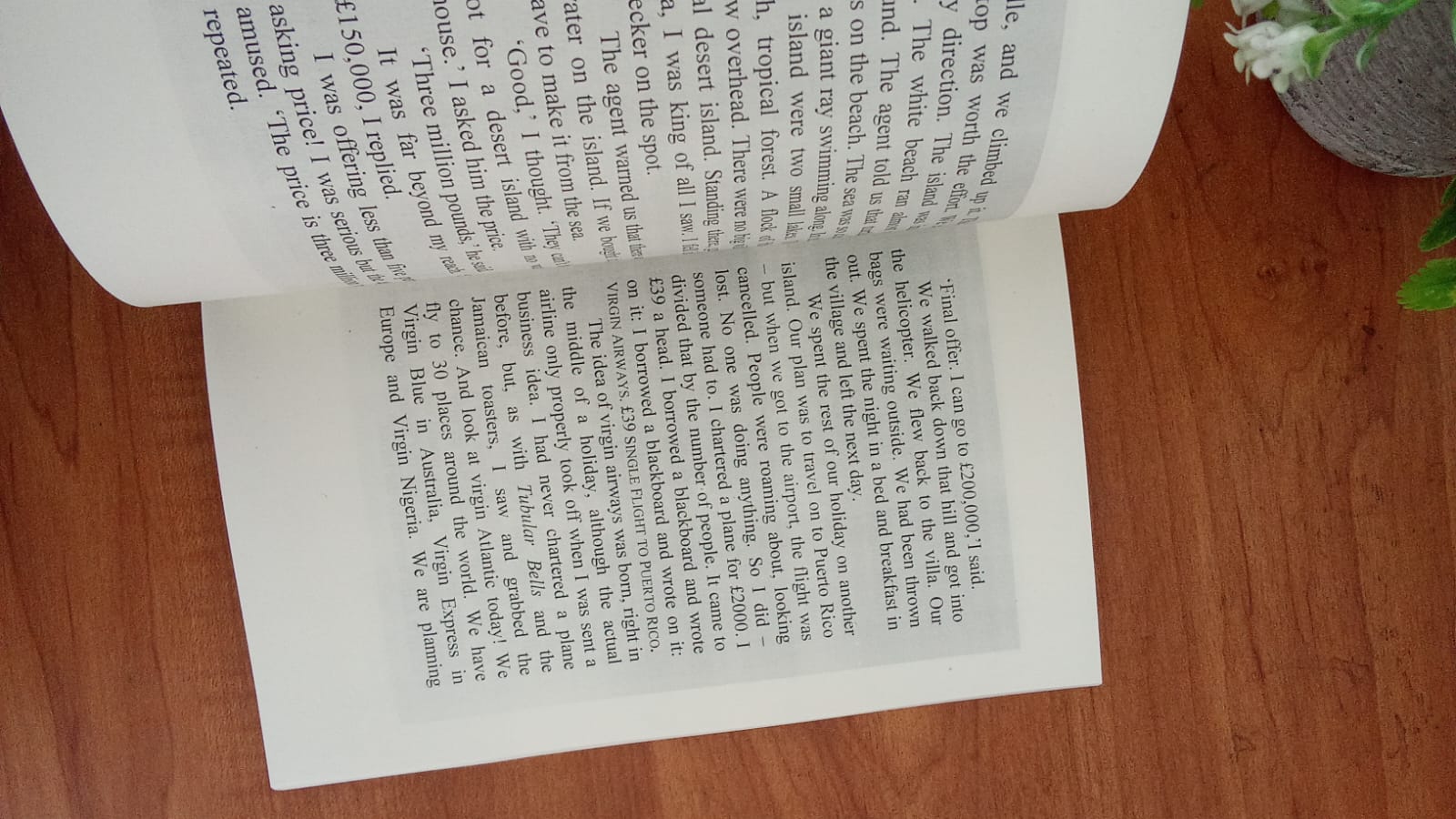
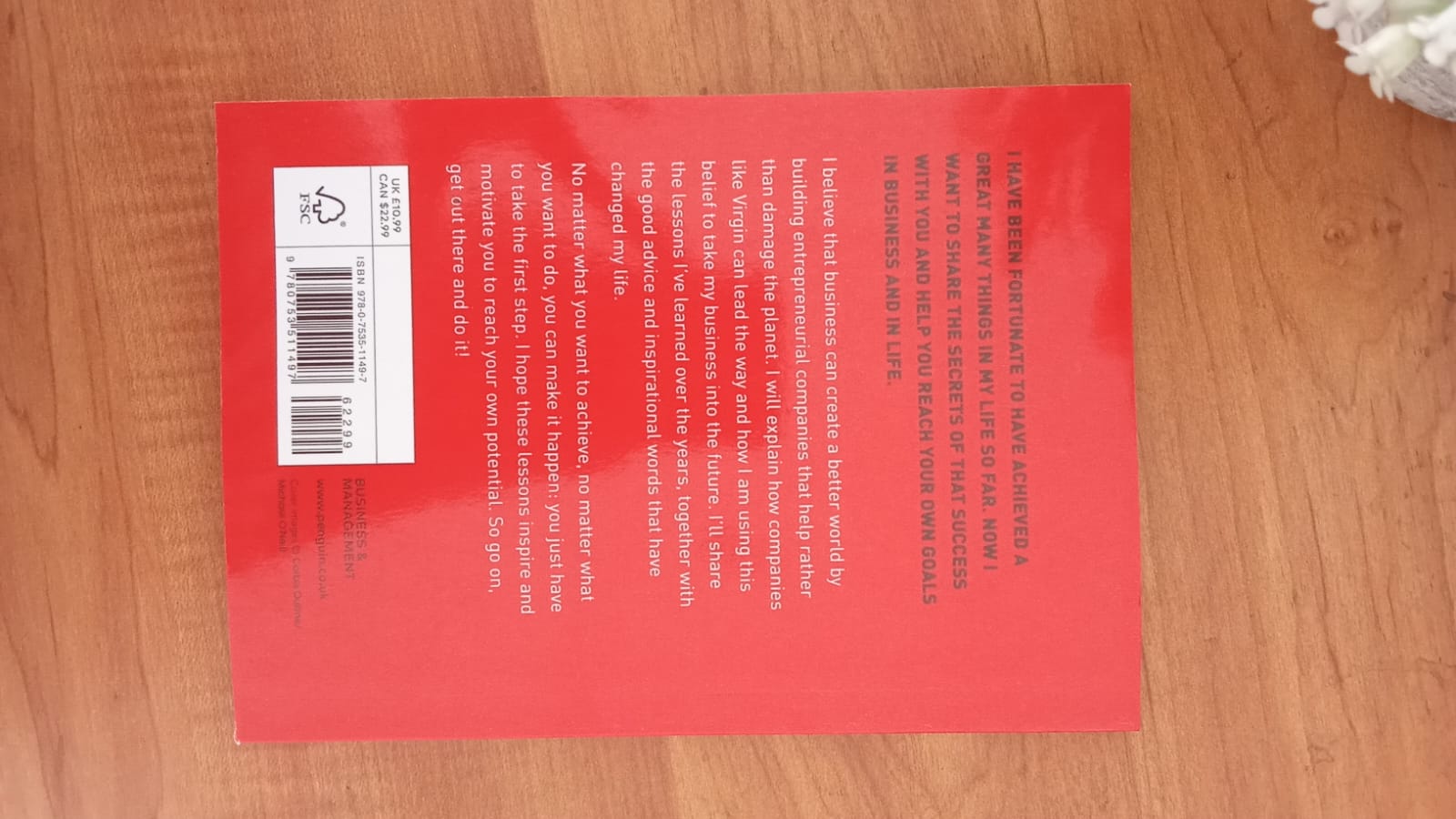
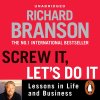
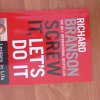

Srew it, let’s do it by Richard Branson, Adrian Mulraney

රු1,400.00
3 X Rs. 466.67 or 8% Cashback with


or 3 X රු466.67 with


or up to 4 X රු350.00 with


An inspiring and motivational book that encourages readers to take action, embrace risks, and stop overthinking. Richard Branson shares his personal experiences and success principles, showing that saying “yes” to opportunities and learning from failure are key to achieving success. Screw It, Let’s Do It is a powerful guide for anyone who wants to build confidence, take control of their life, and turn ideas into reality.
5 in stock
Screw It Lets Do It by Richard Branson is a fast, energetic and inspiring guide to life and business from the founder of the Virgin Group, sharing lessons on taking action, accepting risk, learning from mistakes and refusing to let fear stop a worthwhile idea.
Richard Branson is known for doing things differently.
He has built businesses.
Entered industries dominated by established competitors.
Taken major risks.
Attempted adventurous world records.
Experienced failures.
Started again.
And repeatedly followed ideas that other people considered unrealistic.
In this short motivational book, Branson brings together some of the principles that shaped his approach to both business and life.
His message is simple:
You can spend years waiting for the perfect moment.
Or you can begin.
That does not mean acting carelessly.
It means refusing to let endless hesitation become an excuse for never trying.
Screw It Lets Do It by Richard Branson encourages readers to:
Take action.
Challenge themselves.
Learn through experience.
Enjoy the work.
Treat people well.
Protect their reputation.
Think independently.
Accept mistakes.
And use business as a force capable of creating positive change.
Rather than offering a complicated academic theory of entrepreneurship, Branson teaches through personal experiences.
That makes the book particularly approachable for students, entrepreneurs, young professionals and readers who want motivation without hundreds of pages of technical business language.
Screw It Lets Do It by Richard Branson – Book Overview
Screw It Lets Do It by Richard Branson is based on lessons Branson learned throughout his entrepreneurial career.
The book combines:
Personal stories.
Business experiences.
Mistakes.
Adventures.
Observations.
Short principles.
The overall philosophy is action-oriented.
Branson repeatedly emphasizes that many opportunities disappear because people spend too long analyzing whether something might fail.
Planning matters.
Research matters.
But eventually someone has to make a decision.
The Meaning Behind “Screw It, Let’s Do It”
The title captures Branson’s attitude toward opportunity.
It does not literally mean:
Ignore every warning.
Risk everything.
Never plan.
Instead, it reflects a willingness to act when an opportunity feels worth pursuing—even when certainty is impossible.
Entrepreneurship always contains uncertainty.
You can study a market.
Prepare a business plan.
Research customers.
Calculate costs.
But nobody can guarantee success.
Eventually, you must decide whether to move.
Action Beats Endless Waiting
One of the strongest messages in Screw It Lets Do It by Richard Branson is that action creates learning.
Imagine someone wants to start a business.
They spend:
One year researching.
Another year planning.
Another year waiting for more money.
Another year waiting to feel confident.
Five years later, nothing has launched.
Another person begins with a small version.
They make mistakes.
Customers complain.
They improve.
They learn.
The second person may eventually understand the market much better because real experience produced information planning alone could not provide.
Start Before Everything Is Perfect
Perfection can become a form of procrastination.
People tell themselves:
The website is not perfect.
The logo is not perfect.
The product is not perfect.
The presentation is not perfect.
The plan is not perfect.
So they wait.
A more practical approach is:
Make it good enough to test.
Launch carefully.
Observe.
Improve.
Do Not Confuse Action With Recklessness
This distinction matters.
Branson’s philosophy should not be interpreted as:
Never calculate risk.
Business owners still need to understand:
Cash flow.
Legal obligations.
Customer demand.
Competition.
Debt.
Operational risk.
The point is not to ignore information.
The point is to avoid demanding impossible certainty before taking any action.
Believe It Can Be Done
Self-belief is another major idea in Screw It Lets Do It by Richard Branson.
Before starting something ambitious, people often hear:
That will never work.
Someone already does it better.
You are too young.
You do not have enough experience.
You do not have enough money.
Sometimes those warnings contain useful information.
Sometimes they simply reflect another person’s fear.
An entrepreneur needs to learn the difference.
Confidence Must Lead to Work
Believing something is possible is only the beginning.
Confidence without action produces nothing.
A useful sequence is:
Believe.
Research.
Act.
Measure.
Learn.
Adapt.
Repeat.
This turns optimism into a process rather than wishful thinking.
Challenge Yourself
Branson has often combined entrepreneurship with personal adventure.
This reflects a broader belief in deliberately taking on challenges.
Challenges reveal:
Weaknesses.
Strengths.
Fear.
Creativity.
Resilience.
You do not need to cross an ocean in a balloon to apply this idea.
A personal challenge could be:
Speaking publicly.
Learning coding.
Starting a side business.
Running your first campaign.
Learning to negotiate.
Managing a team.
Growth Happens Outside Familiarity
People naturally prefer environments where they already feel competent.
But staying permanently inside those environments limits growth.
Learning requires temporary discomfort.
The first attempt may feel awkward.
The tenth feels easier.
The hundredth may become expertise.
Have Fun
Another important principle in Screw It Lets Do It by Richard Branson is enjoyment.
Branson frequently emphasizes that work occupies too much of life to spend it doing something you completely hate without a compelling reason.
That does not mean every working day must be exciting.
Every business includes:
Administration.
Problems.
Stress.
Repetition.
Difficult customers.
But if the overall mission creates no interest, energy or meaning, sustaining motivation becomes difficult.
Enjoyment Can Improve Creativity
People often become more creative when they are genuinely interested in the problem they are solving.
Curiosity encourages:
Experimentation.
Questions.
New approaches.
Persistence.
Fun can therefore be more than entertainment.
It can become part of innovation.
Build Businesses Around Problems
Strong businesses solve real problems.
Instead of asking only:
“How can I make money?”
ask:
“What frustrates customers?”
“What could be easier?”
“What is overpriced?”
“What experience is poor?”
“What is missing?”
Many entrepreneurial opportunities begin with dissatisfaction.
Customer Experience Matters
A company may sell the same basic service as competitors but differentiate itself through experience.
Better:
Service.
Communication.
Convenience.
Design.
Support.
Speed.
Human interaction.
Branson built much of Virgin’s reputation around entering established industries and attempting to make the customer experience feel different.
Challenge Big Competitors
One recurring lesson from Branson’s career is that a small company should not automatically assume large competitors are unbeatable.
Large companies have advantages:
Money.
Scale.
Brand awareness.
Infrastructure.
But they can also become:
Slow.
Bureaucratic.
Complacent.
A smaller competitor may respond faster to customers.
Find What Customers Dislike
Instead of copying the market leader exactly, investigate weaknesses.
What do customers complain about?
Long waits?
Poor service?
Confusing pricing?
Outdated systems?
Lack of flexibility?
These complaints may reveal the opportunity.
Take Calculated Risks
Risk is unavoidable in business.
But different risks have different consequences.
A sensible entrepreneur asks:
What could I gain?
What could I lose?
Can I survive the loss?
Can I test this cheaply first?
Can I reduce the downside?
That is more useful than either extreme:
Never risk anything.
or
Risk everything.
Protect the Downside
One practical way to think about risk is to ask:
If this fails, can I recover?
A failed experiment that costs Rs. 10,000 may provide valuable information.
A failed experiment that destroys the entire business is different.
Good risk-taking attempts to preserve the ability to try again.
Failure Is Part of Entrepreneurship
Screw It Lets Do It by Richard Branson does not present business as a straight path where every idea succeeds.
Some projects fail.
Some launches disappoint.
Some partnerships do not work.
Some investments lose money.
The important distinction is between:
A failed attempt
and
a permanently failed person.
Learn From Mistakes
After something goes wrong, ask:
What happened?
What assumption was wrong?
What warning did we miss?
Was the execution poor?
Was the idea itself weak?
What should change next time?
Failure becomes valuable only when it produces learning.
Do Not Waste Failure
A business failure is expensive tuition if you learn from it.
It becomes even more expensive if you repeat exactly the same mistake.
Document lessons.
Change systems.
Improve decisions.
Then move forward.
Reputation Matters
One of the most valuable business assets is reputation.
Customers remember whether a company:
Keeps promises.
Treats them fairly.
Responds to problems.
Delivers quality.
Trust takes time to build.
It can disappear quickly.
Your Word Has Value
A strong professional reputation means people believe:
If you say you will do something, you will try to do it.
This matters with:
Customers.
Suppliers.
Employees.
Investors.
Partners.
Reliability creates future opportunities.
People Matter
Businesses are built by people.
A founder may receive attention, but organizations depend on:
Employees.
Managers.
Customers.
Suppliers.
Partners.
Good people can transform a company.
Poor culture can destroy one.
Treat Employees With Respect
People usually perform better when they feel:
Trusted.
Valued.
Heard.
Respected.
A company that treats employees badly may eventually deliver poor customer service because unhappy staff rarely create enthusiastic customer experiences.
Listen
Leadership is not only speaking.
It also requires listening.
Frontline employees often know problems executives cannot see.
Customers know where the experience fails.
Suppliers understand bottlenecks.
Good leaders create ways for information to move upward.
Leadership Does Not Mean Knowing Everything
A leader who pretends to have every answer becomes dangerous.
Good leaders can say:
I do not know.
Explain it to me.
What do you recommend?
What are we missing?
Questions are not weakness.
They are tools for better decisions.
Delegate
Entrepreneurs sometimes struggle to let go.
They want to:
Approve everything.
Check everything.
Control everything.
That works while the business is tiny.
As the organization grows, it becomes impossible.
Leaders need people they trust.
Hire People Better Than You
A founder should not try to be:
Best accountant.
Best marketer.
Best developer.
Best salesperson.
Best designer.
Best operations manager.
A strong team contains people whose specialist knowledge exceeds the founder’s.
Make Decisions
Indecision has a cost.
While you wait:
Competitors move.
Customers leave.
Opportunities disappear.
Projects remain blocked.
Not every decision deserves months of analysis.
Some decisions can be made quickly and corrected later.
Reversible Versus Irreversible Decisions
A useful modern way to apply Branson’s action philosophy is to distinguish:
Reversible decisions – easy to change later.
Irreversible decisions – expensive or impossible to reverse.
Move faster on reversible decisions.
Be more careful with irreversible ones.
Ask “Why Not?”
Many businesses ask:
Why should we do this?
Branson often approaches opportunity from another direction:
Why shouldn’t we?
This small change can expose assumptions.
Sometimes something has never been done simply because nobody challenged the old way.
Question Industry Rules
Every industry develops conventional wisdom.
Customers expect this.
Prices must work like that.
Businesses always operate this way.
These assumptions may once have been correct.
They may no longer be.
Innovation often begins when someone questions them.
Entrepreneurship Is Experimentation
An entrepreneur is constantly running experiments.
New product.
New price.
New advertisement.
New location.
New service.
New website.
The goal is not to know every answer before beginning.
It is to create a process that discovers better answers.
Think Big, Start Small
An ambitious vision can inspire action.
But the first step may be tiny.
You might dream of building a national company.
The first test could be selling to ten customers.
Thinking big and starting small can work together.
Do Not Wait for Permission
Some people spend too long waiting for:
Approval.
Recognition.
A qualification.
Someone important to tell them they are ready.
Sometimes permission is genuinely required.
Often it is not.
You can begin learning today.
Create the prototype.
Publish the article.
Call the customer.
Build the portfolio.
Say Yes to Opportunity Carefully
Many opportunities appear before people feel fully qualified.
If the gap can reasonably be learned, saying yes may create growth.
The key is honesty.
Do not pretend to have expertise you do not possess.
Instead think:
Can I learn what is required?
Can I build a team?
Can I deliver responsibly?
Networking and Relationships
Branson’s career also demonstrates the importance of relationships.
Businesses operate through networks of:
Customers.
Partners.
Employees.
Investors.
Media.
Communities.
Treating people well creates opportunities that may not produce an immediate financial return.
Business Is Personal
Companies often speak in corporate language.
Customers experience people.
The employee who answers a message.
The person who solves a problem.
The manager who apologizes.
Human interaction can define a brand.
Protect Your Brand
A brand is not only:
Logo.
Color.
Font.
Advertisement.
A brand is what people expect when they hear your name.
If marketing promises one experience and operations deliver another, trust disappears.
Be Bold
Boldness means being willing to attempt something meaningful even when failure is possible.
It does not mean pretending the risk does not exist.
A bold business move should still have:
Reason.
Evidence.
Strategy.
A clear upside.
Learn Quickly
Speed matters in uncertain environments.
The company that learns faster can sometimes outperform the company with more resources.
Test.
Measure.
Improve.
This cycle allows small organizations to adapt quickly.
Adapt When Reality Changes
Persistence is useful.
Stubbornness is not always useful.
If customer behavior changes, adapt.
If the product is wrong, improve it.
If a strategy repeatedly fails, change it.
The goal matters more than protecting your ego.
Do Some Good
Screw It Lets Do It by Richard Branson also discusses responsibility beyond profit.
The official publisher description notes Branson’s concern with the environmental effects of business and the responsibility of companies to reduce harm.
That message is especially relevant today.
Businesses influence:
Employees.
Communities.
Environment.
Supply chains.
Customers.
Profit matters, but consequences matter too.
Business and the Environment
Companies consume:
Energy.
Materials.
Transport.
Packaging.
Land.
Data infrastructure.
Responsible businesses should ask whether growth can be achieved with less unnecessary damage.
Environmental responsibility is not always simple, but ignoring it completely is increasingly difficult to justify.
Purpose Beyond Money
Money is necessary for a sustainable business.
But Branson repeatedly argues for goals beyond money alone.
A meaningful company can aim to:
Solve a problem.
Create jobs.
Improve customer experience.
Support communities.
Develop useful technology.
Purpose can help employees understand why the work matters.
Family and Friends
Achievement can consume enormous amounts of time.
A successful career does not automatically create a successful life.
Relationships require attention too.
A business can be rebuilt.
Lost time with important people may be harder to recover.
Define Success for Yourself
People often inherit someone else’s definition of success.
More money.
Bigger house.
Higher title.
More followers.
Another person’s definition may not fit your life.
Ask:
What do I actually want?
Freedom?
Family time?
Creative work?
Financial security?
Adventure?
Impact?
The answer should influence your choices.
Live the Moment
Ambitious people frequently live mentally in the future.
When I reach this revenue.
When I receive the promotion.
When I finish the project.
When the business grows.
Then I will enjoy life.
But there is always another target.
Screw It Lets Do It by Richard Branson reminds readers that achievement should not eliminate the ability to enjoy the present.
Celebrate Progress
You do not need to wait for the largest goal.
Celebrate:
First customer.
First profitable month.
First employee.
First successful project.
Progress deserves recognition.
Short Books Can Still Carry Big Ideas
One attractive feature of Screw It Lets Do It by Richard Branson is its brevity.
The standard Virgin Books paperback is only 128 pages, according to Penguin.
Readers who find long business books difficult may appreciate its direct style.
It can be read quickly while still providing many ideas worth applying.
Is Screw It Lets Do It an Autobiography?
Not exactly in the conventional sense.
Branson uses personal experiences from his life and career, so the book contains autobiographical material.
But it is primarily organized around lessons and principles, rather than providing a complete chronological life story.
For a fuller autobiography, readers may prefer Losing My Virginity.
Is It a Business Book?
Yes.
It discusses entrepreneurship, risk, decision-making, leadership and Branson’s experiences building businesses.
However, it also contains broader life advice, so it fits both business and personal-development readers.
Is It Good for Entrepreneurs?
Yes.
Entrepreneurs may especially appreciate the book’s emphasis on:
Action.
Calculated risk.
Customer experience.
Reputation.
People.
Experimentation.
Learning from failure.
Is It Good for Students?
Yes.
Its short length and straightforward language make it accessible to students.
The strongest lesson for younger readers may be that large achievements generally begin with ordinary first steps.
Is It Good for Beginners in Business?
Yes.
It is not a technical textbook.
Readers will not find detailed instruction on:
Accounting.
Tax.
Financial modelling.
Business law.
Instead, it focuses on entrepreneurial mindset and experience.
This makes it a useful motivational introduction rather than a complete business manual.
Does the Book Guarantee Success?
No.
Branson’s experiences are examples, not guarantees.
A strategy that worked in one industry or period may not work in another.
Business outcomes depend on:
Timing.
Capital.
Skill.
Competition.
Economic conditions.
Execution.
Luck.
Readers should use the book as inspiration and perspective rather than a guaranteed formula.
Richard Branson
Sir Richard Branson is a British entrepreneur and founder of the Virgin Group.
He became known for building businesses across multiple industries and for his adventurous public personality.
His other books include:
Losing My Virginity
Finding My Virginity
Business Stripped Bare
The Virgin Way
and Screw Business as Usual.
Your BookLounge catalogue also contains Losing My Virginity and Finding My Virginity.
Original Edition Details
For the standard Virgin Books paperback:
Title: Screw It, Let’s Do It
Subtitle: Lessons in Life
Author: Sir Richard Branson
Publisher/Imprint: Virgin Books
Publication Date: 2 March 2006
ISBN-13: 9780753510995
Pages: 128
Format: Paperback
Expanded Edition Note
There is also Screw It, Let’s Do It Expanded: Lessons in Life and Business.
That expanded edition contains additional material and is longer than the original short edition. One published edition uses ISBN 9780753511497 and runs around 240 pages depending on edition formatting.
So before entering your WooCommerce ISBN and page count, check the exact physical copy you are selling.
Important Themes
Screw It Lets Do It by Richard Branson explores:
- Entrepreneurship
- Taking action
- Calculated risk
- Self-belief
- Courage
- Business
- Leadership
- Customer experience
- Failure
- Learning
- Reputation
- Teamwork
- Challenge
- Innovation
- Opportunity
- Fun
- Relationships
- Social responsibility
- Environmental responsibility
- Personal success
7 Powerful Lessons From Screw It Lets Do It by Richard Branson
- Take action before perfect certainty arrives. Research and preparation matter, but opportunities can disappear while you wait for conditions that will never become completely risk-free.
- Believe an ambitious idea deserves a fair test. Other people’s skepticism can provide useful feedback, but it should not automatically decide what you are capable of attempting.
- Treat failure as information. A failed project can reveal weaknesses in the idea, market or execution. Learn from the result instead of turning one failure into your identity.
- Enjoy the journey as well as the result. Work consumes a huge part of life. Building something you care about can make persistence easier and encourage creativity.
- Build around people and trust. Customers, employees, suppliers and partners remember how you treat them. Reputation can become one of the most valuable assets a business owns.
- Challenge conventional ways of doing things. Large opportunities often appear when someone asks why customers have accepted a frustrating experience for so long.
- Use success to create more than personal wealth. Branson argues that businesses should consider their wider impact and look for ways to contribute positively rather than measuring success through profit alone.
Why Read Screw It Lets Do It by Richard Branson?
Screw It Lets Do It by Richard Branson is an excellent choice for readers interested in entrepreneurship, Richard Branson, Virgin Group, business motivation, leadership, risk-taking, self-belief, innovation, startups and personal development.
It is especially useful for readers who suffer from excessive hesitation.
Some people have ideas but never act because they continually ask:
What if I fail?
What if people laugh?
What if someone else is better?
What if I am not ready?
Those are reasonable fears.
But another question matters too:
What if you never try?
Branson’s philosophy encourages thoughtful action.
Begin.
Learn.
Correct.
Continue.
That does not guarantee success.
It does guarantee that you gain more real information than you would by permanently remaining at the planning stage.
Who Should Read This Book?
Screw It Lets Do It by Richard Branson may especially appeal to:
- Entrepreneurs
- Startup founders
- Business students
- University students
- Young professionals
- Managers
- Sales and marketing professionals
- People considering a side business
- Richard Branson fans
- Readers of business biographies
- Readers interested in leadership
- People struggling with fear of failure
- Anyone who wants a short motivational business book
Screw It Lets Do It by Richard Branson – Stop Waiting for the Perfect Moment
Screw It Lets Do It by Richard Branson ultimately delivers a straightforward message:
Life rarely gives you complete certainty.
There will always be reasons not to begin.
Not enough money.
Not enough time.
Not enough experience.
Too much competition.
Too much risk.
Sometimes those reasons are valid.
Sometimes they are fear disguised as logic.
The difficult skill is learning to tell the difference.
Richard Branson’s career demonstrates what can happen when curiosity is combined with action.
He entered industries where established companies already had enormous advantages.
He made mistakes.
Some businesses succeeded.
Others did not.
But each experience created another lesson.
That is why the title remains memorable.
Screw it. Let’s do it.
Not:
Ignore every risk.
Not:
Success is guaranteed.
Instead:
Stop waiting for impossible certainty.
Prepare intelligently.
Protect yourself from catastrophic downside.
Then give the idea a real test.
You may succeed.
You may fail.
You may discover the idea needs to change completely.
But you will know more afterward than you knew while simply thinking about it.
For entrepreneurs, students, young professionals and anyone who has spent too long waiting for the “right time,” Screw It Lets Do It by Richard Branson is a short, energetic reminder that progress usually begins only after someone decides to move.
Learn more about Screw It, Let’s Do It by Richard Branson on the official Virgin website.
Explore more business, entrepreneurship, and motivational books at Bargain Books.
Be the first to review “Srew it, let’s do it by Richard Branson, Adrian Mulraney”
Related products
-24%
Out of stock
Non-Fiction & Knowledge
Original price was: රු2,500.00.රු1,900.00Current price is: රු1,900.00.
3 X Rs. 633.33 or 8% Cashback with
or 3 X රු633.33 with
or up to 4 X රු475.00 with
Non-Fiction & Knowledge
රු1,550.00
3 X Rs. 516.67 or 8% Cashback with
or 3 X රු516.67 with
or up to 4 X රු387.50 with
-13%
Out of stock
Non-Fiction & Knowledge
Original price was: රු3,900.00.රු3,400.00Current price is: රු3,400.00.
3 X Rs. 1,133.33 or 8% Cashback with
or 3 X රු1,133.33 with
or up to 4 X රු850.00 with
Non-Fiction & Knowledge
රු2,250.00
3 X Rs. 750.00 or 8% Cashback with
or 3 X රු750.00 with
or up to 4 X රු562.50 with
Non-Fiction & Knowledge
රු2,450.00
3 X Rs. 816.67 or 8% Cashback with
or 3 X රු816.67 with
or up to 4 X රු612.50 with
-23%

Non-Fiction & Knowledge
Original price was: රු2,200.00.රු1,700.00Current price is: රු1,700.00.
3 X Rs. 566.67 or 8% Cashback with
or 3 X රු566.67 with
or up to 4 X රු425.00 with
Out of stock
Self-Help & Psychology
රු2,200.00
3 X Rs. 733.33 or 8% Cashback with
or 3 X රු733.33 with
or up to 4 X රු550.00 with
Out of stock
Self-Help & Psychology
රු1,500.00
3 X Rs. 500.00 or 8% Cashback with
or 3 X රු500.00 with
or up to 4 X රු375.00 with
Reviews
There are no reviews yet.