
No products in the cart.
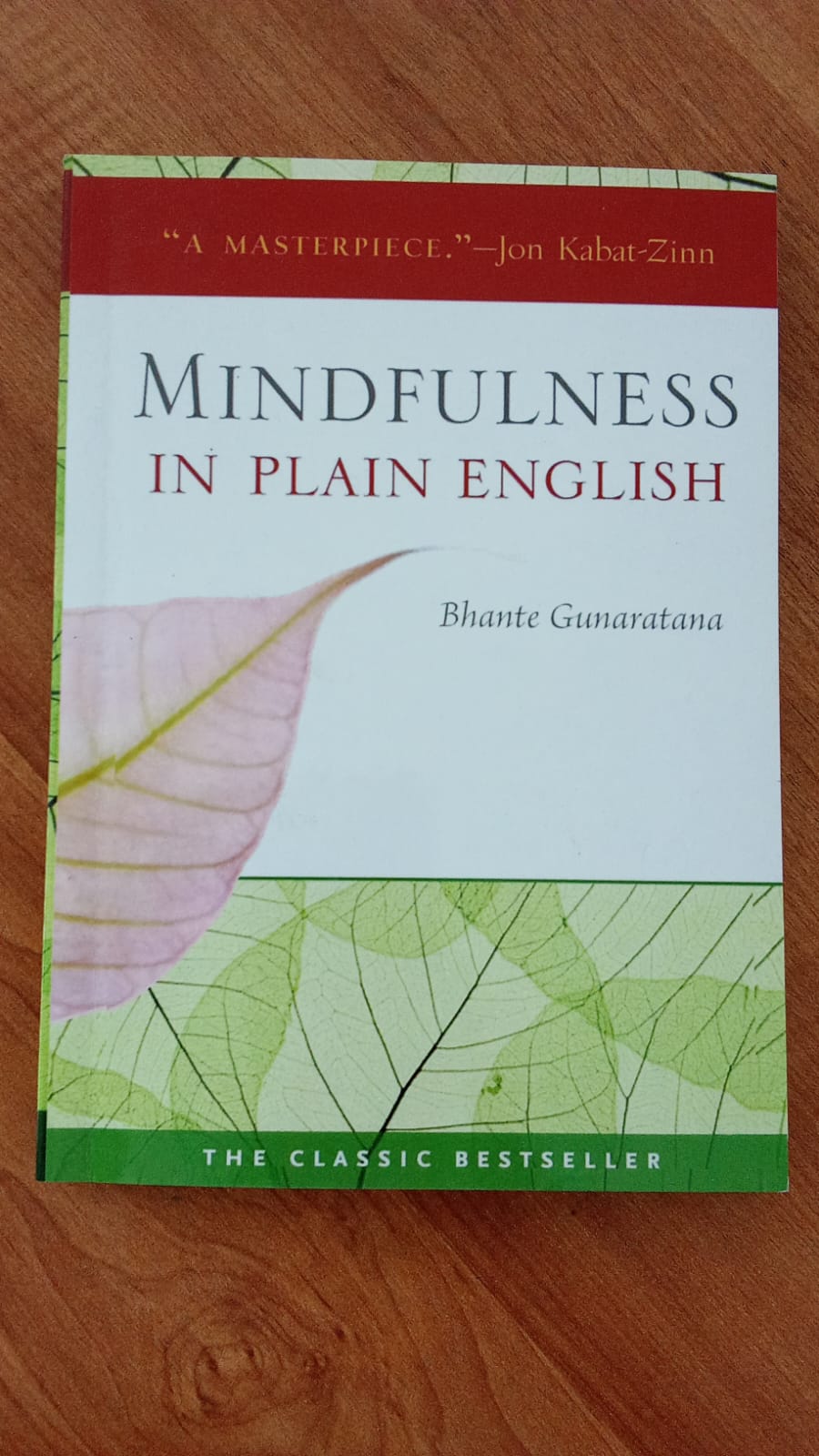
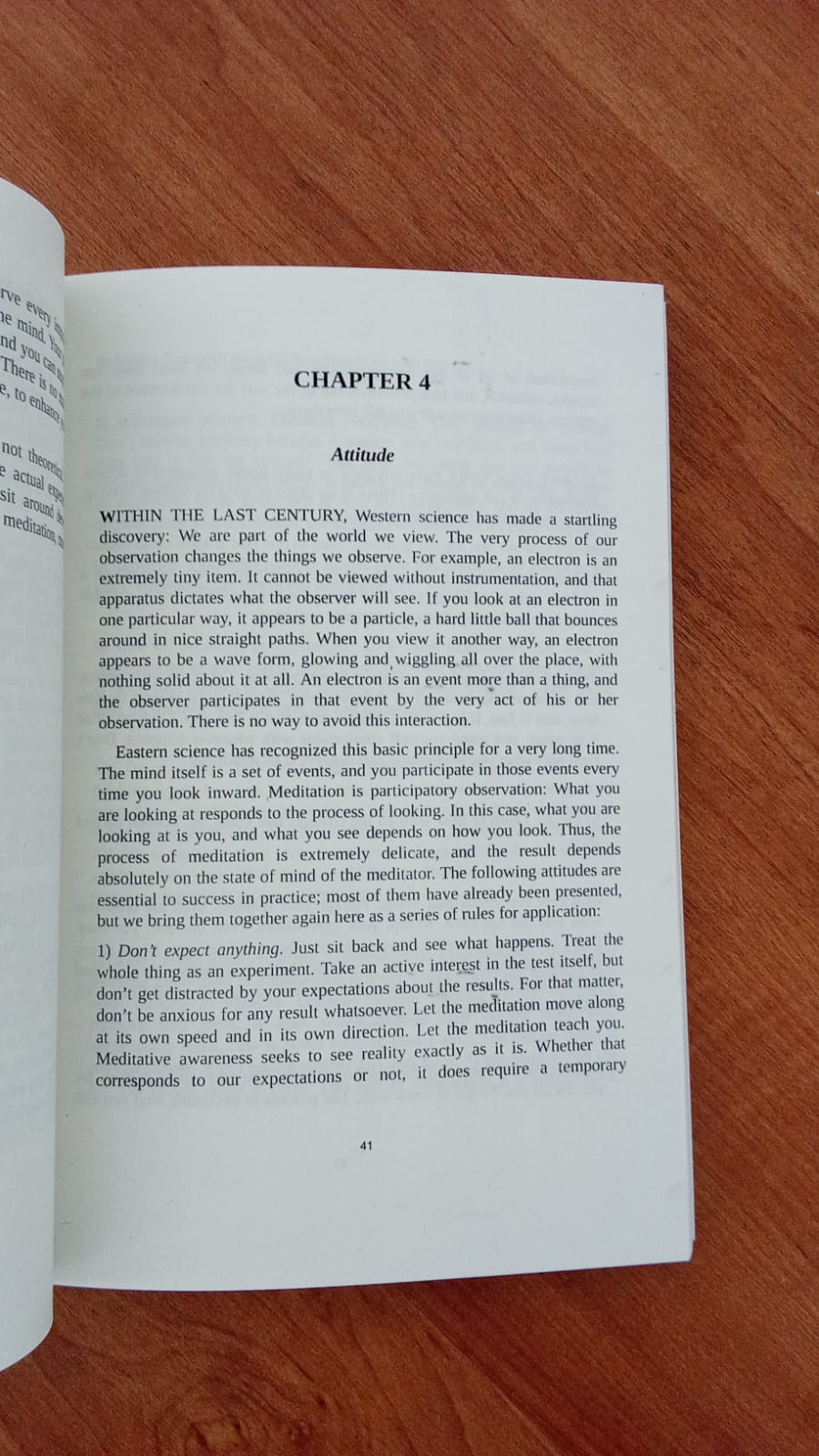

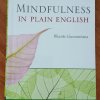


Mindfulness In Plain English by Bhante Bhante Gunaratana

රු1,900.00
3 X Rs. 633.33 or 8% Cashback with


or 3 X රු633.33 with


or up to 4 X රු475.00 with


Mindfulness in Plain English by Bhante Gunaratana is a classic beginner-friendly guide to mindfulness and Vipassana meditation. Using clear and practical language, Bhante Henepola Gunaratana explains breathing meditation, concentration, awareness, distractions, thoughts, emotions, everyday mindfulness and loving-kindness. Ideal for beginners, students of Buddhism, mindfulness practitioners and anyone interested in greater self-awareness, emotional clarity and present-moment living.
2 in stock
Purchase & earn 19 points!
Category: Mindfulness & Meditation
Mindfulness in Plain English by Bhante Gunaratana is a clear, practical and highly respected introduction to mindfulness and Vipassana meditation, written for readers who want to understand meditation without complicated terminology or unnecessary mystery.
What does it actually mean to meditate?
Do you have to stop thinking?
Do you need to sit perfectly still for hours?
Is meditation only for monks?
Can an ordinary person learn mindfulness?
Bhante Gunaratana approaches these questions in direct, accessible language.
Instead of treating meditation as something mysterious, he explains what practitioners actually do:
Sit.
Breathe.
Pay attention.
Notice thoughts.
Recognize emotions.
Observe physical sensations.
Become aware when the mind wanders.
Then gently return attention to the present.
The process sounds simple.
But the mind does not always cooperate.
It becomes:
Bored.
Restless.
Sleepy.
Distracted.
Irritated.
Excited.
Worried.
That is not necessarily evidence that meditation is failing.
Learning to notice these experiences without immediately becoming controlled by them is part of meditation itself.
Mindfulness in Plain English by Bhante Gunaratana explains how to begin a meditation practice, how mindfulness differs from concentration, how to work with distractions and difficulties, and how awareness can gradually extend beyond formal meditation into everyday life.
For beginners, students of Buddhism, personal-development readers and anyone interested in becoming more aware of their thoughts and emotions, this book offers an approachable introduction to one of the world’s most influential contemplative practices.
Mindfulness in Plain English by Bhante Gunaratana – Book Overview
Mindfulness in Plain English by Bhante Gunaratana focuses primarily on Vipassana meditation, often translated as insight meditation.
The aim is not simply to relax.
Relaxation may occur.
But mindfulness practice goes deeper.
The practitioner learns to observe experience more clearly.
Thoughts arise.
Thoughts disappear.
Feelings arise.
Feelings change.
Physical sensations arise.
They also change.
Instead of automatically reacting to every experience, mindfulness creates an opportunity to see what is happening.
This awareness can gradually influence how a person responds to daily life.
What Is Mindfulness?
Mindfulness involves paying careful attention to present experience.
You notice what is happening:
In the body.
In the mind.
In emotions.
In the surrounding environment.
The important element is awareness.
Instead of living entirely on automatic pilot, mindfulness encourages you to notice the experience itself.
Being Present
Most people spend significant time mentally somewhere else.
Thinking about yesterday.
Planning tomorrow.
Replaying conversations.
Imagining future problems.
Judging past mistakes.
Meanwhile, the present moment passes with little attention.
Mindfulness repeatedly brings awareness back to what is happening now.
Mindfulness Is Not Emptying the Mind
One common misconception is that successful meditation means having absolutely no thoughts.
That expectation can make beginners frustrated.
Thoughts are natural.
The mind thinks.
The practice is not necessarily to force every thought to disappear.
Instead, notice:
Thinking is happening.
Then return attention.
Thoughts Are Events in the Mind
A thought can feel extremely important simply because it appeared.
But mindfulness teaches a useful distinction.
You can have a thought without automatically following it.
A thought appears:
“I can’t do this.”
You can observe it.
You do not have to immediately believe it.
Vipassana Meditation
Vipassana is commonly translated as insight or clear seeing.
The practice involves observing experience closely enough to understand its changing nature.
Rather than simply discussing reality intellectually, meditation invites direct observation.
What happens to a sensation if you watch it?
Does it remain exactly the same?
What happens to an emotion?
What happens to a thought?
Experience is constantly moving.
Meditation Is Practice
Reading about meditation can help.
But understanding meditation intellectually is different from actually meditating.
It is similar to learning about swimming.
You can read:
How to breathe.
How to move your arms.
How to position your body.
Eventually, you need to enter the water.
Meditation develops through practice.
Starting With the Breath
Breathing is commonly used as a meditation object.
Why?
Because the breath is:
Always available.
Naturally occurring.
Connected with the body.
Happening in the present.
You do not need special equipment.
You simply notice breathing.
Do Not Force the Breath
The aim is not necessarily to control breathing.
You observe it.
Long breath.
Short breath.
Deep breath.
Shallow breath.
Instead of making the breath behave a particular way, become familiar with it.
Attention Wanders
You begin watching the breath.
Ten seconds later:
You are thinking about lunch.
Then work.
Then a conversation.
Then tomorrow.
Eventually you realize:
I stopped paying attention.
That realization is important.
Awareness has returned.
Return Without Anger
Beginners sometimes become frustrated.
“My mind wandered again.”
But becoming angry creates another distraction.
A more useful process is:
Notice.
Accept.
Return.
Again and again.
The Wandering Mind Is Normal
Mindfulness in Plain English by Bhante Gunaratana is especially useful because it does not pretend meditation is instantly peaceful.
The mind can become extremely noisy when you begin paying attention.
Perhaps it was always noisy.
You simply did not notice before.
Concentration
Concentration is an important part of meditation.
It involves keeping attention steadily connected to an object.
For example:
The breath.
The stronger concentration becomes, the less easily attention is pulled away.
Mindfulness Versus Concentration
Mindfulness and concentration are related, but they are not identical.
Concentration stabilizes attention.
Mindfulness notices what is occurring.
You can think of concentration as helping keep the mind steady while mindfulness observes experience clearly.
Both support meditation practice.
Awareness
Mindfulness means awareness without immediately becoming lost in what is observed.
You notice:
There is anger.
There is tension.
There is fear.
There is excitement.
This is different from immediately becoming:
The anger.
The fear.
The story surrounding the emotion.
Emotions
Mindfulness does not require avoiding emotion.
If sadness appears, notice sadness.
If anger appears, notice anger.
If fear appears, notice fear.
The aim is not:
“I must not feel this.”
It is:
“What is happening right now?”
Anger
Imagine someone insults you.
Normally:
Insult.
Anger.
Reaction.
Mindfulness may create another step.
Insult.
Anger.
Awareness.
Choice.
You still feel anger.
But perhaps you do not immediately say something you regret.
Awareness Creates Space
That small gap between:
Experience.
And reaction.
can become extremely valuable.
Many problems occur because people act at the exact moment an emotion is strongest.
Mindfulness trains observation before reaction.
Physical Sensations
Meditation also develops awareness of the body.
Pain.
Pressure.
Heat.
Cold.
Itching.
Tension.
Instead of immediately judging the sensation, observe it carefully.
Discomfort During Meditation
Sitting still can become uncomfortable.
The leg hurts.
The back becomes stiff.
The face itches.
The immediate impulse is:
Move.
But sometimes observing discomfort reveals something interesting.
A sensation may:
Increase.
Decrease.
Move.
Pulse.
Disappear.
Experience is less fixed than it initially seems.
Pain and Safety
Mindfulness does not require deliberately injuring yourself or ignoring dangerous physical symptoms.
Meditation involves awareness, not reckless endurance.
Adjusting posture when necessary is completely compatible with sensible practice.
Restlessness
Sometimes the biggest problem is not physical pain.
It is restlessness.
The mind says:
Get up.
Check the phone.
Do something.
Anything.
Restlessness becomes something to observe.
Boredom
Boredom can also become part of meditation.
People are accustomed to constant stimulation.
Music.
Videos.
Messages.
Scrolling.
Entertainment.
When stimulation stops, boredom appears.
Mindfulness asks:
What does boredom actually feel like?
Modern Distraction
Although the book predates today’s smartphone culture, its lessons may feel even more relevant now.
Modern attention is constantly interrupted by:
Notifications.
Social media.
Messages.
Videos.
Emails.
Advertising.
Developing the ability to stay with one experience can become a valuable skill.
The Problem With Automatic Pilot
People often perform daily activities without fully experiencing them.
Eating while scrolling.
Driving while mentally arguing with someone.
Talking while preparing the next response.
Walking while staring at a phone.
Mindfulness interrupts automatic behavior.
Meditation in Everyday Life
Mindfulness in Plain English by Bhante Gunaratana does not limit mindfulness to sitting on a cushion.
Awareness can be practiced while:
Walking.
Eating.
Working.
Listening.
Talking.
Cleaning.
Waiting.
The goal is eventually to bring greater attention into ordinary life.
Mindful Eating
Instead of eating automatically, notice:
Taste.
Smell.
Texture.
Hunger.
Fullness.
Speed.
You may discover how rarely you normally experience food directly.
Mindful Walking
Walking can become meditation.
Notice:
Feet touching the ground.
Movement.
Balance.
Body position.
Surrounding sounds.
Walking is usually a means of reaching somewhere else.
Mindfulness makes the walking itself part of the experience.
Mindful Listening
During conversations, people often listen only partially.
While another person speaks, the mind prepares:
Advice.
A reply.
A disagreement.
Mindful listening means actually attending to the person in front of you.
Patience
Meditation requires patience.
People often want immediate results.
“I meditated for three days. Why am I not peaceful?”
Mindfulness is not a quick performance hack.
It is a practice.
Progress develops gradually.
Expectations
Expectations can interfere with meditation.
You sit down expecting:
Peace.
Bliss.
Perfect concentration.
Then the mind becomes restless.
You think:
I failed.
But perhaps the practice for that day is simply learning to recognize restlessness.
Let Experience Be Experience
A central attitude in mindfulness is allowing experience to be observed before immediately trying to change it.
Pleasant?
Notice it.
Unpleasant?
Notice it.
Neutral?
Notice it.
Awareness comes first.
Pleasant Experiences
People naturally want pleasant experiences to continue.
Comfort.
Praise.
Love.
Success.
Pleasure.
But pleasant experiences change.
Clinging too tightly can create frustration when they end.
Unpleasant Experiences
People also want unpleasant experiences to disappear immediately.
Pain.
Embarrassment.
Fear.
Boredom.
Sadness.
Mindfulness examines this impulse without requiring passive acceptance of harmful circumstances.
Impermanence
Change is central to Buddhist meditation.
Thoughts change.
Emotions change.
Bodies change.
Relationships change.
Circumstances change.
Observing change directly can reduce the tendency to treat every temporary experience as permanent.
A Difficult Moment Is Still a Moment
When upset, the mind may say:
“This will always be like this.”
But emotional states change.
Mindfulness can help people recognize that experience moves.
Attachment
People often become attached to:
Possessions.
Ideas.
Relationships.
Status.
Self-image.
Attachment itself is not discussed simply as having something.
The problem is the belief that changing things must remain permanently unchanged.
Aversion
Aversion is the opposite movement.
We push away what we dislike.
Sometimes this is useful.
But psychologically, constant resistance can increase suffering.
Observing Without Immediate Judgment
The mind categorizes constantly.
Good.
Bad.
Beautiful.
Ugly.
Success.
Failure.
Mindfulness helps you notice how quickly these judgments appear.
Judgment Is Also Something to Observe
The goal is not to become a person who never judges anything.
Instead:
Notice judgment.
That judgment itself becomes part of awareness.
The Beginner’s Attitude
A beginner often wants to know:
Am I doing this correctly?
That is understandable.
But excessive self-monitoring can create tension.
Meditation requires some willingness to learn through direct experience.
Consistency
Ten minutes regularly may be more useful than one heroic meditation session followed by weeks of nothing.
Consistency develops familiarity.
The mind learns:
This is something we do.
Creating a Meditation Routine
A simple routine can involve:
Choose a quiet place.
Sit comfortably.
Set a manageable period.
Focus on breathing.
Notice distractions.
Return gently.
Repeat regularly.
The practice does not need to begin dramatically.
Posture
Meditation posture should support:
Alertness.
Stability.
Comfort.
The goal is not to win a flexibility competition.
A posture that causes unnecessary pain can become a distraction.
Sleepiness
Another common difficulty is drowsiness.
You sit.
You relax.
Suddenly meditation becomes a nap.
Sleepiness may indicate:
Fatigue.
Comfort.
Low energy.
Sometimes the practical solution is simply better sleep.
Energy and Alertness
Meditation balances relaxation with alertness.
Too much tension:
Restlessness.
Too little energy:
Sleepiness.
Practice gradually teaches that balance.
Fear
Quiet attention can sometimes reveal emotions people normally avoid.
That can include fear.
Instead of immediately running from it, mindfulness may allow careful observation.
What does fear feel like physically?
Where is it experienced?
How does it change?
Difficult Psychological Experiences
Meditation can be beneficial for many people, but it is not a replacement for professional mental-health care.
People experiencing severe trauma, panic, psychosis, suicidal thoughts or significant mental-health difficulties may benefit from appropriate professional guidance and may need meditation practices adapted to their circumstances.
Mindfulness and Stress
Mindfulness is often associated with stress reduction.
Why might it help?
Because stress is not only the external problem.
It can also involve:
Mental repetition.
Future prediction.
Resistance.
Automatic reaction.
Awareness can change the relationship with those processes.
Not Every Problem Is Solved by Meditation
Meditation does not remove:
Debt.
Unsafe relationships.
Illness.
Workplace exploitation.
Real-world problems may require real-world action.
Mindfulness can support clearer responses.
It should not become an excuse to tolerate preventable harm.
Compassion
The expanded edition of the book includes attention to loving-kindness.
Mindfulness is not intended to create cold detachment.
Awareness can develop alongside:
Kindness.
Patience.
Empathy.
Compassion.
Loving-Kindness
Loving-kindness meditation traditionally involves intentionally cultivating goodwill.
Toward yourself.
Toward people you care about.
Toward others.
The practice encourages a less hostile relationship with oneself and the world.
Self-Compassion
Some people meditate with an aggressively self-critical attitude.
“My concentration is terrible.”
“I am bad at this.”
“I should be better.”
That attitude can become another obstacle.
Patient correction is more sustainable.
Acceptance Is Not Passivity
Acceptance is frequently misunderstood.
Mindful acceptance means recognizing:
This is what is happening now.
It does not mean:
I approve of everything.
You can acknowledge reality and still take action to change it.
Mindfulness and Productivity
Many modern readers approach mindfulness because they want better focus.
Mindfulness can support attention.
But the traditional purpose is broader than simply becoming more productive.
It involves understanding experience and reducing unnecessary suffering.
Mindfulness at Work
At work, mindfulness may help with:
Attention.
Listening.
Emotional regulation.
Responding to pressure.
Recognizing distraction.
Avoiding impulsive communication.
Even a few seconds of awareness before sending an angry email can matter.
Mindfulness for Students
Students can apply mindfulness when:
Studying.
Sitting exams.
Managing stress.
Listening in class.
Instead of reading one paragraph while mentally thinking about five other things, attention can be intentionally returned to the task.
Mindfulness and Technology
Technology is not inherently the enemy.
The problem is unconscious use.
Opening the phone intentionally is different from opening it automatically every thirty seconds.
Awareness helps reveal habits.
Observe Craving
You hear a notification.
Immediately:
Hand reaches for phone.
Mindfulness asks you to notice the impulse.
You may still check.
But now it becomes a choice rather than a completely automatic reaction.
Habits
Many habits operate below conscious awareness.
Trigger.
Reaction.
Reward.
Mindfulness can make the trigger visible.
That visibility creates an opportunity to change behavior.
Self-Knowledge
Meditation gradually reveals patterns.
You may discover:
How quickly you become irritated.
How often you imagine the future.
How strongly you seek approval.
How often you replay old conversations.
This knowledge is not always comfortable.
But awareness is necessary for change.
The Ego and Self-Image
People construct identities.
I am successful.
I am intelligent.
I am calm.
I am a failure.
I am unlucky.
Then life challenges those identities.
Mindfulness encourages observing self-related thoughts without assuming every description is permanent truth.
Control
A surprising lesson from meditation is how little direct control we have over some mental activity.
Try:
Do not think for five minutes.
Thoughts appear anyway.
Recognizing this can create humility.
Responding Instead of Reacting
Perhaps one of the most practical benefits of Mindfulness in Plain English by Bhante Gunaratana is learning to distinguish reaction from response.
Reaction is immediate.
Response includes awareness.
Someone criticizes you.
Reaction:
Attack.
Response:
Notice anger.
Understand the message.
Then decide what action is appropriate.
Relationships
Mindfulness can improve relationships because awareness helps people recognize:
Defensiveness.
Jealousy.
Anger.
Fear.
Need for approval.
Instead of automatically turning these feelings into accusations, people may become better able to communicate.
Conflict
During conflict, notice:
Heart rate.
Muscle tension.
Thoughts.
Urge to interrupt.
Desire to win.
You may still disagree.
Mindfulness does not eliminate disagreement.
It can change how disagreement is handled.
Gratitude for Ordinary Experience
Mindfulness can also make ordinary life more noticeable.
Sunlight.
A meal.
Walking.
Conversation.
Breathing.
Much of life is made of ordinary moments.
If attention is permanently elsewhere, those moments disappear unnoticed.
Meditation and Buddhism
The practices explained in the book come from the Buddhist meditation tradition, particularly Vipassana.
Readers do not necessarily need to become Buddhist to learn from the practical meditation instructions.
However, understanding the Buddhist context can deepen appreciation of the book.
Is Mindfulness a Religion?
Mindfulness practices have Buddhist roots.
Today, they are also used in secular environments such as:
Psychology.
Education.
Healthcare.
Workplaces.
Readers can approach the book at different levels while respecting the tradition from which the practice developed.
Bhante Henepola Gunaratana
Bhante Henepola Gunaratana is a Sri Lankan Buddhist monk and meditation teacher.
He was ordained as a monk at a young age and later became widely known for teaching Buddhism and meditation internationally.
His direct teaching style is one reason Mindfulness in Plain English by Bhante Gunaratana became so influential.
A Sri Lankan Meditation Teacher
Sri Lankan readers may find the author’s background especially interesting.
Bhante Gunaratana was born in Sri Lanka and later taught extensively internationally.
His work helped communicate traditional Buddhist meditation practices to English-speaking audiences in accessible language.
Why “Plain English”?
The title explains the book’s main strength.
Meditation literature can become filled with:
Technical terminology.
Religious vocabulary.
Abstract philosophy.
Bhante Gunaratana aims to explain the practice directly.
What do you do?
What problems arise?
What should you expect?
That practical style makes the book especially approachable.
Is Mindfulness in Plain English Good for Beginners?
Yes.
Mindfulness in Plain English by Bhante Gunaratana is widely regarded as an introductory meditation book.
It explains basic practice before moving into deeper ideas.
No previous meditation experience is required.
Do I Need to Be Buddhist?
No.
Readers can use the meditation instructions without formally adopting Buddhism.
However, the book comes from a Buddhist contemplative tradition, and some concepts are best understood within that context.
Is This a Self-Help Book?
It can be categorized under:
Mindfulness.
Meditation.
Buddhism.
Personal development.
Spirituality.
It is more focused on teaching meditation practice than on providing conventional motivational advice.
Is This About Mindfulness or Meditation?
Both.
Meditation is the formal practice environment.
Mindfulness is the awareness being developed.
Eventually, that awareness can be carried into ordinary activities.
Does Meditation Stop Negative Thoughts?
Not necessarily.
A more realistic goal is developing a different relationship with thoughts.
Negative thoughts can still arise.
The practitioner becomes better at noticing them without immediately becoming trapped in them.
How Long Should Beginners Meditate?
The book emphasizes learning the practice gradually rather than chasing impressive numbers.
Beginners may find shorter consistent sessions easier than immediately attempting very long meditation periods.
Consistency is more important than trying to prove endurance.
Is Mindfulness the Same as Relaxation?
No.
Meditation may sometimes feel relaxing.
Other sessions may feel:
Restless.
Boring.
Emotionally difficult.
Mindfulness means becoming aware of what is actually happening rather than demanding a particular pleasant state.
Mindfulness and Concentration
These two skills support each other.
Concentration steadies attention.
Mindfulness maintains awareness of experience.
Developing both can create stronger meditation practice.
The 20th Anniversary Edition
The widely available 20th Anniversary Edition was published by Wisdom Publications.
It contains the core text of the earlier book with expanded material, including a chapter on cultivating loving-kindness.
This edition continues the book’s practical, beginner-friendly approach.
Related Books by Bhante Gunaratana
Readers who enjoy Mindfulness in Plain English by Bhante Gunaratana may also be interested in titles such as:
Eight Mindful Steps to Happiness
Beyond Mindfulness in Plain English
The Four Foundations of Mindfulness in Plain English
Journey to Mindfulness
These books explore meditation and Buddhist practice from complementary perspectives.
Important Themes
Mindfulness in Plain English by Bhante Gunaratana explores themes including:
- Mindfulness
- Vipassana meditation
- Meditation for beginners
- Awareness
- Concentration
- Breathing meditation
- Thoughts
- Emotions
- Distraction
- Present-moment awareness
- Patience
- Impermanence
- Attachment
- Compassion
- Loving-kindness
- Self-awareness
- Stress
- Everyday mindfulness
- Buddhist meditation
- Personal growth
7 Powerful Lessons From Mindfulness in Plain English by Bhante Gunaratana
There are many lessons in Mindfulness in Plain English by Bhante Gunaratana, but seven stand out:
- Mindfulness begins by noticing what is actually happening – Instead of remaining lost in thoughts about the past or future, practice returning attention to present experience.
- A wandering mind does not mean meditation has failed – Realizing that attention wandered is itself a moment of awareness; simply notice and return.
- You do not need to eliminate thoughts – Thoughts naturally arise. Meditation changes your relationship with them rather than demanding a permanently blank mind.
- Mindfulness and concentration work together – Concentration stabilizes attention while mindfulness helps observe thoughts, emotions and sensations clearly.
- Difficult experiences can become objects of awareness – Restlessness, boredom, irritation and discomfort do not always need to be treated as interruptions; they can become part of the practice.
- Meditation should gradually influence ordinary life – The deeper purpose is not only sitting quietly but becoming more aware while speaking, working, eating, walking and interacting with other people.
- Awareness creates greater freedom in how we respond – When thoughts and emotions are noticed before they become automatic actions, people gain more opportunity to choose thoughtful responses.
Why Read Mindfulness in Plain English by Bhante Gunaratana?
Mindfulness in Plain English by Bhante Gunaratana is an excellent choice for readers interested in:
- Mindfulness
- Meditation
- Vipassana
- Buddhist meditation
- Meditation for beginners
- Mental clarity
- Present-moment awareness
- Stress management
- Emotional awareness
- Concentration
- Self-awareness
- Loving-kindness
- Personal development
- Buddhism
- Spirituality
- Mindful living
- Breathing meditation
- Inner peace
- Self-discovery
- Meditation practice
It is particularly useful for people who want practical meditation guidance without unnecessarily complicated language.
Who Should Read This Book?
Mindfulness in Plain English by Bhante Gunaratana may especially appeal to:
- Meditation beginners
- Mindfulness practitioners
- Buddhist readers
- Students
- Professionals dealing with distraction
- Readers interested in emotional awareness
- People looking for greater concentration
- Personal-development readers
- Spirituality readers
- People interested in Vipassana
- Readers wanting to understand Buddhist meditation
- People trying to build a meditation routine
- Readers seeking greater present-moment awareness
- Anyone curious about how meditation actually works
Mindfulness in Plain English by Bhante Gunaratana – Learn to See the Present More Clearly
Mindfulness in Plain English by Bhante Gunaratana begins with something ordinary:
Breathing.
But the deeper lesson is about awareness.
You sit.
You notice the breath.
The mind wanders.
You notice.
You return.
Then it wanders again.
You return again.
At first, this may feel repetitive.
But gradually, something important becomes visible.
The same pattern happens outside meditation.
Someone says something.
An emotion appears.
A story begins inside your mind.
You react.
Meditation trains you to notice the stages.
Thought.
Emotion.
Impulse.
Reaction.
And sometimes, awareness appears before the final step.
That moment creates choice.
You may still become angry.
But perhaps you wait before speaking.
You may still become anxious.
But perhaps you notice that your mind is predicting a future that has not happened.
You may still feel sadness.
But perhaps you allow the feeling to exist without immediately judging yourself.
This is not about becoming emotionless.
It is about becoming more conscious.
Life will continue to contain:
Pleasure.
Pain.
Success.
Disappointment.
Love.
Loss.
Stress.
Uncertainty.
Mindfulness does not promise to remove those realities.
Instead, it teaches a different way of meeting them.
Pay attention.
Notice clearly.
Do not automatically believe every thought.
Do not automatically obey every emotion.
Return to the present.
Then respond as wisely as you can.
For beginners and experienced readers alike, Mindfulness in Plain English by Bhante Gunaratana offers an accessible introduction to meditation that turns an ancient contemplative practice into clear, practical guidance for everyday life.
Learn more about Mindfulness in Plain English by Bhante Gunaratana on the official Simon & Schuster publisher page.
Explore more mindfulness and personal development books at Bargain Books.
Useful Links
- Bargain / Publisher Page (Reference):
View Book – Mindfulness in Plain English - Wikipedia (Author Page):
https://en.wikipedia.org/wiki/Henepola_Gunaratana
Be the first to review “Mindfulness In Plain English by Bhante Bhante Gunaratana” Cancel reply
Related products
-22%

Meditation
3 X Rs. 700.00 or 8% Cashback with
or 3 X රු700.00 with
or up to 4 X රු525.00 with
-10%

Out of stock
3 X Rs. 633.33 or 8% Cashback with
or 3 X රු633.33 with
or up to 4 X රු475.00 with

Out of stock
Mindfulness & Meditation
රු1,750.00
Purchase & earn 18 points!
3 X Rs. 583.33 or 8% Cashback with
or 3 X රු583.33 with
or up to 4 X රු437.50 with

රු2,200.00
Purchase & earn 22 points!
3 X Rs. 733.33 or 8% Cashback with
or 3 X රු733.33 with
or up to 4 X රු550.00 with
-29%

Out of stock
3 X Rs. 566.67 or 8% Cashback with
or 3 X රු566.67 with
or up to 4 X රු425.00 with
Reviews
There are no reviews yet.