
No products in the cart.
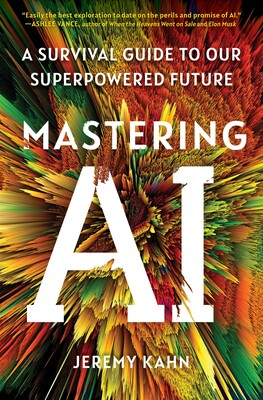
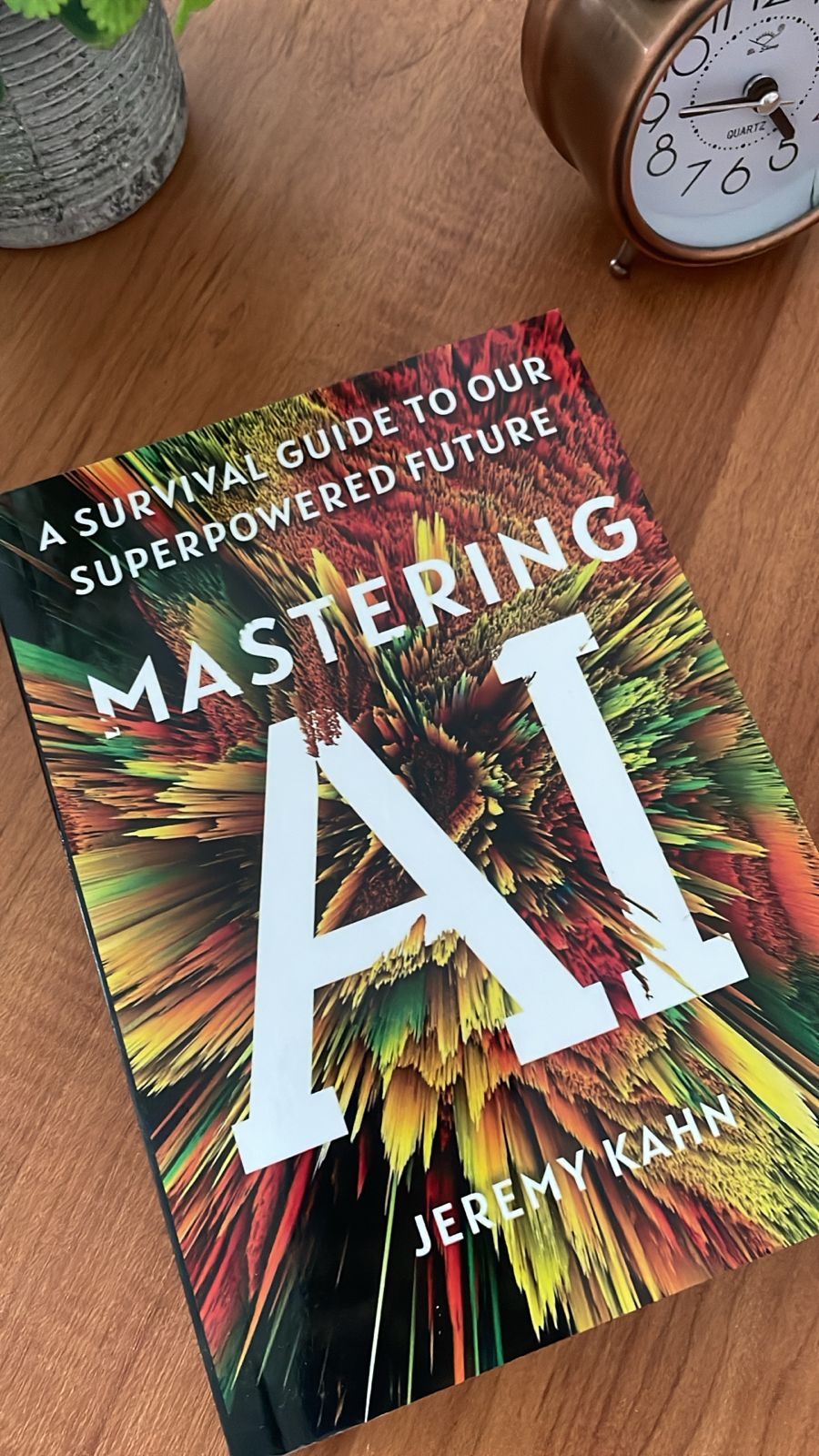
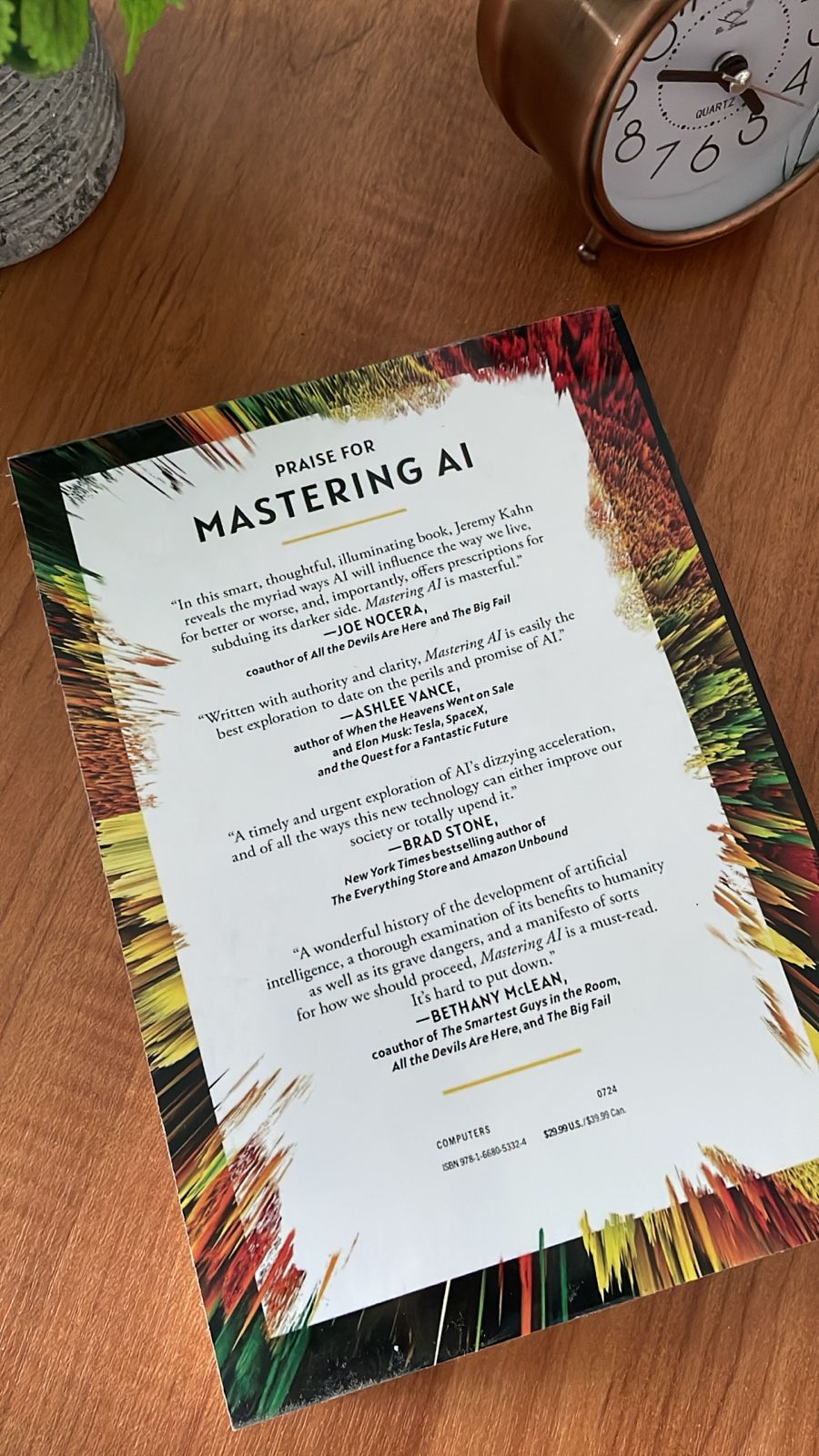

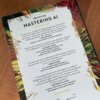
Matering Ai by Jeremy Kahn

රු2,150.00
3 X Rs. 716.67 or 8% Cashback with


or 3 X රු716.67 with


or up to 4 X රු537.50 with


Mastering AI by Jeremy Kahn is an accessible guide to the opportunities and risks of the artificial-intelligence revolution. Exploring generative AI, ChatGPT, automation, the future of work, education, healthcare, creativity, misinformation, bias, democracy and regulation, Fortune journalist Jeremy Kahn examines how increasingly powerful AI could transform business and society. Ideal for business leaders, students, professionals, entrepreneurs and anyone who wants to understand the AI-powered future without needing a technical background.
6 in stock
Purchase & earn 22 points!
Category: Culture & Current Affairs
Mastering AI by Jeremy Kahn is an accessible and thought-provoking guide to understanding the artificial intelligence revolution and what it could mean for work, business, education, creativity, democracy and everyday life.
Artificial intelligence is developing at extraordinary speed.
Tools can now:
Generate text.
Create images.
Write software.
Analyze data.
Answer questions.
Translate languages.
Assist researchers.
Support businesses.
Automate tasks.
And perform work that once appeared to require uniquely human intelligence.
But technological progress raises difficult questions.
Which jobs will change?
Will AI make workers more productive—or replace some of them?
How will schools respond when students have access to powerful AI tutors?
Can artificial intelligence improve healthcare?
What happens when AI-generated misinformation becomes difficult to distinguish from reality?
How should governments regulate increasingly powerful systems?
And perhaps most importantly:
How can humans remain in control of the technology they are creating?
In Mastering AI by Jeremy Kahn, technology journalist Jeremy Kahn examines both the extraordinary promise and serious risks of artificial intelligence.
Rather than treating AI as simply a miracle or a disaster, the book explores the more complicated reality.
AI could help humanity become:
More productive.
More creative.
More capable.
But poorly managed AI could also intensify:
Misinformation.
Bias.
Economic inequality.
Job disruption.
Political manipulation.
Social division.
The future therefore depends not only on what artificial intelligence can do.
It also depends on what humans decide to do with it.
Mastering AI by Jeremy Kahn – Book Overview
Mastering AI by Jeremy Kahn explores the rapid development of artificial intelligence and asks how society should prepare for a technology powerful enough to reshape entire industries.
Kahn draws on his experience reporting on AI companies, scientists, researchers and emerging technologies.
The result is a book designed not only for:
Programmers.
Engineers.
AI researchers.
But also for:
Business owners.
Managers.
Students.
Teachers.
Professionals.
Policy makers.
Parents.
And ordinary people trying to understand what the AI revolution means for their future.
A Survival Guide to Our Superpowered Future
The subtitle of the book is:
A Survival Guide to Our Superpowered Future
That subtitle captures the central idea.
Artificial intelligence is giving individuals and organizations capabilities that once seemed almost impossible.
A person can now use AI to:
Draft documents.
Analyze information.
Generate ideas.
Write code.
Create marketing content.
Summarize research.
Translate text.
Automate repetitive work.
These capabilities can feel like professional superpowers.
But power creates responsibility.
The Rise of Generative AI
Generative AI changed public understanding of artificial intelligence.
For years, AI quietly operated behind:
Search engines.
Recommendation systems.
Fraud detection.
Advertising.
Navigation.
Social-media feeds.
Then generative AI suddenly allowed ordinary users to interact directly with powerful models through natural conversation.
That changed everything.
ChatGPT and the AI Boom
The public arrival of ChatGPT became a major moment in the history of artificial intelligence.
Instead of needing advanced programming skills, users could simply type questions and instructions.
Suddenly millions of people could experience generative AI directly.
That accessibility accelerated:
Investment.
Competition.
Experimentation.
Public discussion.
Concern.
AI Is More Than Chatbots
One important idea in Mastering AI by Jeremy Kahn is that artificial intelligence should not be understood only through chatbots.
AI systems can influence:
Medicine.
Science.
Finance.
Transportation.
Manufacturing.
Education.
Media.
Cybersecurity.
Government.
Business strategy.
The technology could become part of nearly every major industry.
The Future of Work
One of the biggest questions surrounding artificial intelligence is employment.
Will AI destroy jobs?
Create new jobs?
Or simply change existing jobs?
The most realistic answer may involve all three.
Some tasks can become automated.
Some occupations may shrink.
New occupations may emerge.
Many existing jobs may become AI-assisted.
AI Copilots
Rather than completely replacing every professional, AI may increasingly act as a copilot.
A lawyer may use AI to:
Review documents.
A marketer may use AI to:
Generate campaign ideas.
A programmer may use AI to:
Write or debug code.
A manager may use AI to:
Analyze reports.
A teacher may use AI to:
Prepare learning materials.
The person may remain responsible while AI accelerates the work.
Humans Working With AI
The competition of the future may not simply be:
Human versus AI.
It may increasingly become:
Human using AI versus human not using AI.
People who learn how to work effectively with intelligent systems may gain major productivity advantages.
Productivity
AI has the potential to increase productivity dramatically.
Tasks that once required hours may sometimes be completed much faster.
This can allow professionals to spend more time on:
Strategy.
Creativity.
Relationships.
Decision-making.
Complex problems.
But productivity gains will not automatically be distributed equally.
Job Disruption
Some jobs contain many repetitive tasks.
Those occupations may experience more disruption than jobs requiring:
Physical work.
Human trust.
Complex judgment.
Leadership.
Relationship-building.
Original strategy.
Even these jobs, however, may still be changed by AI.
Reskilling
When technology changes work, people need new skills.
AI literacy may become increasingly important.
Professionals may need to understand:
How AI works.
How to give good instructions.
How to evaluate AI-generated information.
How to verify results.
How to protect sensitive information.
How to combine human expertise with machine capability.
Prompting
Communicating effectively with AI systems is itself a useful skill.
A vague question may produce a vague answer.
A clear request with:
Context.
Goals.
Constraints.
Examples.
can often produce better results.
But prompting alone is not enough.
Critical Thinking
Perhaps the most important AI skill is still a human one:
critical thinking.
AI can generate confident answers that are:
Incorrect.
Incomplete.
Biased.
Misleading.
Users therefore need to ask:
Is this accurate?
What evidence supports it?
What is missing?
Should I verify this elsewhere?
AI and Education
Education may be one of the areas most dramatically affected by artificial intelligence.
An AI tutor could potentially explain a difficult concept:
Repeatedly.
At different levels.
In different languages.
At any time of day.
That could make personalized learning more widely available.
Personalized Tutors
Traditional classrooms require one teacher to support many students.
AI systems can potentially provide individualized explanations.
One student may need:
More examples.
Another:
Simpler language.
Another:
Harder questions.
Personalization could become much easier.
The Risk to Learning
But there is another side.
If students ask AI to complete every assignment, they may avoid developing the very skills education is designed to build.
Writing.
Reasoning.
Memory.
Research.
Problem-solving.
Critical thinking.
The challenge is therefore not simply allowing or banning AI.
It is learning how to use it without allowing it to replace thinking.
AI and Human Intelligence
Mastering AI by Jeremy Kahn raises a deeper concern:
If machines perform more thinking for us, will humans gradually practice some mental abilities less?
People already rely on technology for:
Navigation.
Memory.
Calculation.
Information retrieval.
AI could extend that dependency.
Use AI Without Losing Your Mind
The goal should not necessarily be rejecting AI.
Instead, people may need to learn when to:
Use AI.
And when to think independently.
AI can support thought.
It should not automatically replace it.
AI and Healthcare
Artificial intelligence could create major opportunities in healthcare.
Potential applications include:
Medical research.
Drug discovery.
Image analysis.
Patient monitoring.
Administrative automation.
Personalized treatment.
Clinical decision support.
Better data analysis could potentially help researchers and doctors identify patterns more quickly.
Personalized Medicine
AI may allow medicine to become more tailored to individual patients.
Instead of relying only on broad categories, advanced systems may analyze more information about:
Genetics.
Medical history.
Lifestyle.
Treatment response.
The goal would be more targeted care.
Doctors and AI
AI does not automatically eliminate the need for doctors.
Medicine also requires:
Judgment.
Communication.
Trust.
Ethics.
Empathy.
Responsibility.
The strongest future may involve medical professionals using AI as another powerful tool.
AI and Creativity
Generative AI has already transformed creative work.
AI can produce:
Images.
Music.
Video.
Text.
Design concepts.
Marketing ideas.
Software.
This creates exciting opportunities.
But it also creates difficult questions.
What Is Human Creativity?
If a machine can generate an image in seconds, what makes human creativity valuable?
Perhaps human creativity involves more than production.
It also involves:
Experience.
Taste.
Intent.
Emotion.
Culture.
Judgment.
Meaning.
AI can produce content.
Humans still decide why that content should exist.
AI and Artists
Writers, designers, musicians and artists face both opportunities and risks.
AI can help:
Brainstorm.
Edit.
Prototype.
Experiment.
But creators also worry about:
Copyright.
Training data.
Job displacement.
Compensation.
Originality.
The relationship between AI and creative industries will continue evolving.
Misinformation
One of the biggest dangers discussed around artificial intelligence is misinformation.
AI can create believable:
Articles.
Images.
Audio.
Video.
Social posts.
Fake information can now be generated at extraordinary scale.
Deepfakes
Deepfake technology can create convincing synthetic representations of real people.
Someone may appear to:
Say something.
Do something.
Support something.
when the event never happened.
This creates serious challenges for trust.
What Happens When Seeing Is No Longer Believing?
For generations, photographs and videos carried strong evidentiary power.
AI makes manipulation easier.
Society may need new ways to verify:
Sources.
Authenticity.
Identity.
Digital media.
Media literacy becomes increasingly important.
AI and Democracy
Misinformation becomes especially dangerous during elections and political crises.
AI systems could make it easier to create targeted propaganda at enormous scale.
The problem is not simply fake information.
It is the possible destruction of shared trust.
Trust
A functioning society requires some level of agreement about reality.
If everyone believes every piece of information might be artificial, trust itself becomes weaker.
That could affect:
Journalism.
Government.
Science.
Business.
Relationships.
Bias
AI systems learn patterns from large datasets.
Those datasets reflect human society.
Human society contains:
Prejudice.
Historical discrimination.
Stereotypes.
Unequal representation.
AI can therefore reproduce or sometimes amplify these problems.
Algorithmic Bias
A biased algorithm can influence decisions about:
Hiring.
Loans.
Insurance.
Policing.
Education.
Healthcare.
These decisions can have serious consequences.
That means fairness must be considered during AI development.
AI Is Not Automatically Neutral
People sometimes assume a computer is objective because it uses mathematics.
But algorithms are created by humans.
Humans choose:
Training data.
Objectives.
Rules.
Evaluation methods.
Those choices affect outcomes.
Transparency
As AI systems influence more important decisions, people may demand greater transparency.
Why was this application rejected?
Why did this system recommend this treatment?
Why was this person flagged?
Complex models can make explanations difficult.
Accountability
If an AI system causes harm, who is responsible?
The developer?
Company?
User?
Government?
Model provider?
These questions will become increasingly important.
Regulation
Governments around the world are trying to determine how AI should be regulated.
Too little regulation may allow harmful systems to spread.
Too much poorly designed regulation could slow beneficial innovation.
The challenge is finding an effective balance.
Safety Versus Innovation
This debate is not simple.
AI companies want freedom to innovate.
Governments have responsibility to protect citizens.
Consumers want useful tools.
Workers want economic security.
Artists want intellectual-property protection.
Different groups have different interests.
Powerful AI Companies
Artificial intelligence development requires substantial:
Computing power.
Data.
Research talent.
Capital.
Infrastructure.
That can concentrate enormous influence inside a relatively small number of companies.
Who Controls AI?
This may become one of the defining questions of the AI era.
Should the most powerful systems be controlled primarily by:
Private companies?
Governments?
Open-source communities?
International organizations?
Some combination?
Each option contains advantages and risks.
Artificial General Intelligence
AI discussions often include the possibility of Artificial General Intelligence, commonly called AGI.
AGI generally refers to hypothetical systems capable of performing intellectual tasks across a very broad range at human-level or greater ability.
Whether, when or how such systems might emerge remains uncertain.
AI Hype
One valuable reason to read Mastering AI by Jeremy Kahn is learning to separate realistic change from exaggerated claims.
AI discussions often become extreme.
One side says:
AI will solve everything.
Another says:
AI will destroy everything.
Reality is likely to be more complicated.
Avoid Blind Optimism
AI can create enormous benefits.
But technological capability does not automatically create social benefit.
Implementation matters.
Policy matters.
Ethics matter.
Human choices matter.
Avoid Blind Fear
Fear can also prevent useful technology from being understood.
Some AI applications may improve:
Productivity.
Healthcare.
Research.
Education.
Accessibility.
Rejecting everything labeled AI would ignore real opportunities.
AI and Business
For business leaders, artificial intelligence represents both an opportunity and a competitive challenge.
Companies need to ask:
Which processes can be improved?
Where can AI save time?
Where can AI improve customer experience?
What tasks can be automated?
What risks must be controlled?
Start With Problems, Not AI
A common mistake is adopting technology simply because it is fashionable.
A better business question is:
What problem are we trying to solve?
Then ask:
Can AI help?
AI should serve business goals.
Business goals should not exist simply to justify AI.
Customer Service
AI can support customer service through:
Chatbots.
Automated responses.
Knowledge assistants.
Ticket classification.
Translation.
But poor implementation can frustrate customers.
Human escalation should remain available when problems become complicated.
Marketing
AI can assist marketers with:
Content ideas.
Audience analysis.
Copywriting.
Campaign concepts.
Data analysis.
Personalization.
But human judgment remains essential to maintain:
Brand voice.
Accuracy.
Originality.
Trust.
Small Businesses and AI
AI is not only for massive technology companies.
Small businesses can potentially use AI for:
Marketing.
Customer communication.
Inventory analysis.
Product descriptions.
Research.
Administrative work.
Training.
The cost of sophisticated capabilities has fallen dramatically.
Competitive Advantage
As AI becomes widely available, simply using AI may no longer create a competitive advantage.
The advantage may come from how well a company uses it.
Better:
Data.
Processes.
People.
Strategy.
Integration.
may matter more than access to the same public model.
AI Strategy
A useful AI strategy should consider:
Business value.
Security.
Privacy.
Accuracy.
Employee training.
Governance.
Customer impact.
AI should be integrated thoughtfully rather than randomly.
Data Privacy
AI systems often process large amounts of information.
Businesses must therefore consider what information they share.
Sensitive data may include:
Customer information.
Financial data.
Company secrets.
Employee records.
Personal information.
AI adoption without privacy policies can create risk.
Cybersecurity
AI can strengthen cybersecurity.
It can also strengthen attackers.
AI may help identify threats.
But malicious users can potentially use AI to:
Create convincing phishing messages.
Automate attacks.
Generate malicious code.
Manipulate users.
The technology can benefit both defenders and attackers.
Humans Remain Responsible
One of the most important principles in Mastering AI by Jeremy Kahn is that powerful technology does not remove human responsibility.
AI may recommend.
Generate.
Predict.
Analyze.
But humans still need to decide how those capabilities should be used.
Human Judgment
There are situations where judgment matters more than efficiency.
Hiring someone.
Treating a patient.
Judging a student.
Making a legal decision.
Handling sensitive customer problems.
Automation should not automatically remove human oversight from high-impact decisions.
AI Literacy
AI literacy may soon become as important as basic digital literacy.
People should understand at least:
What AI can do.
What AI cannot reliably do.
Why hallucinations occur.
Why bias matters.
Why privacy matters.
Why verification matters.
You do not need to become an AI engineer.
You do need to become an informed user.
Learning to Adapt
Technological change rewards adaptability.
People who insist:
“My job will never change.”
may be surprised.
A more useful question is:
How can I use these tools to become more capable?
Lifelong Learning
The AI era may make continuous learning increasingly necessary.
A degree completed years ago may not be enough for an entire career.
People may need to continually learn:
New software.
New workflows.
New AI tools.
New professional skills.
Skills AI May Increase in Value
As machines become better at routine knowledge work, some human skills may become even more valuable.
These include:
Judgment.
Leadership.
Empathy.
Communication.
Creativity.
Strategy.
Trust-building.
Critical thinking.
The Human Advantage
The goal is not necessarily proving humans are better than machines at every task.
Machines will outperform humans in many areas.
The better question is:
What should humans remain responsible for?
Leadership in the AI Era
Leaders need to understand AI well enough to make informed decisions.
They do not necessarily need to write machine-learning code.
But they should understand:
Capabilities.
Limitations.
Risks.
Opportunities.
Leadership requires knowing when technology should and should not be used.
Society Must Make Choices
Technology does not determine the future completely.
Humans create:
Laws.
Markets.
Institutions.
Social norms.
Policies.
The impact of AI will depend partly on those choices.
AI Is a Tool—and More Than a Tool
Calling AI “just a tool” can underestimate its potential influence.
A hammer does not write reports.
A calculator does not generate political propaganda.
Modern AI systems can influence:
Information.
Decision-making.
Communication.
Knowledge work.
That makes governance especially important.
Why AI Matters Now
Artificial intelligence has existed as a research field for decades.
What changed is the combination of:
Computing power.
Data.
Algorithms.
Large language models.
Accessible interfaces.
Commercial investment.
These factors pushed AI into everyday life.
Jeremy Kahn
Jeremy Kahn is an award-winning journalist for Fortune magazine who covers artificial intelligence and emerging technologies.
His reporting experience gives the book a journalistic perspective.
Rather than approaching AI solely as an engineer, he examines how technology interacts with:
Business.
Politics.
Economics.
Culture.
Society.
Is Mastering AI a Technical Book?
No.
Mastering AI by Jeremy Kahn is not primarily a programming or machine-learning textbook.
Readers do not need to understand advanced:
Calculus.
Python.
Neural-network architecture.
Statistics.
The book focuses more broadly on what AI means for society and the future.
Is Mastering AI Good for Beginners?
Yes.
It is particularly useful for readers who hear constant discussion about:
ChatGPT.
Generative AI.
Automation.
AI jobs.
AI risks.
but want a broader understanding of what is actually happening.
Is It a Business Book?
Partly.
AI’s effect on companies, industries, productivity and employment is an important part of the discussion.
However, the book reaches beyond business into:
Education.
Politics.
Culture.
Healthcare.
Society.
Is It About ChatGPT?
ChatGPT is an important part of the modern AI story, but Mastering AI by Jeremy Kahn is much broader.
It examines the larger artificial-intelligence revolution and its possible consequences over the coming years.
Is Mastering AI Anti-AI?
No.
The book examines both benefits and dangers.
AI could produce enormous positive change.
But understanding risks is necessary if society wants those benefits without creating avoidable harm.
Is Mastering AI Pro-AI?
It is also not simple technology promotion.
The book takes seriously concerns involving:
Misinformation.
Bias.
Democracy.
Employment.
Human cognition.
Safety.
The purpose is understanding the technology rather than blindly celebrating it.
Important Themes
Mastering AI by Jeremy Kahn explores themes including:
- Artificial intelligence
- Generative AI
- ChatGPT
- Future of work
- Automation
- AI copilots
- Productivity
- Education
- Healthcare
- Creativity
- Misinformation
- Deepfakes
- Democracy
- Algorithmic bias
- Critical thinking
- Regulation
- Business transformation
- Technology companies
- Human intelligence
- AI safety
- The future of society
7 Powerful Lessons From Mastering AI by Jeremy Kahn
There are many important ideas in Mastering AI by Jeremy Kahn, but seven stand out:
- AI will affect far more than technology companies – Artificial intelligence has the potential to reshape business, education, healthcare, media and knowledge work across many industries.
- The future of work may be about collaboration with AI – Many professionals may increasingly use AI as a copilot rather than simply being replaced by machines.
- Critical thinking becomes more important, not less – When machines can generate convincing answers instantly, humans must become better at verifying information and recognizing errors.
- AI can create extraordinary benefits while creating serious risks – Productivity, personalized education and healthcare innovation must be balanced against misinformation, bias and social disruption.
- Powerful technology needs responsible governance – Companies, governments and citizens need rules and institutions capable of managing increasingly capable AI systems.
- Humans must avoid becoming intellectually dependent on AI – Intelligent tools can support thinking, but people still need to practice memory, reasoning, creativity and independent judgment.
- Preparing for AI is better than pretending it will disappear – Individuals and organizations should learn how AI works, develop useful skills and participate in shaping how the technology is used.
Why Read Mastering AI by Jeremy Kahn?
Mastering AI by Jeremy Kahn is an excellent choice for readers interested in:
- Artificial intelligence
- Generative AI
- ChatGPT
- Future technology
- Business and AI
- AI strategy
- Future of work
- Automation
- Technology careers
- AI ethics
- AI safety
- Digital transformation
- Machine learning
- Emerging technology
- Future studies
- Technology and society
- Productivity
- Education technology
- AI regulation
- Business leadership
It is particularly useful for people who want to understand AI’s broader impact without reading a highly technical programming textbook.
Who Should Read This Book?
Mastering AI by Jeremy Kahn may especially appeal to:
- Business owners
- Entrepreneurs
- Managers
- Executives
- Students
- Teachers
- Software professionals
- Marketers
- Researchers
- Technology enthusiasts
- AI beginners
- Policy makers
- Journalists
- Professionals concerned about automation
- Readers interested in the future
- Anyone trying to understand how AI may affect their career and everyday life
Mastering AI by Jeremy Kahn – Preparing for a Future That Has Already Begun
Mastering AI by Jeremy Kahn examines a technological transformation that is no longer somewhere in the distant future.
It is already happening.
People are already using AI to:
Write.
Design.
Program.
Research.
Learn.
Analyze.
Communicate.
Create.
Companies are asking how to integrate it.
Workers are asking what it means for their careers.
Teachers are asking what it means for education.
Governments are asking how it should be regulated.
Artists are asking what it means for creativity.
And society is beginning to confront a larger question:
What happens when machines become capable of performing more intellectual tasks once considered uniquely human?
There is no simple answer.
AI could become one of humanity’s most useful technologies.
It could accelerate:
Scientific discovery.
Education.
Healthcare.
Productivity.
Creativity.
But the same technology could also amplify:
Deception.
Bias.
Economic disruption.
Surveillance.
Manipulation.
The future therefore cannot be left entirely to algorithms.
Humans still need to choose:
What we automate.
What we protect.
What we regulate.
What we verify.
What decisions should remain human.
And what kind of society we want powerful artificial intelligence to help create.
That is ultimately why Mastering AI by Jeremy Kahn matters.
The challenge is not simply learning how to use AI.
It is learning how to live wisely in a world where intelligent machines are becoming increasingly capable.
For readers interested in artificial intelligence, business, technology, careers and the future of society, this book offers an accessible guide to understanding both the opportunities ahead and the difficult decisions humanity will need to make.
Learn more about Mastering AI: A Survival Guide to Our Superpowered Future by Jeremy Kahn on the official Simon & Schuster website.
Explore more technology and artificial intelligence books at Bargain Books.
Be the first to review “Matering Ai by Jeremy Kahn” Cancel reply
Related products

Culture & Current Affairs
රු2,200.00
Purchase & earn 22 points!
3 X Rs. 733.33 or 8% Cashback with
or 3 X රු733.33 with
or up to 4 X රු550.00 with
Reviews
There are no reviews yet.