
No products in the cart.
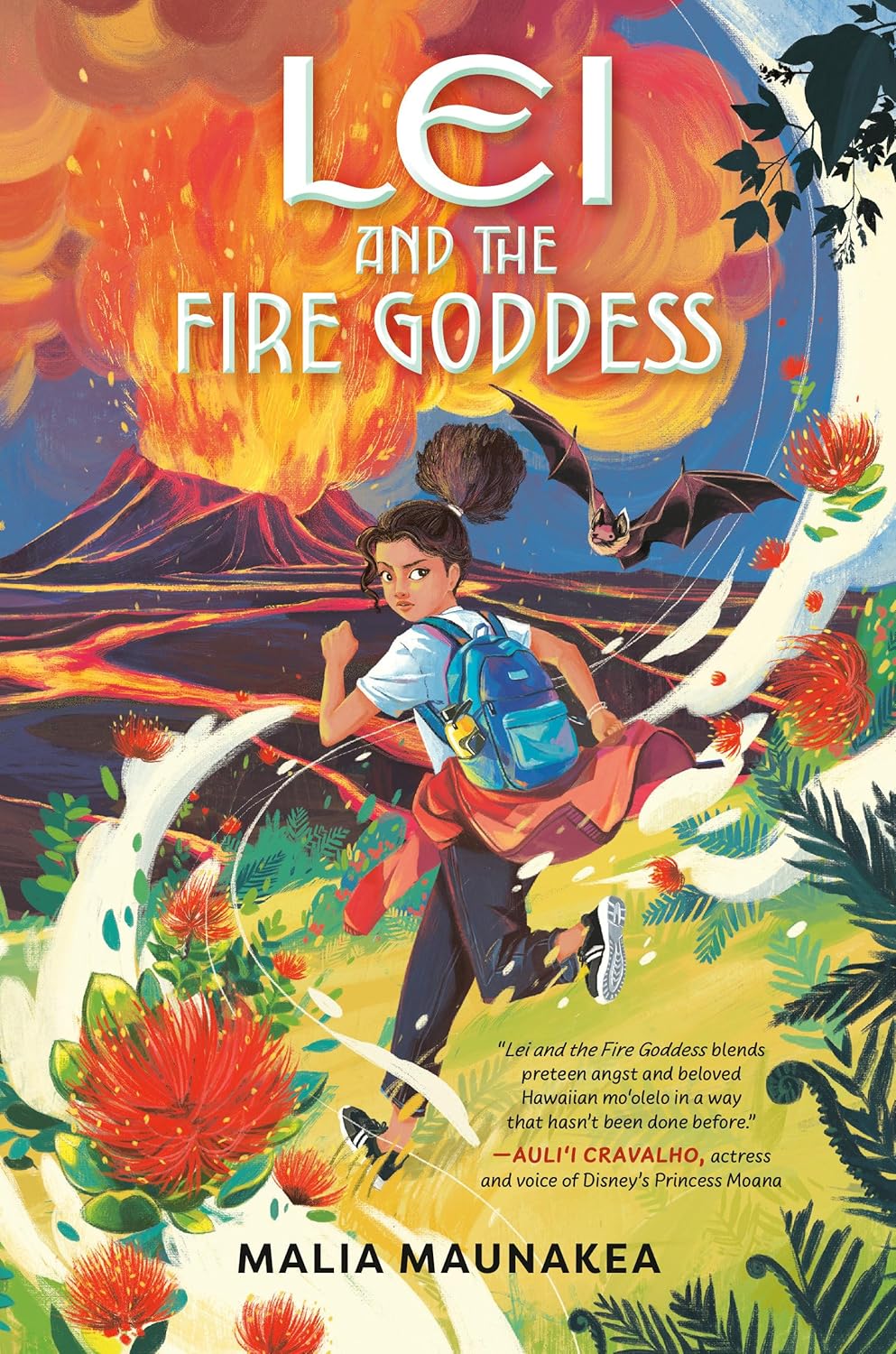
Lei And The Fire Goddess by Malia Maunakea
රු2,300.00
3 X Rs. 766.67 or 8% Cashback with


or 3 X රු766.67 with


or up to 4 X රු575.00 with


Lei and the Fire Goddess by Malia Maunakea is Book 1 in the Lei and the Legends series, following twelve-year-old Lei as she returns to Hawaiʻi, accidentally angers Pele the fire goddess and discovers that her grandmother’s traditional stories may be very real. When her best friend is taken and her family is placed in danger, Lei must face magical creatures, dangerous challenges and her own doubts about her Hawaiian heritage. Filled with mythology, friendship, humor, courage and cultural identity, this exciting middle-grade fantasy is ideal for readers ages 8–12.
6 in stock
Lei and the Fire Goddess by Malia Maunakea is a fast-paced middle-grade fantasy adventure filled with Hawaiian mythology, friendship, magical creatures, family, courage, identity and the powerful journey of learning to embrace where you come from.
At the centre of the story is Anna Leilani Kamaʻehu, usually called Lei.
Lei is twelve years old.
She is part-Hawaiian.
She lives in Colorado.
And she has begun feeling uncomfortable about the traditional Hawaiian stories her grandmother tells.
Back home, some of her friends are more interested in things they consider practical and real.
Science.
Sports.
Things they can see and prove.
Stories about:
Gods.
Guardians.
Sacred flowers.
Ancient legends.
can feel embarrassing to Lei.
So when she returns to Hawaiʻi to spend time with her grandmother, her Tūtū, Lei does not want another lesson about family traditions.
She wants a normal vacation.
Fun.
Tourist activities.
Relaxation.
But Hawaiʻi has something very different waiting for her.
Lei makes a mistake.
She disrespects something sacred.
And she discovers that the stories she dismissed may be much more real than she ever imagined.
Soon, Pele the fire goddess is angry.
A curse is unleashed.
Lei’s best friend is taken.
Her family is in danger.
And the only person who may be able to repair what happened is Lei herself.
That is where Lei and the Fire Goddess by Malia Maunakea becomes an exciting journey about adventure, bravery and cultural identity.
Lei and the Fire Goddess by Malia Maunakea – Book Overview
Lei and the Fire Goddess by Malia Maunakea begins with a young girl who feels caught between two worlds.
Lei has Hawaiian heritage.
Her grandmother lives in Hawaiʻi.
Her family has stories and traditions connected to the islands.
But Lei has grown up somewhere else.
At school, she is surrounded by people who do not always understand or respect those traditions.
That makes Lei begin questioning her own connection to them.
She does not want to seem strange.
She does not want to be embarrassed.
And she does not fully believe the stories anyway.
Then she returns to Hawaiʻi.
What begins as a family visit quickly turns into a magical adventure.
Anna Leilani “Lei” Kamaʻehu
Lei is a relatable middle-grade heroine because she is not presented as someone who already understands everything.
She makes mistakes.
She doubts.
She gets embarrassed.
She wants to fit in.
She sometimes rejects parts of herself because she worries about how other people will react.
That makes her journey meaningful.
She does not begin the story as the perfect cultural hero.
She grows into someone who starts understanding the value of her heritage.
Feeling Between Two Worlds
One of the strongest themes in Lei and the Fire Goddess by Malia Maunakea is cultural identity.
Lei can sometimes feel:
Too Hawaiian for one environment.
Not Hawaiian enough for another.
This experience can be familiar to children growing up with more than one cultural background.
They may wonder:
Where do I belong?
Which part of me is “real”?
Do I need to choose one identity?
The book explores those questions through fantasy and adventure.
Hawaiʻi
Hawaiʻi is much more than a background setting.
The islands, landscape, stories, language and cultural traditions are central to the novel.
Readers encounter a world shaped by:
Volcanoes.
Rainforest.
Family history.
Sacred places.
Traditional stories.
Mythological beings.
The setting gives the adventure a strong sense of place.
Tūtū
Lei’s grandmother, or Tūtū, is an important connection between Lei and her family history.
Tūtū knows the stories.
She understands traditions.
She tries to teach Lei why these stories matter.
At first, Lei may see them as old-fashioned or embarrassing.
But as events unfold, she begins realizing that Tūtū’s knowledge carries meaning.
Grandparents and Cultural Memory
Grandparents often become important keepers of family memory.
They remember:
Stories.
Places.
People.
Traditions.
Language.
Customs.
When younger generations stop listening, part of that connection can disappear.
Lei and the Fire Goddess by Malia Maunakea celebrates the importance of listening to older family members and understanding what they carry.
Hawaiian Moʻolelo
The book introduces readers to moʻolelo, Hawaiian stories and traditions.
These are not treated merely as decorative fantasy elements.
They are connected with:
Identity.
Family.
Memory.
Place.
Respect.
Lei’s journey becomes partly about realizing that cultural stories are meaningful because they connect people with generations before them.
Pele the Fire Goddess
Pele is one of the most important mythological figures in the story.
She is associated with:
Fire.
Volcanoes.
Creation.
Destruction.
Power.
Lei’s mistake brings her directly into conflict with Pele.
This transforms something Lei thought belonged only to stories into something immediate and dangerous.
A Sacred Flower
A key turning point happens when Lei disrespects something sacred.
She damages or removes a lehua blossom connected with Pele.
Lei does not fully understand the importance of what she has done.
But ignorance does not remove the consequences.
That moment becomes the beginning of the larger adventure.
Respect
Respect is an important lesson in Lei and the Fire Goddess by Malia Maunakea.
The book suggests that before dismissing a tradition, place or belief, it is worth understanding why it matters to the people who carry it.
Respect does not require knowing everything.
It begins with willingness to listen.
Consequences
Lei’s mistake has consequences.
That is important.
She cannot simply say:
“I didn’t know.”
and immediately escape responsibility.
She has to act.
She has to learn.
She has to repair what she can.
That makes her growth more meaningful.
Kaipo
Lei’s best friend Kaipo becomes central to the adventure.
When magical forces take him away, Lei’s mission becomes personal.
She is no longer trying to prove whether old stories are true.
She has someone she cares about to save.
Friendship
Friendship is one of the strongest emotional themes in Lei and the Fire Goddess by Malia Maunakea.
Lei’s adventure requires her to think beyond herself.
What will she risk for someone she loves?
Can she admit when she has made a mistake?
Can she keep going when things become frightening?
The friendship gives emotional meaning to the magical quest.
A Giant Hawk
One of the dramatic events in the story involves a giant hawk taking Lei’s friend.
This is the moment when the supernatural becomes impossible for Lei to ignore.
The legends she dismissed now have real consequences.
Mythical Creatures
Lei encounters different mythological and magical beings during her adventure.
This gives the story the excitement of a classic fantasy quest.
Readers can expect:
Dangerous creatures.
Magical helpers.
Unusual challenges.
Surprising allies.
The fantasy elements keep the story energetic.
Talking Animals
The story also includes talking or magical animal companions.
These characters add:
Humour.
Personality.
Adventure.
They help balance the more serious themes involving identity and belonging.
Ilikea
A talking bat becomes one of Lei’s memorable companions.
This kind of character adds a playful element to the adventure.
Middle-grade fantasy often works especially well when serious themes are balanced with humor, unusual creatures and fast-moving action.
Demigods and Legends
Lei’s journey brings her into contact with beings connected to Hawaiian mythology.
This expands the story beyond a simple rescue mission.
She begins encountering a world that has always existed inside her family’s stories.
Fantasy and Culture
One of the strengths of Lei and the Fire Goddess by Malia Maunakea is the way fantasy adventure is connected directly to Hawaiian cultural traditions.
The story is not simply:
A generic fantasy placed in Hawaiʻi.
The mythology matters.
The language matters.
The family history matters.
The cultural setting shapes the plot.
Adventure
The book moves quickly.
Lei must:
Travel.
Escape danger.
Solve problems.
Face magical challenges.
Protect people she loves.
This makes it especially suitable for younger readers who enjoy adventure-driven stories.
Courage
Lei needs courage.
But courage does not mean never being afraid.
Courage means continuing even when fear is present.
Lei begins the story uncertain about her connection to her heritage.
By the time she faces greater dangers, she must trust herself much more.
Bravery Through Action
Bravery often appears through action.
You may still feel afraid.
But you choose to:
Help.
Continue.
Speak.
Protect someone.
Take responsibility.
That is the kind of courage Lei develops.
Identity
Identity is perhaps the deepest theme in Lei and the Fire Goddess by Malia Maunakea.
Lei’s challenge is not only defeating magical danger.
She also needs to answer:
Who am I?
What does my heritage mean to me?
Can I belong to more than one place?
Do I need other people to approve of my culture before I value it?
These questions give the book emotional depth.
Cultural Pride
At the beginning, Lei feels embarrassed by some of the stories connected to her Hawaiian family.
Over time, that embarrassment begins to change.
She learns that understanding your heritage can create:
Confidence.
Connection.
Belonging.
Pride.
Fitting In
Children often feel pressure to fit in.
They may change:
How they speak.
What they wear.
What traditions they talk about.
What food they bring.
What parts of their family they discuss.
because they fear being judged.
Lei’s experience reflects this pressure.
Being Yourself
The novel encourages readers to embrace the different parts of themselves rather than shrinking them for other people’s comfort.
Lei does not need to become less Hawaiian to fit in elsewhere.
She can carry multiple parts of her identity together.
Family
Family plays an important role throughout the book.
Lei’s connection to:
Her grandmother.
Her ancestors.
Family guardians.
Cultural history.
helps her understand herself.
The adventure becomes partly a family journey.
Family Stories
Stories passed down through families can contain:
History.
Lessons.
Warnings.
Values.
Memories.
They help younger generations understand how they are connected to people who came before them.
Heritage
Heritage is more than knowing where your ancestors lived.
It can include:
Language.
Stories.
Beliefs.
Food.
Customs.
Places.
Family relationships.
Lei and the Fire Goddess by Malia Maunakea presents heritage as something living rather than something trapped in the past.
Learning From Mistakes
Lei makes an important mistake.
But the story does not end there.
That is meaningful for young readers.
A mistake can become:
A lesson.
A turning point.
An opportunity to grow.
The important question is what someone does afterward.
Responsibility
Lei has to take responsibility.
She cannot simply expect Tūtū or another adult to solve everything for her.
That gives her adventure real stakes.
Problem-Solving
Fantasy adventures often require heroes to think as well as fight.
Lei has to understand:
The mythology.
The people around her.
The consequences of her choices.
She grows by learning to use both courage and knowledge.
Knowledge as Power
At first, Lei dismisses family stories.
Later, those same stories become useful.
This demonstrates an important idea:
Knowledge that seems irrelevant today may become valuable tomorrow.
Listen Before You Dismiss
One of the strongest lessons in the book is:
Listen first.
A tradition may sound strange because you do not understand its context.
A story may appear impossible.
But dismissing something immediately can close the door to learning.
Nature
Hawaiian landscapes play an important role.
Volcanoes.
Plants.
Animals.
Rainforest.
The natural world is not separate from the mythology.
Stories and landscape are deeply connected.
Volcanoes
Because Pele is associated with volcanic power, volcanoes become an especially important part of the story’s atmosphere.
Fire can represent:
Danger.
Destruction.
Power.
Creation.
This makes Pele a fascinating figure within the adventure.
Humor
Although the book contains danger, it also has humor.
This balance makes it suitable for middle-grade readers.
The story can be:
Exciting.
Funny.
Emotional.
Magical.
without becoming overwhelmingly dark.
Fast-Paced Storytelling
Lei and the Fire Goddess by Malia Maunakea is designed as an accessible adventure.
Readers who prefer stories with:
Quick action.
Clear goals.
Magical creatures.
Strong friendships.
may find it especially enjoyable.
Middle-Grade Fantasy
The book is categorized as middle-grade fiction.
That makes it especially suitable for readers roughly in the 8–12 age range.
It can work well for:
Independent reading.
School libraries.
Family reading.
Young fantasy readers.
Great for Percy Jackson Fans
Readers who enjoy fantasy adventures based on mythology may find some familiar appeal here.
Like many mythology-based adventures, the story combines:
A modern child.
Ancient legends.
Magical creatures.
A dangerous quest.
Personal growth.
However, Lei and the Fire Goddess by Malia Maunakea has its own identity because it is specifically rooted in Hawaiian stories and culture.
Representation
Representation matters in children’s literature.
Young readers benefit from encountering stories centred on cultures and experiences different from their own.
Children who share Lei’s background may also find something valuable in seeing Hawaiian heritage placed at the centre of a fantasy adventure.
Language
The story incorporates Hawaiian words and cultural references.
This gives the world greater authenticity and also introduces readers to language within context.
The purpose is not simply decoration.
Language becomes part of identity.
Belonging
Lei’s journey gradually becomes a journey toward belonging.
Belonging is not always about one location.
Sometimes it means accepting that multiple places and cultures can be part of who you are.
Self-Acceptance
Lei learns that rejecting part of herself does not make life easier.
Real confidence comes from accepting herself more fully.
That gives the fantasy adventure a strong personal-growth message.
Respecting Cultural Stories
The book also reminds readers that myths and traditional stories should be approached respectfully.
They may carry meaning that goes beyond entertainment.
They can connect communities to:
History.
Land.
Ancestors.
Values.
Is Lei and the Fire Goddess Part of a Series?
Yes.
Lei and the Fire Goddess by Malia Maunakea is Book 1 in the Lei and the Legends series.
The current reading order is:
1. Lei and the Fire Goddess
2. Lei and the Invisible Island
The second book continues Lei’s adventures after the events of the first story.
Lei and the Invisible Island
The sequel, Lei and the Invisible Island, continues the world introduced in the first book.
It follows Lei and returning characters into another mythological adventure involving an invisible island, dangerous spirits, friendship, family and Hawaiian cultural traditions.
Readers who enjoy Lei and the Fire Goddess by Malia Maunakea can continue directly into the second book.
Do You Need to Read Anything First?
No.
This is the beginning of the series.
Readers can start directly with Lei and the Fire Goddess by Malia Maunakea.
No previous book is required.
Malia Maunakea
Malia Maunakea is a part-Hawaiian author who grew up in Hawaiʻi.
Her background helps give the story a strong connection to Hawaiian culture, landscapes, stories and identity.
Lei and the Fire Goddess is her debut middle-grade novel.
Award Recognition
The book has received notable recognition in children’s literature.
It has been selected and honored by organizations and reviewers for its:
Adventure.
Cultural representation.
Hawaiian mythology.
Themes of identity and belonging.
This recognition has helped introduce the book to more young readers.
Themes in Lei and the Fire Goddess
Major themes include:
- Hawaiian mythology
- Cultural identity
- Family
- Friendship
- Courage
- Respect
- Belonging
- Heritage
- Self-acceptance
- Responsibility
- Adventure
- Grandparents
- Traditional stories
- Learning from mistakes
Content Considerations
Lei and the Fire Goddess by Malia Maunakea is written for middle-grade readers.
It includes fantasy peril and adventurous situations involving:
- Magical threats
- A kidnapped friend
- Dangerous creatures
- Volcanic danger
- Family in danger
- Curses
- Scary mythological moments
However, the overall tone remains suitable for its intended middle-grade audience, with a strong focus on adventure, humor, friendship and growth.
7 Magical Reasons to Read Lei and the Fire Goddess
There are many reasons young readers may enjoy Lei and the Fire Goddess by Malia Maunakea, but seven stand out:
- It introduces readers to Hawaiian mythology – Pele, magical beings and traditional Hawaiian stories form an essential part of the adventure.
- Lei is a relatable young heroine – She struggles with fitting in, embarrassment, mistakes and questions about identity before gradually becoming more confident.
- The story is full of adventure – Curses, magical creatures, dangerous challenges and a rescue mission keep the story moving quickly.
- Friendship gives the quest emotional meaning – Lei is not simply trying to win a magical game; she is trying to save someone she deeply cares about.
- Family and heritage are central – Tūtū and Lei’s connection to Hawaiian culture give the fantasy story deeper emotional meaning.
- The book celebrates self-acceptance – Lei learns that she does not need to reject part of her identity simply because other people do not understand it.
- It begins an exciting series – Readers can continue with Lei and the Invisible Island after finishing the first adventure.
Why Read Lei and the Fire Goddess by Malia Maunakea?
Lei and the Fire Goddess by Malia Maunakea is an excellent choice for readers interested in:
- Middle-grade fantasy
- Hawaiian mythology
- Children’s adventure books
- Mythology-based fiction
- Strong young heroines
- Friendship stories
- Cultural identity
- Family stories
- Magical creatures
- Volcano adventures
- Hawaiian culture
- Fantasy quests
- Diverse children’s fiction
- Books about belonging
- Books about heritage
- Percy Jackson-style mythology adventures
- Ages 8–12 fiction
It is especially suitable for children who enjoy fantasy stories where mythology becomes part of the modern world.
Who Should Read This Book?
Lei and the Fire Goddess by Malia Maunakea may especially appeal to:
- Readers ages 8–12
- Middle-grade fantasy fans
- Young readers interested in mythology
- Children who enjoy magical adventures
- Readers interested in Hawaiian culture
- Fans of strong female protagonists
- Readers who enjoy friendship stories
- Children exploring questions of identity and belonging
- School-library readers
- Family-reading groups
- Young readers who enjoy humorous fantasy
- Fans of adventure series
A Magical Adventure About Learning Where You Belong
Lei and the Fire Goddess by Malia Maunakea begins with a girl who feels uncertain about part of herself.
Lei knows her family has Hawaiian traditions.
She knows Tūtū believes in the old stories.
But Lei worries about being judged.
So she pushes those stories away.
Then one mistake changes everything.
Pele becomes angry.
A curse begins.
Lei’s friend is taken.
Suddenly the stories are no longer something she can dismiss.
She has to listen.
Learn.
Act.
And understand the culture she once tried to distance herself from.
Her adventure becomes more than a magical rescue mission.
It becomes a journey toward accepting herself.
That is what gives the story its heart.
For young readers who enjoy mythology, fantasy adventure, magical creatures, family stories, friendship, humor and strong messages about identity and belonging, Lei and the Fire Goddess by Malia Maunakea is an exciting and meaningful beginning to the Lei and the Legends series.
Learn more about Lei and the Fire Goddess by Malia Maunakea on the official Penguin Random House website.
Explore more children’s fantasy books at Bargain Books.
Be the first to review “Lei And The Fire Goddess by Malia Maunakea”
Related products

Out of stock
Children & Young Adult
රු1,750.00
3 X Rs. 583.33 or 8% Cashback with
or 3 X රු583.33 with
or up to 4 X රු437.50 with

Out of stock
රු1,450.00
3 X Rs. 483.33 or 8% Cashback with
or 3 X රු483.33 with
or up to 4 X රු362.50 with

Out of stock
රු3,000.00
3 X Rs. 1,000.00 or 8% Cashback with
or 3 X රු1,000.00 with
or up to 4 X රු750.00 with

Out of stock
රු2,000.00
3 X Rs. 666.67 or 8% Cashback with
or 3 X රු666.67 with
or up to 4 X රු500.00 with
-6%

Original price was: රු8,700.00.රු8,200.00Current price is: රු8,200.00.
3 X Rs. 2,733.33 or 8% Cashback with
or 3 X රු2,733.33 with
or up to 4 X රු2,050.00 with
-12%
Original price was: රු1,700.00.රු1,490.00Current price is: රු1,490.00.
3 X Rs. 496.67 or 8% Cashback with
or 3 X රු496.67 with
or up to 4 X රු372.50 with
-50%

Out of stock
Children & Young Adult
Original price was: රු3,400.00.රු1,700.00Current price is: රු1,700.00.
3 X Rs. 566.67 or 8% Cashback with
or 3 X රු566.67 with
or up to 4 X රු425.00 with
Out of stock
Adventure Fiction
රු1,700.00
3 X Rs. 566.67 or 8% Cashback with
or 3 X රු566.67 with
or up to 4 X රු425.00 with
Reviews
There are no reviews yet.