
No products in the cart.



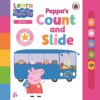
Learn with Peppa: Peppa’s Patterns and Shapes
රු2,700.00
3 X Rs. 900.00 or 8% Cashback with


or 3 X රු900.00 with


or up to 4 X රු675.00 with


Buy Learn with Peppa: Peppa’s Patterns and Shapes online in Sri Lanka and embark on a delightful journey with Peppa and her friends as they explore the exciting world of patterns and shapes! This enchanting children’s book captivates young readers with vibrant illustrations and engaging stories, fostering creativity and learning. In today’s world, where educational resources are in high demand, this book aligns perfectly with the rising trend of interactive learning. It’s an essential addition to your child’s library!
Book Details
- Title: Learn with Peppa: Peppa’s Patterns and Shapes
- Author/Character: Peppa Pig
- Mathematics consultant: Dr Alison Borthwick
- Series consultant: Jan Dubiel
- Series: Learn with Peppa
- Publisher: Ladybird
- Imprint: Ladybird
- Format: Interactive shape-matching board book
- Publication date: 6 July 2023
- Pages: 12
- Language: English
- Recommended age: 3 years and above
- ISBN-10: 0241601835
- ISBN-13: 9780241601839
- Dimensions: Approximately 23 × 23 × 1.6 cm
- Weight: Approximately 577 g
- Key features: Six chunky shape pieces, matching spaces, repeating patterns, colourful illustrations, and early-learning questions
- Main themes: Shapes, colours, patterns, sequencing, problem-solving, fine motor skills, and early mathematics
5 in stock
Learn with Peppa: Peppa’s Patterns and Shapes
Learn with Peppa: Peppa’s Patterns and Shapes is an interactive early-learning board book that helps preschool children recognise shapes, identify colours, and complete simple repeating patterns. Featuring Peppa Pig and her friends, this playful educational book invites children to use six chunky shape pieces to solve the patterns appearing throughout the pages.
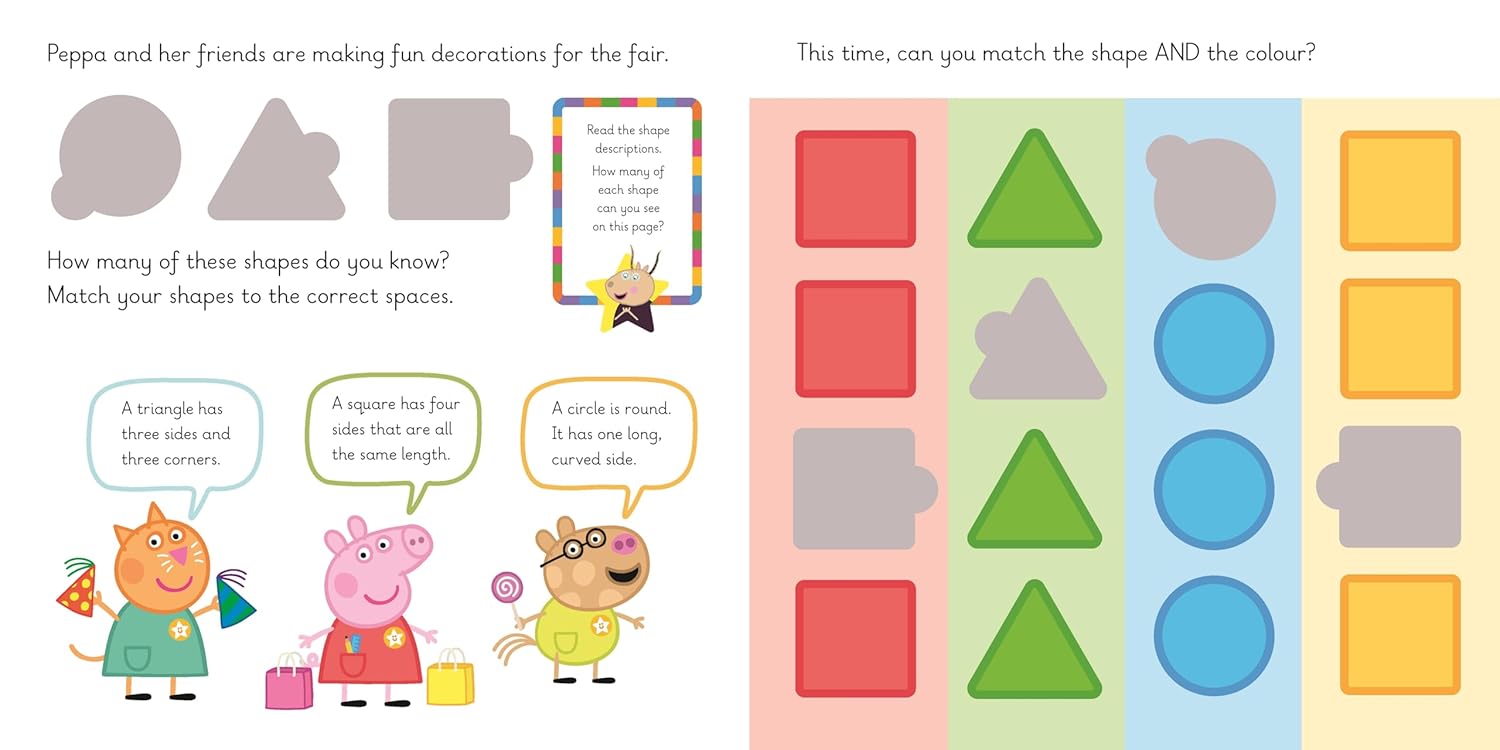
Peppa and her classmates are making colourful decorations for their school fair, but they need help choosing the correct shapes and colours. Children can examine each sequence, work out what should come next, and place the appropriate piece into the matching space.
Published by Ladybird as part of the Learn with Peppa series, this sturdy board book combines early mathematics with hands-on play. It is particularly suitable for children aged three years and above who are beginning to explore shapes, patterns, colours, sequencing, and problem-solving.
Help Peppa Finish the Patterns
Peppa and her friends are preparing decorations for their school fair. The designs contain repeating sequences, but some important pieces are missing.
Young readers must carefully observe the shapes and colours already shown before choosing the correct piece to complete each pattern. The answer is not always based only on shape—children may also need to consider which colour should appear next.
Parents can encourage children by asking:
- “Which shape is missing?”
- “What colour should come next?”
- “Can you see the repeating pattern?”
- “Which piece fits inside this space?”
- “What comes after the circle?”
- “Are these two shapes the same or different?”
These simple questions encourage children to observe, compare, predict, and explain their choices.
Six Chunky Shape Pieces
Peppa’s Patterns and Shapes includes six chunky pieces that children can lift, hold, examine, and place into the appropriate gaps. These tactile elements transform the book into a hands-on matching activity.
Children must select a piece, rotate it if necessary, and fit it into the correct space. This physical interaction may help develop:
- Fine motor control
- Finger and hand strength
- Hand-eye coordination
- Spatial awareness
- Shape matching
- Controlled movements
- Concentration and patience
- Independent problem-solving
The pieces can be used repeatedly, allowing children to practise the activities and become more confident with each reading.
Recognising Common Shapes
Shape recognition is an important part of early mathematics. Before children begin working with more complex geometry, they learn to notice and name shapes in books, toys, buildings, signs, and everyday objects.
This book encourages children to compare shapes according to their visible features. Parents can discuss whether a shape has straight or curved sides and whether it has corners.
Useful shape words may include:
- Circle
- Square
- Triangle
- Rectangle
- Star
- Heart
Adults can extend the activity by asking children to find similar shapes around the home. A plate may resemble a circle, a window may look like a rectangle, and a building block may have a square face.
Connecting the book’s shapes with real objects helps children understand that mathematical ideas are present in everyday life.
Learning About Repeating Patterns
A repeating pattern follows a predictable arrangement. For example, a simple sequence might alternate between a red circle and a blue square.
Learn with Peppa: Peppa’s Patterns and Shapes introduces this idea in a visually appealing and age-appropriate way. Children examine the existing sequence and determine which item should appear next.
Recognising and completing patterns may support:
- Logical thinking
- Prediction
- Sequencing
- Visual discrimination
- Memory
- Attention to detail
- Early mathematical reasoning
- Understanding of order
Pattern recognition also provides a useful foundation for later learning in mathematics, reading, music, and problem-solving.
Exploring Colours and Shapes Together
Some activities require children to think about both shape and colour. A child might correctly identify that a triangle comes next but still need to select the triangle in the appropriate colour.
This additional challenge encourages children to consider more than one visual feature at a time. They learn that two pieces may share the same shape but have different colours, or share the same colour while having different shapes.
Parents can introduce comparison words such as:
- Same
- Different
- Matching
- Next
- Before
- After
- First
- Last
- Between
- Repeat
Hearing this vocabulary during play helps children become familiar with language commonly used in preschool mathematics.
Encouraging Problem-Solving Skills
Every incomplete pattern presents a small puzzle. Children must look at the available information, compare the possible pieces, and choose the one that completes the sequence.
If the first piece does not fit or does not continue the pattern, the child can try another. This process helps communicate that mistakes are a normal part of learning.
Adults can offer gentle support without immediately providing the answer. Helpful prompts include:
- “Let’s look at the pattern again.”
- “Which shapes are repeating?”
- “What happened earlier in the row?”
- “Do we need the same shape in another colour?”
- “Would you like to try a different piece?”
Allowing children enough time to think can build independence and confidence.
Supporting Preschool Development
The combination of visual observation, verbal discussion, physical matching, and logical thinking engages several developing abilities at once.
Exploring Peppa’s Patterns and Shapes may encourage:
- Shape and colour recognition
- Early maths vocabulary
- Pattern awareness
- Fine motor development
- Hand-eye coordination
- Spatial reasoning
- Visual concentration
- Problem-solving
- Memory and sequencing
- Communication skills
- School-readiness confidence
The activity can be adapted to the child’s ability. A beginner might simply match each piece with the corresponding space, while a more confident learner can explain the complete repeating pattern.
Ideas for Extending the Learning
Parents and teachers can continue the book’s lessons using familiar household or classroom objects.
Try creating patterns with:
- Coloured building blocks
- Toy animals
- Buttons
- Crayons
- Fruit pieces
- Paper shapes
- Beads
- Hand movements
- Claps and taps
- Everyday sounds
For example, arrange a red block, a blue block, a red block, and then ask which colour should appear next. Children can also make movement patterns such as clap, tap, clap, tap.
These activities show that patterns can be made using colours, shapes, objects, sounds, and movements.
Learning Through Familiar Characters
Young Peppa Pig fans may feel more enthusiastic about practising early maths when the activity includes characters they already recognise. Peppa and her friends create a cheerful setting that makes the exercises feel like part of an adventure rather than a formal lesson.
Parents can use the illustrations to begin conversations about school, working together, decorations, and helping friends. Children may also enjoy creating their own imaginary decorations for Peppa’s school fair after completing the book.
A Sturdy Board Book for Repeated Play
The strong board-book construction is designed for regular handling by preschool children. Its large square pages provide ample room for colourful illustrations, patterns, and matching spaces.
The six chunky pieces are stored within the book, helping keep the interactive activity organised. Since the exercises can be repeated, children can return to the title as their shape recognition and pattern skills become stronger.
Because the book contains removable play pieces, it is best suited to children aged three years and above and should be used with appropriate adult supervision.
Created with Educational Expertise
The Learn with Peppa interactive board books have been developed with input from educational specialists. Peppa’s Patterns and Shapes includes expertise from mathematics consultant Dr Alison Borthwick and early-childhood education specialist Jan Dubiel.
Dr Alison Borthwick is a mathematics educator, author, adviser, and qualified teacher. Her contribution helps ensure that the book’s shape and pattern activities reflect meaningful early mathematical learning.
The activities introduce important concepts through observation, conversation, and physical play, making them appropriate for preschool learning at home or in the classroom.
Part of the Learn with Peppa Series
The Learn with Peppa series uses Peppa Pig and her friends to support children during their early-learning journey. Titles in the collection cover subjects such as counting, writing, phonics, colours, shapes, patterns, and emotional development.
The books combine familiar characters with carefully structured activities, allowing children to learn through stories, questions, games, and interactive features.
About Peppa Pig
Peppa Pig is the main character in the popular preschool animated television series. She lives with Mummy Pig, Daddy Pig, and her younger brother George. Peppa’s adventures explore family life, friendships, play, school, and everyday discoveries.
Ladybird publishes a wide variety of Peppa Pig titles, including storybooks, novelty books, phonics readers, sticker activities, colouring books, and preschool educational resources.
Who Should Read Peppa’s Patterns and Shapes?
This book is suitable for:
- Children aged three years and above
- Preschoolers learning common shapes
- Children developing colour-recognition skills
- Young learners exploring repeating patterns
- Peppa Pig fans
- Children who enjoy matching and puzzle activities
- Parents preparing children for nursery or school
- Preschool teachers and early-years practitioners
- Anyone searching for an interactive educational gift
The official publisher confirms the book’s format, publication date, ISBN, page count, dimensions, and interactive features. Penguin UK
About Bargain books Sri Lanka
Bargain books is an online bookstore serving readers throughout Sri Lanka. Its collection includes children’s stories, educational resources, board books, activity titles, popular character collections, fiction, and books for adult readers.
Parents can browse Bargain books for more Peppa Pig titles and early-learning resources covering numbers, letters, colours, emotions, phonics, and school-readiness skills.
Book Links
Buy or view the book at Bargain Books:
View the official publication information:
Peppa’s Patterns and Shapes – Penguin UK
Explore more official Peppa Pig books:
Peppa Pig Books – Penguin UK
A Hands-On Introduction to Shapes and Patterns
Learn with Peppa: Peppa’s Patterns and Shapes offers preschool children an entertaining way to explore early mathematics. Its six chunky pieces, colourful sequences, familiar characters, and matching activities encourage children to recognise shapes, distinguish colours, complete patterns, and solve simple visual problems.
The sturdy interactive design makes learning active and repeatable, while Peppa’s school-fair adventure keeps the activity friendly and engaging. It is an excellent addition to a preschool learning collection and a thoughtful educational gift for young Peppa Pig fans.
Be the first to review “Learn with Peppa: Peppa’s Patterns and Shapes”
Related products
Out of stock
Children & Young Adult
රු12,000.00
3 X Rs. 4,000.00 or 8% Cashback with
or 3 X රු4,000.00 with
or up to 4 X රු3,000.00 with
Out of stock
Children & Young Adult
රු2,500.00
3 X Rs. 833.33 or 8% Cashback with
or 3 X රු833.33 with
or up to 4 X රු625.00 with
Out of stock
Children & Young Adult
Famous Five Vol 9: Five Fall into Adventure by Enid Blyton | Classic Children’s Adventure Book
රු800.00
3 X Rs. 266.67 or 8% Cashback with
or 3 X රු266.67 with
or up to 4 X රු200.00 with
-16%
Out of stock
Children & Young Adult
Original price was: රු32,000.00.රු27,000.00Current price is: රු27,000.00.
3 X Rs. 9,000.00 or 8% Cashback with
or 3 X රු9,000.00 with
or up to 4 X රු6,750.00 with
Out of stock
Children & Young Adult
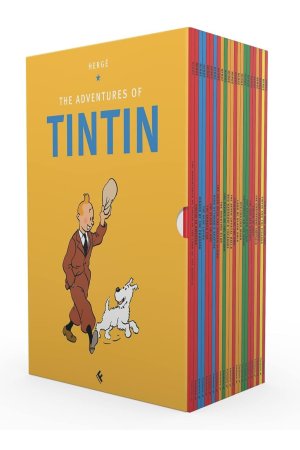
The Famous Five Complete Box Set of 21 by Enid Blyton & Eileen Soper
රු9,900.00
3 X Rs. 3,300.00 or 8% Cashback with
or 3 X රු3,300.00 with
or up to 4 X රු2,475.00 with
Out of stock
Children & Young Adult
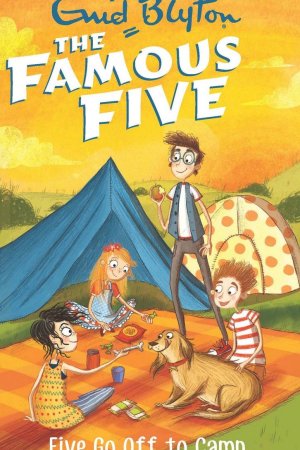
Famous Five Vol 7: Five Go Off to Camp by Enid Blyton | Classic Adventure Book
රු800.00
3 X Rs. 266.67 or 8% Cashback with
or 3 X රු266.67 with
or up to 4 X රු200.00 with
Out of stock
Adventure Fiction
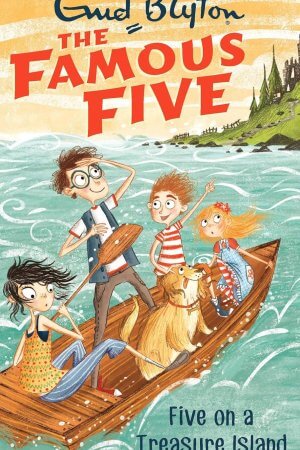
Famous Five: Five on a Treasure Island by Enid Blyton | Book 1 of the Classic Adventure Series
රු800.00
3 X Rs. 266.67 or 8% Cashback with
or 3 X රු266.67 with
or up to 4 X රු200.00 with
Out of stock
Children & Young Adult
රු1,750.00
3 X Rs. 583.33 or 8% Cashback with
or 3 X රු583.33 with
or up to 4 X රු437.50 with
Reviews
There are no reviews yet.