
No products in the cart.
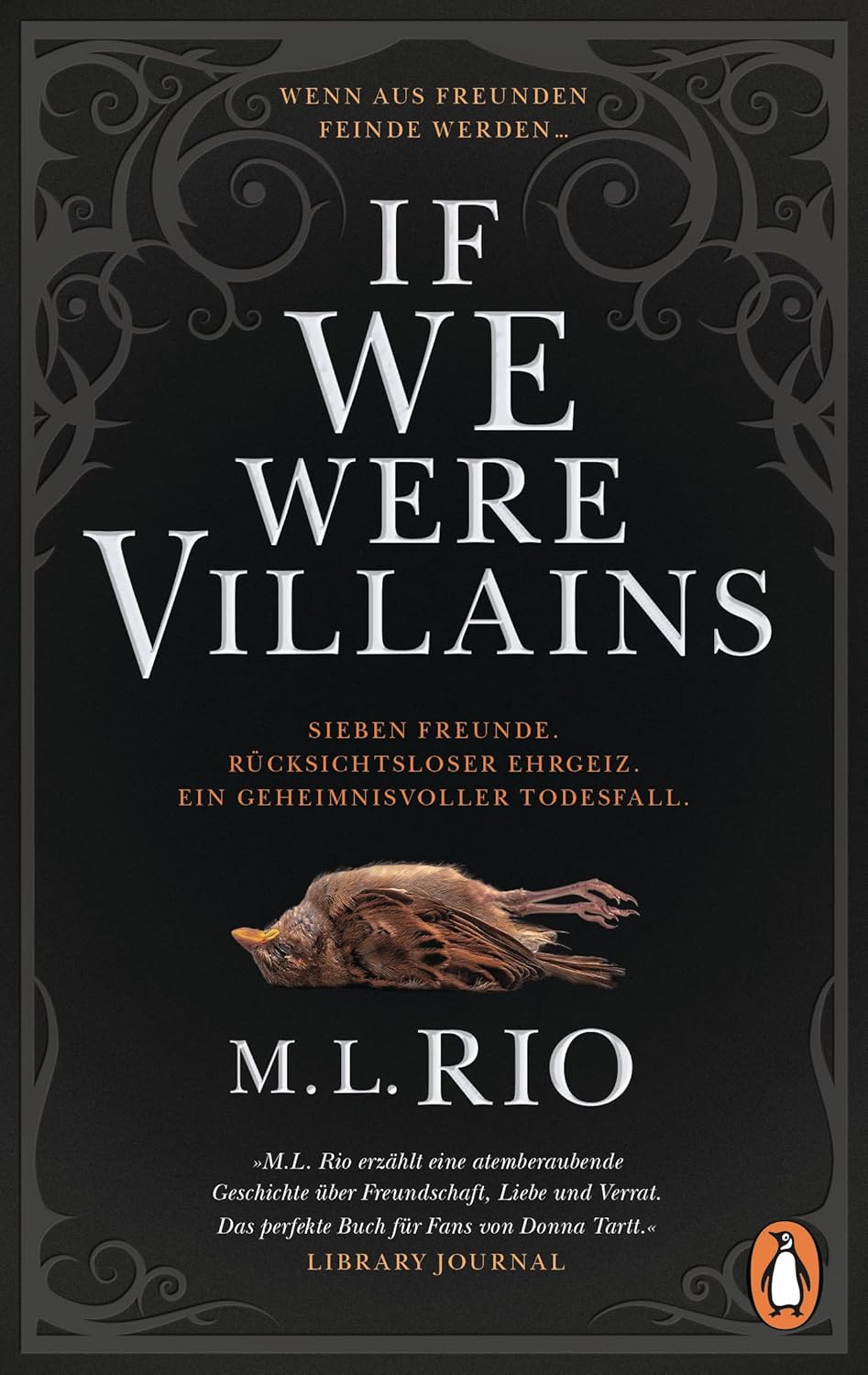
If We Were Villains by M. L. Rio
රු2,100.00
3 X Rs. 700.00 or 8% Cashback with


or 3 X රු700.00 with


or up to 4 X රු525.00 with


If We Were Villains by M. L. Rio is a gripping dark academia thriller about Oliver Marks and six fellow Shakespearean actors at an elite conservatory, where fierce ambition, friendship, obsession, rivalry, and betrayal lead to real violence—and a secret powerful enough to haunt them for years.
Out of stock
Email when stock available
If We Were Villains by M. L. Rio
If We Were Villains by M. L. Rio is a gripping dark academia literary thriller filled with Shakespeare, obsession, friendship, ambition, jealousy, betrayal, secrets, murder, and the dangerous possibility that people can become the roles they spend their lives performing.
The novel begins with Oliver Marks preparing to leave prison after serving ten years.
Waiting for him is Detective Joseph Colborne—the man who helped put him there.
Colborne has never been completely satisfied with what happened all those years ago.
Now that Oliver is finally being released, the detective wants the truth.
Oliver agrees to tell him.
But to understand what happened, he must return to his final year at Dellecher Classical Conservatory, an elite arts school where Oliver and six other students studied Shakespeare with extraordinary intensity.
They were actors.
Friends.
Competitors.
And, in many ways, a family.
They spent their days studying Shakespeare’s tragedies and their nights performing characters consumed by ambition, jealousy, revenge, madness, love, and violence.
Eventually, the boundary between performance and reality begins to disappear.
A rivalry becomes dangerous.
Relationships change.
Secrets develop.
And after a shocking act of violence, the students face the greatest performance of their lives:
Convincing everyone around them—and perhaps themselves—that they are innocent.
If We Were Villains by M. L. Rio is an atmospheric, intelligent, and emotionally intense novel for readers who enjoy dark academia, morally complicated characters, literary mysteries, Shakespeare, and stories where friendship gradually turns into something much more dangerous.
If We Were Villains by M. L. Rio – Book Overview
If We Were Villains by M. L. Rio is structured around two timelines.
In the present, Oliver is leaving prison after ten years.
Detective Colborne wants answers.
Oliver finally decides to explain what happened.
His confession takes readers back to Dellecher Classical Conservatory.
There, Oliver was one of seven advanced Shakespeare students.
The group had spent years together.
They studied together.
Performed together.
Lived together.
Competed together.
And knew each other’s strengths and weaknesses extremely well.
Each student seems to occupy a particular theatrical role both onstage and in everyday life.
There is the hero.
The villain.
The tyrant.
The temptress.
The ingénue.
And those forced into less glamorous positions.
At first, these roles appear to belong only to the stage.
But during their fourth and final year, relationships begin changing.
Competition becomes more aggressive.
Jealousy increases.
Personal frustrations become harder to hide.
Then something happens that transforms their private world forever.
The students are suddenly connected by a secret that could destroy all of them.
Meet Oliver Marks
Oliver is the narrator and emotional centre of If We Were Villains by M. L. Rio.
Within the group, Oliver is often accustomed to being less noticeable.
He is surrounded by larger personalities.
More commanding performers.
More obvious stars.
This gives him an interesting perspective.
Oliver watches.
He notices.
He understands the emotional dynamics within the group.
Yet being the observer does not mean he remains outside the conflict.
As relationships begin changing, Oliver finds himself pulled deeper into situations involving friendship, loyalty, jealousy, attraction, fear, and guilt.
By the time he tells his story ten years later, readers already know that something went terribly wrong.
The mystery is discovering exactly how.
Seven Shakespearean Actors
One of the strongest elements of If We Were Villains by M. L. Rio is the tightly connected group of seven students.
They are talented young actors who have dedicated years to Shakespeare.
Because they live and work so closely together, their friendships become unusually intense.
They understand each other’s performances.
They know personal weaknesses.
They know who wants which role.
They know who receives attention.
They know who is jealous.
They know who is hiding something.
That closeness creates intimacy.
But it also creates danger.
When people live within a small social world, minor conflicts can become enormous.
There is nowhere to escape.
The same people you compete against during rehearsal are the people you see afterward.
Professional rivalry becomes personal.
Personal frustration affects performance.
Eventually, the characters begin behaving like figures from the tragedies they perform.
Shakespeare at the Heart of the Novel
Shakespeare is not simply decoration in If We Were Villains by M. L. Rio.
His work is woven deeply into the story.
The characters study and perform plays filled with:
- Revenge
- Ambition
- Betrayal
- Jealousy
- Murder
- Madness
- Loyalty
- Love
- Power
- Tragedy
These same themes gradually appear in their own lives.
The students frequently communicate through Shakespearean language.
Lines from plays take on personal meanings.
Performances reveal emotions people are unable—or unwilling—to express directly.
As the story progresses, readers begin questioning where acting ends.
When someone performs rage repeatedly, does some of that rage become real?
When people constantly play heroes and villains, do those identities begin influencing how they see themselves?
That connection between theatre and reality gives the novel much of its distinctive atmosphere.
Dark Academia Setting
If We Were Villains by M. L. Rio is a perfect example of dark academia fiction.
Dellecher Classical Conservatory feels isolated from the ordinary world.
The students are surrounded by:
Old buildings.
Books.
Shakespeare.
Rehearsal rooms.
Costumes.
Stages.
Intellectual competition.
Artistic ambition.
Late-night conversations.
Secrets.
The atmosphere can feel beautiful and romantic.
But there is something dangerous beneath it.
Dark academia often explores the darker side of intellectual and artistic obsession.
Learning can inspire people.
But obsession with excellence can also become unhealthy.
Students may begin defining their entire worth through performance and recognition.
That pressure is central to the novel.
Friendship and Loyalty
Friendship is one of the most important themes in If We Were Villains by M. L. Rio.
The seven students are more than classmates.
After years together, they have become deeply connected.
Their friendship creates loyalty.
But loyalty becomes complicated when something terrible happens.
How far should you go to protect a friend?
Should loyalty continue when someone has done something wrong?
What happens when protecting one person puts everyone else at risk?
The novel forces its characters to confront these questions.
Friendship can be beautiful.
But unconditional loyalty can also become dangerous.
When people stop questioning each other’s actions, friendship can become complicity.
Ambition and Competition
Every student at Dellecher wants to succeed.
They are talented.
Serious.
Passionate about acting.
But there are only so many important roles.
If We Were Villains by M. L. Rio explores how artistic ambition can change relationships.
One person’s success may feel like another person’s failure.
Someone repeatedly receiving leading roles can create resentment.
Someone constantly being placed in the background may begin questioning their own value.
Healthy competition can encourage improvement.
But competition becomes dangerous when people connect their entire identity to winning.
The students are not simply competing for roles.
They are competing for recognition.
Importance.
Admiration.
And proof that their years of sacrifice were worthwhile.
The Roles We Play
One of the most fascinating themes in If We Were Villains by M. L. Rio is identity.
Actors constantly become other people.
For a performance, they adopt different voices.
Different movements.
Different emotions.
Different personalities.
But what happens when those roles begin influencing real life?
The students are repeatedly cast according to particular types.
The hero.
The villain.
The tyrant.
The innocent character.
The supporting player.
Over time, those theatrical identities begin shaping how everyone sees each other.
This creates a deeper question:
Are people who they truly are, or do they become what everyone expects them to be?
M. L. Rio uses theatre to explore how easily identity can become a performance.
Art and Reality
The boundary between art and reality is central to If We Were Villains by M. L. Rio.
At first, violence belongs to Shakespeare.
Murder happens in scripts.
Revenge exists inside plays.
Madness belongs to fictional characters.
Then real violence enters the students’ world.
Suddenly, the tragedies they have studied are no longer distant literature.
They begin recognizing uncomfortable similarities between the characters they perform and the choices they make.
That creates one of the novel’s strongest ideas.
Stories can influence how we understand our own lives.
Sometimes that influence is helpful.
Sometimes it becomes dangerous.
Obsession With Art
The students at Dellecher do not simply enjoy Shakespeare.
They live Shakespeare.
Their education dominates their lives.
They memorize enormous amounts of dialogue.
They analyse characters.
They rehearse constantly.
They discuss plays outside class.
If We Were Villains by M. L. Rio explores the beauty and danger of this level of artistic devotion.
Passion can create extraordinary work.
But when art becomes someone’s entire identity, criticism can feel personal.
Losing a role can feel like losing value.
Failure can become unbearable.
The novel asks whether there is a point where dedication becomes obsession.
Secrets and Guilt
From the beginning, readers know Oliver has spent ten years in prison.
This creates immediate tension.
What exactly happened?
Was Oliver guilty?
Was someone else involved?
Why does Detective Colborne still have questions?
If We Were Villains by M. L. Rio gradually reveals information rather than immediately explaining everything.
The characters carry secrets.
Some protect themselves.
Others protect friends.
Some may not completely understand their own motives.
Guilt becomes especially complicated because legal guilt and emotional guilt are not necessarily the same thing.
Someone may be innocent of one action but guilty of another.
Someone may tell the truth while hiding something important.
This moral uncertainty keeps the mystery compelling.
Love and Complicated Relationships
Romantic feelings also influence the group.
But romance in If We Were Villains by M. L. Rio is rarely simple.
Friendship, desire, jealousy, admiration, and artistic intimacy become tangled together.
Actors are required to perform love.
Hatred.
Passion.
Violence.
They may kiss someone onstage and then return to complicated relationships offstage.
This makes emotional boundaries difficult.
Are certain feelings part of the performance?
Or were they already there?
The novel explores relationships with subtlety rather than turning into a conventional romance.
Love becomes another source of loyalty, secrecy, vulnerability, and conflict.
Morally Gray Characters
One reason If We Were Villains by M. L. Rio is so compelling is that the characters are not divided neatly into heroes and villains.
People make selfish choices.
Protect friends.
Lie.
Love deeply.
Become jealous.
Act courageously.
Make terrible mistakes.
Sometimes the same character does all of these things.
This moral complexity reflects Shakespeare’s tragedies.
The most interesting characters are rarely completely innocent or completely evil.
Readers may sympathize with someone and still disagree with their decisions.
That makes the novel especially appealing to people who enjoy psychologically complex fiction.
Murder Mystery and Literary Thriller
Although If We Were Villains by M. L. Rio contains strong literary themes, it also functions as a compelling mystery.
Readers begin with important questions:
Why was Oliver imprisoned?
What happened among the seven students?
What truth does Detective Colborne suspect?
Why has Oliver waited ten years to explain?
As Oliver revisits the past, answers gradually appear.
But each answer creates new questions.
The result combines literary fiction with psychological suspense and crime.
Readers who enjoy mysteries but want deeper character development may particularly appreciate this balance.
Theatrical Atmosphere
The theatre setting creates some of the novel’s most memorable scenes.
Stage lighting.
Costumes.
Rehearsals.
Backstage conversations.
Opening nights.
Audience reactions.
Actors waiting behind curtains.
If We Were Villains by M. L. Rio captures the strange energy of performance.
Actors may spend weeks preparing for a scene that lasts only minutes.
Emotions are rehearsed until they appear spontaneous.
Theatre depends on illusion.
That makes it the perfect setting for a mystery about people hiding the truth.
Everyone knows how to act.
Everyone knows how to perform emotion.
So how can anyone know when another person is being genuine?
If You Loved The Secret History
If We Were Villains by M. L. Rio is frequently recommended to readers who enjoy dark academia and literary thrillers such as The Secret History by Donna Tartt.
Both novels explore:
- Elite academic environments
- Small intellectual groups
- Obsession
- Murder
- Secrecy
- Morally complicated friendships
- Art and literature
- Privilege
- Guilt
- Psychological tension
However, If We Were Villains has its own distinctive identity through Shakespeare and theatre.
Readers do not need extensive Shakespeare knowledge to enjoy the book, although familiarity with his tragedies can add another layer to the experience.
Consequences of Our Choices
One of the deeper ideas in If We Were Villains by M. L. Rio is that decisions made in moments of fear, loyalty, anger, or love can affect years of someone’s life.
The students are young.
They make choices under intense emotional pressure.
But being young does not protect them from consequences.
One decision leads to another.
A secret requires another secret.
A lie creates another problem.
Eventually, everyone becomes trapped inside a story they helped create.
The novel demonstrates how difficult it can be to reverse a choice once other people’s lives become connected to it.
7 Powerful Reasons to Read If We Were Villains
There are many reasons to read If We Were Villains by M. L. Rio:
- It has an unforgettable dark academia atmosphere – Dellecher Classical Conservatory is filled with theatre, literature, competition, and secrets.
- Shakespeare is brilliantly woven into the story – The plays reflect and influence the characters’ real lives.
- The mystery begins immediately – Oliver’s imprisonment creates questions from the opening pages.
- The characters are morally complicated – There are no simple heroes and villains.
- Friendship and loyalty are explored deeply – The story asks how far people should go to protect those they love.
- The line between acting and reality becomes dangerously blurred – Characters begin resembling the roles they perform.
- It combines literary fiction with psychological suspense – Readers receive both intellectual depth and a compelling mystery.
Why Read If We Were Villains by M. L. Rio?
If We Were Villains by M. L. Rio is an excellent choice for readers interested in:
- Dark academia
- Literary thrillers
- Murder mysteries
- Shakespeare
- Theatre
- Psychological fiction
- Campus novels
- Friendship
- Betrayal
- Obsession
- Morally gray characters
- Secret societies and closed groups
- Gothic atmosphere
- Coming-of-age fiction
- Crime and mystery
The novel is especially suited to readers who enjoy slow-building tension, complicated relationships, atmospheric settings, and stories where every character may be hiding something.
Who Should Read This Book?
If We Were Villains by M. L. Rio may especially appeal to:
- Dark academia readers
- Shakespeare fans
- Literature students
- Theatre lovers
- Mystery readers
- Thriller fans
- Readers who enjoyed The Secret History
- Fans of psychological suspense
- Readers who enjoy morally gray characters
- University and campus-fiction readers
- Readers interested in obsession and ambition
- Fans of character-driven mysteries
- Readers who enjoy literary fiction with crime elements
It is particularly memorable for readers who like novels that leave them questioning what really separates heroes from villains.
A Gripping Dark Academia Tragedy
If We Were Villains by M. L. Rio begins with a man leaving prison and a detective still searching for the truth.
To explain what happened, Oliver must return to a world that once seemed almost magical.
Seven young actors.
An elite conservatory.
Shakespeare.
Friendship.
Ambition.
Late-night rehearsals.
Competition.
Then violence.
Once tragedy enters their lives, Oliver and his friends must decide what they are willing to sacrifice to protect themselves and each other.
They are trained actors.
They know how to become different people.
They know how to deliver convincing emotions.
But when the police begin asking questions, acting is no longer art.
It becomes survival.
For readers who love dark academia, Shakespeare, literary mysteries, morally gray characters, friendship, betrayal, obsession, murder, and psychologically intense fiction, If We Were Villains by M. L. Rio is a beautifully atmospheric and unforgettable thriller about what happens when the roles people perform become impossible to separate from who they really are.
Learn more about If We Were Villains by M. L. Rio on the official Macmillan website.
Explore more mystery and literary fiction books at Bargain Books.
Be the first to review “If We Were Villains by M. L. Rio”
Related products
-17%
Classics & Literary Fiction
Original price was: රු2,400.00.රු1,990.00Current price is: රු1,990.00.
3 X Rs. 663.33 or 8% Cashback with
or 3 X රු663.33 with
or up to 4 X රු497.50 with
Out of stock
Contemporary romance
රු2,400.00
3 X Rs. 800.00 or 8% Cashback with
or 3 X රු800.00 with
or up to 4 X රු600.00 with
Contemporary romance
රු1,950.00
3 X Rs. 650.00 or 8% Cashback with
or 3 X රු650.00 with
or up to 4 X රු487.50 with
-20%
Contemporary romance
Original price was: රු2,200.00.රු1,750.00Current price is: රු1,750.00.
3 X Rs. 583.33 or 8% Cashback with
or 3 X රු583.33 with
or up to 4 X රු437.50 with
-20%

Contemporary romance
Original price was: රු2,050.00.රු1,650.00Current price is: රු1,650.00.
3 X Rs. 550.00 or 8% Cashback with
or 3 X රු550.00 with
or up to 4 X රු412.50 with
-17%
Contemporary romance
Original price was: රු2,950.00.රු2,450.00Current price is: රු2,450.00.
3 X Rs. 816.67 or 8% Cashback with
or 3 X රු816.67 with
or up to 4 X රු612.50 with
-22%
Out of stock
Contemporary romance
Original price was: රු2,300.00.රු1,800.00Current price is: රු1,800.00.
3 X Rs. 600.00 or 8% Cashback with
or 3 X රු600.00 with
or up to 4 X රු450.00 with
-22%
Out of stock
Contemporary romance
Original price was: රු2,250.00.රු1,750.00Current price is: රු1,750.00.
3 X Rs. 583.33 or 8% Cashback with
or 3 X රු583.33 with
or up to 4 X රු437.50 with
Reviews
There are no reviews yet.