
No products in the cart.
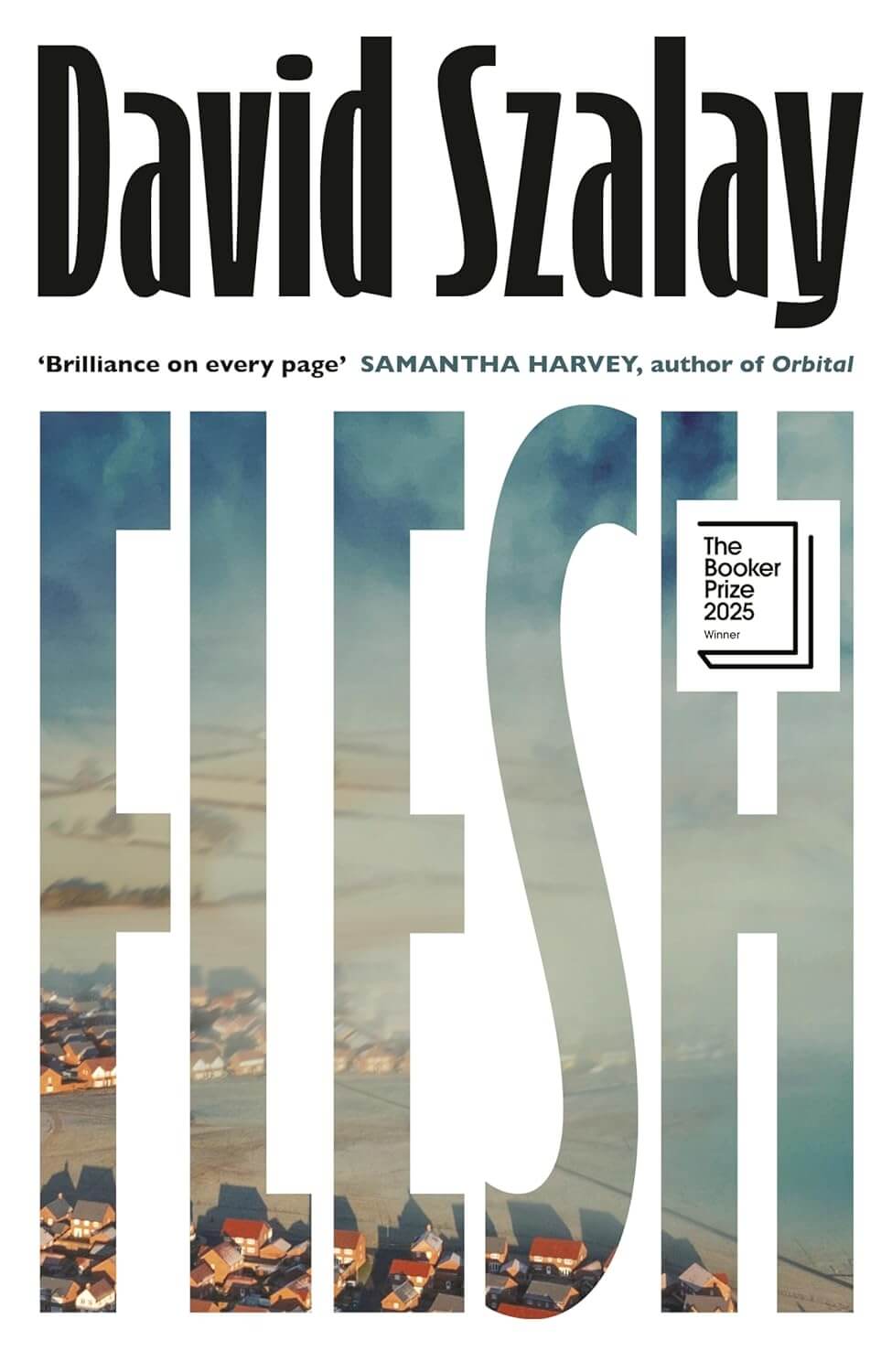


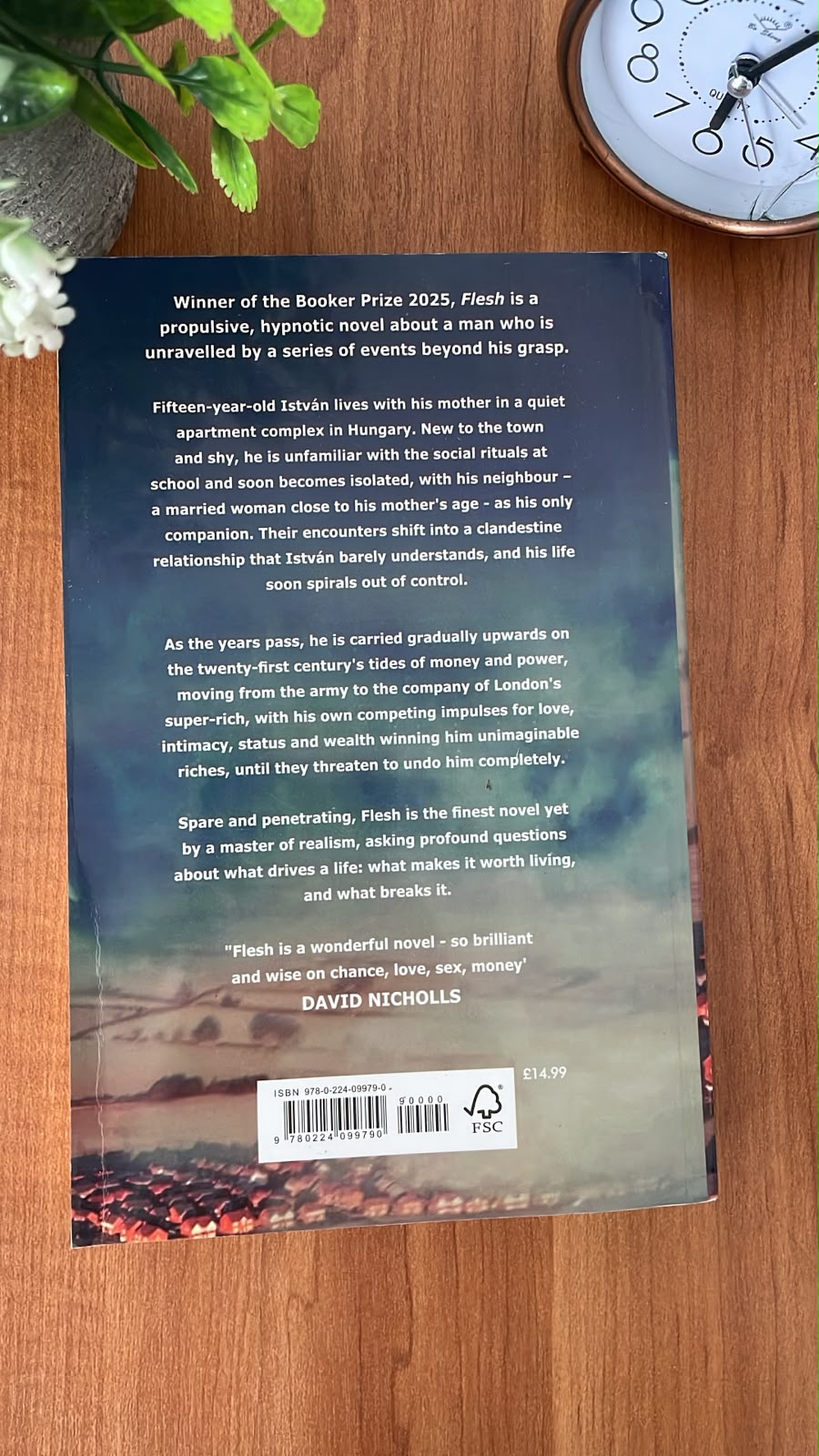







Flesh by David Szalay


රු2,750.00
3 X Rs. 916.67 or 8% Cashback with


or 3 X රු916.67 with


or up to 4 X රු687.50 with


Book Details
Title: Flesh
Author: David Szalay
Language: English
Format: Paperback
Genre: Literary Fiction, Contemporary Fiction
Category: Fiction > Literary Fiction > Contemporary Literary Fiction
Themes: Identity, Relationships, Ambition, Self-Discovery, Human Nature, Modern Society, Love, Personal Growth
3 in stock
Flesh by David Szalay is a striking literary novel about one man’s journey through desire, money, class, intimacy, power, and the unpredictable forces that shape a human life.
István is fifteen.
He lives with his mother in a quiet apartment complex in Hungary.
He is new to the area.
Shy.
Isolated.
And uncomfortable with the social world of the teenagers around him.
Then he begins spending time with an older married woman who lives nearby.
Their secret relationship sets off a chain of events that changes István’s life permanently.
Years pass.
István grows older.
He enters the military.
Eventually, life carries him far from the modest world of his childhood and into the circles of London’s extremely wealthy.
His circumstances change dramatically.
But the past does not disappear simply because his surroundings become richer.
Through István’s rise and repeated collisions with chance, Flesh asks a difficult question:
How much of our life do we actually control?
Why Read Flesh?
Flesh is ideal for readers who enjoy literary fiction built around character, psychology, class, relationships, and the unpredictable direction of a human life.
The novel explores:
- Masculinity
- Class
- Money
- Wealth
- Power
- Intimacy
- Desire
- Trauma
- Migration
- Ambition
- Isolation
- Family
- Chance
- Fate
- Identity
The Booker Prize describes the novel as spanning decades, moving István from a Hungarian housing estate into the mansions of London’s wealthy elite.
Flesh and István
István is not a traditional larger-than-life protagonist.
He is quiet.
Reserved.
Often emotionally difficult to read.
Rather than constantly explaining himself, he tends to move through situations with relatively little outward expression.
That restraint is important to Flesh.
Readers often need to understand István through:
His actions.
His silences.
His relationships.
His physical reactions.
And the decisions he makes.
The Booker judges highlighted Szalay’s deliberately spare style and described István as a deeply reticent central character.
Flesh and a Life Shaped by Chance
One of the strongest ideas in Flesh is that life does not always follow a clean plan.
People like to imagine success as a straight line.
Work hard.
Make good decisions.
Get rewarded.
But real life can be much messier.
Chance matters.
Timing matters.
Other people matter.
One unexpected event can redirect years of your life.
István’s story repeatedly demonstrates this.
Some things happen because of his choices.
Others happen around him.
And sometimes the difference between choice and circumstance becomes difficult to separate.
Flesh and the Beginning in Hungary
The novel starts with István as an isolated fifteen-year-old living with his mother.
His social world is limited.
He struggles to connect with classmates.
Then a relationship develops with a married neighbour who is much older than him.
This is not presented as a simple romantic beginning.
It is an unequal and troubling situation that becomes a defining experience in his adolescence.
The consequences extend far beyond the relationship itself.
The Booker Prize’s official description identifies this episode as the event that sends his young life spiralling out of control.
Flesh and Masculinity
Masculinity is one of the central themes of the novel.
What does a man do when he cannot easily explain how he feels?
What happens when emotional pain is expressed through action rather than conversation?
How do:
Sex.
Money.
Physical strength.
Status.
Work.
Violence.
And silence
shape someone’s understanding of masculinity?
Flesh explores these questions through István rather than turning them into straightforward lessons.
The Booker Prize describes the novel as a meditation on masculinity alongside class, power, intimacy, and migration.
Flesh and Money
Money changes István’s life.
His journey eventually carries him into environments very different from his childhood.
Expensive homes.
Wealthy people.
Luxury.
Status.
Access.
At first, money appears capable of changing almost everything.
And materially, it does.
But Flesh is interested in the limits of wealth too.
Money can change where someone lives.
It can change how others treat them.
It can create comfort.
But can it repair the past?
Can it create intimacy?
Can it give someone a stable identity?
Can wealth make a damaged life meaningful?
Those questions become increasingly important.
From Hungary to London
István’s journey also becomes a story of movement between social worlds.
He begins in modest circumstances in Hungary.
Later, he enters the orbit of London’s super-rich.
That contrast allows David Szalay to examine class from multiple directions.
István sees what people with wealth can access.
He also sees their vulnerabilities.
The novel does not simply portray wealth as glamorous.
It examines how status changes relationships, expectations, and power.
Flesh and Social Class
Class can affect far more than income.
It can influence:
Where someone lives.
How they speak.
Who they know.
How confident they feel.
Which opportunities become available.
How other people perceive them.
István’s upward movement exposes him to environments that once would have seemed completely inaccessible.
But entering an elite social world does not necessarily mean belonging to it.
That tension gives Flesh much of its psychological depth.
Flesh and Intimacy
The title Flesh immediately draws attention toward physical existence.
Bodies.
Sex.
Pain.
Ageing.
Desire.
Physical vulnerability.
But the novel’s interest in intimacy goes beyond sexuality.
István often struggles to connect emotionally.
People enter his life.
Some relationships become important.
Yet emotional closeness remains complicated.
That contrast between physical closeness and emotional distance is one of the book’s most important ideas.
Flesh and the Physical Experience of Life
David Szalay has said he wanted to write about life as a physical experience—what it is like to exist as a living body in the world.
That idea helps explain the title.
Life happens through the body.
Pleasure.
Pain.
Hunger.
Sex.
Violence.
Work.
Ageing.
Exhaustion.
Illness.
Attraction.
The body carries experiences even when a person cannot easily describe them.
Flesh repeatedly returns to this physical reality.
Flesh and Emotional Silence
Many literary novels explain what a character is thinking in great detail.
Flesh often does the opposite.
István can be difficult to interpret.
His emotional interior is not always openly explained.
This creates distance.
But that distance becomes part of the reading experience.
Readers must pay attention to what is not being said.
A short answer can matter.
A silence can matter.
A physical gesture can reveal something a long speech would not.
Spare Writing Style
David Szalay uses unusually economical prose.
The sentences are often direct.
Dialogue can be minimal.
Scenes move quickly.
Large stretches of time may pass without enormous explanation.
That makes Flesh different from dense literary novels filled with long descriptive passages.
The writing may look simple.
But much of the meaning exists underneath the surface.
The 2025 Booker judges praised this spareness, calling the novel hypnotically tense and deeply moving.
Flesh and Ambition
István does not begin life with a clear grand plan.
Yet his circumstances change dramatically.
His rise raises interesting questions about ambition.
How much success comes from intention?
How much comes from opportunity?
How much comes from other people?
And what happens when someone finally obtains things that once seemed unimaginable?
Wealth does not automatically answer the question of what a person actually wants.
Flesh and Fate
Another important theme is fate.
Readers can see moments when István makes choices.
But they can also see how events outside his control push him from one stage of life into another.
An encounter.
An accident.
A relationship.
A job.
A death.
A chance meeting.
One event can change everything afterward.
That gives the novel a sense that human lives are built from a strange mixture of agency and randomness.
Flesh Is a Booker Prize Winner
Flesh won the Booker Prize 2025.
The award was announced on November 10, 2025.
The judges selected it from 153 eligible novels and praised the book for its distinctive style and portrait of István’s life.
This makes it particularly appealing to readers who collect major literary-prize winners.
Is Flesh a Fast Read?
The novel is substantial in length, but its spare prose can make it move relatively quickly.
Szalay does not spend pages describing every transition.
Instead, the story jumps through significant periods of István’s life.
That gives Flesh the feeling of watching decades unfold through carefully selected scenes.
Readers who enjoy economical literary writing may especially appreciate this structure.
Content Note for Flesh
Flesh is adult literary fiction.
Readers should be aware of mature material involving:
- Sexual relationships
- An age-unequal relationship involving a teenager
- Violence
- Trauma
- Death
- War and military experiences
- Alcohol and drugs
- Difficult family and romantic relationships
The book deals with these subjects seriously and can be emotionally uncomfortable.
7 Powerful Reasons to Read Flesh
- Booker Prize Winner – Flesh won the 2025 Booker Prize.
- A Life Spanning Decades – Readers follow István from adolescence in Hungary into adulthood and London’s wealthy elite.
- Powerful Themes – The novel explores masculinity, class, money, intimacy, migration, fate, and identity.
- Distinctive Spare Prose – David Szalay communicates enormous emotional weight using remarkably economical writing.
- A Complex Main Character – István’s emotional restraint makes readers examine his actions and silences closely.
- An Exploration of Wealth and Power – His rise into elite society reveals both the attraction and limitations of money.
- A Story About What Shapes a Life – Flesh asks how chance, choice, physical experience, love, money, and loss combine to create who we become.
What You Can Expect From Flesh
Readers can expect:
- István
- Hungary
- London
- Literary fiction
- Class and wealth
- Masculinity
- Intimacy
- Migration
- Family
- Trauma
- Relationships
- Ambition
- Power
- Chance
- Fate
- Sparse prose
- Psychological depth
Who Should Read Flesh?
Flesh is ideal for readers who enjoy:
Literary fiction.
Booker Prize winners.
Character studies.
Stories spanning decades.
Psychological fiction.
Books about masculinity.
Class and wealth.
Complex protagonists.
European literary fiction.
Minimalist writing.
Thought-provoking novels.
Readers who prefer novels that leave room for interpretation rather than explaining every emotion directly may especially enjoy it.
A Powerful Novel About What Makes and Breaks a Life
Flesh begins with a lonely fifteen-year-old boy in Hungary.
It follows him through a traumatic adolescence.
Military life.
Migration.
Relationships.
Money.
Status.
And eventually an extraordinary rise into the world of London’s rich.
Yet each new stage carries something from the one before it.
István may change countries.
Jobs.
Relationships.
And social classes.
But escaping the past is much harder.
Through spare prose and a protagonist who often says remarkably little, David Szalay creates a novel about the things human beings struggle to express.
Desire.
Pain.
Love.
Power.
Fear.
Loss.
And the physical experience of simply being alive.
For readers who enjoy literary fiction about class, masculinity, intimacy, wealth, fate, and the strange forces that direct a human life, Flesh is a compelling and award-winning novel.
Book Details
Title: Flesh
Author: David Szalay
Genre: Literary Fiction / Contemporary Fiction
Main Character: István
Primary Settings: Hungary & London
Original UK Publication: March 6, 2025
UK Publisher: Jonathan Cape
Award: Winner of the Booker Prize 2025.
UK Hardcover Edition
ISBN-13: 9780224099783
Format: Hardcover
Publisher / Imprint: Jonathan Cape
Publication Date: March 6, 2025
Pages: 368.
U.S. Hardcover Edition
ISBN-13: 9781982122799
Format: Hardcover
Publisher: Scribner
Publication Date: April 1, 2025
Pages: 368.
U.S. Paperback Edition
A newer Scribner paperback edition is listed as:
ISBN-13: 9781982122805
Format: Trade Paperback
Publication Date: August 4, 2026
Pages: 368.
Edition Note
Different editions of Flesh may have different ISBNs, covers, and formats.
Use the ISBN printed on your physical copy before entering exact edition information on your website.
Learn more about Flesh by David Szalay on the official Simon & Schuster website.
Explore more fiction books at Bargain Books.
Be the first to review “Flesh by David Szalay”
Related products

Out of stock
Non-Fiction & Knowledge
රු1,900.00
3 X Rs. 633.33 or 8% Cashback with
or 3 X රු633.33 with
or up to 4 X රු475.00 with

Out of stock
Non-Fiction & Knowledge
රු1,500.00
3 X Rs. 500.00 or 8% Cashback with
or 3 X රු500.00 with
or up to 4 X රු375.00 with
-13%

Out of stock
Non-Fiction & Knowledge
Original price was: රු3,900.00.රු3,400.00Current price is: රු3,400.00.
3 X Rs. 1,133.33 or 8% Cashback with
or 3 X රු1,133.33 with
or up to 4 X රු850.00 with
-34%

Self-Help & Psychology
Original price was: රු2,350.00.රු1,550.00Current price is: රු1,550.00.
3 X Rs. 516.67 or 8% Cashback with
or 3 X රු516.67 with
or up to 4 X රු387.50 with
-23%

Non-Fiction & Knowledge
Original price was: රු2,200.00.රු1,700.00Current price is: රු1,700.00.
3 X Rs. 566.67 or 8% Cashback with
or 3 X රු566.67 with
or up to 4 X රු425.00 with
-19%
Out of stock
Non-Fiction & Knowledge
Original price was: රු2,650.00.රු2,150.00Current price is: රු2,150.00.
3 X Rs. 716.67 or 8% Cashback with
or 3 X රු716.67 with
or up to 4 X රු537.50 with
-33%

Self-Help & Psychology
Original price was: රු2,300.00.රු1,550.00Current price is: රු1,550.00.
3 X Rs. 516.67 or 8% Cashback with
or 3 X රු516.67 with
or up to 4 X රු387.50 with

රු2,000.00
3 X Rs. 666.67 or 8% Cashback with
or 3 X රු666.67 with
or up to 4 X රු500.00 with
Reviews
There are no reviews yet.