
No products in the cart.
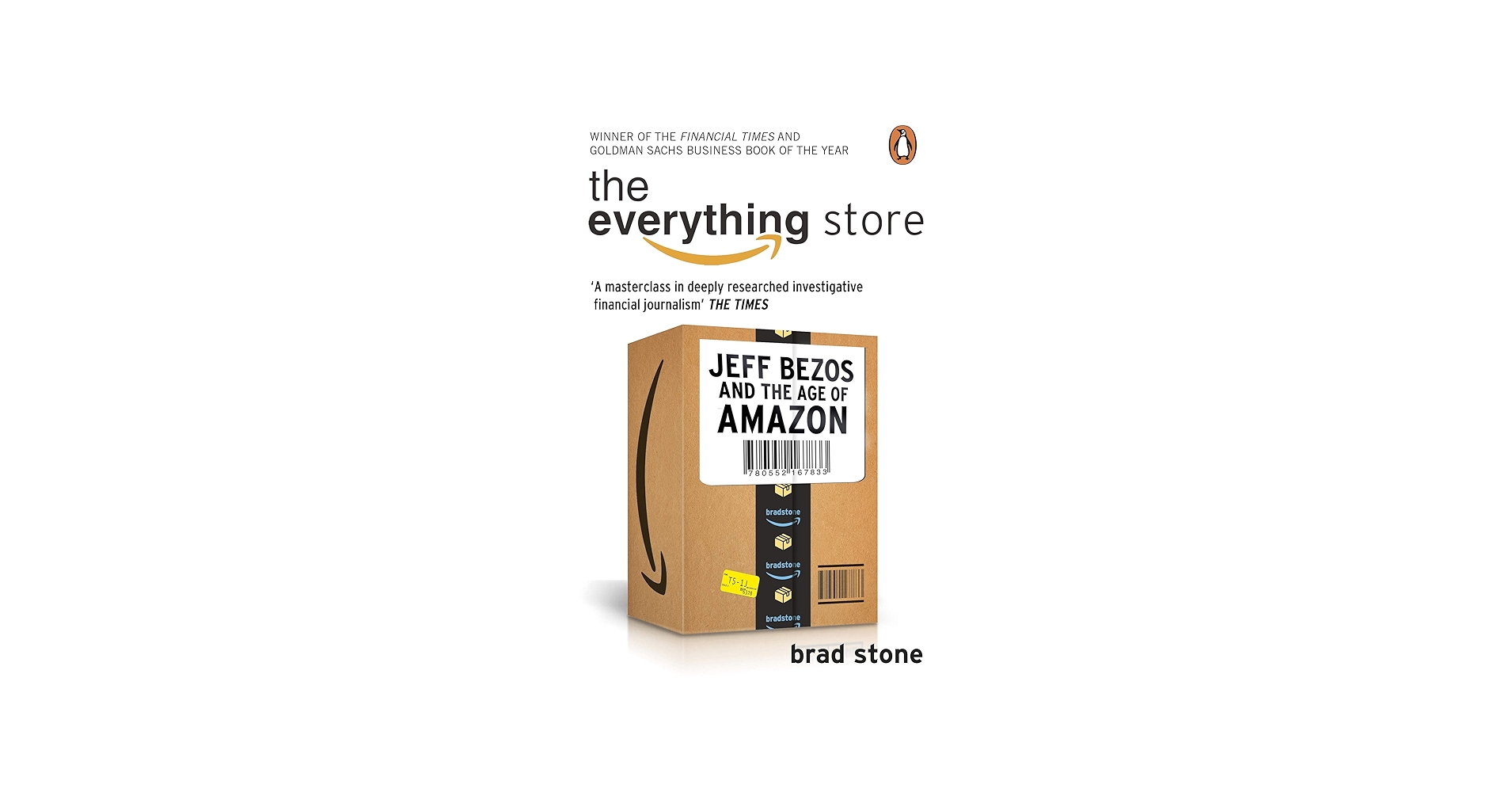
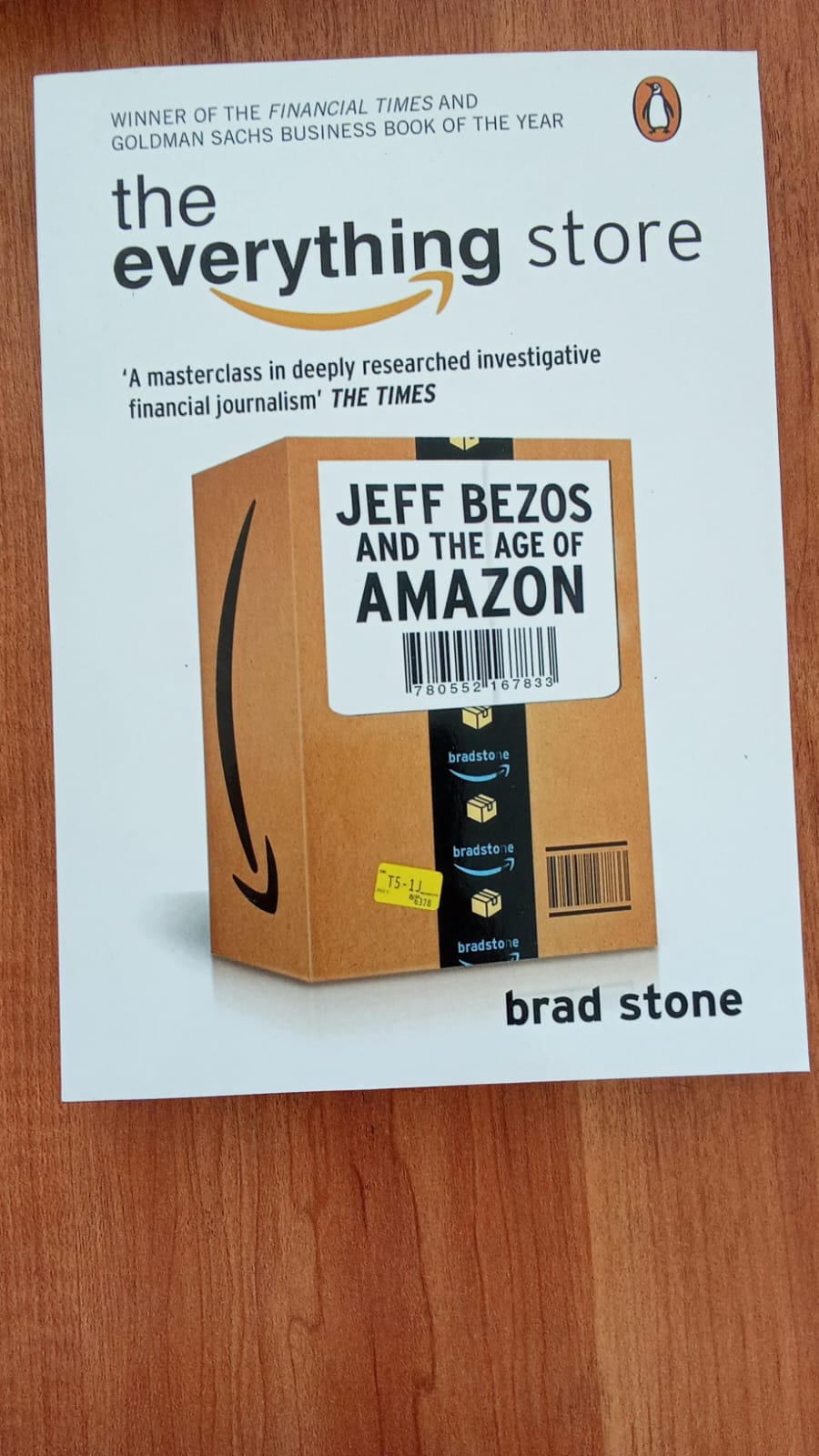
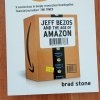


Everything Store by Brad Stone

රු2,200.00
3 X Rs. 733.33 or 8% Cashback with


or 3 X රු733.33 with


or up to 4 X රු550.00 with


The Everything Store tells the story of how Jeff Bezos built Amazon from a small online bookstore into one of the world’s most powerful companies.
The book covers Amazon’s early struggles, its survival during the dot-com crash, and its transformation through innovations like Kindle, Prime, and cloud computing.
6 in stock
Everything Store by Brad Stone is a fascinating business biography about Jeff Bezos, Amazon, innovation, entrepreneurship and the extraordinary rise of one of the most influential companies of the internet era.
Amazon started with books.
But Jeff Bezos never intended to remain only a bookseller.
His ambition was much larger.
He wanted to create a store where customers could find almost anything they wanted.
That vision eventually inspired the idea of the “everything store.”
Brad Stone follows Amazon from its early days selling books online through periods of rapid expansion, financial pressure, experimentation and increasingly ambitious technological projects.
Why Read Everything Store?
Everything Store is ideal for readers interested in entrepreneurship, technology, leadership and business strategy.
Amazon’s success did not happen overnight.
The company had to build infrastructure.
Develop technology.
Attract customers.
Compete with established retailers.
Convince investors.
Survive financial uncertainty.
And repeatedly enter industries where success was far from guaranteed.
The book explores the decisions and culture behind that growth.
Everything Store and Jeff Bezos
Jeff Bezos is at the centre of the story.
Brad Stone portrays him as intensely ambitious, demanding and focused on building for the long term.
He was not satisfied with simply operating a successful online bookstore.
He wanted Amazon to expand.
More products.
More customers.
More markets.
More technology.
That restless pursuit of new opportunities became one of Amazon’s defining characteristics.
Everything Store and the Beginning of Amazon
Amazon began by selling books through the internet.
Books were a useful starting point because an online store could offer a much larger catalogue than a traditional physical bookstore.
But books were only the beginning.
The broader goal was creating an online marketplace with enormous selection and convenience.
Brad Stone’s account shows how the company gradually expanded beyond books as Bezos pursued the much larger idea behind the Everything Store.
Start Small but Think Big
One of the strongest business lessons from Amazon’s story is the difference between where a company starts and where it intends to go.
The first product does not necessarily define the final company.
Amazon started with books.
But its larger ambition was much greater.
Entrepreneurs can apply the same idea.
Start with something manageable.
Learn from customers.
Build systems.
Then expand carefully.
A small beginning can still support a large vision.
Everything Store and Customer Focus
Customer experience became a major part of Amazon’s strategy.
Selection mattered.
Convenience mattered.
Pricing mattered.
Speed mattered.
The company wanted customers to have compelling reasons to return.
Brad Stone describes Bezos’s ambition to offer enormous selection, convenience and aggressive pricing as central to the company he wanted to build.
Start With the Customer
Businesses sometimes begin with internal questions.
What do we want to sell?
What is easiest for us?
What gives us the highest margin?
Another approach begins with customers.
What problem are they experiencing?
What frustrates them?
What would make buying easier?
What would make them return?
Amazon’s development offers a useful example of building business strategy around customer behaviour.
Everything Store and Long-Term Thinking
Some business decisions produce immediate results.
Others may take years.
A company focused exclusively on short-term profit may avoid investments that could create much greater future value.
Amazon repeatedly invested in infrastructure and new technology while pursuing longer-term opportunities.
The company’s expansion into projects such as Kindle and cloud computing illustrates how Bezos continually looked beyond the company’s original retail model.
Think Beyond Today’s Business
A dangerous question for successful businesses is:
“What are we currently good at?”
A more useful question can be:
“What will customers need next?”
Industries change.
Technology changes.
Competitors appear.
Customer expectations increase.
Companies that refuse to evolve can become vulnerable.
Everything Store provides a powerful example of constant expansion into new territory.
Everything Store and Innovation
Innovation is rarely comfortable.
New projects may fail.
Customers may not understand them immediately.
Employees may disagree.
Money may be lost.
But experimentation can also create entirely new businesses.
Amazon moved beyond ordinary online retail into areas including digital reading through Kindle and cloud computing.
That willingness to experiment became an important part of Amazon’s identity.
The Kindle
The Kindle represented an important shift.
Amazon began as a company selling physical books.
The Kindle helped move reading into a digital ecosystem.
That meant Amazon was no longer simply distributing books.
It was also creating technology that could change how people bought and consumed them.
Stone treats Kindle as one of the important ventures illustrating Bezos’s willingness to enter new markets.
Everything Store and Cloud Computing
Cloud computing represented an even bigger departure from Amazon’s original identity.
A company known mainly for retail began providing computing infrastructure to other businesses.
This became another example of Amazon operating more like a technology company than merely an online retailer.
Brad Stone’s account includes Amazon’s move into cloud computing as one of the major new businesses created under Bezos’s leadership.
Do Not Let Your Original Category Limit You
People often categorize businesses.
Bookstore.
Retailer.
Technology company.
Media company.
But categories can become limiting.
If Amazon had thought of itself only as an online bookstore, many later opportunities might never have been pursued.
Everything Store demonstrates the strategic value of asking what capabilities a company has rather than focusing only on what category others place it in.
Everything Store and Company Culture
Culture plays an important role in the book.
Brad Stone describes Amazon as having a culture shaped by relentless ambition and secrecy.
That intensity helped drive innovation.
But it also created controversy.
High-performance environments can produce exceptional results.
They can also create enormous pressure.
The book therefore offers readers an opportunity to think critically about both the strengths and costs of demanding corporate cultures.
High Standards Can Produce Results
High standards can push organizations forward.
Customers receive better service.
Teams solve difficult problems.
Weak processes become visible.
But leaders also need to consider whether the pressure they create is sustainable.
The lesson is not simply:
“Demand more.”
It is to understand how expectations, incentives and culture influence performance.
Everything Store and Competition
Amazon entered markets filled with established competitors.
Traditional bookstores already existed.
Retail giants existed.
Technology companies existed.
Amazon still found ways to compete.
One advantage came from operating differently.
The internet allowed the company to rethink inventory, selection and customer convenience.
New businesses often struggle when they imitate established competitors directly.
A stronger strategy can involve changing the basis of competition itself.
Experiment Before You Know the Answer
Entrepreneurs rarely have complete certainty.
They have assumptions.
Then they test them.
Launch.
Measure.
Learn.
Improve.
Some ideas work.
Others fail.
The important part is learning quickly enough to make better decisions.
Amazon’s history contains repeated examples of moving into uncertain territory rather than waiting until every answer was obvious.
Everything Store and Persistence
Amazon’s rise was not smooth.
The company lived through the dot-com era and periods when internet businesses faced enormous skepticism.
The story includes Amazon’s rise, near-death during the dot-com bust, and later resurgence as new businesses such as Prime, Kindle and Amazon Web Services strengthened the company.
That history makes the company a useful case study in persistence.
Business success often looks inevitable only after it happens.
During the difficult years, the outcome can be extremely uncertain.
Everything Store and Leadership
Leadership involves choosing priorities.
A company cannot pursue everything equally.
Someone needs to decide:
Where should capital go?
Which products matter?
Which projects should stop?
Which customer problems deserve attention?
Which risks are worth taking?
Jeff Bezos’s decisions provide much of the narrative tension in Everything Store.
Some choices produced extraordinary results.
Others generated criticism.
That makes the book useful because it does not need to be read as a simple celebration of leadership.
Readers can examine the decisions and reach their own conclusions.
Hire People Who Challenge the Company
Growing companies require talented people.
Founders cannot build everything alone.
Engineers.
Managers.
Designers.
Operations teams.
Finance teams.
Warehouse employees.
Marketers.
Technology specialists.
All become necessary.
Brad Stone’s access to current and former Amazon employees allows the book to tell the company’s story through more than Bezos alone.
That broader perspective gives readers insight into the organization behind the founder.
Everything Store and Scale
Starting a business is one challenge.
Scaling it is another.
Ten orders can be managed manually.
Ten million cannot.
Growth requires systems.
Warehouses.
Software.
Processes.
People.
Data.
Logistics.
Quality controls.
As companies become larger, operations often become as important as the original idea.
Amazon’s story demonstrates why scaling requires continuous investment in infrastructure.
Convenience Can Be a Competitive Advantage
Customers often choose businesses that remove friction.
Fewer steps.
Faster service.
Better search.
Easy payment.
Reliable delivery.
Convenience can become extremely powerful because customers quickly become accustomed to improvements.
Once people experience something easier, older processes can feel frustrating.
Amazon’s focus on selection and convenience was central to Bezos’s vision of the Everything Store.
Everything Store and Risk
Expansion involves risk.
Entering another product category can fail.
Developing a device can fail.
Building infrastructure can become expensive.
Launching a completely new service can fail.
But refusing every risk also has consequences.
Competitors move.
Technology changes.
Customer behaviour evolves.
Everything Store shows how Amazon repeatedly accepted uncertainty while pursuing new markets.
Business Success Has Trade-Offs
Business stories can become overly simple.
Founder has idea.
Company grows.
Founder becomes successful.
Reality is more complicated.
Growth creates pressure.
Aggressive competition creates criticism.
Fast expansion creates operational problems.
Demanding cultures can produce both performance and controversy.
Brad Stone’s reporting attempts to show Amazon and Bezos with greater complexity than a simple inspirational success story.
7 Powerful Lessons From Everything Store
- Start Small but Think Big – Amazon began with books but Bezos envisioned a much larger business.
- Focus Intensely on Customers – Convenience, selection and pricing became central to Amazon’s strategy.
- Think Long Term – Major opportunities may require years of investment before producing results.
- Keep Experimenting – Kindle and cloud computing show how new ventures can expand what a company is capable of becoming.
- Build Systems for Scale – Growth eventually requires infrastructure rather than relying only on individual effort.
- Question Industry Assumptions – New technology can allow companies to compete in fundamentally different ways.
- Understand the Cost of Ambition – Extreme business performance can also create cultural and leadership challenges.
What You Can Learn From Everything Store
Readers can explore:
- Jeff Bezos
- Amazon
- Brad Stone
- Entrepreneurship
- Business strategy
- Technology
- E-commerce
- Leadership
- Innovation
- Customer experience
- Company culture
- Kindle
- Cloud computing
- Scaling
- Competition
- Long-term thinking
- Risk-taking
- Business growth
- Digital transformation
Who Should Read Everything Store?
Everything Store is ideal for entrepreneurs.
Business owners can learn from Amazon’s growth strategy.
Managers can explore leadership and organizational culture.
Students of business may find the history of e-commerce particularly useful.
Technology readers can learn about Amazon’s evolution beyond retail.
Readers interested in Jeff Bezos can also gain a much deeper understanding of the founder and the company he built.
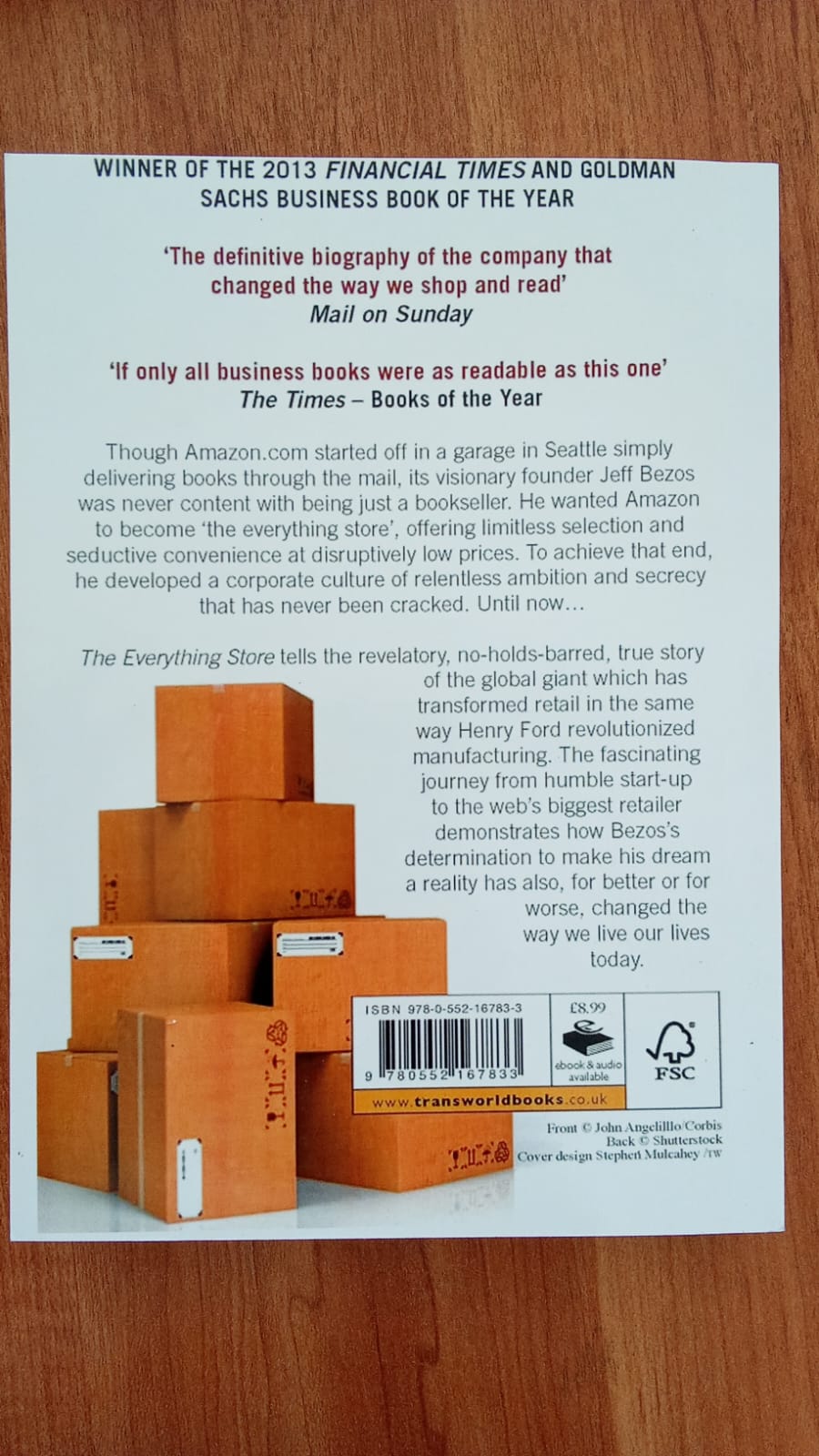
The book won the Financial Times and Goldman Sachs Business Book of the Year Award and was selected as a best book of the year by several major publications.
A Powerful Story of Amazon’s Rise
Everything Store begins with an online bookstore.
It becomes the story of something much bigger.
Jeff Bezos wanted enormous selection.
Convenience.
Competitive prices.
And continuous expansion.
Amazon moved from books into wider retail.
Then into devices.
Technology.
Cloud computing.
And other industries.
Brad Stone combines extensive reporting with interviews involving current and former Amazon employees and Bezos family members to provide an inside account of that transformation.
For entrepreneurs, managers, technology enthusiasts and anyone interested in how ambitious companies are built, Everything Store by Brad Stone is a compelling addition to any business bookshelf.
Book Details
Official Title: The Everything Store: Jeff Bezos and the Age of Amazon
Author: Brad Stone
Genre: Business / Biography / Entrepreneurship / Technology
Subject: Jeff Bezos and Amazon
Original Publication: 2013
Original Publisher: Little, Brown and Company.
Paperback Edition Details
The official Little, Brown trade paperback edition is listed as:
ISBN-13: 9780316219280
Format: Trade Paperback
Publisher: Little, Brown Paperbacks
Publication Date: August 12, 2014
Pages: 416.
Edition Note
Different editions of The Everything Store have different page counts and ISBNs.
For example, the original U.S. hardcover is commonly listed at 384 pages, while the later Little, Brown trade paperback has 416 pages.
Use the ISBN printed on your physical copy before adding edition-specific information to your product page.https://yourwebsite.com/the-everything-store/
Be the first to review “Everything Store by Brad Stone”
Related products

Out of stock
Self-Help & Psychology
රු1,900.00
3 X Rs. 633.33 or 8% Cashback with
or 3 X රු633.33 with
or up to 4 X රු475.00 with
රු2,000.00
3 X Rs. 666.67 or 8% Cashback with
or 3 X රු666.67 with
or up to 4 X රු500.00 with
-17%
Out of stock
Non-Fiction & Knowledge
Original price was: රු2,900.00.රු2,400.00Current price is: රු2,400.00.
3 X Rs. 800.00 or 8% Cashback with
or 3 X රු800.00 with
or up to 4 X රු600.00 with
Out of stock
Non-Fiction & Knowledge
රු1,500.00
3 X Rs. 500.00 or 8% Cashback with
or 3 X රු500.00 with
or up to 4 X රු375.00 with
Non-Fiction & Knowledge
රු2,450.00
3 X Rs. 816.67 or 8% Cashback with
or 3 X රු816.67 with
or up to 4 X රු612.50 with
-33%

Self-Help & Psychology
Original price was: රු2,300.00.රු1,550.00Current price is: රු1,550.00.
3 X Rs. 516.67 or 8% Cashback with
or 3 X රු516.67 with
or up to 4 X රු387.50 with
-34%

Self-Help & Psychology
Original price was: රු2,350.00.රු1,550.00Current price is: රු1,550.00.
3 X Rs. 516.67 or 8% Cashback with
or 3 X රු516.67 with
or up to 4 X රු387.50 with
-24%

Non-Fiction & Knowledge
Original price was: රු2,300.00.රු1,750.00Current price is: රු1,750.00.
3 X Rs. 583.33 or 8% Cashback with
or 3 X රු583.33 with
or up to 4 X රු437.50 with
Reviews
There are no reviews yet.