
No products in the cart.
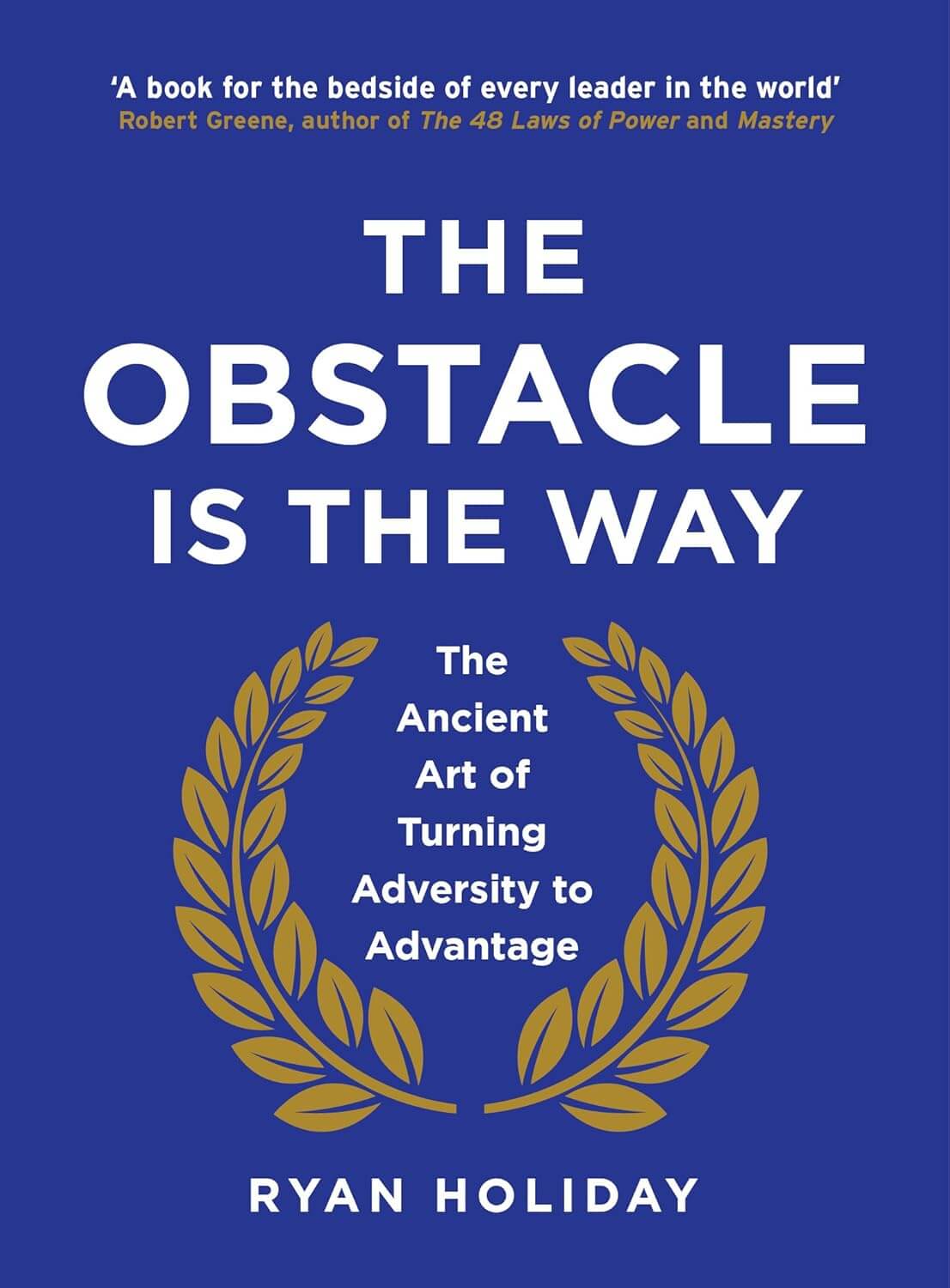
Obstacle Is the Way (Hard Cover) by Ryan Holiday

රු1,590.00
3 X Rs. 530.00 or 8% Cashback with


or 3 X රු530.00 with


or up to 4 X රු397.50 with


The Obstacle Is the Way Hardcover by Ryan Holiday is a practical guide to using Stoic principles to face adversity, control your response, take purposeful action and develop resilience. Built around the disciplines of perception, action and will, the book uses powerful historical examples to show how setbacks can reveal opportunities for growth, learning and stronger decision-making. Ideal for entrepreneurs, students, leaders, athletes and anyone facing difficult challenges, this hardcover edition makes an excellent addition to a personal-development or philosophy collection.
Out of stock
Email when stock available
The Obstacle Is the Way Hardcover by Ryan Holiday is a practical and inspiring guide to facing adversity, controlling your response to difficult circumstances, taking purposeful action and developing the resilience needed to continue when life refuses to follow your plan.
Most people naturally want obstacles to disappear.
A failed project.
A difficult customer.
A financial problem.
An injury.
A rejection.
A career setback.
A mistake.
An unexpected crisis.
We usually see these situations as interruptions standing between us and what we want.
Ryan Holiday presents another possibility.
What if the obstacle itself can become part of the path forward?
Drawing heavily from ancient Stoic philosophy, particularly ideas associated with figures such as Marcus Aurelius, Epictetus, and other historical thinkers, Holiday explains that we often cannot control what happens around us—but we can influence how we interpret circumstances, what actions we take next, and whether we allow adversity to permanently defeat us.
The book organizes this approach around three essential disciplines:
Perception
Action
Will
First, see the situation clearly.
Second, take useful action.
Third, develop the inner strength to continue through what cannot immediately be changed.
The Obstacle Is the Way Hardcover is especially useful for entrepreneurs, students, athletes, managers, leaders, professionals and anyone facing uncertainty or setbacks.
It does not promise that positive thinking will magically eliminate difficulties.
Instead, its central message is much more practical:
You may not control the obstacle.
But you can work on controlling your response.
The Obstacle Is the Way Hardcover – Book Overview
The Obstacle Is the Way Hardcover takes ideas that originated more than two thousand years ago and applies them to modern life.
Stoicism is sometimes misunderstood as suppressing emotions or becoming cold.
That is not the main lesson here.
The practical Stoic approach is closer to:
Recognize reality.
Separate what you control from what you do not.
Stop wasting energy fighting facts that cannot immediately be changed.
Then direct your effort toward useful action.
Holiday illustrates these ideas through stories of leaders, inventors, athletes, military figures, entrepreneurs and historical personalities who encountered serious adversity.
The point is not that successful people somehow avoided difficulty.
Often, difficulty became the environment in which their strongest qualities developed.
The Central Idea
The title comes from a famous idea associated with Roman emperor and Stoic philosopher Marcus Aurelius.
An obstruction does not necessarily end action.
It can redirect action.
Something standing in your way may force you to:
Think differently.
Become more disciplined.
Develop another skill.
Change strategy.
Become patient.
Find another route.
That does not mean obstacles are secretly pleasant.
It means an obstacle does not automatically have to become the end of the story.
Perception
The first major discipline in The Obstacle Is the Way Hardcover is Perception.
Before solving a problem, you need to see it clearly.
This sounds simple.
It often is not.
When something goes wrong, emotions can immediately influence our interpretation.
A mistake becomes:
“My career is ruined.”
A rejection becomes:
“Nobody will ever give me another chance.”
A difficult month becomes:
“My business is finished.”
The event may be real.
The catastrophic interpretation may not be.
Separate Facts From Interpretation
Suppose a customer rejects your proposal.
Fact:
The proposal was rejected.
Interpretation:
“My business idea is terrible and I should quit.”
Those are not the same thing.
A more useful response might be:
Why was it rejected?
Price?
Timing?
Wrong customer?
Weak presentation?
Missing feature?
Once the emotional interpretation is separated from the fact, information becomes available.
Control What You Can Control
This is one of Stoicism’s most practical ideas.
Some things are within your influence.
Others are not.
You cannot completely control:
The economy.
Weather.
Other people’s opinions.
A competitor’s decision.
Whether someone likes you.
An unexpected illness.
You can often influence:
Preparation.
Effort.
Response.
Communication.
Learning.
Your next decision.
The Obstacle Is the Way Hardcover repeatedly encourages readers to invest energy where action is actually possible.
Stop Fighting Reality
Sometimes people suffer twice.
First from the actual problem.
Then from repeatedly thinking:
This should not have happened.
Maybe it should not have happened.
But if it already did, refusing to accept reality does not reverse it.
Acceptance does not mean approval.
It means recognizing the current situation accurately enough to begin responding.
Objectivity
Objectivity creates emotional distance.
Instead of saying:
“This is a disaster.”
ask:
“What exactly happened?”
“What information do I have?”
“What part can I influence?”
“What is the next useful move?”
This type of thinking can improve decision-making under pressure.
Action
The second major discipline in The Obstacle Is the Way Hardcover is Action.
Seeing a problem clearly is not enough.
Eventually, something must be done.
Many people wait for:
Perfect confidence.
Perfect timing.
Perfect motivation.
Perfect information.
Those conditions rarely arrive.
Progress usually begins before everything feels comfortable.
Start Where You Are
When a challenge appears enormous, thinking about the entire journey can become overwhelming.
Instead, identify one useful action.
Send the email.
Make the phone call.
Write the first page.
Study the first chapter.
Fix one customer problem.
Apply for one job.
Take one step.
Small action creates movement.
Persistence
Persistence is important throughout The Obstacle Is the Way Hardcover.
But persistence should not be confused with blindly repeating an ineffective method.
If one approach repeatedly fails, intelligent persistence asks:
What can I change?
Persistence toward the goal can coexist with flexibility in the method.
The Process
Holiday emphasizes focusing on the process rather than becoming emotionally consumed by the final outcome.
For example, a student cannot instantly control the final examination result.
But today they can control:
Whether they study.
How long they study.
Whether they practise questions.
Whether they identify weak areas.
The outcome arrives later.
The process exists now.
Do the Work
Motivation is unreliable.
Some mornings you feel motivated.
Some mornings you do not.
Discipline matters because useful work still needs to happen when enthusiasm disappears.
This makes The Obstacle Is the Way Hardcover particularly relevant to entrepreneurs, athletes and students.
Problems Can Reveal Opportunities
An obstacle can force a better question.
A competitor enters your market.
Maybe you improve your product.
A budget is reduced.
Maybe you simplify operations.
A supplier fails.
Maybe you develop a more resilient supply chain.
A project fails.
Maybe it exposes a weakness before the company becomes larger.
This does not mean every setback is good.
It means useful information may exist inside failure.
Failure as Feedback
There is a major difference between:
“I failed.”
and
“I am a failure.”
The first describes an event.
The second creates an identity.
Failure can provide data.
What happened?
Why?
What assumption was wrong?
What should change?
That information can improve the next attempt.
Use What You Have
We often focus on missing resources.
Not enough money.
Not enough staff.
Not enough time.
Not enough experience.
Those limitations may be real.
But a useful question is:
What resources do I already have?
Constraints sometimes encourage creativity.
The Will
The third major discipline in The Obstacle Is the Way Hardcover is Will.
Some obstacles can be removed through action.
Others cannot.
A person may face:
Loss.
Illness.
A permanent limitation.
An economic crisis.
Circumstances that cannot immediately be changed.
In those moments, inner endurance becomes especially important.
Acceptance and Endurance
Will is not merely aggressive determination.
Sometimes strength means enduring something that cannot yet be solved.
Patience.
Acceptance.
Emotional discipline.
Perspective.
Continuing despite uncertainty.
These are quieter forms of courage.
Prepare for Difficulty
Stoic thinkers did not assume that life would remain easy.
They expected difficulties.
This did not make them pessimistic.
Preparation reduces shock.
Businesses create emergency funds.
Athletes train for bad conditions.
Organizations create backup plans.
People insure valuable assets.
Preparation acknowledges reality.
Amor Fati
A Stoic idea often associated with embracing one’s fate is sometimes summarized as amor fati—love of fate.
This should not be interpreted as pretending painful events are wonderful.
A practical interpretation is:
Since this is now part of reality, how can I use it well?
You cannot rewrite the past.
You can influence what you build from it.
Persistence Without Self-Destruction
An important modern clarification is necessary.
“Obstacle is the way” does not mean:
Never rest.
Ignore illness.
Stay in abusive situations.
Reject professional help.
Continue dangerous projects indefinitely.
Real resilience also involves judgment.
Sometimes the right action is:
Stop.
Rest.
Ask for help.
Change direction.
Leave.
Seek treatment.
The philosophy is about responding wisely—not suffering unnecessarily.
Marcus Aurelius
Marcus Aurelius was Roman emperor from AD 161 to 180 and is one of the central figures associated with Stoicism.
His private reflections later became known as Meditations.
His ideas about responding to adversity strongly influence Holiday’s framework.
Marcus faced:
War.
Political responsibility.
Illness.
Personal loss.
The lesson is not that his life was free from difficulty.
It is that he repeatedly reflected on how to respond to difficulty with discipline.
Epictetus
Epictetus was another major Stoic thinker.
Born into slavery, he later became a philosopher and teacher.
One of the core ideas associated with his philosophy is distinguishing what depends on us from what does not.
That principle sits at the heart of The Obstacle Is the Way Hardcover.
Stoicism for Modern Life
Why does an ancient philosophy remain popular?
Because modern technology has changed dramatically.
Human emotional problems have not changed as much.
People still struggle with:
Fear.
Anger.
Jealousy.
Failure.
Uncertainty.
Loss.
Ambition.
Control.
Stoicism offers tools for responding to those experiences.
Not Everything Is Under Your Control
One of the biggest sources of unnecessary frustration is trying to control things that are fundamentally outside our control.
For example:
You can prepare carefully for an interview.
You cannot force someone to hire you.
You can create a strong product.
You cannot force customers to buy.
You can communicate clearly.
You cannot control how everyone interprets you.
Your responsibility is the part belonging to you.
Emotional Regulation
This does not mean becoming emotionless.
You can feel:
Disappointed.
Angry.
Afraid.
Sad.
The goal is preventing emotion from automatically controlling every decision.
Feeling anger is one thing.
Making a destructive decision while angry is another.
Pause Before Reacting
One practical application of Stoic thinking is creating space between:
Event
and
response.
A customer sends an angry email.
You feel attacked.
Instead of immediately replying, pause.
Read it again.
Identify the actual issue.
Then respond professionally.
A small pause can prevent large mistakes.
Leadership
The Obstacle Is the Way Hardcover has strong applications to leadership.
Leaders often operate under uncertainty.
Projects fail.
Staff leave.
Customers complain.
Budgets change.
A leader’s response affects the entire team.
Panic spreads.
Calm also spreads.
Leaders Set Emotional Tone
A leader does not need to pretend everything is fine.
But they should help the team move from:
Panic
to
problem-solving.
What happened?
What matters most?
What is the next action?
Who owns it?
That structure turns anxiety into movement.
Business Lessons
Entrepreneurs encounter obstacles constantly.
Low sales.
Supplier problems.
Cash-flow pressure.
Advertising failures.
Employee issues.
Technical bugs.
Competition.
The business owner who expects a perfectly smooth journey may become emotionally exhausted.
The better assumption is:
Problems are part of operating.
The skill is solving them.
Customer Complaints
A complaint feels negative.
But it can contain useful information.
Why is the customer unhappy?
Is the problem:
Product quality?
Website confusion?
Delivery delays?
Poor communication?
A complaint may reveal something that dozens of silent customers experienced but never reported.
The obstacle can become customer research.
Competition
Competition can also improve a business.
A stronger competitor may force you to:
Differentiate.
Improve service.
Control costs.
Build a stronger brand.
Innovate.
Competition feels uncomfortable precisely because it exposes weakness.
Weakness identified can become weakness improved.
Lessons for Students
Students can apply The Obstacle Is the Way Hardcover when facing:
Low marks.
Difficult modules.
Examination anxiety.
Heavy workloads.
Failed assignments.
Instead of treating poor performance as proof of inability, analyze it.
Which topics were weak?
Was the study method effective?
Did you practise enough?
Was time management poor?
Failure becomes useful when it changes preparation.
Lessons for Software Developers
The philosophy applies surprisingly well to software development.
Bugs are information.
A failed deployment reveals weaknesses.
User complaints reveal usability problems.
Performance bottlenecks expose architecture limits.
A developer who becomes personally offended by every bug wastes energy.
A stronger response is:
Reproduce.
Understand.
Fix.
Learn.
Improve the system.
Lessons for Entrepreneurs
A startup rarely follows the original plan exactly.
Customers may reject the first idea.
Pricing may be wrong.
A feature may fail.
A competitor may move faster.
The entrepreneur needs a combination of:
Clear perception.
Decisive action.
Emotional endurance.
That is essentially Holiday’s three-part framework.
Lessons for Athletes
Athletes understand obstacles naturally.
Injury.
Loss.
Bad performance.
Stronger opponents.
Poor conditions.
The athlete cannot change the previous game.
They can study it.
Train.
Recover.
Prepare.
Compete again.
This is one reason the book has become popular in professional sports; Profile Books notes its readership among professional athletes, coaches and teams.
Discipline
One of the hidden messages throughout The Obstacle Is the Way Hardcover is discipline.
You cannot always wait until you feel ready.
Discipline means doing useful work even when the emotional conditions are imperfect.
Motivation Versus Systems
Motivation asks:
Do I feel like doing this today?
A system asks:
What do I do every day regardless?
Systems can include:
Morning study.
Weekly financial review.
Daily exercise.
Regular customer follow-up.
Routine code testing.
Small repeated systems create resilience.
Creativity Under Constraint
Constraints can stimulate creativity.
Unlimited time encourages delay.
Limited time forces prioritization.
Limited money forces efficiency.
Limited resources force experimentation.
Not every constraint is beneficial, but limitations sometimes reveal simpler solutions.
Patience
Some problems cannot be solved immediately.
A business takes time to grow.
Skills take time to develop.
Recovery takes time.
Relationships take time to rebuild.
Patience prevents us from destroying long-term progress because short-term results feel slow.
Think Long Term
A temporary setback can feel enormous when viewed only through today.
Ask:
Will this matter in one year?
Five years?
What can this experience teach me?
Long-term perspective reduces the emotional size of many short-term problems.
Ego
Ryan Holiday later developed the subject of ego more directly in Ego Is the Enemy.
But ego also matters here.
Sometimes the obstacle is difficult not because it is objectively impossible, but because solving it requires admitting:
We were wrong.
The plan failed.
Someone else’s idea is better.
We need help.
Humility improves adaptation.
Asking for Help
Stoicism should not be confused with doing everything alone.
A strong person can ask:
What don’t I know?
Who understands this better?
Who can help?
Teamwork is often the most rational response to a difficult problem.
Perspective
Perspective changes experience.
Two people can face similar difficulties and interpret them differently.
One sees:
Proof everything is hopeless.
Another sees:
A difficult but solvable problem.
The situation may be similar.
Their available actions become different because perception influences behavior.
Reframing
Reframing means intentionally asking whether another interpretation is available.
Instead of:
“I have to do this.”
try:
“I get to practise this.”
Instead of:
“This problem ruined everything.”
try:
“This problem revealed what needs to improve.”
Reframing should remain realistic.
It is not pretending bad events are good.
It is looking for the most useful interpretation supported by reality.
Action Beats Rumination
Thinking can help.
Rumination usually does not.
If you have already understood the problem, repeating the same anxious thoughts rarely solves it.
At some point, ask:
What action is available?
Then do that.
The Discipline of the Present
You cannot act yesterday.
You cannot act tomorrow yet.
Action exists in the present.
This is why Stoic practice repeatedly returns attention to what can be done now.
The Obstacle Can Become Training
Difficult customers train patience.
Hard projects train skill.
Competition trains innovation.
Failure trains humility.
Uncertainty trains adaptability.
Again, this does not mean difficulty is pleasant.
It means difficulty can produce capability.
Is The Obstacle Is the Way a Stoicism Book?
Yes.
The Obstacle Is the Way Hardcover draws heavily on Stoic philosophy and applies it to modern challenges.
However, it is written as practical modern nonfiction rather than as an academic history of ancient philosophy.
Readers wanting a scholarly introduction to Stoicism may also want to read original Stoic texts and academic commentary.
Do You Need to Know Philosophy?
No.
The book is designed to be approachable.
Holiday uses historical stories and modern explanations rather than expecting the reader to understand Greek or Roman philosophy beforehand.
Is It a Self-Help Book?
Yes, though it overlaps with:
Philosophy.
Leadership.
Business.
Personal development.
Resilience.
It provides a framework for responding to problems rather than a step-by-step life program.
Is It Good for Business Readers?
Yes.
Its ideas are especially relevant to:
Entrepreneurs.
Managers.
Executives.
Salespeople.
Team leaders.
People making difficult decisions.
The framework of perception, action and will can be applied directly to business challenges.
Is It Good for Students?
Yes.
Students facing academic stress may benefit from the emphasis on:
Controlling preparation.
Accepting results.
Learning from failure.
Continuing after setbacks.
The book is short enough to remain accessible while still offering many ideas to revisit.
Is It a Good Introduction to Ryan Holiday?
Yes.
The Obstacle Is the Way is one of Holiday’s best-known works and a natural starting point for readers interested in his modern interpretation of Stoic philosophy.
Readers who enjoy it may also explore:
Ego Is the Enemy
The Daily Stoic
Stillness Is the Key
Courage Is Calling
Discipline Is Destiny
Is It Part of a Series?
It is not Book 1 of a conventional narrative series.
However, The Obstacle Is the Way, Ego Is the Enemy, and Stillness Is the Key are often grouped together as a thematic trilogy about Stoic principles for modern life. Penguin Random House currently sells the three together as The Way, the Enemy, and the Key.
Each book can be read independently.
Hardcover Edition Note
Because you specified Hard Cover, check which physical edition you have before entering the ISBN.
A current Profile Books 10th Anniversary hardback was published on October 1, 2024, with ISBN 9781805222477. This expanded edition includes a new introduction and additional material and is subtitled The Timeless Art of Turning Trials into Triumph.
The U.S. Portfolio Expanded 10th Anniversary Edition hardcover was also published on October 1, 2024 and has 224 pages; Penguin Random House lists hardcover ISBN 9780593719916.
So do not copy an ISBN until you check the barcode on your actual hardcover, because UK, U.S., older and anniversary hardcover editions can differ.
The Expanded 10th Anniversary Edition
If your copy is the 2024 anniversary hardcover, it is more than a simple format change.
Ryan Holiday updated and expanded the book with a new introduction and new material featuring additional historical examples.
That makes the hardcover especially attractive to:
Collectors.
Ryan Holiday fans.
Readers buying the book as a gift.
People who want the expanded edition.
Important Themes
The Obstacle Is the Way Hardcover explores:
- Stoicism
- Resilience
- Adversity
- Perception
- Action
- Will
- Discipline
- Failure
- Self-control
- Leadership
- Courage
- Acceptance
- Persistence
- Adaptability
- Problem-solving
- Perspective
- Entrepreneurship
- Emotional regulation
- Personal responsibility
- Growth through difficulty
7 Powerful Lessons From The Obstacle Is the Way Hardcover
- Separate the obstacle from your interpretation of it. Something difficult happened. Before deciding it means disaster, look at the facts clearly and determine what is actually true.
- Focus your energy on what you can control. Time spent trying to control other people, the past or unpredictable events is usually less useful than improving your own preparation and response.
- Take action before conditions become perfect. Perfect timing rarely arrives. Progress often begins with one small useful action taken under imperfect circumstances.
- Use failure as information. A failed attempt can expose weak assumptions, poor preparation or an ineffective method. Learn from the information rather than turning the event into your identity.
- Adapt without abandoning the larger goal. Persistence does not mean repeating the same strategy forever. Strong people remain committed while changing methods when reality requires it.
- Develop the strength to endure what cannot immediately be changed. Not every obstacle can be solved today. Patience, acceptance and emotional discipline matter when action alone cannot remove the problem.
- Look for what the obstacle can teach or develop in you. Adversity may force greater discipline, creativity, humility, courage or skill. The obstacle may become part of the training required for the next level.
Why Read The Obstacle Is the Way Hardcover?
The Obstacle Is the Way Hardcover is an excellent choice for readers interested in Stoicism, Ryan Holiday, self-development, resilience, leadership, entrepreneurship, productivity, discipline and mental strength.
It is particularly useful during periods when life feels stuck.
When a plan fails.
When progress feels slow.
When an unexpected problem changes your direction.
The book does not promise a world without obstacles.
That would be unrealistic.
Instead, it offers a framework for becoming better at handling them.
Perception: See clearly.
Action: Move deliberately.
Will: Endure what remains.
That three-part structure is simple enough to remember and broad enough to apply in many different situations.
Who Should Read This Book?
The Obstacle Is the Way Hardcover may especially appeal to:
- Ryan Holiday readers
- Stoicism beginners
- Entrepreneurs
- Business owners
- Managers and leaders
- University students
- Athletes
- Software developers
- Sales professionals
- People facing career setbacks
- Readers recovering from failure
- Personal-development readers
- People interested in emotional resilience
- Readers looking for a motivational hardcover gift
- Anyone trying to handle adversity more effectively
The Obstacle Is the Way Hardcover – Turn Resistance Into a Path Forward
The Obstacle Is the Way Hardcover begins with a simple reality.
There will be obstacles.
You can build the best plan possible.
Something will eventually go wrong.
A customer leaves.
A project fails.
A competitor appears.
An examination goes badly.
Your original plan becomes impossible.
The first reaction may be:
Why is this happening?
Stoic thinking asks a different question:
What can I do with what has happened?
That question changes the direction of attention.
From frustration to observation.
From observation to action.
From action to resilience.
You may not have chosen the problem.
You still have choices inside the response.
Sometimes the obstacle teaches a skill.
Sometimes it exposes a weak system.
Sometimes it forces you to develop patience.
Sometimes it makes you change direction entirely.
And sometimes there is no immediate lesson at all—you simply need the strength to endure until circumstances improve.
That last point is important.
Not every tragedy needs to be transformed into a motivational slogan.
Some experiences are genuinely painful.
Stoicism does not require pretending otherwise.
The useful principle is that even when the situation cannot be controlled, your entire inner life does not have to be surrendered to it.
You can still decide:
How carefully you think.
How responsibly you act.
How you treat other people.
Whether you keep learning.
Whether you try again.
That is why the central message of The Obstacle Is the Way Hardcover remains powerful.
The obstacle does not automatically become the way.
It becomes the way when you learn how to respond to it with clear perception, purposeful action and the will to continue.
For readers facing challenges in business, study, work, sport or everyday life, Ryan Holiday offers a practical modern introduction to an ancient philosophy built for exactly this problem:
How to live well when life does not cooperate.
Learn more about The Obstacle Is the Way by Ryan Holiday on the official Penguin Random House website.
Explore more personal development and philosophy books at Bargain Books.
Be the first to review “Obstacle Is the Way (Hard Cover) by Ryan Holiday”
Related products
Out of stock
Autobiography
රු2,750.00
3 X Rs. 916.67 or 8% Cashback with
or 3 X රු916.67 with
or up to 4 X රු687.50 with
-13%

Out of stock
Non-Fiction & Knowledge
Original price was: රු3,900.00.රු3,400.00Current price is: රු3,400.00.
3 X Rs. 1,133.33 or 8% Cashback with
or 3 X රු1,133.33 with
or up to 4 X රු850.00 with
Non-Fiction & Knowledge
රු2,450.00
3 X Rs. 816.67 or 8% Cashback with
or 3 X රු816.67 with
or up to 4 X රු612.50 with

Non-Fiction & Knowledge
රු1,950.00
3 X Rs. 650.00 or 8% Cashback with
or 3 X රු650.00 with
or up to 4 X රු487.50 with
-24%
Non-Fiction & Knowledge
Original price was: රු2,300.00.රු1,750.00Current price is: රු1,750.00.
3 X Rs. 583.33 or 8% Cashback with
or 3 X රු583.33 with
or up to 4 X රු437.50 with
රු2,000.00
3 X Rs. 666.67 or 8% Cashback with
or 3 X රු666.67 with
or up to 4 X රු500.00 with
Non-Fiction & Knowledge
රු2,250.00
3 X Rs. 750.00 or 8% Cashback with
or 3 X රු750.00 with
or up to 4 X රු562.50 with
-33%

Self-Help & Psychology
Original price was: රු2,300.00.රු1,550.00Current price is: රු1,550.00.
3 X Rs. 516.67 or 8% Cashback with
or 3 X රු516.67 with
or up to 4 X රු387.50 with
Reviews
There are no reviews yet.