No products in the cart.
-39%
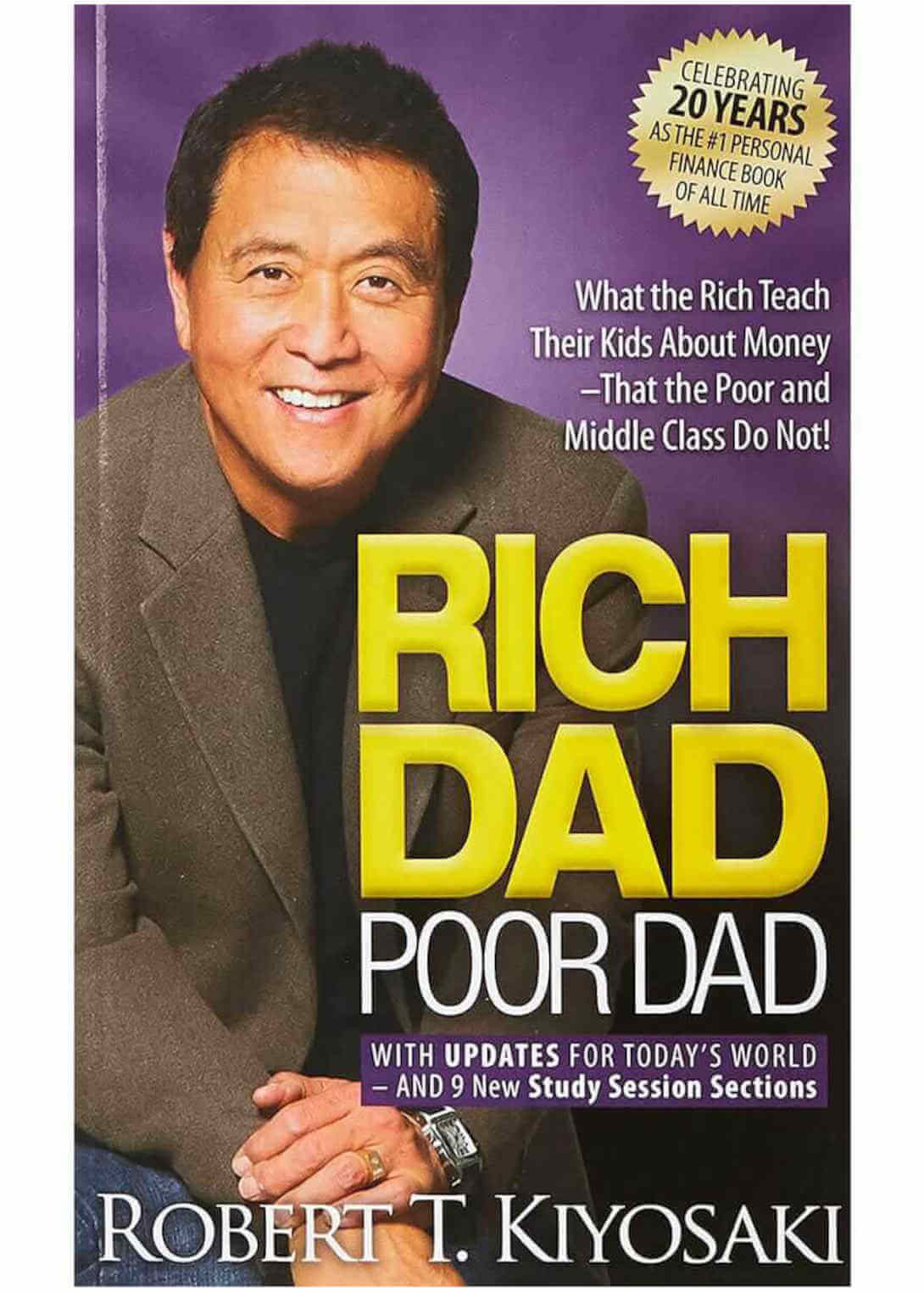
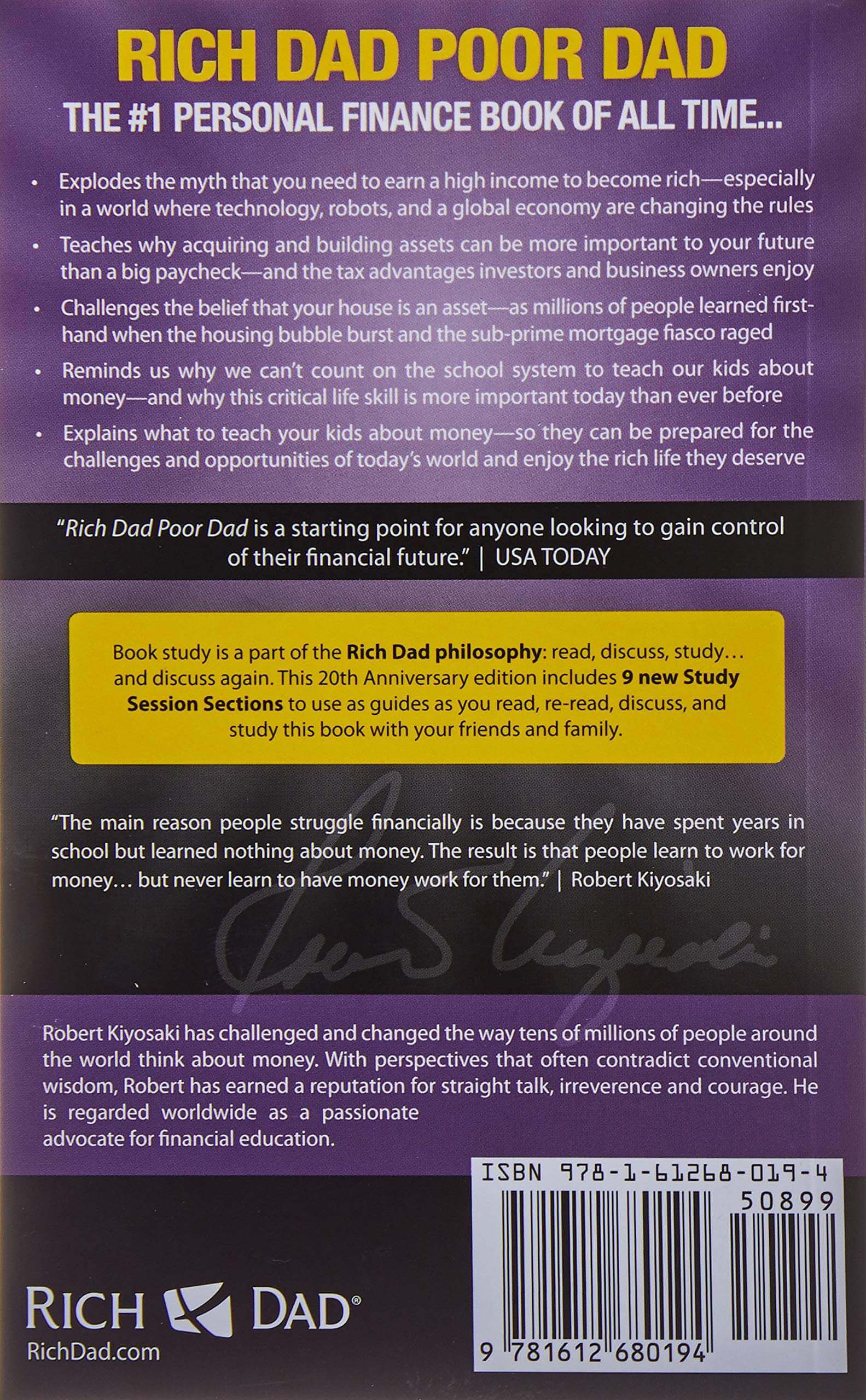
Rich Dad Poor Dad by Robert Kiyosaki
Original price was: රු2,450.00.රු1,500.00Current price is: රු1,500.00.
3 X Rs. 500.00 or 8% Cashback with


or 3 X රු500.00 with


or up to 4 X රු375.00 with


Rich Dad Poor Dad by Robert Kiyosaki is a bestselling personal-finance classic that challenges traditional ideas about money, work and wealth. Through the contrasting lessons of his “rich dad” and “poor dad,” Kiyosaki introduces concepts such as assets, liabilities, cash flow, financial education, entrepreneurship and making money work for you. Ideal for beginners, students, entrepreneurs and anyone interested in improving their financial mindset and understanding the difference between earning income and building long-term wealth.
Out of stock
Email when stock available
Rich Dad Poor Dad by Robert Kiyosaki is a bestselling personal-finance book that challenges conventional ideas about earning, saving, investing and what it really means to become financially independent.
Kiyosaki presents the lessons through two contrasting father figures.
His “poor dad” represents the traditional path:
Study hard.
Get good grades.
Find a secure job.
Earn a salary.
Save money.
Avoid excessive risk.
His “rich dad” represents a different philosophy:
Build financial knowledge.
Learn how money works.
Acquire income-producing assets.
Understand cash flow.
Develop business and investing skills.
Create income that is not completely dependent on your working hours.
The central message of Rich Dad Poor Dad by Robert Kiyosaki is not simply that one father was intelligent and the other was not.
Both were educated in different ways.
Instead, Kiyosaki argues that financial intelligence is a separate skill—one that schools and traditional career paths do not always teach.
The official Rich Dad description emphasizes this contrast between Kiyosaki’s biological father and his best friend’s entrepreneurial father, as well as the book’s focus on assets, liabilities and making money work for you rather than depending entirely on earned income.
Rich Dad Poor Dad by Robert Kiyosaki – Book Overview
Rich Dad Poor Dad by Robert Kiyosaki asks readers to reconsider one of the most common assumptions about money:
Does earning a high salary automatically make someone wealthy?
Kiyosaki’s answer is no.
A person can earn a large income and still struggle financially if expenses and debt rise just as quickly.
Another person may earn less but gradually build assets that generate cash flow.
For Kiyosaki, the important question is therefore not only:
“How much do you earn?”
It is also:
“What do you do with the money after you earn it?”
Financial Education
One of the strongest themes in Rich Dad Poor Dad by Robert Kiyosaki is financial education.
Kiyosaki argues that people spend years learning:
Mathematics.
Science.
Languages.
Professional skills.
But may finish formal education without understanding basic financial concepts.
These can include:
Cash flow.
Assets.
Liabilities.
Debt.
Taxes.
Business structures.
Investing.
Financial statements.
His broader message is that earning money and understanding money are different skills.
Assets and Liabilities
Perhaps the most famous lesson from Rich Dad Poor Dad by Robert Kiyosaki is Kiyosaki’s simplified distinction between an asset and a liability.
In his teaching framework:
An asset puts money into your pocket.
A liability takes money out of your pocket.
This definition is deliberately simpler than formal accounting definitions.
In professional accounting, assets and liabilities have technical meanings that do not always match Kiyosaki’s cash-flow-based explanation.
That distinction is important.
His model is best understood as a teaching tool for thinking about personal cash flow rather than a replacement for accounting standards.
Buy Assets
Kiyosaki encourages readers to gradually acquire assets capable of producing income or increasing long-term financial value.
Depending on circumstances, examples might include:
Businesses.
Income-producing investments.
Certain real-estate investments.
Intellectual property.
Other productive assets.
The principle is to use at least part of your income to build things that may eventually create additional income.
Lifestyle Inflation
One reason people remain financially pressured even after receiving higher salaries is lifestyle inflation.
Income rises.
Then the house becomes more expensive.
The car becomes more expensive.
Subscriptions increase.
Shopping increases.
Debt increases.
Eventually the person earns much more but still feels financially trapped.
Rich Dad Poor Dad by Robert Kiyosaki encourages readers to think about whether higher income is being converted into productive assets or simply higher consumption.
Cash Flow
Cash flow is another major idea.
Money comes in.
Money goes out.
Understanding where it goes is basic financial management.
A person may own impressive possessions but still experience negative cash flow if those possessions generate large ongoing expenses.
This leads Kiyosaki to focus strongly on the direction in which money moves.
Wealth Versus Appearance
One theme in Rich Dad Poor Dad by Robert Kiyosaki is that looking wealthy and being financially secure are not the same thing.
An expensive lifestyle can be funded by:
Debt.
High monthly expenses.
Large financial commitments.
True financial strength may be much less visible.
That idea is useful because consumer culture often encourages people to display success before they have actually built financial security.
Work to Learn, Not Only to Earn
Kiyosaki argues that a job can provide more than a paycheck.
It can provide skills.
A person might deliberately learn:
Sales.
Accounting.
Marketing.
Negotiation.
Leadership.
Communication.
Management.
These skills may later become useful in entrepreneurship or investing.
This does not mean salary is unimportant.
The book’s argument is that career decisions can also be evaluated by what they teach you.
Financial Intelligence
Kiyosaki uses the idea of financial intelligence to describe the ability to understand and make decisions about money.
That can involve:
Reading numbers.
Understanding cash flow.
Recognizing opportunities.
Evaluating risk.
Understanding taxes.
Negotiating.
Managing investments.
The broader principle is that financial decisions improve when people understand the systems behind them.
The Rat Race
The Rat Race is one of the most recognizable ideas associated with the Rich Dad philosophy.
The cycle may look like this:
Earn salary.
Pay expenses.
Take on debt.
Need salary to pay debt.
Receive raise.
Increase lifestyle.
Need even larger salary.
Repeat.
The person may appear successful but has very little freedom because monthly obligations require constant earned income.
Financial Freedom
For Kiyosaki, financial freedom means reaching a point where income from assets can cover a meaningful portion—or eventually all—of living expenses.
This does not necessarily mean never working again.
It means having more choice.
Work because you choose to.
Not only because every bill depends on the next paycheck.
Passive Income
The book discusses income that does not depend entirely on directly exchanging working hours for money.
Kiyosaki commonly contrasts:
Earned income – salary or wages from work.
with forms of income from:
Investments.
Businesses.
Assets.
The terminology and tax treatment of different income types vary by country, so readers should not assume that the book’s examples apply identically in Sri Lanka or elsewhere.
Entrepreneurship
Rich Dad Poor Dad by Robert Kiyosaki strongly encourages entrepreneurial thinking.
An employee asks:
How can I perform this job well?
An entrepreneur may also ask:
Can I build a system that creates value even when I am not personally doing every task?
This is the difference between:
Working in a system
and
building or owning part of the system.
Business Systems
A scalable business does not depend entirely on one person performing everything manually.
It needs:
Processes.
People.
Technology.
Accounting.
Sales.
Operations.
Management.
The principle is relevant even for small businesses.
A bookstore, café, ecommerce site or service company becomes easier to grow when the owner is not required to personally perform every task.
Investing
Kiyosaki encourages readers to learn investing rather than treating it as something only financial professionals can understand.
However, Rich Dad Poor Dad by Robert Kiyosaki is not a complete investment textbook.
It does not provide everything needed to evaluate:
Stocks.
Bonds.
Property.
Business valuations.
Portfolio diversification.
Risk.
Tax consequences.
Readers interested in investing should treat the book as a mindset introduction and continue learning from more detailed, evidence-based sources.
Risk and Knowledge
Kiyosaki often argues that financial ignorance can itself create risk.
Someone who does not understand an investment may not recognize:
Excessive leverage.
Poor cash flow.
Bad terms.
Fraud.
Unrealistic returns.
The useful takeaway is not that knowledgeable people can eliminate risk.
They cannot.
Knowledge can help people identify and manage risk more intelligently.
Fear of Losing Money
Fear can prevent people from investing or starting businesses.
That fear is understandable.
Money represents:
Security.
Housing.
Food.
Family responsibility.
Future plans.
The goal should not be becoming fearless.
It should be learning enough to make informed decisions without allowing either fear or greed to dominate.
Debt
Kiyosaki has often discussed using debt strategically.
Readers should approach this carefully.
Debt can increase returns when an investment performs well.
It can also magnify losses when things go badly.
Interest rates can change.
Property values can fall.
Businesses can fail.
Cash flow can disappear.
For most readers, high-interest consumer debt can create serious financial pressure.
Ideas about leveraged investing should therefore be evaluated cautiously and, where appropriate, with qualified financial or tax professionals.
Your Home as an Asset
One of the book’s most controversial claims concerns home ownership.
Kiyosaki challenges the assumption that a personal residence should automatically be viewed as an income-producing asset.
His point is largely about cash flow:
A home may require:
Mortgage payments.
Maintenance.
Insurance.
Taxes.
Repairs.
At the same time, a home can still have market value, provide housing services and appreciate in price.
So the issue is more nuanced than simply saying:
“A house is not an asset.”
In accounting and economics, owner-occupied property may indeed be considered an asset.
Kiyosaki is using a narrower personal-cash-flow definition.
Taxes
Rich Dad Poor Dad by Robert Kiyosaki also encourages readers to understand taxation and business structures.
This is useful as a general principle.
However, tax laws vary dramatically across countries and change over time.
A strategy described for the United States may not work the same way in Sri Lanka.
Readers should consult current local tax rules and qualified professionals before acting on specific tax strategies.
Pay Yourself First
Another influential idea is to prioritize building personal financial assets before allowing every rupee of income to disappear into consumption.
In practical terms, this may mean automatically setting aside part of income for:
Savings.
Emergency funds.
Investments.
Long-term goals.
The exact percentage depends on the person’s income, debt and responsibilities.
The useful principle is intentionality.
Do not leave saving until whatever remains at the end of the month.
Emergency Funds Still Matter
Some readers can become so excited about investing that they neglect basic financial protection.
Before taking significant investment risk, many people benefit from maintaining accessible emergency savings.
Unexpected expenses happen.
Medical costs.
Repairs.
Job loss.
Family emergencies.
A good financial plan needs both growth and resilience.
Financial Statements
Kiyosaki encourages readers to understand how basic financial statements work.
Even simple knowledge of:
Income.
Expenses.
Assets.
Liabilities.
Cash flow.
can improve personal decision-making.
Business owners particularly benefit from knowing the difference between:
Revenue.
Profit.
Cash.
A company can generate sales and still run out of cash.
The Difference Between Income and Wealth
Income is what flows in during a period.
Wealth is broader.
Someone earning Rs. 500,000 per month but spending Rs. 520,000 is not necessarily becoming wealthier.
Someone earning less but consistently building savings and productive assets may improve their financial position over time.
That distinction is central to Rich Dad Poor Dad by Robert Kiyosaki.
Make Money Work for You
The phrase “make money work for you” is central to the Rich Dad philosophy.
It means using capital to purchase or create assets that may generate future income.
This could include investments or business ownership.
However, money does not literally work automatically.
Assets still require:
Research.
Risk management.
Maintenance.
Monitoring.
Good decisions.
The phrase should be understood as a financial principle, not a promise of effortless wealth.
Rich Dad Versus Poor Dad
The book’s storytelling relies on contrast.
Poor Dad emphasizes:
Education.
Security.
Employment.
Traditional career success.
Rich Dad emphasizes:
Financial literacy.
Ownership.
Investment.
Entrepreneurship.
Kiyosaki uses the contrast to challenge assumptions.
Readers do not necessarily need to reject one side completely.
Formal education and financial education can both be valuable.
Stable employment and investing can coexist.
The most useful approach may be learning from both.
Is Rich Dad Poor Dad a True Story?
The book is presented through autobiographical stories about Kiyosaki and two father figures, including his biological father and the father of his childhood friend. The official Rich Dad site continues to describe that framing as the foundation of the book.
Readers should still understand that Rich Dad Poor Dad is primarily a personal-finance teaching book rather than an independently documented biography.
Its stories are used mainly to communicate financial ideas.
Is It a Beginner Finance Book?
Yes.
Rich Dad Poor Dad by Robert Kiyosaki is particularly accessible because it does not begin with complicated formulas.
It focuses on:
Mindset.
Basic cash flow.
Assets.
Liabilities.
Financial education.
Entrepreneurship.
That makes it approachable for readers who have never studied finance.
Is It an Investing Manual?
No.
The book is better described as a financial mindset and education book.
It can motivate readers to learn about investing, but it does not provide enough detail by itself to construct a diversified investment portfolio or evaluate every investment opportunity.
Does Rich Dad Poor Dad Guarantee Wealth?
No.
Reading Rich Dad Poor Dad by Robert Kiyosaki does not guarantee financial independence.
Neither does:
Buying property.
Starting a business.
Investing.
These involve risk.
Outcomes depend on many factors including:
Income.
Capital.
Skills.
Market conditions.
Taxes.
Timing.
Diversification.
Personal decisions.
The book is best used to generate questions and improve financial awareness—not as a guaranteed formula for becoming rich.
Is the Book Still Relevant?
Many of its core ideas remain relevant:
Understand cash flow.
Learn financial basics.
Avoid uncontrolled lifestyle inflation.
Develop useful skills.
Build assets.
Think about ownership.
Some examples and claims should still be read critically, especially around real estate, debt, taxation and definitions of assets.
Publication History
The Rich Dad organization states that Rich Dad Poor Dad was self-published in April 1997 after traditional publishers rejected it. It later became an international bestseller and developed into the wider Rich Dad financial-education brand.
Modern editions include updated commentary and anniversary material, so exact:
Page count.
Cover.
Subtitle.
ISBN.
may vary.
Your BookLounge Edition
Your BookLounge product is already listed as:
Rich Dad Poor Dad by Robert T Kiyosaki
SKU / Code: 2083
Category: Non-Fiction > Finance, Economics & Investing
Your procurement record for a recent batch lists:
ISBN: 9781612680194
Use the ISBN printed on the physical copy when updating WooCommerce, because other editions use different ISBNs.
Important Themes
Rich Dad Poor Dad by Robert Kiyosaki explores financial literacy, assets, liabilities, cash flow, wealth building, entrepreneurship, investing, business ownership, financial independence, mindset, career development, taxation, debt, passive income, personal responsibility and the difference between earning money and building wealth.
7 Powerful Money Lessons From Rich Dad Poor Dad by Robert Kiyosaki
- Financial education matters. Earning money is only one part of personal finance. Understanding how money moves helps people make better long-term decisions.
- Focus on acquiring productive assets. Instead of allowing every increase in income to become higher consumption, consider directing some toward assets that may build future financial value.
- Watch cash flow, not appearances. Expensive possessions can make someone look wealthy while leaving them financially stressed.
- Learn skills beyond your main profession. Sales, accounting, investing, negotiation and business knowledge can increase your options and earning potential.
- Avoid uncontrolled lifestyle inflation. A higher salary does not improve financial freedom if expenses and debt rise equally quickly.
- Think about ownership. Employees earn from their labor; owners may also benefit from businesses, investments and systems. Understanding both sides can broaden financial opportunities.
- Make financial decisions critically. The strongest lesson from Rich Dad Poor Dad by Robert Kiyosaki is not to blindly follow either conventional advice or Kiyosaki himself. Learn, question, calculate risks and understand the decision before committing money.
Why Read Rich Dad Poor Dad by Robert Kiyosaki?
Rich Dad Poor Dad by Robert Kiyosaki is an excellent starting point for readers interested in:
Personal finance.
Financial literacy.
Investing.
Entrepreneurship.
Business ownership.
Passive-income concepts.
Money mindset.
Cash flow.
Assets and liabilities.
Building wealth.
Career development.
Financial independence.
It is especially useful for readers who have never thought deeply about the difference between:
Earning a salary
and
building financial assets.
The book may change the questions you ask about money.
Instead of only:
“How can I earn more?”
you may begin asking:
“What do I own?”
“What produces cash flow?”
“Where is my money going?”
“What financial skills do I lack?”
“What am I building for the future?”
Those questions can be valuable even when readers disagree with some of Kiyosaki’s specific conclusions.
Who Should Read This Book?
Rich Dad Poor Dad by Robert Kiyosaki may especially appeal to students, young professionals, entrepreneurs, small-business owners, people beginning to learn about investing and anyone who wants an accessible introduction to financial thinking.
It is also useful for people earning reasonably well but wondering why they still feel financially pressured.
The book is not a substitute for professional investment, legal or tax advice, but it can provide motivation to become more financially educated.
Rich Dad Poor Dad by Robert Kiyosaki – Change the Way You Think About Money
Rich Dad Poor Dad by Robert Kiyosaki became influential because its central challenge is simple.
Most people are taught how to work for money.
Far fewer are taught how money itself works.
School may help someone become:
A doctor.
Engineer.
Teacher.
Software developer.
Manager.
But professional expertise does not automatically produce financial expertise.
A highly skilled person can still:
Overspend.
Take on excessive debt.
Ignore investing.
Misunderstand cash flow.
Reach retirement with insufficient savings.
That is the gap Kiyosaki wants readers to notice.
His answer is financial education.
Learn the language of money.
Understand what you own.
Understand what you owe.
Understand where your income goes.
Build productive assets gradually.
Develop skills.
Think about ownership.
And stop assuming that earning more automatically solves every financial problem.
Readers should still approach Rich Dad Poor Dad by Robert Kiyosaki critically.
Some definitions are deliberately simplified.
Real-estate investing involves risk.
Debt can be dangerous.
Tax rules differ between countries.
No asset produces guaranteed returns.
And no book can provide a universal formula for wealth.
But those caveats do not erase the value of the book’s central question:
Are you only earning money—or are you also learning how to manage and build with it?
For readers beginning their financial-education journey, Rich Dad Poor Dad by Robert Kiyosaki remains an accessible and thought-provoking introduction to assets, cash flow, entrepreneurship, investing and the idea of building greater control over your financial future.
Learn more about Rich Dad Poor Dad by Robert Kiyosaki on the official Rich Dad website.
Explore more personal finance and business books at Bargain Books.
| Author | Robert Kiyosaki |
|---|---|
| Language | English |
| ISBN/ISSN | 9.78161E+12 |
| Type | Paperback Printed Book (Second Quality Copy) |
Be the first to review “Rich Dad Poor Dad by Robert Kiyosaki”
Related products
Out of stock
Business, Finance & Economics
රු1,700.00
3 X Rs. 566.67 or 8% Cashback with
or 3 X රු566.67 with
or up to 4 X රු425.00 with

Out of stock
Damaged & Imperfect Books
රු1,700.00
3 X Rs. 566.67 or 8% Cashback with
or 3 X රු566.67 with
or up to 4 X රු425.00 with
Business, Finance & Economics
රු1,900.00
3 X Rs. 633.33 or 8% Cashback with
or 3 X රු633.33 with
or up to 4 X රු475.00 with
Damaged & Imperfect Books
රු1,700.00
3 X Rs. 566.67 or 8% Cashback with
or 3 X රු566.67 with
or up to 4 X රු425.00 with
-12%
Biography
Original price was: රු3,400.00.රු3,000.00Current price is: රු3,000.00.
3 X Rs. 1,000.00 or 8% Cashback with
or 3 X රු1,000.00 with
or up to 4 X රු750.00 with
Business, Finance & Economics
රු2,500.00
3 X Rs. 833.33 or 8% Cashback with
or 3 X රු833.33 with
or up to 4 X රු625.00 with
Damaged & Imperfect Books
රු1,700.00
3 X Rs. 566.67 or 8% Cashback with
or 3 X රු566.67 with
or up to 4 X රු425.00 with
Damaged & Imperfect Books
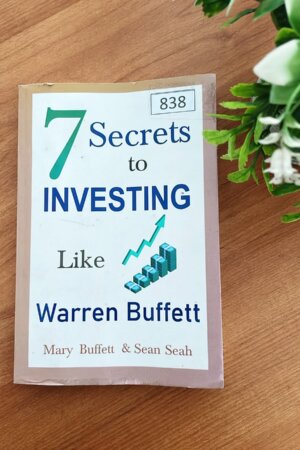
7 Secrets to Investing Like Warren Buffett by Mary Buffett and Sean Seah (838)
රු750.00
3 X Rs. 250.00 or 8% Cashback with
or 3 X රු250.00 with
or up to 4 X රු187.50 with
Reviews
There are no reviews yet.