
No products in the cart.
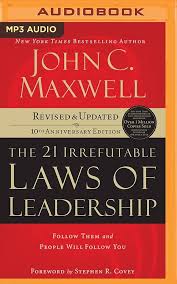







The 21 Irrefutable Laws of Leadership by John C. Maxwell


රු2,250.00
3 X Rs. 750.00 or 8% Cashback with


or 3 X රු750.00 with


or up to 4 X රු562.50 with


21 Irrefutable Laws of Leadership by John C. Maxwell is a practical guide to understanding what makes effective leaders successful and how leadership ability can be developed over time.
Maxwell presents leadership through twenty-one memorable principles covering influence, trust, growth, priorities, empowerment, timing, teamwork and legacy.
Among the best-known principles are the Law of the Lid, Law of Influence, Law of Process, Law of Navigation, Law of Solid Ground, Law of Empowerment and Law of Legacy.
Ideal for managers, entrepreneurs, team leaders, students and professionals, this book provides a structured framework for becoming a stronger leader and helping others grow.
Product details:
- Title: The 21 Irrefutable Laws of Leadership
- Subtitle: Follow Them and People Will Follow You
- Author: John C. Maxwell
- Publisher: Thomas Nelson / HarperCollins Leadership
- Format: Paperback
- Edition: Revised and Updated 10th Anniversary Edition
- Pages: 336
- Language: English
- ISBN-13: 9780785289357
- ISBN-10: 0785289356
- Publication year: 2007
- Dimensions: Approximately 21.2 × 14.1 × 2.7 cm
- Weight: Approximately 441 g
- Category: Business, Leadership and Personal Development
- Key themes: Influence, trust, growth, teamwork, priorities, empowerment and legacy
9 in stock
A Masterclass in Influence: The 21 Irrefutable Laws of Leadership
21 Irrefutable Laws of Leadership by John C. Maxwell is a practical and widely recognized guide to becoming a more effective leader.
Rather than presenting leadership as something reserved for executives or people with impressive titles, Maxwell explores leadership as a set of principles that can be learned, practised and strengthened.
The book is organised around twenty-one laws covering influence, trust, growth, decision-making, teamwork, priorities and long-term impact.
21 Irrefutable Laws of Leadership
21 Irrefutable Laws of Leadership begins with one of Maxwell’s central ideas: leadership determines how effectively a person can influence and develop other people.
A job title may give someone authority.
It does not automatically make that person an effective leader.
Strong leadership develops through trust, experience, learning, relationships and consistent behaviour.
This makes the book useful for both experienced managers and people preparing for their first leadership responsibilities.
The Law of the Lid
The Law of the Lid suggests that leadership ability can place a limit on overall effectiveness.
Someone may possess excellent technical knowledge, work extremely hard and have ambitious goals.
However, limited leadership ability can make it difficult to build a strong team or scale an organisation.
Improving leadership therefore has the potential to increase effectiveness in many other areas.
Readers can ask:
- How well do I communicate?
- Can I motivate other people?
- Do people trust my decisions?
- Can I delegate effectively?
- Am I developing future leaders?
These questions help identify areas that may need improvement.
The Law of Influence
One of the best-known ideas in 21 Irrefutable Laws of Leadership is that leadership involves influence.
People may follow a manager because they are required to.
Leadership becomes stronger when people choose to follow because they trust the person and believe in the direction being offered.
Influence can grow through:
- Competence
- Communication
- Consistency
- Integrity
- Relationships
- Reliability
- Understanding others
This makes leadership a relationship rather than simply a position.
The Law of Process
Leadership does not usually develop overnight.
The Law of Process focuses on continuous improvement.
A person can become a stronger leader through repeated learning, experience and reflection.
Useful development activities include:
- Reading leadership books
- Seeking feedback
- Finding mentors
- Taking on greater responsibility
- Learning from mistakes
- Practising communication
- Developing emotional awareness
Small improvements accumulated over years can create substantial growth.
The Law of Navigation
A leader needs more than a destination.
Strong leaders also consider how the team will reach it.
The Law of Navigation emphasizes planning.
Before beginning an important project, leaders can consider:
- What is the goal?
- What resources are required?
- What risks exist?
- Who should be involved?
- What obstacles are likely?
- What milestones should be measured?
- What alternatives are available?
Planning does not remove uncertainty.
It helps people respond more effectively when circumstances change.
The Law of Addition
Leadership should create value for other people.
A leader is not successful simply because their own position improves.
Strong leadership should also help employees, colleagues and team members become more capable.
This can happen through:
- Coaching
- Training
- Recognition
- Opportunities
- Constructive feedback
- Support
- Mentorship
Leaders who consistently add value can build stronger relationships and more capable teams.
The Law of Solid Ground
Trust is an essential part of leadership.
People need confidence in the character and judgement of those leading them.
Trust can be strengthened through consistency between words and actions.
Leaders should therefore pay attention to:
- Keeping commitments
- Communicating honestly
- Accepting responsibility
- Treating people fairly
- Correcting mistakes
- Acting consistently
Trust often takes time to build but can disappear quickly when repeatedly damaged.
The Law of Respect
People tend to respect leaders who demonstrate competence, courage and consistency.
Respect cannot simply be demanded.
It develops through behaviour.
A leader who remains calm during difficulty, accepts responsibility and supports the team may gain stronger respect than someone who depends only on authority.
This is why leadership character matters alongside technical knowledge.
The Law of Intuition
Experienced leaders often learn to recognise patterns that other people may overlook.
They notice changes in team morale, customer behaviour, organisational problems and opportunities.
This does not mean making important decisions without evidence.
Leadership intuition becomes stronger when experience and observation are combined with careful analysis.
Over time, leaders can become better at identifying important signals.
The Law of Magnetism
Teams often reflect the people leading them.
Leaders may attract individuals with similar values, priorities and attitudes.
This gives leaders another reason to work on themselves.
If a leader wants disciplined, curious and responsible employees, those qualities should also be visible in their own behaviour.
Culture is influenced by what leaders consistently demonstrate.
The Law of Connection
Leadership is easier when people feel understood.
Before asking people to follow a plan, leaders should make an effort to connect with them.
This may involve listening carefully, understanding concerns and communicating why a goal matters.
Different team members may require different communication approaches.
Connection does not mean avoiding difficult decisions.
It means remembering that leadership involves people, not only processes.
The Law of the Inner Circle
No leader succeeds completely alone.
The people closest to a leader can significantly influence overall effectiveness.
An effective inner circle may include people with strengths in:
- Operations
- Finance
- Communication
- Strategy
- Technology
- Sales
- Customer service
- People management
Strong leaders do not need to be the most talented person in every area.
They need to build capable teams.
The Law of Empowerment
Some managers struggle to delegate because they fear losing control.
The Law of Empowerment encourages leaders to give capable people responsibility and authority.
Empowerment can increase:
- Ownership
- Confidence
- Decision-making ability
- Motivation
- Leadership capacity
This also allows senior leaders to focus on higher-value responsibilities.
Delegation should include clear expectations, appropriate authority and accountability.
The Law of the Picture
People pay attention to what leaders actually do.
A leader who asks employees to arrive on time but is consistently late weakens the message.
A leader who asks people to continue learning but never develops personally creates the same problem.
Leadership behaviour should model the standards being requested from others.
Actions make values visible.
The Law of Buy-In
People often need confidence in the leader before they fully support the vision.
A strong business strategy may struggle if employees do not trust the person presenting it.
Leaders therefore need to build credibility while communicating direction.
This can involve:
- Explaining decisions
- Demonstrating competence
- Listening to concerns
- Building trust
- Showing consistency
People are more likely to support change when they understand both the destination and the leader guiding them.
The Law of Victory
Strong leaders look for ways to help the team succeed.
Difficult circumstances should lead to problem-solving rather than immediate surrender.
When obstacles appear, leaders can ask:
- What alternatives exist?
- What resources can we use?
- What are we missing?
- Who can help?
- What should change?
The focus moves from explaining failure toward finding a path forward.
The Law of the Big Mo
Momentum can make leadership easier.
When a team begins producing positive results, confidence can increase.
Small wins may lead to greater energy and stronger participation.
Leaders can help create momentum by setting achievable milestones and recognising progress.
Momentum does not replace strategy.
It strengthens execution.
The Law of Priorities
Being busy is not the same as being effective.
Leaders frequently face more tasks than they can personally complete.
The Law of Priorities encourages them to identify where their attention produces the greatest value.
Important questions include:
- What must I personally handle?
- What can be delegated?
- Which activity has the greatest impact?
- What should stop?
- Which task supports our main goal?
Strong prioritisation helps protect time for high-value work.
The Law of Sacrifice
Greater leadership responsibility often requires sacrifice.
Leaders may need to give up convenience, personal recognition or short-term comfort to achieve a larger goal.
Leadership positions can bring benefits.
They also bring responsibility.
The more people depend on a leader’s decisions, the more carefully those decisions may need to be made.
The Law of Timing
A good decision made at the wrong time may still produce poor results.
Timing matters.
Leaders need to consider both what should happen and when it should happen.
Launching a project, announcing a change, hiring employees or entering a market can all depend partly on timing.
Experience helps leaders understand when to move quickly and when to wait.
The Law of Explosive Growth
Developing followers can increase results.
Developing other leaders can multiply them.
This is especially important for growing organisations.
A company that depends entirely on one leader may struggle to expand.
Leadership development creates more people capable of making decisions, managing teams and taking responsibility.
This makes growth more sustainable.
The Law of Legacy
The final law asks leaders to consider what remains after they leave.
A leadership legacy is not simply a title or achievement.
It may be reflected in:
- People developed
- Systems improved
- Values established
- Leaders mentored
- Opportunities created
- Organisations strengthened
Successful leadership eventually becomes less about personal recognition and more about what continues without you.
Developing Leadership Every Day
21 Irrefutable Laws of Leadership works best when the principles are applied rather than simply read.
A practical approach is to choose one law at a time.
Identify how it currently appears in your work.
Then choose one behaviour to improve.
For example:
Law: Empowerment
Current issue: Too many decisions depend on me.
Action: Delegate one recurring responsibility with clear authority and accountability.
Small practical changes make leadership development measurable.
Who Should Read This Book?
21 Irrefutable Laws of Leadership may appeal to:
- Business owners
- Entrepreneurs
- Managers
- Supervisors
- Team leaders
- Project managers
- Students
- Coaches
- Emerging leaders
- Professionals preparing for management
It can also be useful for experienced leaders who want a structured framework for reviewing their current leadership approach.
About John C. Maxwell
John C. Maxwell is an author, speaker and leadership teacher whose work focuses on leadership, teamwork and personal development.
His other books include The 5 Levels of Leadership, The 15 Invaluable Laws of Growth and The 17 Indisputable Laws of Teamwork.
His leadership books frequently use memorable frameworks designed to help readers apply complex ideas in practical situations.
Product Details
Product title: The 21 Irrefutable Laws of Leadership
Subtitle: Follow Them and People Will Follow You
Author: John C. Maxwell
Publisher: Thomas Nelson / HarperCollins Leadership
Format: Paperback
Edition: Revised and Updated 10th Anniversary Edition
Language: English
Page count: 336 pages
ISBN-13: 9780785289357
ISBN-10: 0785289356
Publication year: 2007
Dimensions: Approximately 212 × 141 × 27 mm
Weight: Approximately 441 grams
Category: Business, Leadership and Personal Development
Key themes: Influence, trust, growth, teamwork, priorities, empowerment and legacy
Why Choose 21 Irrefutable Laws of Leadership?
21 Irrefutable Laws of Leadership provides a clear framework for understanding how successful leadership develops.
Instead of treating leadership as a mysterious talent, Maxwell breaks it into principles involving influence, trust, continuous development, priorities, teamwork, empowerment and long-term legacy.
Managers can use the laws to evaluate how they lead teams.
Entrepreneurs can apply them while building organisations.
Emerging leaders can use them as a framework for developing skills before moving into larger responsibilities.
For readers interested in management, leadership and personal growth, 21 Irrefutable Laws of Leadership is a valuable addition to a business bookshelf.
Explore our complete leadership and management books collection to discover more titles about influence, teamwork, personal development and building successful organisations.
: Book Lounge – Self-Help & Leadership
Physical Specifications
Weight: ~360 g (Paperback) / ~540 g (Hardcover)
Height: 21.0 cm (Standard Edition)
Publisher: Thomas Nelson / HarperCollins
Reference & Purchase Links
Wikipedia: The 21 Irrefutable Laws of Leadership
Bargain Books: Buy on bargainbooks.lk
Lasting Impact
After reading The 21 Irrefutable Laws, many readers feel more intentional about their interactions. Instead of just “managing” tasks, they begin “leading” people. Ultimately, John C. Maxwell teaches that lasting impact grows from serving others, building trust, and consistently applying the laws of influence.
eference & Purchase Links
Wikipedia: The 21 Irrefutable Laws of Leadership
Bargain Books: Buy on bargainbooks.lk
Be the first to review “The 21 Irrefutable Laws of Leadership by John C. Maxwell”
Related products
-19%

Out of stock
Biography
Original price was: රු2,400.00.රු1,950.00Current price is: රු1,950.00.
3 X Rs. 650.00 or 8% Cashback with
or 3 X රු650.00 with
or up to 4 X රු487.50 with
-19%

Out of stock
Non-Fiction & Knowledge
Original price was: රු2,650.00.රු2,150.00Current price is: රු2,150.00.
3 X Rs. 716.67 or 8% Cashback with
or 3 X රු716.67 with
or up to 4 X රු537.50 with
-14%

Out of stock
Non-Fiction & Knowledge
Original price was: රු3,500.00.රු3,000.00Current price is: රු3,000.00.
3 X Rs. 1,000.00 or 8% Cashback with
or 3 X රු1,000.00 with
or up to 4 X රු750.00 with
-17%

Out of stock
Non-Fiction & Knowledge
Original price was: රු2,900.00.රු2,400.00Current price is: රු2,400.00.
3 X Rs. 800.00 or 8% Cashback with
or 3 X රු800.00 with
or up to 4 X රු600.00 with
-24%

Out of stock
Non-Fiction & Knowledge
Original price was: රු2,100.00.රු1,600.00Current price is: රු1,600.00.
3 X Rs. 533.33 or 8% Cashback with
or 3 X රු533.33 with
or up to 4 X රු400.00 with
-24%

Non-Fiction & Knowledge
Original price was: රු2,300.00.රු1,750.00Current price is: රු1,750.00.
3 X Rs. 583.33 or 8% Cashback with
or 3 X රු583.33 with
or up to 4 X රු437.50 with
-7%

Out of stock
Original price was: රු4,500.00.රු4,200.00Current price is: රු4,200.00.
3 X Rs. 1,400.00 or 8% Cashback with
or 3 X රු1,400.00 with
or up to 4 X රු1,050.00 with

Out of stock
Non-Fiction & Knowledge
රු1,800.00
3 X Rs. 600.00 or 8% Cashback with
or 3 X රු600.00 with
or up to 4 X රු450.00 with
Reviews
There are no reviews yet.