
No products in the cart.
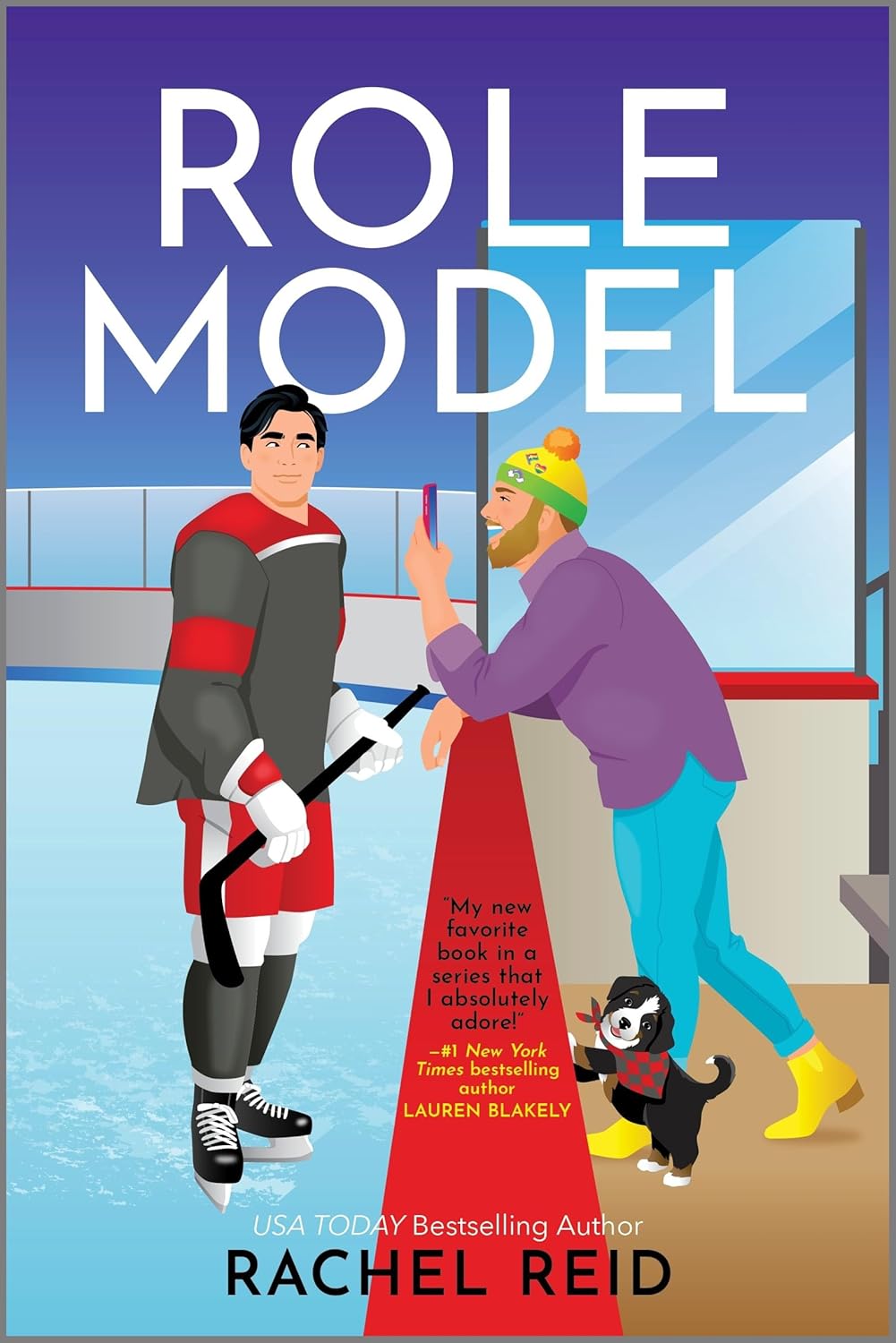
Role model by Rachel reid


රු1,750.00
3 X Rs. 583.33 or 8% Cashback with


or 3 X රු583.33 with


or up to 4 X රු437.50 with


| Detail | Information |
|---|---|
| Title | Role Model |
| Author | Rachel Reid |
| Series | Game Changers #5 |
| Genre | Romance / Sports Romance (LGBTQ+) |
| Language | English |
| Publisher | Carina Press |
| Publication Year | 2021 |
| Pages | 350 pages (approx.) |
| Format | Paperback |
| ISBN-10 | 133547681X |
| ISBN-13 | 9781335476814 |
| Package Length (cm) | 20.3 cm |
| Package Width (cm) | 13.3 cm |
| Package Height (cm) | 2.4 cm |
Out of stock
Email when stock available
Role Model by Rachel Reid is a heartfelt, funny and steamy adult hockey romance about learning to become a better person, finding the courage to live authentically and falling for someone whose optimism makes hiding increasingly difficult.
Professional hockey player Troy Barrett is not having a particularly good time.
His personal life is a mess.
His reputation has taken a hit.
A scandal involving someone close to him has forced Troy to confront uncomfortable questions about the people he once surrounded himself with.
Then he gets traded.
And not to the kind of team a successful player dreams of joining.
Troy lands with the Ottawa Centaurs, a struggling hockey team where he would prefer to play quietly, avoid attention and keep everyone at a safe emotional distance.
Unfortunately for Troy, the team has a social media manager named Harris Drover.
Harris is almost Troy’s complete opposite.
He is cheerful.
Friendly.
Openly gay.
Comfortable with himself.
Good with people.
And determined to make Troy participate in the team’s online presence.
Troy initially wants nothing to do with him.
But Harris has a way of getting past Troy’s defensive exterior.
The more time they spend together, the more difficult it becomes for Troy to pretend that he feels nothing.
And for a closeted professional athlete who has spent years carefully controlling what the world sees, falling for an openly gay man creates a terrifying possibility:
Maybe Troy could stop hiding.
But wanting that life and being brave enough to choose it are two very different things.
Role Model by Rachel Reid – Book Overview
Role Model by Rachel Reid is the fifth novel in Rachel Reid’s Game Changers hockey-romance series.
The story focuses on Troy Barrett, a professional hockey player whose life has reached an uncomfortable turning point.
He is carrying the consequences of past choices.
He is questioning friendships he once accepted without enough thought.
He is closeted.
He is unhappy.
And he is suddenly playing for a new team.
Then Harris enters his life.
The romance between them is important, but the novel is also very much about Troy deciding what kind of man he actually wants to become.
Troy Barrett
Troy is intentionally not introduced as the perfect romantic hero.
He is defensive, unhappy and carrying years of fear.
He has spent much of his life trying to fit into a professional hockey environment where being openly queer can feel dangerous.
That fear has influenced how he behaves.
It has also contributed to relationships and choices he increasingly realizes he cannot defend.
This gives Troy a genuine character arc.
The question is not simply whether he will fall in love.
It is whether he will accept responsibility for the person he has been and make different choices going forward.
Harris Drover
Harris is the social media manager for the Ottawa Centaurs.
Rachel Reid describes him as cheerful, openly gay and essentially a “walking ball of sunshine.”
Where Troy is guarded, Harris is warm.
Where Troy tries to disappear, Harris’s job literally involves making people visible.
Where Troy fears what others may think about his sexuality, Harris has built a life in which being gay is simply part of who he is.
That contrast creates much of the novel’s romantic chemistry.
Grumpy Meets Sunshine
Role Model by Rachel Reid uses the popular grumpy/sunshine romance trope extremely effectively.
Troy is withdrawn and irritable.
Harris is enthusiastic and friendly.
Harris does not magically fix Troy.
Instead, his presence shows Troy that another kind of life may be possible.
One where he can laugh more.
Connect with people.
Stop constantly monitoring himself.
And perhaps stop assuming that rejection is inevitable.
A Hockey Romance
Hockey is not merely decorative background in the novel.
Troy’s identity is deeply connected to professional sport.
The team environment shapes his friendships, public image and fears about coming out.
Professional athletes often live under enormous public scrutiny.
Fans watch.
Media comment.
Teammates talk.
Sponsors notice.
Management makes decisions.
For a closeted player, that visibility can turn personal identity into something that feels professionally risky.
Hockey Culture
One of the darker themes in Role Model by Rachel Reid involves harmful aspects of male sports culture.
The novel examines what can happen when loyalty to teammates becomes more important than accountability.
A player may be talented.
Popular.
Well liked.
But none of those things erase harmful behavior.
Troy’s growth partly involves recognizing that remaining silent can also become a choice.
Accountability
This is one of the strongest aspects of the story.
Troy is not asked merely to become nicer because he has fallen in love.
He has to confront past behavior.
He has to think about who he supported.
Who he ignored.
Who may have been hurt.
Personal growth becomes meaningful because it requires discomfort.
The Scandal Before the Story
A serious scandal involving sexual-assault allegations against someone from Troy’s former hockey circle helps trigger his crisis.
Rachel Reid has clarified that the assault itself occurs off page before the novel begins and that the book does not depict or describe the assault directly. The subject is nevertheless important to the story and receives a content warning.
This makes the novel heavier than a purely fluffy sports romance.
Choosing Who You Want to Be
Troy cannot change everything he did previously.
What he can change is what he does next.
That distinction is important.
Growth does not require pretending the past never happened.
It requires acknowledging it honestly enough to stop repeating it.
Coming Out
Role Model by Rachel Reid is also a coming-out story.
Troy is deeply afraid of publicly acknowledging that he is gay.
That fear does not disappear simply because he meets Harris.
Coming out is not one dramatic moment followed by instant confidence.
It involves decisions about:
Family.
Teammates.
Career.
Media.
Fans.
Friends.
Safety.
Privacy.
Troy must decide when and how much of himself he is ready to reveal.
The Closet as Protection
For Troy, staying closeted has functioned as protection.
If nobody knows, nobody can reject him for it.
But hiding also creates another cost.
He cannot live openly.
He cannot easily build the relationship he actually wants.
He constantly has to monitor his words and behavior.
Protection can eventually become a prison.
Harris and Authenticity
Harris provides a contrast because he is openly gay and comfortable with his identity.
That does not mean his life is free from difficulty.
It simply allows Troy to see something he has rarely imagined for himself:
A queer adult life built around friendship, work, joy and ordinary happiness.
Sometimes seeing another person living authentically makes possibility feel more real.
Private Love Versus Public Love
Troy may be able to be affectionate behind closed doors.
But a relationship cannot remain entirely private if one partner feels erased by that secrecy.
This creates one of the novel’s central emotional questions.
How much fear should a relationship be expected to accommodate?
And at what point does self-protection begin harming the person you love?
Harris Is Not Troy’s Therapist
An important strength of the romance is that Harris can support Troy without being responsible for solving every problem in Troy’s life.
Love may encourage change.
But Troy still has to make his own decisions.
That helps preserve Harris as a character rather than reducing him to a reward for Troy’s development.
A New Team and a New Beginning
The Ottawa Centaurs initially look like a professional disappointment.
For Troy, however, the trade becomes an unexpected opportunity.
His old environment reinforced old habits.
The new team offers a chance to build different relationships.
Sometimes a setback can become useful precisely because it interrupts a pattern.
Teammates
One of the pleasures of Rachel Reid’s Game Changers books is the larger hockey world surrounding each central couple.
Characters from earlier novels can appear again, creating continuity across the series.
For readers who already know the other couples, these connections add an extra layer of enjoyment.
Ilya Rozanov
Fans of Heated Rivalry will also find familiar connections in this broader series world.
Ilya Rozanov remains an especially memorable recurring character.
His appearances help connect Role Model with the relationships and themes developed elsewhere in Game Changers.
Readers especially invested in Ilya and Shane should continue into The Long Game, which focuses again on their relationship.
Redemption
Troy’s character arc can reasonably be described as a redemption arc.
But redemption does not mean that everyone he hurt must forgive him.
Someone can apologize sincerely and still have to accept that another person wants distance.
That is an important distinction.
An apology is something you offer.
Forgiveness belongs to the other person.
Toxic Friendship
The book also examines friendships built around unhealthy loyalty.
Sometimes people remain friends because:
They have known each other for years.
They share a profession.
The group expects loyalty.
Challenging the person could create conflict.
But history does not make every relationship worth preserving.
Believe People Who Speak Up
The scandal storyline raises a broader issue about what happens when people report harmful behavior involving someone popular or powerful.
Communities may instinctively defend the person they know.
That reaction can make it extremely difficult for victims to be heard.
The novel makes this conflict part of Troy’s moral development rather than treating the scandal only as background drama.
Masculinity
Role Model by Rachel Reid also examines different versions of masculinity.
Professional hockey culture is traditionally associated with toughness.
Pain tolerance.
Competition.
Physical aggression.
Emotional control.
But emotional honesty does not make Troy less masculine.
Neither does being gay.
The book challenges the idea that strength requires hiding vulnerability.
Vulnerability
Falling for Harris requires Troy to become vulnerable.
Not simply sexually.
Emotionally.
He has to admit:
I care.
I am afraid.
I was wrong.
I want something different.
Those statements can feel more frightening than physical confrontation.
Mental and Emotional Growth
Troy’s change is gradual enough to matter.
A good redemption story should not say:
He fell in love, therefore everything is fixed.
Instead, readers see him reconsider assumptions and begin making different decisions.
Growth becomes a process.
Humor
Despite its heavier themes, Role Model by Rachel Reid is also funny.
Rachel Reid herself described the novel as somewhat darker than some installments while still containing plenty of comedy, romance and sex.
Harris’s personality helps balance Troy’s seriousness.
The Centaurs also provide a lighter team atmosphere that allows the story to remain romantic rather than overwhelmingly grim.
Sexual Chemistry
This is an adult romance and contains explicit sexual content.
The physical relationship between Troy and Harris is part of the emotional development of the romance.
Readers looking for a completely closed-door or clean hockey romance should be aware that this is not one.
M/M Romance
The central romantic relationship is between two men.
Harlequin categorizes the book as gay/Male-Male contemporary sports romance.
The story is written for an adult romance audience.
Is Role Model Part of a Series?
Yes.
Role Model by Rachel Reid is Book 5 of the Game Changers series. Harlequin confirms the series placement.
The core published sequence leading into it is Game Changer, Heated Rivalry, Tough Guy, Common Goal, Role Model, and The Long Game. Harlequin’s current series page also lists Unrivaled as Book 7.
Do You Need to Read the Earlier Books First?
The central romance between Troy and Harris is developed within this novel, so readers can follow their relationship without needing every previous book.
However, reading the Game Changers series in order is recommended if you want the fullest context for returning players, hockey teams and ongoing relationships.
At minimum, readers who already know the series will notice connections that a completely new reader may miss.
What Comes After Role Model?
The next book is The Long Game, Book 6.
That novel returns to Shane Hollander and Ilya Rozanov, whose romance began in Heated Rivalry.
Is Role Model the Same Story as Heated Rivalry?
No.
Heated Rivalry focuses primarily on Shane Hollander and Ilya Rozanov.
Role Model by Rachel Reid focuses on Troy Barrett and Harris Drover.
They belong to the same connected hockey-romance universe.
Is It a Sports Romance?
Yes.
Hockey is central to Troy’s career, social environment and character development.
However, readers do not need detailed knowledge of professional hockey rules to understand the romance.
The emotional story remains accessible even if you are not already a hockey fan.
Is It Enemies to Lovers?
Not really.
The central dynamic is better described as:
Grumpy/sunshine
Workplace-adjacent romance
Closeted athlete x openly gay love interest
and opposites attract.
Troy is initially resistant to Harris, but the story is not structured around them being true enemies.
Is Role Model a Slow Burn?
The emotional development has gradual elements because Troy must overcome significant internal barriers, although the book also contains explicit adult romance.
Readers who enjoy character growth alongside attraction are likely to appreciate the pacing.
Does It Have a Happy Ending?
As an adult genre romance, the central Troy/Harris relationship is written toward romantic resolution rather than a tragic ending. The larger Game Changers universe continues beyond their book.
Role Model and the Heated Rivalry Screen Universe
Harlequin now markets Game Changers as the book series behind the Heated Rivalry screen adaptation.
Readers discovering Rachel Reid through the adaptation can therefore explore Troy and Harris’s story within the same connected Game Changers world.
Edition and ISBN Note
Your inventory needs one correction here.
The reliable product record in your consolidated list gives:
Title: Role Model
Author: Rachel Reid
ISBN: 9781335534613
Harlequin confirms 9781335534613 as a trade paperback edition, and Google Books lists that ISBN with 336 pages.
However, another one of your procurement sheets currently assigns 9781335400697 to Role Model. That ISBN is now catalogued for Uncovering Explosive Secrets by Maggie K. Black, so it should not be used for this Rachel Reid title.
For WooCommerce, check the barcode on the physical copy, but 9781335534613 is the confirmed Role Model ISBN from your consolidated stock data and Harlequin’s current trade-paperback listing.
Content Considerations
Role Model by Rachel Reid is intended for adult readers. It includes explicit sexual content, homophobia and fear surrounding coming out, toxic friendship and hockey-culture issues, misogyny and discussion of sexual-assault allegations. The author states that the assault itself occurs before the story and is not depicted or described on page.
The novel balances these heavier topics with humor, romance, supportive relationships and a hopeful character-growth arc.
Important Themes
The major themes in Role Model by Rachel Reid include identity, coming out, professional hockey, queer relationships, accountability, personal growth, toxic masculinity, friendship, courage, public image, fear, forgiveness, privilege, responsibility, sexuality, teamwork and learning that becoming a better person requires action rather than intention alone.
7 Powerful Reasons to Read Role Model by Rachel Reid
- Troy has a meaningful redemption arc. He begins the story unhappy, defensive and forced to confront uncomfortable truths about himself, making his emotional growth one of the strongest parts of the novel.
- Harris is a wonderfully warm romantic lead. His cheerful, openly gay personality creates an appealing contrast with Troy’s guarded and pessimistic nature.
- The grumpy/sunshine chemistry works beautifully. Troy wants to be left alone; Harris naturally brings people together, giving their relationship both humor and tenderness.
- The hockey setting adds real emotional stakes. Troy’s fear of coming out is connected to his career, teammates, media attention and the culture surrounding professional men’s sports.
- The novel tackles accountability rather than offering effortless redemption. Troy must think about harmful friendships, silence and his own choices instead of being transformed simply because someone loves him.
- It balances serious themes with romance and humor. The book deals with homophobia, toxic sports culture and sexual-assault allegations while still delivering the warmth, chemistry and explicit romance readers expect from the series.
- It expands the Game Changers universe. Readers who love Heated Rivalry, Ilya, Shane and Rachel Reid’s interconnected hockey world will find plenty of reasons to continue through Role Model and into The Long Game.
Why Read Role Model by Rachel Reid?
Role Model by Rachel Reid is a strong choice for readers who enjoy M/M romance, hockey romance, grumpy/sunshine couples, queer sports stories, coming-out narratives and romances built around genuine character growth.
It is especially appealing because the title itself works on multiple levels.
Troy is a professional athlete.
Fans may see athletes as role models.
But fame does not automatically make someone worthy of admiration.
The novel asks a more interesting question:
What would it actually take to become someone worth looking up to?
Not scoring more goals.
Not becoming more famous.
Not creating a better social media image.
Becoming more honest.
More accountable.
More courageous.
More willing to stand up when silence would be easier.
That gives the romance a satisfying emotional foundation.
Who Should Read This Book?
Role Model by Rachel Reid is particularly suitable for adult romance readers, Rachel Reid fans, readers of queer hockey romance, fans of Heated Rivalry, readers who enjoy redemption arcs, readers looking for openly queer characters in professional sports settings and anyone who enjoys a grumpy athlete paired with an affectionate sunshine love interest.
Readers should be comfortable with explicit sexual content and heavier discussions involving homophobia, misogyny and sexual-assault allegations.
Role Model by Rachel Reid – Becoming the Man You Want to Be
Role Model by Rachel Reid starts with Troy Barrett at a point where almost everything seems to be going wrong.
His relationship has ended.
His reputation is complicated.
His friendships no longer look the way they once did.
His team does not want him.
And now he has been traded somewhere he never wanted to go.
From Troy’s perspective, Ottawa looks like another punishment.
Then Harris Drover keeps smiling at him.
Harris is everything Troy is afraid to be.
Open.
Warm.
Comfortable.
Unashamed.
Troy has spent years constructing walls because those walls seemed necessary for survival.
Harris does not immediately destroy them.
He simply gives Troy reasons to wonder whether he still needs all of them.
That is where the real transformation begins.
Troy cannot become someone new by deleting his past.
He has to look at it.
Admit where he was wrong.
Recognize which relationships were toxic.
Decide what he is willing to stand for.
Then make better choices.
The romance gives him support, but the work remains his.
And that makes the title especially appropriate.
A role model is not someone who has never made a mistake.
It is someone whose actions give other people a reason to trust, respect or learn from them.
Troy begins the book a long way from that ideal.
Watching him move toward it gives the story its emotional power.
For readers who enjoy adult hockey romance with explicit chemistry, queer representation, humor, coming-out themes and genuine character growth, Role Model by Rachel Reid is one of the most emotionally rewarding installments in the Game Changers series.
Learn more about Role Model by Rachel Reid on the official Harlequin website.
Explore more contemporary and sports romance books at Bargain Books.
Be the first to review “Role model by Rachel reid”
Related products
Non-Fiction & Knowledge
රු2,250.00
3 X Rs. 750.00 or 8% Cashback with
or 3 X රු750.00 with
or up to 4 X රු562.50 with
-19%
Out of stock
Non-Fiction & Knowledge
Original price was: රු2,650.00.රු2,150.00Current price is: රු2,150.00.
3 X Rs. 716.67 or 8% Cashback with
or 3 X රු716.67 with
or up to 4 X රු537.50 with
-28%

Self-Help & Psychology
Original price was: රු1,800.00.රු1,300.00Current price is: රු1,300.00.
3 X Rs. 433.33 or 8% Cashback with
or 3 X රු433.33 with
or up to 4 X රු325.00 with
-34%

Non-Fiction & Knowledge
Original price was: රු2,250.00.රු1,490.00Current price is: රු1,490.00.
3 X Rs. 496.67 or 8% Cashback with
or 3 X රු496.67 with
or up to 4 X රු372.50 with
-26%
Non-Fiction & Knowledge
The 7 Habits of Highly Effective People by Stephen R. Covey – Blue Cover
Original price was: රු2,300.00.රු1,700.00Current price is: රු1,700.00.
3 X Rs. 566.67 or 8% Cashback with
or 3 X රු566.67 with
or up to 4 X රු425.00 with
-13%

Out of stock
Non-Fiction & Knowledge
Original price was: රු3,900.00.රු3,400.00Current price is: රු3,400.00.
3 X Rs. 1,133.33 or 8% Cashback with
or 3 X රු1,133.33 with
or up to 4 X රු850.00 with

Out of stock
Autobiography
රු2,750.00
3 X Rs. 916.67 or 8% Cashback with
or 3 X රු916.67 with
or up to 4 X රු687.50 with
-24%

Out of stock
Non-Fiction & Knowledge
Original price was: රු2,500.00.රු1,900.00Current price is: රු1,900.00.
3 X Rs. 633.33 or 8% Cashback with
or 3 X රු633.33 with
or up to 4 X රු475.00 with
Reviews
There are no reviews yet.