
No products in the cart.
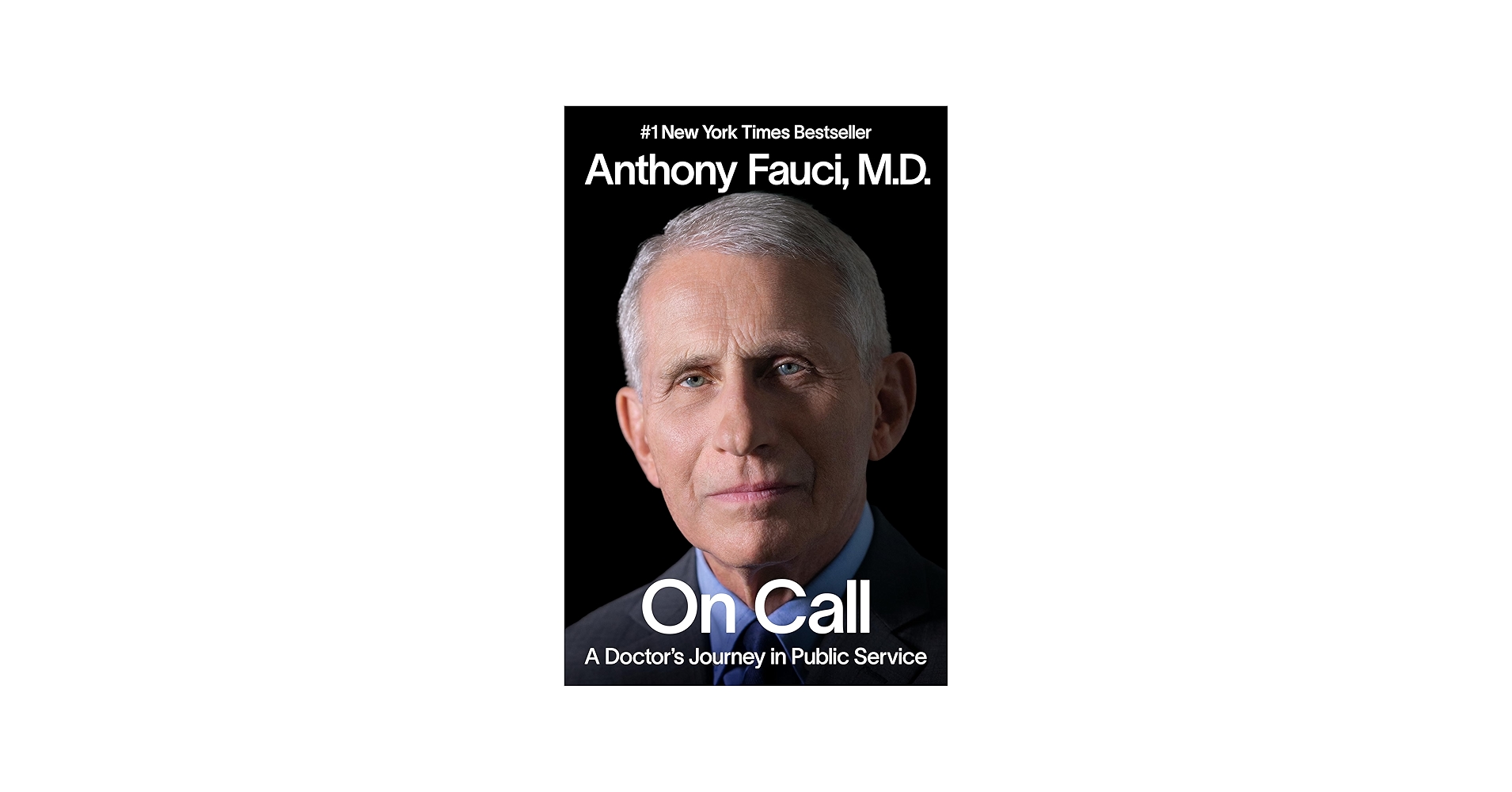
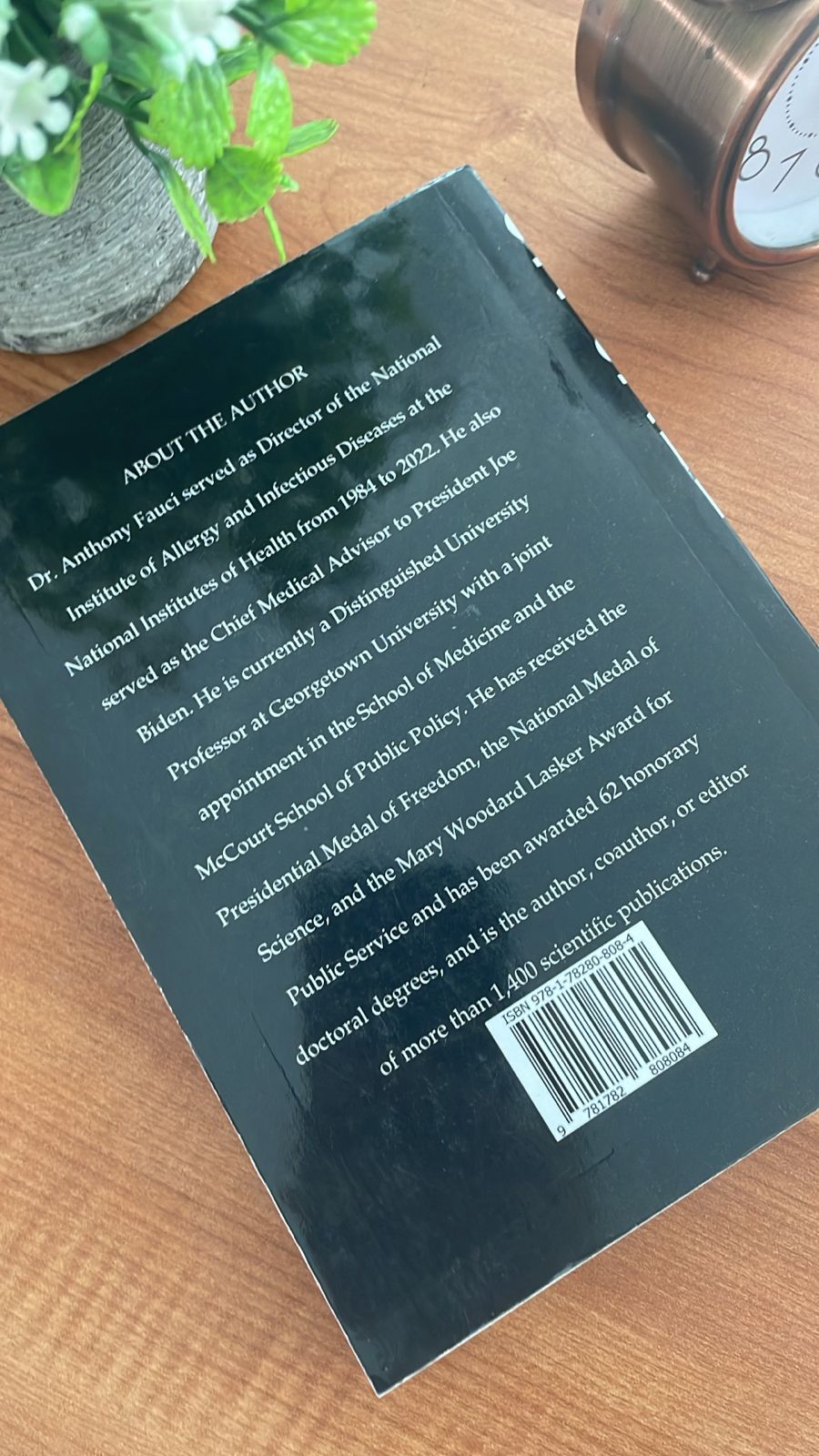
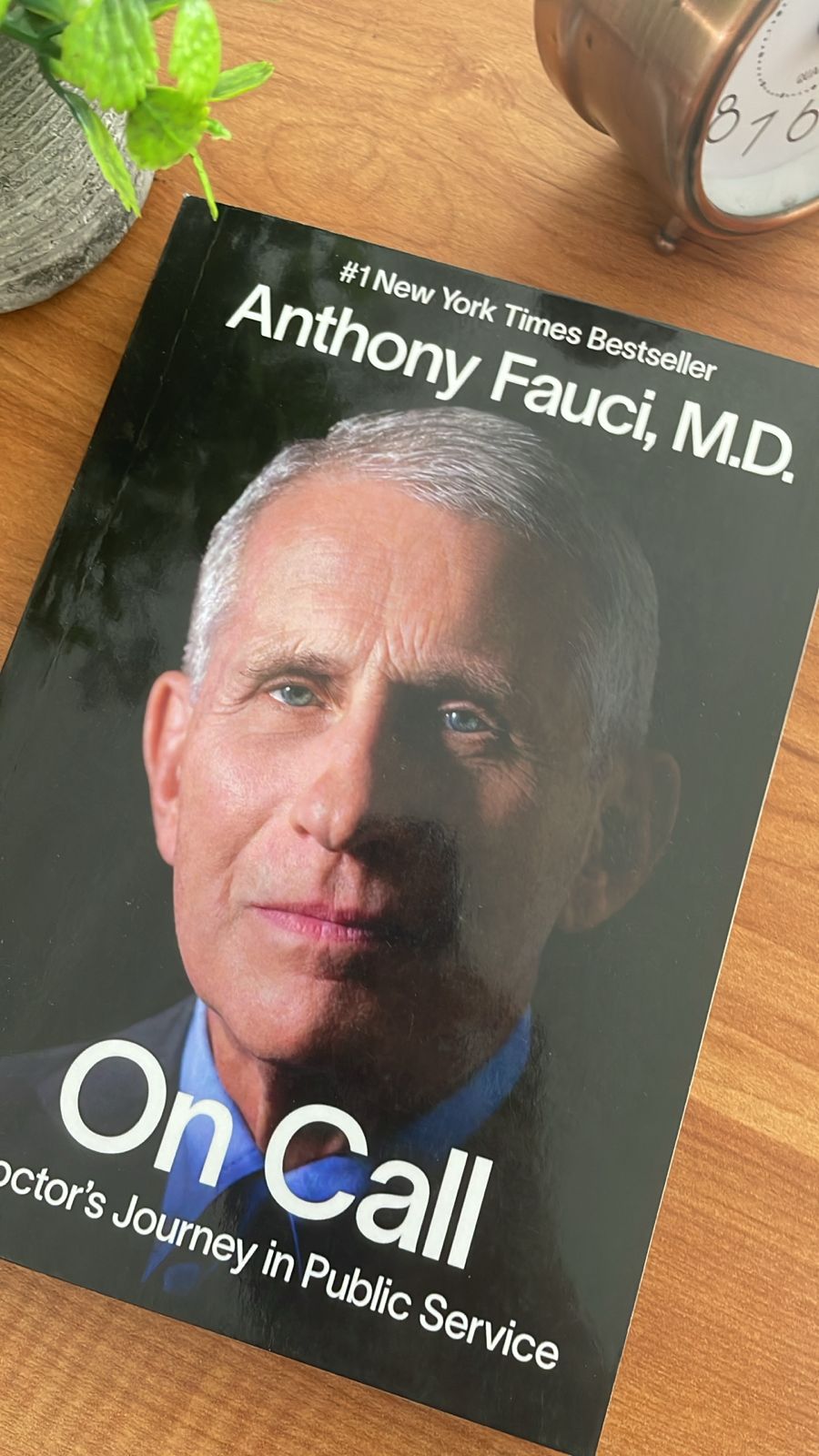
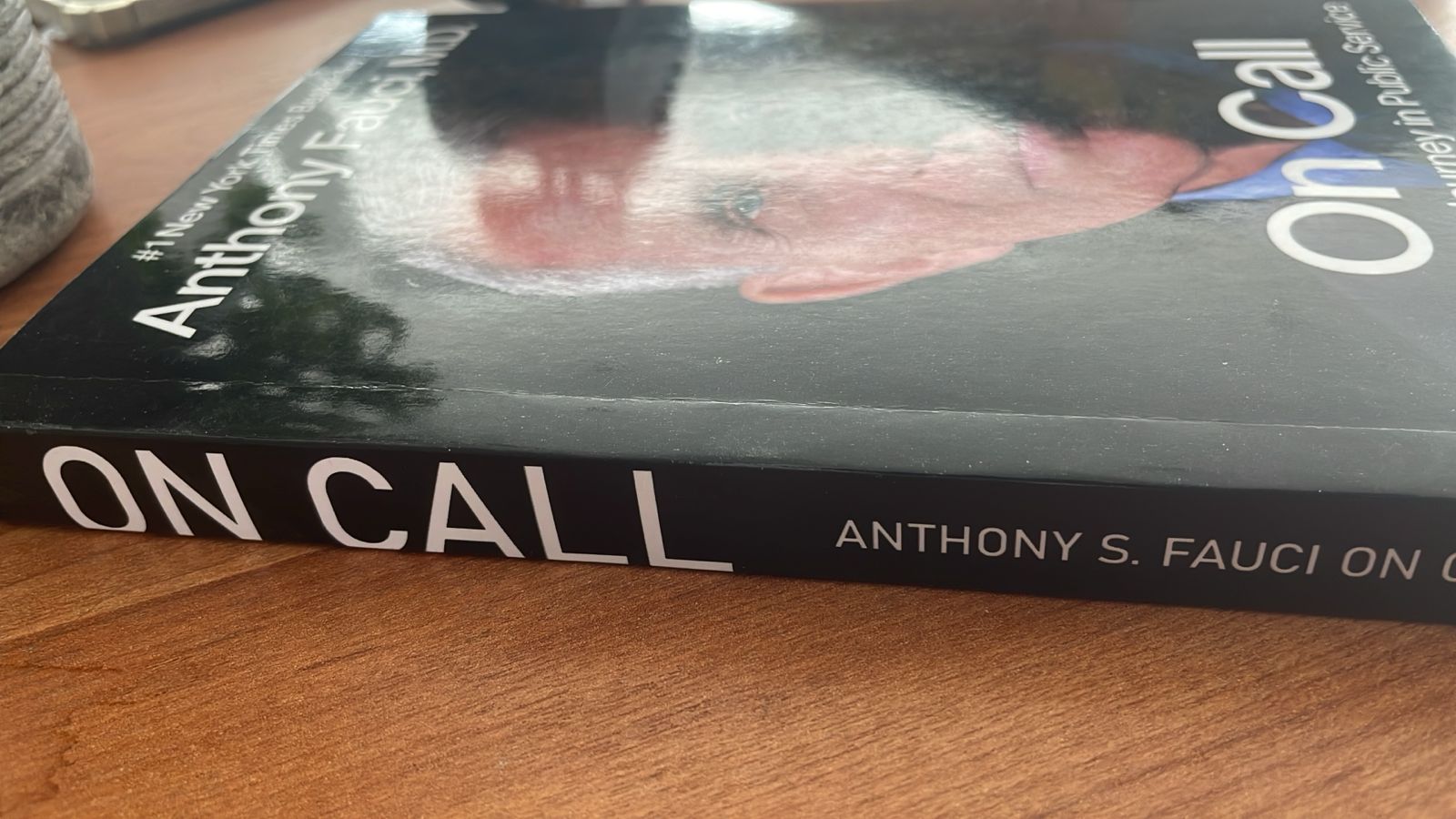



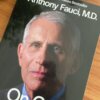





On Call by Anthony Fauci is a detailed and deeply personal memoir about medicine, infectious disease, scientific discovery, leadership and more than five decades spent working at the center of some of the world’s most serious public-health crises.
Anthony Fauci became internationally recognizable during the COVID-19 pandemic.
For millions of people, that period may be the first time they heard his name.
But his career in infectious-disease medicine began decades earlier.
Long before COVID-19, Fauci was treating critically ill patients, studying the immune system, researching infectious diseases and working inside the U.S. government’s public-health institutions.
His career would eventually intersect with:
HIV/AIDS.
Anthrax attacks.
SARS.
West Nile virus.
Pandemic influenza.
Ebola.
COVID-19.
And major global-health initiatives.
In On Call by Anthony Fauci, he looks back at the scientific, medical, political and human experiences that shaped that career.
The memoir begins with his childhood in Brooklyn and follows his journey into medicine before moving through the major outbreaks and public-health challenges that defined his professional life.
It is also a book about what happens when science meets politics.
Research can produce evidence.
Doctors can offer recommendations.
But public-health decisions often involve governments, budgets, institutions, competing priorities and public trust.
Fauci spent decades working at that intersection.
That makes On Call by Anthony Fauci more than a medical memoir.
It is also a firsthand account of leadership under pressure, public communication, institutional decision-making and the difficulty of giving scientific advice when the available evidence is still developing.
On Call by Anthony Fauci – Book Overview
On Call by Anthony Fauci follows a medical career spanning more than half a century.
Fauci entered medicine because he wanted to treat patients and understand disease.
That path eventually took him into biomedical research and the U.S. National Institutes of Health.
From there, his work expanded from individual patient care to questions affecting entire populations.
How does a new disease spread?
How quickly can researchers understand it?
Can treatments be developed?
How should governments respond?
How do health officials communicate uncertainty?
What happens when scientific recommendations become politically controversial?
These questions appear repeatedly throughout the memoir.
Anthony Fauci’s Early Life
Anthony Fauci was born and raised in Brooklyn, New York.
His family background helped shape his interest in service, discipline and medicine.
Before he became a famous public figure, he was a young student trying to decide what kind of career he wanted.
The early chapters of the memoir help humanize someone most readers may know primarily through television briefings and political debates.
Becoming a Doctor
Medicine appealed to Fauci because it combined:
Science.
Problem-solving.
Human interaction.
Responsibility.
Patient care.
A physician needs technical knowledge.
But medicine also requires communication.
A patient may be frightened.
A family may not understand what is happening.
A treatment may be uncertain.
The doctor has to translate complicated information into decisions people can understand.
That skill would later become extremely important in Fauci’s public-health career.
Infectious Disease
Fauci specialized in infectious diseases and immunology.
This placed him in a field where medicine can change rapidly.
A new pathogen appears.
Scientists may initially know almost nothing about it.
Questions emerge immediately.
How does it spread?
Who is most vulnerable?
What treatments work?
Can a vaccine be created?
How dangerous is it?
Those answers may change as evidence accumulates.
Science Under Uncertainty
One of the central lessons in On Call by Anthony Fauci is that science is not a database containing permanent answers to every problem.
Science is a process.
Researchers:
Observe.
Form hypotheses.
Collect evidence.
Test ideas.
Revise conclusions.
That can create difficulty during a public-health emergency.
The public understandably wants certainty.
Scientists may only be able to offer the best conclusion supported by current evidence.
The National Institutes of Health
Fauci spent most of his career at the National Institutes of Health, particularly the National Institute of Allergy and Infectious Diseases, or NIAID.
He served as NIAID director from 1984 until 2022.
That extraordinary length of service meant he worked through multiple administrations and major disease outbreaks.
Advising Seven Presidents
Fauci advised seven U.S. presidents on infectious-disease and public-health issues.
This is one of the most interesting aspects of the memoir.
Political administrations change.
Public-health institutions remain.
A career civil servant may therefore need to work with leaders holding very different political beliefs and management styles.
Public Service Across Administrations
That requires a particular form of professional discipline.
The scientific question should not become:
What answer does this political leader want?
It should remain:
What does the evidence indicate?
Of course, translating evidence into policy involves value judgments, trade-offs and political authority.
That distinction becomes especially important in the chapters covering major outbreaks.
The HIV/AIDS Crisis
One of the most important parts of On Call by Anthony Fauci concerns the HIV/AIDS epidemic.
When AIDS emerged, the disease was terrifying partly because so little was understood.
People were becoming seriously ill.
Many were dying.
Effective treatments did not yet exist.
Fear and stigma were widespread.
The scientific and medical challenge was enormous.
AIDS Activism
The AIDS crisis also changed the relationship between patients, activists, scientists and government institutions.
Activist organizations criticized the pace of research and drug approval.
Government agencies were accused of moving too slowly while people were dying.
Fauci initially became a target of some of that anger.
But one of the most important developments described in his career was his willingness to engage directly with activists.
Listening to Critics
This is one of the strongest leadership lessons in the memoir.
Criticism can be uncomfortable.
The natural reaction may be to become defensive.
But sometimes critics understand an important part of the problem that institutions are missing.
A person living with a disease may see urgency differently from someone managing a research program.
Changing the System
Dialogue between researchers, government officials and AIDS activists contributed to changes in how experimental treatments were studied and accessed.
This became an example of an institution learning through conflict rather than simply dismissing criticism.
Science and Compassion
Medical research deals with data.
But each data point represents a person.
A trial participant has:
A family.
Fear.
Hope.
A life.
The AIDS crisis demonstrated why scientific rigor and compassion should not be treated as opposites.
HIV Treatment Progress
Over time, HIV treatment changed dramatically.
What had once been a frequently fatal diagnosis became, for many patients with access to effective treatment, a manageable chronic condition.
That progress came from the combined work of:
Scientists.
Doctors.
Patients.
Activists.
Pharmaceutical researchers.
Public-health professionals.
Governments.
The memoir gives readers one insider perspective on that transformation.
PEPFAR
Fauci also played an important role in the development of the President’s Emergency Plan for AIDS Relief, commonly known as PEPFAR.
The program was launched under President George W. Bush and became one of the largest global-health initiatives focused on HIV/AIDS.
Penguin Random House notes Fauci’s role as one of the principal architects of the program.
Public Health Is Global
Infectious diseases do not respect national borders.
A virus does not care whether someone crossed:
A country border.
A political boundary.
An economic category.
This means effective disease control often requires international cooperation.
Emerging Infectious Diseases
Throughout On Call by Anthony Fauci, one outbreak follows another.
Each disease has different characteristics.
Different transmission.
Different mortality.
Different treatments.
Different political contexts.
But similar challenges appear repeatedly.
Detect the problem.
Understand it.
Communicate.
Coordinate.
Respond.
Learn.
Anthrax
After the September 11 attacks, anthrax letters created another public-health emergency in the United States.
The event combined:
Infectious disease.
Bioterrorism.
National security.
Public fear.
Health officials had to operate in an environment where medical questions and security questions overlapped.
SARS
The outbreak of Severe Acute Respiratory Syndrome, or SARS, again demonstrated how quickly a novel respiratory disease could become an international concern.
The world would later face that lesson on a dramatically larger scale with COVID-19.
Ebola
Ebola presented another type of challenge.
Its severe symptoms and high mortality created enormous public fear.
But understanding actual transmission risk remained essential.
Public-health communication needs to take fear seriously without allowing fear to replace evidence.
Risk Communication
This is much harder than it sounds.
Tell people there is no danger when danger exists, and trust collapses.
Exaggerate a danger, and panic may create additional harm.
Strong communication must distinguish between:
Possible.
Probable.
Uncertain.
Known.
Unknown.
COVID-19
The COVID-19 pandemic is inevitably one of the most prominent sections of On Call by Anthony Fauci.
By then, Fauci had decades of experience responding to epidemics.
Yet COVID-19 presented a combination of challenges unmatched in much of his career.
A newly identified virus.
Rapid global spread.
Large numbers of serious illnesses and deaths.
Scientific uncertainty.
Economic disruption.
School closures.
Vaccine development.
Public disagreement.
Political polarization.
A Scientific Problem Becomes a Political Problem
The biology of a virus is not partisan.
But responses to the virus can become political.
Questions surrounding:
Restrictions.
Masks.
Vaccination.
School policy.
Business closures.
Travel.
Public communication.
became highly contested.
That meant public-health officials were operating not only inside a medical emergency but inside an intense political environment.
Fauci and Donald Trump
The relationship between Fauci and President Donald Trump became one of the most publicly visible parts of the U.S. pandemic response.
They sometimes disagreed about how information should be communicated and how the government should respond.
Because the memoir is Fauci’s own account, readers receive his interpretation of these events.
That is valuable primary-source material, but it is still one participant’s perspective.
Readers studying the pandemic historically should compare memoirs, official records, scientific literature and independent reporting rather than treating any single account as the complete history.
Changing Recommendations
One source of frustration during COVID-19 was that health recommendations sometimes changed.
That can appear contradictory.
But new diseases produce new evidence.
When information changes, guidance may need to change too.
The harder problem is communicating why it changed.
Without that explanation, revision can look like incompetence or dishonesty even when revision reflects new evidence.
Trust
Public health depends heavily on trust.
A government can issue advice.
Scientists can publish studies.
Doctors can explain risk.
But if citizens do not trust the institutions delivering the information, compliance becomes far more difficult.
Trust is therefore itself a public-health resource.
Trust Is Slow to Build
Trust depends on:
Accuracy.
Transparency.
Consistency.
Admitting uncertainty.
Acknowledging mistakes.
Explaining decisions.
It can take years to create and minutes to damage.
Speaking Truth to Power
The publisher presents “speaking truth to power” as a central theme of Fauci’s career.
For any scientific adviser, this is an important responsibility.
Leaders may want reassurance.
The evidence may not be reassuring.
The adviser’s job is not simply to make leadership comfortable.
It is to communicate the best available assessment.
Advice Is Not Authority
At the same time, scientific advisers do not govern alone.
Scientists provide evidence and recommendations.
Elected officials make many final policy decisions.
Those decisions may include considerations beyond medicine, such as:
Economics.
Education.
Civil liberties.
Public behavior.
Political feasibility.
Understanding this difference helps readers separate scientific advice from political decision-making.
Evidence and Values
Science can answer:
How infectious is this disease?
How effective is this vaccine?
What is the risk by age group?
But science alone cannot determine every policy question.
For example:
How should society balance disease control with economic disruption?
That requires both evidence and values.
Political Controversy
Fauci became a deeply polarizing figure during the COVID era.
Some people saw him as a trusted scientific adviser.
Others strongly criticized his recommendations, communication and role in government policy.
A responsible reading of On Call by Anthony Fauci should recognize that context.
The memoir explains Fauci’s own reasoning and experiences.
It is not a neutral institutional history of the pandemic.
Memoir as a Primary Source
That does not make the book less useful.
It makes it useful in a specific way.
A memoir tells readers:
What the author remembers.
How the author interpreted events.
What decisions the author thought mattered.
How the author understood criticism.
That perspective becomes especially valuable when combined with other evidence.
Leadership During Crisis
A crisis changes leadership.
Normally, leaders may have weeks or months to decide.
During an outbreak, delays can matter.
Information is incomplete.
Everyone wants answers.
Mistakes become visible.
Pressure increases.
The challenge is making the best decision possible without pretending you know more than you do.
Decision-Making With Incomplete Information
This principle applies outside medicine.
Business leaders do it.
Military commanders do it.
Emergency responders do it.
Doctors do it.
You rarely receive perfect information before a deadline.
Good decision-making means:
Assessing available evidence.
Understanding uncertainty.
Considering risks.
Acting.
Then revising if necessary.
Humility
Scientific humility means admitting:
I do not know yet.
That sentence can be uncomfortable for experts.
But pretending certainty where none exists is worse.
One of the broader lessons of On Call by Anthony Fauci is that credibility should come from honest reasoning rather than pretending to possess perfect foresight.
Medicine and Humanity
Fauci’s career began with patients.
That matters.
Public health can become abstract very quickly.
Cases.
Rates.
Charts.
Percentages.
But physicians encounter individuals.
A patient is never simply a statistic.
The Human Side of Epidemics
An epidemic affects:
Patients.
Families.
Healthcare workers.
Businesses.
Students.
Communities.
Different groups experience the same crisis differently.
Public-health policy must therefore deal with human consequences alongside scientific ones.
Healthcare Workers
Disease outbreaks place enormous demands on doctors, nurses and other healthcare professionals.
They may face:
Long hours.
Personal risk.
Emotional exhaustion.
Uncertainty.
Patient deaths.
Public pressure.
The memoir helps readers understand the institutional world supporting these frontline workers.
Research
Fauci remained connected to biomedical science throughout his career.
Research is slow compared with public expectations.
A laboratory result is not automatically a treatment.
Potential therapies require:
Testing.
Clinical trials.
Safety evaluation.
Regulatory review.
Manufacturing.
Distribution.
The public usually sees only the final stage.
Why Research Takes Time
People sometimes ask:
Why can’t scientists simply release a treatment immediately?
Because an untested treatment can harm patients.
Speed matters.
So does evidence.
The challenge during emergencies is making the research process faster without abandoning safety and rigor.
Vaccines
Vaccination became one of the central scientific and political issues during COVID-19.
The rapid development of effective vaccines represented a major technical achievement.
But development alone was not enough.
Vaccines also needed:
Manufacturing.
Distribution.
Public communication.
Trust.
Monitoring.
Public Communication Matters as Much as Discovery
A perfect medical intervention has limited effect if people cannot access it or refuse to use it.
That means scientists and public-health leaders need communication skills as well as technical expertise.
Working With Presidents
Fauci’s career spans administrations led by presidents with very different political philosophies.
This creates an unusual perspective on professional continuity.
Political leadership changes every few years.
Disease does not follow election schedules.
Institutional knowledge therefore matters.
Ronald Reagan and AIDS
Fauci became NIAID director during the Reagan administration, as HIV/AIDS was becoming one of the most serious health crises of the era.
Government response to AIDS was controversial, and the epidemic exposed major weaknesses in how institutions responded to marginalized populations.
George H. W. Bush
As administrations changed, Fauci remained within the public-health system.
This continuity meant that lessons learned from one crisis could influence responses to later ones.
Bill Clinton
The HIV/AIDS response continued evolving during the Clinton years, with medical research making increasingly important progress.
George W. Bush
The Bush administration years included major issues involving:
Anthrax.
Bioterrorism preparedness.
Global HIV/AIDS.
Emerging infectious disease.
PEPFAR became particularly significant.
Barack Obama
The Obama administration faced outbreaks including:
H1N1 influenza.
Ebola.
Zika.
Different outbreaks demanded different strategies.
Donald Trump
COVID-19 dominated the final year of the Trump administration and brought Fauci unprecedented public attention.
Joe Biden
Fauci later served as Chief Medical Advisor to President Joe Biden before leaving federal service in 2022.
Public Service
The subtitle A Doctor’s Journey in Public Service is important.
The memoir is not simply:
A doctor’s career.
It is a career inside government.
That means success is measured differently.
Public service involves attempting to improve outcomes for populations rather than personal customers or shareholders.
Bureaucracy
Government bureaucracy can frustrate people.
But institutions also provide:
Infrastructure.
Long-term research funding.
Disease surveillance.
Regulation.
Emergency-response capacity.
Scientific expertise.
One challenge is improving institutions without destroying the capabilities they provide.
Working Within Institutions
Changing a large institution usually requires patience.
Processes exist.
Budgets exist.
Legal limits exist.
Stakeholders exist.
This means effective public servants need more than technical expertise.
They need institutional knowledge.
Collaboration
No single doctor solved HIV/AIDS.
No single scientist created the COVID vaccines.
No single government stopped every outbreak.
Modern public health depends on collaboration among:
Universities.
Hospitals.
Governments.
Researchers.
Pharmaceutical companies.
International organizations.
Communities.
Expertise
On Call by Anthony Fauci also raises broader questions about expertise.
Experts can be wrong.
But the answer to flawed expertise is not necessarily rejecting expertise entirely.
A healthier system allows experts to:
Provide evidence.
Be questioned.
Correct mistakes.
Explain uncertainty.
Remain accountable.
Criticism
Public officials should expect criticism.
Some criticism may be unfair.
Some may identify real problems.
Leaders need to distinguish between the two rather than automatically dismissing disagreement.
Learning From Opposition
The AIDS activist experience demonstrates the potential value of listening to opponents.
People criticizing an institution may understand consequences that insiders cannot see.
Reputation
Fauci’s public reputation changed dramatically over decades.
Within medicine and government, he was already highly influential.
COVID transformed him into a household name.
Public visibility creates a different kind of pressure.
Statements are clipped.
Shared.
Interpreted politically.
Sometimes misinterpreted.
Media
Media communication is another recurring challenge.
Scientific explanations are often complicated.
Television wants concise answers.
Social media rewards short statements.
Nuance can disappear.
This is one reason scientific communication is difficult during emergencies.
Certainty Sells Better Than Nuance
A statement such as:
“Based on current evidence, this appears likely, but we need more data”
is scientifically responsible.
It is less satisfying than:
“This is definitely true.”
Public communication needs to preserve uncertainty without becoming incomprehensible.
The Value of Experience
When a new crisis appears, previous experience matters.
But experience can also create assumptions.
A wise expert asks:
What lessons transfer?
What is genuinely different?
COVID was not HIV.
Ebola was not SARS.
Each disease required specific evidence.
Lifelong Learning
Medicine never stops changing.
A doctor who stops learning eventually becomes outdated.
Fauci’s long career therefore illustrates a broader professional principle:
Expertise requires continuous updating.
Mentorship
Long careers are also shaped by mentors and colleagues.
Nobody becomes an expert entirely alone.
People learn through:
Training.
Observation.
Feedback.
Collaboration.
Mistakes.
Good institutions pass knowledge from one generation to another.
Young Doctors and Public Service
Fauci has said he hopes the memoir encourages younger people to consider careers in public health and public service.
This gives the book particular relevance to:
Medical students.
Science students.
Public-health students.
Researchers.
Government professionals.
Is On Call a Medical Textbook?
No.
On Call by Anthony Fauci is a memoir.
It discusses medical and scientific events, but it is not a clinical reference book or treatment manual.
Readers do not need medical training to understand the central narrative.
Is On Call About COVID Only?
No.
COVID occupies an important part of the memoir because of its scale and Fauci’s public role.
But the book covers many decades before 2020, including HIV/AIDS, biomedical research, anthrax, SARS, Ebola and other infectious-disease challenges.
Is It Political?
Partly.
Fauci worked directly with presidents and senior government officials, so politics naturally appears throughout the book.
However, the broader focus is medicine, public health and government service.
Readers from different political perspectives may interpret some events differently.
Is It an Autobiography?
Yes.
It is Fauci’s memoir of his life and career.
That means readers receive his personal interpretation of events rather than a completely detached historical account.
Do You Need Medical Knowledge?
No.
The memoir is written for a general audience.
Technical scientific issues are discussed in the context of Fauci’s experiences and major public-health events.
Hardcover Edition Details
The official Viking U.S. hardcover edition has:
Full Title: On Call: A Doctor’s Journey in Public Service
Author: Anthony Fauci, M.D.
Publisher: Viking
Publication Date: June 18, 2024
ISBN-13: 9780593657478
Pages: 480
Your BookLounge catalogue specifically identifies its current product as Hard Cover, but check the ISBN printed on your physical copy before entering edition-specific attributes.
Content Considerations
On Call by Anthony Fauci contains discussion of serious real-world topics, including:
- HIV/AIDS and patient deaths
- Pandemics and epidemics
- COVID-19
- Serious illness
- Medical emergencies
- Death and grief
- Political conflict
- Public controversy
- Bioterrorism and anthrax
- Ebola and other infectious diseases
- High-pressure medical decision-making
The material is presented as memoir and public-health history rather than graphic medical writing.
Important Themes
On Call by Anthony Fauci explores:
- Medicine
- Public health
- Infectious disease
- HIV/AIDS
- COVID-19
- Scientific research
- Leadership
- Public service
- Government
- Evidence
- Medical ethics
- Crisis management
- Communication
- Trust
- Politics and science
- Vaccines
- Global health
- Resilience
- Institutional change
- Speaking truth to power
7 Powerful Lessons From On Call by Anthony Fauci
- Science must be willing to change when evidence changes. Updating a conclusion is not necessarily a weakness; refusing to respond to stronger evidence can be far more dangerous.
- Listen to people outside the institution. Fauci’s interactions with AIDS activists demonstrate that critics can sometimes identify problems that established systems have failed to understand.
- Public trust is essential during a crisis. Scientific expertise has limited value if communication is unclear or institutions lose credibility.
- Leadership requires making decisions before every answer is available. Public-health emergencies rarely provide perfect information, so leaders must balance urgency with uncertainty.
- Expertise should include humility. Knowing a great deal also means understanding where knowledge ends and uncertainty begins.
- Long-term public service requires working across differences. Fauci served under seven presidents from different political backgrounds, illustrating the importance of institutional continuity and professional responsibility.
- Medicine is ultimately about people. Behind statistics, studies and policy debates are patients, families and communities whose lives are affected by every decision.
Why Read On Call by Anthony Fauci?
On Call by Anthony Fauci is a strong choice for readers interested in medicine, public health, infectious disease, scientific research, global health, leadership, government and modern history.
It may particularly appeal to readers who want to understand what public-health work looks like from inside major institutions.
The book allows readers to follow one career through several historic disease outbreaks.
That provides an unusual perspective.
Each crisis seems unique while it is happening.
Yet recurring challenges appear:
Uncertainty.
Fear.
Scientific disagreement.
Political pressure.
Public communication.
Institutional resistance.
The need for trust.
Understanding those patterns can help readers think more clearly about future health emergencies.
Who Should Read This Book?
On Call by Anthony Fauci may especially appeal to:
- Medical students
- Doctors and healthcare workers
- Public-health students
- Science students
- Researchers
- Policy students
- Leadership readers
- Biography and memoir readers
- Readers interested in COVID-19 history
- Readers interested in HIV/AIDS history
- Government and public-service professionals
- People interested in crisis management
- Readers studying the relationship between science and politics
- Anyone curious about how governments respond to disease outbreaks
On Call by Anthony Fauci – Medicine, Science and a Life in Public Service
On Call by Anthony Fauci covers a career during which medicine changed dramatically.
When Fauci began his professional life, many of the technologies and treatments now considered ordinary did not exist.
Then came HIV/AIDS.
A mysterious disease.
Young people dying.
Fear.
Stigma.
Few answers.
Scientists had to learn quickly.
Activists demanded faster action.
Government institutions had to change.
Decades later came another global crisis.
COVID-19.
Again:
Fear.
Unknown disease.
Rapid research.
Political pressure.
Public disagreement.
The technology had changed.
The basic challenge of making decisions under uncertainty had not.
That continuity is one reason the memoir is valuable.
It shows that public-health crises are not purely scientific events.
They are human events.
Scientific evidence matters.
But so do:
Institutions.
Communication.
Politics.
Trust.
Leadership.
Empathy.
And the ability to admit when something needs to change.
Because this is Fauci’s memoir, it naturally presents events from his point of view.
Readers do not have to agree with every decision or interpretation to find the account useful.
In fact, one of the best ways to read a memoir by an influential public official is critically:
What did he believe at the time?
Why?
What evidence influenced the decision?
What does he think went right?
What does he think went wrong?
What would another participant say?
That turns the book from simple biography into a source for understanding how difficult decisions are made.
For readers interested in medicine, science, leadership, pandemics and the complicated relationship between expertise and government, On Call by Anthony Fauci offers a detailed firsthand account of a doctor whose career repeatedly placed him where medical science and public policy collided.
Learn more about On Call: A Doctor’s Journey in Public Service by Anthony Fauci, M.D. on the official Penguin Random House website.
Explore more biography and memoir books at Bargain Books.
Be the first to review “On Call by Anthony S. Fauci”
Related products
Out of stock
Self-Help & Psychology
රු1,900.00
3 X Rs. 633.33 or 8% Cashback with


or 3 X රු633.33 with


or up to 4 X රු475.00 with

-14%
Out of stock
Self-Help & Psychology
Original price was: රු2,900.00.රු2,500.00Current price is: රු2,500.00.
3 X Rs. 833.33 or 8% Cashback with
or 3 X රු833.33 with
or up to 4 X රු625.00 with
-34%

Self-Help & Psychology
Original price was: රු2,350.00.රු1,550.00Current price is: රු1,550.00.
3 X Rs. 516.67 or 8% Cashback with
or 3 X රු516.67 with
or up to 4 X රු387.50 with
-24%
Out of stock
Non-Fiction & Knowledge
Original price was: රු2,500.00.රු1,900.00Current price is: රු1,900.00.
3 X Rs. 633.33 or 8% Cashback with
or 3 X රු633.33 with
or up to 4 X රු475.00 with
-26%
Non-Fiction & Knowledge
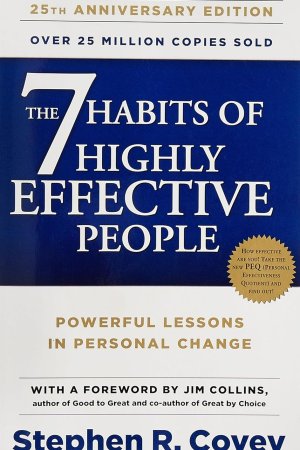
The 7 Habits of Highly Effective People by Stephen R. Covey – Blue Cover
Original price was: රු2,300.00.රු1,700.00Current price is: රු1,700.00.
3 X Rs. 566.67 or 8% Cashback with
or 3 X රු566.67 with
or up to 4 X රු425.00 with
Non-Fiction & Knowledge
රු2,250.00
3 X Rs. 750.00 or 8% Cashback with
or 3 X රු750.00 with
or up to 4 X රු562.50 with
-13%

Out of stock
Non-Fiction & Knowledge
Original price was: රු3,900.00.රු3,400.00Current price is: රු3,400.00.
3 X Rs. 1,133.33 or 8% Cashback with
or 3 X රු1,133.33 with
or up to 4 X රු850.00 with
රු2,000.00
3 X Rs. 666.67 or 8% Cashback with
or 3 X රු666.67 with
or up to 4 X රු500.00 with
Reviews
There are no reviews yet.