
No products in the cart.
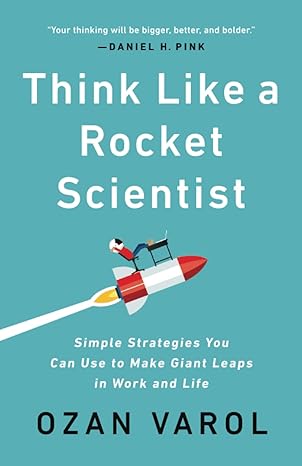
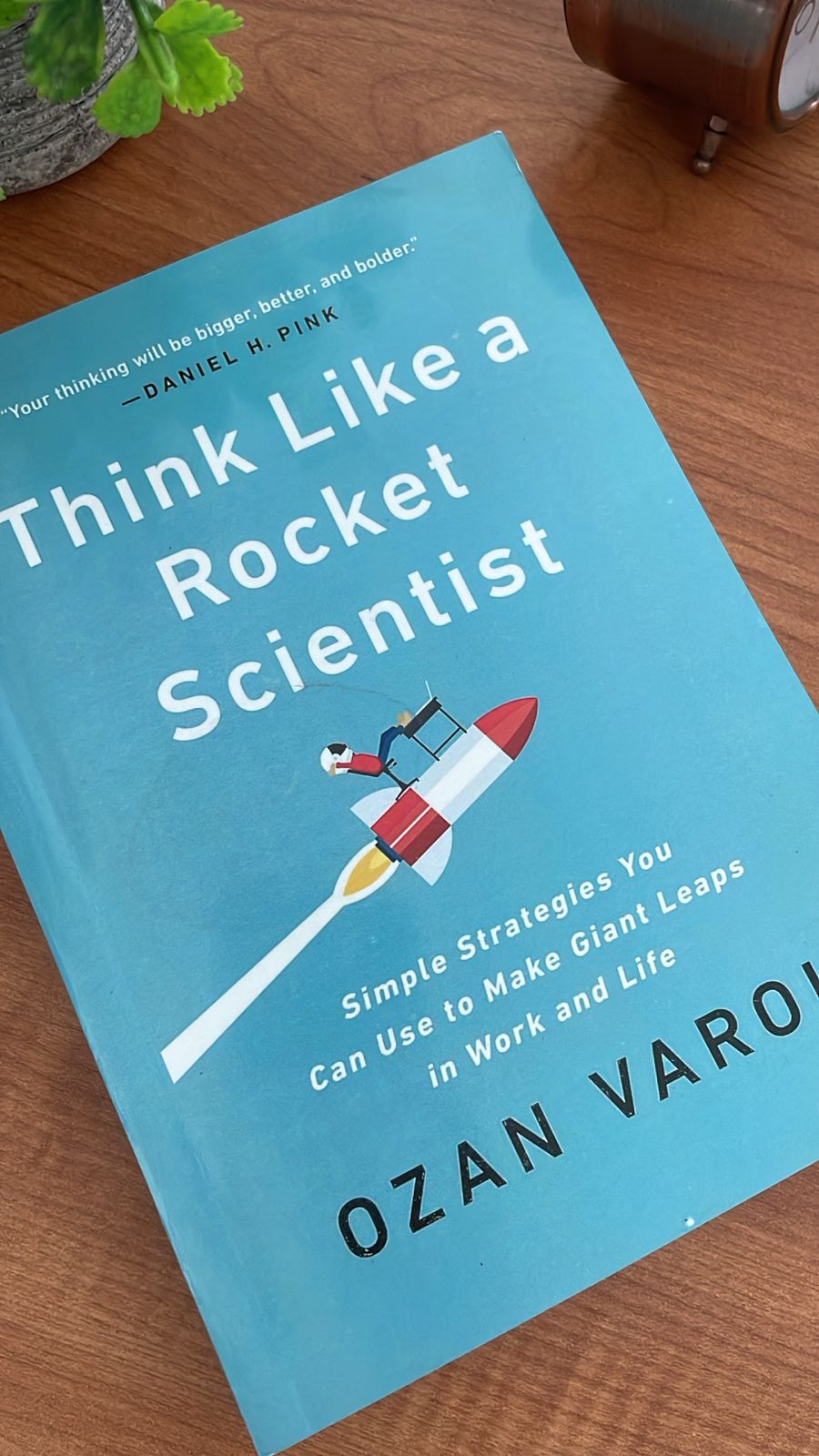
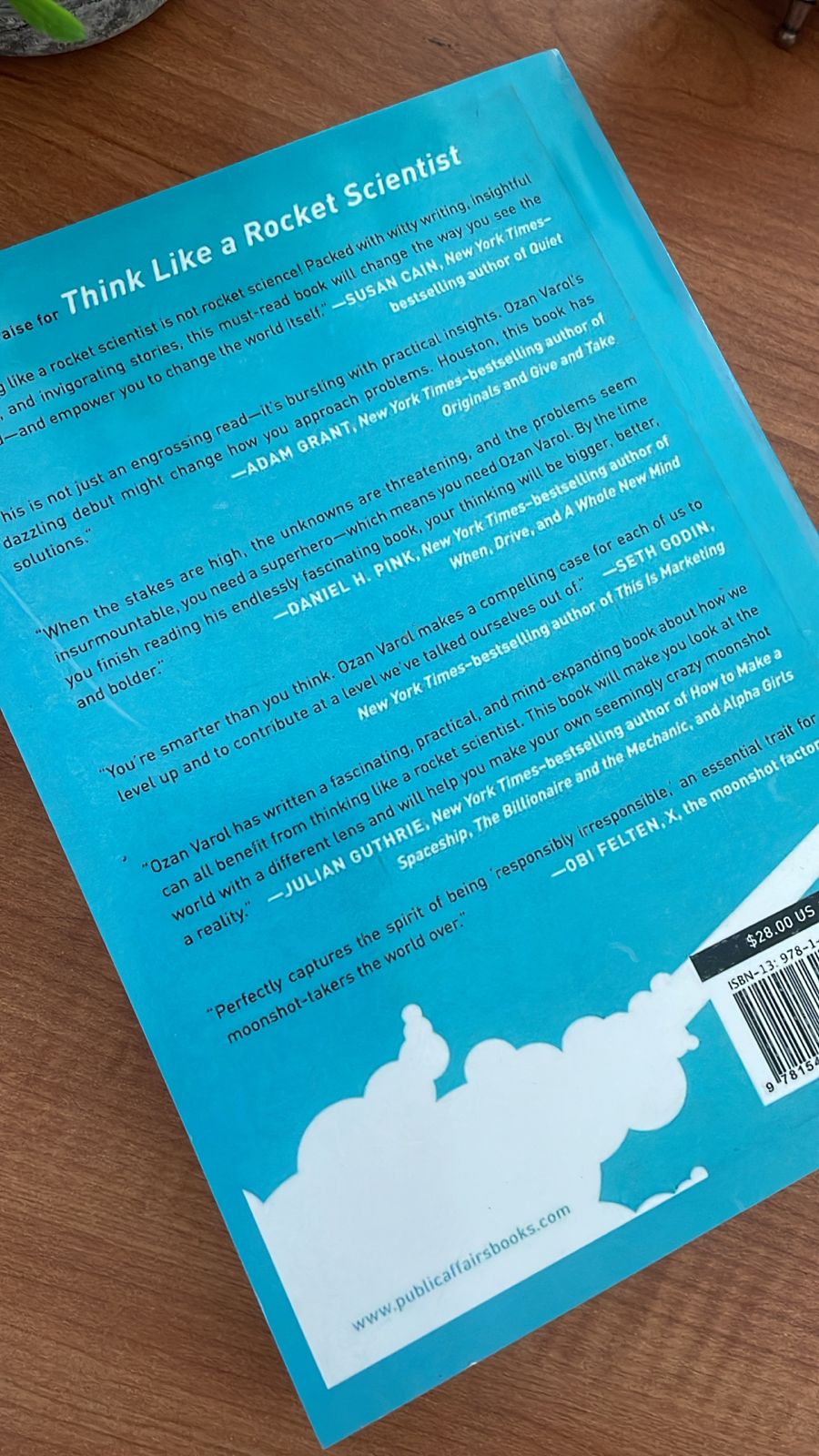
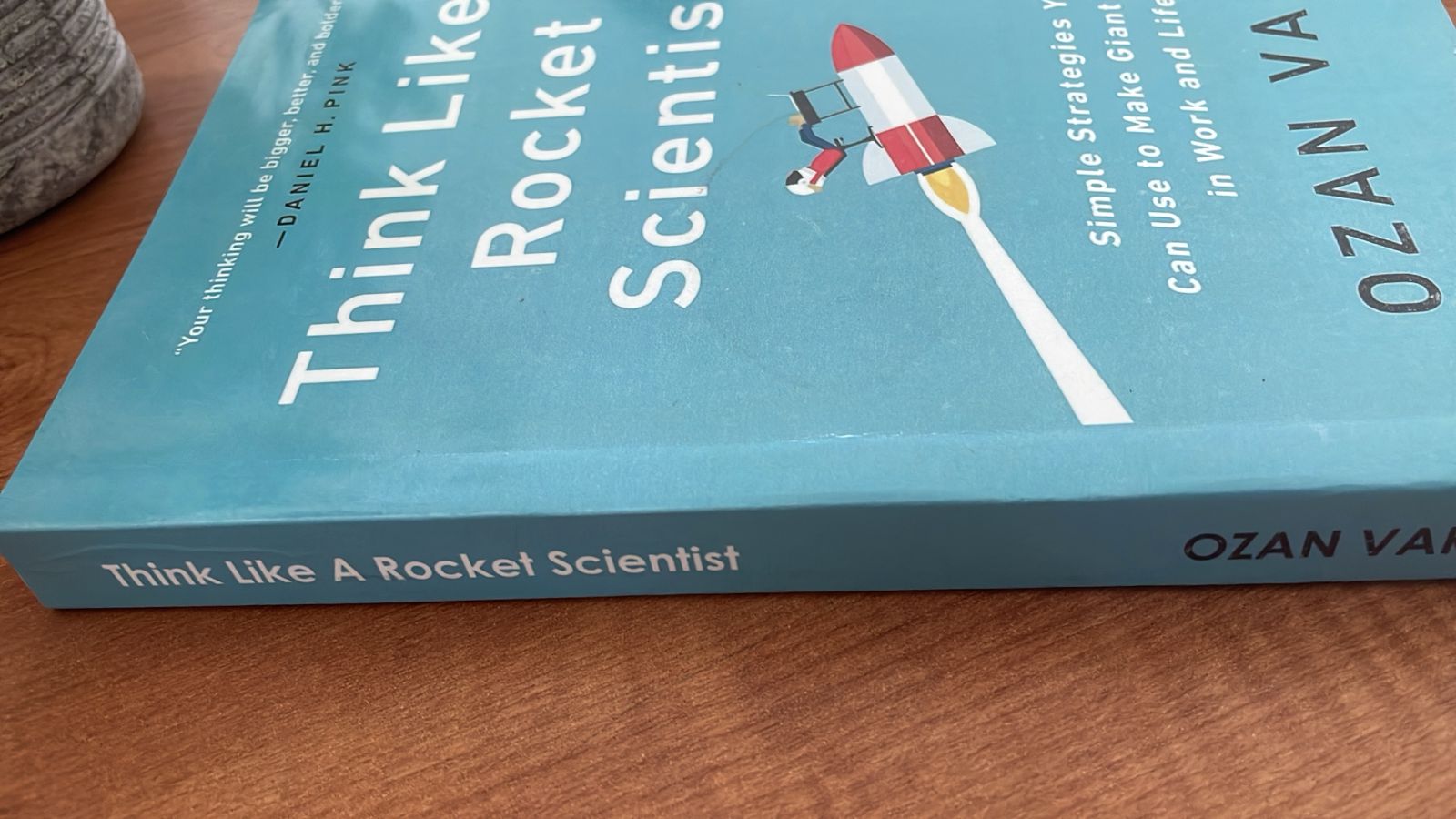


Think Like a Rocket Scientist by Ozan Varol
රු2,500.00
3 X Rs. 833.33 or 8% Cashback with


or 3 X රු833.33 with


or up to 4 X රු625.00 with


• Practical guide to problem-solving using rocket science thinking
• Focuses on first-principles, creativity, and experimentation
• Ideal for entrepreneurs, professionals, and innovators
4 in stock
Purchase & earn 25 points!
Category: Habits & Productivity
Think Like a Rocket Scientist by Ozan Varol
Think Like a Rocket Scientist by Ozan Varol is a practical guide to solving difficult problems, challenging assumptions, thinking creatively, and turning ambitious ideas into action.
Ozan Varol is a former rocket scientist who worked on the 2003 Mars Exploration Rovers project.
In this book, he explains that rocket science is not only about advanced technology.
It is also about a way of thinking.
Rocket scientists regularly work on problems that have no obvious solution.
They must question assumptions, test ideas, learn from failure, and make decisions under uncertainty.
Varol argues that the same mindset can be applied to everyday life and business.
About Think Like a Rocket Scientist
Think Like a Rocket Scientist presents nine strategies that readers can use to approach difficult problems differently.
The book combines scientific thinking, real-world stories, psychology, innovation, and practical decision-making.
Its goal is not to teach readers how to build rockets.
It is to teach them how to think more effectively.
The book is especially useful for people who feel stuck using the same methods repeatedly.
9 Powerful Strategies from Think Like a Rocket Scientist
1. Embrace Uncertainty
One of the main ideas in Think Like a Rocket Scientist is that uncertainty is not always something to fear.
Many breakthroughs begin without a clear answer.
Rocket scientists often work on missions where the outcome is unknown.
They cannot wait until every detail is certain.
Instead, they learn how to make intelligent decisions using incomplete information.
This is useful in business, careers, and personal decisions.
2. Reason from First Principles
First-principles thinking means breaking a problem down to its most basic truths.
Instead of asking how something has always been done, ask why it is done that way.
Then rebuild the solution from the ground up.
This can reveal assumptions that are no longer useful.
Entrepreneurs and innovators frequently use this type of thinking to create new approaches.
3. Use Thought Experiments
A thought experiment allows you to test an idea mentally before taking action.
Ask questions such as:
What would happen if this assumption were wrong?
What if we had to solve the problem with half the budget?
What if our biggest competitor disappeared?
These questions can reveal possibilities that ordinary thinking may miss.
4. Take Moonshots
A moonshot is an ambitious goal that initially appears extremely difficult.
Varol argues that big goals can force people to rethink traditional methods.
If the goal is only slightly better performance, small improvements may be enough.
If the goal is dramatically better performance, completely different thinking may be required.
That pressure can generate innovation.
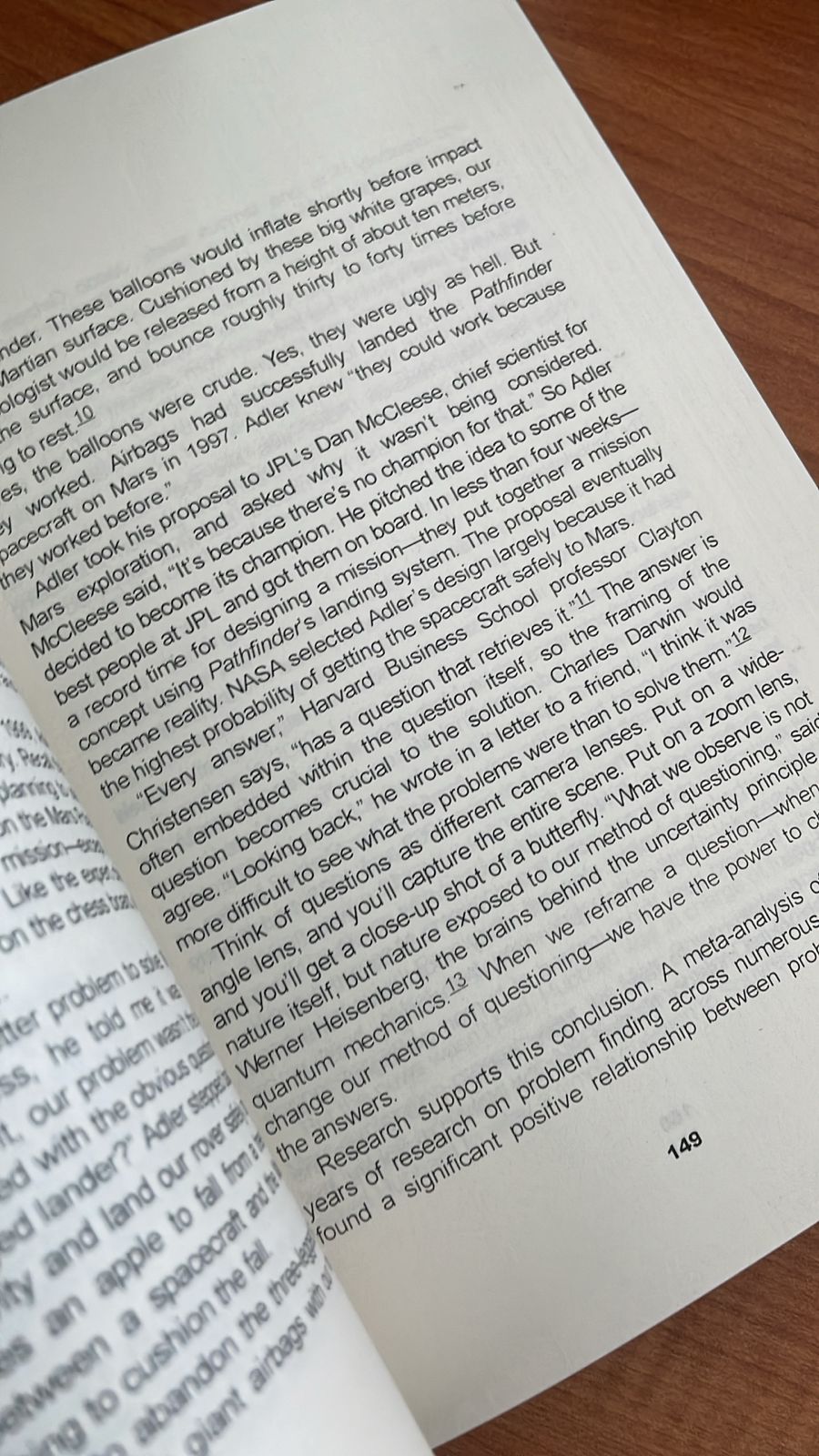
5. Reframe the Question
Sometimes the problem is not the answer.
The problem is the question.
A badly framed question can limit possible solutions.
Think Like a Rocket Scientist encourages readers to examine whether they are solving the right problem.
Instead of asking, “How can we improve this existing process?”
You might ask, “Do we need this process at all?”
A small change in the question can produce very different ideas.
6. Test as You Fly
Rocket missions require extensive testing.
Components are tested before launch.
Systems are tested under pressure.
Failures are investigated.
The same principle can be applied to products, businesses, and projects.
Instead of assuming an idea will work, test it.
Small experiments can expose weaknesses before they become expensive problems.
7. Learn from Failure
Failure is not automatically useful.
It becomes useful when you study it.
Varol encourages readers to treat failed experiments as information.
Why did the plan fail?
Was the original assumption wrong?
Was execution weak?
Was the timing poor?
Understanding the cause makes the next attempt stronger.
8. Question Success
Success can also be dangerous.
When something works, people may stop questioning it.
They may assume the same strategy will continue working forever.
But conditions change.
Competitors change.
Technology changes.
Customer behaviour changes.
The book encourages readers to examine successful systems before they become outdated.
9. Make Better Decisions
The final goal of rocket-scientist thinking is better judgment.
Good decision-making combines curiosity, evidence, testing, flexibility, and critical thinking.
It avoids blind confidence.
It also avoids paralysis.
The objective is to make the best possible decision using the information available.
First-Principles Thinking
First-principles thinking is one of the most important ideas in Think Like a Rocket Scientist.
People often solve problems by analogy.
They ask what someone else has done.
Then they copy it.
That can work.
But it can also limit innovation.
First-principles thinking asks what is actually true.
Then it builds a solution from those facts.
This can challenge traditions that exist simply because “that is how we have always done it.”
The Power of Asking Better Questions
Good questions can change everything.
A weak question may create narrow answers.
A stronger question opens possibilities.
Varol encourages readers to become more curious.
Ask why.
Ask what if.
Ask what would need to be true.
These questions can reveal assumptions that have become invisible.
Why Failure Matters
Failure has a bad reputation.
People naturally want to avoid it.
But experimentation requires the possibility of failure.
A test that can only confirm what you already believe is not very useful.
The goal is to fail in ways that create information.
Small failures can prevent larger ones later.
Experiment Before Committing
One of the most practical lessons in the book is to test before making a large commitment.
Businesses can test products with small groups.
Writers can test ideas with early readers.
Teams can prototype systems.
Entrepreneurs can test customer demand.
These experiments reduce uncertainty.
They also help improve the final result.
Avoiding Confirmation Bias
People naturally look for information that supports what they already believe.
This is known as confirmation bias.
It can damage decision-making.
Think Like a Rocket Scientist encourages readers to actively search for evidence that could prove them wrong.
That sounds uncomfortable.
But it can prevent costly mistakes.
The goal is not to defend an idea.
The goal is to discover whether the idea is actually good.
Think Like a Scientist
Scientific thinking requires curiosity.
It also requires humility.
A scientist should be willing to update a belief when better evidence appears.
This is valuable outside laboratories.
Managers can change strategies.
Entrepreneurs can change products.
Students can change study methods.
Professionals can revise assumptions.
Changing your mind is not always weakness.
Sometimes it is evidence of learning.
Moonshot Thinking
Moonshot thinking encourages ambitious goals.
But the book does not suggest ignoring reality.
A moonshot still requires testing, planning, and execution.
The difference is scale.
A large goal can force people to reconsider assumptions they would otherwise accept.
This can produce creative solutions.
The Danger of Success
One of the most interesting ideas in Think Like a Rocket Scientist is that success can reduce curiosity.
When a system works, people stop asking questions.
They become comfortable.
That creates vulnerability.
Competitors may discover something better.
Technology may make the old system obsolete.
Varol encourages readers to keep experimenting even when things are going well.
Problem-Solving at Work
The strategies in the book can be useful in professional environments.
Teams can question assumptions.
Managers can test new processes.
Product teams can prototype ideas.
Leaders can examine failures without immediately blaming people.
This creates a culture where learning becomes part of work.
Creativity and Innovation
Innovation often comes from combining curiosity with disciplined experimentation.
Ideas alone are not enough.
They need to be tested.
A strange idea may become useful.
A popular idea may fail.
The only way to know is to investigate.
This combination of imagination and evidence is central to the book.
Who Should Read This Book?
Think Like a Rocket Scientist is ideal for entrepreneurs, managers, students, product developers, engineers, creatives, and anyone interested in problem-solving.
It can be especially useful for readers who want to become better at decision-making.
People working in uncertain environments may also appreciate its emphasis on experimentation.
The book is accessible even if you have no scientific background.
You do not need to understand astrophysics.
The focus is on thinking methods.
About Ozan Varol
Ozan Varol is a former rocket scientist, professor, author, and speaker.
He studied astrophysics at Cornell University.
While there, he worked on the operations team for the 2003 Mars Exploration Rovers project.
He later became a law professor and writer.
His work focuses on critical thinking, creativity, problem-solving, and making better decisions.
Readers can learn more through the official Ozan Varol page for Think Like a Rocket Scientist.
Product Details
Title: Think Like a Rocket Scientist
Subtitle: Simple Strategies You Can Use to Make Giant Leaps in Work and Life
Author: Ozan Varol
Genre: Business / Personal Development / Problem-Solving / Decision-Making
Language: English
Publisher: PublicAffairs
Original Hardcover Publication: April 14, 2020
Trade Paperback Publication: September 14, 2021
Trade Paperback ISBN-13: 9781541762602
Pages: 368
The original hardcover uses ISBN 9781541762596 and also contains 368 pages.
Always check the ISBN printed on your physical copy before entering final WooCommerce specifications.
Explore More Business and Self-Development Books
Think Like a Rocket Scientist is ultimately about approaching difficult problems with greater curiosity.
Question assumptions.
Break problems down.
Test ideas.
Learn from failure.
Challenge success.
And remain willing to change your mind when better evidence appears.
Readers interested in innovation, business, and decision-making can explore more Business, Finance & Economics Books at Bargain Books.
Readers interested in mindset and personal growth can also explore Self-Help & Psychology Books at Bargain Books.
For readers who want to think more creatively, solve problems more effectively, and turn ambitious ideas into practical action, Think Like a Rocket Scientist offers an engaging and useful framework.
Reviews
There are no reviews yet.