
No products in the cart.
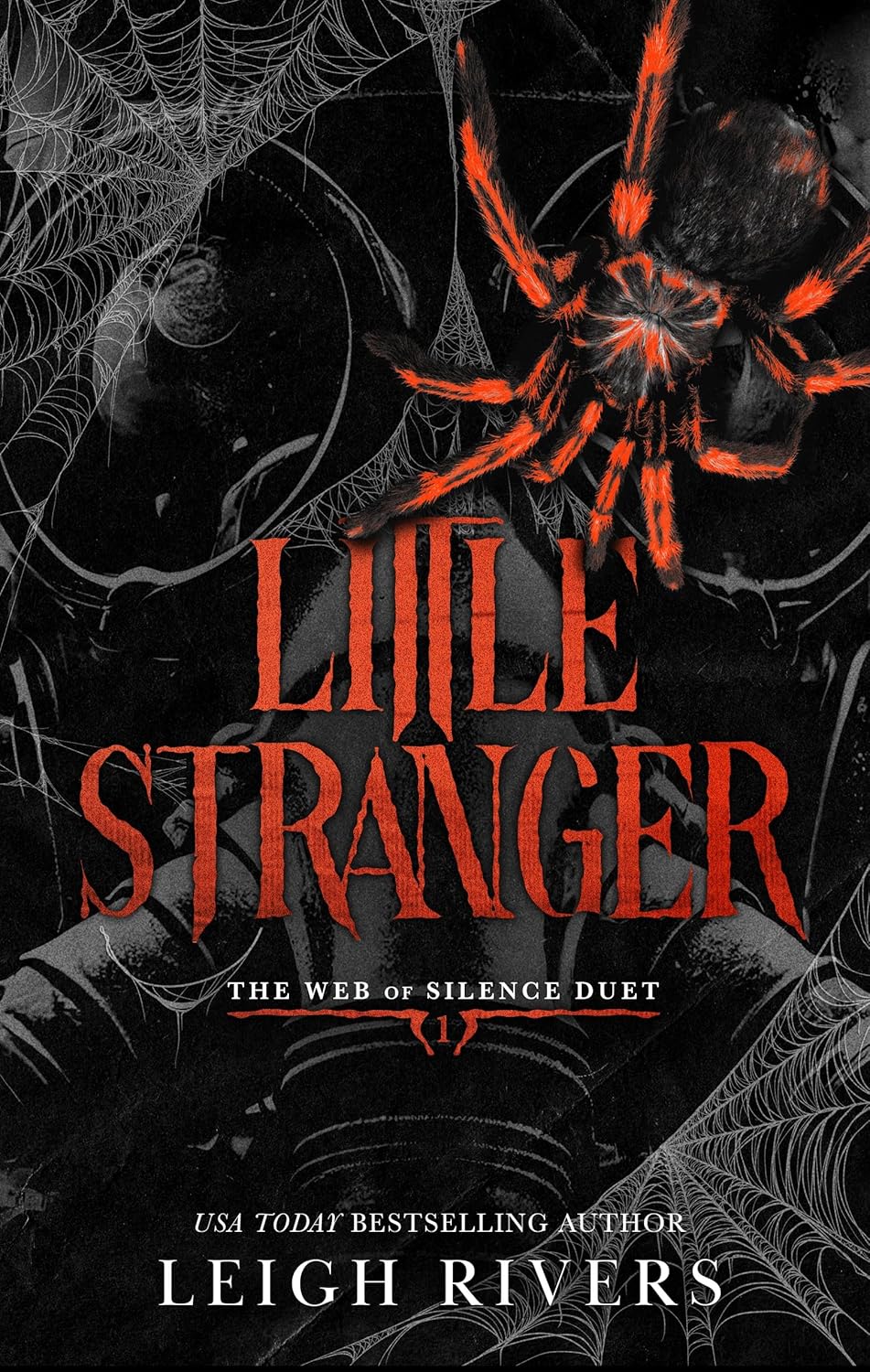
Little Stranger by Leigh Rivers


රු2,100.00
3 X Rs. 700.00 or 8% Cashback with


or 3 X රු700.00 with


or up to 4 X රු525.00 with


Little Stranger by Leigh Rivers is a dark romance novel exploring obsession, power, and emotional intensity through morally complex characters and a psychologically charged narrative.
Out of stock
Email when stock available
The Little Stranger by Sarah Waters is a haunting gothic historical novel about a decaying English mansion, an aristocratic family struggling with change, a country doctor fascinated by their world, and a series of disturbing events that may have a supernatural explanation—or something even more unsettling.
The story takes place in post-war England.
The Second World War has ended.
The country is changing.
Old social structures are weakening.
Large aristocratic estates are becoming increasingly difficult to maintain.
And one once-grand house called Hundreds Hall is slowly falling apart.
Living inside it is the Ayres family.
Once wealthy and socially important, the family now struggles to preserve a lifestyle that belongs to another age.
Then Dr. Faraday, a local physician, is called to Hundreds Hall.
He already knows the house.
As a child, he admired it from a distance.
His mother once worked there as a servant.
To him, Hundreds Hall represents:
Status.
Beauty.
Privilege.
A world his family could never fully enter.
Now, years later, he finally gains access to that world.
But Hundreds Hall is no longer the magnificent place he remembers.
The walls are deteriorating.
The finances are failing.
The family is emotionally strained.
And something strange may be happening inside the house.
The Little Stranger by Sarah Waters gradually develops into a deeply atmospheric story about class, desire, repression, family, decline and the terrifying uncertainty of not knowing whether something is truly supernatural.
The Little Stranger by Sarah Waters – Book Overview
The Little Stranger by Sarah Waters begins when Dr. Faraday is called to Hundreds Hall to treat a young servant.
The visit reconnects him with a place that fascinated him during childhood.
Hundreds Hall belongs to the Ayres family.
The household includes:
Mrs. Ayres
Her daughter Caroline
Her son Roderick
And their small number of remaining servants.
The family once belonged comfortably to the upper class.
But post-war Britain has changed.
Money is disappearing.
The estate is expensive to maintain.
Social expectations are shifting.
The Ayres family increasingly finds itself trapped between the prestigious past and an uncertain future.
As Dr. Faraday becomes more involved in their lives, strange incidents begin occurring.
Objects move.
Noises appear.
Marks appear where they should not.
People experience disturbing events.
Fear grows.
The question becomes:
Is Hundreds Hall haunted?
Is someone imagining these events?
Is trauma affecting the family?
Or is something more complicated happening?
Dr. Faraday
Dr. Faraday narrates the story.
He is intelligent.
Educated.
Professional.
Apparently rational.
He approaches life through medicine and logic.
But his relationship with Hundreds Hall is complicated.
As a boy, he was fascinated by the mansion.
Its beauty represented a world above his family’s social position.
His mother had once worked there as a servant.
That connection gives him a strange combination of:
Familiarity.
Distance.
Admiration.
Resentment.
Desire.
These emotions become increasingly important.
The Unreliable Perspective
One of the strengths of The Little Stranger by Sarah Waters is its narrative uncertainty.
Readers see the story through Dr. Faraday.
But should everything he says be accepted without question?
He considers himself rational.
He often searches for medical or psychological explanations.
But his own desires may influence the way he interprets events.
This creates one of the novel’s most fascinating questions:
Can we fully trust the person telling us the story?
Hundreds Hall
Hundreds Hall is almost a character itself.
Once, it represented:
Wealth.
Tradition.
Prestige.
Beauty.
Now it is deteriorating.
Rooms are unused.
Furniture is aging.
Money is disappearing.
The estate becomes a physical symbol of a social system that is also disappearing.
The Decaying Mansion
Gothic fiction often uses large old houses.
They represent:
Secrets.
History.
Memory.
Isolation.
Power.
In The Little Stranger by Sarah Waters, Hundreds Hall also represents class.
The family cannot easily abandon it.
The house contains their identity.
But maintaining it is slowly destroying them.
The Ayres Family
The Ayres family lives under enormous pressure.
They are trying to maintain a way of life that no longer fits the world around them.
Their problems include:
Money.
War trauma.
Social expectations.
Family responsibility.
Isolation.
The strange events inside the house make everything worse.
Mrs. Ayres
Mrs. Ayres represents the older generation.
She remembers Hundreds Hall during its more prosperous years.
For her, the house is connected with:
Family.
Memory.
Loss.
Status.
Identity.
Letting go of the estate would mean letting go of a large part of her past.
Caroline Ayres
Caroline is one of the novel’s most important characters.
She is practical.
Intelligent.
Independent.
Less romantic about the family’s status than her mother.
Caroline recognizes that the world is changing.
She understands the financial reality surrounding Hundreds Hall.
Her relationship with Dr. Faraday gradually becomes increasingly important.
Roderick Ayres
Roderick is the heir to Hundreds Hall.
He served during the Second World War and returned with serious injuries and emotional difficulties.
Now he carries the responsibility of an estate that is becoming impossible to manage.
His condition introduces themes of:
War trauma.
Duty.
Masculinity.
Mental health.
Family expectation.
Post-War England
The historical setting is essential to The Little Stranger by Sarah Waters.
Britain after World War II was changing dramatically.
The traditional class system remained powerful.
But it was no longer as secure as it once had been.
Large estates were expensive.
Domestic servants were less available.
Economic conditions changed.
Social mobility increased.
The world of aristocratic privilege was beginning to decline.
The Decline of the Aristocracy
The Ayres family represents this larger historical transformation.
They possess:
A grand house.
A respected family name.
A prestigious past.
But not enough money.
This creates a powerful contradiction.
They appear wealthy because of the house.
But their actual financial situation is increasingly unstable.
Class
Class is one of the strongest themes in The Little Stranger by Sarah Waters.
Dr. Faraday is not from the same social background as the Ayres family.
His education has allowed him to become a doctor.
That gives him professional status.
But childhood memories of social difference remain.
He is close enough to the upper class to enter their homes.
Yet he may still feel outside their world.
Social Mobility
Post-war Britain created greater opportunities for people from working and lower-middle-class backgrounds.
Dr. Faraday represents this movement.
His father worked hard.
His mother had served at Hundreds Hall.
Their son becomes a doctor.
This is significant social progress.
Yet psychological class boundaries can remain even when economic circumstances change.
Status
Why does Hundreds Hall matter so much to Dr. Faraday?
It is not simply a building.
It represents something he admired when he was young.
A world of:
Privilege.
Beauty.
Recognition.
Belonging.
The desire to enter that world becomes psychologically important.
Obsession
Obsession gradually becomes another important theme.
Dr. Faraday becomes increasingly connected to:
The house.
The family.
Caroline.
The future of Hundreds Hall.
The question becomes whether his involvement is purely caring.
Or whether something deeper is driving him.
Desire
Desire does not always appear openly.
People can desire:
Love.
Status.
Property.
Recognition.
Belonging.
Control.
Sometimes those desires overlap.
The Little Stranger by Sarah Waters explores how hidden desire can influence behavior.
The Supernatural
The novel contains a series of apparently supernatural incidents.
Strange sounds.
Unexplained marks.
Objects behaving unexpectedly.
Disturbing experiences.
But Sarah Waters never makes the answer completely simple.
Readers are encouraged to consider multiple explanations.
Is Hundreds Hall Haunted?
This is one of the biggest questions in the novel.
Possibility one:
A supernatural force exists.
Possibility two:
Psychological distress explains the events.
Possibility three:
Someone living near or inside the house may be involved.
Possibility four:
Several explanations may overlap.
The uncertainty makes the novel especially effective.
Gothic Fiction
The Little Stranger by Sarah Waters belongs strongly to the gothic tradition.
Gothic literature often includes:
Old houses.
Family secrets.
Isolation.
Psychological disturbance.
Death.
Social anxiety.
Possible supernatural forces.
The book uses these elements while connecting them with modern questions about class and psychology.
Psychological Horror
The novel is often more psychologically disturbing than openly frightening.
There are no constant monsters.
Instead, fear develops through:
Uncertainty.
Silence.
Memory.
Isolation.
Changes in behavior.
The possibility that something is wrong without knowing exactly what.
Slow-Burn Suspense
Readers should know that The Little Stranger by Sarah Waters is a slow-burn novel.
The tension develops gradually.
Sarah Waters spends time establishing:
Characters.
Relationships.
The house.
Class differences.
Historical context.
Then the unsettling atmosphere becomes increasingly powerful.
Atmosphere
Atmosphere is one of the book’s greatest strengths.
Hundreds Hall feels:
Cold.
Empty.
Beautiful.
Neglected.
Heavy with history.
The physical deterioration of the house mirrors the emotional deterioration taking place within the family.
A Haunted House Story With a Difference
Many haunted-house stories tell readers immediately:
There is a ghost.
This novel is different.
It asks:
What if we never know for certain?
That uncertainty can be more frightening than a clear supernatural explanation.
Rationality Versus Belief
Dr. Faraday is a doctor.
He believes in:
Medicine.
Evidence.
Psychology.
Scientific explanation.
But some experiences at Hundreds Hall resist simple explanation.
This creates a conflict between rational interpretation and supernatural possibility.
Medicine
Medicine is important because Dr. Faraday often tries to understand disturbing behavior through physical or psychological explanations.
He considers:
Stress.
Trauma.
Mental illness.
Physical injury.
Emotional strain.
But medicine does not always provide answers that satisfy everyone.
Mental Health
The novel takes place during a period when understanding of mental health was very different from today.
Characters experience:
Anxiety.
Trauma.
Fear.
Emotional breakdown.
Obsessive thinking.
These experiences are interpreted through the medical assumptions of the period.
War Trauma
Roderick’s experiences after military service highlight the psychological consequences of war.
A soldier may physically return home.
But part of the war can remain with him.
War trauma can affect:
Sleep.
Identity.
Confidence.
Relationships.
Mental stability.
Family Pressure
Roderick also carries enormous pressure to preserve Hundreds Hall.
He is expected to protect:
The property.
The family name.
The future of the estate.
But he is already physically and emotionally vulnerable.
This creates an impossible burden.
Responsibility
Responsibility can become destructive when one person is expected to save something that cannot realistically be saved.
Roderick faces exactly this problem.
The estate represents generations of family history.
But history does not pay bills.
Change
Change is unavoidable throughout The Little Stranger by Sarah Waters.
Britain is changing.
Class is changing.
Medicine is changing.
Economic structures are changing.
The Ayres family resists some of these changes.
That resistance increases their difficulties.
The Past
The past is everywhere at Hundreds Hall.
Old rooms.
Old furniture.
Family memories.
Servants.
Childhood experiences.
The house feels full of things that once existed.
This creates another form of haunting.
Even without a ghost, the past can haunt people.
Memory
Memory is not always reliable.
People remember places differently depending on:
Age.
Emotion.
Desire.
Status.
Dr. Faraday remembers Hundreds Hall as magnificent.
But how much of that magnificence comes from childhood imagination?
Nostalgia
Nostalgia can make the past appear better than it really was.
Dr. Faraday remembers the old social order partly through beauty.
But for someone like his mother, who worked as a servant, that world may have looked very different.
This creates tension between nostalgia and reality.
Privilege
The Ayres family was born into privilege.
Dr. Faraday was not.
But privilege is complicated.
By the time the story begins, the family name no longer guarantees comfort.
Privilege can survive culturally even after wealth begins disappearing.
Resentment
Resentment can grow quietly.
Someone may appear respectful while carrying old anger.
Class resentment is therefore another possible psychological force in the story.
Caroline and Dr. Faraday
The relationship between Caroline and Dr. Faraday gradually becomes central.
They spend more time together.
Faraday begins imagining a future connected with her.
But their feelings may not develop in exactly the same way.
This creates emotional tension.
Romance
The novel contains romantic elements, but it is not primarily a romance novel.
The relationship is connected with:
Class.
Desire.
Expectation.
The house.
Control.
Different ideas about the future.
Readers should not approach it expecting a conventional love story.
Possession
Possession becomes an interesting theme.
What does it mean to possess something?
A house?
A family name?
A relationship?
A future?
Sometimes wanting something intensely can become dangerous.
Control
Characters repeatedly attempt to control circumstances that may be impossible to control.
The Ayres family wants to control the decline of Hundreds Hall.
Dr. Faraday wants logical explanations.
Individuals want to control relationships.
But life continues changing.
Fear of Losing Status
The loss of money is one problem.
The loss of identity may be even worse.
If a family has defined itself through a house for generations, what happens when the house disappears?
This is one reason Hundreds Hall becomes so important.
The House as Symbol
Hundreds Hall can symbolize:
The British class system.
Declining aristocracy.
Family history.
Memory.
Privilege.
Repression.
The past.
Its deterioration reflects all of these themes.
Repression
Characters often do not say exactly what they feel.
Emotions are controlled.
Social manners remain important.
Fear and desire may remain hidden.
This emotional repression increases the tension.
Silence
Silence becomes powerful in gothic fiction.
A quiet hallway.
An empty room.
A closed door.
A conversation where someone avoids the real subject.
Sarah Waters uses silence to create unease.
Uncertainty
The novel’s greatest strength may be uncertainty.
After disturbing events, readers repeatedly ask:
What happened?
Who caused it?
What explanation makes sense?
The book does not always provide comfortable certainty.
The Meaning of “The Little Stranger”
The title itself invites interpretation.
Who—or what—is the little stranger?
Is it connected to the supernatural?
A person?
A hidden psychological force?
Something within the characters themselves?
Readers may interpret the title differently after finishing the novel.
The Final Mystery
The ending of The Little Stranger by Sarah Waters is deliberately open to interpretation.
Without revealing major spoilers, the final sections encourage readers to reconsider:
Dr. Faraday.
Hundreds Hall.
The earlier supernatural events.
The title.
The narrator’s motivations.
The ending is one reason the book works especially well for discussion.
A Book That Rewards Interpretation
This is not a novel where every mystery receives a simple answer.
Readers may finish with different theories.
That makes the story ideal for:
Book clubs.
Literature students.
Readers who enjoy ambiguous endings.
Historical Fiction
The novel is also strong historical fiction.
Post-war England is not simply decoration.
Social and economic change drives the story.
The decline of Hundreds Hall makes sense because the country itself is changing.
Society After War
World War II did not simply end when fighting stopped.
Britain continued experiencing:
Economic pressure.
Rationing.
Social change.
Housing problems.
Class transformation.
Psychological consequences.
These realities influence the novel.
Women and Changing Roles
Caroline exists during a period when women’s roles were changing.
War had expanded opportunities and responsibilities for many women.
After the war, traditional expectations remained.
Caroline’s independence therefore has historical significance.
Caroline’s Independence
Caroline does not fit perfectly into the traditional image of an aristocratic daughter.
She is practical.
Direct.
Capable.
She understands that Hundreds Hall may not survive forever.
This gives her perspective that differs from other family members.
Social Expectations
People are expected to behave according to:
Class.
Gender.
Family.
Profession.
Breaking these expectations can create social discomfort.
The novel explores how those rules influence personal choices.
Sarah Waters
Sarah Waters is known for historical fiction with strong atmosphere, complex characters and close attention to class, gender and sexuality.
Her other novels include:
Fingersmith
Tipping the Velvet
Affinity
The Night Watch
The Paying Guests
Readers who enjoy immersive historical fiction may want to explore her other work.
Award Recognition
The Little Stranger was shortlisted for the 2009 Man Booker Prize.
The novel received significant critical attention for its combination of:
Historical fiction.
Gothic suspense.
Psychological complexity.
Social commentary.
The Little Stranger Movie
The Little Stranger by Sarah Waters was adapted into a film released in 2018.
The movie was directed by Lenny Abrahamson.
Its principal cast includes:
Domhnall Gleeson as Dr. Faraday.
Ruth Wilson as Caroline Ayres.
Will Poulter as Roderick Ayres.
Charlotte Rampling as Mrs. Ayres.
The adaptation preserves the story’s eerie atmosphere and psychological ambiguity.
Book Versus Movie
Readers who have watched the movie may still find the novel worthwhile.
The book provides much more access to:
Faraday’s thoughts.
Class resentment.
The history of Hundreds Hall.
Character psychology.
Ambiguity.
The narrator’s perspective becomes particularly important in written form.
Is The Little Stranger a Horror Book?
It contains horror and supernatural elements, but it is more accurately described as:
Gothic historical fiction.
Psychological suspense.
Supernatural mystery.
Readers should expect atmosphere and tension rather than constant jump scares or graphic horror.
Is The Little Stranger a Ghost Story?
Possibly.
That uncertainty is intentional.
Readers can interpret events as:
Supernatural.
Psychological.
Human.
Or some combination.
The novel never makes the mystery completely comfortable.
Is The Little Stranger a Standalone?
Yes.
The Little Stranger by Sarah Waters is a standalone novel.
No previous Sarah Waters book is required.
Readers can begin directly with this story.
Content Considerations
The Little Stranger by Sarah Waters contains mature and potentially disturbing themes involving:
- Death
- Psychological distress
- Mental illness
- War trauma
- Physical injury
- Fire
- Suicide-related themes
- Family decline
- Class prejudice
- Obsessive behavior
- Disturbing supernatural events
- Emotional manipulation
- Grief
The novel is primarily atmospheric rather than graphically violent.
7 Powerful Reasons to Read The Little Stranger
There are many reasons readers may enjoy The Little Stranger by Sarah Waters, but seven stand out:
- Hundreds Hall is an unforgettable gothic setting – The decaying mansion creates an eerie atmosphere while symbolizing the decline of Britain’s traditional upper class.
- The supernatural mystery remains brilliantly ambiguous – Readers are never given an easy answer about whether the house is truly haunted.
- Dr. Faraday is a fascinating narrator – His rational personality, childhood fascination with Hundreds Hall and complicated motivations make his perspective increasingly intriguing.
- The novel explores class in a sophisticated way – Post-war social change, aristocratic decline and Faraday’s working-class background add depth beyond the ghost-story elements.
- Caroline Ayres is a compelling character – Practical, independent and aware of reality, she becomes central to both the emotional and psychological tension.
- The slow-burn atmosphere creates lasting suspense – Instead of relying on constant shocks, Sarah Waters gradually builds a sense that something is deeply wrong.
- The ending invites discussion and interpretation – The final mystery encourages readers to rethink the narrator, the house and the meaning of the title.
Why Read The Little Stranger by Sarah Waters?
The Little Stranger by Sarah Waters is an excellent choice for readers interested in:
- Sarah Waters books
- Gothic fiction
- Historical fiction
- Haunted house novels
- Psychological suspense
- Post-war Britain
- English country houses
- Ghost stories
- Supernatural mysteries
- Class conflict
- Aristocratic families
- Slow-burn horror
- Unreliable narrators
- Psychological fiction
- Ambiguous endings
- Booker Prize fiction
- Atmospheric novels
- Literary suspense
- Historical mystery
It is especially suitable for readers who enjoy stories where psychological and supernatural explanations remain deliberately difficult to separate.
Who Should Read This Book?
The Little Stranger by Sarah Waters may especially appeal to:
- Gothic-fiction readers
- Historical-fiction fans
- Sarah Waters readers
- Fans of haunted-house stories
- Readers who enjoy psychological mysteries
- Book club readers
- Readers who enjoy slow-burn suspense
- Fans of post-war historical fiction
- Readers interested in class and social history
- Fans of ambiguous supernatural stories
- Readers who like unreliable narrators
- Literature students
- Readers who enjoy atmospheric fiction
- Fans of literary horror
- Readers who prefer mystery without simple answers
A Haunting Story About a House, a Family and a Changing World
The Little Stranger by Sarah Waters begins with an old mansion.
A doctor.
A declining family.
A country changing after war.
But gradually, something begins to feel wrong.
Hundreds Hall is deteriorating.
The Ayres family is under pressure.
Roderick carries the consequences of war.
Caroline wants a future beyond the estate.
Mrs. Ayres remains emotionally connected to the past.
And Dr. Faraday becomes increasingly connected to the house he admired since childhood.
Then come the unexplained events.
Noises.
Marks.
Fear.
Accidents.
Behavior that may—or may not—have a rational explanation.
The deeper Dr. Faraday becomes involved with Hundreds Hall, the harder it becomes to separate:
Love from possession.
Concern from obsession.
Memory from desire.
Mental illness from supernatural influence.
And haunting from something hidden inside the human mind.
That is what makes The Little Stranger by Sarah Waters so effective.
The novel does not simply ask:
Is there a ghost?
It asks something much more unsettling.
What if the real source of a haunting is not where we expect it to be?
For readers who enjoy gothic fiction, psychological suspense, haunted houses, historical settings, complex characters, class conflict and mysteries that remain open to interpretation, The Little Stranger by Sarah Waters is an atmospheric and thought-provoking novel that continues to invite questions long after the final page.
Learn more about The Little Stranger by Sarah Waters on Sarah Waters’ official website.
Explore more mystery and historical fiction books at Bargain Books.
Be the first to review “Little Stranger by Leigh Rivers”
Related products

Classics & Literary Fiction
රු1,800.00
3 X Rs. 600.00 or 8% Cashback with
or 3 X රු600.00 with
or up to 4 X රු450.00 with
Classics & Literary Fiction
රු1,850.00
3 X Rs. 616.67 or 8% Cashback with
or 3 X රු616.67 with
or up to 4 X රු462.50 with
Out of stock
Classics & Literary Fiction
රු1,750.00
3 X Rs. 583.33 or 8% Cashback with
or 3 X රු583.33 with
or up to 4 X රු437.50 with
-22%
Out of stock
Fiction & Literature
Original price was: රු2,300.00.රු1,800.00Current price is: රු1,800.00.
3 X Rs. 600.00 or 8% Cashback with
or 3 X රු600.00 with
or up to 4 X රු450.00 with
-26%

Contemporary romance
Original price was: රු1,950.00.රු1,450.00Current price is: රු1,450.00.
3 X Rs. 483.33 or 8% Cashback with
or 3 X රු483.33 with
or up to 4 X රු362.50 with

Out of stock
Contemporary romance
රු1,850.00
3 X Rs. 616.67 or 8% Cashback with
or 3 X රු616.67 with
or up to 4 X රු462.50 with

Out of stock
Classics & Literary Fiction
රු1,600.00
3 X Rs. 533.33 or 8% Cashback with
or 3 X රු533.33 with
or up to 4 X රු400.00 with
-22%

Classics & Literary Fiction
Original price was: රු2,250.00.රු1,750.00Current price is: රු1,750.00.
3 X Rs. 583.33 or 8% Cashback with
or 3 X රු583.33 with
or up to 4 X රු437.50 with
Reviews
There are no reviews yet.