
No products in the cart.
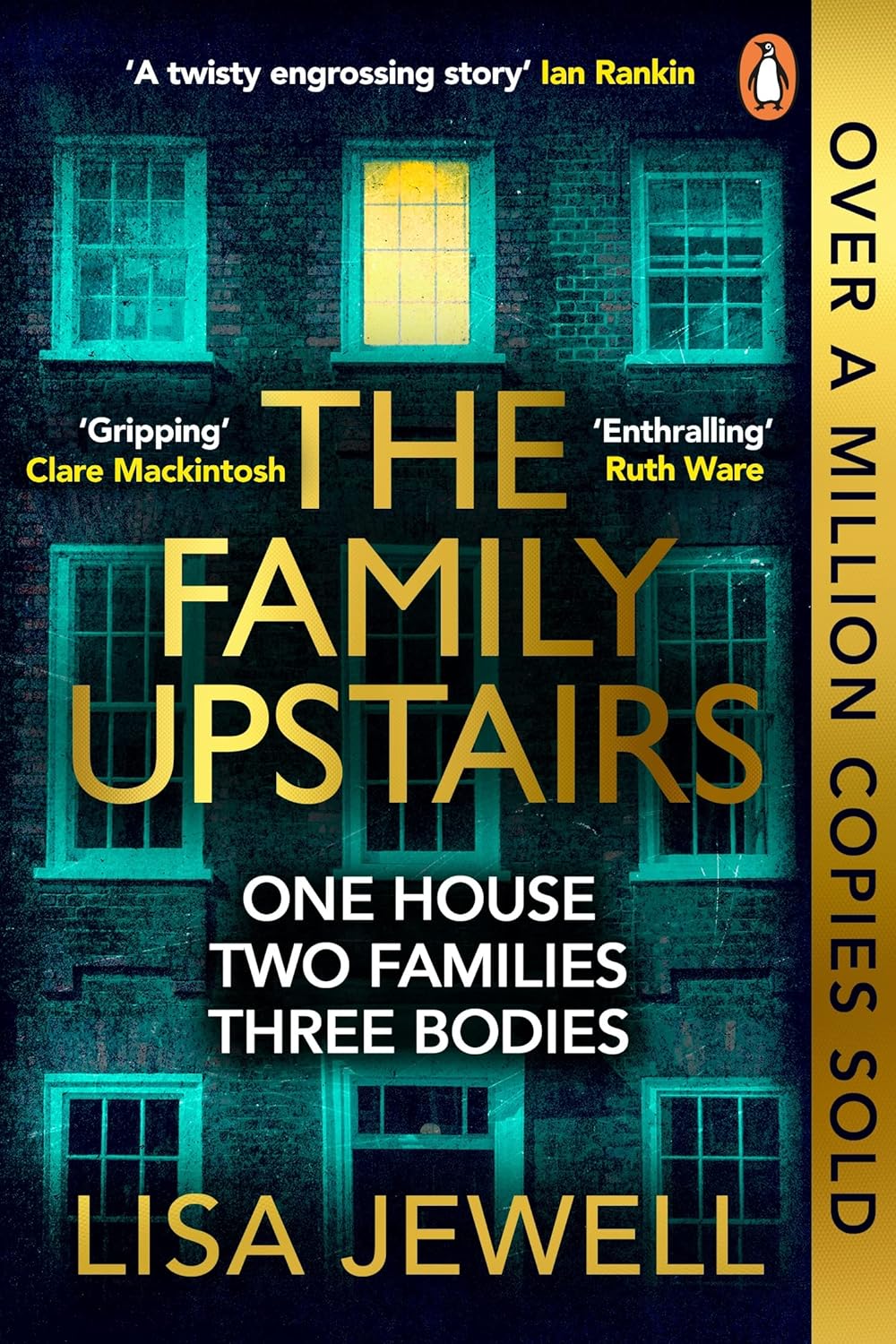
The Family Upstairs by Lisa Jewell | Gripping Psychological Thriller


රු1,800.00
3 X Rs. 600.00 or 8% Cashback with


or 3 X රු600.00 with


or up to 4 X රු450.00 with


The Family Upstairs by Lisa Jewell is a chilling psychological thriller that intertwines mystery, suspense, and dark family secrets. Set in an elegant yet eerie London mansion, the story follows three characters whose lives are connected by a traumatic past and a dangerous family secret.
Intriguing Plot – The story centers around a grand London mansion with a dark past, where a young woman inherits the house and uncovers a web of family secrets and mysteries.
Multiple Perspectives – Told through the viewpoints of three characters—Libby, Henry, and Lucy—the novel reveals different angles of the same haunting story, keeping readers engaged and intrigued.
Psychological Suspense – A masterclass in tension, the novel gradually unravels a chilling and twisted family history, with secrets that threaten to destroy the lives of those involved.
Dark Family Secrets – The novel explores themes of betrayal, trauma, and the impact of hidden truths, focusing on the disturbing events that occurred in the mansion and their long-lasting effects.
Compelling Characters – Each character has a unique and emotional backstory, creating a deep connection with readers. Their lives are shaped by the house and the horrifying events that took place there.
Shocking Twists and Turns – Just when readers think they have it figured out, The Family Upstairs delivers unexpected twists, keeping the suspense high and the story unpredictable.
Atmospheric Setting – The crumbling mansion, with its eerie history, serves as a perfect backdrop for the dark and haunting events of the novel, enhancing the sense of mystery and danger.
Exploration of Trauma and Recovery – The book delves into how individuals cope with past trauma and the impact of family dynamics on personal growth and healing.
Unforgettable Ending – The story builds to a gripping climax, where all the secrets are finally revealed, leaving readers stunned by the shocking conclusion.


Out of stock
Email when stock available
The Family Upstairs by Lisa Jewell is a dark, gripping psychological thriller filled with family secrets, mysterious deaths, disappearances, and disturbing truths hidden inside one extraordinary London house.
Libby Jones has spent her entire life wondering where she came from.
Then she turns twenty-five.
A letter arrives.
And everything changes.
Libby finally learns the identity of her birth parents.
But that is only the beginning.
She also discovers that she has inherited an enormous mansion in Chelsea, London, worth millions.
For most people, that would sound like a dream.
For Libby, it opens the door to a nightmare that began twenty-five years earlier.
Why Read The Family Upstairs?
The Family Upstairs is ideal for readers who enjoy psychological thrillers where the truth is revealed slowly.
The story combines:
- Family secrets
- Psychological suspense
- A mysterious mansion
- Multiple timelines
- Missing children
- Unexplained deaths
- Manipulation
- Obsession
- Identity
- Dark relationships
- Twists and revelations
- Domestic noir
The mystery begins almost immediately.
Who were Libby’s real parents?
Why did they die?
Who looked after her after their deaths?
What happened to the other children?
And why have certain people been waiting for Libby to turn twenty-five?
The Family Upstairs and Libby Jones
Libby Jones believes she is finally about to receive answers about her past.
Instead, she receives something much bigger.
A house.
Not an ordinary house.
A grand mansion at 16 Cheyne Walk in fashionable Chelsea.
It belonged to her biological parents.
And now it belongs to her.
The property is worth millions.
Her financial future appears to have changed overnight.
But the house carries a disturbing history.
A history Libby knows almost nothing about.
The Dark History of The Family Upstairs
Twenty-five years earlier, police were called to the mansion after reports of a baby crying.
Inside the house, they found a healthy ten-month-old baby.
She was safe.
Fed.
And alone.
Downstairs was something completely different.
Three adults were dead in the kitchen.
They were dressed in black.
A handwritten note was nearby.
And four other children believed to have been living in the house were nowhere to be found.
That baby was Libby.
But someone must have cared for her after the adults died.
Who?
And where did that person go?
The Family Upstairs and the Chelsea Mansion
The house itself feels almost like another character.
It once represented wealth.
Status.
Comfort.
And privilege.
But over time, something inside the house changed.
Relationships changed.
Rules changed.
The people living there changed.
What should have been a beautiful family home became connected with fear, control, and tragedy.
That makes the mansion central to The Family Upstairs.
Libby has inherited valuable property.
But she has also inherited its secrets.
A Psychological Thriller About Family
At its heart, The Family Upstairs is a family story.
Just not a comfortable one.
Lisa Jewell explores what can happen when boundaries disappear inside a household.
When trust becomes manipulation.
When outsiders gain influence.
And when children become trapped inside situations they cannot control.
The novel gradually reveals how the families inside the Chelsea mansion became entangled.
The result is disturbing because much of the danger develops slowly.
The Family Upstairs and Multiple Perspectives
The story does not simply follow Libby from beginning to end.
Different perspectives help reveal pieces of the past and present.
Readers receive information gradually.
One character knows something another does not.
One version of events may change the way you understand another.
That structure is especially effective in a mystery.
Instead of receiving one simple explanation, readers build the truth piece by piece.
Secrets From Twenty-Five Years Ago
The mystery surrounding the mansion has remained unresolved for decades.
Four children disappeared.
Three adults died.
A baby survived.
Then life moved forward.
But secrets do not always stay buried.
Libby’s twenty-fifth birthday becomes the moment when the past begins colliding with the present.
The publisher notes that people who have been hiding are now heading back toward her.
That gives The Family Upstairs a powerful feeling of approaching danger.
Libby may have inherited the house.
But someone else has been waiting for that inheritance too.
The Family Upstairs and Identity
One of the strongest themes is identity.
Libby wants to know where she came from.
That is understandable.
But learning about your past can change how you understand yourself.
Who were her parents?
What kind of family did she come from?
What really happened in the mansion?
And how much of that history belongs to her?
The Family Upstairs explores the difference between the family we are born into and the life we create afterward.
A Story About Control
Another major theme is control.
Who controls a household?
Who decides what is normal?
How can one powerful personality influence an entire family?
The novel explores how manipulation can develop gradually.
A strange rule may initially seem harmless.
Then another appears.
Then another.
Eventually, the people inside the situation may barely recognize how much their lives have changed.
This psychological element gives The Family Upstairs much of its darkness.
The Family Upstairs and Suspense
Lisa Jewell does not rely only on sudden shocks.
Much of the suspense comes from knowing something terrible happened but not understanding exactly how.
Readers already know three people died.
They know children disappeared.
They know Libby survived.
The question is not simply what happened?
It is:
How did an apparently wealthy family reach that point?
That question keeps the pages turning.
The Family Upstairs Without Spoilers
This is the kind of thriller where knowing too much before reading can reduce the experience.
The pleasure comes from discovering:
Who lived in the house.
How the families became connected.
Why relationships changed.
What happened to the missing children.
Who survived.
Who is telling the truth.
And why Libby’s inheritance matters now.
It is better to let the answers arrive naturally.
Dark Family Secrets
Many psychological thrillers begin with an ordinary person discovering that someone close to them has hidden something.
The Family Upstairs takes that idea much further.
Libby’s entire family history is a mystery.
She cannot simply ask her biological parents.
They are dead.
The house may contain clues.
Other survivors may have answers.
But those answers may be difficult to hear.
The Family Upstairs and Domestic Noir
The publisher describes the book as combining a family saga with domestic noir.
That description fits well.
Much of the danger comes from inside the home.
The threat is not necessarily a stranger standing outside.
It comes from relationships.
Power.
Trust.
Manipulation.
And the people allowed through the front door.
That makes the story psychologically unsettling.
A Mystery With Multiple Layers
The first mystery is obvious.
What happened inside the house?
Then other mysteries appear.
Where are the missing children?
Who has been watching Libby’s life?
Why was the baby left unharmed?
Who wrote the note?
What happened before the deaths?
Every answer reveals another layer.
That makes The Family Upstairs particularly suitable for readers who enjoy complex thrillers rather than straightforward crime stories.
The Family Upstairs and Its Sequel
The Family Upstairs is the first book in this connected story.
Lisa Jewell later continued the characters’ story in The Family Remains.
Penguin currently lists The Family Upstairs as The Family Upstairs #1, while Simon & Schuster describes The Family Remains as its sequel.
So readers who finish this book and want to know what happens afterward have another novel to continue with.
Who Should Read The Family Upstairs?
The Family Upstairs is ideal for readers who enjoy:
Psychological thrillers.
Domestic thrillers.
Family mysteries.
Dark secrets.
Multiple timelines.
Unreliable or complicated characters.
Mysterious houses.
Missing-person stories.
Slowly unfolding mysteries.
Lisa Jewell novels.
Books like Then She Was Gone.
Readers who enjoy stories where seemingly ordinary families hide disturbing histories will likely find plenty to keep them interested.
Content Note for The Family Upstairs
This is a dark adult thriller.
Readers should expect themes involving:
- Death
- Psychological manipulation
- Controlling behaviour
- Family trauma
- Child neglect and abuse
- Violence
- Toxic relationships
- Disturbing family dynamics
- Cult-like control
These elements are central to the psychological mystery.
7 Shocking Reasons to Read The Family Upstairs
- A Brilliant Opening Mystery – A baby is discovered alive while three adults are found dead downstairs.
- A Multimillion-Pound Inheritance – Libby suddenly inherits an extraordinary Chelsea mansion.
- Four Missing Children – The children reported to be living in the house vanished after the deaths.
- Dark Family Secrets – The novel slowly explains how the household became deeply disturbed.
- Multiple Perspectives – Different viewpoints gradually reveal the truth.
- Twisted Psychological Suspense – The danger comes from manipulation, trust, and relationships as much as traditional crime.
- A Story That Continues – Readers can continue with Lisa Jewell’s sequel, The Family Remains.
What You Can Expect From The Family Upstairs
Readers can expect:
- Libby Jones
- Chelsea, London
- 16 Cheyne Walk
- A mysterious inheritance
- Three unexplained deaths
- Missing children
- Family secrets
- Psychological manipulation
- Multiple perspectives
- Past and present timelines
- Suspense
- Mystery
- Dark revelations
- Twists
- Domestic noir
A Dark and Addictive Psychological Mystery
The Family Upstairs begins with what should be the best news of Libby Jones’s life.
She has inherited a mansion worth millions.
But the house comes with history.
Twenty-five years earlier, a baby was discovered alive inside.
Three adults were dead.
Four children were missing.
And nobody has ever fully explained what happened.
Now Libby owns the house.
The past is returning.
And people who have spent years waiting are moving toward her.
For readers who enjoy dark family mysteries, complicated characters, disturbing secrets, and psychological thrillers that reveal the truth piece by piece, The Family Upstairs is a gripping choice.
Book Details
Title: The Family Upstairs
Author: Lisa Jewell
Genre: Psychological Thriller / Mystery / Domestic Noir
Series: The Family Upstairs #1
Original Publication: 2019
Main Character: Libby Jones
Main Setting: Chelsea, London
Sequel: The Family Remains.
UK Paperback Edition
Penguin lists this paperback edition:
ISBN-13: 9781787461482
Format: Paperback
Imprint: Arrow
Publication Date: 23 June 2022
Pages: 480
Dimensions: 199 × 129 × 31 mm
Weight: 302 g.
US Trade Paperback Edition
Simon & Schuster lists:
ISBN-13: 9781501190117
Format: Trade Paperback
Publisher: Atria Books
Publication Date: 2 June 2020
Pages: 384.
Edition Note
Different editions of The Family Upstairs have different ISBNs, page counts, covers, dimensions, and weights.
Use the ISBN printed on your physical copy before entering exact edition details on your website.
About The Family Upstairs
The Family Upstairs by Lisa Jewell is a gripping psychological thriller filled with secrets, mystery, and family drama.
The story follows a young woman who inherits a house connected to a disturbing past.
Why Read The Family Upstairs?
The Family Upstairs is perfect for readers who enjoy suspense, dark family secrets, and unexpected twists.
The novel keeps the tension high while slowly revealing what really happened inside the mysterious house.
The Family Upstairs is a strong choice for fans of psychological thrillers and mystery fiction.


Be the first to review “The Family Upstairs by Lisa Jewell | Gripping Psychological Thriller”
Related products
-19%
Out of stock
Classics & Literary Fiction
Original price was: රු2,600.00.රු2,100.00Current price is: රු2,100.00.
3 X Rs. 700.00 or 8% Cashback with
or 3 X රු700.00 with
or up to 4 X රු525.00 with

Out of stock
Fiction & Literature
රු1,900.00
3 X Rs. 633.33 or 8% Cashback with
or 3 X රු633.33 with
or up to 4 X රු475.00 with

Out of stock
Contemporary romance
රු1,850.00
3 X Rs. 616.67 or 8% Cashback with
or 3 X රු616.67 with
or up to 4 X රු462.50 with
-20%

Contemporary romance
Original price was: රු2,050.00.රු1,650.00Current price is: රු1,650.00.
3 X Rs. 550.00 or 8% Cashback with
or 3 X රු550.00 with
or up to 4 X රු412.50 with
Classics & Literary Fiction
රු1,850.00
3 X Rs. 616.67 or 8% Cashback with
or 3 X රු616.67 with
or up to 4 X රු462.50 with

Out of stock
Children & Young Adult
රු3,200.00
3 X Rs. 1,066.67 or 8% Cashback with
or 3 X රු1,066.67 with
or up to 4 X රු800.00 with
-20%
Classics & Literary Fiction
Original price was: රු2,450.00.රු1,950.00Current price is: රු1,950.00.
3 X Rs. 650.00 or 8% Cashback with
or 3 X රු650.00 with
or up to 4 X රු487.50 with
-29%
Classics & Literary Fiction
Original price was: රු2,100.00.රු1,500.00Current price is: රු1,500.00.
3 X Rs. 500.00 or 8% Cashback with
or 3 X රු500.00 with
or up to 4 X රු375.00 with
Reviews
There are no reviews yet.