No products in the cart.
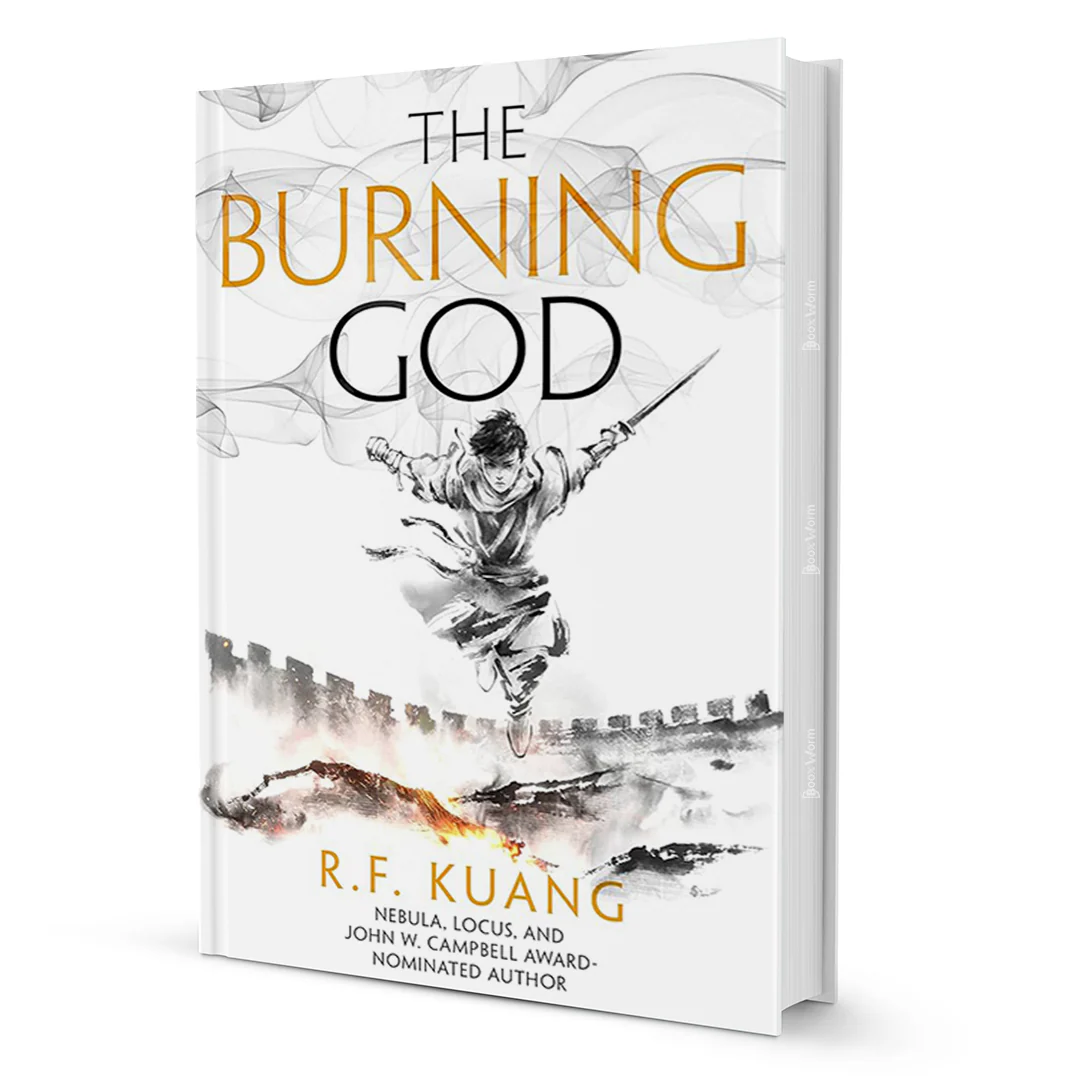
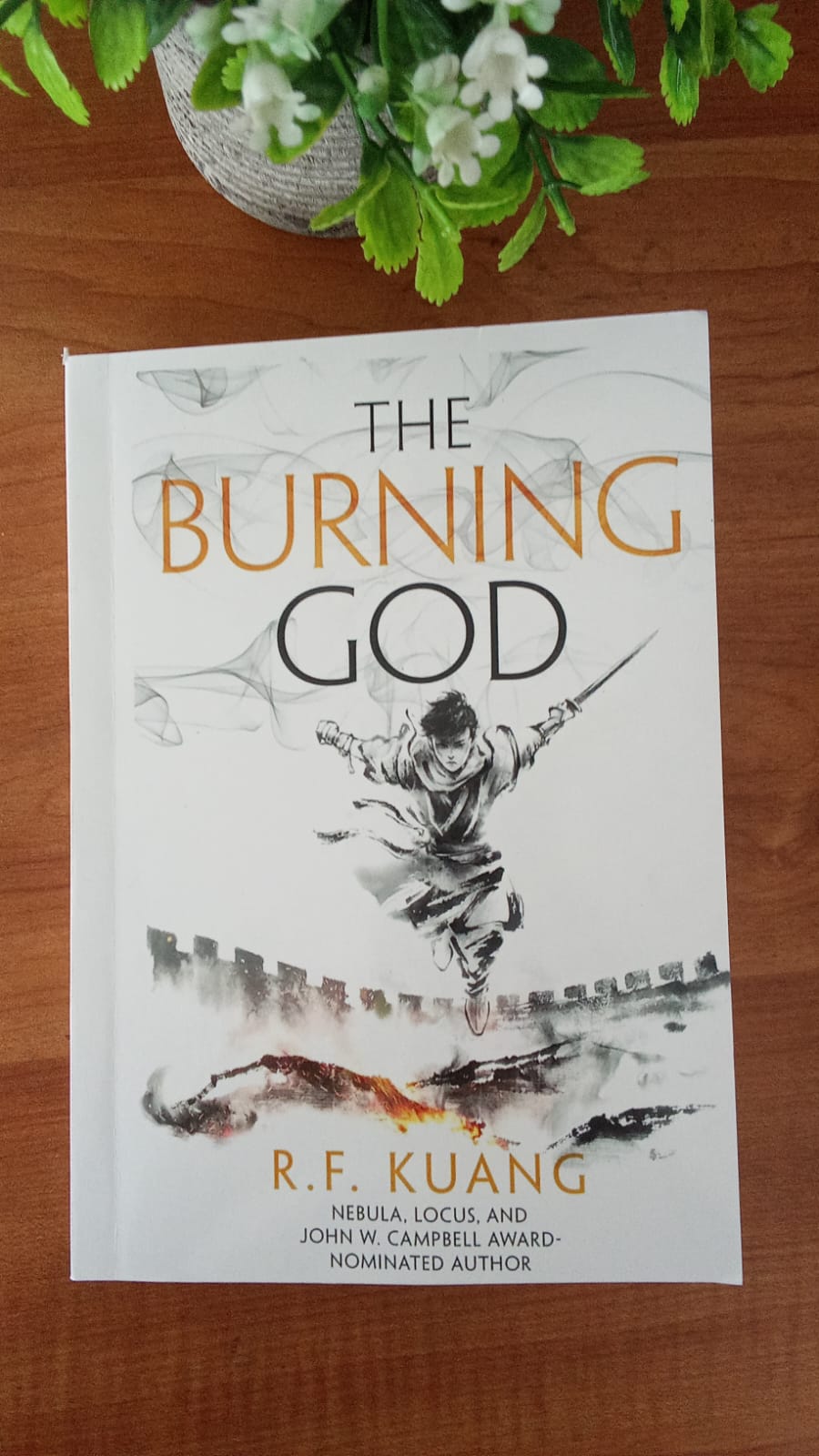
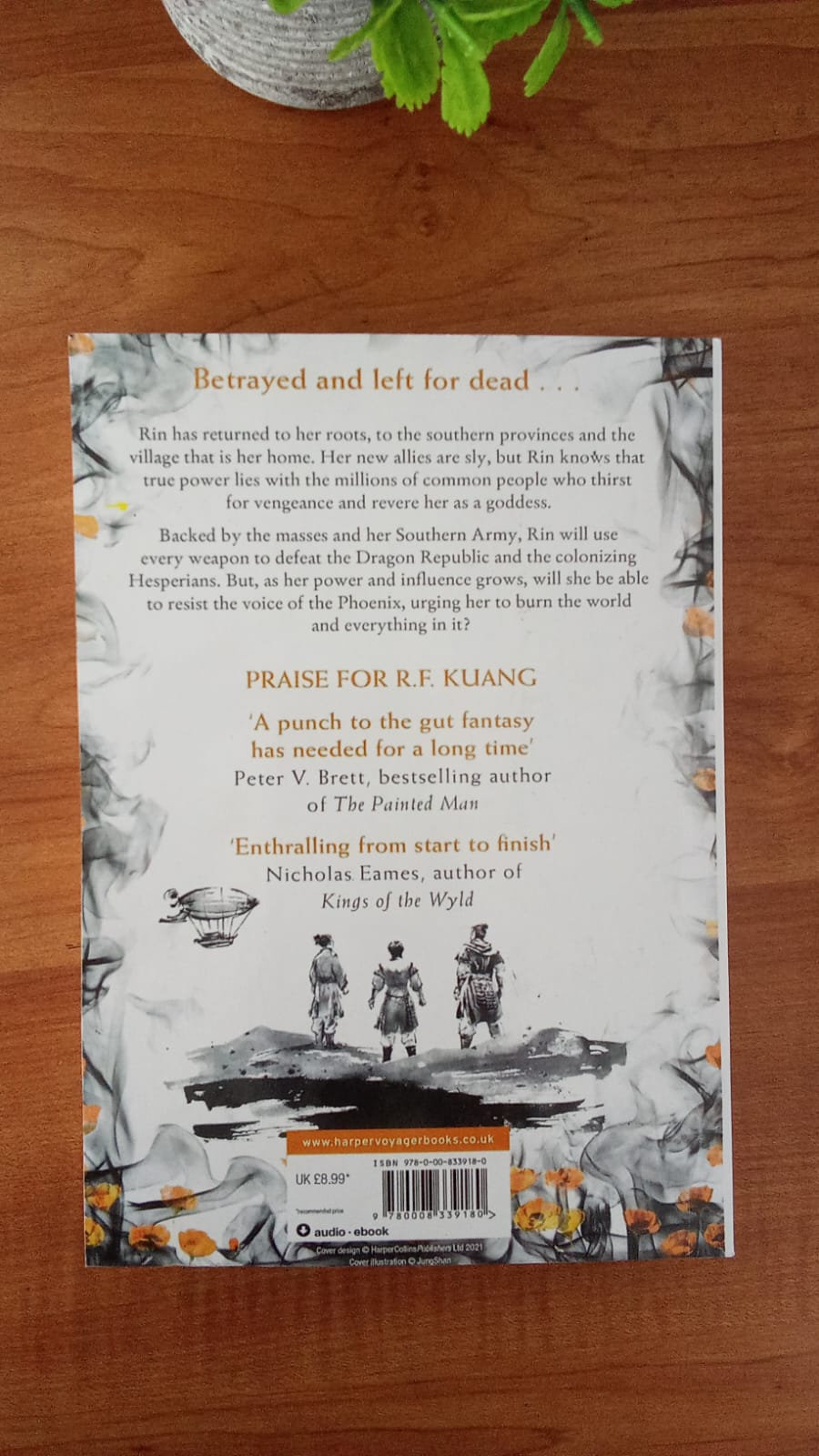
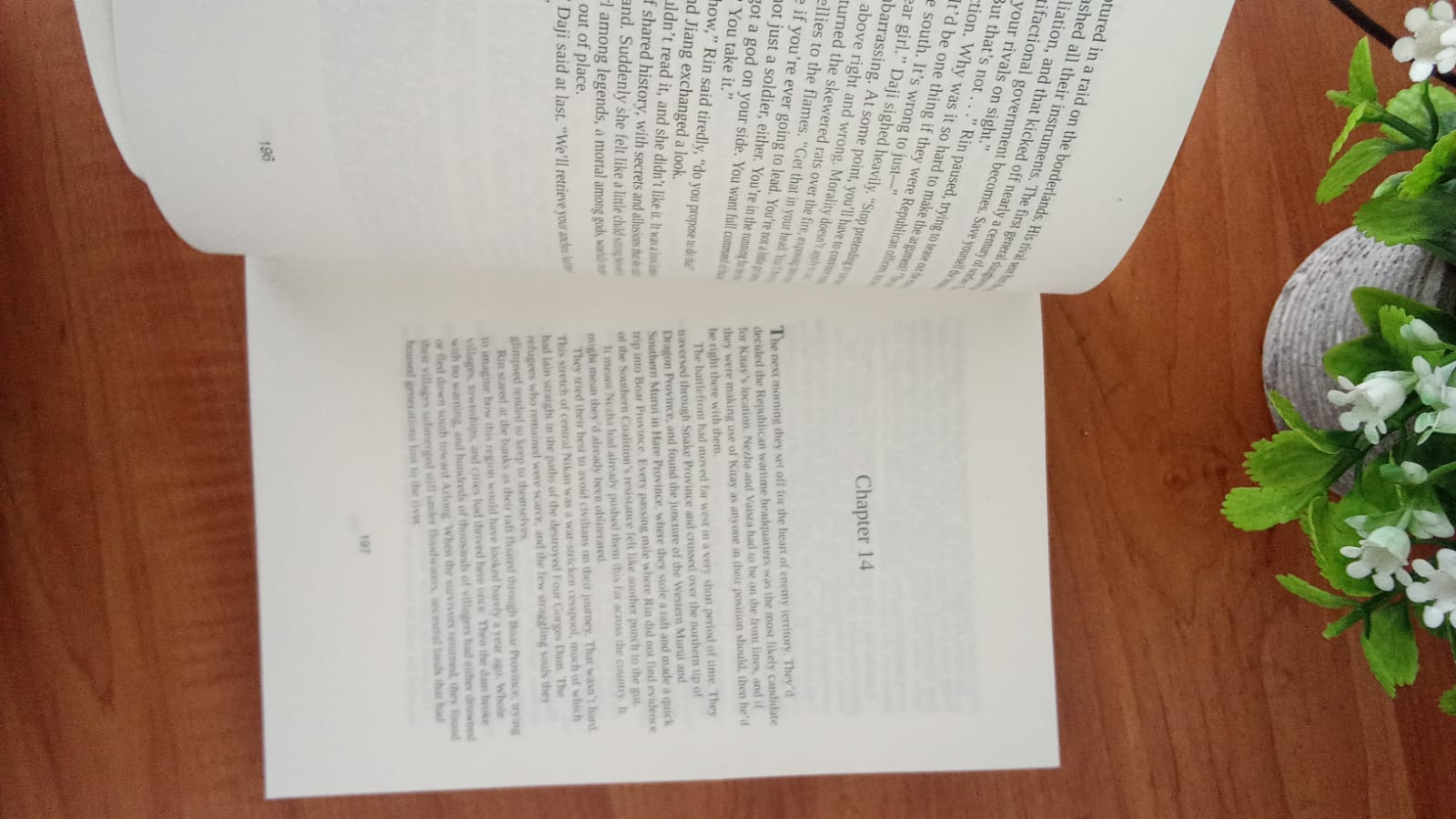

The Burning God by R. F. Kuang
The Burning God by R. F. Kuang is a devastating dark fantasy filled with war, revenge, political conflict, gods, betrayal, loyalty, ambition, and the terrible cost of power.
It brings The Poppy War trilogy to its conclusion after The Poppy War and The Dragon Republic.
The story once again follows Fang Runin, better known as Rin, as she faces the consequences of everything that has happened throughout the first two books.
Readers should definitely read the previous volumes before beginning this one.
Why Read The Burning God?
The Burning God is an excellent choice for readers who enjoy dark fantasy, military fantasy, morally complicated characters, political conflict, and stories where victory never comes without a price.
Publishers Weekly describes the novel as confronting difficult moral choices and the personal costs involved in pursuing victory and peace.
This is not a light fantasy adventure.
The novel deals directly with violence, warfare, trauma, hunger, power, revenge, and political instability.
Rin Returns
Rin has changed enormously since the beginning of The Poppy War.
She began as a determined young woman fighting for an opportunity to escape poverty.
By the time of The Burning God, she has survived military training, invasion, devastating warfare, political manipulation, betrayal, and her connection with the Phoenix.
Her experiences have made her powerful.
They have also made her increasingly dangerous.
Publishers Weekly described Kuang as pushing Rin, her central antihero, toward the limits in this final volume.
Betrayal Changes Everything
At the beginning of the final novel, Rin is dealing with the consequences of betrayal.
The alliances she depended on have fractured.
The struggle for control of Nikan is far from finished.
Rin must decide who can still be trusted and how far she is willing to go to defeat those standing against her.
These questions turn political conflict into something deeply personal.
War for Nikan
War remains central to The Burning God.
But the novel is interested in much more than battles.
It asks what happens after armies destroy cities.
Who feeds the survivors?
Who governs?
Who rebuilds?
And what happens when the people who fought together for victory disagree about what the new country should become?
Publishers Weekly highlights the novel’s focus on the consequences and moral compromises of war rather than presenting victory as simple or heroic.
Rin and the Phoenix
Rin’s connection with the Phoenix gives her extraordinary destructive power.
But power always carries consequences in this trilogy.
The Phoenix is not simply a convenient magical weapon.
It represents rage, destruction, and the temptation to solve impossible problems through overwhelming force.
Rin repeatedly has to decide whether power gives her the right to use it.
That conflict becomes increasingly important in the final book.
Kitay and Loyalty
Kitay remains one of Rin’s most important relationships.
Their connection has survived experiences that would have destroyed many friendships.
He often provides a more analytical perspective when Rin is driven by anger or desperation.
The tension between loyalty and disagreement becomes increasingly important as Rin’s decisions grow more extreme.
Their relationship gives the political and military story a deeply personal centre.
Nezha and Political Conflict
Nezha also continues to play a crucial role in the trilogy’s conclusion.
His relationship with Rin has always contained rivalry, friendship, resentment, attraction, political disagreement, and shared history.
By this point, their paths represent competing visions for Nikan.
That makes their conflict more complicated than a simple hero-versus-villain confrontation.
Both characters believe that their choices may be necessary.
Gods and Shamans
The supernatural world remains deeply connected with the political conflict.
Shamans can access extraordinary power.
But the gods are not safe tools waiting to obey human commands.
Using divine power comes with psychological and physical consequences.
This makes the fantasy system feel closely connected to the larger themes of control, ambition, and destruction.
Revenge Versus Leadership
One of the strongest questions in The Burning God is whether someone who is excellent at fighting a revolution will also be capable of governing afterward.
Destroying an enemy is one problem.
Building a functioning country is another.
Rin’s anger and determination make her extremely effective in conflict.
But leadership requires compromise, planning, resources, alliances, and sometimes restraint.
That creates one of the most fascinating tensions in the final novel.
The Cost of Victory
Fantasy stories often end when the enemy is defeated.
Kuang is more interested in what victory actually costs.
A country can win a war and still be destroyed.
An army can defeat its enemy and still lose thousands of people.
A leader can achieve power and discover that governing is harder than rebellion.
The Burning God repeatedly forces its characters to confront those realities.
Inspired by History
Kuang has discussed the trilogy as drawing heavily on twentieth-century Chinese history while combining those influences with fantasy, martial-arts traditions, mythology, and other storytelling forms.
This historical inspiration helps explain why the trilogy’s wars, political movements, foreign intervention, and ideological conflicts often feel unusually harsh and complex.
It is fantasy, but its portrayal of war deliberately avoids romanticizing conquest.
A Dark Conclusion
Readers should prepare for an emotionally heavy final volume.
Publishers Weekly called the ending satisfying without describing it as happy and emphasized the novel’s refusal to avoid the consequences of war.
That tone fits the trilogy.
The series has always been concerned with what happens when people pursue power in a world where every available choice has terrible consequences.
7 Epic Reasons to Read The Burning God
1. It completes The Poppy War trilogy.
This is the third and final volume.
2. Rin’s character reaches its most intense stage.
Her ambition, anger, trauma, and power become central to the conclusion.
3. The political conflict becomes bigger.
The struggle is no longer simply about defeating one enemy.
4. The fantasy remains dark and unpredictable.
Gods, shamans, warfare, and political betrayal continue to shape the story.
5. Relationships become increasingly complicated.
Rin’s connections with Kitay, Nezha, and others carry enormous emotional and political consequences.
6. The book explores the price of victory.
Winning a war does not automatically create peace.
7. It delivers the conclusion to an ambitious military fantasy saga.
Publishers Weekly praised its focus on difficult moral choices and the consequences of war.
The Poppy War Reading Order
Read the trilogy in this order:
- The Poppy War
- The Dragon Republic
- The Burning God
HarperCollins lists these three novels together as the complete trilogy.
For your WooCommerce page, adding internal links to the first two books would be particularly useful.
About R. F. Kuang
R. F. Kuang launched her fiction career with The Poppy War in 2018 and completed the trilogy with The Burning God in 2020. Publishers Weekly noted that her fantasy work combines influences from Chinese history with epic fantasy, wuxia, and other storytelling traditions.
Her later novels include Babel and Yellowface.
Book Details
A U.S. Harper Voyager hardcover edition has these details:
Author: R. F. Kuang
Series: The Poppy War – Book 3
Publisher: Harper Voyager
Publication Date: November 17, 2020
Pages: 640
ISBN-13: 9780062662620
ISBN-10: 0062662627
HarperCollins also lists a later 656-page edition, so check your physical copy before entering page count or ISBN into WooCommerce.
Perfect for Readers Interested In
The Burning God is a strong choice for readers interested in:
- Dark fantasy
- Epic fantasy
- Military fantasy
- R. F. Kuang
- The Poppy War
- Political fantasy
- Morally grey characters
- War fiction
- Gods and mythology
- Revenge stories
- Historical-inspired fantasy
- BookTok fantasy
Build Your Fantasy Collection
Readers who enjoy The Burning God should also explore The Poppy War and The Dragon Republic.
You can add internal links to your Fantasy, Dark Fantasy, Epic Fantasy, and BookTok Books categories.
If you stock Babel or other R. F. Kuang titles, link those products as additional recommendations.
Buy The Burning God in Sri Lanka
Looking for The Burning God in Sri Lanka?
R. F. Kuang’s explosive trilogy finale is an excellent choice for readers who enjoy dark fantasy, military conflict, morally complicated characters, revenge, gods, betrayal, political strategy, and emotionally devastating stories.
Experience the final chapter of Rin’s journey as the struggle for Nikan reaches its brutal conclusion.
Add The Burning God to your fantasy collection today. https://www.harpercollins.com/products/the-burning-god-r-f-kuang
Be the first to review “Burning god by R. F. Kuang”
Related products
Out of stock
Fantasy
3 X Rs. 0.00 or 8% Cashback with


or 3 X රු0.00 with


or up to 4 X රු0.00 with

Out of stock
රු1,900.00
3 X Rs. 633.33 or 8% Cashback with
or 3 X රු633.33 with
or up to 4 X රු475.00 with
රු2,500.00
3 X Rs. 833.33 or 8% Cashback with
or 3 X රු833.33 with
or up to 4 X රු625.00 with
-6%
Original price was: රු8,700.00.රු8,200.00Current price is: රු8,200.00.
3 X Rs. 2,733.33 or 8% Cashback with
or 3 X රු2,733.33 with
or up to 4 X රු2,050.00 with
Out of stock
Children & Young Adult
රු1,750.00
3 X Rs. 583.33 or 8% Cashback with
or 3 X රු583.33 with
or up to 4 X රු437.50 with
රු3,000.00
3 X Rs. 1,000.00 or 8% Cashback with
or 3 X රු1,000.00 with
or up to 4 X රු750.00 with

Out of stock
රු1,450.00
3 X Rs. 483.33 or 8% Cashback with
or 3 X රු483.33 with
or up to 4 X රු362.50 with
-15%
Contemporary romance
A Touch of Malice: The world of New Athens and the Greek gods by Scarlett St. Clair
Original price was: රු2,600.00.රු2,200.00Current price is: රු2,200.00.
3 X Rs. 733.33 or 8% Cashback with
or 3 X රු733.33 with
or up to 4 X රු550.00 with
Reviews
There are no reviews yet.