
No products in the cart.



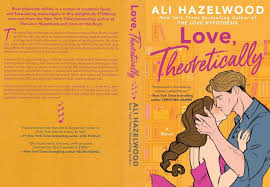






Love Theoretically by Ali Hazelwood


රු1,600.00
3 X Rs. 533.33 or 8% Cashback with


or 3 X රු533.33 with


or up to 4 X රු400.00 with


Love Theoretically by Ali Hazelwood is a witty STEM romance following theoretical physicist Elsie Hannaway, an underpaid adjunct professor who secretly works as a fake girlfriend, and Jack Smith, the intimidating experimental physicist standing between her and her dream job. Filled with academic rivalry, fake dating, sharp banter, career ambition, people-pleasing, self-discovery and undeniable chemistry, this standalone romance is perfect for fans of smart, funny and emotional love stories.
4 in stock
Love Theoretically by Ali Hazelwood is a smart, funny and emotionally satisfying STEM romance about academic rivalry, fake dating, people-pleasing, career ambition and learning that being loved should never require pretending to be someone else.
Elsie Hannaway is a theoretical physicist.
She is intelligent.
Highly qualified.
Ambitious.
And completely exhausted.
By day, Elsie works as an adjunct professor, teaching thermodynamics and grading endless assignments while hoping to finally secure a permanent academic position.
Unfortunately, academic life does not pay her nearly enough.
So Elsie has another job.
She works as a fake girlfriend.
Her ability to understand what other people want makes her excellent at becoming whatever version of herself a client needs.
Quiet girlfriend?
She can do that.
Charming girlfriend?
Easy.
Perfect person to impress the family?
No problem.
Elsie has spent years adapting herself to other people’s expectations.
Then she meets Jack Smith.
Jack is the older brother of one of her favorite fake-dating clients.
He is also an experimental physicist.
Worse, he is the physicist Elsie believes damaged the reputation of theoretical physics and harmed her mentor’s career.
And when Elsie applies for her dream academic position at MIT, Jack is suddenly standing directly between her and the job she desperately wants.
Their relationship should be simple.
They are rivals.
They disagree.
They irritate each other.
But Jack has an unsettling ability to see through Elsie’s carefully constructed personalities.
Around him, she finds it increasingly difficult to become whatever other people expect.
And for perhaps the first time, Elsie begins asking an uncomfortable question:
Who is she when she stops performing for everyone else?
Love Theoretically by Ali Hazelwood combines enemies-to-lovers tension, academic rivalry, STEM humor, fake dating and emotional growth in a romance about choosing authenticity over approval.
Love Theoretically by Ali Hazelwood – Book Overview
Love Theoretically by Ali Hazelwood follows Elsie Hannaway as several parts of her carefully organized life collide.
Her academic career is uncertain.
Her finances are difficult.
Her fake-dating work depends on keeping different parts of her life separate.
And she desperately wants a permanent university position.
Then Jack Smith appears in more than one part of her world.
Elsie already dislikes what Jack represents professionally.
He is an experimental physicist.
She is a theoretical physicist.
Their academic fields have their own tensions.
But Jack is more complicated than the enemy Elsie expects.
He challenges her.
Questions her.
Notices when she changes herself to please other people.
And refuses to accept the convenient version of Elsie she usually presents.
That becomes much more frightening than simply arguing about physics.
Elsie Hannaway
Elsie is one of Ali Hazelwood’s most memorable STEM heroines.
She is:
Brilliant.
Funny.
Hardworking.
Financially stressed.
Professionally ambitious.
And deeply accustomed to people-pleasing.
She has spent so long adapting herself that she can sometimes lose track of what she genuinely wants.
People-Pleasing
One of the strongest themes in Love Theoretically by Ali Hazelwood is people-pleasing.
Elsie is extraordinarily good at reading a room.
She notices:
What people like.
What makes them uncomfortable.
What they expect from her.
Then she adjusts.
This ability can seem useful.
But constantly changing yourself for other people has a cost.
Who Are You When Nobody Needs Anything From You?
If you always become the person others want, eventually one question becomes difficult:
What do you want?
Elsie’s journey is partly about answering that question.
Her problem is not kindness.
Kindness is valuable.
The problem is disappearing inside other people’s expectations.
Fake Dating as a Job
Unlike many romance novels where fake dating begins between the main couple, Elsie already works as a fake girlfriend professionally.
She uses her ability to perform different identities to help clients navigate social situations.
The setup is funny.
But it also reveals something important about her character.
Elsie has turned emotional adaptation into a skill.
Jack Smith
Jack Smith initially seems like exactly the type of person Elsie should dislike.
He is:
Confident.
Intimidating.
Blunt.
An experimental physicist.
Connected with a professional controversy Elsie has never forgotten.
And involved in the hiring process for the academic position she wants.
But Jack also does something unusual.
He pays attention.
Being Seen
Many people like the version of Elsie that she creates for them.
Jack seems interested in the version underneath.
That makes their relationship emotionally powerful.
Being liked is not necessarily the same as being known.
And being known can feel much more vulnerable.
Theoretical Physics Versus Experimental Physics
The academic rivalry gives the novel its title and much of its humor.
Elsie is a theoretical physicist.
Jack is an experimental physicist.
Theoreticians often develop mathematical models and explanations.
Experimentalists test ideas through observation and experimentation.
In the novel, this professional divide becomes personal.
Academic Rivalry
Elsie believes Jack has contributed to problems affecting theorists.
That creates immediate conflict.
Their relationship therefore contains:
Professional resentment.
Personal attraction.
Academic tension.
Competition.
Misunderstandings.
This makes Love Theoretically by Ali Hazelwood particularly enjoyable for readers who love rivals-to-lovers romance.
Rivals to Lovers
The romance develops because neither character can simply ignore the other.
They challenge assumptions.
They argue.
They notice things.
They become increasingly aware of the attraction underneath the conflict.
The result is a strong combination of:
Banter.
Tension.
Chemistry.
Emotional vulnerability.
Academia
The novel takes the pressure of academic careers seriously.
For Elsie, obtaining the right position could change her entire life.
Academic jobs can be extremely competitive.
Candidates may face:
Interviews.
Publication expectations.
Teaching responsibilities.
Professional politics.
Limited permanent positions.
The dream job is therefore more than a convenient romance setting.
It represents stability.
Adjunct Life
Elsie’s work as an adjunct professor is especially important.
Adjunct academics can face:
Low pay.
Unstable contracts.
Heavy teaching workloads.
Limited benefits.
Little job security.
Elsie’s financial difficulties help explain why landing a permanent position matters so much to her.
Career Ambition
Love Theoretically by Ali Hazelwood does not treat Elsie’s career as something she should abandon for romance.
Her scientific ambitions matter.
She wants:
Respect.
Stability.
Meaningful work.
A future in physics.
The romantic storyline develops alongside those goals.
Love Should Not Require Becoming Smaller
One of the strongest messages in the novel is that a healthy relationship should make room for ambition.
A partner should not require someone to become:
Less intelligent.
Less ambitious.
Less independent.
Less themselves.
The right relationship should create space for authenticity.
Self-Worth
Elsie has spent years measuring her value through other people’s reactions.
Do they approve?
Are they happy?
Did I say the right thing?
Do they still like me?
That creates fragile self-worth.
Because other people’s opinions constantly change.
Approval
Approval can feel addictive.
You make someone happy.
They praise you.
You feel safe.
Then you begin adjusting more and more of yourself to keep that approval.
Eventually, the relationship becomes exhausting.
Authenticity
A major emotional turning point occurs when Elsie begins choosing honesty over performance.
Authenticity can be uncomfortable.
Some people may dislike the real version of you.
But relationships built entirely around performance are difficult to sustain.
Jack and Honesty
Jack’s bluntness sometimes frustrates Elsie.
But it also creates something she rarely experiences:
Clarity.
He does not always tell her what she wants to hear.
He challenges her assumptions.
And he encourages her to stop hiding behind the version of herself she thinks people prefer.
Misunderstanding
The relationship between Elsie and Jack is shaped by misconceptions.
Elsie believes she understands:
Who Jack is.
What he did.
What he thinks of her.
But assumptions can become dangerous when people never verify them.
Ask Before Assuming
One useful relationship lesson from Love Theoretically by Ali Hazelwood is simple:
Ask.
People frequently create entire stories from incomplete information.
“He doesn’t like me.”
“She doesn’t respect me.”
“They did this because…”
Sometimes those conclusions are correct.
Sometimes they are completely wrong.
Communication matters.
Vulnerability
Elsie’s ability to adapt protects her from rejection.
If someone dislikes a version she created, they have not rejected the real Elsie.
But this protection creates another problem.
Nobody can fully love a person they are never allowed to know.
The Risk of Being Known
Authenticity creates risk.
Someone might see:
Your flaws.
Your insecurities.
Your difficult emotions.
And still choose you.
That is far more meaningful than being liked because you successfully performed the perfect role.
Chemistry
Elsie and Jack have strong romantic chemistry.
Their attraction develops through:
Academic conflict.
Conversation.
Observation.
Tension.
Vulnerability.
The relationship becomes increasingly difficult to classify as simply professional rivalry.
Enemies-to-Lovers Energy
Although their relationship is more complicated than straightforward enemies, the book delivers many of the elements readers enjoy from enemies-to-lovers romance:
Sharp disagreements.
Professional rivalry.
Mutual fascination.
Unexpected attraction.
Gradual understanding.
STEM Romance
Ali Hazelwood is particularly well known for romance novels featuring women in science.
Love Theoretically by Ali Hazelwood places physics directly at the center of the story.
Readers encounter:
Theoretical physics.
Experimental physics.
Academic hiring.
University politics.
Research careers.
Teaching.
Women in STEM
Elsie’s experiences also connect to broader questions about women working in traditionally male-dominated academic environments.
She must navigate:
Professional expectations.
Bias.
Power structures.
Competition.
The pressure to be liked.
Her tendency to accommodate everyone makes those dynamics even more complicated.
Professional Identity
People often connect identity with career.
I am a physicist.
I am a researcher.
I am a professor.
When a career becomes uncertain, identity can also feel uncertain.
That helps explain the emotional significance of Elsie’s job search.
Financial Stress
Romance novels do not always discuss money realistically.
This one makes Elsie’s financial insecurity meaningful.
Career instability affects:
Housing.
Healthcare.
Daily decisions.
Confidence.
Future planning.
Love does not happen in a world where practical problems disappear.
Chronic Health Management
Elsie’s life also involves managing a chronic medical condition.
That adds another layer to her need for stability and financial security.
Health is not something she can simply ignore while pursuing academic dreams.
Stability
For Elsie, a permanent job represents more than prestige.
It means:
Reliable income.
Professional security.
A future she can actually plan.
That makes the competition for the MIT position emotionally significant.
Mentorship
Academic mentors can have enormous influence.
They help shape:
Research direction.
Professional networks.
Career opportunities.
Beliefs about the field.
Elsie’s loyalty to her mentor also affects the way she views Jack.
Loyalty
Loyalty can be admirable.
But loyalty can also prevent people from questioning what they have been told.
Growing up sometimes means realizing that someone you respect may not have given you the complete story.
Academic Politics
Universities contain people.
And wherever people exist, politics can exist.
Departments can experience:
Competition.
Old conflicts.
Status differences.
Professional rivalries.
Hiring disagreements.
The novel uses these tensions to create both humor and serious conflict.
Intelligence Does Not Solve Every Problem
Elsie is brilliant.
But intelligence in physics does not automatically make emotional life easy.
Someone can understand complicated theories while still struggling with:
Relationships.
Self-worth.
Boundaries.
Communication.
This contrast makes her relatable.
Boundaries
A healthy life requires boundaries.
You cannot always:
Fix everyone’s problems.
Say yes.
Make everyone comfortable.
Avoid every disagreement.
Boundaries may disappoint people.
That does not automatically make them wrong.
Saying No
For a lifelong people-pleaser, saying no can feel almost aggressive.
But saying no is often simply communication.
No, I cannot do that.
No, I do not want that.
No, this does not work for me.
Learning this becomes part of Elsie’s growth.
Friendship
Friendship remains important alongside romance.
Elsie needs people who support her without demanding constant performance.
Healthy friendships allow room for:
Honesty.
Mistakes.
Different opinions.
Individual needs.
Relationships and Performance
Many people perform in relationships without realizing it.
They try to become:
The easy partner.
The funny friend.
The perfect employee.
The helpful child.
Over time, maintaining these identities can become exhausting.
Love Theoretically by Ali Hazelwood turns this psychological pattern into a central romantic theme.
Love and Acceptance
Real acceptance does not mean someone thinks every behavior is perfect.
It means they can know the complicated version of you without demanding that you hide everything inconvenient.
That becomes especially meaningful for Elsie.
Attraction Versus Compatibility
Physical attraction can happen quickly.
Compatibility takes longer.
Do you communicate well?
Can you disagree?
Do you respect each other’s goals?
Can you be honest?
The novel gradually explores these deeper questions.
Science and Love
The title Love, Theoretically plays with Elsie’s scientific identity.
Theories help physicists explain the universe.
But love cannot be completely solved through equations.
There is no guaranteed formula.
No controlled experiment.
No perfect prediction.
Love requires uncertainty.
Theory Versus Experiment
The title also echoes the professional divide between Elsie and Jack.
Elsie belongs to theory.
Jack belongs to experimentation.
Their relationship almost becomes an experiment of its own.
Elsie has theories about Jack.
Then reality starts producing different evidence.
Evidence Changes Conclusions
Good scientists change their conclusions when evidence changes.
Relationships should work similarly.
If new information contradicts your assumptions, reconsider them.
That becomes an important part of Elsie’s journey.
Humor
Despite serious themes, Love Theoretically by Ali Hazelwood is a romantic comedy.
Readers can expect:
Academic jokes.
Awkward situations.
Fake-dating complications.
Sharp banter.
Physics humor.
Romantic tension.
The humor keeps the story lively even when it addresses insecurity and career stress.
Ali Hazelwood
Ali Hazelwood is known for STEM-centered romance featuring intelligent, ambitious women.
Her stories frequently combine:
Science.
Academia.
Romantic comedy.
Career ambition.
Strong chemistry.
Emotional growth.
Other Books by Ali Hazelwood
Readers who enjoy this book may also like:
The Love Hypothesis
Love on the Brain
Not in Love
Deep End
Check & Mate
Ali Hazelwood’s books often feature women navigating demanding professional or intellectual environments while discovering unexpected relationships.
Love Theoretically Compared With The Love Hypothesis
Readers who enjoyed The Love Hypothesis may find familiar elements here:
STEM.
Academia.
Romantic tension.
A brilliant heroine.
An intimidating male scientist.
But Love Theoretically by Ali Hazelwood places especially strong emphasis on:
People-pleasing.
Identity.
Academic career insecurity.
Rival branches of physics.
Learning to express personal wants.
Is Love Theoretically a Standalone?
Yes.
Love Theoretically by Ali Hazelwood is a standalone contemporary romance.
You do not need to read The Love Hypothesis or Love on the Brain first.
The central story of Elsie and Jack is complete within this novel.
Is Love Theoretically Spicy?
Yes.
This is an adult romance and includes explicit sexual content.
Readers looking specifically for clean romance should be aware of that.
Popular Romance Tropes
The novel includes:
- Rivals to lovers
- Enemies-to-lovers energy
- STEM romance
- Academia romance
- Fake dating
- Opposites attract
- Workplace/professional tension
- He sees the real her
- Slow-building attraction
- Strong banter
- Forced professional proximity
Content Warning
Love Theoretically by Ali Hazelwood includes mature or potentially sensitive themes such as:
- Explicit sexual content
- Chronic illness and healthcare concerns
- Financial insecurity
- Academic workplace pressure
- Professional power dynamics
- People-pleasing and low self-worth
- Family and relationship tension
- Emotional manipulation
- Career instability
- Strong language
The overall tone remains romantic, funny and hopeful.
7 Powerful Reasons to Read Love Theoretically by Ali Hazelwood
There are many reasons readers enjoy Love Theoretically by Ali Hazelwood, but seven stand out:
- Elsie is a brilliant but deeply relatable heroine – She may understand theoretical physics, but she is still learning how to stop building her life around everyone else’s expectations.
- Jack actually challenges her people-pleasing – Instead of simply liking the version Elsie creates for him, he pushes her toward greater honesty and authenticity.
- The academic rivalry creates excellent romantic tension – The conflict between theoretical and experimental physics gives their relationship a distinctive STEM twist.
- The novel explores the realities of academic careers – Adjunct work, job insecurity, university politics and professional competition give the story real stakes beyond romance.
- It combines humor with meaningful emotional growth – Fake dating, banter and academic jokes sit alongside deeper questions about identity, boundaries and self-worth.
- The romance is built around being truly seen – Elsie’s biggest challenge is not simply admitting attraction but allowing another person to know who she really is.
- It works perfectly as a standalone romance – Readers can enjoy Elsie and Jack’s complete story without needing to read another Ali Hazelwood novel first.
Why Read Love Theoretically by Ali Hazelwood?
Love Theoretically by Ali Hazelwood is an excellent choice for readers interested in:
- Ali Hazelwood books
- Contemporary romance
- STEM romance
- Academia romance
- Rivals to lovers
- Enemies to lovers
- Fake dating
- Theoretical physics
- Women in STEM
- Romantic comedy
- Adult romance
- Smart heroines
- Academic rivals
- People-pleasing
- Self-discovery
- Career ambition
- Witty banter
- Emotional romance
- Standalone romance
- BookTok romance
It is especially suitable for readers who enjoy romances where professional ambition and emotional development matter as much as attraction.
Who Should Read This Book?
Love Theoretically by Ali Hazelwood may especially appeal to:
- Ali Hazelwood fans
- Contemporary romance readers
- STEM students and professionals
- Readers who enjoy academic settings
- Fans of rivals-to-lovers romance
- Readers who love intelligent heroines
- Fans of witty romantic banter
- Readers who enjoyed The Love Hypothesis
- Readers interested in women in STEM
- Adult romance readers
- Readers who enjoy character growth
- Fans of emotional but funny romances
- Readers who love standalone novels
Love Theoretically by Ali Hazelwood – What Happens When You Stop Pretending?
Love Theoretically by Ali Hazelwood begins with a woman who is exceptionally good at becoming whatever other people need.
Elsie can adapt.
Smile.
Agree.
Perform.
Keep everyone comfortable.
It is a useful skill.
Until it becomes the way she lives her entire life.
Then Jack appears.
He is professionally inconvenient.
Personally irritating.
Far too observant.
And increasingly impossible to dismiss.
The biggest disruption Jack brings into Elsie’s life is not romance.
It is honesty.
He forces her to examine assumptions she has carried for years.
About physics.
About academia.
About other people.
And especially about herself.
Elsie gradually has to learn that disappointing someone is not always failure.
Disagreement is not always rejection.
Having personal needs is not selfish.
And love built around a false version of yourself cannot provide the same security as being accepted honestly.
That emotional journey gives the romance its deeper meaning.
Elsie does not simply need to find someone who loves her.
She needs to become comfortable enough with herself to stop asking everyone else who she should be.
For readers who enjoy STEM romance, academic rivals, fake dating, enemies-to-lovers tension, witty banter and stories about learning to live authentically, Love Theoretically by Ali Hazelwood is a smart, funny and deeply satisfying romance about discovering that sometimes the best experimental result is finally being yourself.
Learn more about Love, Theoretically by Ali Hazelwood on the official Penguin Random House website.
Explore more romance books at Bargain Books.

Be the first to review “Love Theoretically by Ali Hazelwood”
Related products
-19%

Classics & Literary Fiction
Original price was: රු2,700.00.රු2,200.00Current price is: රු2,200.00.
3 X Rs. 733.33 or 8% Cashback with
or 3 X රු733.33 with
or up to 4 X රු550.00 with
-22%

Contemporary romance
Original price was: රු2,300.00.රු1,800.00Current price is: රු1,800.00.
3 X Rs. 600.00 or 8% Cashback with
or 3 X රු600.00 with
or up to 4 X රු450.00 with
-14%

Out of stock
Contemporary romance
Original price was: රු1,800.00.රු1,550.00Current price is: රු1,550.00.
3 X Rs. 516.67 or 8% Cashback with
or 3 X රු516.67 with
or up to 4 X රු387.50 with
-24%

Out of stock
Contemporary romance
Original price was: රු2,100.00.රු1,600.00Current price is: රු1,600.00.
3 X Rs. 533.33 or 8% Cashback with
or 3 X රු533.33 with
or up to 4 X රු400.00 with
-14%

Out of stock
Adventure Fiction
Original price was: රු3,650.00.රු3,150.00Current price is: රු3,150.00.
3 X Rs. 1,050.00 or 8% Cashback with
or 3 X රු1,050.00 with
or up to 4 X රු787.50 with

Contemporary romance
රු1,950.00
3 X Rs. 650.00 or 8% Cashback with
or 3 X රු650.00 with
or up to 4 X රු487.50 with
-22%

Contemporary romance
Original price was: රු2,250.00.රු1,750.00Current price is: රු1,750.00.
3 X Rs. 583.33 or 8% Cashback with
or 3 X රු583.33 with
or up to 4 X රු437.50 with
-26%

Contemporary romance
Original price was: රු1,950.00.රු1,450.00Current price is: රු1,450.00.
3 X Rs. 483.33 or 8% Cashback with
or 3 X රු483.33 with
or up to 4 X රු362.50 with
Reviews
There are no reviews yet.