
No products in the cart.
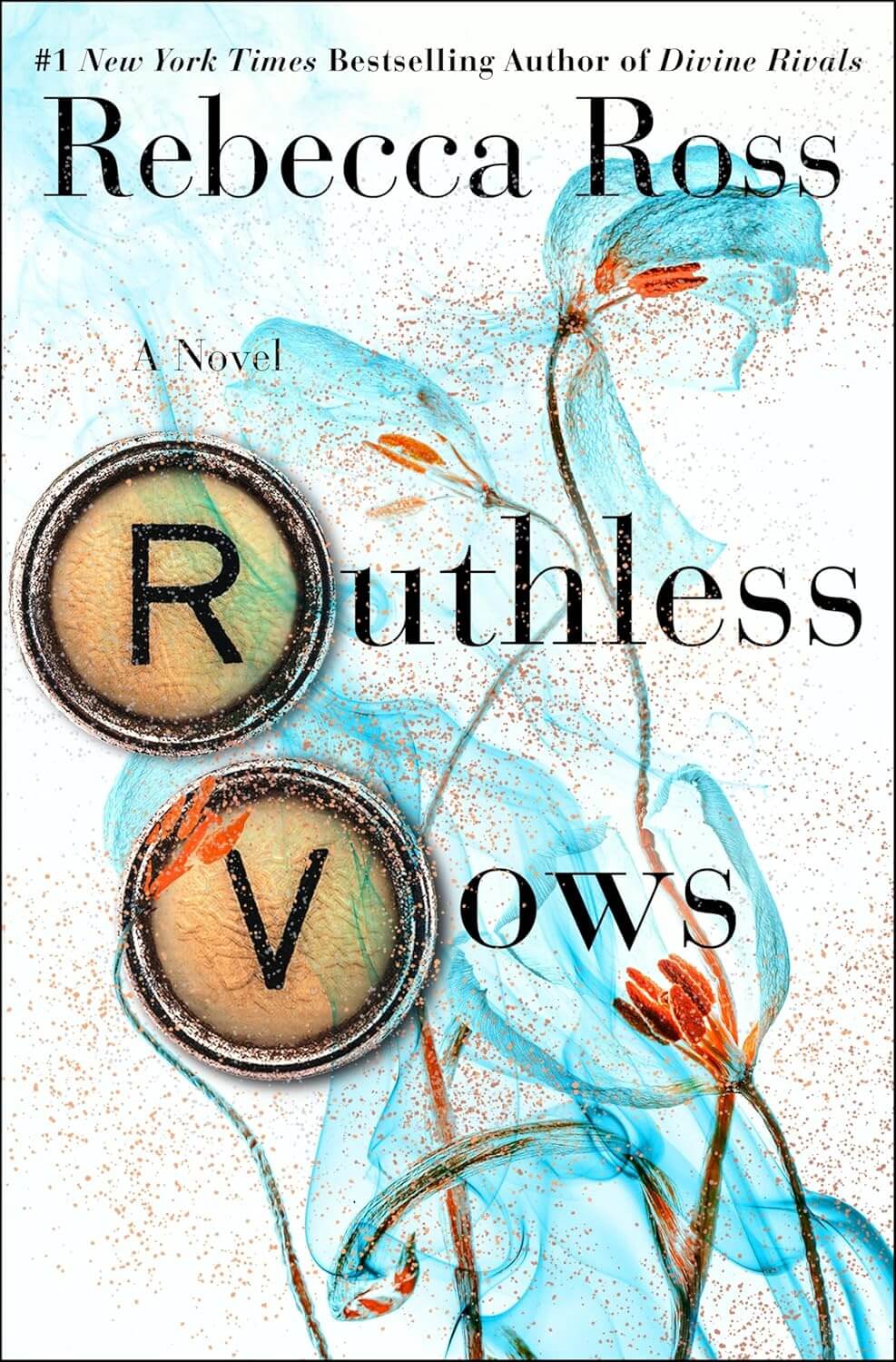
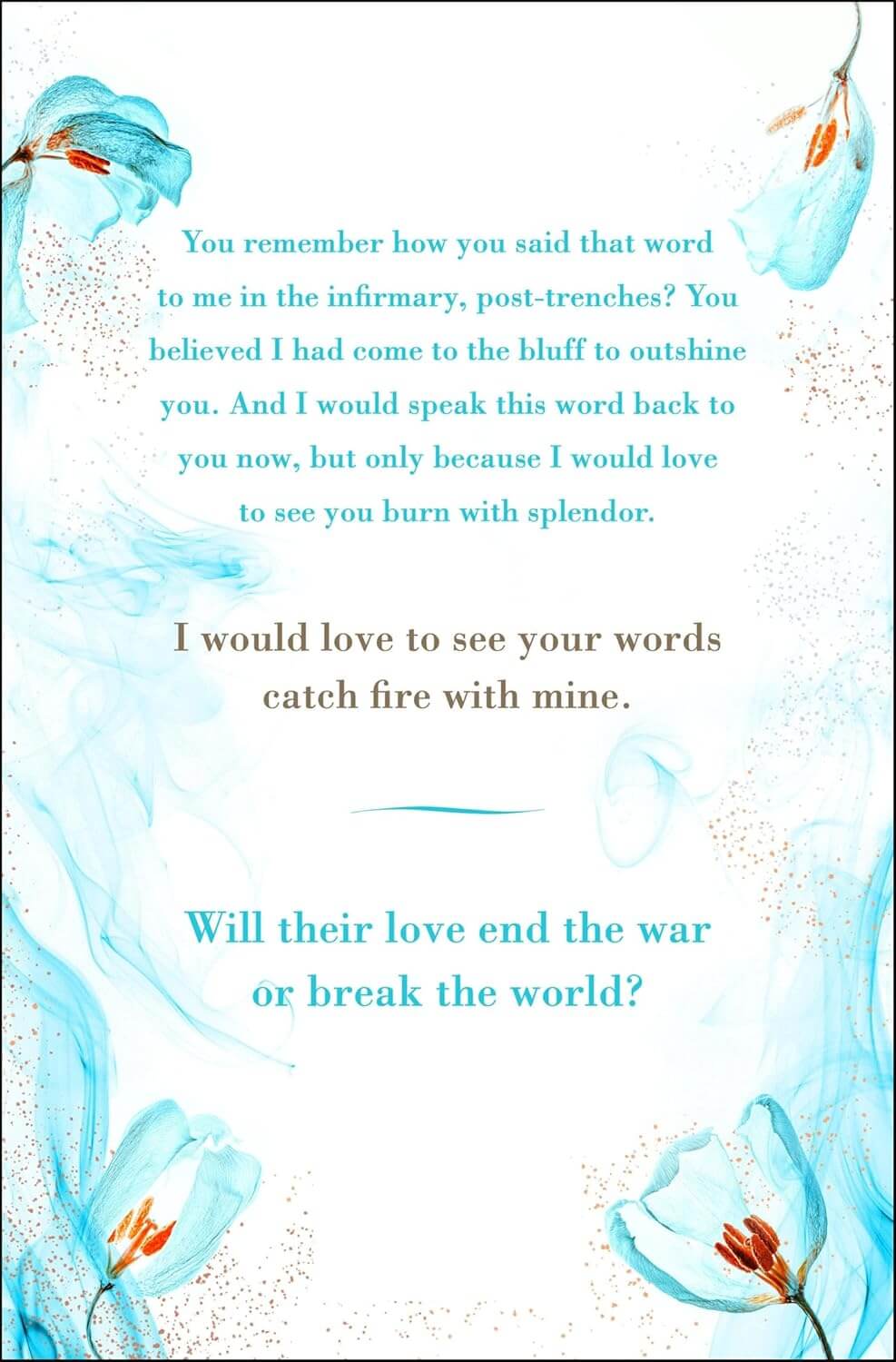

Ruthless Vows by Rebecca Ross

රු2,200.00
3 X Rs. 733.33 or 8% Cashback with


or 3 X රු733.33 with


or up to 4 X රු550.00 with


The spellbinding sequel to Divine Rivals, Ruthless Vows by Rebecca Ross is a lyrical and emotional romantasy set in a world on the brink of ruin. As war rages, Iris and Roman must find their way back to each other—through magic, memory, and impossible choices. Perfect for fans of heartfelt fantasy, epic battles, and enduring love.
equel to the bestselling Divine Rivals
Features magical letters and enchanted typewriters
Themes of love, memory, identity, and war
Ideal for fans of fantasy romance and character-driven stories
Emotionally rich, fast-paced, and beautifully written
Out of stock
Email when stock available
Ruthless Vows by Rebecca Ross is the emotional and epic conclusion to the Letters of Enchantment duology, continuing the unforgettable story of Iris Winnow and Roman Kitt as love, memory, war and ancient gods threaten to tear them apart.
Two weeks have passed since Iris returned home from the front.
She is bruised, heartbroken and uncertain about Roman’s fate.
The war is far from over.
The city of Oath remains dangerously unprepared.
And Roman is missing.
When Iris and her friend Attie are given another opportunity to report on the movements of the god Dacre, they return toward the conflict despite the growing danger.
Meanwhile, Roman wakes in Dacre’s realm without his memories.
He does not remember the life he lived before.
He does not fully remember Iris.
He begins writing for Dacre, uncertain of his role in a war whose true history he does not completely understand.
Then a mysterious letter arrives.
The words feel strangely familiar.
And once again, letters begin creating a bridge between two people separated by forces far greater than themselves.
Ruthless Vows by Rebecca Ross expands everything readers loved about Divine Rivals: magical correspondence, beautiful prose, war-torn fantasy, mythology, journalism and a deeply emotional romance between two writers whose words continue finding each other even when memory fails.
Ruthless Vows by Rebecca Ross – Book Overview
Ruthless Vows by Rebecca Ross begins shortly after the ending of Divine Rivals.
This is important for new readers.
It is not a separate romantic fantasy with a new couple.
It is a direct continuation.
The relationship between Iris and Roman, the war between divine powers, the magical typewriters and the events of the first book all matter immediately.
For the strongest experience, read Divine Rivals first.
Iris Winnow
Iris remains one of the emotional centers of the story.
She has already experienced loss, danger and the brutal realities of war.
Returning home does not mean everything becomes normal again.
Roman is gone.
The conflict continues.
And Iris cannot simply remain safe while other people continue suffering.
Her work as a journalist once again becomes central to how she understands the war.
She wants information.
She wants truth.
And she wants to understand what happened to Roman.
Roman Kitt
Roman’s situation is dramatically different.
He is alive, but memory has been taken from him.
He does not fully understand who he used to be.
That creates one of the sequel’s strongest emotional questions.
If memory disappears, what remains?
Personality?
Instinct?
Love?
Loyalty?
Roman must decide what kind of person he wants to become while important pieces of his identity remain missing.
Memory and Identity
Memory is one of the central themes in Ruthless Vows by Rebecca Ross.
We often think of identity as something permanent.
But much of identity comes from remembering:
Who loved us.
Who hurt us.
What we promised.
What we learned.
What we lost.
Roman’s missing memories therefore create more than a plot mystery.
They challenge his understanding of himself.
Magical Letters Return
The correspondence between Iris and Roman was one of the most memorable elements of Divine Rivals.
That motif remains essential here.
Letters can cross distance in ways people cannot.
They can carry:
Emotion.
Truth.
Hope.
Secrets.
Memory.
Words become a form of connection powerful enough to survive extraordinary separation.
Writing as Connection
Both Iris and Roman are writers.
That matters.
Their relationship has always been built partly through language.
They understand one another through sentences.
Through honesty.
Through words written when face-to-face conversation feels impossible.
In Ruthless Vows by Rebecca Ross, writing once again becomes more than communication.
It becomes survival.
Journalism During War
Iris and Attie’s reporting also adds a political and social dimension to the fantasy.
War creates competing narratives.
Governments may hide information.
Rumours spread.
People far from the battlefield may not understand what is actually happening.
Journalists therefore become important because someone must witness events and tell others what they see.
Truth in Wartime
Truth becomes difficult during war.
Different sides have reasons to manipulate information.
Fear creates rumours.
Authorities may minimize danger.
People choose stories that make them feel safer.
Iris’s role as a reporter places her directly inside this conflict between:
What people want to believe
and
what is actually happening.
Dacre
The god Dacre becomes even more important in the sequel.
He is not merely a distant supernatural threat.
His influence reaches Roman directly.
Dacre presents himself in ways that force Roman to question what he knows.
Because Roman has lost his memories, he cannot easily compare Dacre’s claims with his own history.
That makes information itself dangerous.
Enva and the Gods
The mythology surrounding Dacre, Enva and the other divine figures expands in Ruthless Vows by Rebecca Ross.
Readers learn more about the old conflicts that shaped the present war.
The gods are not simply background mythology.
Their choices have consequences for ordinary people.
This makes the war simultaneously:
Personal.
Political.
Historical.
Supernatural.
Gods and Mortals
One of the interesting tensions in the duology is the relationship between enormously powerful gods and vulnerable humans.
Mortals suffer because divine conflicts have returned.
Soldiers die.
Families are separated.
Cities become endangered.
The story therefore questions whether beings with immense power truly understand the cost paid by ordinary people.
War
The sequel expands the scale of the war.
In Divine Rivals, Iris entered the conflict and discovered its reality.
In Ruthless Vows by Rebecca Ross, the war moves closer to the wider population.
No longer can everyone assume the fighting will remain somewhere far away.
This creates greater urgency.
The City of Oath
Oath becomes increasingly important.
People in the city are divided.
Some understand the danger.
Others remain unaware or resistant to uncomfortable truths.
Political leadership also becomes part of the problem.
This makes Oath feel less like a simple fantasy city and more like a society under pressure.
Propaganda and Information
Wars are fought with weapons.
They are also fought with information.
Who controls the narrative?
Who decides what citizens know?
What stories encourage people to fight?
What information is hidden?
Because Iris and Roman are both writers, the novel is naturally positioned to explore these questions.
Love During War
The romance remains central, but it develops under extraordinary circumstances.
Iris and Roman do not have the luxury of an ordinary relationship.
Their love must survive:
Separation.
Danger.
Trauma.
Memory loss.
War.
Divine interference.
That makes their relationship feel both intimate and epic.
Love and Recognition
Roman’s memory loss creates a painful romantic question.
If someone no longer remembers loving you, can something inside them still recognize the connection?
The story explores love not simply as remembered history but as something that may also exist through:
Instinct.
Trust.
Familiarity.
Choice.
Choice Matters
The idea of choice is crucial.
Love is not meaningful only because two characters are destined to be together.
It becomes meaningful because they repeatedly make decisions that move them toward one another despite enormous obstacles.
Iris and Roman
Readers who loved the rivals-to-lovers development in Divine Rivals will find the relationship transformed here.
They are no longer simply competing journalists.
They have already experienced love and loss together.
The question becomes:
Can they preserve that bond when circumstances force them apart?
Rivals to Lovers Becomes Something Deeper
The first book’s romantic tension grew partly from rivalry.
The sequel has different emotional stakes.
Now the relationship must survive consequences.
Love is easier when it exists only as longing.
It becomes more difficult when people must make sacrifices for it.
Attie
Attie continues to be important to Iris.
Her friendship provides companionship and courage during dangerous reporting assignments.
This matters because romantic fantasy works better when the protagonist’s entire emotional world does not depend on one romantic relationship.
Iris has friendships.
Family connections.
Professional ambitions.
Personal responsibilities.
Forest
Iris’s brother Forest also continues to carry the psychological effects of war.
His experiences demonstrate another important theme:
Returning home does not automatically erase what happened on the battlefield.
War changes people.
Sometimes in visible ways.
Sometimes quietly.
Trauma After War
The novel acknowledges that surviving war is not the same as escaping its consequences.
Characters may experience:
Fear.
Grief.
Hypervigilance.
Loss.
Emotional distance.
Survival is only the first stage.
Living afterward can be another challenge.
Sacrifice
Ruthless Vows by Rebecca Ross repeatedly asks what people are willing to sacrifice.
For love.
For family.
For truth.
For a city.
For peace.
For victory.
But sacrifice is not automatically noble simply because it hurts.
The story also asks whether the sacrifice is actually necessary and who is being asked to pay it.
Loyalty
Characters face conflicting loyalties.
To:
Family.
Friends.
Governments.
Gods.
Personal beliefs.
Romantic partners.
Sometimes these loyalties cannot all coexist.
Choosing one may mean betraying another.
Trust
Trust becomes especially difficult when memory is unreliable.
Roman must decide whom to believe.
Iris must act despite incomplete information.
People must evaluate claims while living inside propaganda and war.
This makes trust both romantic and political.
Forgotten Memories
Amnesia can sometimes feel like a simple plot device.
Here, it connects naturally with the book’s themes of writing and identity.
Letters preserve things memory may lose.
Written words become evidence of relationships and beliefs that once existed.
In that sense, writing becomes an external form of memory.
Why Letters Matter
A letter preserves a moment.
The writer may change.
The reader may change.
But the words remain.
That idea becomes especially powerful when one character’s memories have been disrupted.
A written sentence can carry something the mind no longer remembers.
Typewriters and Magic
The magical typewriters remain one of the series’ most distinctive fantasy elements.
Instead of a giant magical system built around endless rules, Ross gives ordinary objects an enchanting significance.
Typewriters.
Letters.
Wardrobes.
Words.
These everyday things become gateways for impossible connection.
Soft Magic
The Letters of Enchantment world leans toward atmospheric, mythic magic rather than a heavily technical magic system.
Readers do not need to memorize dozens of spells or mathematical rules.
The magic is designed to create:
Wonder.
Mystery.
Emotion.
Symbolism.
Romantic Fantasy
Ruthless Vows by Rebecca Ross fits naturally within romantic fantasy or romantasy.
But the book is not only romance.
It also includes:
War fantasy.
Mythology.
Journalism.
Political conflict.
Family relationships.
Themes of memory and identity.
That broader scope helps the story feel substantial beyond the central couple.
Young Adult Fantasy
Macmillan officially categorizes the book as Young Adult and gives the U.S. edition an age range of 13–18.
However, the themes can appeal to older readers as well.
War.
Loss.
Memory.
Political manipulation.
Love.
Sacrifice.
These are not limited to one age group.
Is Ruthless Vows Book 2?
Yes.
Ruthless Vows by Rebecca Ross is Book 2 of the Letters of Enchantment series.
The correct order is:
Divine Rivals → Ruthless Vows
Do You Need to Read Divine Rivals First?
Yes.
This is strongly recommended.
Ruthless Vows begins shortly after the events of Divine Rivals and assumes you already understand:
Iris.
Roman.
Their relationship.
The magical letters.
The war.
The gods.
The first book’s ending.
Starting here would spoil major events from Divine Rivals and make many emotional moments less meaningful.
Is Ruthless Vows the Final Book?
Yes.
Macmillan describes it as the epic conclusion to the story begun in Divine Rivals, making Letters of Enchantment a completed duology.
So readers who dislike waiting years for an unfinished series can currently read the complete main story.
Is Ruthless Vows a Standalone?
No.
It is not recommended as a standalone.
Read Divine Rivals first.
Is Ruthless Vows Spicy?
The series is primarily focused on emotional and romantic intimacy rather than being marketed as explicit adult romance.
Its official classification is YA fantasy, with Macmillan listing the U.S. edition for ages 13–18.
Readers looking mainly for explicit romance should know that the emotional relationship, letters, longing and war storyline are much more central.
Is It Enemies to Lovers?
The original relationship in Divine Rivals begins with professional rivalry.
By Ruthless Vows by Rebecca Ross, the relationship has moved beyond the initial enemies/rivals-to-lovers setup.
The sequel focuses much more on:
Separation.
Memory.
Commitment.
Reunion.
Sacrifice.
Is It Dark Fantasy?
It contains dark material such as war, death, gods, violence and trauma, but it is better described as romantic historical-style fantasy / YA fantasy rather than extreme dark fantasy.
The prose retains a lyrical, hopeful quality even when events become serious.
Historical-Fantasy Atmosphere
The world is fictional rather than a direct representation of a specific historical country.
However, the technology and wartime atmosphere evoke an earlier twentieth-century feeling.
Readers encounter:
Typewriters.
Newspapers.
Telegram-like communication.
Trains.
Trench warfare.
This blend gives the world a recognizable historical texture while remaining entirely fantastical.
Journalism and Words
One reason the duology stands apart from many fantasy romances is that its protagonists are writers.
Their abilities are not primarily:
Sword fighting.
Assassination.
Royal magic.
Instead, words are central.
Iris and Roman report.
Write.
Edit.
Communicate.
Their professional identities remain important even inside a supernatural war.
The Power of Language
A newspaper article can influence a city.
A letter can change a relationship.
A lie can change an army.
A forgotten sentence can restore a piece of identity.
The novel repeatedly demonstrates that words have consequences.
Rebecca Ross
Rebecca Ross is the author of fantasy novels for young adult and adult readers, including Divine Rivals, Ruthless Vows, A River Enchanted, A Fire Endless, Dreams Lie Beneath and Sisters of Sword and Song.
Macmillan’s official series page identifies her as the author of both books in Letters of Enchantment.
Edition Details
Your stock data contains at least two editions.
One inventory record lists:
Title: Ruthless Vows
Author: Rebecca Ross
ISBN: 9781250857453
Macmillan confirms that ISBN as the Wednesday Books U.S. hardcover, with 432 pages and publication date December 26, 2023.
Another of your procurement files lists:
ISBN: 9780008588267.
That is also a documented Ruthless Vows ISBN for a HarperCollins edition.
Therefore, do not automatically replace one with the other. Check the barcode on the physical copy you are uploading.
Content Considerations
Ruthless Vows by Rebecca Ross contains mature themes appropriate to its wartime fantasy setting, including war and battle violence, injury, death, grief, trauma, memory loss, captivity and manipulation, family conflict, supernatural danger and emotional distress.
The book is YA rather than graphic adult dark fantasy, but readers sensitive to wartime trauma or character loss may want to know these themes in advance.
Important Themes
The major themes in Ruthless Vows by Rebecca Ross include love, memory, identity, magical letters, journalism, war, sacrifice, loyalty, truth, propaganda, grief, trauma, family, friendship, ancient gods, trust, writing, courage, hope and the power of choosing someone even when circumstances make that choice difficult.
7 Epic Reasons to Read Ruthless Vows by Rebecca Ross
- Iris and Roman’s romance becomes even more emotional. Their relationship has to survive distance, war and memory loss, making the sequel less about initial attraction and more about whether love can endure genuine consequences.
- The magical-letter concept remains beautifully important. Correspondence once again becomes a bridge between people who cannot easily reach each other, giving writing an almost physical emotional power.
- The mythology grows much larger. Dacre, Enva and the history of the gods become increasingly important, expanding the fantasy beyond the journalism and romance introduced in the first novel.
- The war has greater stakes. The danger moves closer to Oath, forcing characters and civilians to confront a conflict that can no longer be treated as someone else’s problem.
- Roman’s memory loss creates a strong identity story. He must decide who he is when the memories that once defined his loyalties and relationships have disappeared.
- Iris remains active rather than simply waiting for Roman. She continues reporting, investigating and making difficult decisions, keeping her own professional and personal identity central to the story.
- It completes the duology. Readers who loved Divine Rivals receive the conclusion to Iris and Roman’s main story without needing another sequel to finish the central arc.
Why Read Ruthless Vows by Rebecca Ross?
Ruthless Vows by Rebecca Ross is an excellent choice for readers who enjoy romantic fantasy, magical correspondence, lyrical writing, wartime stories, mythology, journalism and emotionally intense relationships.
It may especially appeal to readers who loved:
Divine Rivals.
Slow-burn emotional romance.
Fantasy worlds with historical atmosphere.
Stories about writers.
Magical letters.
Gods and mythology.
War-driven fantasy.
Memory-loss romance.
Love stories built on words and emotional connection.
The strongest reason to read it, however, is simple:
If Divine Rivals made you care about Iris and Roman, their story is not finished until you read Ruthless Vows.
Who Should Read This Book?
Ruthless Vows by Rebecca Ross is especially suitable for readers who have already finished Divine Rivals, fans of Rebecca Ross, YA fantasy readers, romantasy fans, readers who enjoy epistolary elements, lovers of magical typewriters and letters, readers who enjoy mythological fantasy and anyone looking for a completed two-book romantic fantasy series.
It is less suitable as a first Rebecca Ross book if you have not read Divine Rivals, because this sequel begins after major events that the first book establishes.
Ruthless Vows by Rebecca Ross – Can Love Survive When Memory Is Lost?
Ruthless Vows by Rebecca Ross begins with separation.
Iris remembers.
Roman does not.
That difference creates the emotional heart of the sequel.
Iris knows what they shared.
She knows the letters.
The rivalry.
The trust.
The love.
Roman wakes without that history.
Yet words begin finding him again.
That is what makes the series’ magical correspondence so effective.
A letter can carry memory even when the person reading it cannot fully remember.
It can preserve a version of love that circumstances tried to erase.
At the same time, the world around Iris and Roman is moving toward greater destruction.
The gods are not finished.
The war is expanding.
Oath cannot remain protected forever.
Characters who once thought they had time are increasingly forced to choose.
And choice becomes the real meaning behind the title.
A vow has value only when keeping it becomes difficult.
When everything is easy, loyalty costs little.
War tests loyalty.
Memory loss tests love.
Fear tests courage.
Power tests morality.
Ruthless Vows by Rebecca Ross takes the tender relationship established in Divine Rivals and places it under far greater pressure.
Yet despite the gods, battles and magic, the story remains rooted in something remarkably human:
Two writers trying to find each other through words.
For readers who fell in love with Iris Winnow, Roman Kitt and the magical letters of Divine Rivals, this sequel delivers the larger war, deeper mythology and emotional conclusion their story demands
Learn more about Ruthless Vows by Rebecca Ross on the official Macmillan website.
Explore more fantasy romance books at Bargain Books.
| Author | Rebecca Ross |
|---|---|
| Type | Paperback Brand new Printed (Indian Locally published) |
| ISBN/ISSN | 0008588236 |
| Language | English |
| Pages | 432 |
Be the first to review “Ruthless Vows by Rebecca Ross”
Related products

Out of stock
Fiction & Literature
රු2,000.00
3 X Rs. 666.67 or 8% Cashback with
or 3 X රු666.67 with
or up to 4 X රු500.00 with

Out of stock
Fiction & Literature
රු1,750.00
3 X Rs. 583.33 or 8% Cashback with
or 3 X රු583.33 with
or up to 4 X රු437.50 with
Out of stock
Contemporary romance
රු1,850.00
3 X Rs. 616.67 or 8% Cashback with
or 3 X රු616.67 with
or up to 4 X රු462.50 with
-9%

Fiction & Literature
Original price was: රු2,750.00.රු2,500.00Current price is: රු2,500.00.
3 X Rs. 833.33 or 8% Cashback with
or 3 X රු833.33 with
or up to 4 X රු625.00 with
-24%
Contemporary romance
Original price was: රු2,100.00.රු1,600.00Current price is: රු1,600.00.
3 X Rs. 533.33 or 8% Cashback with
or 3 X රු533.33 with
or up to 4 X රු400.00 with

Fiction & Literature
රු1,750.00
3 X Rs. 583.33 or 8% Cashback with
or 3 X රු583.33 with
or up to 4 X රු437.50 with

Out of stock
Classics & Literary Fiction
රු1,600.00
3 X Rs. 533.33 or 8% Cashback with
or 3 X රු533.33 with
or up to 4 X රු400.00 with
Out of stock
Contemporary romance
රු1,700.00
3 X Rs. 566.67 or 8% Cashback with
or 3 X රු566.67 with
or up to 4 X රු425.00 with
Reviews
There are no reviews yet.