
No products in the cart.


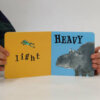
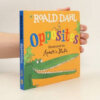

Roald Dahl’S Opposites
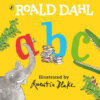
රු2,350.00
3 X Rs. 783.33 or 8% Cashback with


or 3 X රු783.33 with


or up to 4 X රු587.50 with


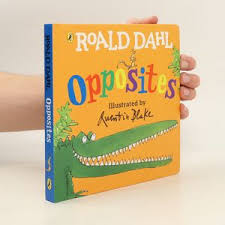
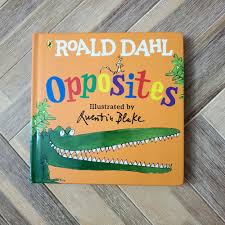
Learn important opposite words with the Roald Dahl Opposites Board Book, a colourful lift-the-flap title for toddlers and young children.
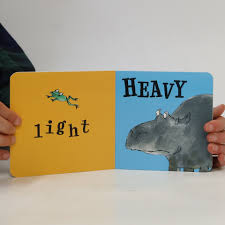
The Enormous Crocodile helps little readers explore familiar opposite pairs, including day and night, big and small, and hungry and full. Children can lift the interactive flaps, examine Quentin Blake’s lively illustrations and join in during shared reading.
Its sturdy board-book format makes it suitable for little hands, repeated story time and early vocabulary learning.
Product details:
- Author: Roald Dahl
- Illustrator: Quentin Blake
- Publisher/Imprint: Puffin
- Format: Lift-the-flap board book
- Pages: 16
- Language: English
- ISBN-13: 9780241330555
- ISBN-10: 0241330556
- Publication date: 14 June 2018
- Dimensions: 18.7 × 1.6 × 18.7 cm
- Publisher-listed weight: 347 g
- Learning areas: Opposites, vocabulary, observation and comparison
- Featured character: The Enormous Crocodile
3 in stock
Roald Dahl’s Opposites – Lift-the-Flap Board Book
Roald Dahl Opposites Board Book is a colourful first-concept book that introduces toddlers to opposite words through entertaining illustrations and interactive lift-the-flap surprises. Written by Roald Dahl and illustrated by Quentin Blake, it brings familiar characters and playful language into a sturdy format created for little hands.
Children can explore opposite pairs such as day and night, big and small, and hungry and full while following the Enormous Crocodile through the pages. The flaps encourage young readers to participate physically, making early vocabulary practice more engaging.
Roald Dahl Opposites Board Book introduces contrasting words through pictures, simple language and interactive flaps.
Young children can listen as an adult reads each opposite pair aloud. They can then examine the illustrations, lift the flap and identify how the two words differ.
The book can help children practise:
- Recognising opposite words
- Comparing two pictures
- Listening to new vocabulary
- Describing size and position
- Identifying differences
- Making simple predictions
- Opening and closing flaps carefully
- Participating during shared reading
- Remembering familiar word pairs
Parents, caregivers and teachers can read slowly and allow children enough time to examine each picture before revealing the flap.
Big and small are useful early comparison words.
Children can look at two characters or objects and decide which one is larger and which one is smaller. Adults can then connect the idea with safe everyday examples.
They might compare:
- A large book and a small book
- A big building block and a little block
- A large toy and a small toy
- An adult shoe and a child’s shoe
- A big circle and a small circle
Helpful questions include:
- Which object is big?
- Which one is small?
- Are they the same size?
- Can you find something bigger?
- Can you find something smaller?
Roald Dahl Opposites Board Book makes this comparison approachable through colourful artwork and familiar characters.
Day and night help children talk about time and familiar daily routines.
Adults can explain that daytime is usually associated with light and many everyday activities, while nighttime is often associated with darkness, sleep and stars in the sky.
Children may discuss activities such as:
- Waking up in the morning
- Eating breakfast
- Playing during the day
- Seeing the Moon at night
- Getting ready for bed
- Sleeping until morning
Ask the child whether a picture shows day or night and invite them to explain which visual clues helped them decide.
Hungry and full introduce words connected with eating and how the body may feel before and after a meal.
The Enormous Crocodile makes this opposite pair especially playful and memorable.
Adults can explain that hungry means wanting or needing food, while full describes the feeling after eating enough.
Children can use the words in simple sentences:
- The crocodile is hungry.
- He has eaten and now feels full.
- I was hungry before lunch.
- I felt full after my meal.
Food discussions should remain positive and appropriate for the child’s age and individual dietary needs.
The interactive elements make Roald Dahl Opposites Board Book more than an ordinary picture book.
Children can locate the edge of a flap, predict what may be hidden and then open it carefully to discover the answer or contrasting picture.
Lift-the-flap reading can encourage:
- Curiosity
- Prediction
- Visual observation
- Hand-eye coordination
- Fine-motor control
- Concentration
- Active participation
- Repeated reading
The flaps are more delicate than the main board pages. Adults should show young readers how to lift and close them gently without bending them too far.
Quentin Blake’s distinctive illustrations bring energy, humour and movement to the book.
Children can study each character’s expression, body position and surroundings while learning the opposite words. The lively pictures also provide opportunities for conversations beyond the printed text.
Adults may ask:
- What is the character doing?
- Does the character look happy or worried?
- Which picture looks funniest?
- What colours can you see?
- What do you think is behind the flap?
- Which character is larger?
- What might happen next?
These questions encourage children to examine the illustrations carefully.
Opposite words help children describe differences between objects, actions and situations.
Roald Dahl Opposites Board Book provides a playful introduction to comparison language. Adults can extend the activity by introducing other common opposite pairs, such as:
- Up and down
- Hot and cold
- Fast and slow
- Open and closed
- Loud and quiet
- Happy and sad
- Tall and short
- Inside and outside
- Wet and dry
- Near and far
Introduce only a few words at a time so the activity remains manageable and enjoyable.
Understanding opposites requires children to compare two ideas.
A child needs to notice that one object is large while another is small, or that one scene represents daytime while another represents nighttime.
These comparisons support early thinking skills involving:
- Similarities
- Differences
- Size
- Position
- Quantity
- Time
- Movement
- Feelings
Adults can invite children to explain why two pictures are opposites rather than simply asking them to repeat the words.
Reading the opposite pairs aloud gives children opportunities to hear and repeat new words.
An adult may say the first word and allow the child to complete the pair. For example:
- Big and…
- Day and…
- Hungry and…
- Up and…
- Open and…
Children may initially listen without responding. With repeated reading, they may begin remembering and saying the second word independently.
Praise every attempt to point, repeat or describe a picture.
The book introduces toddlers to the imaginative world associated with Roald Dahl and Quentin Blake.
The Enormous Crocodile provides a humorous central character who helps make the early-learning theme memorable. Children who later explore longer Roald Dahl stories may recognise the visual style and playful characters.
Roald Dahl Opposites Board Book can therefore serve as an accessible first step into the author’s wider collection.
The book is presented in a sturdy 16-page board-book format.
Board pages are generally easier for small hands to hold and turn than thin paper pages. The square design is suitable for shared reading, although the interactive flaps should still be handled carefully.
The book may be enjoyed during:
- Family story time
- Bedtime reading
- Quiet afternoons
- Preschool sessions
- Early vocabulary practice
- Supervised travel
- Toddler reading time
- Roald Dahl-themed activities
Store the book in a clean and dry location away from food, drinks, excessive heat and moisture.
Opening and closing flaps requires careful finger and hand movements.
Children use their hands and eyes together while locating a flap, lifting it and returning it to the page. These controlled movements can support early coordination.
Young readers may need assistance with some flaps. An adult can begin lifting the edge while allowing the child to complete the movement independently.
Encourage gentle handling to protect the book.
The contrasting pictures invite children to notice differences.
Parents can ask young readers to identify:
- The bigger object
- The smaller character
- The daytime scene
- The nighttime scene
- The hungry character
- The full character
- Something near
- Something far away
- Something open
- Something closed
Observation questions add extra learning value without requiring additional materials.
After reading Roald Dahl Opposites Board Book, adults can organise simple opposite activities using safe household objects or toys.
Children could:
- Match a large block with a small block
- Place one toy up and another down
- Open and close a box
- Move a toy quickly and slowly
- Compare a long pencil with a short pencil
- Put one object inside and another outside
- Sort loud and quiet sounds
- Match happy and sad faces
The activity should remain playful rather than becoming a formal test.
Roald Dahl Opposites Board Book offers a hands-on alternative to mobile phones, tablets, television and video games.
Children participate by listening, looking, comparing, speaking and lifting flaps. The familiar pages can be enjoyed repeatedly, with each reading focusing on a different skill.
One session may concentrate on opposite words, while another explores colours, characters, sizes or emotions.
The book can make an enjoyable gift for toddlers and families beginning an early-learning collection.
It may particularly appeal to children who enjoy:
- Lift-the-flap books
- Colourful illustrations
- Funny characters
- Opposite words
- Interactive reading
- Quentin Blake artwork
- Roald Dahl characters
- Shared family story time
Its sturdy format and accessible concept make it suitable for birthdays, holidays or everyday reading.
Read each pair of opposite words slowly and clearly.
Give the child time to examine the picture before opening the flap. Ask them to predict the contrasting word or image.
Connect the words with simple objects and routines the child already knows. Repetition can help young readers remember the pairs.
Avoid introducing too many additional opposites during one session. Short, positive reading experiences are often easier for toddlers to enjoy.
Product title: Roald Dahl’s Opposites
SEO product title: Roald Dahl Opposites Board Book
Author: Roald Dahl
Illustrator: Quentin Blake
Publisher/Imprint: Puffin
Format: Lift-the-flap board book
Language: English
Page count: 16 pages
ISBN-13: 9780241330555
ISBN-10: 0241330556
Publication date: 14 June 2018
Dimensions: 187 × 16 × 187 mm
Publisher-listed weight: 347 grams
Learning areas: Opposite words, vocabulary, comparison and observation
Featured character: The Enormous Crocodile
Suitable for: Toddlers, shared reading and early concept learning
Roald Dahl Opposites Board Book combines simple early vocabulary, Quentin Blake’s lively illustrations and interactive flaps in one sturdy toddler-friendly book.
Children can learn opposite pairs such as day and night, big and small, and hungry and full while exploring the playful world of the Enormous Crocodile.
The interactive format encourages observation, comparison, prediction, speaking and fine-motor development.
Choose Roald Dahl Opposites Board Book for an entertaining introduction to contrasting words and the imaginative world of Roald Dahl.
View the official publication details for
Roald Dahl’s Opposites on Penguin Books
Be the first to review “Roald Dahl’S Opposites”
Related products
-28%
Out of stock
Children & Young Adult
Original price was: රු1,800.00.රු1,300.00Current price is: රු1,300.00.
3 X Rs. 433.33 or 8% Cashback with
or 3 X රු433.33 with
or up to 4 X රු325.00 with
Out of stock
Children & Young Adult
Famous Five Vol 11: Five Have a Wonderful Time – Enid Blyton | Classic Children’s Adventure Book
රු800.00
3 X Rs. 266.67 or 8% Cashback with
or 3 X රු266.67 with
or up to 4 X රු200.00 with
-25%
Out of stock
Children & Young Adult
Original price was: රු2,000.00.රු1,500.00Current price is: රු1,500.00.
3 X Rs. 500.00 or 8% Cashback with
or 3 X රු500.00 with
or up to 4 X රු375.00 with
Out of stock
Children & Young Adult
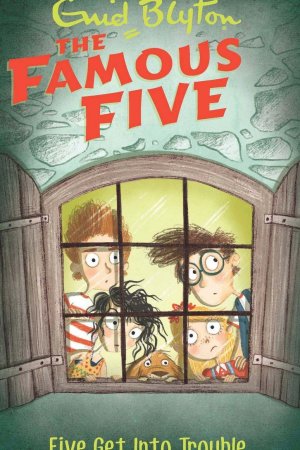
Famous Five Vol 8: Five Get into Trouble by Enid Blyton | Classic Children’s Adventure Book
රු800.00
3 X Rs. 266.67 or 8% Cashback with
or 3 X රු266.67 with
or up to 4 X රු200.00 with
Out of stock
Children & Young Adult
රු1,600.00
3 X Rs. 533.33 or 8% Cashback with
or 3 X රු533.33 with
or up to 4 X රු400.00 with
Out of stock
Children & Young Adult
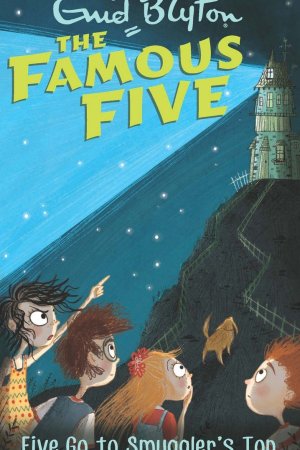
Famous Five: Five Go to Smuggler’s Top – Book 4 by Enid Blyton
රු800.00
3 X Rs. 266.67 or 8% Cashback with
or 3 X රු266.67 with
or up to 4 X රු200.00 with
-25%
Out of stock
Children & Young Adult
Original price was: රු2,000.00.රු1,500.00Current price is: රු1,500.00.
3 X Rs. 500.00 or 8% Cashback with
or 3 X රු500.00 with
or up to 4 X රු375.00 with
Out of stock
Children & Young Adult
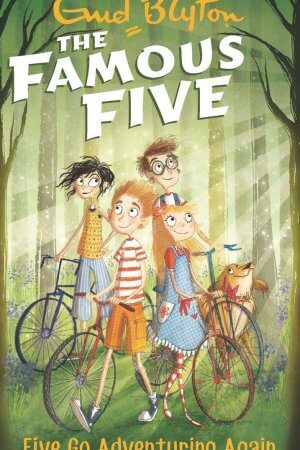
Famous Five: Five Go Adventuring Again by Enid Blyton | Book 2 of the Classic Adventure Series
රු800.00
3 X Rs. 266.67 or 8% Cashback with
or 3 X රු266.67 with
or up to 4 X රු200.00 with
Reviews
There are no reviews yet.