
No products in the cart.
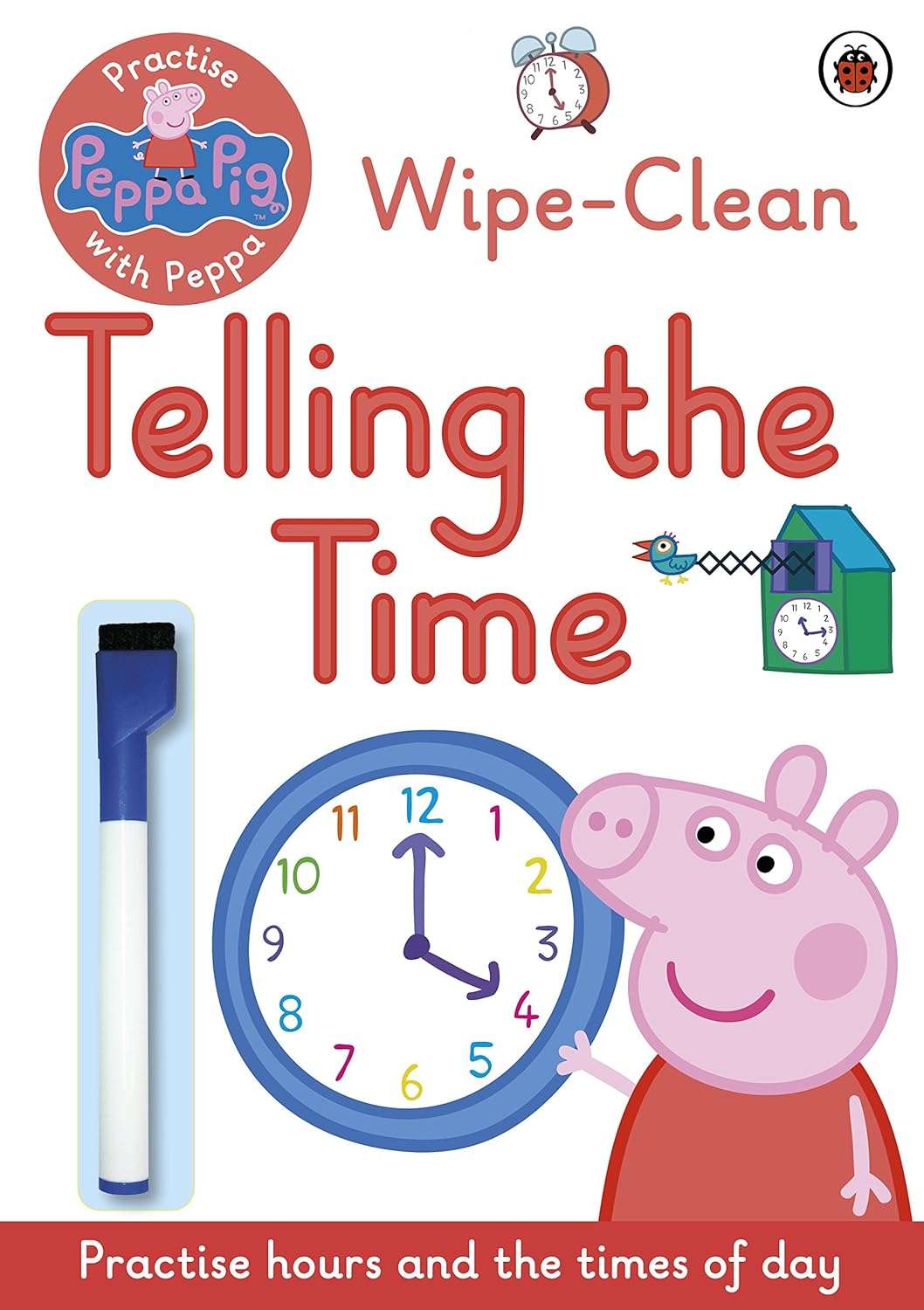
Peppa Pig: Practise with Peppa: Wipe-Clean Telling the Time
රු2,300.00
3 X Rs. 766.67 or 8% Cashback with


or 3 X රු766.67 with


or up to 4 X රු575.00 with


| Attribute | Detail |
|---|---|
| Title | Peppa Pig: Practise with Peppa: Wipe‑Clean Telling the Time |
| Series | Practise with Peppa (Wipe‑Clean) |
| Publisher / Imprint | Ladybird / Penguin Random House Children’s UK |
| ISBN | 978 0241254011 |
| Format | Paperback (wipe‑clean activity book) |
| Number of Pages | 16 pages |
| Dimensions | 296 mm × 210 mm × 13 mm |
| Weight | ~112 g |
| Suitable Age | Age 3 years + (young readers starting school) |
| Key Features | Wipe‑clean pages; includes a free pen; practise hours, half‑hours, quarter‑hours; analogue & digital clock activities. |
5 in stock
Peppa Pig: Practise with Peppa: Wipe-Clean Telling the Time
Peppa Pig: Practise with Peppa: Wipe-Clean Telling the Time is a colourful early-learning activity book that helps children understand analogue and digital clocks. Featuring Peppa Pig and her friends, it introduces important time concepts through simple explanations, clock-drawing exercises, and activities that can be completed repeatedly.
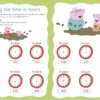
Children can draw the big and little hands on clock faces, write times on digital displays, and practise useful expressions such as “o’clock,” “half past,” and “quarter past.” The wipe-clean pages allow answers to be erased so learners can attempt the activities again and gradually build confidence.
Published by Ladybird, the book includes a wipe-clean pen and is particularly suitable for children who are starting school or beginning to learn how clocks work.
Understanding time is an important early numeracy skill, but it can initially feel complicated. Children need to recognise numbers, understand the order of hours, distinguish between the hour and minute hands, and connect clock displays with everyday activities.
Practise with Peppa: Wipe-Clean Telling the Time introduces these ideas in an approachable format. Peppa and her familiar friends help make the exercises feel like enjoyable activities instead of formal schoolwork.
Parents can support children by connecting each activity with ordinary routines:
- “What time do you wake up?”
- “When do you eat breakfast?”
- “What time does school begin?”
- “When do we have lunch?”
- “What time do you go to bed?”
- “How long is one hour?”
- “Which hand is the hour hand?”
Using familiar examples can help children understand that clocks represent real moments throughout their day.
An analogue clock uses numbers and moving hands to display the time. Children must learn that the short hand generally represents the hour while the long hand shows the minutes.
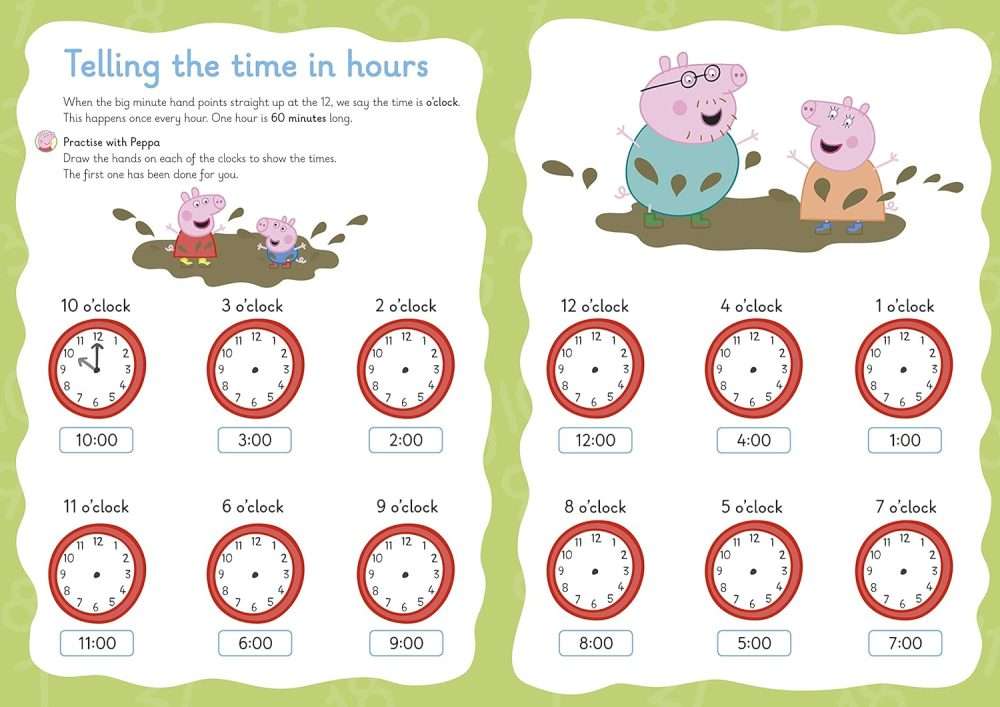
This activity book allows children to add the big and little hands to different clock faces. Drawing the hands gives them practical experience rather than asking them only to memorise an explanation.
As children practise, they can begin recognising:
- The numbers around a clock face
- The direction in which clock hands move
- The difference between the hour and minute hands
- Whole hours
- Half hours
- Quarter hours
- The relationship between numbers and hand positions
At first, an adult may need to demonstrate where each hand belongs. With repeated use, children can gradually attempt the clocks independently.
Whole hours are often the easiest starting point for learning to tell the time. When the minute hand points to twelve, the hour hand indicates the current hour.
The book helps children practise the expression “o’clock” and connect it with the correct clock position. Parents can reinforce this skill using real clocks at home.
For example, an adult might say:
- “The short hand points to seven, so it is seven o’clock.”
- “Lunch is at twelve o’clock.”
- “The programme begins at five o’clock.”
- “Can you draw three o’clock?”
Regularly noticing whole hours can help children become more confident before progressing to half and quarter hours.
After learning whole hours, children can explore more detailed time expressions. The book introduces phrases such as “half past” and “quarter past.”
Understanding these expressions requires children to connect the clock face with parts of an hour. Adults can explain that:
- One complete hour contains 60 minutes.
- Half an hour contains 30 minutes.
- A quarter of an hour contains 15 minutes.
- At half past, the minute hand points to six.
- At quarter past, the minute hand points to three.
These concepts may require repetition. The wipe-clean format is particularly useful because children can practise the same type of clock several times without permanently marking an incorrect answer.
Children encounter both analogue and digital clocks in everyday life. Digital displays appear on phones, watches, appliances, vehicles, and electronic clocks.
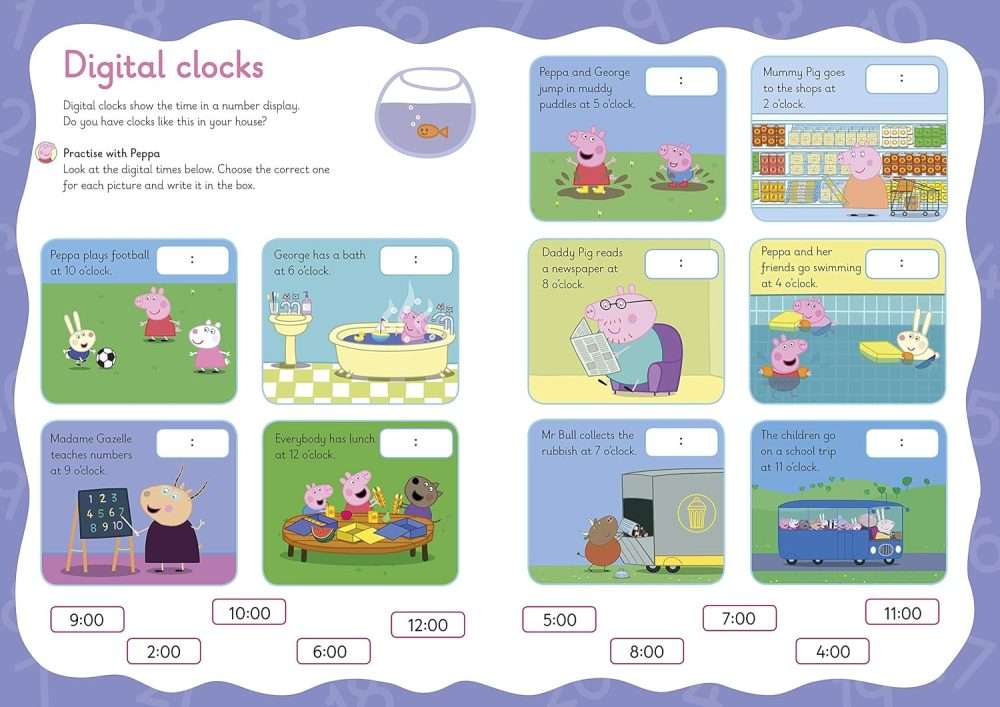
Peppa Pig: Practise with Peppa: Wipe-Clean Telling the Time includes activities in which children fill in times on digital clocks. This helps them understand that an analogue clock face and a digital display can represent the same moment.
Parents can show children examples such as:
- 3:00 means three o’clock.
- 6:30 means half past six.
- 9:15 means quarter past nine.
Comparing the two formats helps children become more flexible when reading different types of clocks.
One of the book’s most useful features is its reusable wipe-clean surface. Children can complete an exercise, check the answer, erase their writing, and try again.
Repeated practice may help with:
- Remembering the positions of clock hands
- Improving number formation
- Strengthening pen control
- Correcting mistakes without frustration
- Developing confidence
- Preparing for school activities
- Practising independently
A soft cloth or suitable wipe-clean eraser can be used to remove the marks. For the best results, writing should normally be erased after the activity rather than being left on the page for a long period.
Only a suitable wipe-clean pen should be used. Permanent markers, pencils, and ordinary colouring pens may not erase correctly.
The book includes a pen intended for use on its wipe-clean pages. This allows children to begin the activities without requiring a separate writing tool.
Parents should supervise younger children while they use the pen. The cap should be kept safely away from small children, and the pen should be closed after use to prevent it from drying out.
The included pen also makes the book useful for travel, lessons, and family visits, as the main activity tool can be kept together with the book.
Although the primary subject is telling the time, the activities also give children opportunities to practise early writing and pencil-control skills.
Drawing clock hands requires controlled lines, while filling in digital displays involves writing numerals clearly. These actions can strengthen the physical skills needed for later handwriting and mathematics work.
Using the book may support:
- Number formation
- Fine-motor control
- Hand-eye coordination
- Directional awareness
- Visual concentration
- Following instructions
- Early mathematical vocabulary
- Independent learning habits
Children should be encouraged to work slowly and comfortably. Accurate understanding is more important than finishing each page quickly.
Children may understand time more easily when it is connected with daily routines. Parents can extend the activities beyond the book by discussing the family’s schedule.
Ideas include:
- Drawing the time breakfast begins
- Finding the time on a wall clock
- Comparing analogue and digital clocks
- Creating a simple daily timetable
- Setting a clock for bedtime
- Talking about the duration of an activity
- Asking what happens before or after a particular time
Adults can also use a toy clock alongside the book. Moving physical clock hands may help children visualise how the hour and minute hands change position.
The book is designed for young readers who are starting school and developing their first time-telling skills. Its familiar Peppa Pig characters can make structured practice feel less intimidating.
It can be used:
- At home with a parent
- During homeschooling
- As additional school practice
- In early-learning centres
- During quiet activity time
- For revision during school holidays
- Before beginning more advanced time exercises
The activities are most effective when children already recognise basic numerals. Learners who are still developing number recognition may benefit from adult guidance.
The Practise with Peppa range uses wipe-clean activities and familiar characters to introduce early educational skills. Other books in the collection focus on areas such as first writing, words, numbers, and counting.
The reusable format allows children to revisit exercises as often as necessary. This makes the series useful for practice, revision, and building confidence through repetition.
Peppa Pig is a popular preschool character whose stories follow Peppa, George, Mummy Pig, Daddy Pig, and their friends through family activities and everyday adventures.
Peppa Pig books include picture books, sticker activities, lift-the-flap stories, sound books, colouring titles, and early-learning resources. Educational titles use familiar characters to make foundational skills approachable for young children.
This book is suitable for:
- Children beginning to tell the time
- Young readers starting school
- Peppa Pig fans
- Children learning analogue clocks
- Learners practising digital time
- Parents seeking reusable educational activities
- Homeschooling families
- Early-learning centres and classrooms
- Children developing number-writing and pen-control skills
Adult supervision is recommended when younger children use the included pen.
The official description and edition information are available from Penguin UK.
Be the first to review “Peppa Pig: Practise with Peppa: Wipe-Clean Telling the Time”
Related products
Out of stock
Children & Young Adult
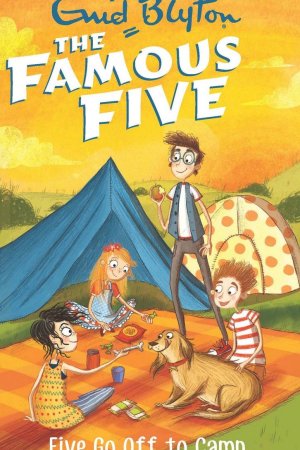
Famous Five Vol 7: Five Go Off to Camp by Enid Blyton | Classic Adventure Book
රු800.00
3 X Rs. 266.67 or 8% Cashback with
or 3 X රු266.67 with
or up to 4 X රු200.00 with
-25%
Out of stock
Children & Young Adult
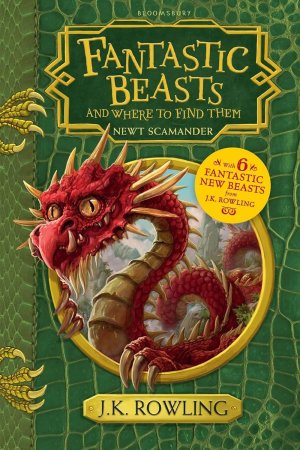
Original price was: රු2,000.00.රු1,500.00Current price is: රු1,500.00.
3 X Rs. 500.00 or 8% Cashback with
or 3 X රු500.00 with
or up to 4 X රු375.00 with
Out of stock
Children & Young Adult
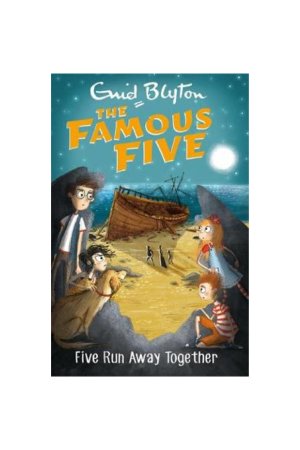
Famous Five: Five Run Away Together (Book 3) by Enid Blyton | Paperback Edition
රු800.00
3 X Rs. 266.67 or 8% Cashback with
or 3 X රු266.67 with
or up to 4 X රු200.00 with
-49%

Out of stock
Children & Young Adult
Original price was: රු3,400.00.රු1,750.00Current price is: රු1,750.00.
3 X Rs. 583.33 or 8% Cashback with
or 3 X රු583.33 with
or up to 4 X රු437.50 with
-28%
Out of stock
Children & Young Adult
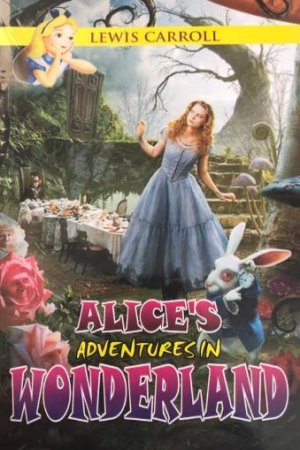
Original price was: රු1,800.00.රු1,300.00Current price is: රු1,300.00.
3 X Rs. 433.33 or 8% Cashback with
or 3 X රු433.33 with
or up to 4 X රු325.00 with
Out of stock
Children & Young Adult
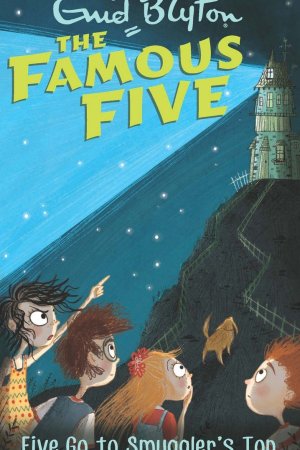
Famous Five: Five Go to Smuggler’s Top – Book 4 by Enid Blyton
රු800.00
3 X Rs. 266.67 or 8% Cashback with
or 3 X රු266.67 with
or up to 4 X රු200.00 with
Out of stock
Children & Young Adult
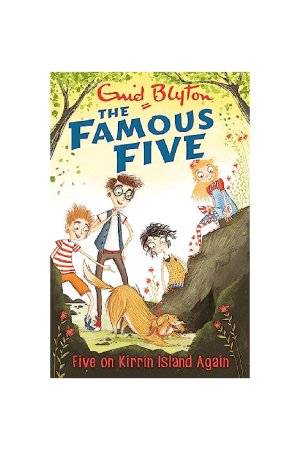
Famous Five Vol 6: Five on Kirrin Island Again by Enid Blyton | Classic Adventure Book
රු800.00
3 X Rs. 266.67 or 8% Cashback with
or 3 X රු266.67 with
or up to 4 X රු200.00 with
Out of stock
Children & Young Adult
රු12,000.00
3 X Rs. 4,000.00 or 8% Cashback with
or 3 X රු4,000.00 with
or up to 4 X රු3,000.00 with
Reviews
There are no reviews yet.