
No products in the cart.
Peppa Pig: Peppa Loves Our Planet
රු2,500.00
3 X Rs. 833.33 or 8% Cashback with


or 3 X රු833.33 with


or up to 4 X රු625.00 with


| Feature | Details |
|---|---|
| Title | Peppa Pig: Peppa Loves Our Planet |
| Author / Brand | Peppa Pig (Children’s book brand) |
| ISBN | 978‑0241436721 |
| Pages | 32 pages |
| Publication Date | 19 March 2020 |
| Publisher / Imprint | Ladybird (Penguin Books) |
| Dimensions | 25.8 cm × 26.5 cm × 0.4 cm |
| Weight | 213 g |
| Language | English |
| Theme | Environment / Planet‑care for young children |
| Recommended Age | Preschool / early readers |
5 in stock
Peppa Pig: Peppa Loves Our Planet
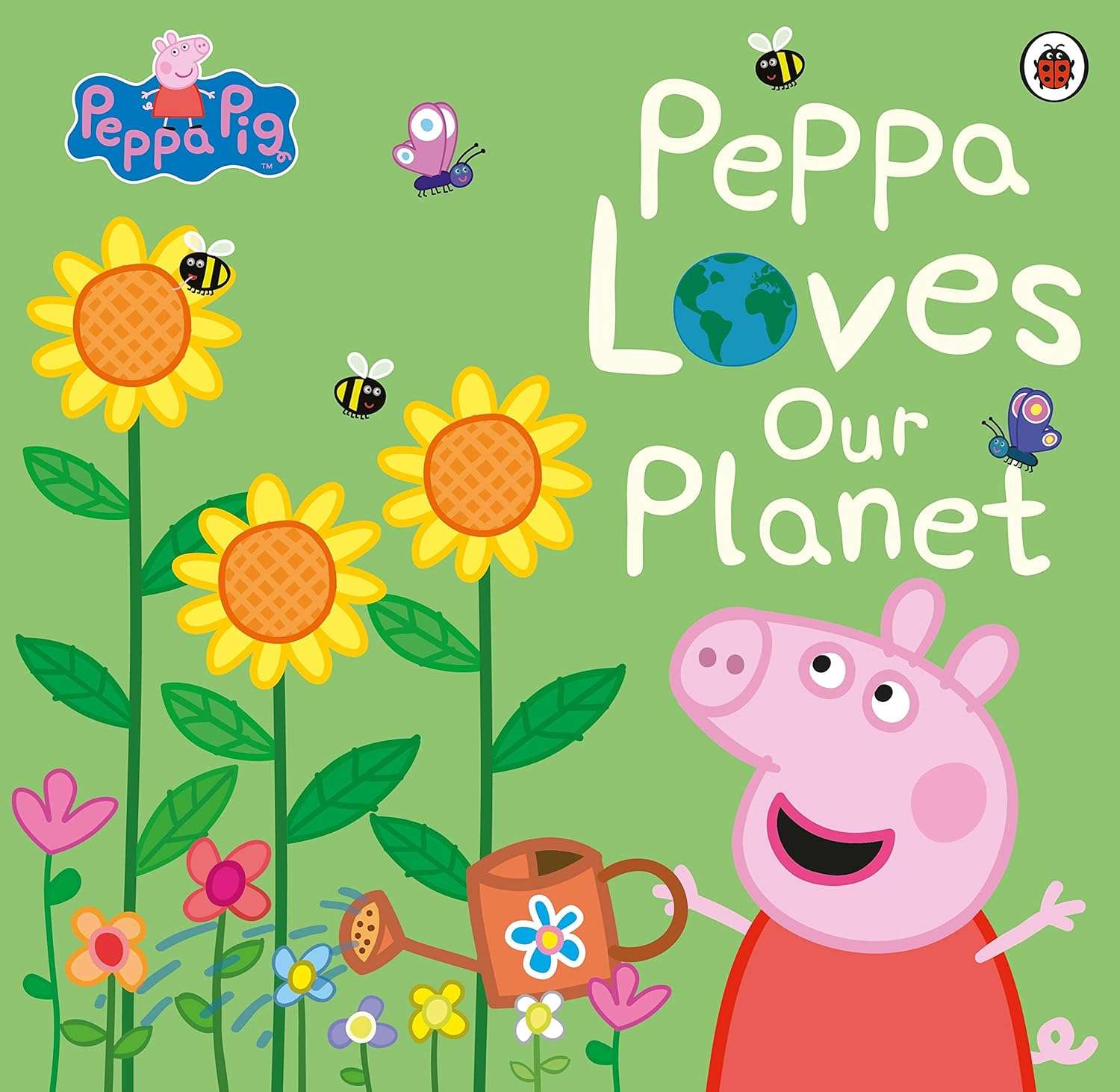
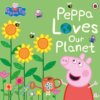
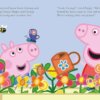
Peppa Pig: Peppa Loves Our Planet is an inspiring picture book that introduces young children to simple ways they can help care for the environment. Featuring Peppa, George, Madame Gazelle, and their playgroup friends, this positive story shows that small everyday actions can make a meaningful difference.
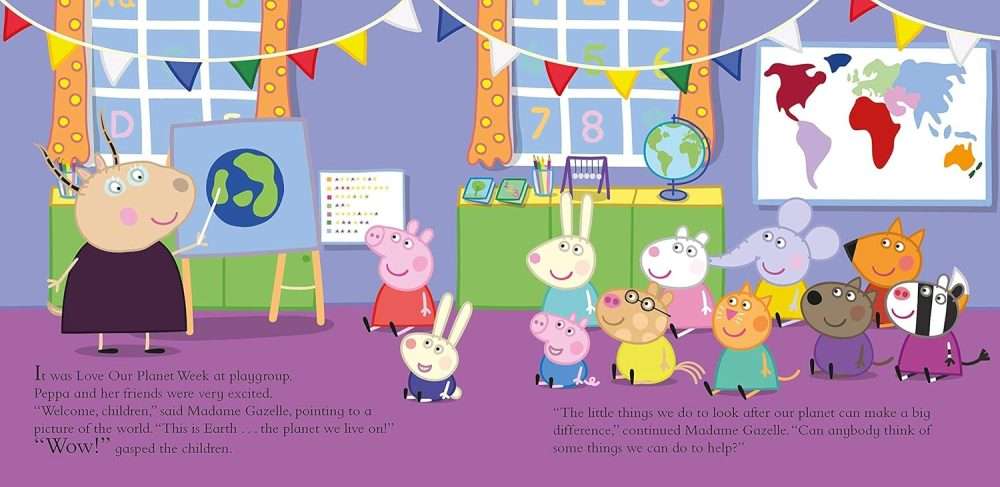
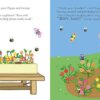
It is Love Our Planet Week at Peppa’s playgroup, and Madame Gazelle asks the children to create a scrapbook. Their scrapbook will record all the things they can do to help look after the planet.
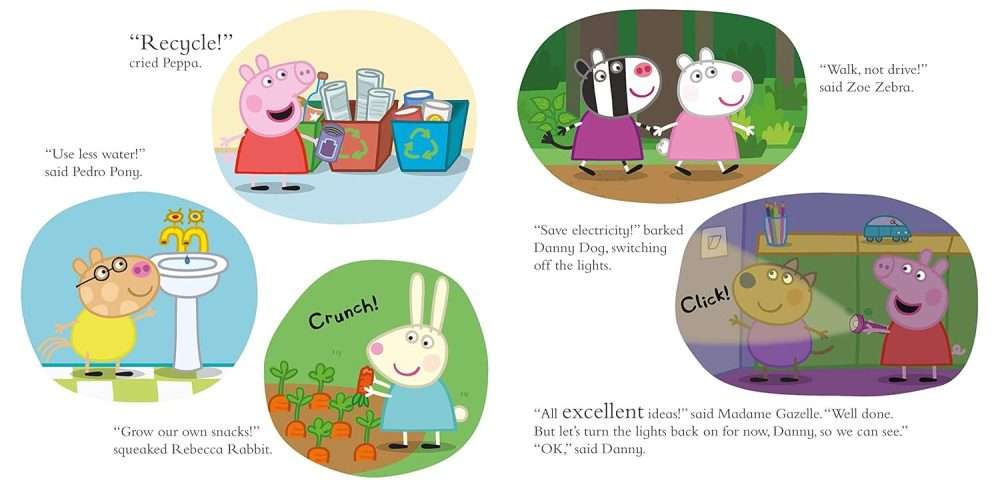
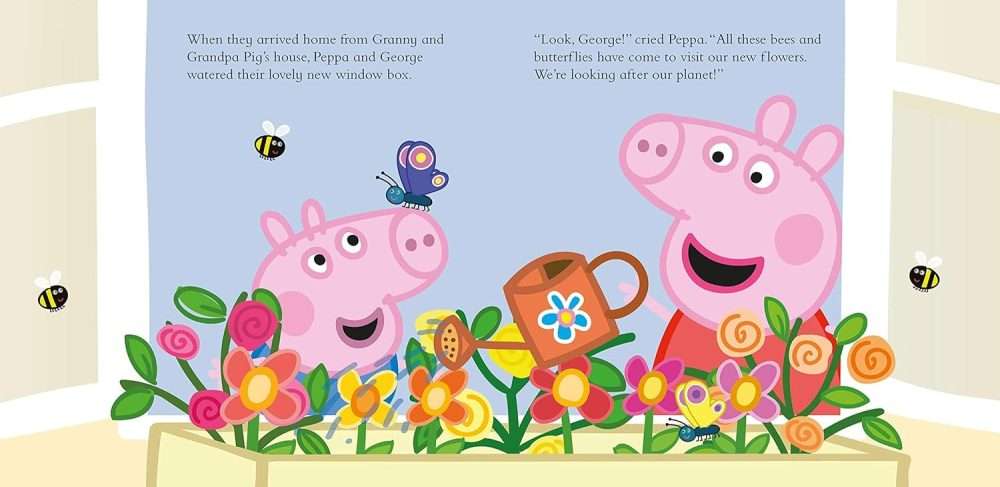
Peppa and George begin exploring environmentally friendly habits. They recycle, grow their own vegetables, turn off the tap while brushing their teeth, and travel to playgroup by scooter instead of using the car. Through these familiar activities, they learn that everyone can contribute to protecting the world around them.
Published by Ladybird, this large-format 32-page paperback is recommended for children from approximately two years old. It is also printed using environmentally friendly vegetable inks, with a water-based finish on the cover.
The story begins when Madame Gazelle introduces Love Our Planet Week at playgroup. She asks the children to think about actions that can help care for the Earth and record their ideas in a scrapbook.
This classroom project makes environmental learning feel creative and accessible. Instead of presenting young children with complicated information, the story focuses on practical actions they can recognise and attempt with adult guidance.
Parents and teachers can make the reading session interactive by asking:
- “What is Love Our Planet Week?”
- “What does Madame Gazelle ask the children to make?”
- “How can Peppa and George help the planet?”
- “What items can your family recycle?”
- “Why should we turn off the tap?”
- “What could we grow in a garden?”
- “How do you help care for the environment?”
Children can answer verbally, point to the illustrations, or demonstrate one of the actions from the story.
Recycling is one of the simple environmental activities Peppa and George practise. It provides an age-appropriate introduction to the idea that some materials can be collected and processed instead of being thrown away with general waste.
Parents can explain that recycling rules may differ depending on local collection services. Children should therefore ask an adult which container to use before disposing of an item.
Families can practise identifying common materials such as:
- Paper
- Cardboard
- Clean plastic containers
- Glass bottles and jars
- Metal cans
Adults should supervise children around glass, sharp metal, or potentially dirty packaging. The activity should focus on recognising materials and developing responsible habits rather than allowing children to handle unsafe objects.
Peppa and George learn to turn off the tap while brushing their teeth. This is a small action that children can easily understand and practise as part of their daily routine.
Parents can explain that clean water is valuable and should not be allowed to run unnecessarily. Children can wet their toothbrush, turn off the tap, brush carefully, and then use the water again when they need to rinse.
This part of the story connects environmental care with a familiar everyday activity. It shows that helping the planet does not always require a large project—small choices made regularly can also matter.
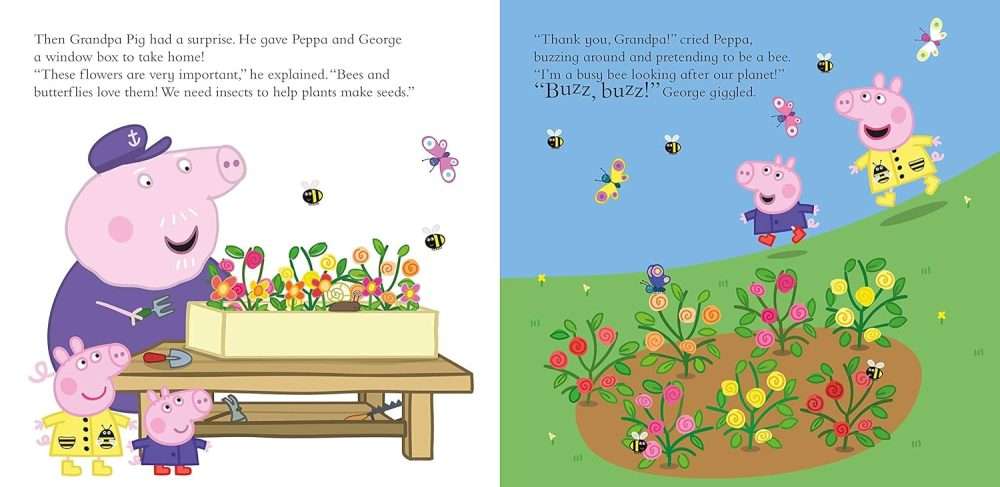
The story also shows Peppa and George growing vegetables. Gardening can help children understand where food comes from and what plants require in order to grow.
Adults can introduce basic gardening words such as:
- Seed
- Soil
- Water
- Sunlight
- Root
- Leaf
- Vegetable
- Harvest
Even families without a large garden may be able to grow a suitable herb or small plant in a container. Children can help by observing growth, watering with adult supervision, and discussing changes over time.
This activity may encourage patience because plants do not grow immediately. Children learn to care for something regularly and wait for the results.
Peppa and George travel to playgroup on their scooters rather than going in the car. The story uses this example to introduce the idea that some short journeys may be completed without a motor vehicle.
Parents can discuss environmentally friendly travel choices such as:
- Walking
- Riding a bicycle
- Using a scooter
- Travelling by public transport
- Sharing a vehicle when appropriate
The safest travel option depends on the child’s age, local traffic, weather, distance, and available routes. Children should always be supervised and use suitable protective equipment when riding bicycles or scooters.
The main message is that families can consider different ways of travelling rather than automatically using a car for every journey.
A central lesson in Peppa Pig: Peppa Loves Our Planet is that small actions can create a bigger positive result when people practise them consistently.
Young children may feel that environmental problems are too large for them to understand or influence. Peppa’s story offers an encouraging alternative by focusing on simple actions within a child’s everyday world.
Families can create a short list of achievable habits, such as:
- Turning off unnecessary lights
- Closing the tap properly
- Using both sides of drawing paper
- Looking after toys and books
- Reusing suitable containers
- Avoiding littering
- Watering plants carefully
- Sorting recyclable materials with an adult
- Walking short, safe distances
- Treating animals and plants gently
Children can receive positive encouragement when they remember these habits independently.
Madame Gazelle’s scrapbook project can be recreated at home or in a classroom. Children can collect drawings, photographs, labels, and simple written ideas showing how they care for the planet.
A scrapbook could include:
- A drawing of recycling containers
- Pictures of plants growing
- A record of a walk or scooter ride
- Leaves collected from the ground
- Drawings of favourite animals
- Ideas for saving water
- Photographs of reusable items
- A weekly environmental-care checklist
Adults should make sure that collected natural objects are safe, clean, and permitted. Children should avoid picking protected plants or disturbing wildlife.
The scrapbook can be revisited over time as the child learns new ways to care for the environment.
Although the story focuses on everyday habits, it can also inspire broader conversations about the natural world.
Parents can explain that the planet is home to people, animals, plants, oceans, forests, and many different habitats. Looking after the environment helps protect these living things and the resources everyone needs.
Families can extend the story through simple nature activities, including:
- Visiting a park
- Watching birds from a safe distance
- Observing insects without harming them
- Watering a plant
- Looking at clouds
- Collecting litter with proper adult supervision
- Talking about seasonal changes
These experiences help environmental ideas become more meaningful and connected to the child’s surroundings.
Peppa Pig: Peppa Loves Our Planet introduces children to useful words and concepts connected with environmental responsibility.
Vocabulary may include:
- Planet
- Environment
- Recycle
- Reuse
- Water
- Energy
- Vegetables
- Garden
- Transport
- Scrapbook
- Nature
- Responsibility
Parents can explain these words using short examples. For instance, “recycle” can be described as placing a suitable used material in the correct container so that it may be processed and used again.
Children do not need to remember every definition immediately. Hearing the words regularly helps build familiarity.
Sharing this story may help encourage:
- Early environmental awareness
- Listening and concentration
- Story comprehension
- New vocabulary
- Memory and sequencing
- Observation skills
- Responsible decision-making
- Creativity
- Empathy for living things
- Parent-child communication
The story also connects learning with daily routines. Children can see how ideas introduced in a book may be applied at home, at playgroup, and outdoors.
The physical production of Peppa Pig: Peppa Loves Our Planet complements its environmental message. According to the publisher, Peppa Pig books are printed on paper from responsibly managed sources.
This particular title is printed using environmentally friendly vegetable inks and has a water-based finish on its cover. These details help connect the story’s message with the way the book itself was produced.
Parents can explain that manufacturers and publishers can also make choices intended to reduce their environmental impact.
The book’s approximately 25.8 × 26.5 cm format gives children plenty of space to enjoy the colourful illustrations. The visual scenes help young readers understand the environmental activities shown in the story.
Its 32-page paperback format is well suited to shared reading. Adults can read the full story or pause on individual pages to discuss Peppa’s actions and examine the pictures.
Because this is a paperback picture book rather than a board book, younger children may need guidance when turning the pages to prevent bending or tearing.
Peppa Pig: Peppa Loves Our Planet can be used in several settings, including:
- Family story time
- Preschool classrooms
- Nursery reading corners
- Environmental-awareness activities
- Earth Day discussions
- Gardening projects
- Recycling lessons
- Library story sessions
- Screen-free quiet time
Teachers can use the story as a friendly introduction before beginning a recycling, gardening, or nature-observation activity.
This book is an appealing gift for children who enjoy Peppa Pig, animals, gardens, or outdoor activities. Its positive message makes it especially suitable for families and educators who want to introduce environmental responsibility in an age-appropriate way.
It can be given for:
- Birthdays
- Christmas
- Earth Day
- Preschool rewards
- Nursery graduation
- Environmental projects
- Everyday reading
- Classroom collections
Peppa Pig is a popular preschool character who lives with Mummy Pig, Daddy Pig, and her little brother George. Her stories explore family life, friendship, playgroup, celebrations, learning, and familiar childhood experiences.
The Peppa Pig publishing range includes picture books, board books, sticker activities, colouring titles, sound books, and interactive novelty books. These stories allow children to learn and play with familiar characters away from the screen.
This book is suitable for:
- Children from approximately two years old
- Toddlers and preschoolers
- Young Peppa Pig fans
- Children interested in nature and gardening
- Families introducing recycling and water conservation
- Preschools exploring environmental themes
- Teachers planning Earth Day activities
- Anyone searching for an educational Peppa Pig gift
The story, production information, and edition specifications are confirmed by the official Penguin UK publication page.
Be the first to review “Peppa Pig: Peppa Loves Our Planet”
Related products
-16%
Out of stock
Children & Young Adult
Original price was: රු32,000.00.රු27,000.00Current price is: රු27,000.00.
3 X Rs. 9,000.00 or 8% Cashback with
or 3 X රු9,000.00 with
or up to 4 X රු6,750.00 with
Out of stock
Children & Young Adult
රු1,750.00
3 X Rs. 583.33 or 8% Cashback with
or 3 X රු583.33 with
or up to 4 X රු437.50 with
-25%
Out of stock
Children & Young Adult
Original price was: රු2,000.00.රු1,500.00Current price is: රු1,500.00.
3 X Rs. 500.00 or 8% Cashback with
or 3 X රු500.00 with
or up to 4 X රු375.00 with
Out of stock
Children & Young Adult
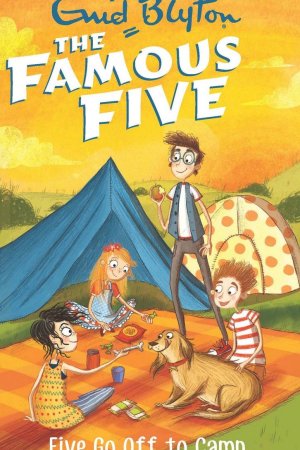
Famous Five Vol 7: Five Go Off to Camp by Enid Blyton | Classic Adventure Book
රු800.00
3 X Rs. 266.67 or 8% Cashback with
or 3 X රු266.67 with
or up to 4 X රු200.00 with
Out of stock
Children & Young Adult
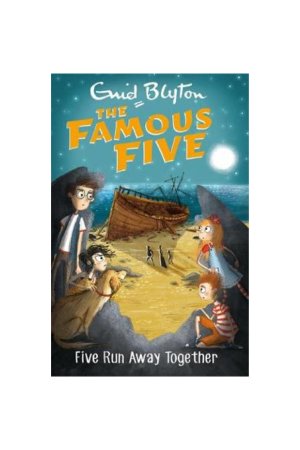
Famous Five: Five Run Away Together (Book 3) by Enid Blyton | Paperback Edition
රු800.00
3 X Rs. 266.67 or 8% Cashback with
or 3 X රු266.67 with
or up to 4 X රු200.00 with
Out of stock
Children & Young Adult
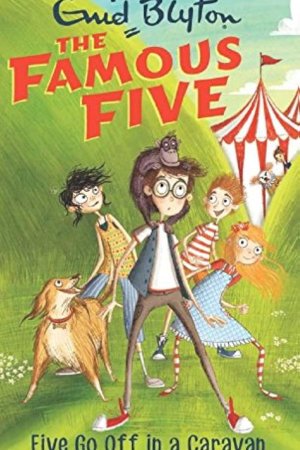
Famous Five: Five Go Off in a Caravan – Book 5 by Enid Blyton | Classic Children’s Adventure
රු800.00
3 X Rs. 266.67 or 8% Cashback with
or 3 X රු266.67 with
or up to 4 X රු200.00 with
Out of stock
Children & Young Adult
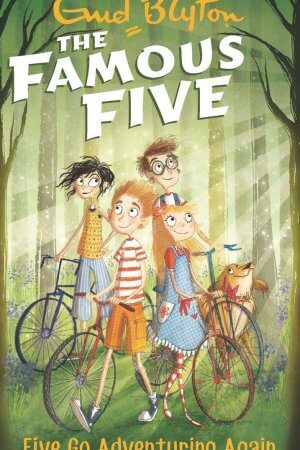
Famous Five: Five Go Adventuring Again by Enid Blyton | Book 2 of the Classic Adventure Series
රු800.00
3 X Rs. 266.67 or 8% Cashback with
or 3 X රු266.67 with
or up to 4 X රු200.00 with

Out of stock
Children & Young Adult
රු3,200.00
3 X Rs. 1,066.67 or 8% Cashback with
or 3 X රු1,066.67 with
or up to 4 X රු800.00 with
Reviews
There are no reviews yet.